How do you tell which covering you have?
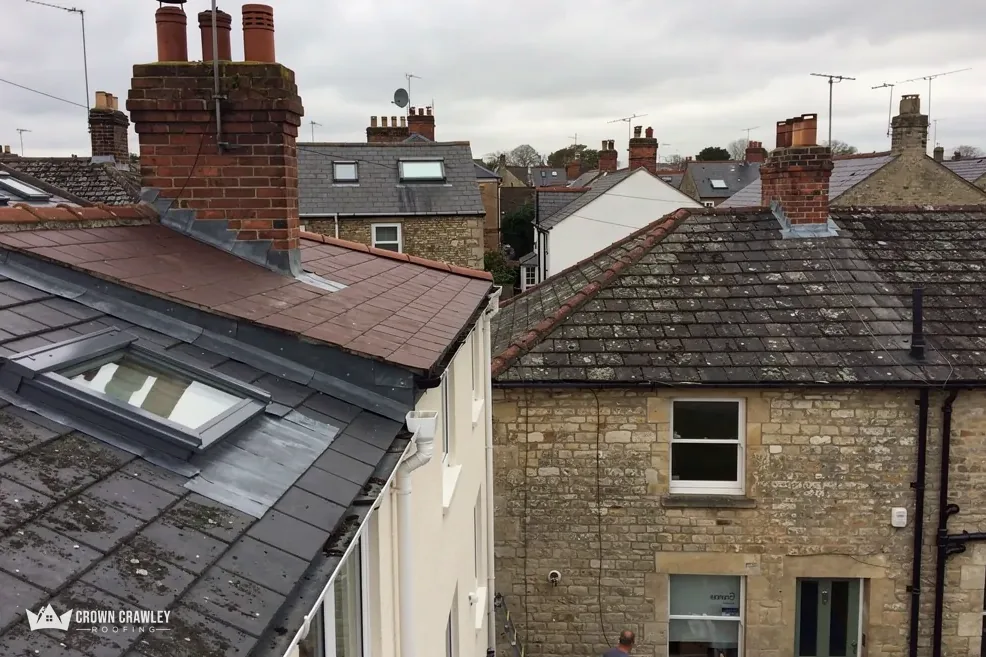
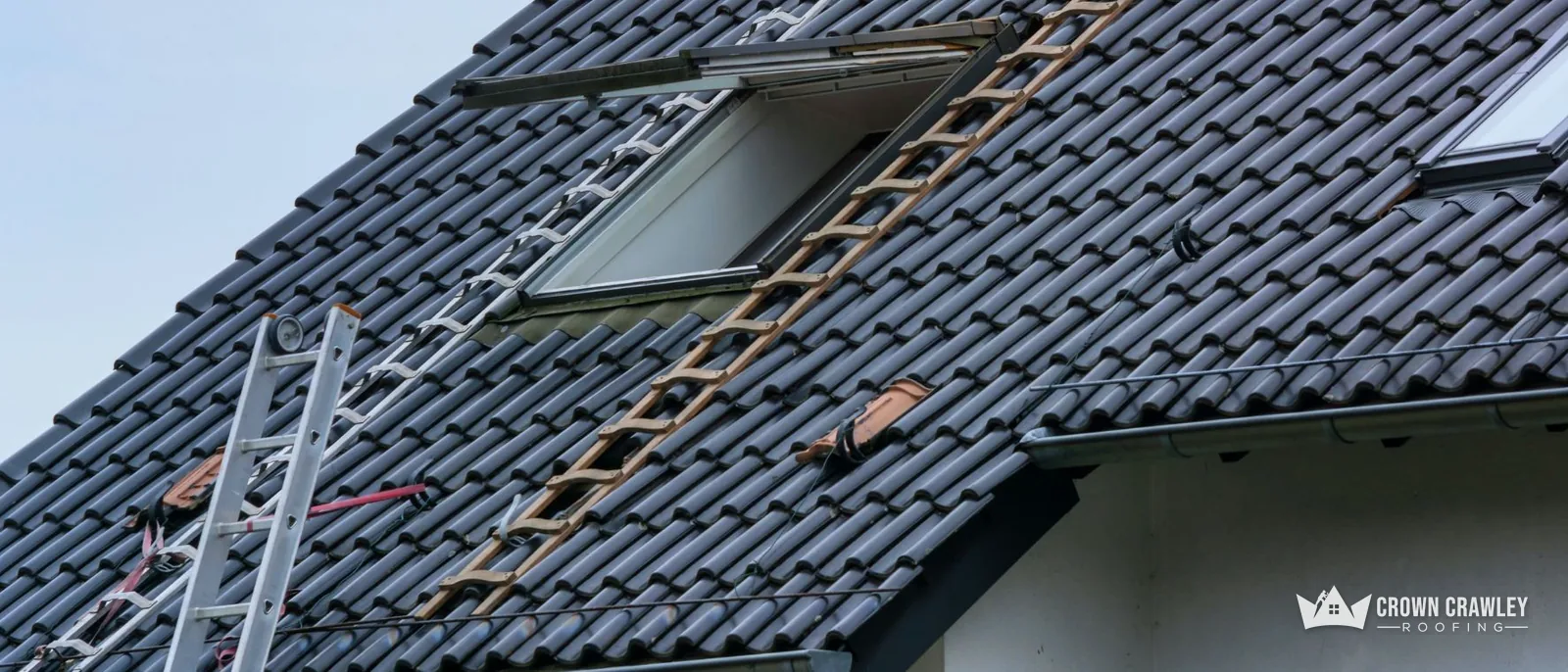
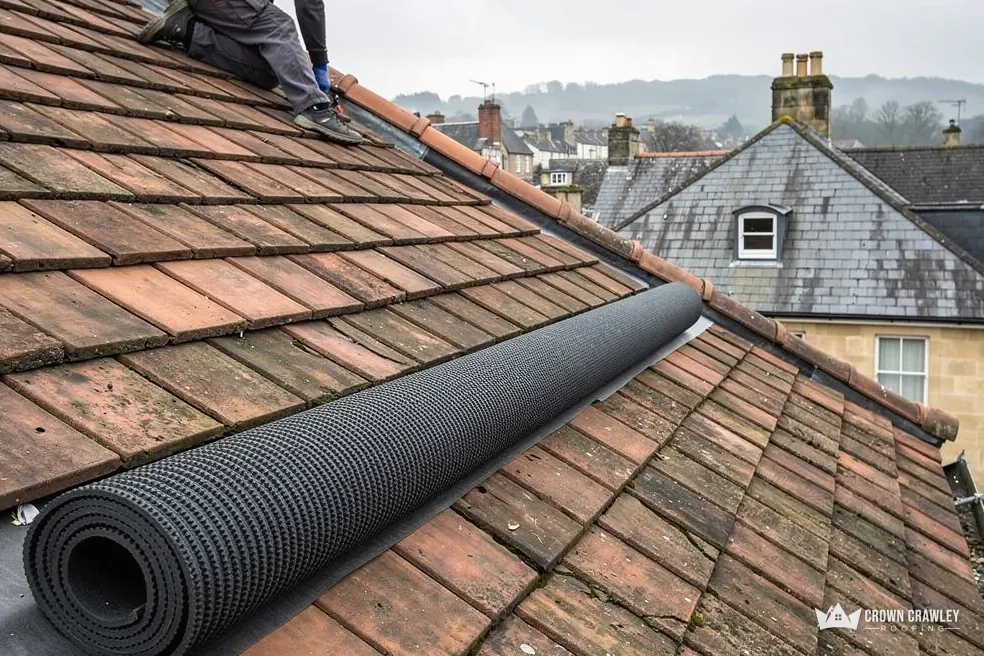
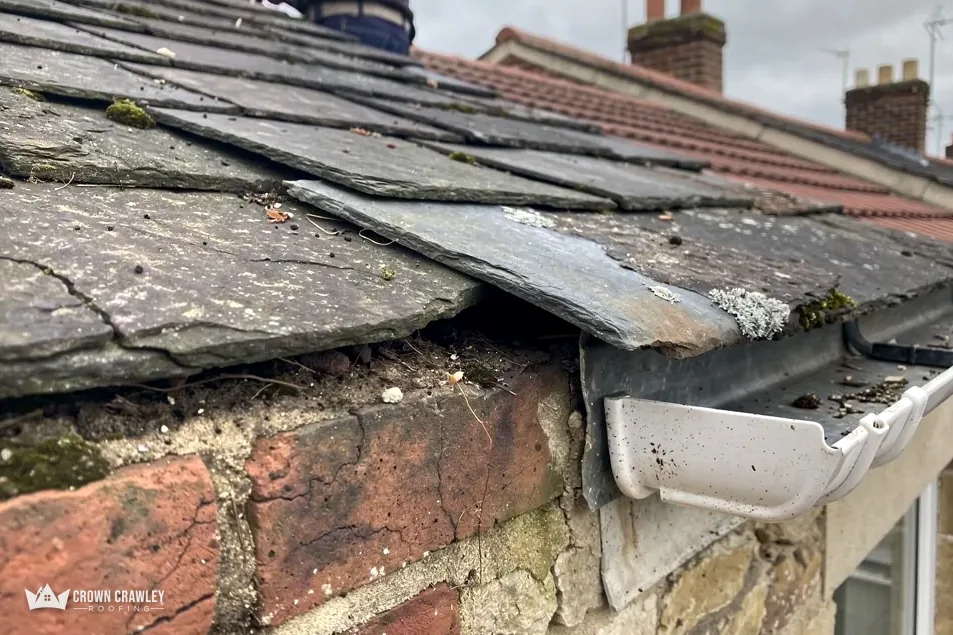
From the ground it is often hard, and that is why we climb. Flemish and other clay tiles are rounded and slightly uneven, slate is thin, flat and grey, and interlocking concrete tiles lock edge to edge in straight, regular courses. Once we know the covering, we know what sort of failure to expect, and what to put in the loft report: split slate around a rusted nail, a worn clay tile that has lost its edge, or a concrete tile that has slipped from its clip.
What changes the repair?
The covering decides the method. On slate, the fixing matters most. Cupa Pizarras says hooks have no place on a pitch under 25 degrees, and BS 5534 sets 20 degrees as the lowest pitch for natural slate. A guide to traditional roofing materials says well kept slate can reach 100 years and beyond, so a few failed slates seldom mean a new roof, though old iron nails can rust through long before the slate itself gives up. Our pitched roofing page covers the repair methods for tiles, slates and the timbers under them.
Around the covering we check the chimney stack, because the flashings and the flaunching, the sloped mortar bed gripping each chimney pot, are places a leak can start. Anything made of lead is looked at separately, and our lead work page goes through lead sheet codes and where each weight suits.