Roofers in Sompting

Clay tile and slate roofs around a flint-walled conservation area.

Sompting's conservation area dates from 1976, and the council names both clay tiles and slates among its roofing materials, beside flint walls. We inspect first, share pictures of your roof, then quote a single total.

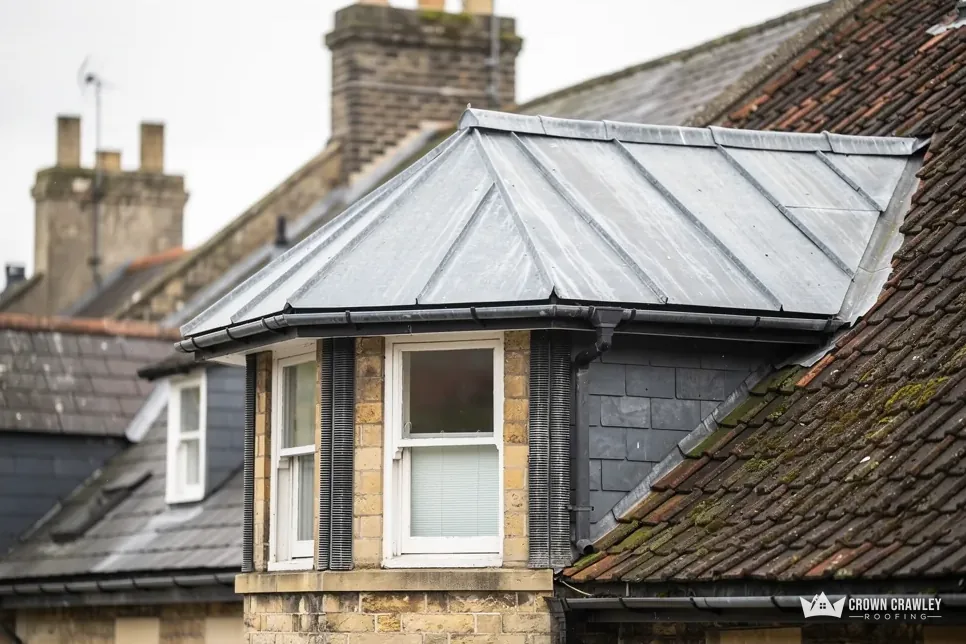
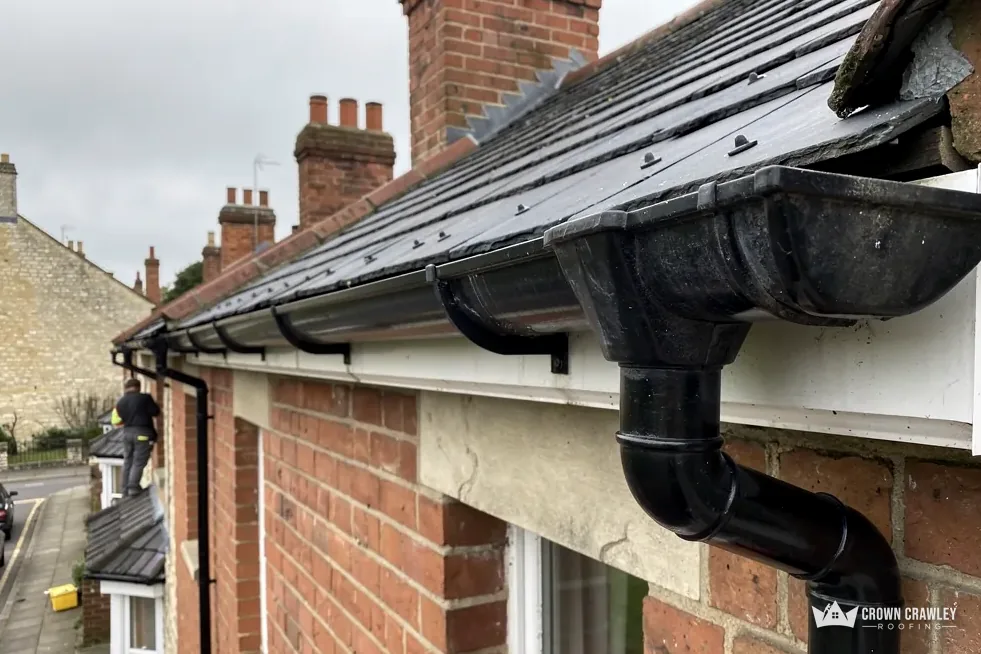
Lead-covered bay roof and chimney stack on a slate and tile roof

Three roof types around Sompting's flint

Dormer window with white cladding in a clay tiled roof

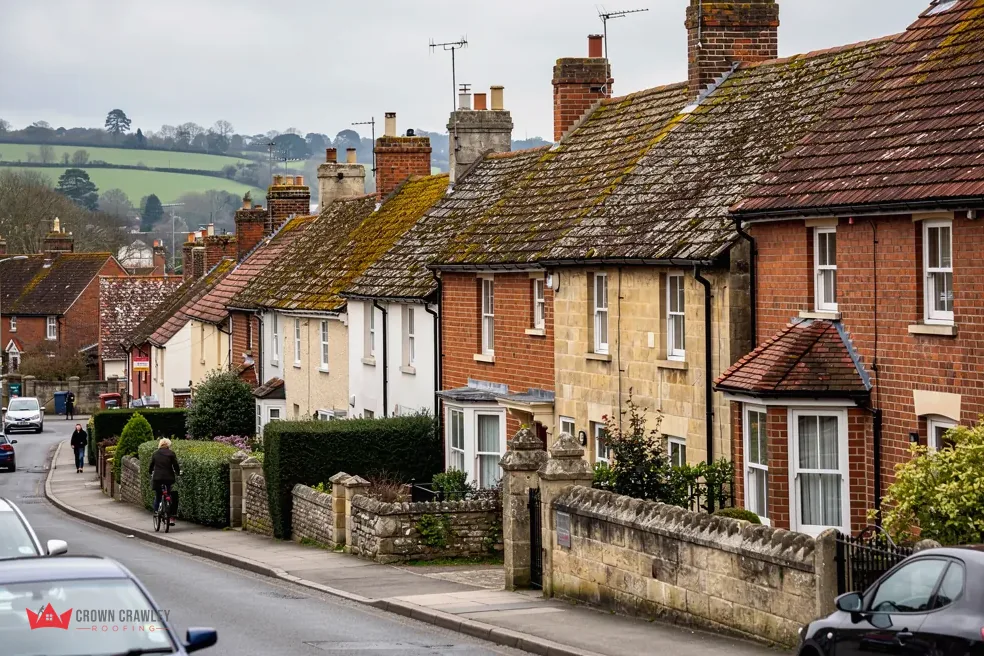
Clay tiles in the conservation area

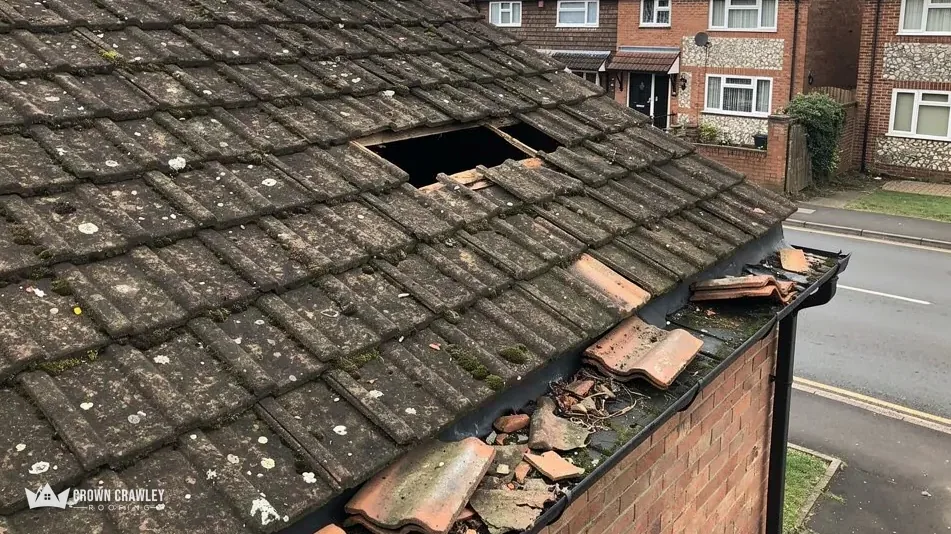
The council's appraisal lists clay tiles among the roofing materials inside the conservation area. When one slips or wears, we hunt for a matching tile and test the batten under it, not only the visible gap.

Clay tiles on an older roof

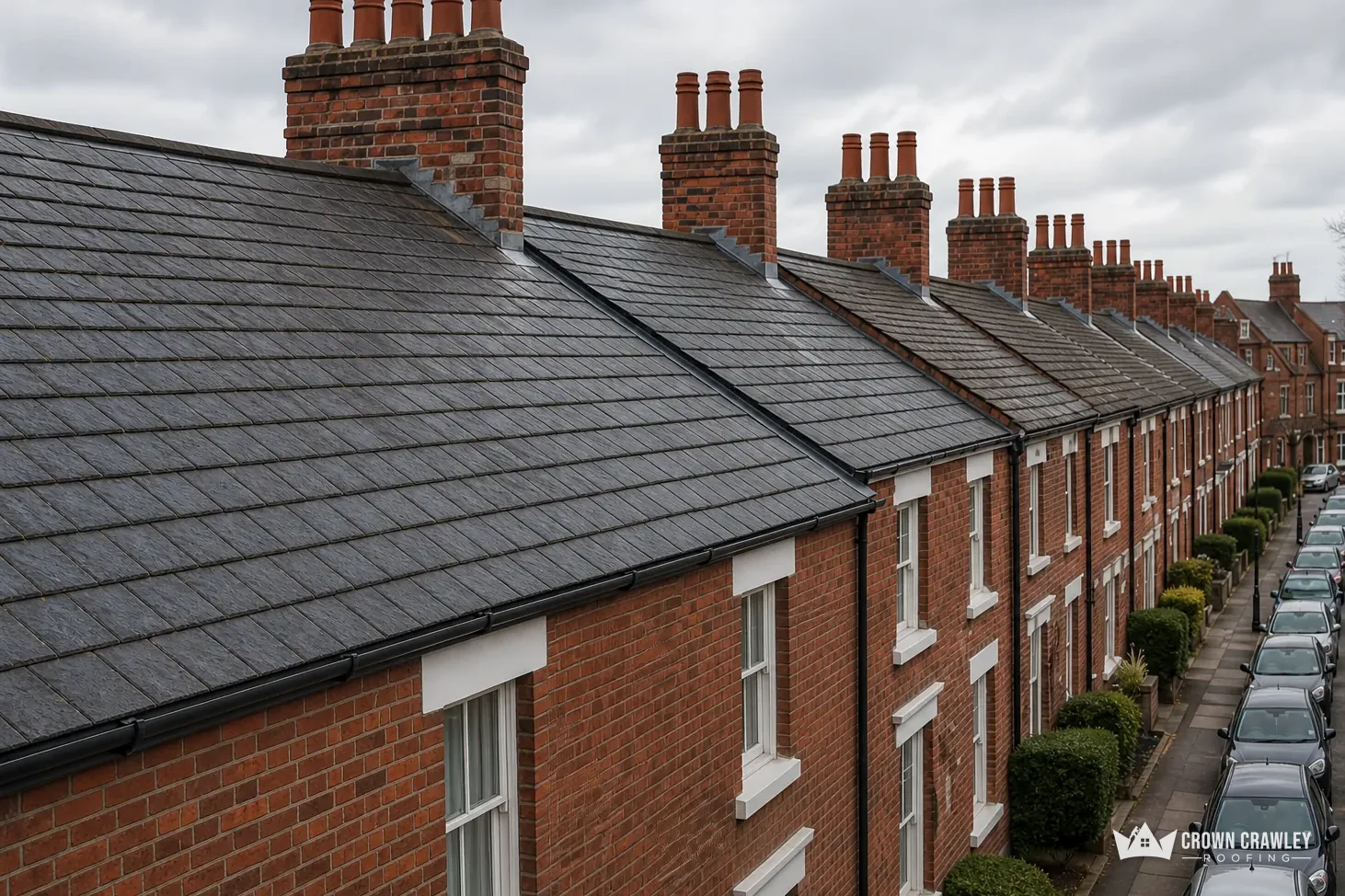
Long terrace of slate roofs with a line of brick chimneys

Slate beside the flint

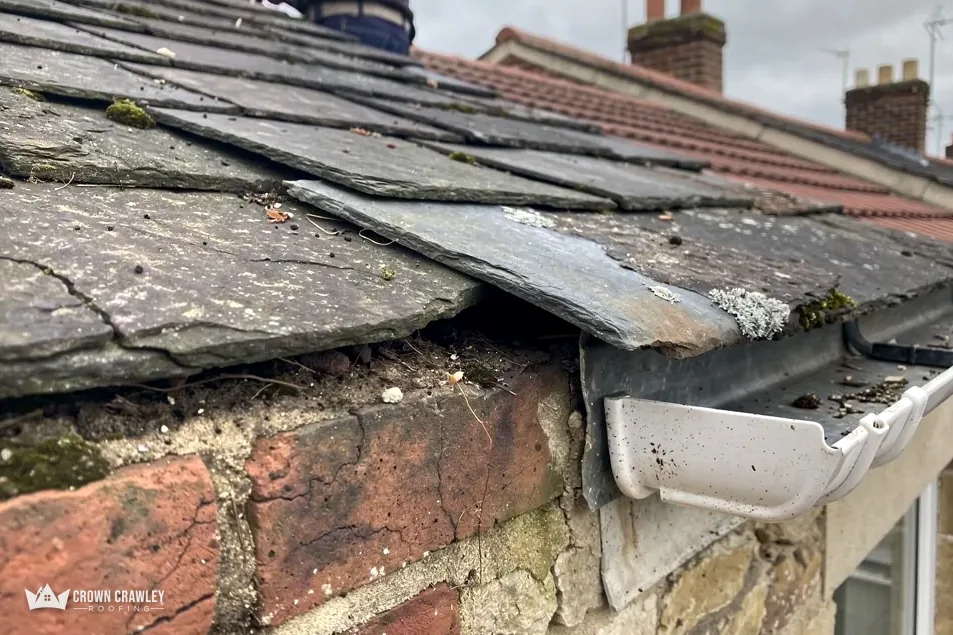
Slate is the other covering the appraisal names, set against flint walls. A slate roof depends on its fixings and overlaps, so we study how each slate is held before suggesting a patch or a strip.

Slate roof with a chimney stack

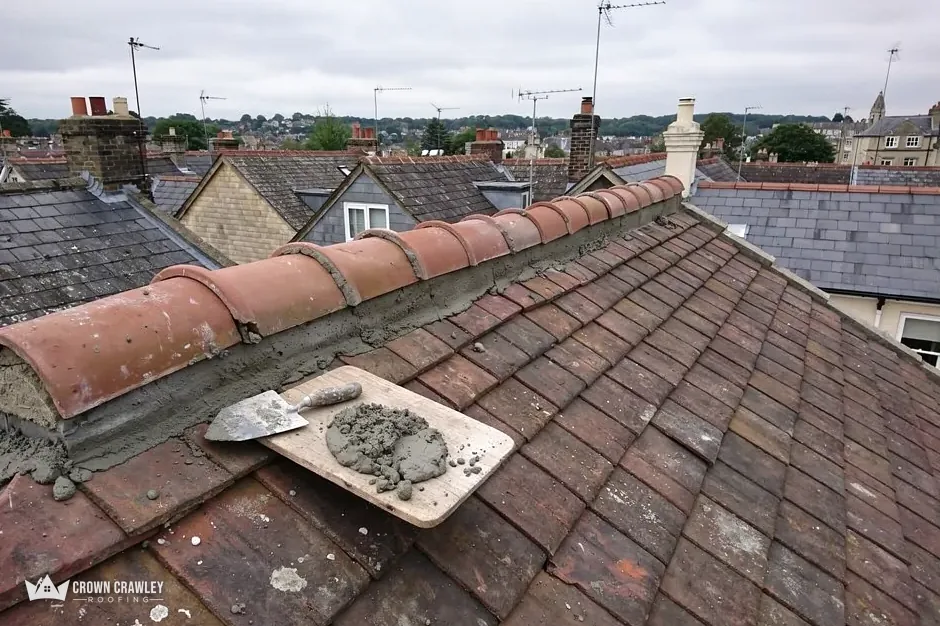
Ridge tile bedded in fresh mortar with a trowel resting on the roof

Sompting Abbotts and other listed roofs

Sompting Abbotts, rebuilt in 1856 in the gothic style, is Grade II listed. A listed roof calls for a conversation with the council before any figure goes on paper, and we start that conversation for you.

Historic building with a tiled roof

Sompting, either side of the A27

Map of Sompting and the neighbourhoods around it, with Crawley for reference.

Sompting lies on the dip slope of the South Downs, with the southern half of the village on the coastal plain.

Distance
27.9 road miles from Crawley, to the south
Drive
About 34 minutes
Council
Adur District Council and West Sussex County Council
Planning authority
Adur District Council
Conservation area
Sompting Conservation Area (designated 1976)
Parish population
8,888 (Census 2021, Sompting civil parish)
Parish church
St Mary's, Grade I listed, with an 11th-century Rhenish helm roof
Get a free quote

Sompting survey diary

Reading roofs in a flint village

Three short chapters on clay tile and slate, the two planning authorities either side of the A27, and the scaffold, notice and approvals behind a bigger job.

New slate-effect roof on a bungalow with white fascias and guttering

Stage 01 · Materials

Clay tile and slate beside flint

The conservation area appraisal names clay tiles and slates among its roofing materials, so careful matching and refixing matter more than wholesale replacement.

Adur District Council's 2024 appraisal of Sompting Conservation Area describes flint used extensively in houses and boundary walls alike, and lists clay tiles and slates among the roofing materials. Under the moss on an older Sompting roof you can therefore expect clay or slate, and each is mended in its own way. Our first inspection is from the ground, then from as close as is safe, and you receive pictures of what was found before any price appears.

On a clay or slate survey

Tiles
Cracked, slipped or worn at the nibs
Slates
Rusted nails, slipped or split slates
Battens
Sound timber with no soft patches
Flashings
Lead tight to wall and chimney
Ridge
Bedding and fixings still holding

Can worn clay tiles be repaired without changing how the roof looks?

Every clay tile hooks over a batten, the timber lath that carries its course, using two lugs called nibs. Nib and nail tend to fail first, while the clay around them is still sound. Building Research Establishment guidance puts a clay tile's life at a minimum of 60 years, though conservation writers caution that the figure misleads where old peg tiles are concerned, so a date on the deeds never settles the question. Each tile's condition does. We lift out a cracked tile and bed in a twin. A slope that has lost its nibs is another matter: stripping and re-tiling it costs less over time than patching it winter after winter. Colour and profile are matched as far as the stockist allows, and you hear before work starts if the best match is imperfect. The pitched roofing page explains our work on tiles, battens and underlay, the felt or membrane under the tiles.

Clay and slate both repay a careful repair, and both punish a rushed patch.

What should be done about slipped slates?

The Confederation of Roofing Contractors reckons a Sompting slate roof, kept in good order, can see out a hundred years and more. A slate that has dropped usually tells you about its fixing first: the nail rusted through and the slate slid. Swapping a handful on a roof that is otherwise sound is sensible. Swapping all of them is not, unless the survey shows widespread splitting or battens gone soft, and then you see the evidence in photographs. Slate also has a pitch limit: BS 5534 sets 20 degrees as the minimum for natural slate, which we check on the slope before suggesting it for new work.

Where does leadwork come in?

Anywhere a roof butts up to flint or a chimney stack, a strip of lead is dressed into the wall and over the covering. That strip is the flashing. A national cost guide credits lead flashing with a life beyond 80 years, so a failed joint is repaired, not a whole run stripped. The lead work page goes through the detail.

Village street of brick and render houses with old tiled roofs

Stage 02 · Planning

Two planning authorities in one village

Part of the conservation area lies north of the A27 and part south, with a different planning authority on each side.

Adur District Council first designated Sompting Conservation Area in March 1976 and adopted a fresh appraisal and management plan in August 2024. Planning is split by the main road. The South Downs National Park Authority has held that role since April 2011 for the section north of the A27, and Adur District Council keeps it for the village to the south. Putting back what was there needs no application on either side. Altering how the roof looks does, so the team to ring first depends on which side of the road your front door is.

Is permission needed to mend a roof inside the conservation area?

The Act's definition of development leaves out work that makes no material difference to how the outside of a building looks, so replacing a covering with the same material, colour and profile is normally the end of it. Questions arise once the covering changes, a roof window is added or the ridge line moves. Our answer on re-roofing in a conservation area lists what to ask the planning team. The council's own list of Article 4 directions shows a single 1983 direction for one farmhouse site, although the 2024 appraisal says one should be considered south of the A27. Assume nothing either way. Put your address to the planning team before you order a single tile.

Planning words you may meet

Conservation area
Area where planning controls protect local character
Listed building consent
Approval for work affecting a listed building's character
Article 4 direction
Order withdrawing some permitted development rights
Like for like
Mending with identical material so nothing looks different

Does a listing change the job?

Sompting Abbotts, rebuilt in 1856 to designs by P.C. Hardwick, is Grade II listed. St Mary's, the parish church, carries a Rhenish helm roof that is very rare in Britain and is Grade I. For listed buildings the Planning (Listed Buildings and Conservation Areas) Act bars any alteration that would affect the building's special character unless it is authorised. North of the A27, inside the Park, the South Downs National Park Authority's guidance exempts routine upkeep and minor in-situ repairs that replace like with like from listed building consent, which helps on a modest job there; south of the road, ask Adur. On a listed roof we ask first, price second, and attach the council's reply to the quote.

Flint walls and old chimney stacks often sit right against the slope on roofs like these. Where they do, we photograph the flashing and the stack together, because a repair to one frequently shows up in the other. Send a clear picture of both when you write to us and you may save a second visit.

Stage 03 · Access

Scaffold, licences and building control

Access comes first on any roof job, and a bigger re-roof also brings Adur and Worthing building control into the plan.

Nobody should climb a roof until the access is right. The scaffold must be sound, neighbours need a word of warning and a licence, if one is due, must exist before the first pole is set.

Does scaffolding in Sompting call for a licence?

Only scaffold on the road or the pavement raises the question. West Sussex County Council holds the highway powers here, asks for 10 working days' notice before the scaffold goes up and lists £266 for a month's licence. The paperwork goes through the scaffolder and ourselves together, and we pick a start day only after the licence is confirmed. Rubbish is cleared as we go, so a front garden is not left piled with old slates. Poles on your own drive or front lawn need no highway licence. Where a flint wall fronts the garden, or the plot is tight, the survey settles where poles can stand and how tiles, slates and rubbish reach the road. You get the dates for putting it up and striking it in advance.

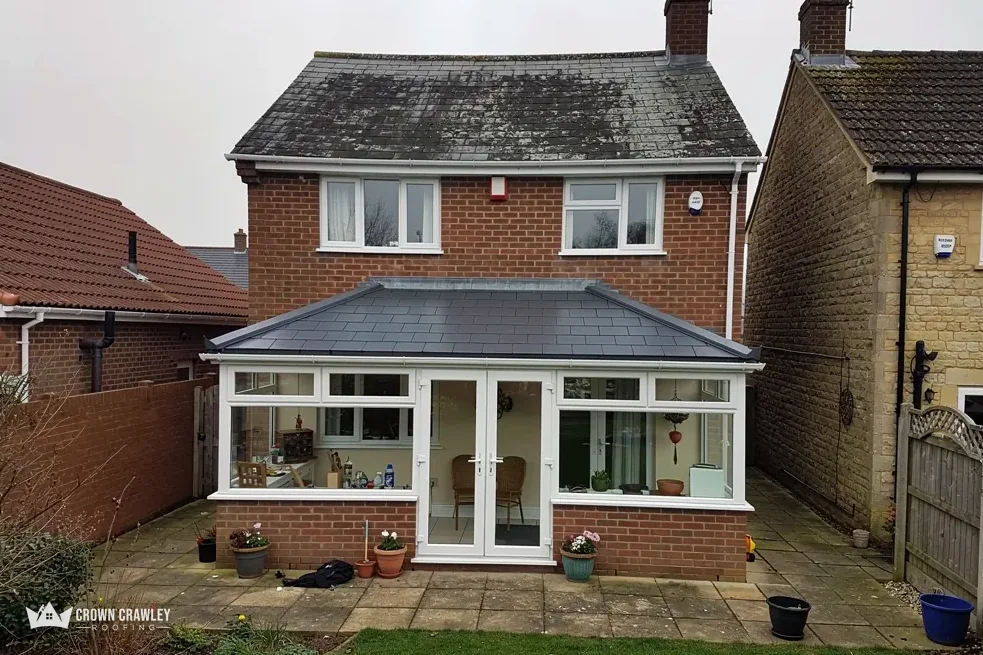
Rear of a brick house with a glazed extension and slate-effect roof

Access checklist for Sompting

Highway
West Sussex County Council licence
Notice
10 working days at least
Own land
No highway licence needed
Control
Shared Adur and Worthing team
Wildlife
Pause and consult if bats found

When does a Sompting re-roof need approval from building control?

In the Planning Portal's words, an application is usually unnecessary when under 25 per cent of the building envelope, and under 50 per cent of the roof, is involved. A new covering 15 per cent or more heavier, or reacts differently in a fire, changes that. Swapping slate or clay for a heavier tile can do the first, and the Planning Portal recommends asking a surveyor or structural engineer before ordering anything. Here the service is the one Adur and Worthing Councils share. On a bigger job we speak to them before settling the start, and what they say shapes the written price. On the roof replacement page you can follow a re-roof from strip to sign-off.

Bats and nests: what happens on a Sompting roof?

Bats and their roosts carry strong legal protection, and official guidance lists reroofing among the activities likely to affect them. The Wildlife and Countryside Act covers birds too: it makes the intentional wrecking of a wild bird's nest an offence at any point while birds are building or using it. Droppings, a roost or a nest found on the survey means work pauses while we talk options through with you. Next step: photograph the worrying part, whether slope, ridge, flashing or stack, then add your postcode and say which side of the A27 you are on.

Sompting roof queries, answered

Can a few slipped slates on an old Sompting roof be fixed without re-roofing?

A repair can be enough, though the survey decides. A dropped slate points to a rusted nail, so we test the fixings around it and the battens under it before pricing. Sound neighbours stay; failed slates are replaced and the rest refixed. If lots are splitting, or the timber is soft, you are told plainly and shown the pictures.

Which council do I ask about roof changes in Sompting?

Adur District Council covers the village south of the A27. North of it, the part inside the conservation area answers to the South Downs National Park Authority for planning. Building control is the shared Adur and Worthing service. Putting back the same covering needs no application; a new material or roof window does, so ask before ordering.

Does Sompting's conservation area stop me choosing different tiles?

A re-roof is allowed; the choice of covering becomes a planning question. Matching what was there leaves the building's appearance unchanged, while a different material may not. The appraisal names clay tiles and slates, so a match is the simple route. Ask the planning team first, and we will copy what your roof already has.

What should I send for a written price on my Sompting roof?

Two or three pictures of whichever part troubles you, whether slope, ridge or flashing, your postcode, and which side of the A27 the house is on. Mention a listing if there is one. After the survey you receive photos of our findings and a single written total, so you can follow how the figure was reached.

Send us your Sompting roof details

Send a picture of the tile, slate or flashing causing worry, your postcode and which side of the A27 you live on.

01293 974253

10-year workmanship guarantee, in writing.

Call Get a free quote