Roofers in Ashtead

Roofs in a Surrey village with an old brick and tile works.

Ashtead had brickfields and a brick and tile works on record in 1911, and Grade II houses still stand on its lanes. We survey each roof as it is, then price in writing.

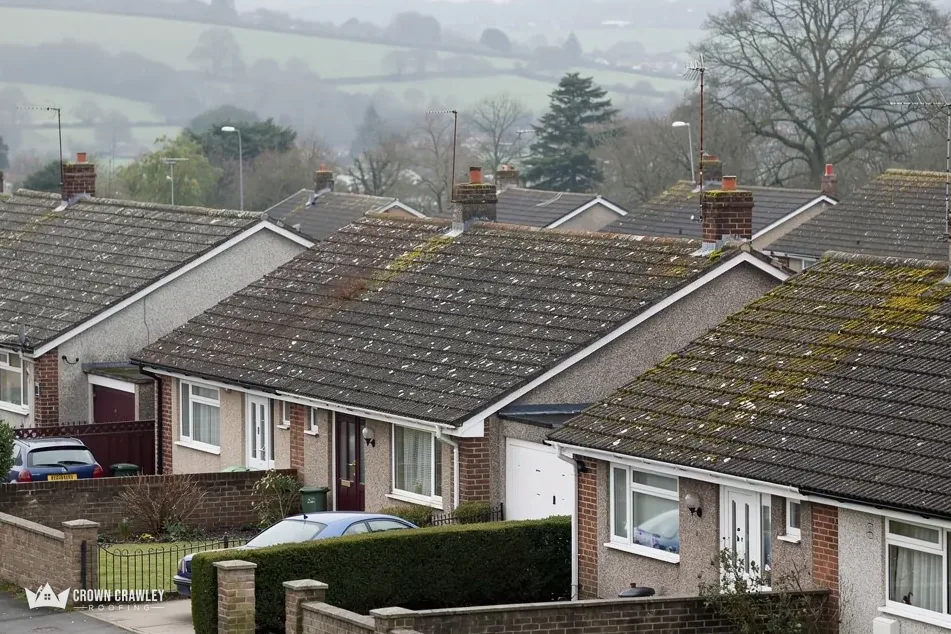
Terraced bungalows with grey tiled roofs along a cul-de-sac

What the records say about Ashtead roofs

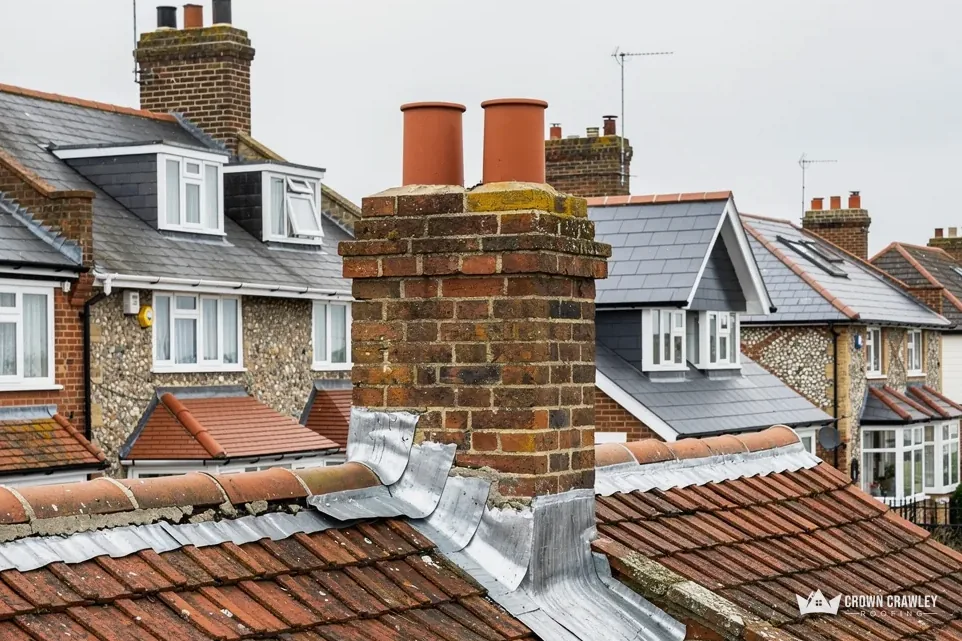
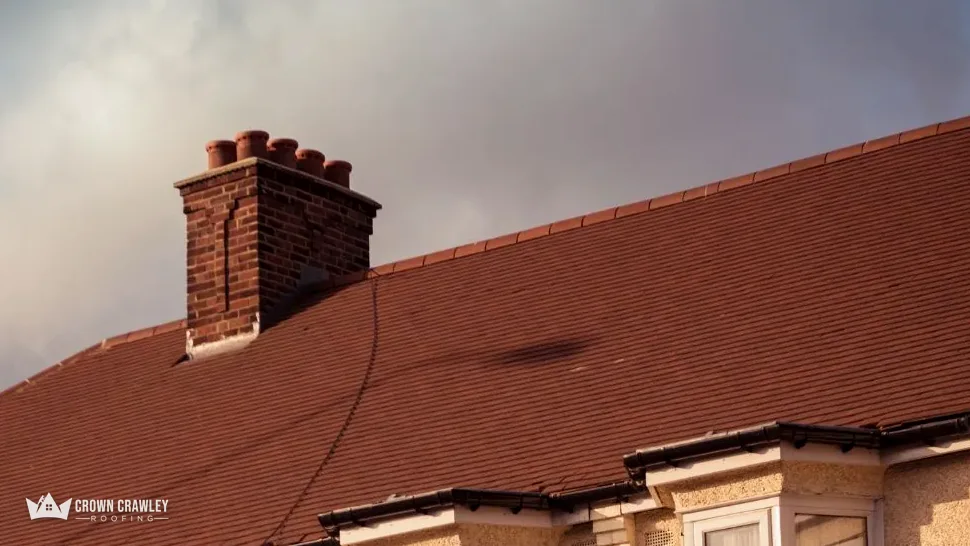
Chimney stack with orange pots and lead flashing among tiled roofs

The Barnett Lane brick works

The Victoria County History noted brickfields and tile manufactories at Ashtead Brick Works in 1911. A works nearby says nothing about your covering, so we identify the tile, its profile and its colour at the survey.

Clay tiles stacked on a roof

Brick chimney with lead flashing on a clay tiled roof

Grade II houses on three lanes

Homes on Rectory Lane, the Street and Agates Lane carry Grade II listings. Before any change to a covering, ridge or chimney there, we ask you to speak to the council about listed building consent.

Old tiled roof with a chimney stack

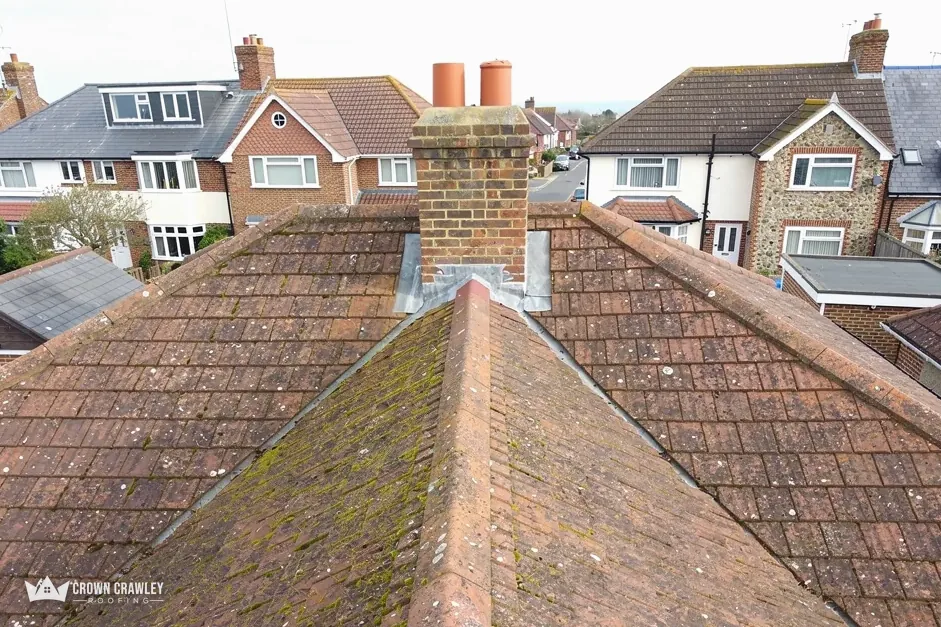
Hipped tiled roof with a chimney at the ridge

Roman tiles under the church

When the church was restored in 1830, Roman tiles and part of a hypocaust turned up around it. Roof coverings have a long history here, so we match what is on your house today rather than assume.

Weathered plain tiles close up

Ashtead, between the downs and the Common

Map of Ashtead and the neighbourhoods around it, with Crawley for reference.

Ashtead lies two miles south-west of Epsom on the road to Leatherhead, between the chalk downs and the London Clay of Ashtead Common.

Distance
24 road miles from Crawley, to the north
Drive
About 30 minutes
Council
Mole Valley District Council and Surrey County Council
Planning authority
Mole Valley District Council
Population
14,837 (Census 2021, Ashtead built-up area)
Railway
Ashtead station opened in 1859
Get a free quote

Notes from Ashtead

Reading an Ashtead roof from the ground up

Three short chapters on how we read a tiled roof, what listed houses on Rectory Lane and the Street mean for repairs, and the Surrey rules for a bigger job.

Stage 01 · First look

Brickfields, tiles and what is on your roof

Ashtead has a tile-making past on record, but your own roof tells its story better than the history books do.

Ashtead has a tile-making past on record. The Victoria County History, writing in 1911, noted brickfields and special brick and tile manufactories at the Ashtead Brick Works in Barnett Lane. That is good local history, but it tells you nothing about the covering on your own roof. A house here could carry clay tiles, concrete tiles or slate whatever its neighbours have, and a roof repaired over several decades can hold a mixture of all three. So we never start from a guess. We start from the survey.

What do we look at first on an Ashtead roof?

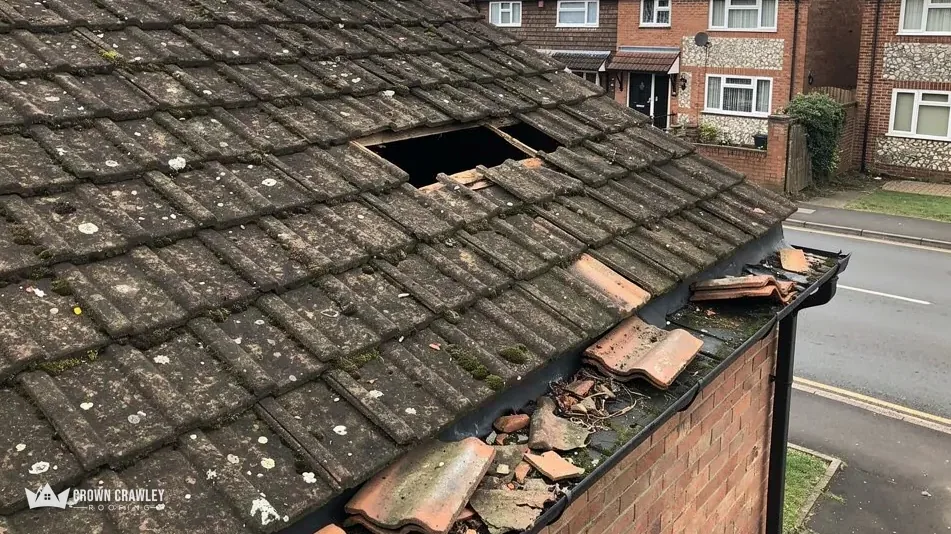
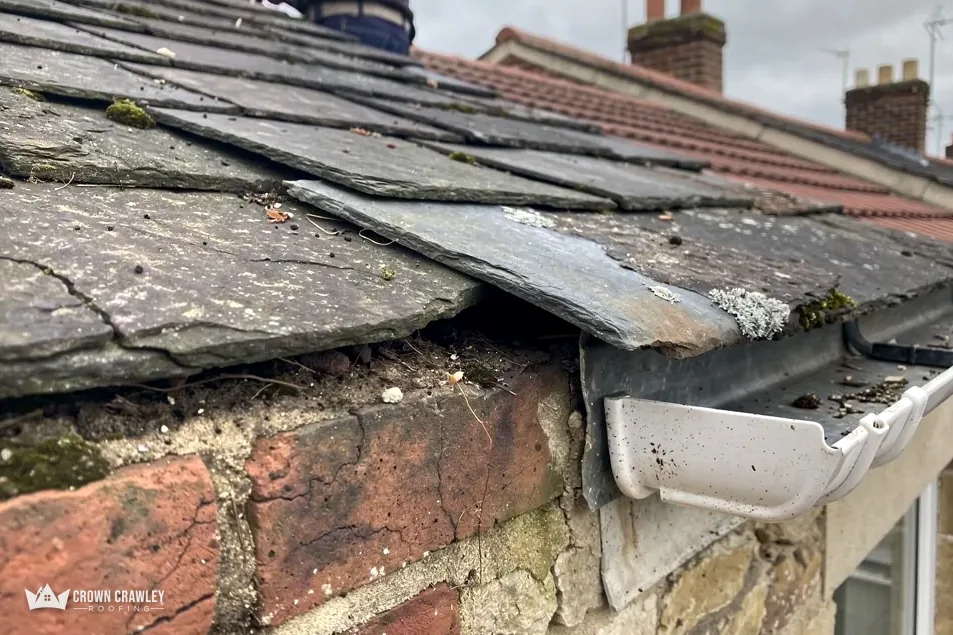
We follow the route the rain takes. Tiles come first: any that have slid out of line, split, or crumbled where they hook over the timber? Nibs are the small lugs that hang each tile on its batten, and they wear before the face of the tile does. Next the ridge along the top and the hips down the corners, which take the most wind. Then the valleys, where two slopes meet and pour their water into one channel, and the flashings, the metal strips that seal the roof against a wall or chimney. Underneath sit the battens, the timber strips that carry the tiles, and the underlay, the sheet that catches whatever gets past them. You get photos of your own roof, so what we say matches what you can see.

What the Ashtead survey reads

Tiles
Slid, split or worn-out nibs
Ridge and hips
Bedding sound and caps fixed
Valleys
Clear channel, lead or liner whole
Battens
Firm timber, no soft ends
Underlay
Whole sheet, not perished at eaves
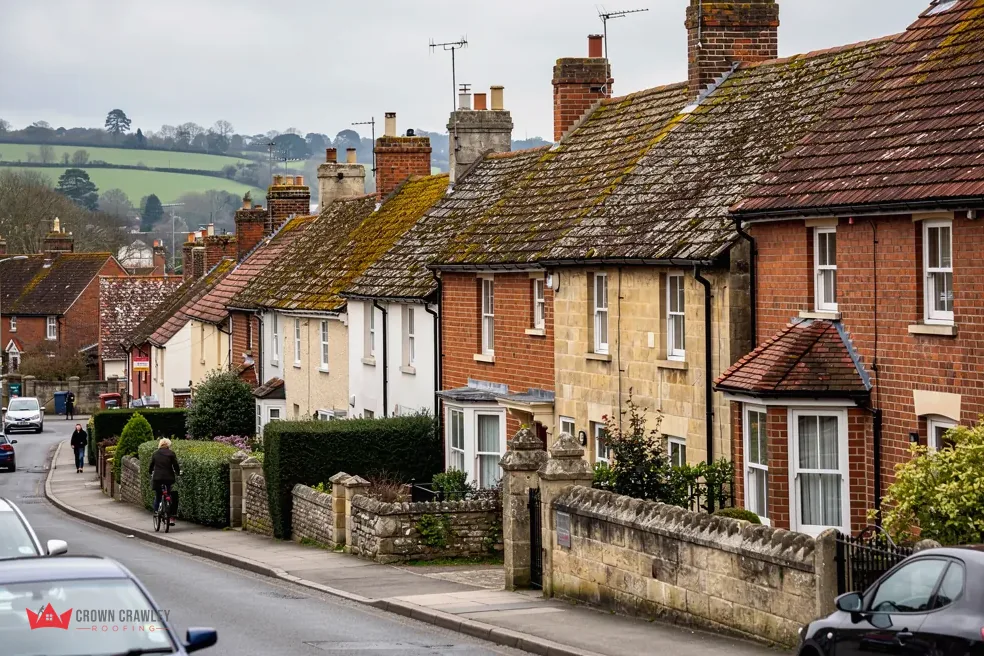
Village street of brick and render houses with old tiled roofs

Is a tile fault a reason to replace the roof?

Seldom on its own. A few slipped or broken tiles, cracked ridge bedding or a tired flashing call for a repair, and a repair is the better buy while the battens and most of the covering are sound. A new roof earns its price when battens are rotten, the underlay has perished across whole slopes or tiles are failing faster than anyone can patch them. Marley gives around 60 years for a concrete tile, with the caveat that no figure is a guarantee. For clay, the Building Research Establishment quotes a minimum of 60 years. Neither number tells you what your roof has left, which is why the survey counts for more than the date on the deeds.

When the answer is a repair, our pitched roofing page covers the tile, batten and underlay work in more detail. Whatever the job, the quote is one total price in writing, sent after we have been up and looked, and we tell you what each day on site will involve before it starts.

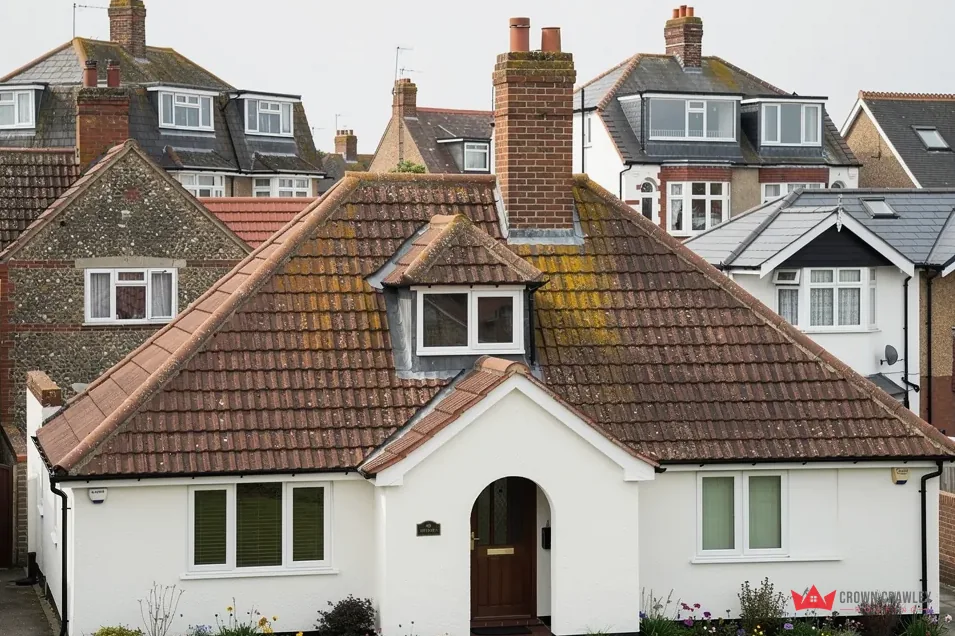
White rendered bungalow with a hipped tiled roof and dormer

Stage 02 · Listed homes

Listed houses on Rectory Lane and the Street

Several Ashtead addresses are Grade II listed, and a listed roof asks different questions before a single tile comes off.

The National Heritage List for England includes 18 and 20 Rectory Lane, 44 and 46 the Street and 60 and 62 Agates Lane, all Grade II. If your home is one of them, or you cannot tell whether it is listed, find out before any roof work that changes the covering, the ridge or the chimneys. A quick check now is easier than a problem after the scaffold is up.

Does a listed roof need consent for a repair?

Listing law asks for consent where works would alter a listed building in a way that affects its character as a building of special architectural or historic interest. Whether a given repair does is a judgement for Mole Valley District Council's planning team, not for us and not for you alone. So ask them before you order anything beyond a small patch. We describe the work in plain terms, with photos, to help them answer. Where the plan is to match the existing tile, bedding and lead exactly, that description is short. Where it changes the look, even slightly, it is better that they say yes first.

Listed roof terms

Grade II
Listed as of special interest
Listed consent
Council approval for changes to character
Like for like
Same tile, same colour, same fixing
Hip tile
Capping along a sloping roof corner

Does a conservation area matter as well as the listing?

It can. A conservation area adds its own care over how a roof looks, while a listing applies to the building whether or not a conservation area surrounds it. The two are separate checks, and a house can face one, both or neither. Mole Valley is the planning authority, and its team can tell you the status of any Ashtead address before a covering is chosen.

What changes on site for an older tiled roof?

On a roof of this kind we slow down. Before touching anything we record how the tiles are laid, how the ridge and hips are bedded and what the lead looks like, so a matching repair is possible and the council has a record to read. Old leadwork gets particular care, because lead can outlast much of what surrounds it and is often worth keeping. Our lead work page explains how flashings and valleys are repaired and when they are replaced. The loft is checked too, since a roof that has lasted a long time tends to have timbers worth saving, and we would rather splice one rotten rafter foot, the end that rests on the wall, than strip a whole slope. You see the timber in the survey photos before we agree what to do.

On a listed house, the first call is to the council's planning team, then to us.

Stage 03 · Permissions

Surrey rules for a bigger Ashtead job

Mole Valley handles planning, a shared Surrey team handles building control, and Surrey County Council licenses scaffold on the road.

Swapping like tiles for like seldom meets a form. Paperwork starts when a repair swells into a whole new roof, the covering is swapped for another, or scaffold goes up beside the road. It is worth knowing where those lines fall before you take a quote, so nothing surprises you halfway through.

When does an Ashtead re-roof need approval?

Mole Valley's building control comes from the Southern Building Control Partnership, which also serves Reigate and Banstead and Tandridge. Under the Planning Portal's test, a job normally needs no building control application when less than 25 per cent of the building envelope and less than 50 per cent of the roof is affected. The Portal also lists a covering that raises the roof's weight by 15 per cent or more as needing approval. That second test catches people who swap clay for a heavier tile or slate, so we raise it at the survey. Our roof replacement page shows how a full re-roof runs, and our post on planning permission for roof work covers dormers and roof windows.

Before a bigger job starts

Planning
Mole Valley District Council
Building control
Southern Building Control Partnership
Scaffold fee
£208 per 28 days on the highway
Notice
10 working days before the start
Eaves
Soffit and gutter checked for nests
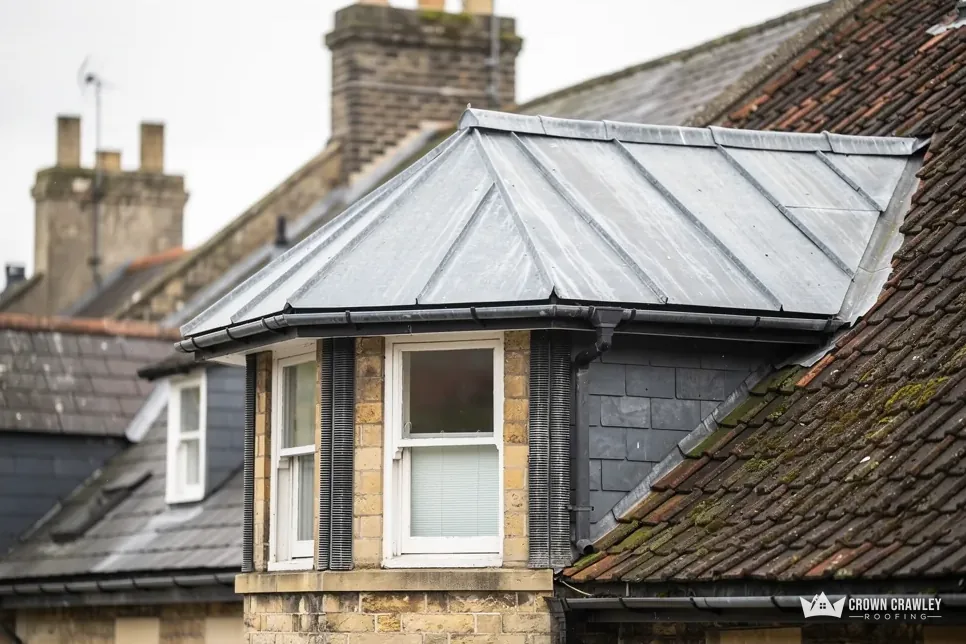
Lead-covered bay roof and chimney stack on a slate and tile roof

Does an Ashtead scaffold need a licence?

When it stands on the public highway, yes, and a pavement counts. Surrey County Council charges £208 per 28 day period and asks for an application at least 10 working days before the date you want to start. We settle the licence jointly with the scaffolding firm and fit the date around it; ask who applies if a quote mentions one. If your drive or garden has room, the poles can stand there, and nothing is owed to the highway authority for private ground.

What about bats and nesting birds?

Old tiled roofs in Surrey can shelter bats, which are protected along with their roosts, and the law shields an occupied nest as well. If the survey turns up droppings, a nest or a gap that animals use, we stop and agree the next step with you before any tile moves. We glance along the eaves on the same visit, where a worn fascia or soffit lets in rainwater and sometimes birds.

To begin, take a picture of the tiles, ridge or chimney that worries you from the garden or pavement, and send it with your Ashtead postcode and a line on how old you think the roof is. That is enough for us to plan the survey.

Ashtead roofs: your questions, answered

Do the old brick and tile works mean my Ashtead roof has local tiles?

Not necessarily. The 1911 record shows brickfields and tile manufactories in Barnett Lane, but it does not say where any house got its tiles. A roof may have been re-covered since, or patched with something different. We identify the tile profile, colour and material at the survey and photograph it, so you know exactly what you have.

How do I tell if my Ashtead house is listed?

Grade II entries in Ashtead include 18 and 20 Rectory Lane, 44 and 46 the Street and 60 and 62 Agates Lane. The list is longer than these, so ask Mole Valley District Council's planning team about yours. If it is listed, ask them about consent before any work that changes how the roof looks or is built.

Can an Ashtead roof near the Barnett Lane brickfields take concrete tiles in place of clay?

Sometimes, but weigh it first. The Planning Portal says a new covering heavier than the old by 15 per cent or more needs building control approval, and a change of material alters how the roof looks. Ask Mole Valley District Council whether your address is listed or inside a conservation area before you choose, and we check the timbers at the survey.

Will a scaffold at my Ashtead house need a Surrey licence?

That depends on where it stands: the public highway needs one. Surrey County Council charges £208 per 28 day period and wants applications at least 10 working days ahead, so the start date is set around that. Poles kept on your own drive or lawn need no highway licence. We arrange it with the scaffolder and keep you informed.

One written price for your Ashtead roof

Email us a photo of the tiles, ridge or chimney that worries you, with your Ashtead postcode, and mention any listing.

01293 974253

10-year workmanship guarantee, in writing.

Call Get a free quote