Roofers in Leatherhead

Roofs in the long-street town beside the River Mole.

Leatherhead grew from one long street and a bridge over the Mole, and part of it now lies inside a conservation area. We look at your roof first, then put one total price on paper.

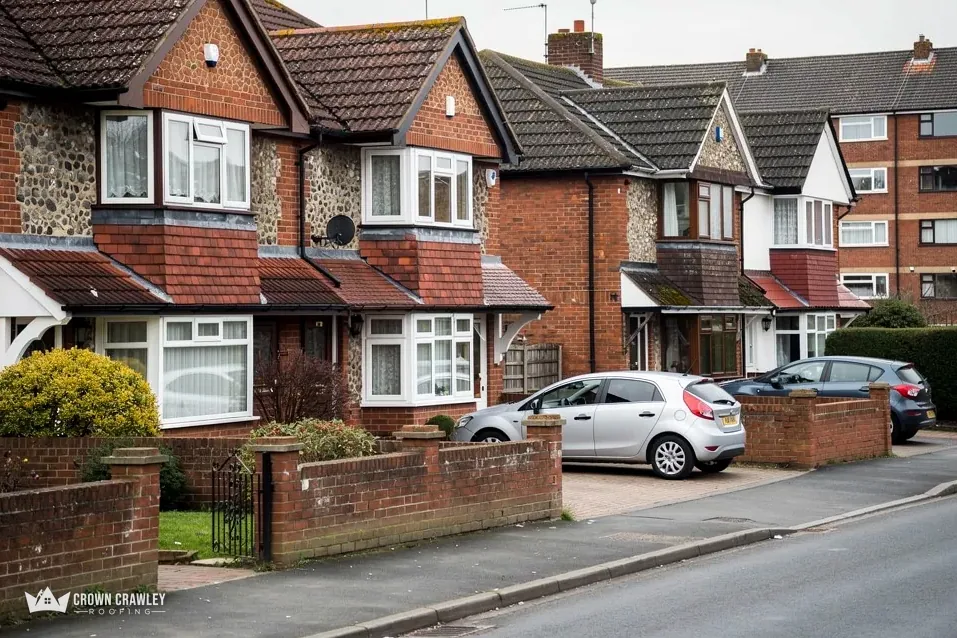
Brick semi-detached houses with tiled roofs and parked cars

What a Leatherhead survey looks at

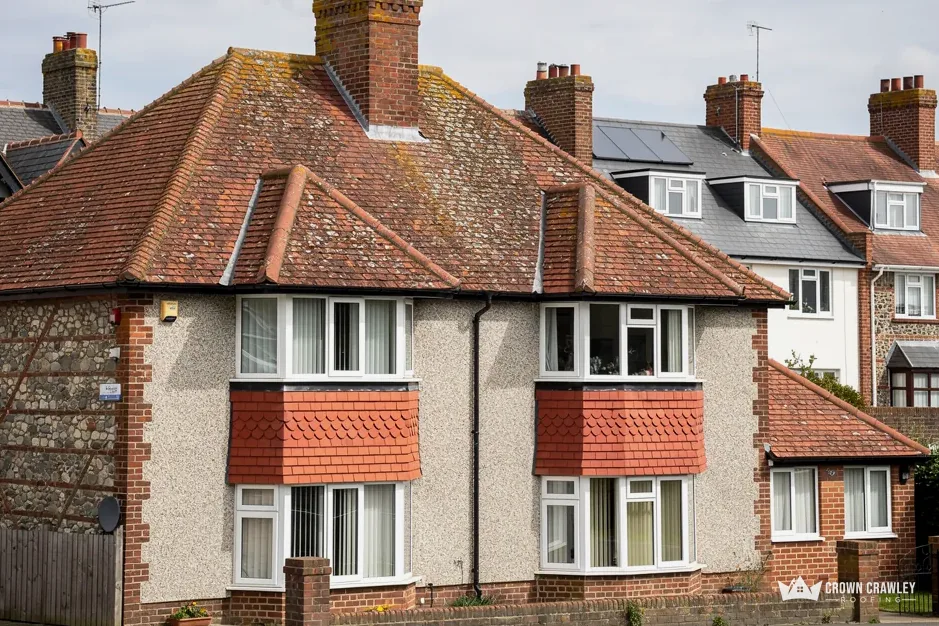
Pebbledash semi-detached house with a red clay tiled roof and bay windows

Roofs near the old tile works

The Victoria County History recorded a brick and tile works in Leatherhead in 1911. That says nothing about your roof, so we lift a few tiles, identify the type on your slope and match replacements by eye and by sample.

Clay tiles on an older roof

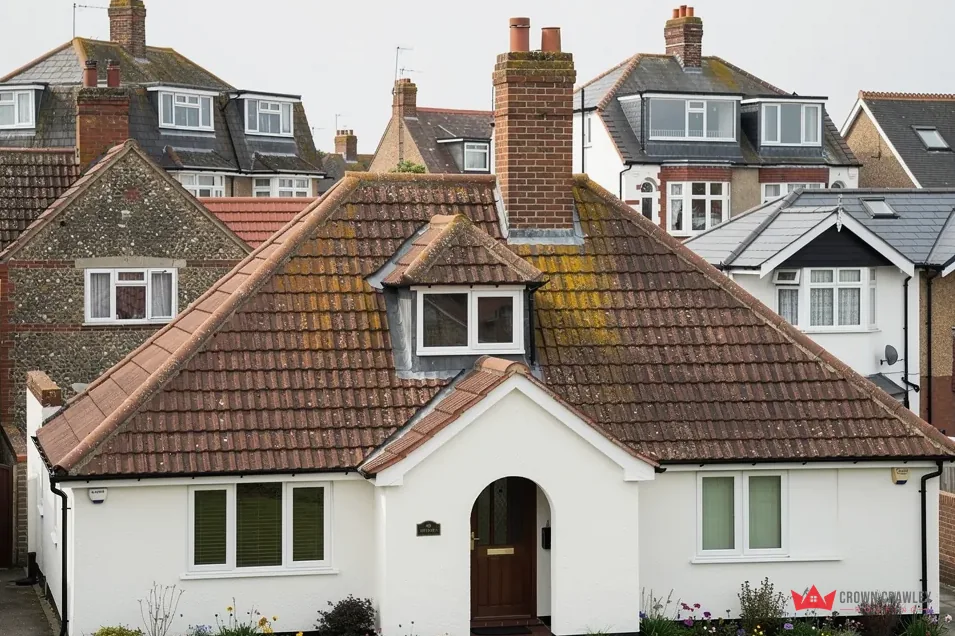
White rendered bungalow with a hipped tiled roof and dormer

Streets that spread north and east

By 1911 building had spread north and east of the old street, so one road can hold roofs from several periods. Covering, fixings, eaves and gutters get checked on each roof by itself.

Terraced homes with tiled roofs

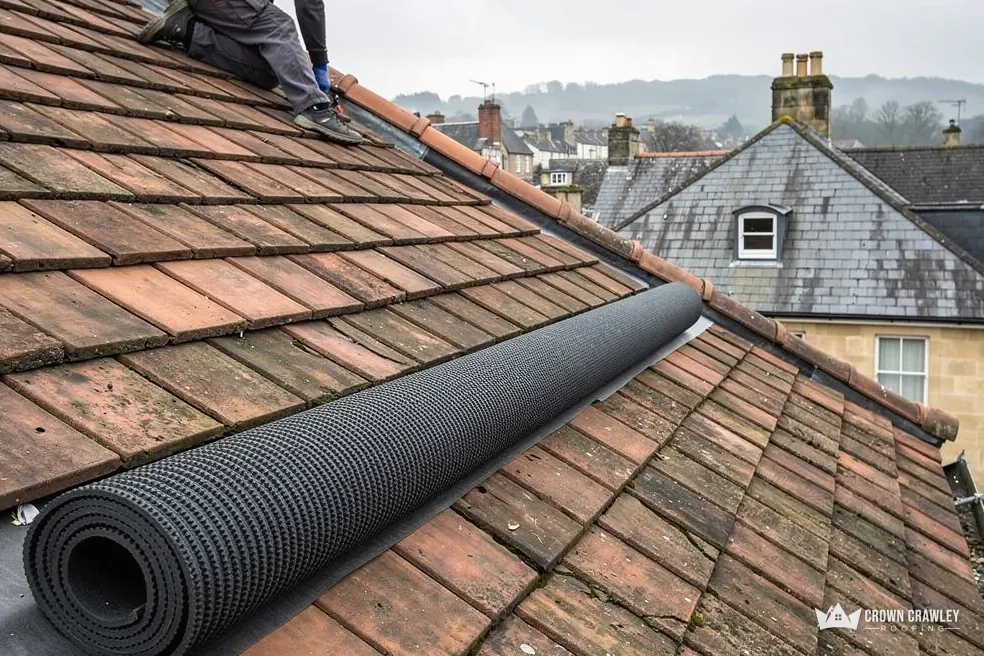
Roll of roofing membrane lying on a clay tiled roof

Listed buildings in the centre

The national list records the church, the former Old Rising Sun and The Running Horse at Grade II*. Anything listed needs a different conversation before work starts, so we ask about listing at the first call.

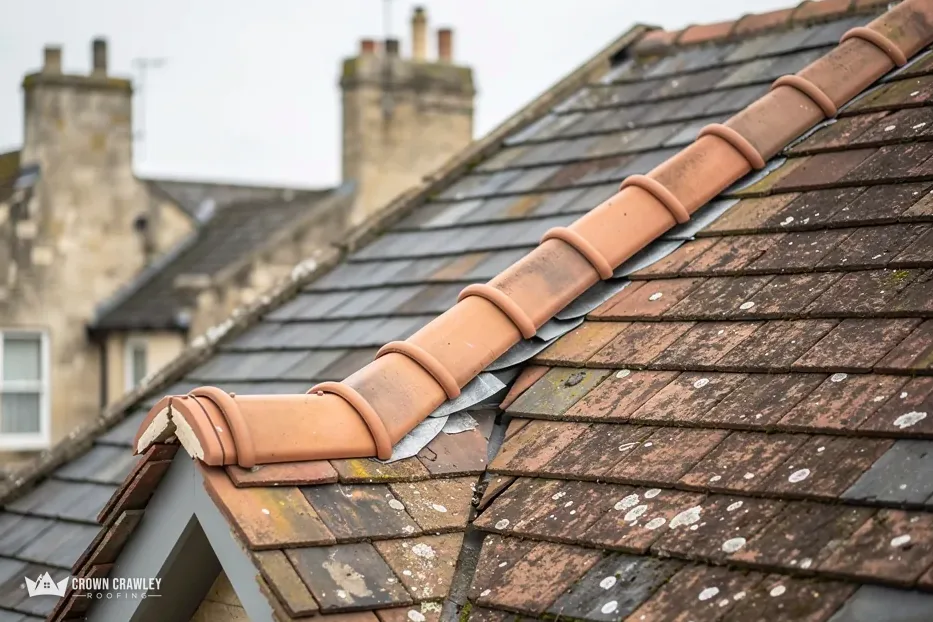
Old ridge tiles and mortar

Leatherhead, at the foot of the downs

Map of Leatherhead and the neighbourhoods around it, with Crawley for reference.

Leatherhead is a small town in the Mole valley, at the foot of the chalk downs, on the London to Horsham road.

Distance
23.2 road miles from Crawley, to the north-west
Drive
About 28 minutes
Council
Mole Valley District Council and Surrey County Council
Planning authority
Mole Valley District Council
Conservation area
Leatherhead
Parish church
St Mary and St Nicholas, Grade II*
Get a free quote

The Leatherhead roof story

What the Mole valley tells a roofer

Three short chapters on the town's old street, the conservation area, and the approvals and access that come with a larger job.

Stage 01 · Background

A town that grew from one street

Leatherhead began as a single long street and a bridge, so one road can carry roofs from several different periods.

The Victoria County History of 1911 says Leatherhead originally consisted of one long street with a cross-street running down to the bridge. That bridge has fourteen arches, with stone piers and brick parapets, and it crosses a wide part of the Mole where there was once a ford. Building had spread, especially north and east, and the parish had a brewery and a brick and tile works. Put those details together and you get a town built up in stages, not laid out as a single estate. Two houses in the same road may be a generation or more apart in age, and their roofs will show it.

Will my Leatherhead roof match the one next door?

Not always, even along one terrace. Roofs get patched, part re-covered and altered over the years, so a slope that looks even from the pavement may hide two tile types, an old and a newer underlay (the waterproof sheet beneath the tiles) and a mix of nails and clips. Our first job is to get up there with a camera and show you the pictures before any price is mentioned. If a handful of tiles need replacing, we match profile, colour and thickness, and the survey tells you plainly when a close match is hard to source.

What we check in Leatherhead

Tiles
Face, nibs and nail holes
Ridge
Bedding sound, fixings holding
Underlay
Whole at the eaves and valleys
Gutters
Joints tight, outlets clear
Loft
Damp marks on timber or felt
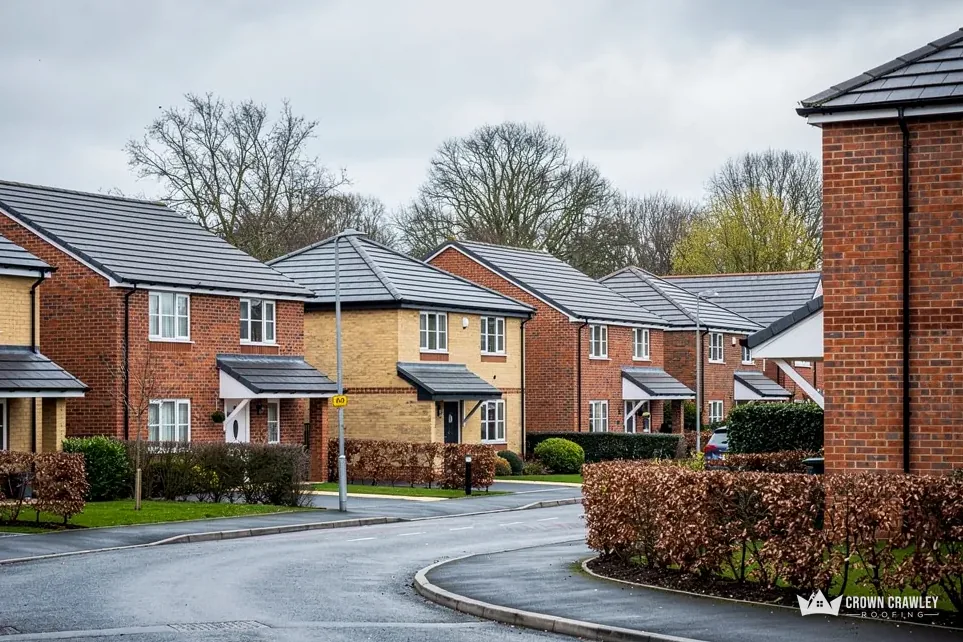
Modern estate road with brick houses and grey roof tiles

How do you tell a tired tile from a sound one?

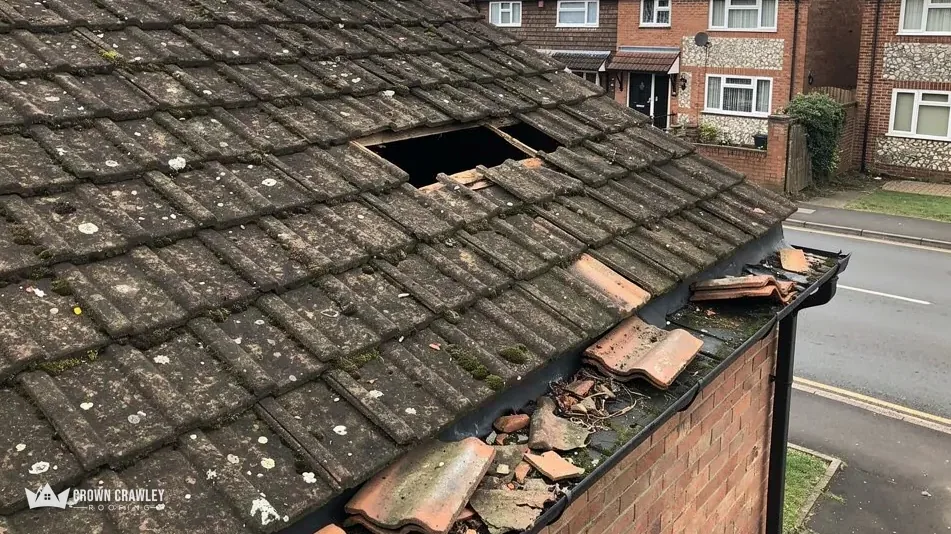
By handling it. A tile that flakes on the face, cracks across the nib (the little lip along the top edge that holds it to the batten) or has an elongated nail hole is on its way out, while one that rings cleanly when tapped and sits flat is worth keeping. We work along the slope course by course, count the failures and ask what caused them: age, frost, a boot placed badly years ago, or a slow leak that has been softening the batten beneath. A few failed tiles on sound battens make a repair. Crumbling tiles across a whole slope point towards re-covering, and the photographs show which situation you are in. Our pitched roofing page sets out how both kinds of job run, from the first batten check to the last ridge tile.

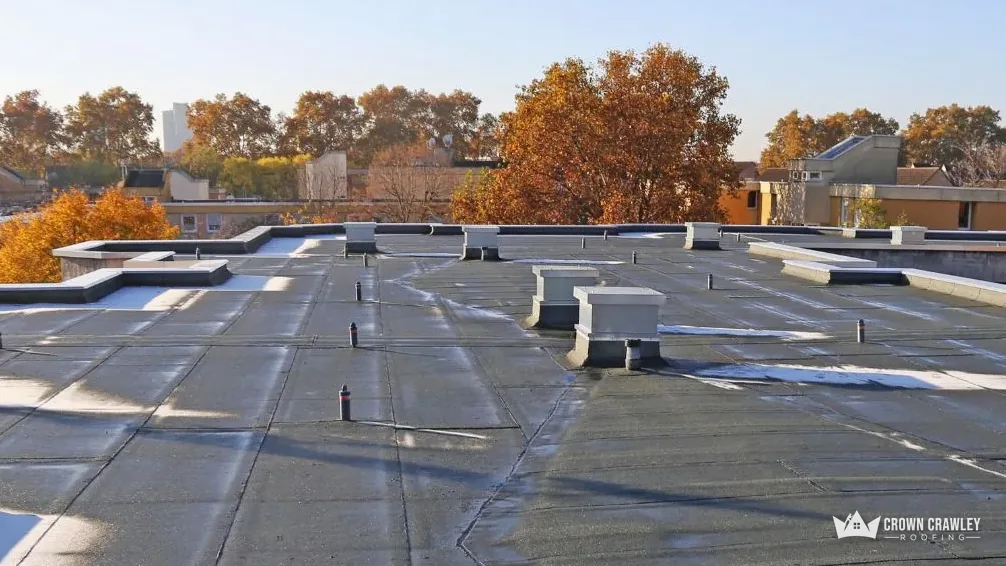
What about a flat-roofed extension or garage?

We look at it on the same visit. Less's flat roof cost guide, updated in March 2026, gives felt 10 to 20 years and GRP 25 to 40 years, so the age of the covering tells us whether a patch will buy useful time or whether the whole membrane is due. Those are typical spans, not promises, and the survey photographs show the seams, the upstands and any ponding where water has stood.

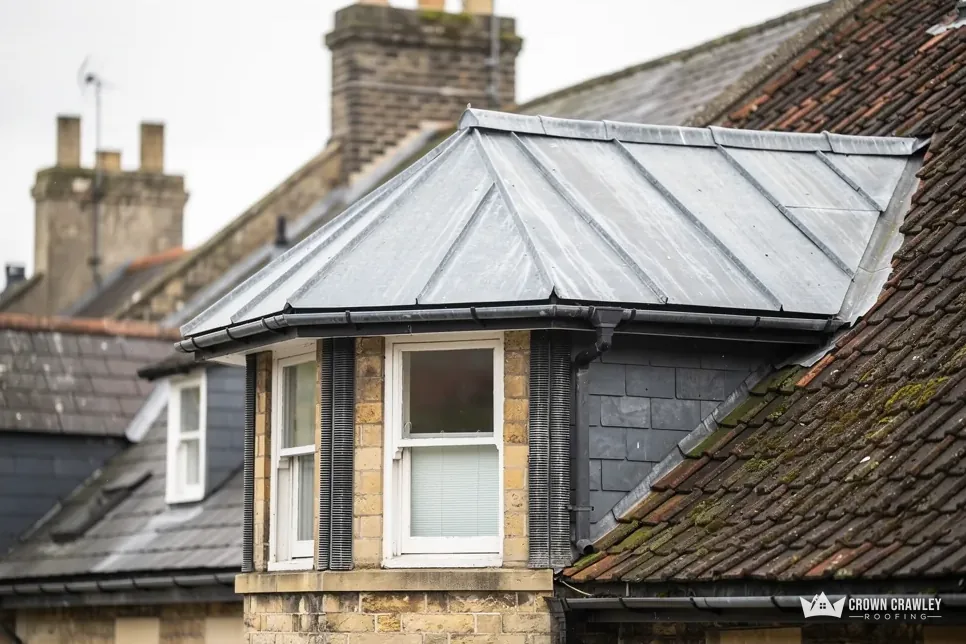
Lead-covered bay roof and chimney stack on a slate and tile roof

Stage 02 · Permissions

The Leatherhead conservation area

Part of Leatherhead lies in the Leatherhead conservation area, so on some streets the first call is to Mole Valley's planning team.

Roof work on an older street is planned with more care than on a newer one. Because only part of the town lies inside the conservation area, the boundary matters more than the postcode, and the planning team at Mole Valley District Council is the body that can place your address on the right side of it. A short email quoting your road name should settle the question before we visit.

Does a conservation area change an ordinary repair?

Work that keeps the same tile, colour, ridge and verge detail, so nobody could tell from the street, is the simple case. Questions start when the plan alters the appearance: another covering, a new roof window facing the street, a different chimney pot. Ask Mole Valley's planning team about those before you commit, and read our answer on re-roofing in a conservation area. On a street like this our written price names the tile, ridge and verge we propose to fit, so anyone at the council reading it can see what would go on the roof. If the council's answer is slow, we hold the tile order and the date until it arrives, because ordering first and asking afterwards is how mismatches happen.

Words you may hear

Conservation area
Area whose character is protected
Listed building
Nationally listed for special interest
Like for like
Same tile, colour and details
Faculty
The diocese's consent route for churches

Before we order tiles for an older street, we ask whether your address falls inside the boundary.

What if the house is listed?

Leatherhead's Grade II* entries on the national list include the Church of St Mary and St Nicholas, the former Old Rising Sun and The Running Horse. Houses can be listed at their own grades, and a listing brings consent rules for any work that affects a building's character. If you think yours may be listed, ask the planning team before a survey date is fixed. We will wait for the reply, because a start date set too early only causes trouble later.

What about the church roof?

St Mary and St Nicholas holds Anglican services, so roof work there passes through the denomination's own faculty system rather than listed building consent, so its roof is a matter for the parish and diocese and no homeowner's quote can answer it. Houses and cottages near it are different, and each gets its own survey. We note which neighbours share a wall, a gutter or a ridge line with you, so a repair on one side leaves the other side sound, and we tell those neighbours before work begins.

Stage 03 · On site

Approvals and access for a Leatherhead job

When a job outgrows a patch repair, three practical questions follow: approval, scaffold and what may be nesting under the tiles.

Smaller jobs seldom involve a form. The paperwork starts when a roof heads for a full strip, when tiles give way to a different material, or when scaffold must stand beside a road.

Who looks at a big Leatherhead re-roof?

Building control here sits with the Southern Building Control Partnership, a service formed in 2017 that works as a single team across Mole Valley, Reigate and Banstead, and Tandridge. On the Planning Portal's reading, building control approval is not usually needed while the work touches under 25 per cent of the building envelope and under 50 per cent of the roof. Weight is tested on its own: a covering that weighs 15 per cent or more above the old one needs approval, and the Planning Portal suggests asking an engineer or surveyor whether the timbers can take it. Should the survey show that a whole slope must be stripped, the partnership hears about it from us before a start is agreed. Our roof replacement page walks through a whole-roof job from stripping to sign-off.

Checks for a larger Leatherhead job

Planning
Mole Valley District Council
Building control
Southern Building Control Partnership
Scaffold
Surrey County Council highway licence
Notice
10 working days before scaffold
Wildlife
Bat roosts are protected
Clay ridge tiles along the hip of a weathered tiled roof

Where will the scaffold stand, and who pays for a licence?

That depends on where the poles go. For poles standing on a public pavement or carriageway, Surrey County Council wants the application 10 working days or more ahead and charges £208 for each 28 days. Poles on your own drive, front garden or side passage need no highway licence. We look at what is possible during the survey. Where only the road will do, licence and start date are settled jointly with the scaffolder, and neighbours are told before any poles arrive.

Could bats be living under the tiles?

Bats and the places they shelter are protected in full, and the government's guidance is clear that a roofing job can affect a roost. While surveying we check for droppings, staining and gaps beneath the ridge tiles, and any sign pauses that section while we discuss it with you. Wild birds' nests carry protection while occupied or under construction. If water is coming in and cannot wait, our emergency roof repairs page explains how a roof is made safe first. To begin, tell us which road you live on and which slope, gutter or chimney is giving trouble.

Answers for Leatherhead homeowners

Can a Leatherhead roof be repaired with tiles that match?

Often yes, because tiles of a similar profile, colour and thickness can be matched from a sample. Streets here were built over a long span, so two neighbouring roofs may differ. We lift a tile, identify the type, and tell you in the survey whether a close match exists or whether a small patch would stand out against the older slope.

Can I fit a rooflight on an older Leatherhead street?

Possibly, but check first. The Leatherhead conservation area covers a section of the town, so the postcode alone cannot answer, and Mole Valley District Council's planners can place your address against the boundary. Repairs in kind leave the roof looking the same, while a rooflight in a street-facing slope or a change of covering is worth raising with them before you order.

Who deals with Building Regulations for a Leatherhead re-roof?

Mole Valley District Council points to the Southern Building Control Partnership for its area. Approval turns on the share of the building envelope and the roof being touched, and on any added weight in the new covering. The survey measures both, and a larger scheme goes to the partnership before we commit to a date.

How far ahead must scaffold on a Leatherhead road be arranged?

Surrey County Council needs the application 10 working days ahead or earlier, and charges £208 per 28 day period, renewals included. Poles that stand on your own lawn or drive sit outside the highway rules. For a pavement position the licence is settled jointly with the scaffolder, and the roof start follows the approved date.

Start your Leatherhead quote

Name the slope, gutter or chimney giving trouble and the road it is on, and we reply with a date for the survey.

01293 974253

10-year workmanship guarantee, in writing.

Call Get a free quote