Roofers in Fetcham

Roofs at the foot of the chalk beside the River Mole.

Fetcham's older buildings once carried Horsham slabs and tiles, and three of its older houses are listed Grade II. We read each roof for what is on it, then quote one written total.

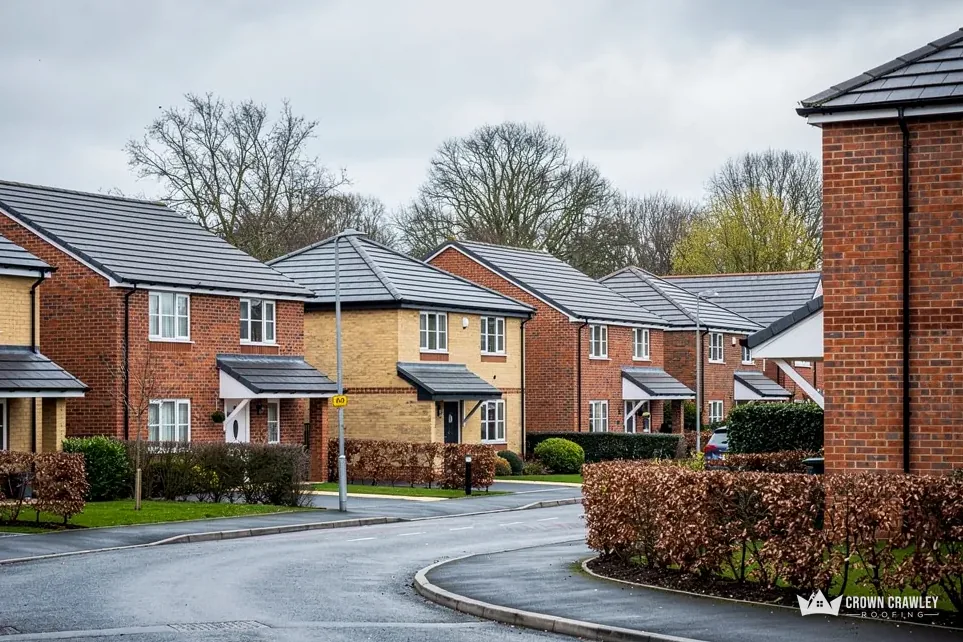
Modern estate road with brick houses and grey roof tiles

Looking up in Fetcham

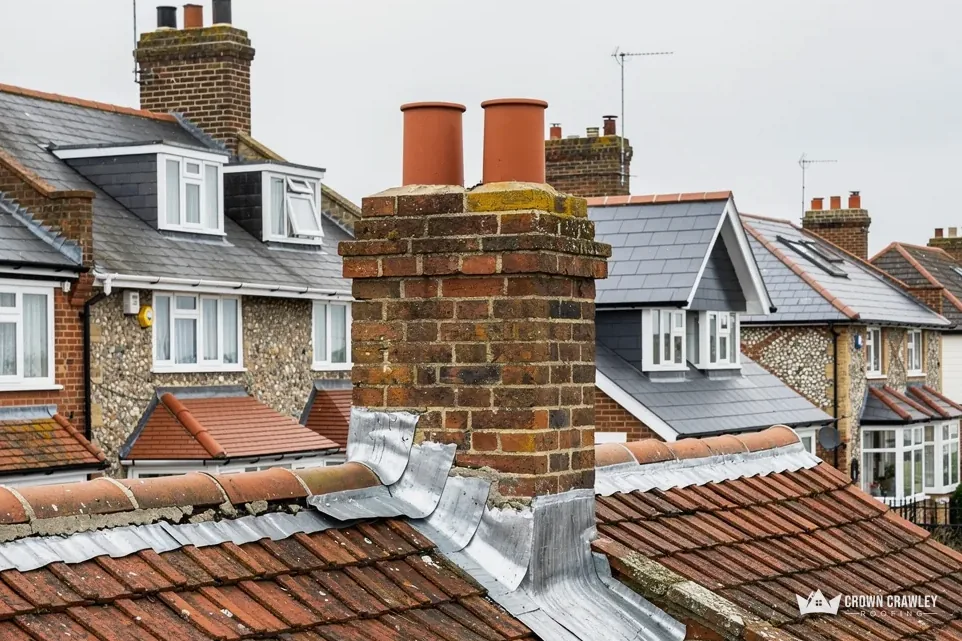
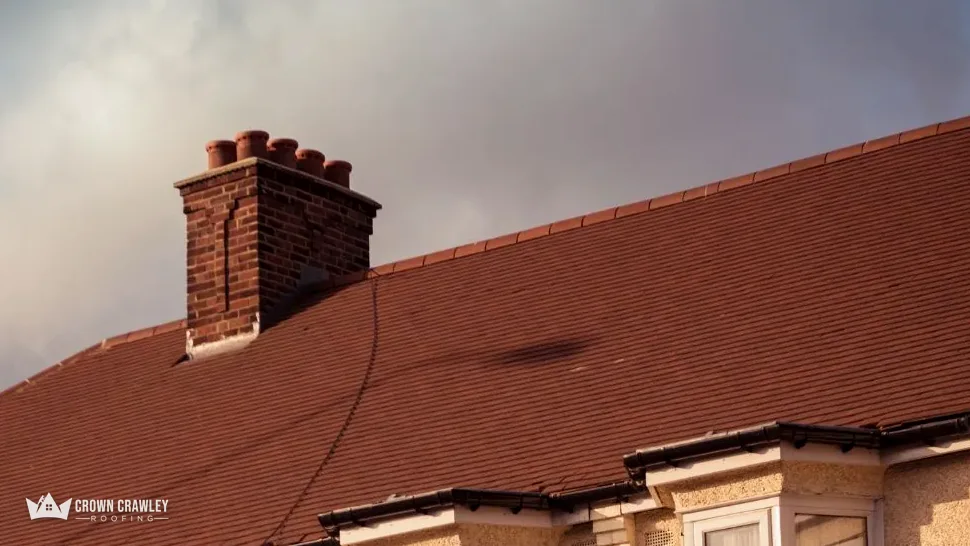
Chimney stack with orange pots and lead flashing among tiled roofs

Home Farmhouse, listed Grade II

Home Farmhouse was listed Grade II in 1951, and Monks Green Farmhouse and Orchard Cottage carry the same grade. On a listed building we photograph first and ask the council before anything is changed.

Old farmhouse roof with tall chimney

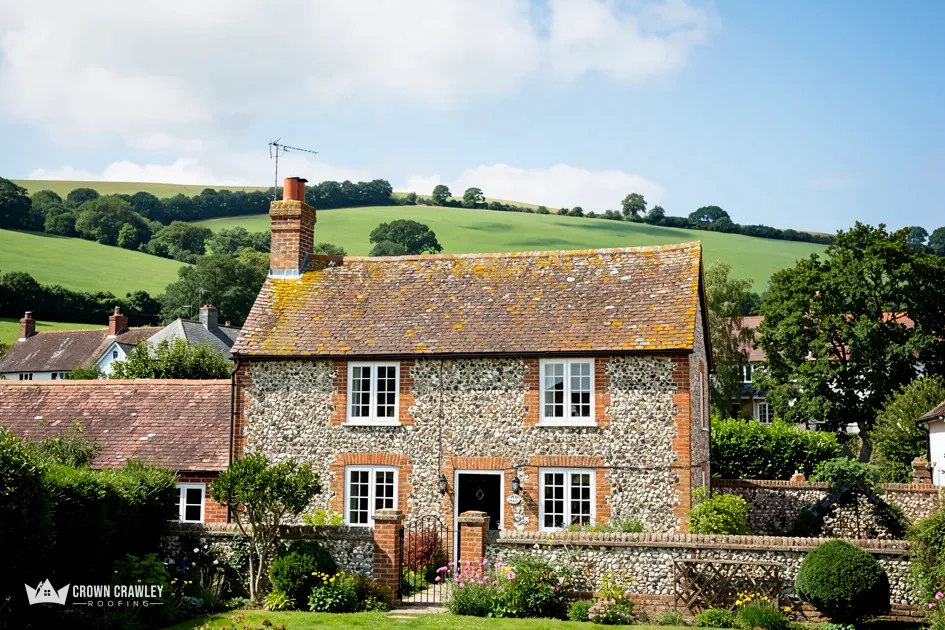
Flint cottage with a clay tiled roof set against green fields

Horsham slabs and tiles together

In 1911 the county history recorded Horsham slabs near the eaves of Fetcham church, with tiles above. Mixed coverings mean mixed weights and fixings, so we read every slope on its own terms.

Stone slab and tile roof edge

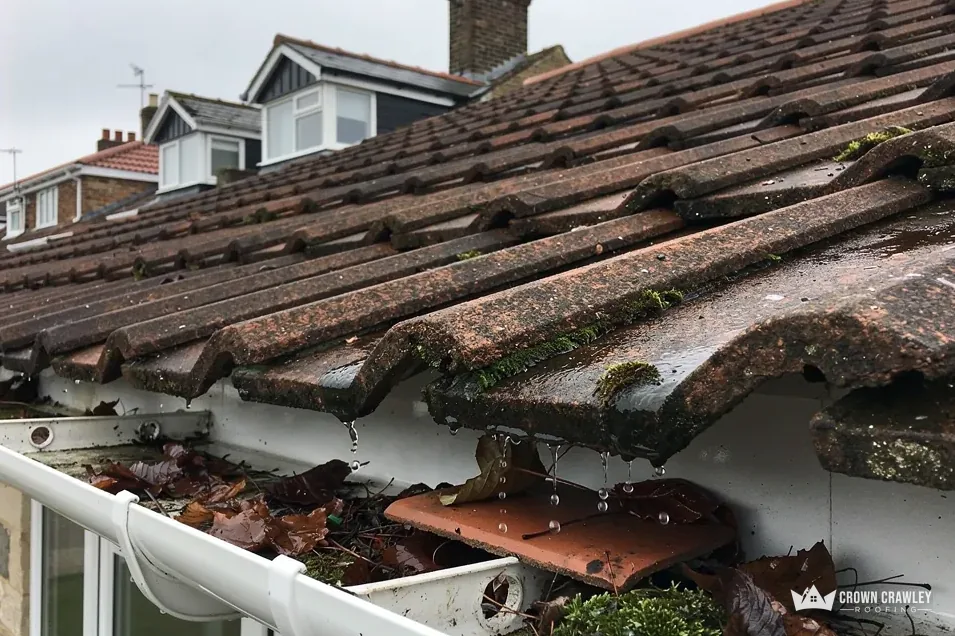
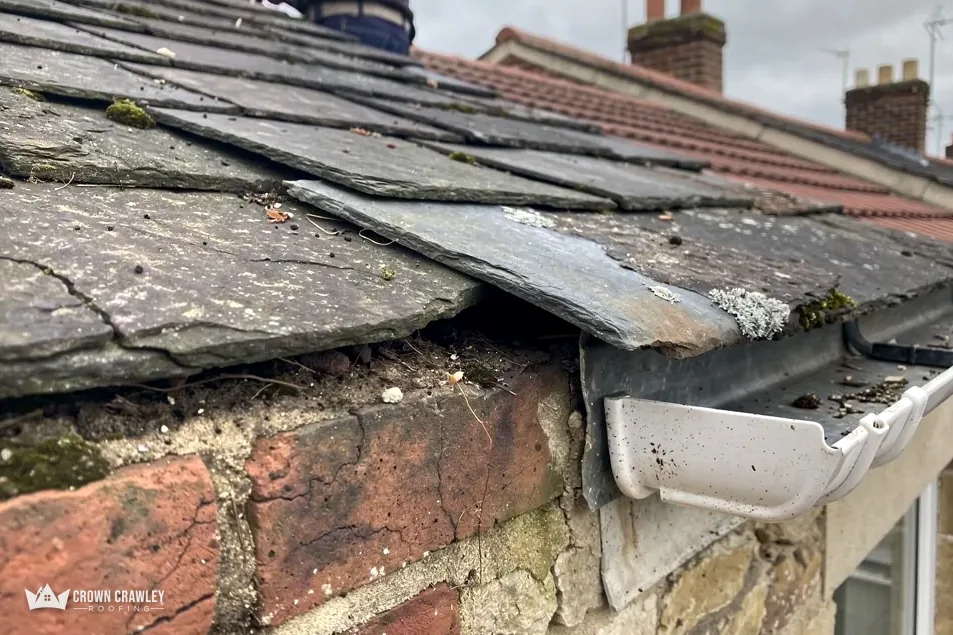
Slipped tiles lying in a blocked gutter

Low ground beside the River Mole

Fetcham sits at the foot of the chalk, bounded by the Mole on the east and north. Springs and a river nearby make gutters, downpipes and where the water ends up part of every survey.

Gutter and downpipe on a brick wall

Fetcham, a mile from Leatherhead

Map of Fetcham and the neighbourhoods around it, with Crawley for reference.

Fetcham is a village a mile from Leatherhead, at the foot of the chalk, with the River Mole on its east and north sides.

Distance
24.6 road miles from Crawley, to the north-west
Drive
About 32 minutes
Council
Mole Valley District Council and Surrey County Council
Planning authority
Mole Valley District Council
Listed Grade II
Home Farmhouse, Monks Green Farmhouse, Orchard Cottage
Church nave walls
Plastered flint, possibly early 11th century
Get a free quote

Fetcham: survey to sign-off

Reading a roof at the foot of the chalk

Three short chapters on heavy old coverings, listed farmhouses and the Mole's springs, and what Mole Valley and Surrey ask when a patch-up grows into a whole new roof.

Stage 01 · Old coverings

Horsham slabs, tiles and a heavy old roof

Fetcham's church roofs once mixed Horsham slabs and tiles, a useful reminder that coverings differ in weight and that weight matters on a re-roof.

Church roofs make good teachers. When the Victoria County History described Fetcham church in 1911, it recorded that the nave and chancel roofs had Horsham slabs near the eaves with tiles above, while the other roofs were tiled only. It also noted plastered flint-work in the nave walls that may date from the beginning of the 11th century, with Roman bricks used in considerable quantities. We are not roofing the church, but the description shows how one building can wear more than one covering, and your own roof may be the same after a century or two of patching.

Before a covering changes

Weight
New covering against the old
Pitch
Suits the product data sheet
Rafters
Sound enough for the load
Fixings
Nails and clips matched to covering
Eaves
First course supported and clear
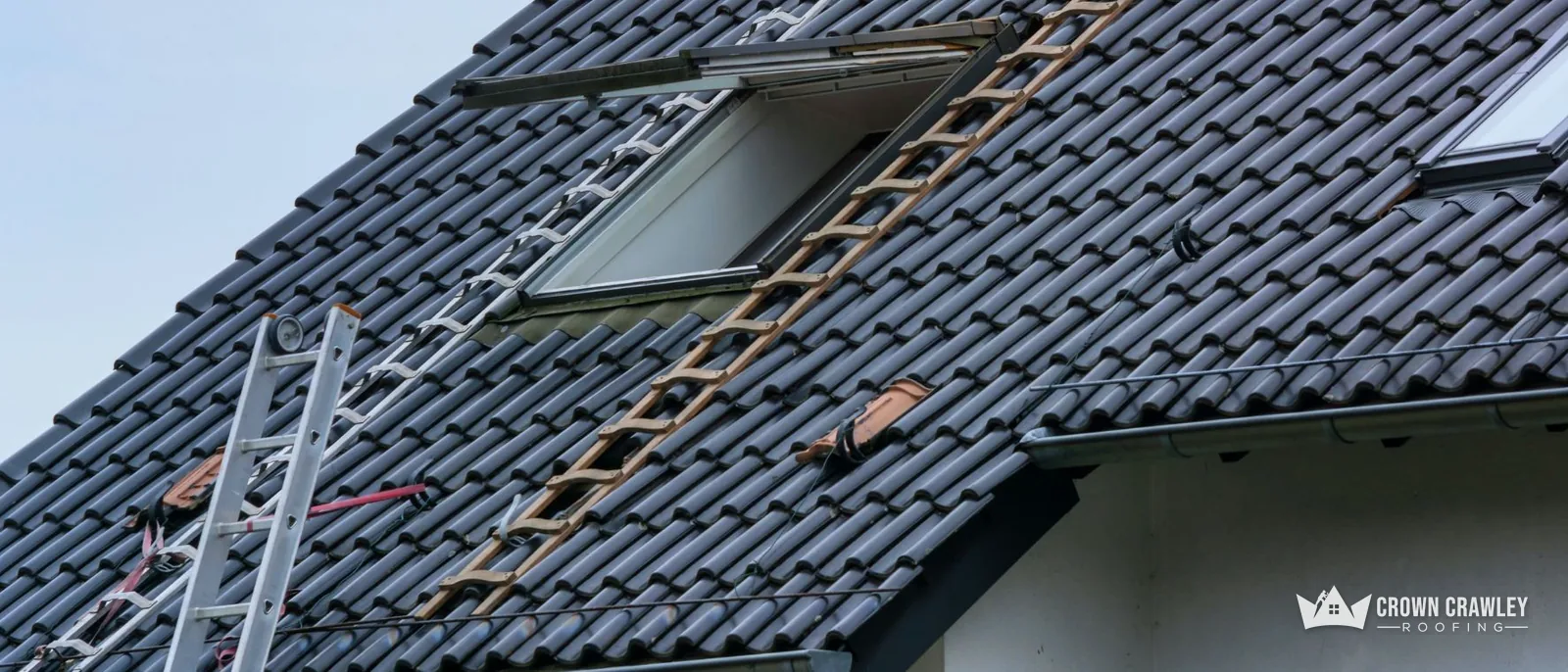
Black roof tiles with a roof window and ladder against a house

Why does the weight of a covering matter?

The roof timbers were sized for whatever first sat on them. A heavier covering loads the rafters and walls harder, and a lighter one can lift in a gale if it is fixed to suit the old one. The Planning Portal puts the trigger at a new covering that adds 15 per cent or more to the weight on the rafters, and suggests that an engineer or surveyor check the structure first. So where a Fetcham slope is mixed, or the owner wants a change of material, we set the weight of what is there against what is proposed using the manufacturer's data sheet, tell you the result, and bring in an engineer if the figures run close. That conversation costs little compared with a sagging ridge three winters later, and it belongs before the price, not after it.

What do we do when one roof has two coverings?

We read each slope separately. A slope covered once and mended decades later will have different battens, different nail lengths and different overlaps, and a repair has to suit the part it joins. Our pitched roofing page describes how we replace slipped tiles, damaged battens and worn underlay. If one patch has failed and the rest is sound, we mend the patch. If the pattern of failures says the whole slope is tired, the photos make that clear before we suggest anything bigger.

Keep reading

Should your roof still carry stone slabs, they deserve better than the skip. Sound ones can be lifted, numbered and relaid in the same order, which preserves the roof's appearance and saves buying new. Cracked slabs are set aside and the survey notes how many are affected, so the written price reflects the real extent of the damage.

Dormer window with white cladding in a clay tiled roof

Stage 02 · Water

Farmhouses, springs and rainwater

Three Grade II listings and a spring-fed mill pond give this chapter two themes: what consent an old house needs, and where the water goes.

Home Farmhouse has been listed Grade II since 7 September 1951. Monks Green Farmhouse and Orchard Cottage are listed at the same grade. We list them because a listing is the first fact to establish about an older Fetcham house: if yours is one of them, the council has a say in changes to its look, and that shapes the quote before a tile is priced.

What does a listing mean for a gutter or a chimney?

Listed building consent covers works that affect a building's character, and a gutter swapped to a different material or a chimney with a new pot can fall under that. Mole Valley District Council's planning team can answer that, and a question with our survey photos attached gets a better reply than one without, because the officer sees the real condition. Our gutters, soffits and fascias page explains the parts along the eaves, including the fascia, the board the gutter brackets screw to, and the soffit lining the underside of the overhang.

Rainwater words

Gutter
Channel along the eaves
Downpipe
Carries water down to the drain
Hopper
Funnel at a downpipe's top
Fall
The slope that moves water along

Where does the water go on a Fetcham roof?

The 1911 history says Fetcham mill was driven by the overflow of a pond fed by strong springs, which the rise and fall of the Mole did not affect. With the chalk rising behind it and the Mole on two sides, Fetcham is a place where we treat the water on the ground as seriously as the water on the roof. We follow it all the way down: slope, gutter, downpipe, and the drain or soakaway at the bottom. A gutter needs a fall to carry the water to its outlet, and one manufacturer, Brett Martin, advises 1 mm for every 600 mm of run.

A sagging gutter that holds a pool on a dry day is failing even if it never drips onto your path. Standing water rots the fascia behind it, finds the gaps at the joints and stains the wall below. We check the brackets, the joints and the outlet, and tell you whether a clean and re-hang will do or the run needs replacing. On a listed farmhouse we match the section and material where we can, because the profile of the gutter is part of how the house looks.

A roof only keeps the weather out if the water has somewhere to go.

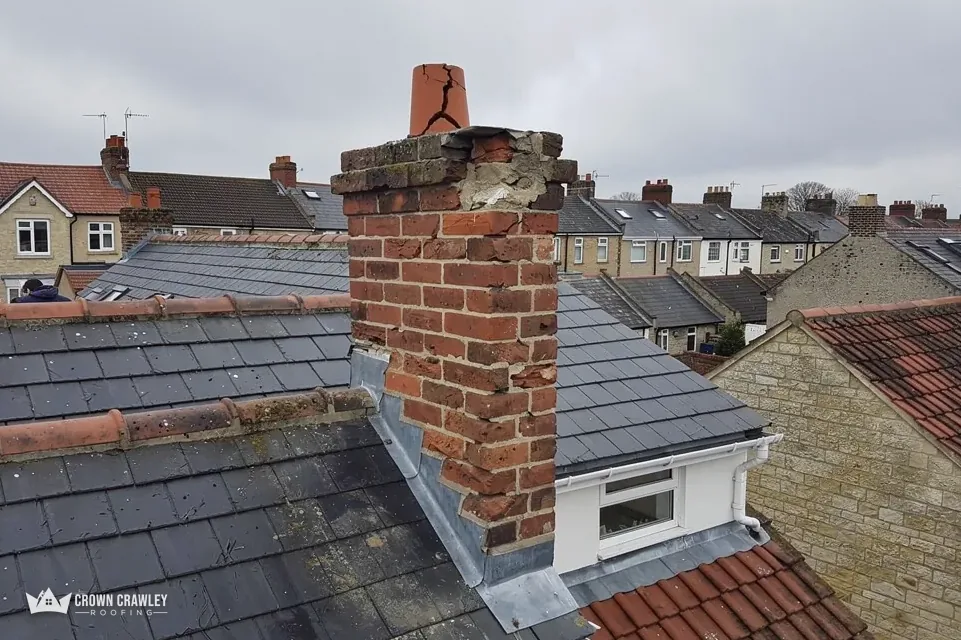
The same visit covers the chimney stack: the mortar joints, the flaunching (the cement collar that beds the pots) and the lead flashings where the stack meets the slope. Water that runs down a chimney face lands in the same gutter, and a failed joint up there can be mistaken for a roof leak. Each part is photographed for the survey, so the evidence is in your hands.

Stage 03 · Permissions

Mole Valley rules on a Fetcham job

Mole Valley District Council decides planning questions, a shared team covers building control, and an insurer comes first after storm damage.

Planning in Fetcham answers to Mole Valley District Council, which has designated a Fetcham Conservation Area, so the first question for an older house is whether it sits inside that boundary. Listed buildings remain the exception to any simple answer, so a listed farmhouse always starts with a question to the council. Matching the covering already there is a far simpler matter to arrange than a switch to a different one.

Does a Fetcham re-roof need Building Regulations approval?

The Planning Portal's test pairs two limits: under 25 per cent of the building envelope, and under 50 per cent of the roof. Stay inside both and building control approval is normally not needed. Go beyond them, or choose a covering at least 15 per cent heavier, and it can be. Building control for Mole Valley is the Southern Building Control Partnership, the same shared team that serves Reigate and Banstead and Tandridge. When a survey points to a major strip we ask them before the date is fixed. If scaffold must stand on the road, Surrey County Council needs the licence application lodged at least 10 working days beforehand, and we deal with that alongside the scaffolder.

Who to ask

Planning
Mole Valley District Council
Building control
Southern Building Control Partnership
Highway
Surrey County Council licence
Storm damage
Your insurer, before anything else
Brick chimney stack on a slate roof with lead flashing

What should I do first after storm damage?

Tell your insurer first. Take pictures of the damage while it is still in place, and hold on to the receipts for emergency work, since both help when the insurer looks at the claim. A temporary repair that stops more water coming in is sensible, and we make a leaking roof safe before we talk about the permanent fix. What an insurer pays is its decision, not ours. Should a claim go badly, complaints about how an insurer handled it can go to the Financial Ombudsman Service. Our roof replacement page shows what a full re-roof involves, for the cases where repair is not enough.

What does a temporary repair actually involve?

On a pitched roof it is a sheet, a few battens and a handful of spare tiles or a patch of lead, put on so the loft stays dry until the permanent job is planned. It is no substitute for a survey. We photograph what we find under it, because the cause of a leak can sit a few feet from the stain on the ceiling, and following the water uphill is the only reliable way to find it. You are told each day what has been done and what happens next.

Keep reading

For a first look, tell us whether your roof has slabs, tiles or both, where the water comes in, and your Fetcham postcode.

Fetcham roofs: slabs, listings and water

My Fetcham roof has stone slabs low down and tiles above. Can it still be repaired?

Usually yes. The county history recorded that very pairing on Fetcham church in 1911. Slabs and tiles weigh differently and sit on different battens, so each part is repaired on its own terms. Sound slabs are lifted, numbered and relaid in order, and any replacement tile is priced in writing once the survey photos show what is damaged.

Which Fetcham houses are listed?

Home Farmhouse, Monks Green Farmhouse and Orchard Cottage are all listed Grade II, and there may be others. If yours is on the National Heritage List, listed building consent can apply to changes that affect its character. Searching the list for your address, or asking Mole Valley District Council's planning team, settles it before you plan any change to a roof.

Does Mole Valley need to approve a replacement roof?

Not always. Under 25 per cent of the building envelope and under 50 per cent of the roof is the Planning Portal's line for when building control is normally not needed. Heavier coverings change that. The Southern Building Control Partnership handles Mole Valley, and we ask it before fixing dates whenever the survey points to a large strip.

How can I tell whether my gutter has enough fall?

Watch it during or just after rain. Water that pools in one stretch, or spills over the front at a joint, points to a sag or a wrong slope. Manufacturer guidance from Brett Martin is 1 mm of fall for every 600 mm of run. We check the line, brackets and outlet at the survey and photograph any stretch that holds water.

Your Fetcham roof, looked at first

Tell us whether your Fetcham roof has slabs, tiles or both, and where it leaks, and we will arrange the survey.

01293 974253

10-year workmanship guarantee, in writing.

Call Get a free quote