Roofers in Headley

Roofs on a downland brow, from listed cottages to village homes.

Headley is a small scattered village on the chalk downs, with its church on the brow of a steep slope. Roofs up here meet the weather head-on, and we survey them with that in mind.

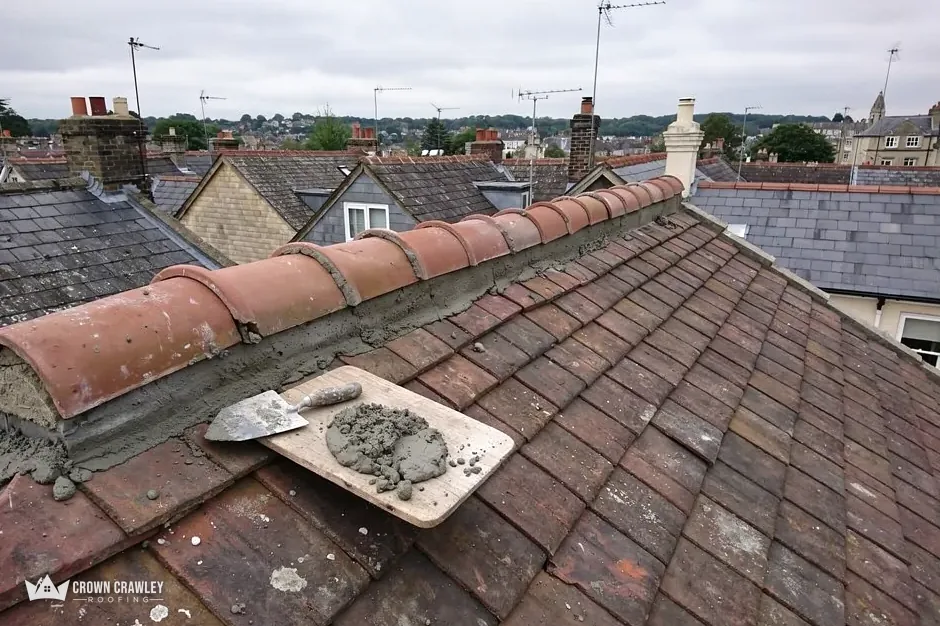
Ridge tile bedded in fresh mortar with a trowel resting on the roof

Old and new roofs in Headley

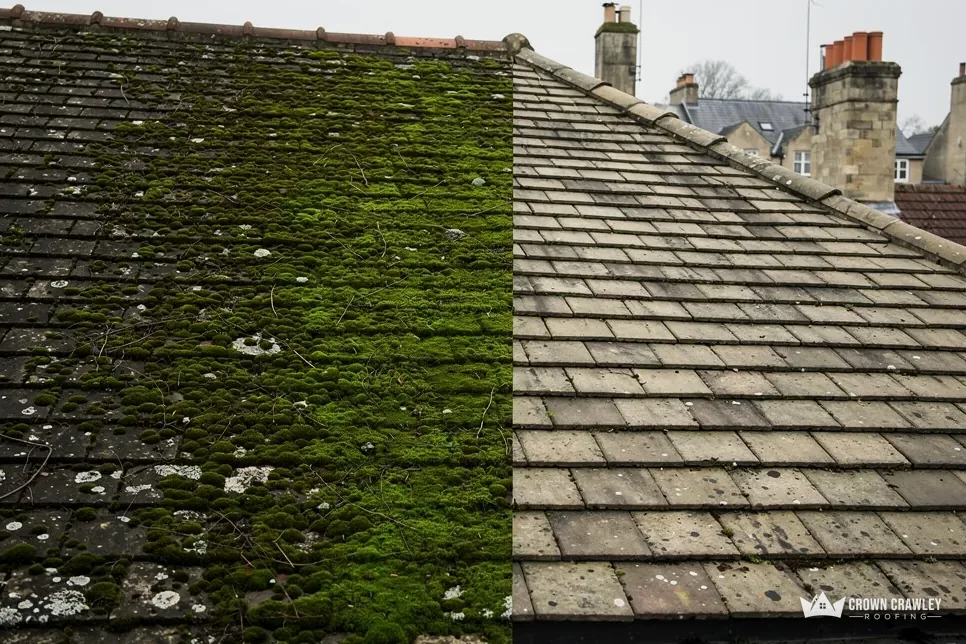
Roof slope half cleaned of moss, the left side still green

Roofs on the brow

The church and the few houses at the village centre stand on the brow of a steep slope some 600 ft above sea level. Wind meets a roof there before anything else, so fixings at the ridge and verge get close attention.

Tiled roofs on an exposed hillside

Brick chimney with lead flashing on a clay tiled roof

Listed cottages

Dove Cottage and Heather Cottage are both Grade II listed. If your own house is listed, putting back what is there may need no consent, while altering the roof's look does, so we ask before changing anything.

Old cottage with a clay tile roof

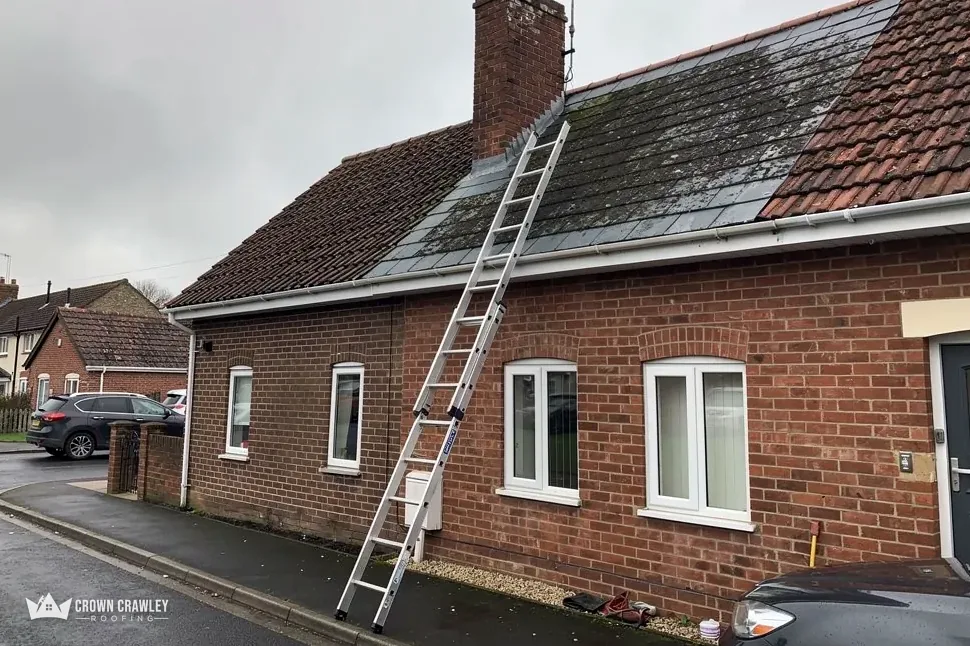
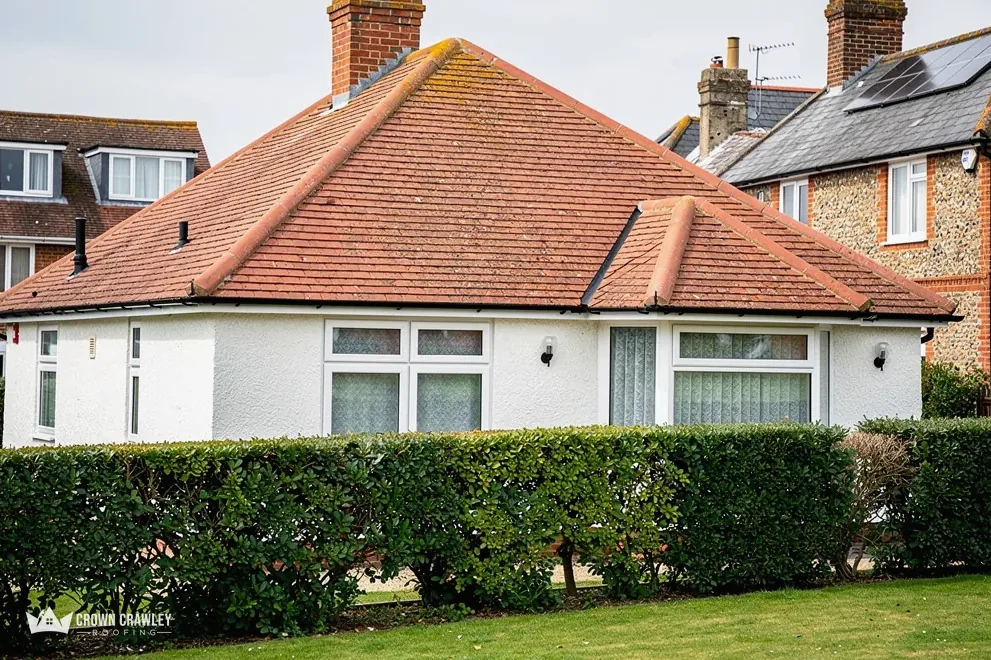
Brick bungalow with a ladder leaning against its tiled roof

Homes near Headley Heath

The village is small and scattered, with Headley Heath to the south. A scattered layout shapes how materials arrive, so we walk the approach at the survey and plan deliveries and scaffold around it.

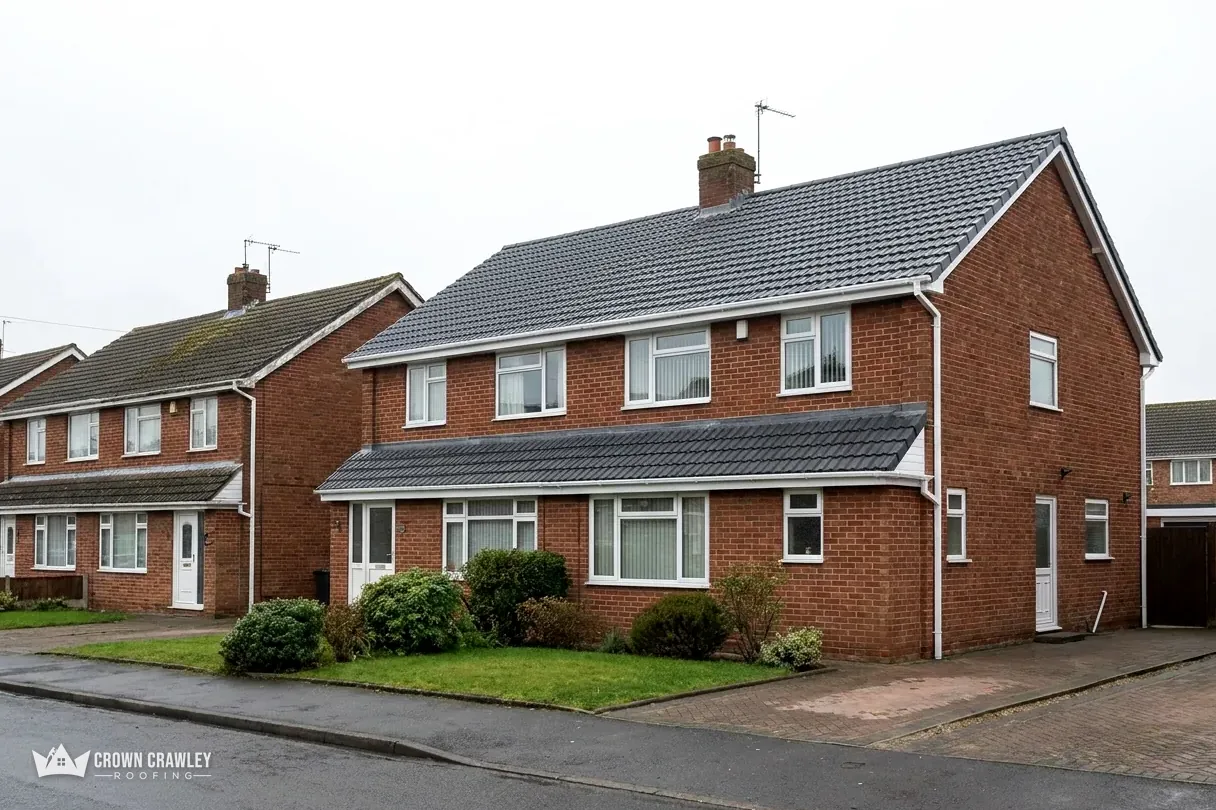
Detached house with a tiled roof

Headley, on the downs south of Leatherhead

Map of Headley and the neighbourhoods around it, with Crawley for reference.

Headley is a small, scattered downland village a short way south-east of Leatherhead, north of Crawley, with Headley Heath lying to its south.

Distance
16.5 road miles from Crawley, to the north
Drive
About 31 minutes
Council
Mole Valley District Council and Surrey County Council
Planning authority
Mole Valley District Council
Population
576 (Census 2021, civil parish)
Church
St Mary the Virgin, Grade II listed
Get a free quote

Headley, stage by stage

Reading a roof that stands on the chalk

What a downland brow asks of a roof, how listing changes the conversation, and the Mole Valley and Surrey permissions that can arrive with a bigger job.

Stage 01 · Exposure

A village on the brow

Headley church stands on a steep brow some 600 ft up, a landmark for many miles round in the County History's words.

Stand at Headley church and the ground falls away on several sides. The Victoria County History of 1911 described the church and the few houses at the village centre as standing on the brow of a steep slope some 600 ft above sea level, and called the church a conspicuous landmark for many miles round. The same account places the parish on the chalk downs, capped in the higher parts with brick-earth and hill-sand deposits. For a roofer, the interesting part is the first sentence. A roof on a brow sees more moving air than one tucked into a hollow, and the places where wind gets a grip are the ones we study.

What the hill asks of a roof

Ridge
Held by fixings, not bedding alone
Verge
Edge tiles clipped or cemented firm
Tiles
Lifted, slipped or missing after gales
Chimney
Flashing tight against driven rain
Access
Lane width and drive length
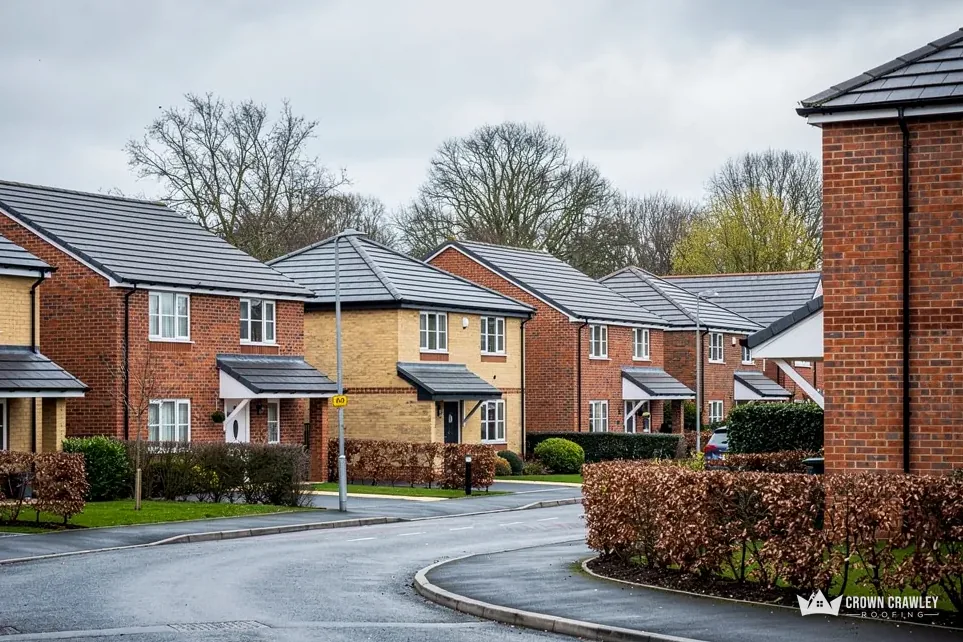
Detached red brick houses with grey tiled roofs on a quiet road

Which parts of a roof does wind attack first?

The edges. Wind lifts a roof where the covering ends: along the ridge (the line of capping tiles at the peak), at the verges (the sloping edges at a gable end) and around the eaves (the lower edge over the gutters). A tile that has lost its nail or clip rattles, then lifts, then slides, and the next one along loses some of its support. Marley's reading of the 2014 BS 5534 revision is that mortar by itself cannot hold the capping tiles on a ridge or hip, and that anything bedded should have mechanical fixings too. Marley also notes that installing to BS 5534 isn't required by law, so an older roof is not failing merely because it predates the revision. We tap the mortar, test the clips and see which tiles move under a gloved hand.

What happens after a gale?

Walk round and look for tiles on the lawn, broken pieces in the gutter and a ridge line that no longer looks straight. Photographs from the ground are useful, and we ask for them, because they show us the pattern of damage before we get up the ladder. Gaps in the covering let rain reach the underlay (the membrane beneath the tiles) and the battens, the thin timbers that carry the tiles. Even a small gap matters, since water follows the timber and shows up later, a long way from where it entered. Where rain is already coming in, we cover the gap first and plan the proper repair once the whole slope has been seen.

Keep reading

If the damage is a handful of tiles, our pitched roofing work covers that kind of repair, and the survey photographs show you exactly where the gaps are. If the covering as a whole has tired, you will see that in the pictures too, and we will talk through what a re-roof involves before anyone mentions a figure.

Modern estate road with brick houses and grey roof tiles

Stage 02 · Heritage

Listed cottages and a village church

Dove Cottage and Heather Cottage are Grade II listed, and the church has its own consent route, so some roofs carry extra rules.

Three listed buildings stand out in the village: St Mary the Virgin's church, Dove Cottage and Heather Cottage, each at Grade II, the two cottages first listed in 1973. Listing does not freeze a house, and it does not stop a roof being repaired. It does mean the law pays attention to what makes the building special, and the roof sits high on that list.

Can I repair a listed cottage roof?

Yes. Listed building consent exists for alterations that change what makes the building special, while upkeep that leaves its look alone sits on the other side of that line. Swapping one failed tile for a matching one is a long way from a new covering, a new opening in the slope or a rebuilt stack. We would not guess where a particular job falls, and neither should you. We photograph the roof, note the tile or slate and how it is fixed, and suggest you ask Mole Valley's conservation and planning team before work begins. A short conversation before the work is better than a surprise afterwards.

Heritage words on a roof job

Listed building consent
Consent for work altering a listed building
Like for like
Matching what was there in every visible way
Faculty
Diocese consent for an Anglican church's works
Grade II
Listing level for buildings of special interest

On an old cottage, the first job is to learn what the roof is made of.

What about the church?

St Mary the Virgin is an Anglican church in worship use, and churches in that position are exempt from listed building consent. Works go through the Church of England's own system instead, which calls its permission a faculty. For anyone on St Mary's church council, the relevant permission starts with the diocese, and any contractor would work to that approval. For houses next to the church, the usual planning rules apply as normal.

Clay and old plain tiles weather unevenly, so a matching replacement is not always simple, and colour, thickness and curve all need to sit right beside the old ones. A figure of 60 years from the Building Research Establishment is the minimum expected life for clay tile, though buildingconservation.com warns it tells you little about handmade peg tile. So a tired-looking tile may have plenty left, and a repair that respects the old covering can beat stripping it. Where a section does need relaying, we set the sound tiles aside for reuse and the whole job is priced as a single written sum once the survey is done. Our chimney repairs page covers the stack and flashing, which on any older roof are places where water can get in.

Stage 03 · Permissions

Mole Valley rules and Surrey scaffold

Headley's planning decisions sit with Mole Valley District Council, its building control with a three-council partnership, and its roads with Surrey.

Putting back exactly what was there rarely calls for more than a clear price and a dry spell. A bigger job brings questions about approvals, and in Headley the answers come from three directions: the district council, the shared building control team and the county.

How big a Headley re-roof slips past building control?

Per the Planning Portal, an application can normally be skipped when work touches under 25 per cent of the building envelope and under 50 per cent of the roof, while a covering that is 15 per cent or more heavier than its predecessor needs approval whatever the area. For Mole Valley, building control comes from the Southern Building Control Partnership, a shared team that also serves Reigate and Banstead and Tandridge. If the survey shows a wide area of new covering ahead, we put the question to them before any start date, and the price reflects the reply. For a complete new roof, the roof replacement page lays out the job in order, from stripping to tidying up. A full re-roof also gives a chance to renew the underlay and any rotten battens while the covering is off.

Who to ask before a bigger job

Planning
Mole Valley District Council
Building control
Southern Building Control Partnership
Highway
Surrey County Council licence
Fee
£208 for each 28 days
Roosts
Stop and review if one shows
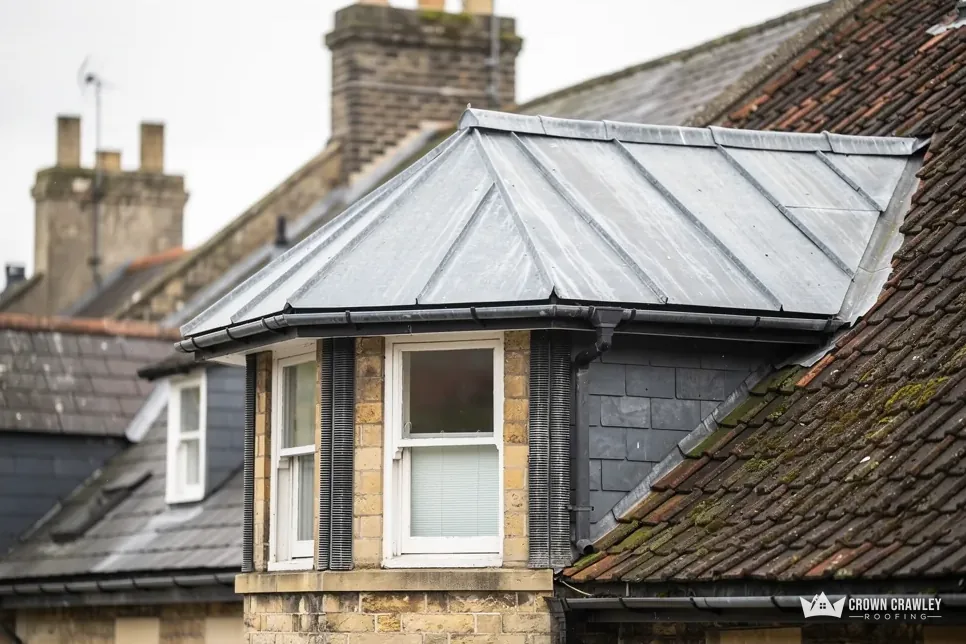
Lead-covered bay roof and chimney stack on a slate and tile roof

What decides whether a Headley roof change is a planning matter?

Mostly the look of the result. Like-for-like work on an unlisted Headley house is simple, and Mole Valley's planning officers can say if a conservation area covers your road. Altering the roof's appearance, or owning a listed house, are both reasons to put the question to Mole Valley's planners first. Our post on planning permission for roof work sets out when a roof job becomes a planning matter.

What does the scaffold need?

Surrey County Council licenses scaffolding that stands on the public highway. Its published charge is £208 per 28 days, and applications go in at least ten working days ahead of the date wanted. The county also asks for a layout drawing with the application. Poles and boards set up on your own plot sit outside that system. Should they have to stand on the road or footway instead, we apply jointly with our scaffolder and fix the dates with you.

Last, bats. Bats of every species, and the spots where they breed or shelter, are protected by law. Roof repair and replacement both feature in the government's bat guidance as work to be careful with. If anything under the tiles suggests a roost, we stop and decide the next step with you. A clear picture of the worst slope, plus your Headley postcode, is enough to begin.

Roof help for Headley

Does a roof on a hill brow like Headley's need different fixings?

Not a different standard, but closer attention. The village centre sits about 600 ft up on a steep brow, so ridge, hip and verge tiles meet more wind. BS 5534 guidance points to mechanical fixings on bedded tiles, and dry systems are tested to BS 8612. We check what holds your edges and say what we would add.

My Headley cottage is Grade II listed. Who do I ask first?

Ask Mole Valley District Council's planning and conservation team before any work that could change the roof's character. A matching repair is a different matter from a new covering, and the council can tell you which side of the line your job falls on. We photograph and describe the roof so the conversation is quick.

Can scaffold and deliveries reach a house in scattered Headley?

The survey decides how. We look at the approach to the house, how long the drive is, and where a delivery lorry or skip could stop. Where poles have to stand in the lane, a licence goes in first, and the programme waits for it. A scaffold on your own plot sidesteps the highway licence altogether.

Do I need to tell the council about a bat in my loft?

The law protects every bat and its roost, and a roost can sit in any old loft unnoticed. If you find signs in the loft, tell us before work starts. We pause, talk through your options and, where needed, point you to the right wildlife advice before a single tile comes off the roof, and well before anyone books scaffold.

Line up a Headley survey

Send a clear photo of the troublesome slope with your Headley postcode, and we will book a time to climb up and survey.

01293 974253

10-year workmanship guarantee, in writing.

Call Get a free quote