Stage 01 · Background
Chalk, lime and brickyards
Quarrying, lime burning and brickmaking shaped the parish, yet a village's history is no guide to any single roof.
In 1911 the Victoria County History said chalk furnished the parish's chief industry. Chalkpits and limeworks had existed time out of mind, and the Dorking Grey Stone and Lime Company burnt lime and made cement here on a large scale. There were brickyards too. The parish church is built of chalk rubble quarried from the neighbouring hills, with dressings of clunch and firestone. It is a lively picture of a working landscape, but it describes the parish a century ago, not the roof above your kitchen.
What do you look at when you survey a Betchworth roof?
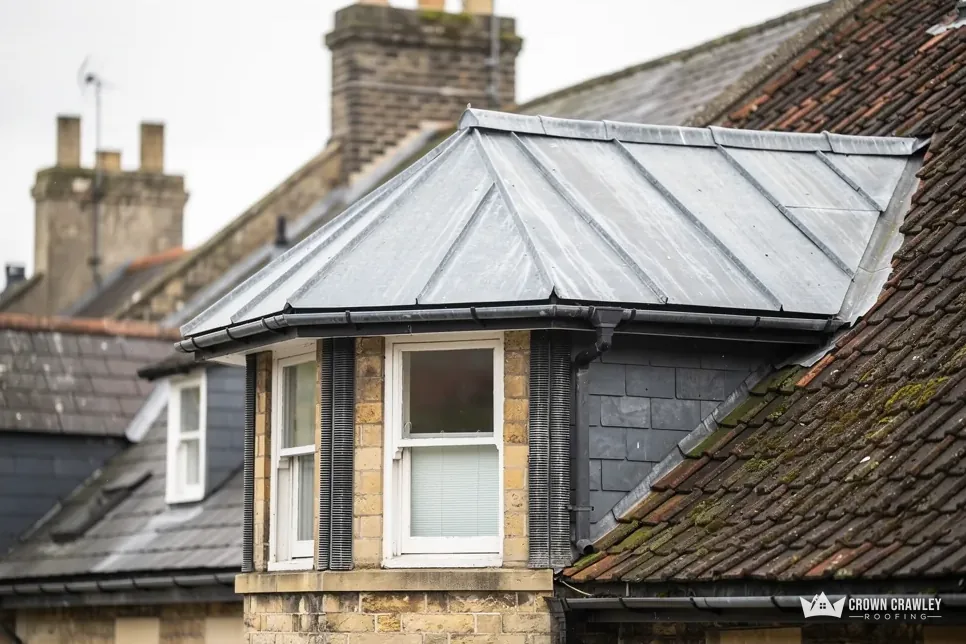
We begin on the ground, walking round the house and looking up at the slopes from the lane and the garden. Missing or slipped tiles, a sagging ridge line, stained brickwork under the gutters and moss thick on one slope are all clues. Then we go up, check the covering, the fixings and the junctions at chimneys and walls, and look in the roof space for daylight, damp and timber that has gone soft. You get the photos, and the plain-English account that goes with them. Nothing is left to memory, which matters if you want to show the same pictures to a neighbour, a landlord or the council.