Roofers in Epsom

Roofs in an old spa town of red brick and listed fronts.

Epsom grew from a village on the chalk edge into a fashionable spa town, and its older roofs show it. A survey comes first, then photos of what we found, then one total.

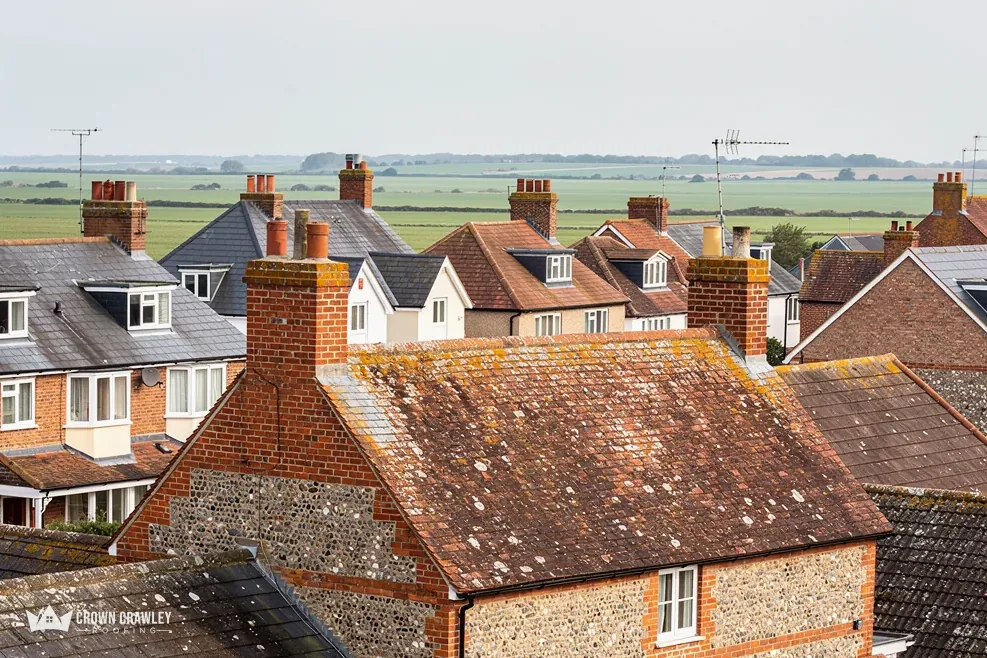
Flint-walled house with a mossy clay tiled roof overlooking fields

Epsom's roofs in plain terms

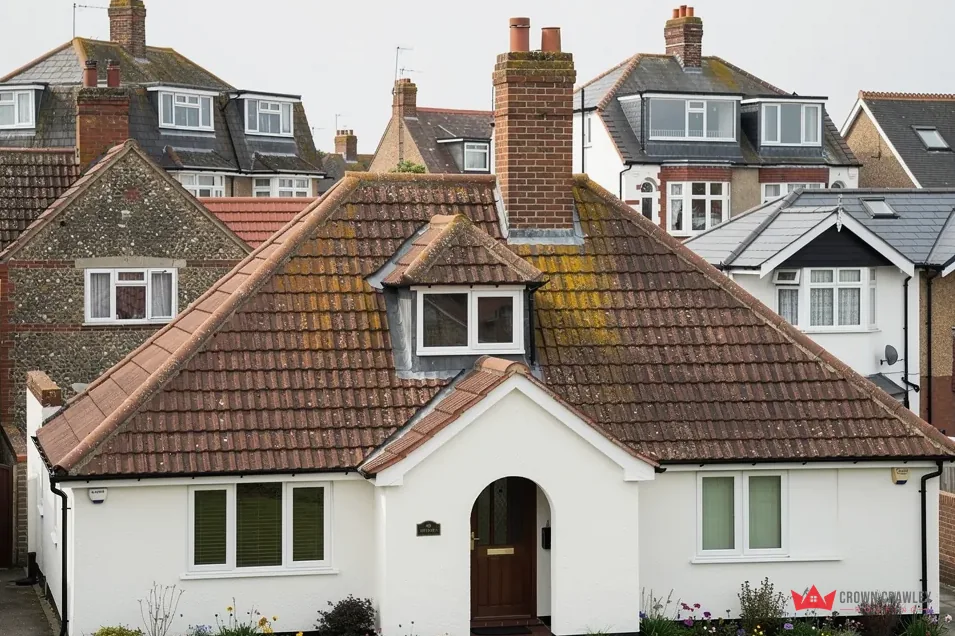
White rendered bungalow with a hipped tiled roof and dormer

Red brick with dormer windows

The county history records 18th-century red brick buildings with dormered top floors in Epsom. A dormer has its own cheeks, flashings and valleys, and each one is a spot where rain can enter, so we check them all.

Dormer window in a tiled roof

Chimney stack with orange pots and lead flashing among tiled roofs

Brick and terracotta civic roofs

The Town Hall of 1883 is in red brick and terracotta. Buildings of that age often use lead for flashings and gutters, so we look at its condition as closely as at the tiles around it.

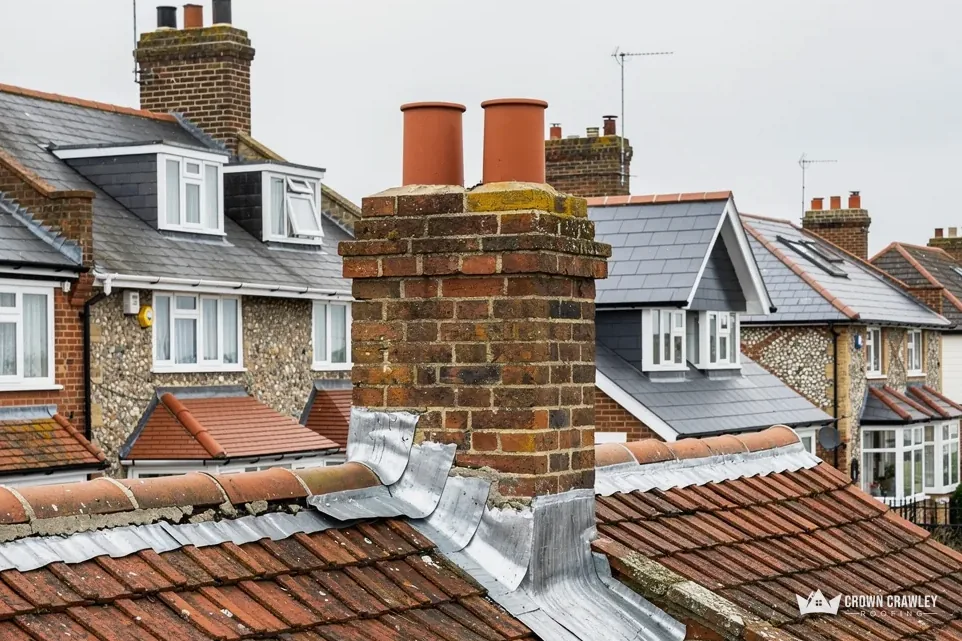
Lead flashing beside a chimney

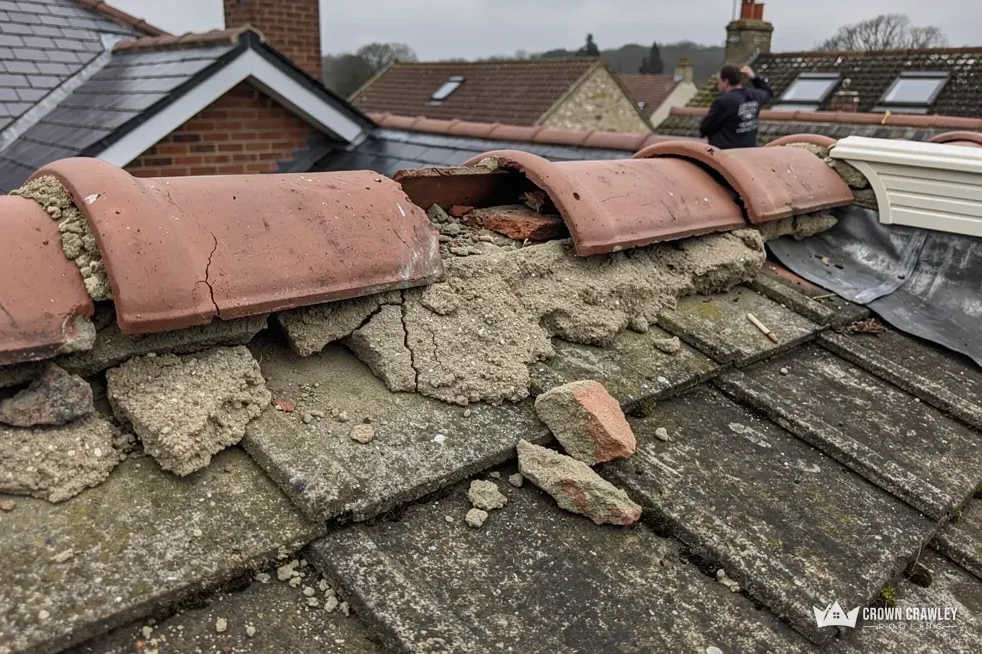
Crumbling mortar and cracked ridge tiles on a roof

Listed fronts on the High Street

The High Street has buildings listed Grade II*, among them numbers 127 and 129 and numbers 149 to 153, and Ashley House nearby is Grade II* as well. A listed roof job starts with the council, not the scaffold.

Old brick buildings with tiled roofs

Epsom, below the downs

Map of Epsom and the neighbourhoods around it, with Crawley for reference.

Epsom is a town of about 36,000 people on the chalk downs' edge, with the Downs south and the Common west.

Distance
26.1 road miles from Crawley, to the north
Drive
About 35 minutes
Council
Epsom and Ewell Borough Council and Surrey County Council
Planning authority
Epsom and Ewell Borough Council
Conservation area
Epsom Town Centre
Conservation area
Epsom Town Centre (part of the town)
Building control
Elmbridge Building Control Services Ltd
Get a free quote

Notes on Epsom roofs

Dormers, lead and listed fronts in old Epsom

Three short chapters on the older buildings of a spa town, how a listed or conservation area roof is handled, and how scaffold and approvals work in Epsom.

Stage 01 · Old town

Dormers and red brick in old Epsom

Epsom's older streets have dormers, brick and lead, and each of those parts of a roof fails in its own way.

Epsom's story starts well before the tiles on most of its roofs. The usual account is that a mineral well was found in 1618 by Henry Wicker, who noticed that cattle would not drink from it, and that the town became a fashionable watering place in the later 17th century. By 1911 the county history notes that the church stands on the chalk, the old village sits on a patch of gravel and sand, and brick-making and brewing were carried on beside farming. It also records 18th-century red brick buildings with dormered top floors, and a Town Hall of 1883 in red brick and terracotta.

Why do dormers need a closer look?

A dormer is a small building standing on a roof, and everything that ties it to the main slope is a route for rain. The cheeks at each side, the roof on top, the valleys where it meets the main slope and the flashings against the brickwork all have to be watertight. When a leak appears in a room below a dormer, the culprit is often a flashing that has lifted or a small tear in a valley lining, not a missing tile. We follow the water from the ceiling stain up to its source before we price anything, and we photograph each stage of that trail so you can follow the same path.

On an older Epsom roof

Dormer cheeks
Sides sealed and flashings tight
Valleys
Lead or lining whole, no splits
Chimney
Flaunching and soakers sound
Brickwork
Pointing firm where it meets roof
Rafters
Free of rot where water entered
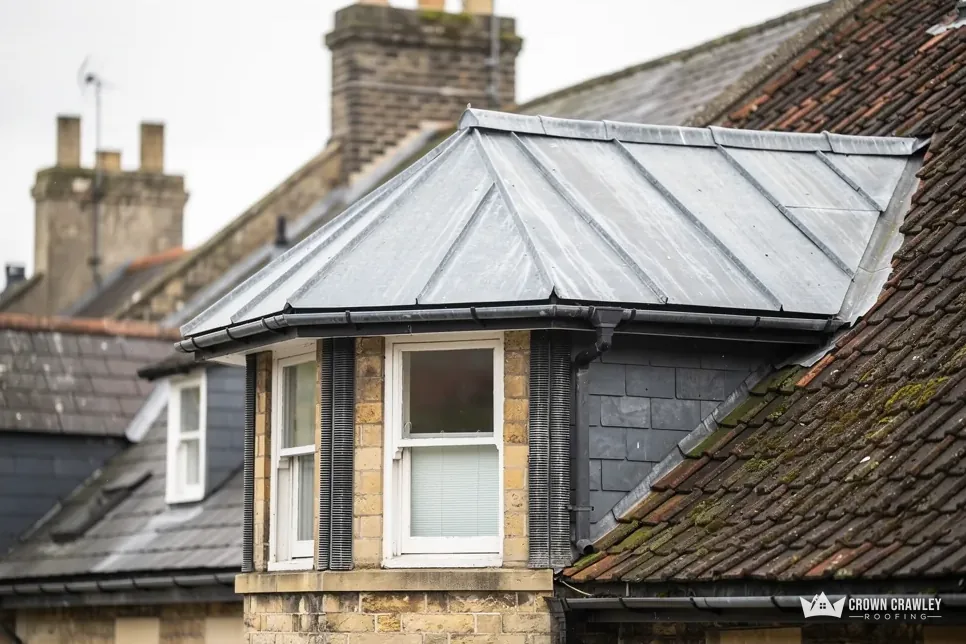
Lead-covered bay roof and chimney stack on a slate and tile roof

What is lead and why does it matter here?

Lead sheet is the traditional material for flashings, valleys and gutters on older buildings. Royston Lead's brochure lists Code 5 for flashings, valley gutters and dormers, and Code 4 for soakers and flashings as well. One guide says lead flashing can outlast 80 years, so a sound lead detail should be kept where it can be and repaired where it cannot. Our lead work page explains how we repair splits, replace failed flashings and choose the right code.

Around the dormer we also look at the brickwork where it meets the roof. Pointing that has crumbled lets water in behind a flashing even when the flashing itself is sound, and it is a small repair that is easy to miss from the ground. Old brick also soaks up water, so a wall that stays damp beside a roof can look like a roof leak when the real cause is the mortar joints.

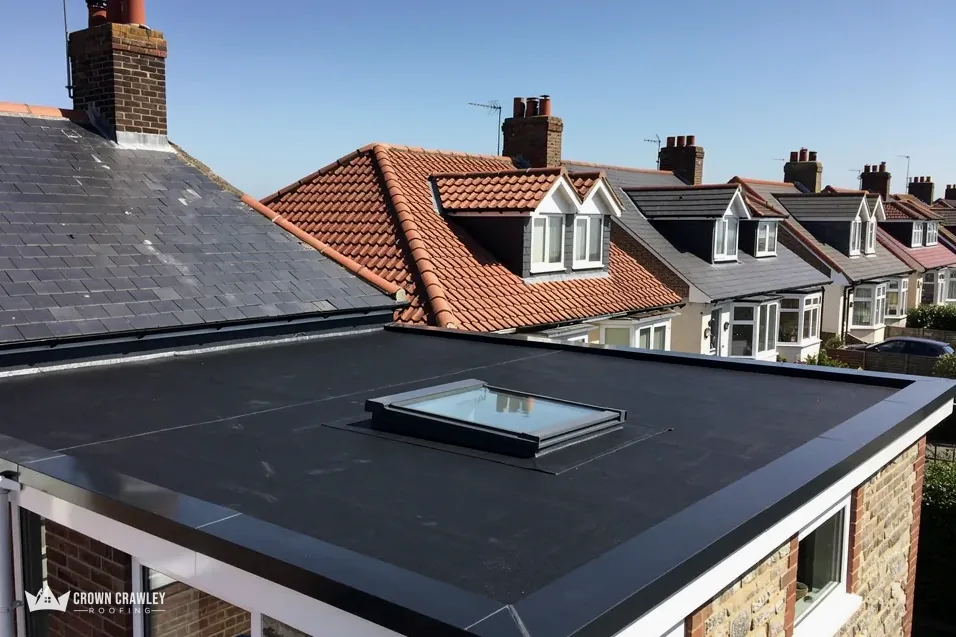
Black flat roof with a rooflight on a house extension

Stage 02 · Heritage

Listed fronts and the town centre conservation area

Epsom has listed buildings and a conservation area, so some roofs need the council's view before a roofer can book a date.

Historic England lists several Epsom buildings at Grade II*. Numbers 127 and 129 High Street were first listed on 10 April 1954, numbers 149 to 153 High Street share that grade, and so does Ashley House. The Parish Church of St Martin is Grade II* too, also first listed on 10 April 1954. The national planning dataset shows the Epsom Town Centre conservation area covering part of the town.

Who decides on a listed roof?

For an ordinary listed building, the council does. Works that would alter a listed building's character need listed building consent under the 1990 Act, and some roof work falls inside that. We start with a survey, then tell you what we found and what a careful repair would involve, and Epsom and Ewell Borough Council is asked before any date is booked. Where a roof can be mended rather than renewed, that is usually the simpler path with a listed building as well as the cheaper one, and it keeps more of the original fabric.

Heritage words in plain English

Grade II*
Listed as particularly important
Listed consent
Council sign-off for altering a listed building
Faculty
Church of England consent system
Conservation area
Area where character is protected
On a listed High Street building, the order is the council first, the scaffold second.

What is different about a church?

St Martin's is a working Church of England church, which makes it an exempt building. So St Martin's roof works are approved through a faculty from the diocese rather than through listed building consent. Government guidance on the exemption is clear that a listed church still needs planning permission for development that alters its outside. Any church job here would wait for the right consent to be in place before our part began, and we would ask the parish who holds the plans for the roof. A church roof can be specialist work, so the survey would include a straight view on whether it suits us.

Does a conservation area change a repair?

A repair that keeps the look of the roof raises few questions, but a different material, shade or tile pattern in the Epsom Town Centre conservation area is something to put to the council first. Epsom and Ewell's conservation pages show where the boundary runs. A slope that faces the street may draw more questions than a rear slope or a flat roof out of sight. We note which slopes show from the road when we survey. Our answer on re-roofing in a conservation area goes through the usual questions in more depth.

Stage 03 · Permissions

Scaffold in Epsom and who approves what

Epsom's scaffold rules have a local twist in the Market Place, and building control runs through a company that manages it for the borough.

A small repair with matching materials involves no forms. Questions begin when a job covers much of a roof, when one material is swapped for another, or when the building is listed or inside the conservation area. In a town with shops, offices and flats, we also ask early who owns the roof, since a flat or a unit above a shop may share one with its neighbours.

Who handles scaffold licences in Epsom?

Putting scaffold over a road or footway calls for a licence from the highway authority, which for most of Epsom is Surrey County Council. It charges £208 for each 28-day period and asks for applications at least 10 working days ahead. The Market Place is the exception, because licences there come from Epsom and Ewell Borough Council. On a High Street job, we settle with the scaffolder who submits the application and build the lead time into your dates. Poles set up on private ground need no licence. Where a building sits hard against the pavement there is no private ground to use, so on those addresses we plan for a licence from the first call.

Checks as a job grows

Planning
Epsom and Ewell Borough Council
Approvals
Elmbridge Building Control Services Ltd
Market Place
Licence issued by the borough
Elsewhere
Surrey County Council, £208 per 28 days
Lead time
At least 10 working days
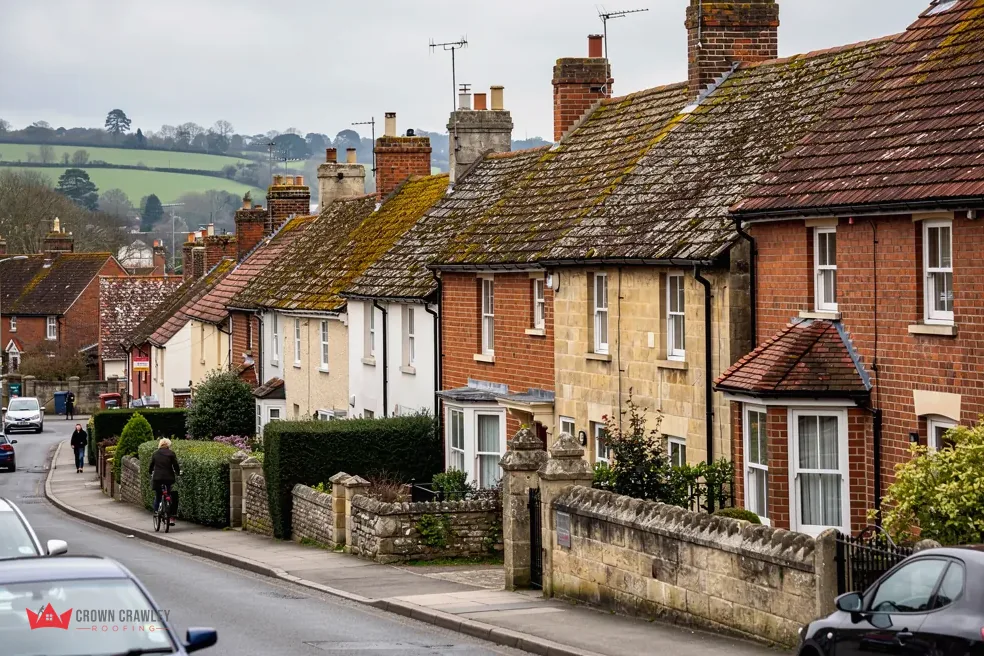
Village street of brick and render houses with old tiled roofs

Who looks after building control?

Epsom and Ewell's building control service is managed by Elmbridge Building Control Services Ltd. The Planning Portal sets a re-roofing test of under 25 per cent of the building envelope and under 50 per cent of the roof, and says a covering 15 per cent or more heavier needs approval. We check both at the survey. Replacing a flat roof's waterproof membrane also counts as renovation under Part L, which our flat roofing page explains.

What about shops and commercial units?

Shops and offices cluster in the centre, and a roof over a business has needs of its own, from access during opening hours to who is liable for the repair. If the building is let, the lease usually says who pays, and the single written price goes to whoever instructs the work. We plan each day around trading hours and keep the pavement clear for customers. Where a roof is shared across several units, one written total covers the part we are instructed on, and our commercial roofing page explains how those jobs run.

Things Epsom owners wonder

Why does an Epsom dormer leak when the tiles look fine?

The tiles are often not the cause. A dormer has cheeks, valleys and flashings against brick, and rain tends to find one of those joins. We follow the stain from the room up to the source, check the lead or lining, and price the repair of that part only, not a whole slope, in one written total, with photographs of the lead or lining as it was found.

Can I change the roof colour on a building in Epsom Town Centre conservation area?

Possibly, but ask first. The Epsom Town Centre conservation area covers part of the town, not every address. Epsom and Ewell Borough Council's conservation pages and planning team can confirm yours. It matters when a job would change how a roof looks, through its material or shade, so put the question to the council before choosing, and we hold the start date until the council replies.

Who runs building control for Epsom roofs?

Elmbridge Building Control Services Ltd manages the service for Epsom and Ewell Borough Council. Matching tiles in the same places seldom needs approval, whereas a large re-roof or a heavier covering might. The survey tells us which applies, and the written price names any approval step so it is not a surprise. If a buyer's report has flagged your roof, send it with your details, since it often points at one specific fault.

Do I need a scaffold licence in Epsom?

Only if the poles would stand on a road or footway. Surrey County Council charges £208 for each 28 days and wants at least 10 working days' notice, except in the Market Place, where Epsom and Ewell Borough Council issues licences. Framework inside your own boundary needs none, and the survey settles where yours goes.

Your roof in Epsom: next step

Tell us which roof or dormer needs a look, your postcode, and whether the building is listed, and we will book the survey.

01293 974253

10-year workmanship guarantee, in writing.

Call Get a free quote