Roofers in Ewell

Old village roofs, listed High Street frontages and a local tile trade.

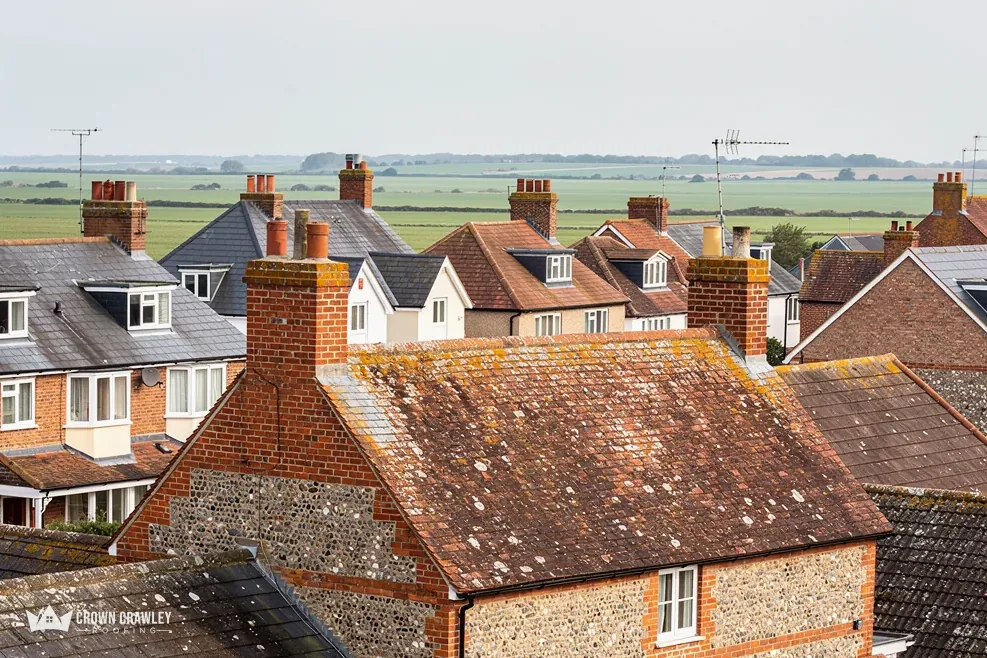
Ewell is an old market village on the edge of the chalk, with Grade II listed buildings and a conservation area at its heart. Each roof is surveyed first, with photos and one written price.

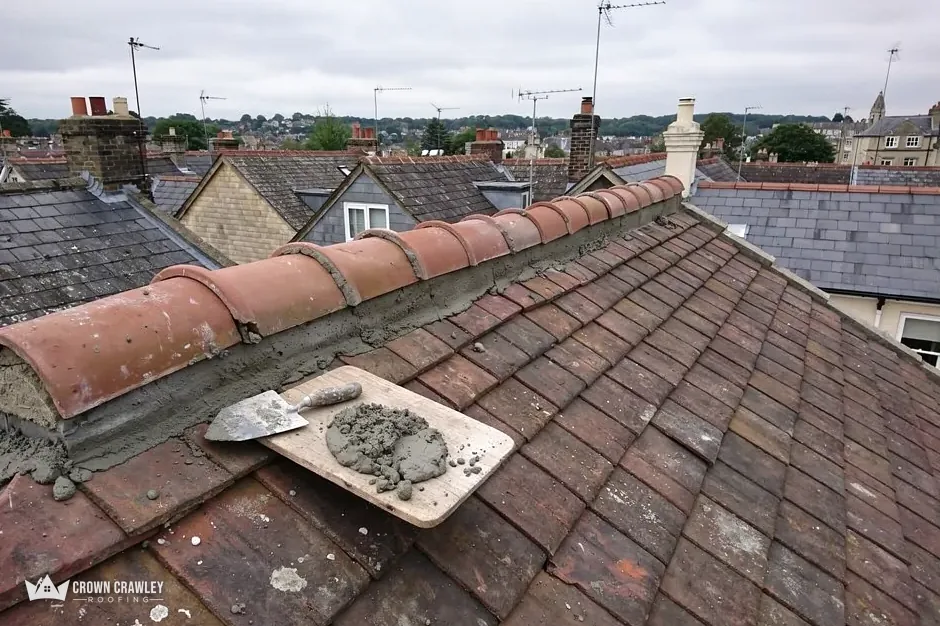
Ridge tile bedded in fresh mortar with a trowel resting on the roof

Ewell roofs, from High Street to Mill Lane

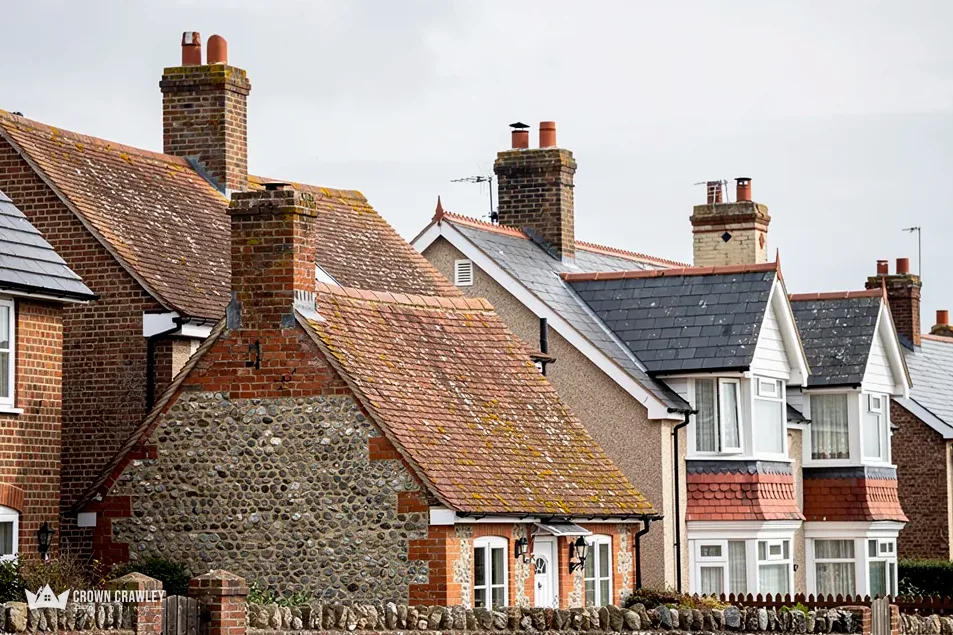
Flint and brick houses with clay tiled roofs and chimneys

Listed frontages on High Street

Numbers 11 to 15 and number 17 on the High Street are both Grade II listed. Roof work on a listed frontage needs the right consent, so we help you sort out who must agree before the covering is touched.

Terraced frontage with a tiled roof

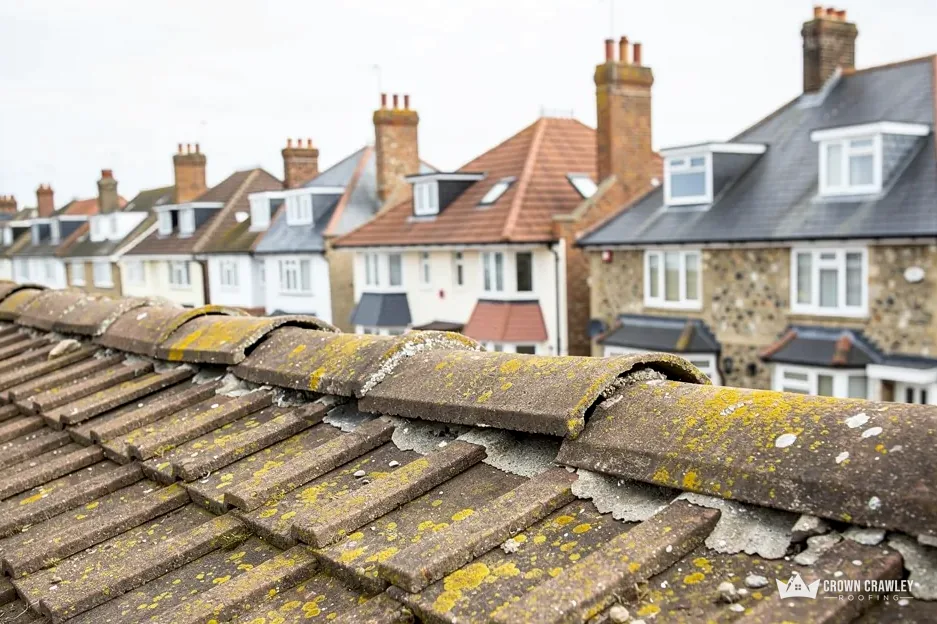
Mossy ridge tiles lifting along the ridge of a terraced roof

A tiled church and a flint tower

The old church was pulled down apart from its 15th-century flint tower, and the newer church is grey stone with tiled roofs. We bring the same careful eye to any roof where old and newer work meet, checking the junction as closely as the slope.

Stone church with a tiled roof

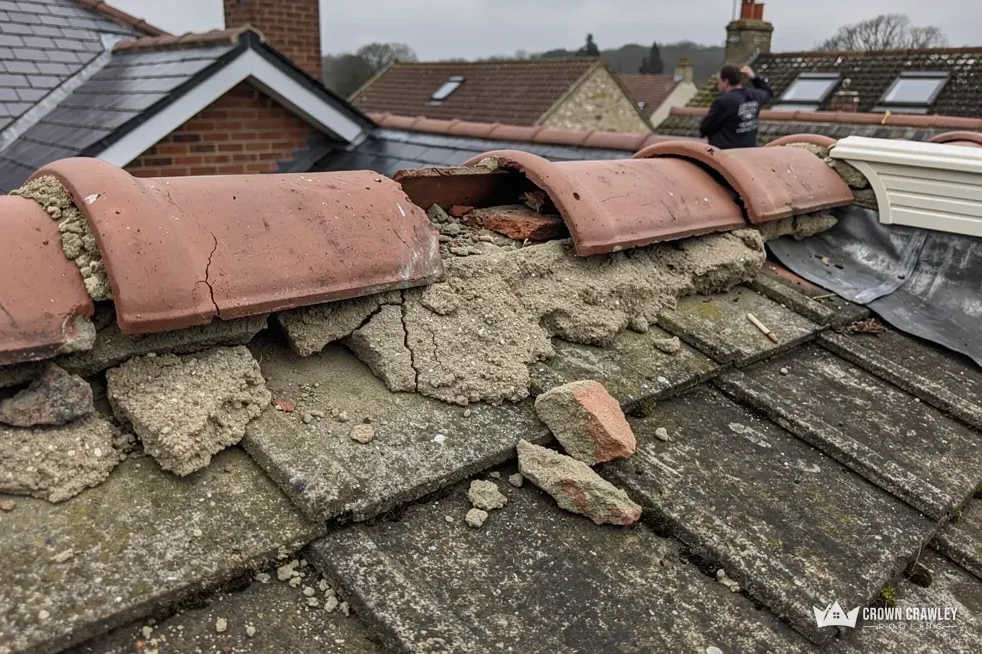
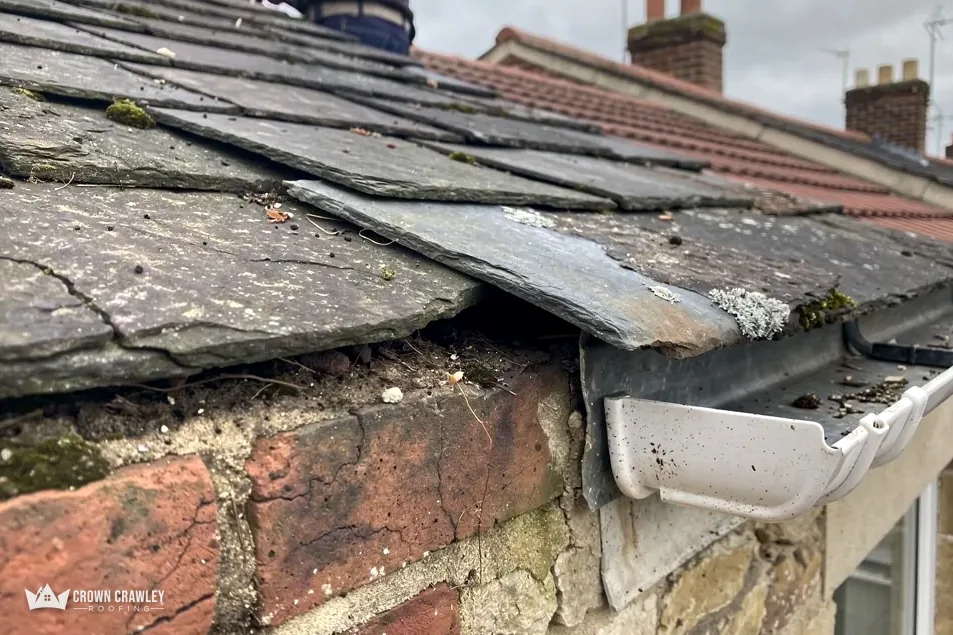
Crumbling mortar and cracked ridge tiles on a roof

A village with its own tile works

In 1911 the parish held extensive brick, tile and pottery works, the Nonsuch Works. We never assume where a tile came from, so we match each one by profile, size and colour.

Clay tiles laid on a pitched roof

Ewell, a mile north-east of Epsom

Map of Ewell and the neighbourhoods around it, with Crawley for reference.

Ewell is an old market village where the Kingston and London roads to Epsom meet, on the edge of the chalk.

Distance
23 road miles from Crawley, to the north
Drive
About 35 minutes
Council
Epsom and Ewell Borough Council and Surrey County Council
Planning authority
Epsom and Ewell Borough Council
Conservation area
Ewell Village
Population
27,526 (Census 2021, Ewell built-up area)
Article 4
A direction area is mapped at Ewell Village
Get a free quote

The Ewell roof story

What an old market village asks of its roofs

Three short chapters on matching tiles in a place with a tile-making past, on tight access in a busy suburb, and on the layers of control around Ewell Village.

Stage 01 · First look

Matching tiles in a tile-making village

Ewell once had its own brick, tile and pottery works, so a close match for an old tile is a fair thing to ask for.

The parish history of 1911 notes extensive brick, tile and pottery works in Ewell, the Nonsuch Works, alongside two flour mills. It records that earlier gunpowder mills had closed, and that a strong spring in the village feeds the Hogsmill River. Nothing in that record says what covers your roof today. A house built in the last century and a cottage near the old centre can carry quite different coverings, and the sensible course is to look. We would rather measure a tile than trust a story about one.

Can a missing tile be matched exactly?

Sometimes, and often closely enough that the eye does not catch it. We take a loose tile as the pattern and note its profile, its length and width, its thickness and the way the weather has faded it. A new tile straight from a factory will look pale beside a weathered one, so on a visible slope we may take matching tiles from a less visible face or use salvage, then put the new ones where they will be least noticed. If you want a quote that shows the choice, the written price states which route we expect to use.

Matching a tile in Ewell

Profile
Plain, pantile or interlocking
Size
Measured against a loose tile
Colour
Weathered, not factory fresh
Batten gauge
Checked before any swap
Source
Salvage or new, your choice
Flint-walled house with a mossy clay tiled roof overlooking fields

How long should a roof like this last?

Lifespans are ranges, never promises. For clay, the Building Research Establishment gives 60 years as a minimum, and Marley, which makes concrete tile, quotes about the same for its product while stressing that it is not a guarantee. CoRC's roofing materials guide reckons well-kept natural slate can pass the 100 year mark. What decides your roof is its fixings, its flashings and its gutters, much more than its date. A roof that is leaking at a single flashing needs a flashing, and the rest may be fine. Our pitched roofing page explains how we work through battens, underlay and tiles on a repair.

What do you look at beyond the tiles?

The ridge, where one slope meets another, and the hips and valleys, which are the sloping joins and the gullies between planes. We check the verge, the tile edge running up a gable, and the gutters below, because an overflowing gutter will send rain up beneath the lowest row of tiles. Inside the loft the clues are pin-pricks of daylight, dark rafters and insulation jammed against the eaves. Your written price follows the survey and names the work it covers, and the photographs show each point we raise.

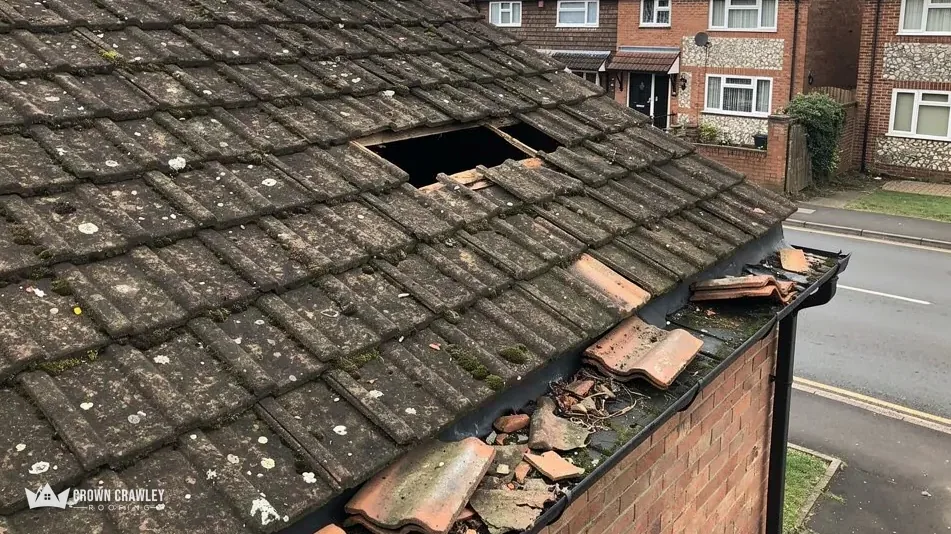
Storm-damaged tiled roof with the battens exposed and tiles on the ground

Stage 02 · Access

Tight streets and shared roofs

Ewell's built-up area held 27,526 people in 2021, so roofs often stand close together and access matters as much as the repair.

The 2021 Census counted 27,526 people in Ewell's built-up area, and that means a lot of roofs side by side. Wherever terraces, semis and flats occur, they share walls, gutters and sometimes whole ridges. A repair to one house can touch the next, so we plan the job around the pair or row as well as the single house. Where one roof covers several households, a block of flats for example, the managing agent may be the right person to ring first, and we write our findings so that every owner can follow them without a roofing background.

Who do I tell before work starts next door?

If a repair involves a shared wall, tell your neighbour early and in writing, and keep a copy. We look at the shared line of the roof during the survey, photograph both sides where we can reach them, and mark in the written price what we expect to do at that line.

Terms for a terrace roof

Party wall
Wall shared by two properties
Parapet
Low wall rising above the roof edge
Valley
Gutter where two slopes meet
Lead soaker
Folded sheet sealing a tile edge

How do you reach a roof in a crowded street?

We note the width of the pavement, where cars park, whether there are overhead lines, and whether the back of the house can be reached through a side passage or only through the house. Ladders and scaffold are planned around those facts. Waste is taken away from site, and neighbours are told when the equipment goes up and comes down. Some terraces have a parapet, a low wall rising above the roof edge, with a valley gutter behind it. Parapets and valleys fail quietly: a cracked joint, a lifted lead flashing or a blocked outlet can wet the ceiling below long before the stain shows. Our lead work page describes the metal flashings and linings used at those joins.

On a terrace, one roof leak often starts on a neighbour's slope.

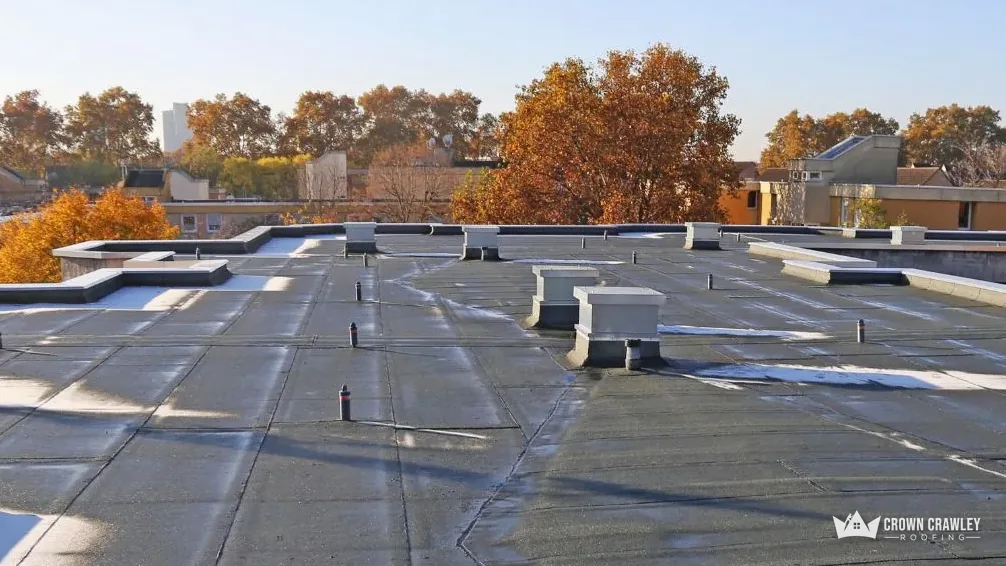
If your house has a flat roof over a rear extension or a garage, water from it can run along a wall and surface in an upstairs room, so we follow the line of the damp rather than the line of the stain. A flat roof also needs a fall towards its outlet so water does not pond, and ponding is among the first things we check on a roof like that. When you ring about a leak, we make the roof safe first, then plan the permanent repair once we have seen it.

Stage 03 · Permissions

Ewell Village and the layers of control

Ewell Village is a conservation area with an Article 4 direction area mapped there too, so ask before you change a roof.

Part of Ewell lies in the Ewell Village conservation area, and the national planning data also maps an Article 4 direction area at Ewell Village. Ask the council what that direction covers, and if your house is inside the village boundary, ask the planning team at Epsom and Ewell Borough Council what applies before you change anything about how the roof looks. Our answer on re-roofing in a conservation area lists useful questions.

Which listed buildings are in Ewell?

The National Heritage List holds Grade II entries for 11 to 15 High Street, 17 High Street and 15 to 21 Mill Lane, among others. Listing means works that alter a building's character need listed building consent, and that applies whatever the road. Maintenance that matches the existing covering is a question for the council to confirm, not for us to assume. If your house is listed, let us know before the survey so we can word our notes in a way the council will find useful.

Ewell permissions at a glance

Planning
Epsom and Ewell Borough Council
Building control
Elmbridge Building Control Services
Highway
Surrey County Council licence
Village area
Conservation area and Article 4
Bats
Stop and take advice
Dormer window with white cladding in a clay tiled roof

Who runs building control here?

Elmbridge Building Control Services Ltd runs the building control service for Epsom and Ewell. For a re-roof, the Planning Portal's tests are less than 25 per cent of the building envelope and less than 50 per cent of the roof affected, and a covering 15 per cent or more heavier than the one it replaces needs approval. Put the question to that service before you fix a date on a bigger job. Our roof replacement page follows a complete re-roof from the first look to the last sweep.

What does Surrey ask of scaffold on the road?

Surrey County Council licenses scaffold sitting on the road or the footway. Its page wants applications in no later than 10 working days ahead of the first pole and lists £208 per 28 day period. Nothing published says who applies, so the question goes to the scaffolder and the answer is agreed early. Poles kept on your own side of the boundary need no highway licence at all. If the roof holds bats or a nest, work stops while we talk you through what comes next. GOV.UK gives bats and their roosts full protection, and its guidance says roofing work, repairs included, can affect them. We would rather pause for a day than risk harm to a protected animal or a legal problem for you. Photograph the slope or ridge you doubt from the road, and send it with the postcode.

Helpful answers for Ewell

Can an old Ewell roof tile be matched when one needs replacing?

Often closely, yes. We use a loose tile as the pattern, measure it and note its colour and wear. A new tile looks pale beside a weathered one, so on a visible slope we may use salvage or move tiles from a quieter face. The written price states which route we expect to use for your roof.

Does the Article 4 area at Ewell Village affect a change of roof covering?

It may. Part of Ewell lies in the Ewell Village conservation area, and an Article 4 direction area is mapped there as well, so some permitted development rights may have been withdrawn. Whether your street is inside, and what the direction covers, is for the borough council's planning team to confirm. Check before you change the covering or the roofline, and tell us when you write.

Does Surrey County Council licence all scaffold in Ewell?

Only scaffold sitting on the road or pavement. The council wants an application at least 10 working days ahead and lists £208 per 28 days, so it is wise to book the scaffolder early. Poles within your boundary sit outside that licence. Say how much frontage you have when you book, and we plan the dates with the scaffolder.

What should I send for a Ewell roof survey?

Your postcode, a picture from the road or garden of the slope, ridge or flat roof in question, and a note of what you have seen inside, such as a stain or drip. After the survey you receive our photographs and a single written total. A listed house deserves a line in your first message, and so does a shared roof.

Request a Ewell quote

Photograph the slope, parapet or flat roof giving you doubts, add the postcode and note any listing, and survey dates come back to you.

01293 974253

10-year workmanship guarantee, in writing.

Call Get a free quote