Roofers in Stoneleigh

Roofs on a 1930s suburb that grew up around the station.

Stoneleigh turned from farmland to housing in the 1930s, after its station opened in 1932. We study each roof separately and write down one price you can hold us to.

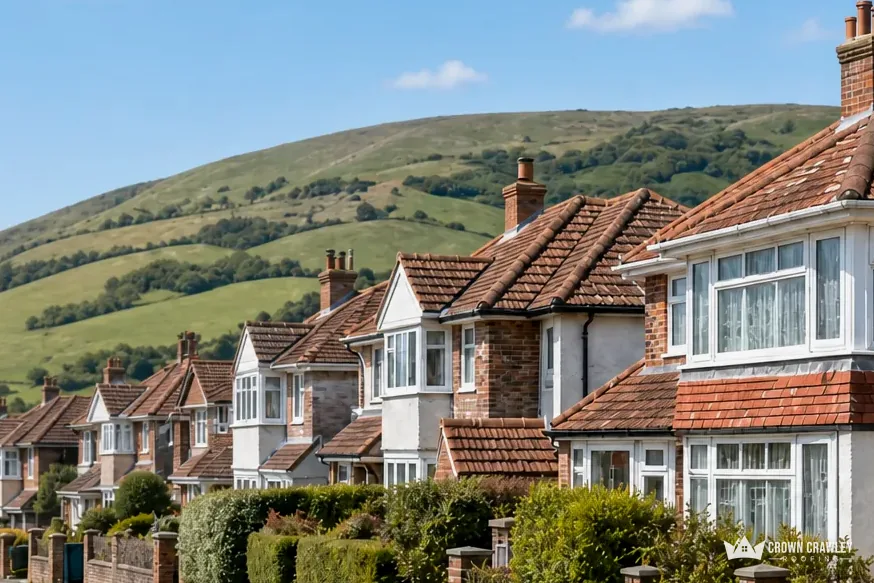
Row of suburban houses with tiled roofs below green downland

How roofs vary across Stoneleigh

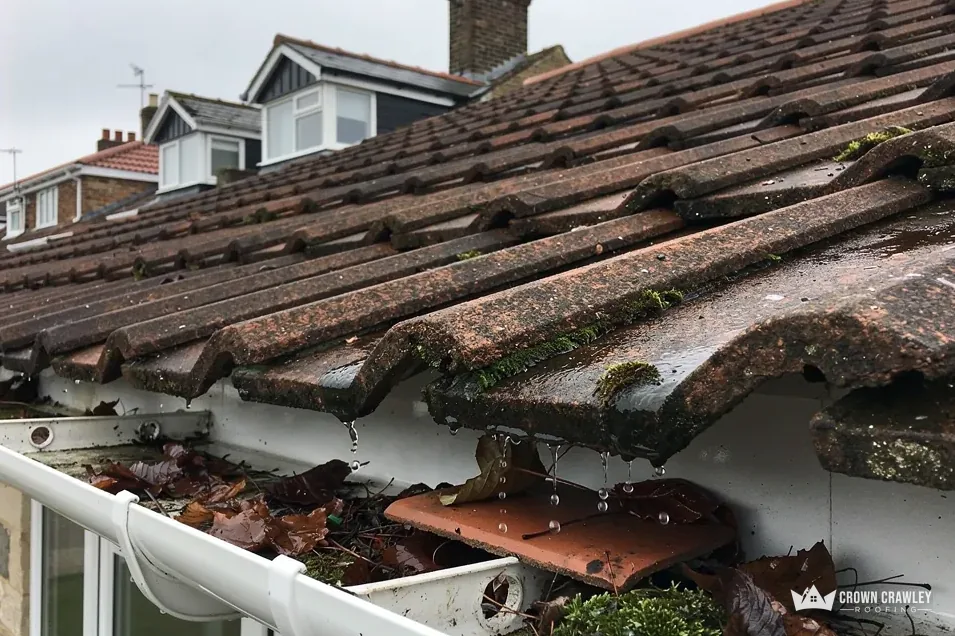
Slipped tiles lying in a blocked gutter

Houses of the Stoneleigh Hill Estate

The estate west of the railway stands on former Cold Harbour Farm and was sold off in plots to numerous builders. Next-door houses can differ beneath the tiles, so every roof is read on its own.

Semi-detached houses with tiled roofs

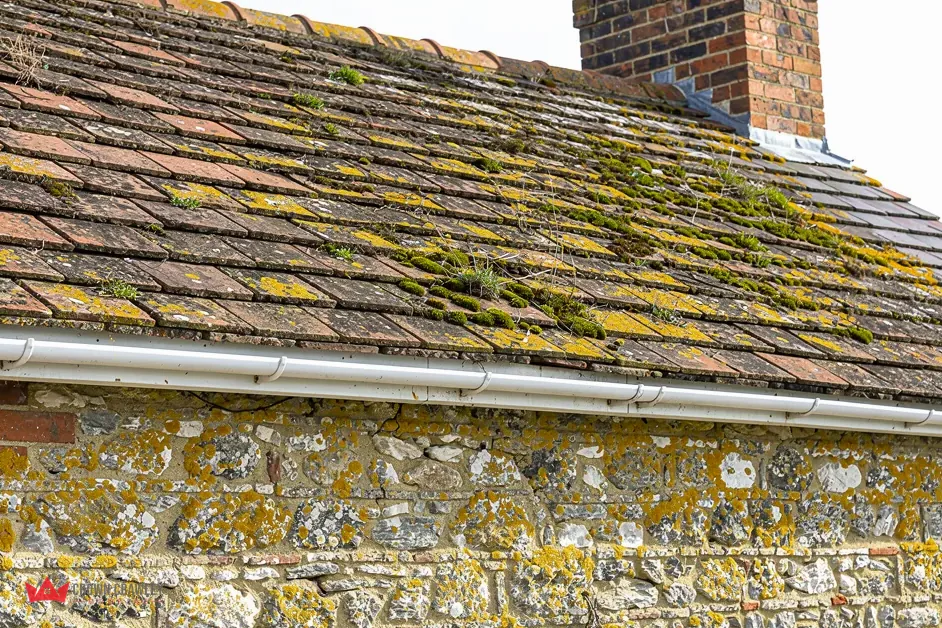
Yellow lichen and moss on tiles above a flint wall

Homes near the 1932 station

Stoneleigh station opened on 17 July 1932, and housing followed through the decade. A roof standing since then may have been patched in several decades, so battens, underlay and fixings get a look.

Row of suburban tiled roofs

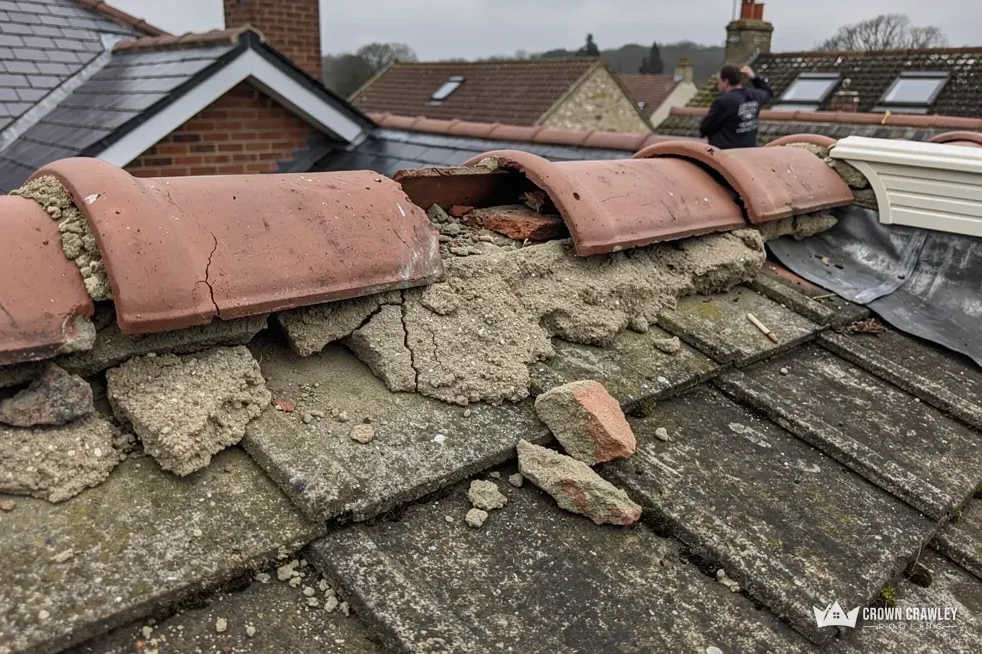
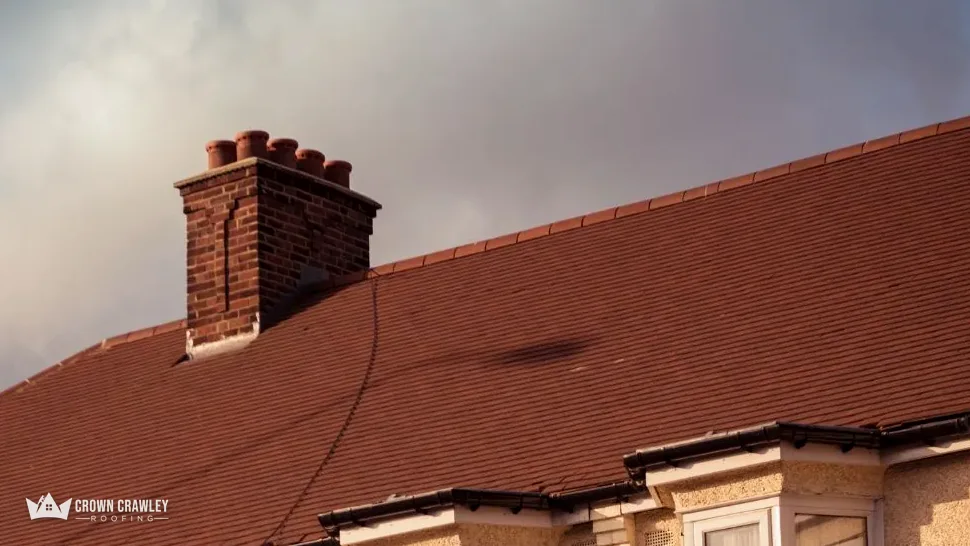
Crumbling mortar and cracked ridge tiles on a roof

The former Stoneleigh Hotel

The Station Public House, once the Stoneleigh Hotel, is Grade II listed (list entry 1427779, first listed in 2015). Roof work on a listed building needs the council's view, and any survey is planned around that.

Large pitched roof on a corner building

Stoneleigh, around the station

Map of Stoneleigh and the neighbourhoods around it, with Crawley for reference.

Stoneleigh is a 1930s suburb around its railway station, 12 miles from Waterloo, in the borough of Epsom and Ewell.

Distance
24.1 road miles from Crawley, to the north
Drive
About 37 minutes
Council
Epsom and Ewell Borough Council and Surrey County Council
Planning authority
Epsom and Ewell Borough Council
Station gift
Stone Trustees gave land, roads and £3,000
Listed example
Station Public House, Grade II (list entry 1427779)
Get a free quote

Inside a Stoneleigh roof job

From Cold Harbour Farm to a suburb of roofs

Three chapters on how farmland became streets of houses, why neighbouring roofs can differ, and what Epsom and Ewell and Surrey ask once a repair grows.

Stage 01 · Background

From Cold Harbour Farm to suburb

Stoneleigh changed from farmland to housing in the 1930s, and its station opened in 1932, so we expect roofs that began in that decade.

The Epsom and Ewell History Explorer records that Stoneleigh station opened on 17 July 1932, 12 miles from Waterloo. The Stone Trustees helped by giving land, access roads and £3,000 of the £7,500 it cost to build. The Ewell Court Estate, south of the Kingston Road, was the first to be developed. Farmland became housing in the 1930s, and the last phase, the Stoneleigh Hill Estate west of the railway, went up on land that had been Cold Harbour Farm. A suburb that filled with houses in the 1930s has roofs that began in the same decade, and they now share a long history of weather and repairs. That is why we trust the evidence on your own roof and not a table of typical ages.

Is a roof from the 1930s due for replacing?

Age alone does not answer that. If the covering is still the original, the published figures are worth knowing. Marley puts concrete tiles at around 60 years, and states plainly that the figure is neither guarantee nor warranty. Clay tiles are rated by the Building Research Establishment at a minimum 60 years of life expectancy. Those numbers are prompts to inspect, not a ruling. In practice a 1930s roof is judged on its condition: how many tiles have slipped or split, whether the nails have held, and what the underlay looks like where it drapes toward the gutter.

Checks on a 1930s roof

Covering
Tile condition and any patched areas
Ridge
Bedding firm, no loose caps
Verge
Edge mortar whole or caps fixed
Underlay
Present, whole and lapped over the eaves
Loft
Dry timber and open eaves gaps
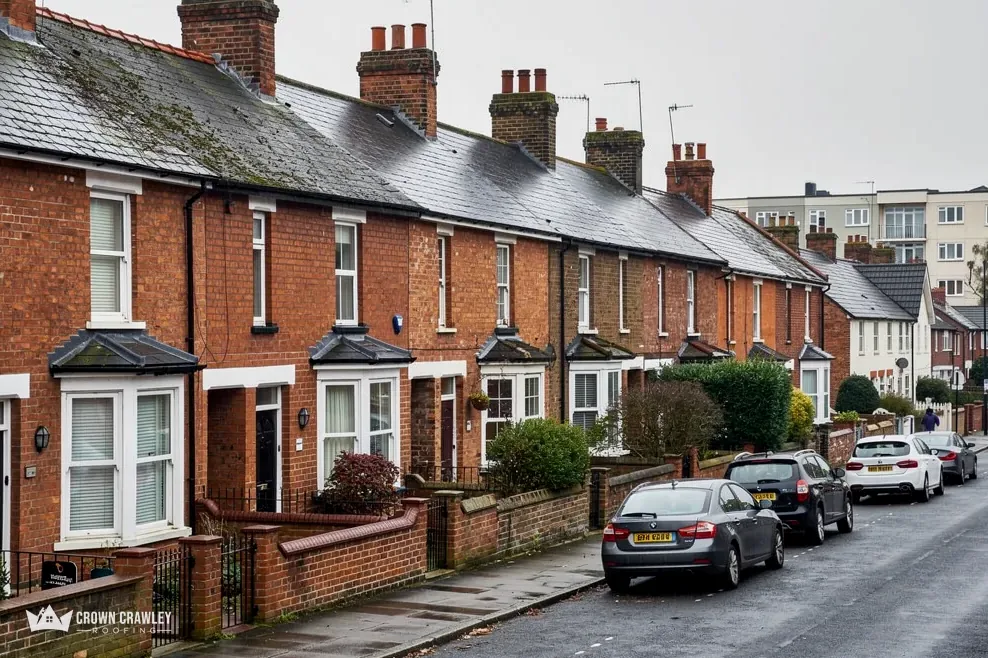
Victorian brick terrace with bay windows and parked cars

What do the survey and the photographs cover?

We photograph each slope from a ladder or tower, then go up into the loft. The ridge is the top row of capping tiles, and the verge is where the tiling finishes along a gable's sloping side. Underlay is the membrane under the tiles. The loft shows where daylight gets in, whether the timber is damp, and whether insulation has been stuffed against the eaves, cutting off the airflow that keeps a roof dry. You receive the pictures, a plain explanation, and a written price. We take them from the same points on every visit, so you can compare one slope with another. Our pitched roofing page describes the repair work in more detail.

Where gutters and boards at the eaves have failed, our gutters, soffits and fascias page covers that work, and it makes sense to deal with it while the access is up. The survey looks for these secondary jobs so that they appear in the written price and not as a surprise later.

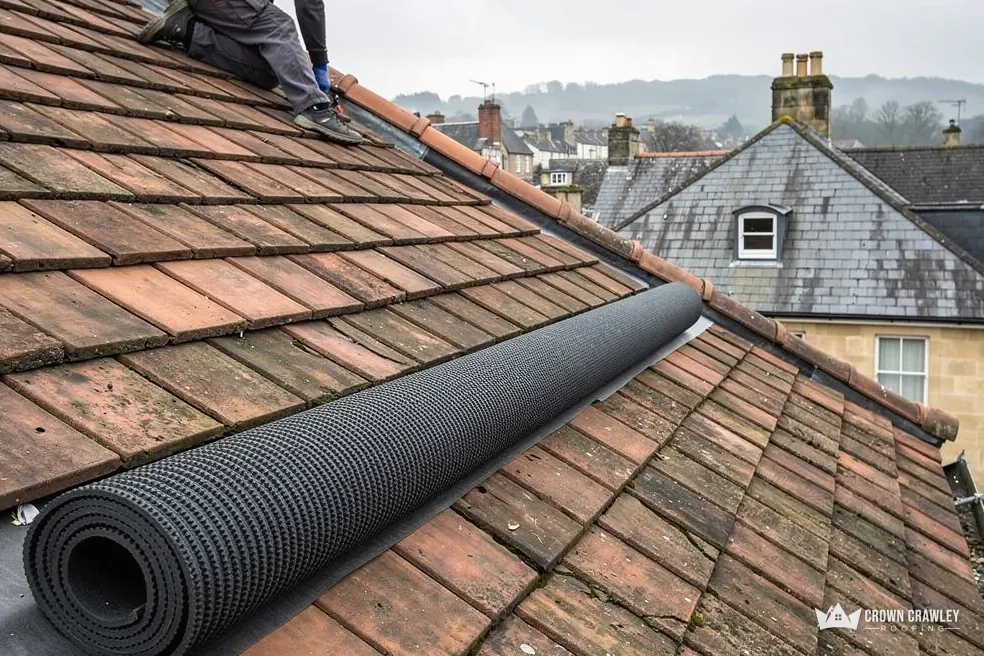
Roll of roofing membrane lying on a clay tiled roof

Stage 02 · Variety

Many builders, many roofs on one estate

The Stoneleigh Hill Estate was sold off in plots, and the local history says that accounts for its varied house styles.

Peter Reed's history of the Stoneleigh Hill Estate says it was built on the former Cold Harbour Farm and sold off in plots to numerous builders, which accounts for its varied house styles. For a roofer, that is a useful warning. Two neighbours might have different pitches, different tile profiles and different ways of finishing the edges, so a quote written for one house tells you little about the other.

Why does a hip or a valley change the repair?

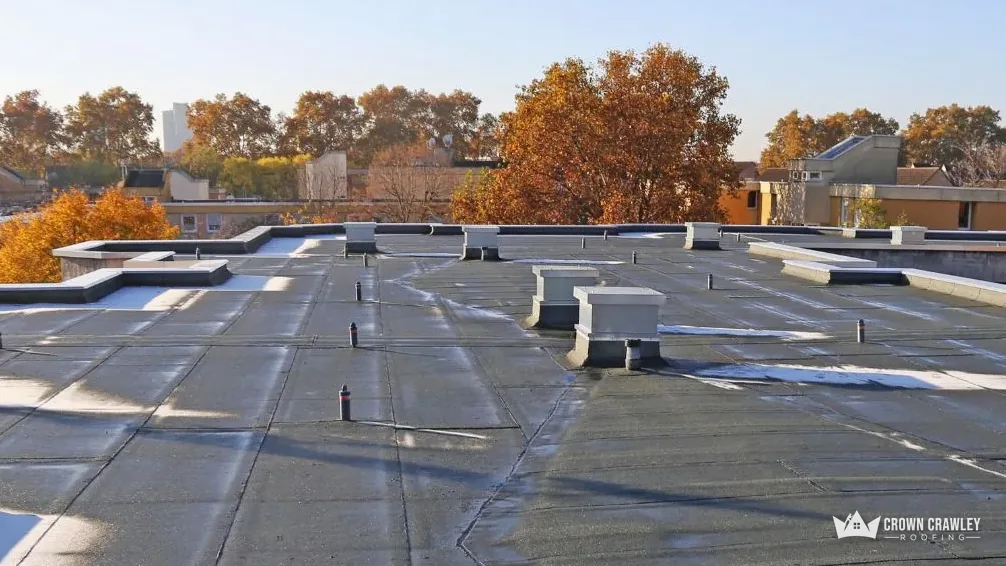
A hipped roof has sloping edges that run down to its corners, and each hip needs its own cap tiles and bedding. A valley is a trough made where two slopes join, and it carries more water than any ordinary stretch of tiling. Both are places where trouble can start. A flat-topped extension or a porch roof adds more joints still, where the main slope meets a lower roof and a flashing has to bridge the two. We note every one of these on the survey, because they shape the repair. Our flat roofing page explains how a low-pitched section is covered and drained.

Roof shapes and joints

Hip
Sloping edge running to a corner
Valley
Inward fold between two slopes
Flashing
Sheet metal at a roof junction
Soffit
Panel lining the eaves from below

Next door's roof tells you little about your own.

If such a section is covered in EPDM, GreenSpec's expected service life for the material is 20 to 30 years. Less, in March 2026, quoted 25 to 40 years for GRP and 10 to 20 years for felt. A flat roof that has passed those ages is worth a closer look than the slopes beside it.

What do we check at the eaves?

Under the overhang, the soffit is a panel that lines it from below, and the fascia is the front board that carries the gutter. When either rots, water can reach the rafter ends. We look at the boards, the gutter fixings and the level of each run, and at where the felt drapes toward the gutter, because a torn lap sends water behind the fascia. A clear photograph of that line, taken from the ladder, is often more convincing than a paragraph of description.

Houses on an estate like this may have gained extensions over the years. Each addition brings a roof of its own, and the seam where old meets new, bridged by a flashing, deserves a careful look.

Estate roofs are rarely identical, and neither are their owners' worries. A short note from you about what you have noticed, such as a stain, a draught or a gutter that spills during a downpour, points us at the right spot before we climb.

Stage 03 · Permissions

Epsom and Ewell and Surrey rules for Stoneleigh

Planning sits with Epsom and Ewell Borough Council, with the scaffold licence on a public highway issued by Surrey County Council.

Epsom and Ewell's Ewell Village Conservation Area lies to the south, within a kilometre of Stoneleigh, and a repair that copies the roof already there is the simplest case on either side of its edge. The listed former hotel is the one to remember, and anyone who wants the roof to look different should ask the borough's planning team first.

Who handles building control for a Stoneleigh re-roof?

Building control for Epsom and Ewell is run by Elmbridge Building Control Services Ltd. The Planning Portal's threshold for skipping a building control application is under 25 per cent of the total building envelope together with under 50 per cent of the roof. Loading follows a different rule: if the replacement makes the covering 15 per cent or more heavier, approval is needed as well. For a bigger re-roof we consult the service first, sending the survey photographs with our question.

Questions to ask early

Planning
Epsom and Ewell Borough Council
Approvals
Elmbridge Building Control Services
Licence
Surrey County Council, public roads
Lead time
10 working days before the start
Wildlife
Birds' nests and bats alter timing
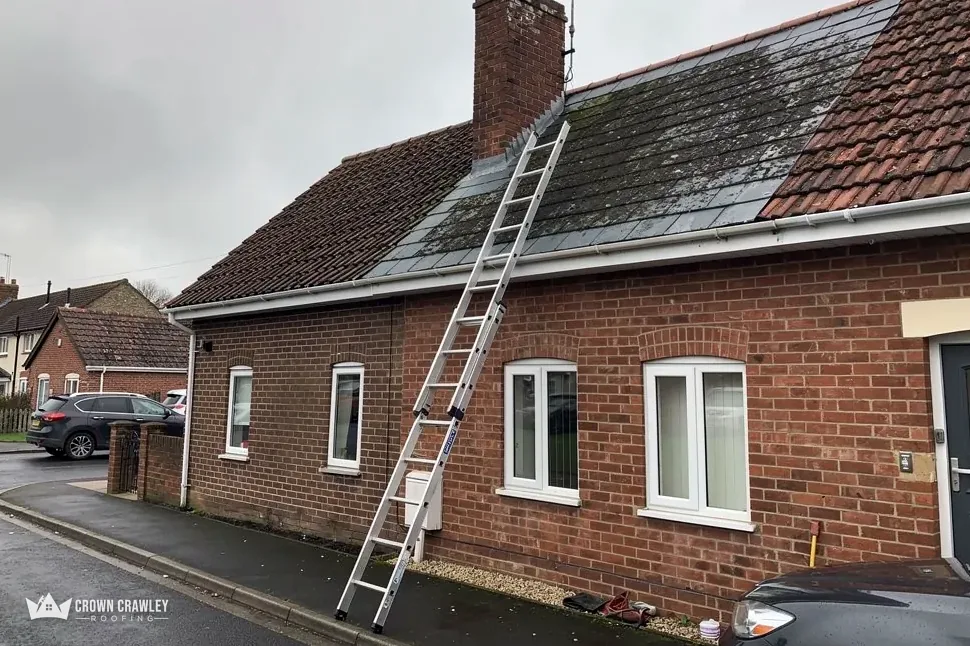
Brick bungalow with a ladder leaning against its tiled roof

Does scaffold on a Stoneleigh road need a Surrey licence?

A scaffold that stands over a public road, pavement or other highway needs Surrey County Council's licence. The fee is £208 for each 28 day period, it is not refundable once the application is in, and the council would like the application at least 10 working days before your chosen start. Because of that lead time, we sort out the application with the scaffolder early and set your date to match. A drive or garden wide enough for the scaffold keeps it off the highway, and so out of the licence scheme.

The former hotel's listing means work that alters its character needs listed building consent, a matter for its owner and the council. For an ordinary house, the planning question usually comes down to whether the new covering will look the same as the old one.

Roofs are also homes for wildlife. Bats are fully protected, and nesting birds are protected while a nest is in use. If either shows up during the survey, we reschedule the work around it and tell you the new plan.

Area, covering, access and loft findings are the four things that move a Stoneleigh price. You get one total in writing, and if you hold other quotes it is worth checking whether they include VAT and scaffolding.

Keep reading

Start with a short message: your road, the style of the house, and whatever has made you look up at the roof.

Stoneleigh questions, answered plainly

Why do two Stoneleigh houses on one street need different roof repairs?

On the Stoneleigh Hill Estate the land was sold in plots to numerous builders, which the local history gives as the reason for its varied house styles. Two neighbours can therefore have different tiles, ridge details and underlay. We survey each house separately, so a neighbour's quote tells you little about yours, even when the houses look alike from the road.

Can I change the tiles on my 1930s Stoneleigh semi?

Usually, but check first. Matching repairs are the easy route, though the former Stoneleigh Hotel is listed and the Ewell Village Conservation Area begins a short way south. If you want a roof to look different, put it to Epsom and Ewell's planners before ordering anything, and send us photographs of the house as it stands so a matching repair can be priced.

Who checks building control for a Stoneleigh re-roof?

The borough's building control is run by Elmbridge Building Control Services Ltd. The Planning Portal's test needs no application under 25 per cent of the building envelope and under 50 per cent of the roof. Weight has its own test: a new covering 15 per cent or more heavier than the old needs approval too. Larger jobs go to the service before a start date is set, with our survey photographs attached.

Does the scaffold outside my Stoneleigh house need a Surrey licence?

If it stands over a public road, pavement or other highway, yes. Surrey County Council lists £208 per 28 day period and would like the application at least 10 working days before the start. We handle that with the scaffolder. A frame on your own drive or garden stays off the highway, and we agree the access plan with you beforehand.

Start with a Stoneleigh roof survey

Send us your road, the style of the house, and what made you look up at the roof, and we will arrange a survey.

01293 974253

10-year workmanship guarantee, in writing.

Call Get a free quote