Roofers in Cheam

Old tiled cottages and listed roofs around Cheam Village.

Cheam's old cottages were recorded in 1912 as timber-framed, weather-boarded and tiled, and part of the village is now a conservation area. We survey the roof first, then price once, in writing.

Rear of a brick detached house with a tiled roof and garden

A closer look at Cheam roofs

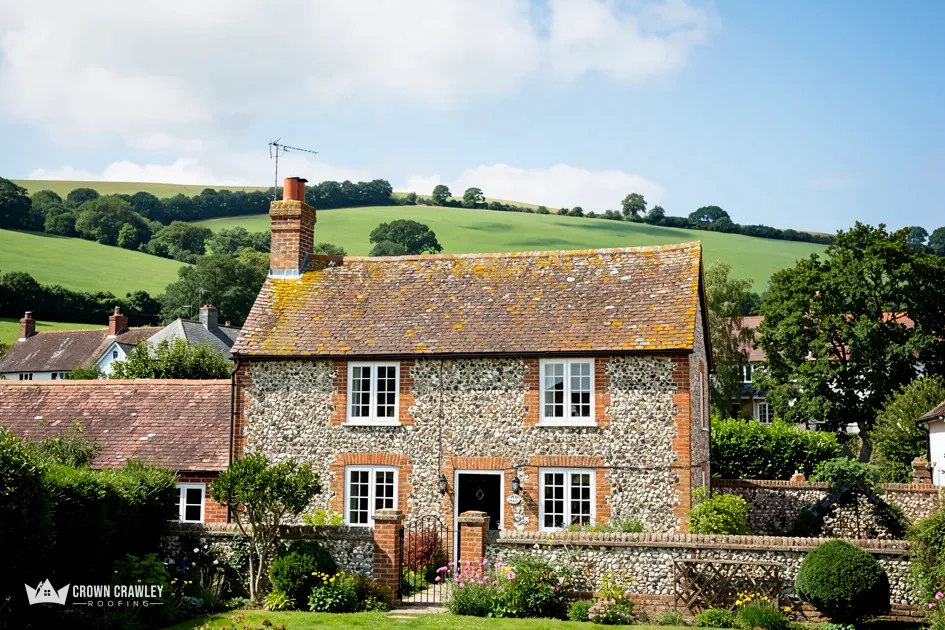
Flint cottage with a clay tiled roof set against green fields

Cottages recorded in 1912

The Victoria County History described many old cottages as timber-framed and weather-boarded, with tiled roofs and some built of brick. We read your roof as it stands today, checking tiles, battens and the lowest courses.

Old tiled cottage roof

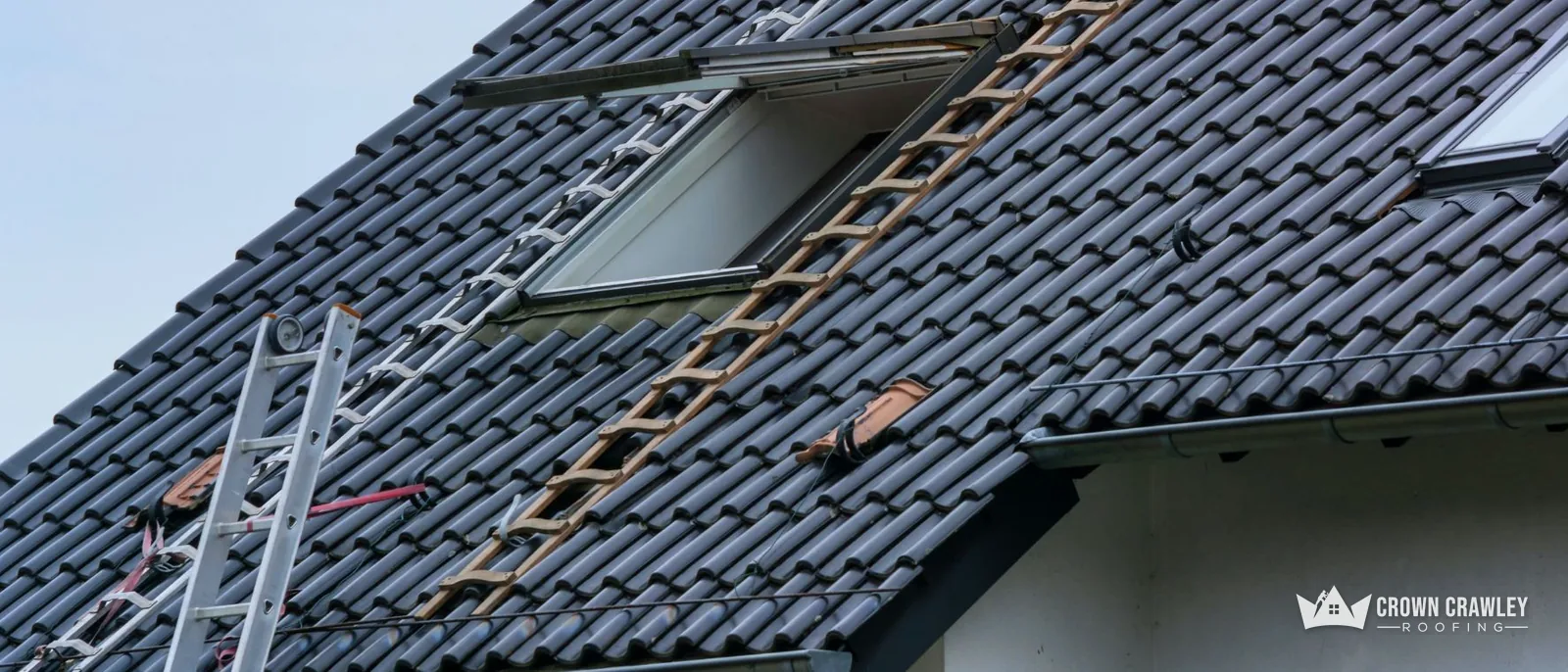
Black roof tiles with a roof window and ladder against a house

Whitehall and its overhanging upper storey

Whitehall began as a small half-timbered farmhouse, apparently built in the 16th century, and it is listed Grade II*. Work on a listed roof starts with the consent question, well before any scaffold goes up.

Old timber-framed house roof

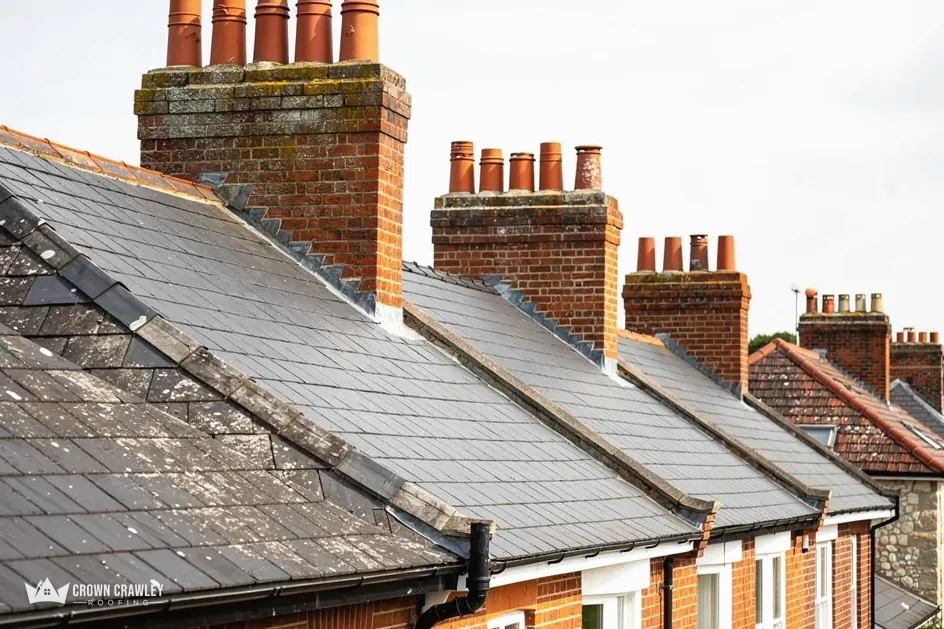
Row of terraced chimney stacks above slate roofs

Part of the village in a conservation area

Part of Cheam lies in the Cheam Village conservation area. If a repair would change how your roof looks from the street, we point you to Sutton's planning team before we fix a start date.

Tiled roofs along a village street

Cheam, on the north side of the downs

Map of Cheam and the neighbourhoods around it, with Crawley for reference.

Cheam is an old village below the chalk downs, around the crossing of the Malden to Banstead road and the Sutton to Ewell road.

Distance
23.4 road miles from Crawley, to the north
Drive
About 34 minutes
Council
London Borough of Sutton (London borough; Greater London Authority above)
Planning authority
London Borough of Sutton
Conservation area
Cheam Village
Church of St Dunstan
Grade II*, list entry 1065676
Get a free quote

Cheam in three stages

Reading a roof in an old village

Three short chapters on tiled cottages, the listed buildings of the village, and the Sutton rules that matter once a repair grows.

Dormer window with white cladding in a clay tiled roof

Stage 01 · First look

Tiled cottages in the 1912 record

A 1912 description gives us a picture of Cheam's old cottages, but we never assume your house matches it until we are up there.

The Victoria County History, writing in 1912, described many of Cheam's old cottages as timber-framed, weather-boarded on the outside and roofed with tiles, with some built of brick. That is a handy picture to keep in your head, because it shows what a cottage of that sort was built to carry: a tiled slope sitting on a timber frame that has had a very long time to move. It says nothing about the house you actually live in, so we climb up and look before any figure is mentioned.

On an old tiled cottage

Tiles
Sound, ringing clear, face intact
Battens
Firm timber, no soft ends
Slope
Straight, or gently wavy
Valleys
Lead or tiles still watertight
Brickwork
Chimney and parapet joints whole

What goes wrong on an old tiled cottage roof?

Old frames settle. Rafters bow, ridges dip, and a slope that left the carpenter dead straight can end up gently wavy. Tiles still shed water over a wavy slope, but the overlaps open and close as the timber shifts, and the battens, the thin laths the tiles hang from, can rot at the exact spot where a slipped tile has let rain in for a season or two. We lift a few tiles at the bottom of the slope and examine the battens and any underlay, the waterproof sheet that sometimes lies beneath the tiles, then show you what we saw.

Are old clay tiles worth keeping?

Frequently, yes. A 60-year minimum is the figure quoted for clay tiles by the Building Research Establishment, yet on old peg tiles it is no sure guide, so age on its own decides nothing. A tile that rings when you tap it and has an unbroken face can go straight back on the roof. We separate the sound tiles from the tired ones, re-lay the good ones where they came from, and make up any shortfall with tiles of matching size and colour, so the roof still reads as itself from the lane. Our pitched roofing page sets out how we handle tiles, battens and underlay.

Keep reading

What about the valleys and the chimney?

A valley is the V where two slopes meet, and a flashing is the metal collar that keeps rain out at the joint between slope and brickwork, whether that is a gable wall or a chimney stack. On a small cottage those two spots sit close together, and both carry a good deal of water in a downpour. Lead is the traditional answer and it lasts well, but it cracks where it was bent too sharply or fixed too stiffly. Where the existing lead is sound we leave it alone. Where it has split we put the split in the survey photos and explain what a new piece involves. Our lead work page goes into the detail.

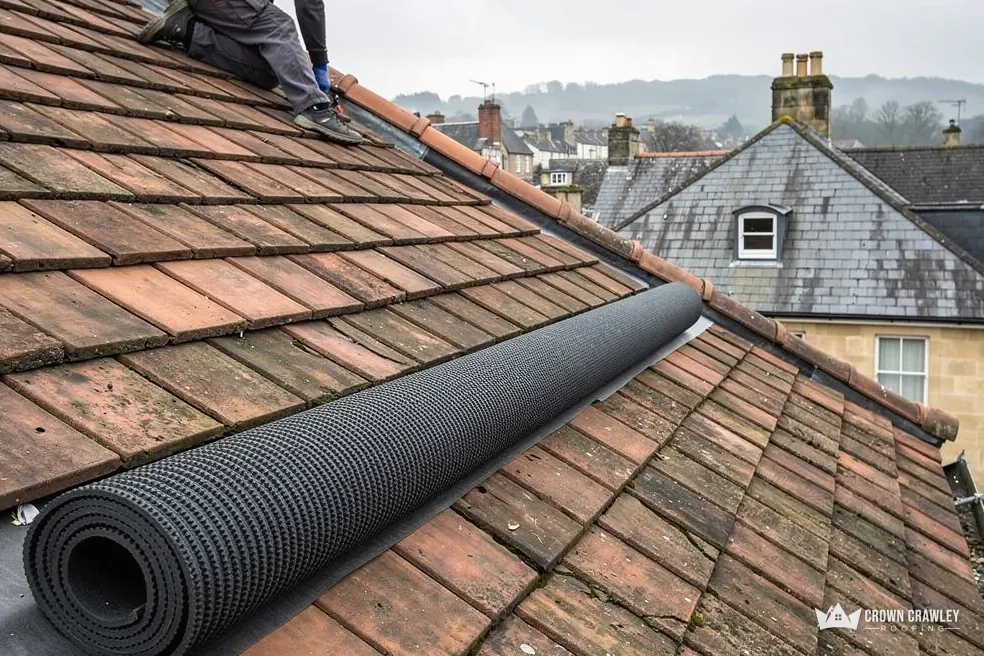
Roll of roofing membrane lying on a clay tiled roof

Stage 02 · Consent

Whitehall, St Dunstan and listed roofs

Cheam has several listed buildings, and a listed roof is a consent question first and a roofing question second, whatever the leak looks like.

Cheam's listed buildings include Whitehall, the Church of St Dunstan and the remains of the old church known as the Lumley Chapel, all at Grade II*. Whitehall started as a small half-timbered rectangular farmhouse, apparently in the 16th century, and its upper storey overhangs the one below. You may not live in anything so grand. The point is that three entries at that grade sit within a short walk of each other, so it pays to check whether a house is on the list before anyone lifts a tile.

Does a listed Cheam house need consent for roof repairs?

Under the Planning (Listed Buildings and Conservation Areas) Act 1990, nobody may alter a listed building in a way that would change what makes it special unless the works have been authorised. Whether one particular repair does that is a judgement, and the council makes it, not a roofer. Ahead of any listed job, please speak to Sutton's planning team yourself and, should they ask for it, we put the proposed tiles, lead and method in writing so they have something concrete to read. Nothing starts until you hold their answer. Our guide to re-roofing in a conservation area shows how those conversations run, and the same habits help on a listed roof.

Terms from the Cheam list entries

Listing consent
Sign-off before changing a listed house
Grade II*
Ranked above plain Grade II
Faculty
Anglican church's own approval route
Matching repair
Same material, size and method as before

Why does the church follow different rules?

St Dunstan is used for Anglican worship, and the Church of England belongs to the exempt group of denominations. Works to the building go through the Church's own faculty system, run by the diocese, rather than through the council's listed building consent. That is the parish's business, not a homeowner's, but it explains why you can see scaffold at the church with no council notice on the railings. The exemption stops at the churchyard wall, so a listed cottage next door still deals with the council. The exemption also leaves planning law in place, so a change to the outside appearance of a listed church may still need planning permission.

If you own a listed property in Cheam, tell us the list entry number if you have it. We read the entry before the survey, so we know what the listing names and what it leaves out. The photos from the survey then work as a dated record of the roof as we found it, useful to the planning officer and useful to you if the property is ever sold.

Stage 03 · Permissions

The conservation area and Sutton's rules

Sutton decides planning for Cheam, and a slice of the village lies within a protected conservation area, so we check the rules first.

A simple repair that leaves the roof looking exactly as it did seldom bothers anyone with a form. The picture shifts when a job grows into a full re-roof, when the covering is changed, or when the house stands inside a conservation area. Boundary maps that Sutton has given to planning.data.gov.uk place part of Cheam inside the Cheam Village conservation area, so the first thing we do with a Cheam address is find out which side of that line it falls on. If it is inside, we ask Sutton's planning team before settling on materials.

When does a Cheam re-roof need building control?

The Planning Portal sets two tests. Building control approval is normally not needed where less than 25 per cent of the building envelope and less than 50 per cent of the roof are affected. A heavier covering, though, needs approval when it adds 15 per cent or more to the load on the rafters, and before starting the Portal suggests consulting a structural engineer or a surveyor. Changing to a heavier tile can tip that balance, which is one reason to keep to what is already there. If the survey points to stripping a complete slope, we raise it with your building control body before the date is fixed. Our roof replacement page explains what a complete re-roof involves.

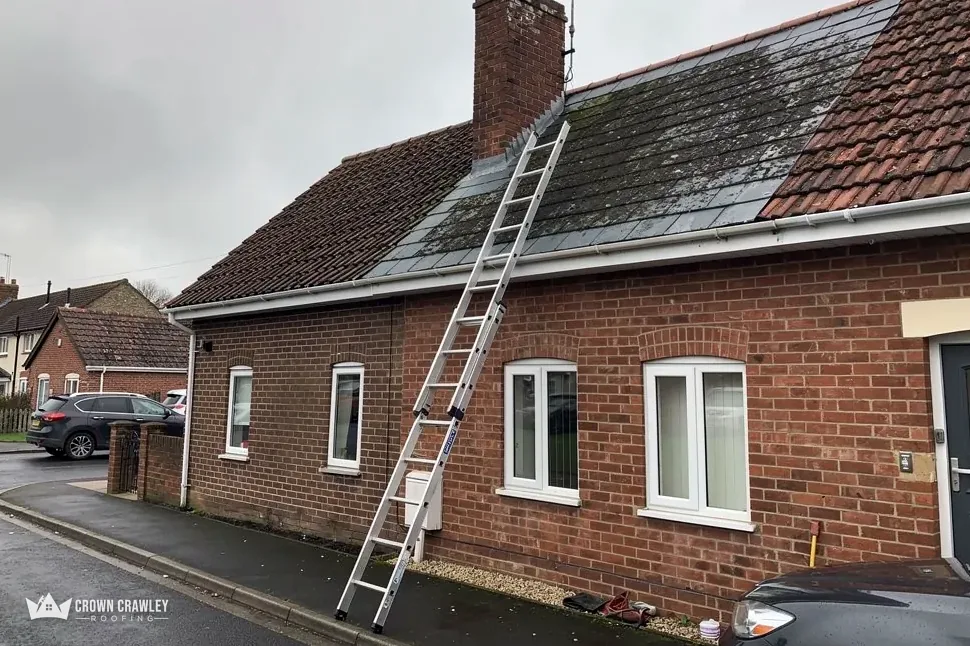
Brick bungalow with a ladder leaning against its tiled roof

Before a bigger Cheam job

Planning
London Borough of Sutton
Conservation
Cheam Village covers part
Building control
Ask Sutton before a re-roof
Scaffold
Licence if poles stand on the road
Roof voids
Stop and talk if bats appear

Will scaffold in Cheam need a licence?

Under section 169 of the Highways Act 1980, any scaffold that obstructs the road or pavement must have a licence granted by the highway authority. Poles standing wholly on your own land need no licence, which is why a front garden or a drive with space is welcome. Sutton's fee and notice period are for the council to tell you, so we ask at the survey, sort the paperwork out jointly with the scaffolder and set our start around the reply. Neighbours on a narrow lane hear from us before the poles go up.

Bats are protected by law, roosts included, and the government lists repairing or replacing a roof as work that can affect them. Should we spot droppings or a roost while surveying the loft or the eaves, we stop, tell you and talk it through before a single tile is lifted. To begin, take a few pictures of the slope, stack or gutter bothering you from the lane, and note your house number.

Cheam questions, answered plainly

Can the tiles on an old Cheam cottage be saved?

Often they can. Clay tiles are quoted a 60-year minimum by the Building Research Establishment, but with old peg tiles age tells you little, so we judge each tile on its own merits. We lift a few, tap them, study the face and the nail holes, re-lay the sound ones and match any that must go.

Which Cheam roofs come under the Cheam Village conservation area?

Only part of Cheam sits inside the Cheam Village conservation area, so the answer depends on your street. Sutton's planning team can confirm it from your address. If you are inside the boundary, ask the council before altering the look of the roof, and tell us at the survey so we plan with that in mind.

Who deals with roof work on a church like St Dunstan?

Because St Dunstan is still used for Anglican worship, its repairs are approved through the Church of England's faculty system rather than listed building consent. That exemption belongs to the denomination and does not cover houses nearby. A listed cottage in the village still needs listed building consent from the council for work that would affect its character, so ask before ordering tiles.

What should I gather before asking for a Cheam roof price?

A few pictures of the trouble spot taken from the lane or garden, your house number, and a line on where damp shows indoors. If the house is listed, add the list entry number. Then comes the survey, a set of pictures from your own roof, and a single total price on paper, with the listing or conservation question settled first.

Get your Cheam roof priced

Give us your house number and say if it is listed or inside the conservation area, and the survey will be planned around that.

01293 974253

10-year workmanship guarantee, in writing.

Call Get a free quote