Someone has cleaned your roof, or offered to, and now comes the follow-up: a coating. It might be described as a sealant, a protective finish, a colour restorer or a lifetime treatment. The pitch is simple and appealing. The moss is gone, the tiles look tidy, so why not paint on something that keeps them that way and makes the roof look new?
Sometimes a coating is a reasonable choice. Often it is not, and in a few cases it is sold to cover a roof that needs repair. This guide sets out what a coating is, what it can and cannot achieve on a pitched roof, the question of breathability, how coatings affect the cost and the maintenance of a roof, and the warning signs that a sales visit is going too far. You will find it easier to say yes or no with those facts in hand. For the wider picture, start with our roof cleaning and moss removal page, and if the question is simply whether to coat after a clean, should I coat my roof after cleaning takes it step by step.
What a roof tile coating is
A roof tile coating is a resin-based liquid that is brushed, rolled or sprayed onto a clean roof and dries to a thin film. It is sold in several forms. Some are clear and aim to seal the surface. Some are pigmented to freshen up faded tiles, and some are sold as moss-resistant.
Why do people use them?
Two reasons come up most. The first is looks: a faded or patchy roof is renewed in colour without the cost of replacing the tiles. The second is protection, the idea that a sealed surface will shed water and stop moss and algae from taking hold again. Both are fair aims, yet the second is the one that most often gets oversold. A film on top of a tile is a surface treatment and does not change what the tile is made of.
What is a coating not?
It is not a repair. It will not make a cracked tile sound, stop a slipped tile slipping or fix a failing hip or ridge. It is not a new roof, and it should not be described as one. Marley puts a concrete tile's expected life at around 60 years, as a typical figure that carries no promise for any one tile. A coating does not alter that either way. The coat-after-cleaning guide and this page should be read together.
Coating after a clean: the sensible order
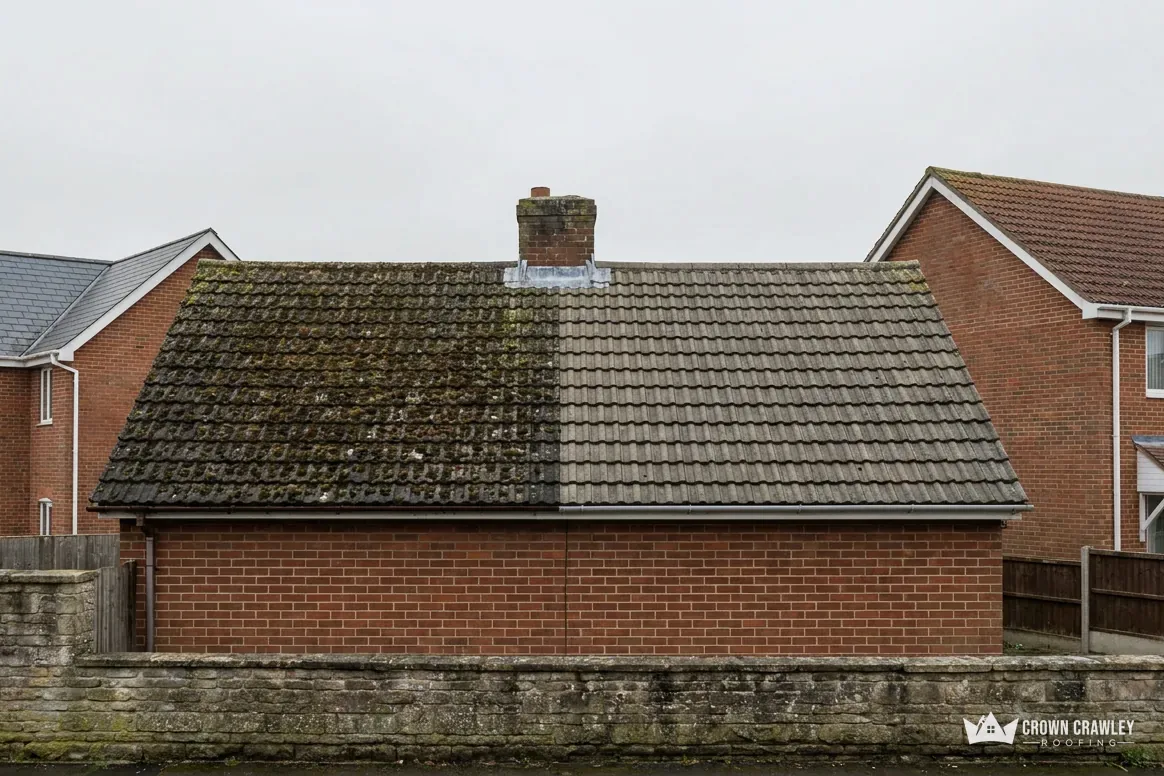
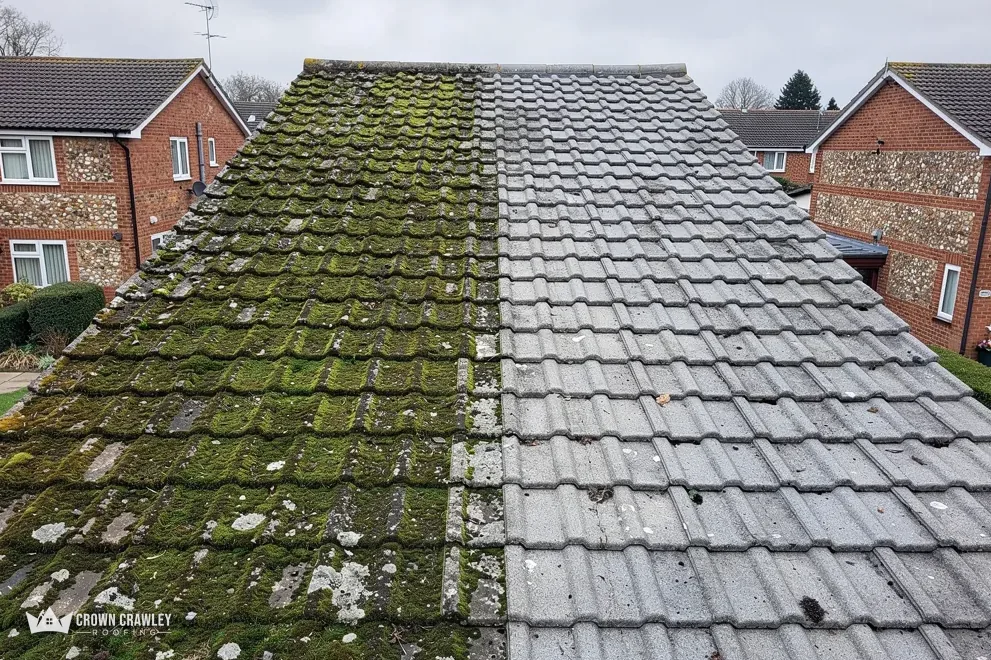
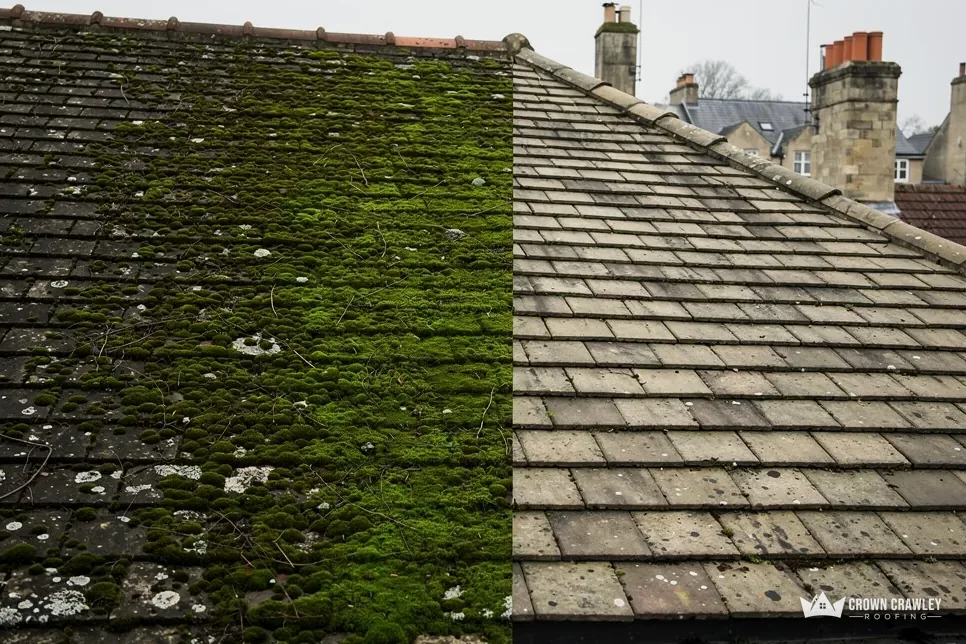
A coating can only go onto a clean, dry and sound roof. Applying it over moss, algae or loose dirt traps those under the film, where they carry on growing and lift the coating off in patches. So cleaning always comes first, and the clean has to be thorough, with all the growth removed and any treatment given time to work.
What has to happen before the coat goes on?
The roof is surveyed and any broken or slipped tiles are replaced and ridges are checked. The surface is then cleaned, rinsed and left to dry fully. A tile scoured by a hard jet is a poor base for a coating, and tile makers advise against that kind of washing in the first place. A low-pressure wash is the better preparation, and our page on roof soft washing explained describes it. The coating then needs dry weather, because water on or under a fresh film spoils it.
Is it a good idea straight after a clean?
Only if the cleaning has finished its job. Biocide treatments need time to kill the remaining growth, and some coatings need that growth to have gone before they can bond. Ask the roofer which product they use, how long they leave between the clean and the coat, and what the data sheet says about the surface it needs. The timing is set by the product, so a firm that coats the same afternoon should be able to show you why.
Our guide on how a biocide roof treatment works explains what happens to growth after treatment.
Breathability: the question to ask
A pitched roof is not a sealed box. Damp air from the rooms below drifts up into the loft and has to escape, which is why roofs have ventilation at the eaves and ridge and why underlays come in breathable and non-breathable types. Take BS 5250 as an example: Marley's summary of it asks for an eaves gap of 25mm on a low-pitched roof with a cold loft and non-breathable underlay, and 10mm on steeper pitches. A coating on the outside of the tiles raises a fair question about what it does to that moisture movement.
Does a coating stop a roof breathing?
It depends on the product and on the roof, and a general answer would be a guess. Roof tiles are laid with overlaps and gaps, and much of the ventilation happens at the eaves, ridge and vents and not through the face of the tile. Even so, a film thick enough to seal the surface changes how water behaves on and in the tile. Ask the installer for the product's data sheet and ask what it says about vapour permeability, in writing. Keep a copy with the quote, because it is the one document you can check later against what was applied.
What if the answer is vague?
Take that as a warning. A reputable supplier publishes technical information, and a roofer who is confident in a product can hand it over without fuss. "It breathes, don't worry" is not an answer. If the roof has condensation or damp problems already, a coating is the wrong first step, and ventilation and underlay should be looked at before anything is painted on. A good start is our guide to whether moss can cause a roof leak, which shows how water finds its way in.
What a coating can and cannot do
Set the claims against a plain list, because this is where sales talk drifts.
What it can do
- Freshen the colour of faded concrete tiles where the rest of the roof is sound.
- Give a uniform finish where patches of old and new tile differ.
- Add a surface film that may make it slightly harder for growth to take hold, depending on the product and on the shade and damp around the roof.
What it cannot do
- Repair a cracked, slipped or porous tile, or a failed ridge, hip or valley.
- Replace the need for cleaning in future; shaded roofs under trees still collect growth.
- Make an old roof last indefinitely. A coating is not a lifespan, and a promise made about a coating says nothing about the roof beneath.
- Cure a leak that comes from lead, flashing or underlay beneath the tiles.
Moss is a good example of what a coating does and does not fix. If growth keeps coming back, the cause is usually shade, damp or a north-facing slope, and a film does not change those. Our page on why moss grows on the north side of a roof explains the pattern, and zinc strips for roof moss is a separate option for slowing it.
Be wary of any claim that a coating will extend the life of the roof by a stated number of years. Nobody can promise that without knowing the age, condition and exposure of your tiles, and a figure offered before anyone has climbed up or looked at photos is a sales line and not a measurement.
Warning signs of mis-selling
Coatings turn up often in doorstep and phone sales, partly because the customer cannot easily judge the result from the ground. Know the signs before anyone knocks, and keep them to hand if a leaflet or a call arrives first.
What should make you stop?
- A visit nobody asked for, or a flyer followed by a pushy call.
- A price given on the spot with no survey, or a price that changes the longer you hesitate.
- A claim that the roof will last for a fixed number of years, or that the coating is "lifetime".
- Photos of a roof that is not yours.
- Pressure to decide today, or a "special price for this street".
- Only a mobile number given, and no written quote.
What do the consumer rules say?
Citizens Advice recommends collecting several written quotes, asking a trader for recent examples and phoning those customers, and treating a mobile number with nothing else behind it as a red flag. A contract signed at home carries a cancellation period for services that runs to the end of 14 days after the contract is made, and it stretches up to 12 months if the trader never gave the required cancellation information. The exception covers urgent repairs you specifically asked a trader to visit for, which a coating is not. If a sale has gone wrong, Citizens Advice is the place for individuals to start.
Is a coating worth it on your roof
For a sound, faded concrete roof where the owner wants a tidier colour, a coating can be a sensible finish, provided the clean is done properly and the product is well chosen. For most other roofs it is an extra cost with an uncertain return.
When does it make sense?
It makes sense on a roof that is structurally sound, with no broken or slipped tiles, where the tiles are visibly weathered, and where the owner has asked for the colour change and understands what it is. It makes less sense on an old roof near the end of its life, where the money would be better kept toward repairs or a re-roof. The survey settles it, and where mending the roof makes more sense than coating it, that is the advice you will get.
How much does it cost?
No national price guide for roof tile coatings is available to us, so we do not quote a figure here. The cleaning that comes first has one: A typical UK range for roof cleaning, from Checkatrade's April 2026 cost table, is £8.50 to £14 per m². The cost of a coating depends on the area, the product and the access. Ask for one written total, check whether VAT and scaffold are included, and compare that with your other options. Our page on roof cleaning cost covers the cleaning side.
What should you send us?
Tell us whether your tiles are concrete or clay, say what bothers you (colour, moss or both) and send ground-level snaps of each slope. At the survey we check the condition, show you pictures of your own tiles, and write up one total price for whichever option fits.
Part of our Roof Cleaning & Moss Removal in Crawley
Coating questions, answered
Will a roof coating stop moss growing back?
It may slow it, depending on the product, but it cannot change the shade, damp and tree cover that grow moss in the first place. A shaded north-facing slope will still need cleaning from time to time, with or without a film on the tiles.
Can a coating be applied over a damaged roof?
It should not be. Broken, slipped or porous tiles need repair first, because a coating only covers the surface and the fault underneath carries on. If a roofer offers to coat over visible damage, take that as a sign to ask for a second opinion.
Does a roof coating need building control approval?
The Planning Portal's test for re-roofing is about new coverings: less than 25 per cent of the building envelope and less than 50 per cent of the roof affected. Whether a coating counts is a question for your building control body, so ask them before you book.