Roof cleaning is one of those jobs people either put off for years or pay for every twelve months without asking whether it is needed. Neither habit is a plan. A roof can look scruffy and be perfectly sound, and a roof can look fine from the road while a slope at the back is quietly holding water against the tiles.
This is the decision post. It does not tell you how to clean, because other posts and guides do that. It helps you answer one question: is cleaning worth it for your roof, right now? We look at four things that tip the balance, which are how the house looks, a sale on the horizon, what the tiles are made of and what is happening in the gutters. Then we cover when to repair first, and whether to do it yourself. One word to start with: the tile face is the visible, weather-facing surface of a tile, and the growth you can see from the pavement sits on that surface.
Is a dirty roof actually a problem?
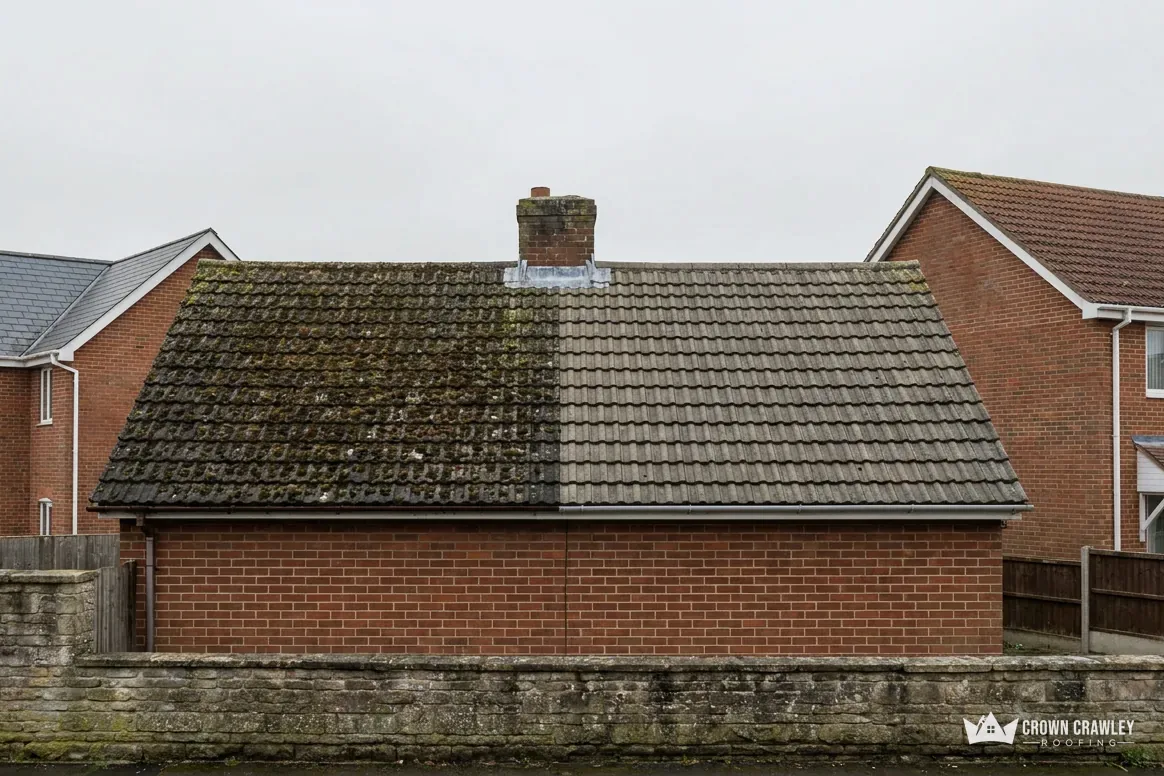
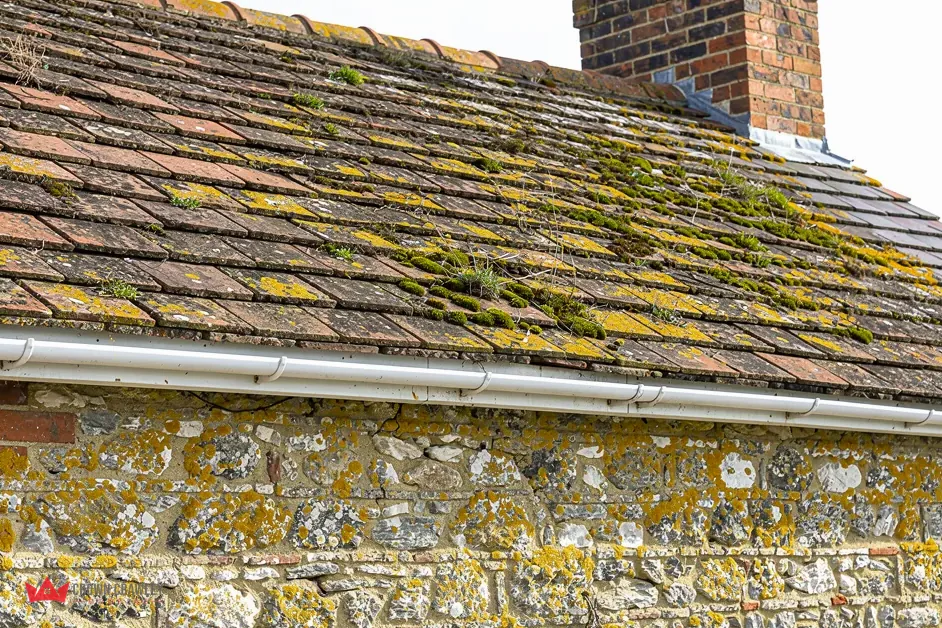
Start by separating the cosmetic from the functional. Dark streaks on a tile are usually algae, the thin black or green layer that spreads down a slope in damp weather. On its own it spoils the look of a roof without doing much else. Lichen, the crusty orange or grey patches, grips the tile more firmly. Moss is thicker, holds water and can fill gaps. Each one calls for a different level of attention, so begin by identifying which one you have.
What can you check from the ground?
Walk round the house in dry weather with binoculars. Look for thick moss along the bottom edge of a slope and in the valleys, which are the internal channels between slopes. Check whether green or black growth is spreading evenly or collecting on the shaded side. Look at the gutters for plants or moss falling out of them. A thin film that stays within the tile surface is a cosmetic matter. Thick cushions, raised tile edges or water stains below the gutter are signs the roof is working harder than it should.
When is the answer plainly yes?
When moss is blocking the water path, when growth is lifting tiles or filling the laps, or when a surveyor, buyer or insurer has mentioned the roof. Our post on whether moss is damaging your roof covers what it does, and what the four removal methods involve. If none of those applies, you have room to wait, and waiting is a sensible choice. Our roof cleaning and moss removal service is there when the time comes.
Kerb appeal and selling your house
Selling is the one situation where looks alone can justify a clean. Buyers judge a roof in a moment from the street, and a green, streaked one can suggest neglect even when the tiles underneath are in good order. Estate agents' photographs are taken from outside, so the front slope matters most.
Will it add value?
What cleaning adds to a sale price depends on the house and the market, so any figure would be a guess. What we can say is what it does: it removes a visible reason for a buyer to ask questions, and it gives you a chance to find problems on your own terms. If a buyer's surveyor flags the roof, that can lead to a request for a price reduction or a repair, and it is better to know what is wrong first. Our guide to cleaning a roof before selling a house goes into the timing.
Should you clean or just repair?
If your roof has slipped tiles, cracked ridge mortar or failing flashing, repair comes first. Cleaning a roof that is about to be repaired wastes money, and a clean roof makes defects easier to photograph for a buyer. When we survey a roof, we share photographs of your own roof, whatever state it is in, so you can decide what to put right before you list.
What about renting out or letting?
Landlords have a different test. A rented house with a leaking roof causes complaints, so the question is less about looks and more about gutters and water paths. If the roof is sound and the tenants have not reported a problem, cosmetic cleaning can wait.
Concrete, clay or slate: does the tile decide?
Yes, more than people expect. The material changes how fast growth takes hold, how much cleaning the tile can take and how the roof looks afterwards.
How do concrete tiles behave?
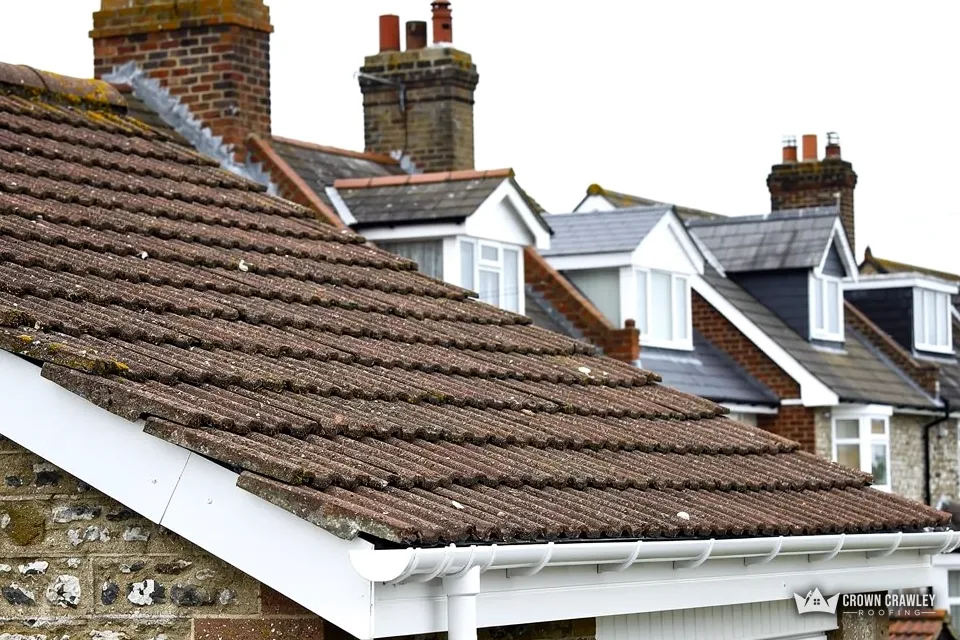
Concrete tiles have a slightly rough, porous surface that holds moisture, so algae and moss settle readily on them. Marley puts a concrete tile at around 60 years, with no guarantee implied. The surface layer is also where a rough clean can do harm. Marley does not recommend powerful jets on its tiles, as they can scar the surface and cut the working life of the tile. Concrete is common on estates built in the post-war decades, so many Crawley homes fit this case, though we cannot say what any one street is roofed in until we have looked.
What about clay and slate?
Clay is harder and less porous, and a Building Research Establishment figure puts its minimum life expectancy at 60 years, though that number says little about old peg tiles. Slate, if well maintained, can last 100 years or more. Both need gentler handling than people assume: older clay can be brittle and slate can be fragile at its tails. Our guides to moss on concrete roof tiles and on cleaning a clay tile roof set out the differences.
Does a coating change the answer?
A tile coating can make a roof look new and slow regrowth, but it is a larger decision than a clean and only suits sound tiles. If a seller or a buyer asks about one, ask the roofer what it is, what prep it needs and what it hides.
Gutters and the water path
If you only look at one thing before deciding, look at the gutters. A roof stands or falls on how well it drains, and gutters are where moss does its damage by dropping debris into them.
How do I tell whether the gutters are failing?
Watch them during heavy rain. Water pouring over the front edge, a downpipe that overflows at the top and green stains on the wall below are the three usual signs. In dry weather, look for plants growing in the gutter, sagging runs between brackets and wet patches at the joints. A gutter that holds water after rain has lost its fall, which is the slight slope towards the downpipe. Brett Martin's guidance gives 1mm for every 600mm as a manufacturer's figure.
Does cleaning the roof help the gutters?
It helps in the long run and makes a mess in the short run. Cleaning dislodges debris that then lands in the gutter, so clear the gutters after the clean, not before. If you clean the roof and leave the gutters alone, the next downpour carries the loosened moss straight to the outlet.
What about the fascia and soffit?
Fascia means the long timber the gutter is screwed to, and soffit means the board that boxes in the underside of the overhang. If water has been spilling behind the gutter, those boards can be soft or stained. A roofer will see this from the scaffold or tower during a clean, and it is a reason to have the survey photos.
A clean that finds rot is doing its job. A clean that hides it is not.
Repair first, or leave it alone?
Cleaning is cosmetic maintenance, and it pays to put the structural jobs in front of it. Three situations are worth ruling out before booking.
Are any of the tiles already broken?
A cracked or slipped tile will be found during a clean, since the roofer sees every course close up. Cleaning around damage leaves water getting in and spreads moss into the gap. It is usually cheaper to fix a few tiles first, and our post on pitched roof repairs shows how to tell which layer is at fault.
Is the covering actually asbestos cement?
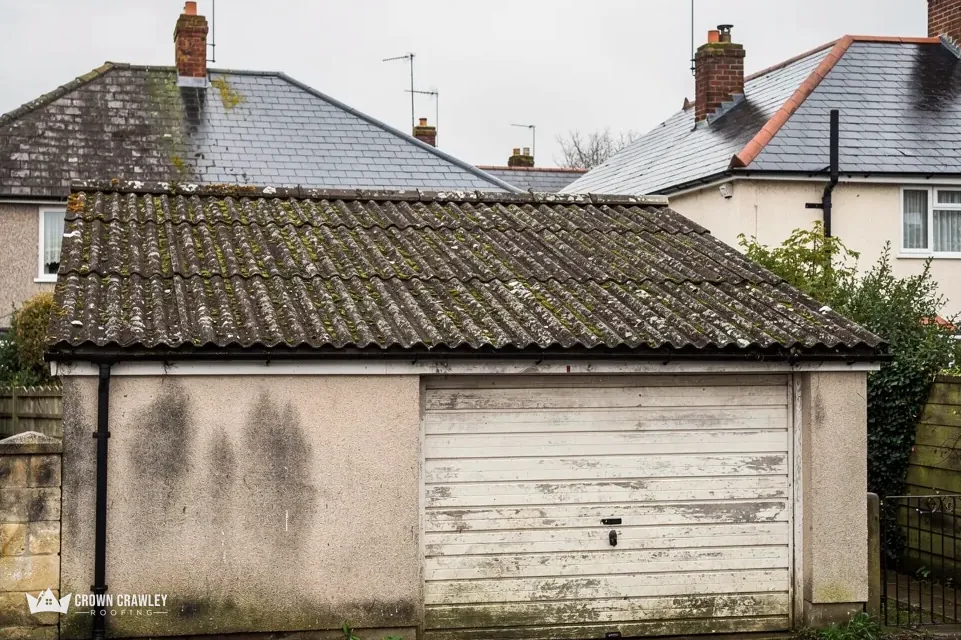
This matters most on garages, sheds and older extensions. HSE advises treating any property dating from before 2000, or refurbished before then, as likely to contain asbestos. Asbestos cement roof sheeting is always fragile, and brushing or washing it can break it up and create dust. Do not clean or walk on a roof like that. Have the material identified first.
When can you safely leave it?
If growth is thin, the roof drains cleanly and you are not selling, you may wait another season. Leaving a roof is a decision, not neglect, provided you keep an eye on it. A yearly check from the ground in autumn, after the leaves fall and before the winter rain, costs nothing and tells you if anything has changed. How often to clean a roof depends on the tile, the shade and the trees around it. A handful of photos of the slopes and gutters is all we need to suggest where to begin.
Do it yourself or pay a roofer?
The risk in a DIY clean is not the cleaning. It is the height. A roof is a poor place for an amateur, wet moss is slippery, and a fall from a ladder is a serious injury. Most of the saving disappears if something goes wrong.
What can you safely do yourself?
From the ground, you can clear low gutters, trim back overhanging branches that drop leaves and keep shade on the roof, and watch for changes. A long-handled soft brush on a low outbuilding roof is fine if you can reach it from a stable platform. Anything higher, and anything on a pitched slope, is a job for someone with proper access.
What does a roofer cost?
Checkatrade, in a table dated April 2026, gives a typical UK range of £8.50 to £14 per square metre, with around £11.50 for hand removal plus a biocide, and £637.50 to £862.50 for a semi-detached house. Scaffold, if needed, adds around £18 per square metre. Those figures are national guides, not Crown prices. Ask whether any quote you get includes VAT and scaffolding.
What should a roofer tell you?
Which method they will use and why, what products they apply, what pressure they use and what they will do about run-off and gutters. They should also share photos of your roof before and after. Do not accept a vague promise of a clean roof without any of that. The price we write down after the survey is one total figure. Tell us what the roof is covered in and what you can see growing, and we will shape the visit around that.
Part of our Roof Cleaning & Moss Removal in Crawley
More on cleaning your roof
Can cleaning shorten the life of a roof?
A badly done one can. Marley's guidance is that a powerful jet wash can scar a tile or slate and cut its working life. A gentle clean with the right products and a low-pressure rinse is a different thing. Ask any roofer which method they use before you agree to the work.
Is it worth cleaning the roof just for the look of the house?
That is a fair reason, provided the tiles are in good order and the budget allows it. Kerb appeal is real, particularly before a sale. Just do not pay for a clean to hide a defect. A roofer should photograph the roof first, and any broken tiles or loose ridge mortar should be put right before the cleaning begins.
What time of year is best for roof cleaning?
Dry, mild weather suits most methods, since a treatment needs time before rain and a rinse should not freeze on the tiles. Autumn, after the leaves have gone, is a good time to clear gutters at the same visit. Ask the roofer how weather affects their method, and whether they will rebook if conditions turn.