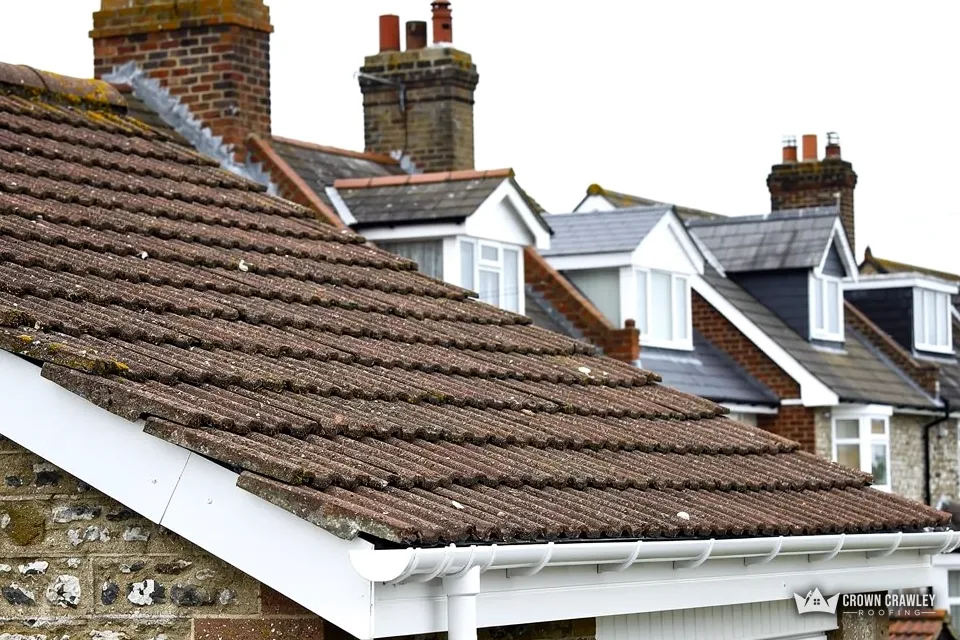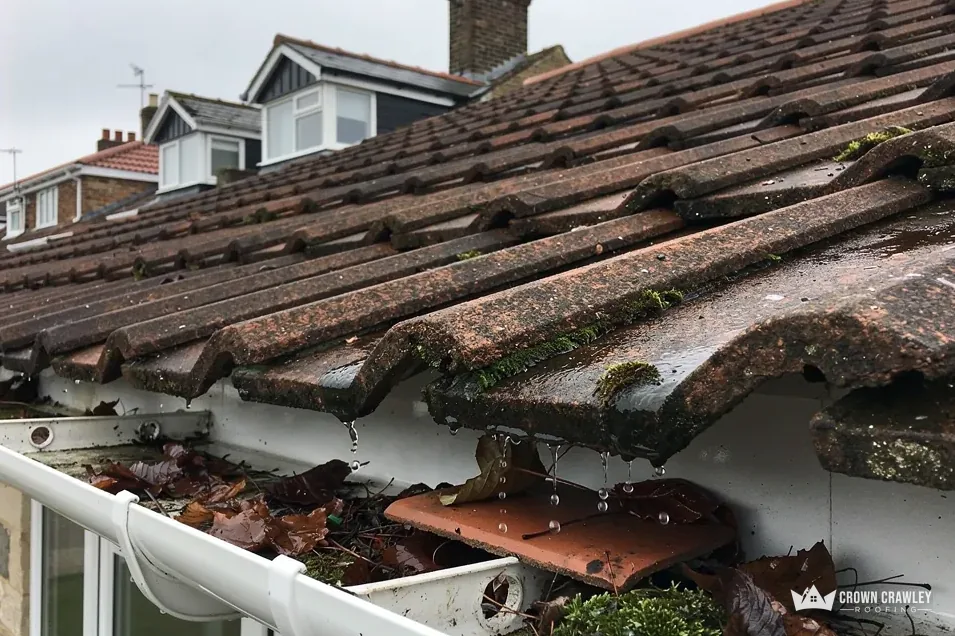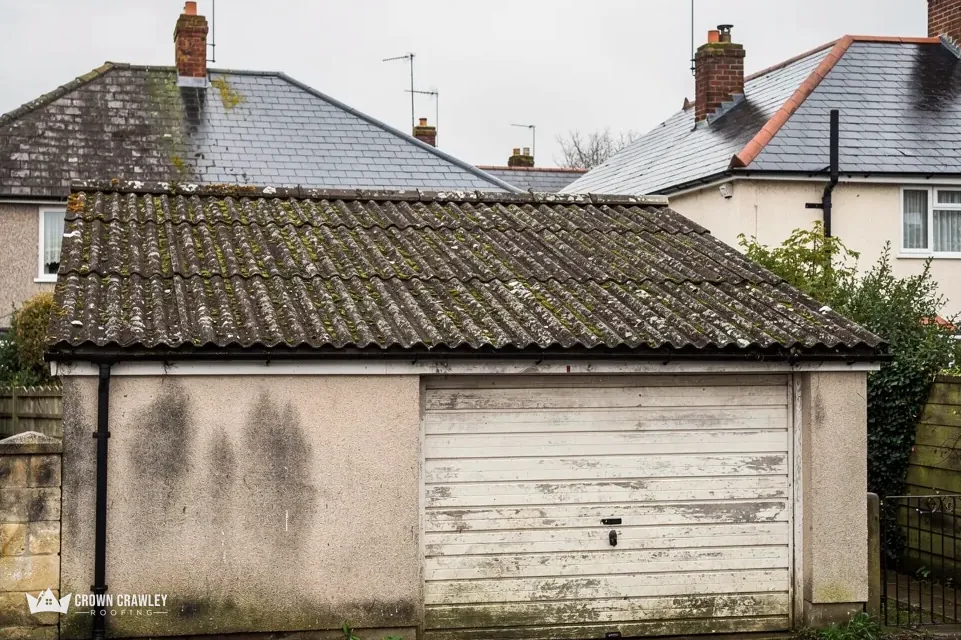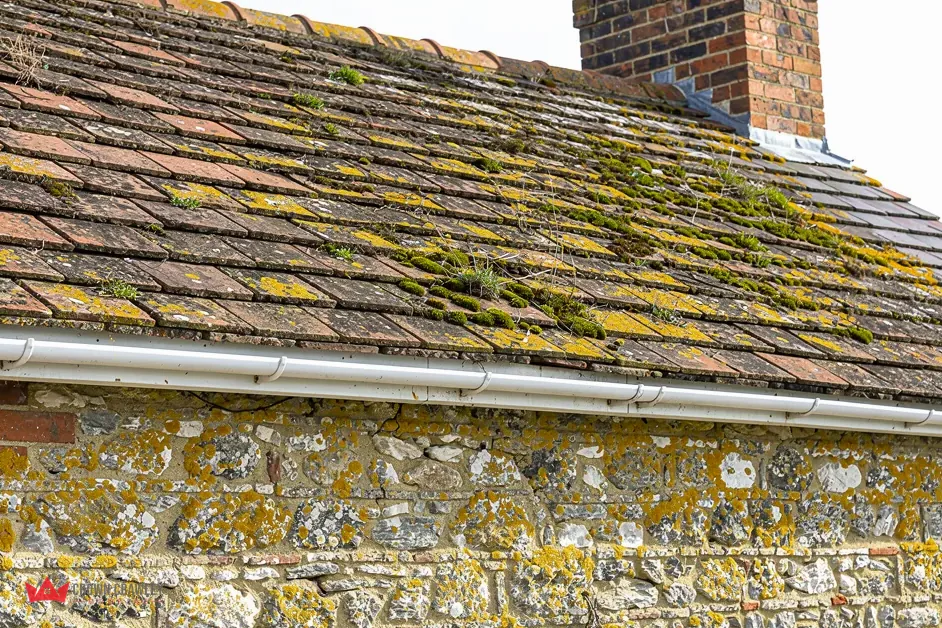
A moss-covered clay roof looks tired, and the temptation is to hire the strongest wash going and blast it clean. For clay and slate that is the wrong instinct. Both coverings lose their value through damage to the surface, and once a tile face has been stripped by a jet, no treatment puts it back. The roof may look pale and tidy for a season, then start to flake, soak up water and fail early.
Older and listed buildings add a second layer of care. The tiles may be handmade, the lime mortar may be soft, and the nails holding slates may already be on their way out. A roof cleaner who treats such a roof like a modern driveway can undo what the roof has taken a long time to build. This guide covers why gentle methods matter, how moss and algae are removed without damage, what to check on a protected building, and what a sensible clean costs as a national guide. It also says when the better answer is a repair first and a clean second.
Why old roofs need a gentler approach
Modern concrete tiles carry a hard factory coating and are cheap to replace. Clay and slate are different. A clay tile gets its strength and weather resistance from a fired surface, and a slate from the way the stone splits. Strip either surface and the material underneath takes in water, freezes, and begins to flake or delaminate.
What does a jet wash do to clay and slate?
Marley, a tile maker, advises against powerful jet washes on its roofing, because they can harm the face of the tile and cut its working life. A jet can also force water up past the laps, soak the underlay and shift loose tiles. On an old roof with tired nails and soft battens, a leak straight after the clean is a real risk. Our page on pressure washing roof tiles goes into this in more detail.
Is the moss harming the roof?
It can be. Thick moss keeps the tile surface wet for long spells, and heavy growth can block the gaps between courses and the gutters below. On the other hand, light lichen on an old clay roof is often part of how the roof has aged, and some owners and conservation officers prefer to leave it. Whether to remove it is a judgement about the roof and about how it looks, and a clean is not always the right first step. A roofer who checks the roof before quoting will tell you which applies.
Colour is a clue as well. A clay roof that has gone patchy and pale after an earlier hard wash may show a roughened surface up close. If you inherit a roof like that, say so at the survey, because it changes how much a further clean can safely do.
Gentle methods that suit clay and slate
Old coverings reward patience. The safest methods lift growth from the surface without scouring the tile beneath. They take longer than a power wash, which is part of the reason they cost more per square metre, but they leave the roof in better shape.
Hand removal
On a steep roof of small clay tiles, a roofer can work along the slope using soft brushes and plastic scrapers to lift moss in sheets, working from the ridge downwards so debris falls toward the gutter and not under the laps. Care is needed to avoid lifting tile edges, and the work is done from a safe working platform, not by walking on the tiles. Our page on manual moss removal explains the method.
Treatment applied at low pressure
Many cleaners apply a moss and algae treatment with a sprayer at low pressure, then leave it to work. The growth dies back over the following weeks and weathers off with the rain. Our page on roof soft washing describes how this works. It leaves the tile face intact, which suits fired clay and natural slate.
Moss that is left in place
On very old or fragile roofs, the most careful option may be to treat and leave the dead growth to fall away, rather than scrape. Slate roofs that already have slipped slates or rusted nails often benefit from this, because brushing along them can lift tiles that were barely holding.
None of these methods involves a power jet held close to the tiles. If a quote is for jetting, ask what pressure is used and from what distance, and ask why the roofer thinks it suits your covering.
Treatments, the label and the law
Moss and algae treatments are biocides, which means they are regulated products, and the rules about who may use them are real.
What are the rules on biocides?
The HSE is clear that products meant only for professional users are not for the general public, and that some professional products call for specific certification. Under the retained Biocidal Products Regulation, article 17(5), biocidal products must be used in compliance with the terms and conditions of the authorisation and with the labelling requirements. The practical point for you is simple. A trained cleaner uses products authorised for the job and follows the label, and you can ask which product is going on your roof and read the label yourself.
What should you not be told?
The HSE also treats advertising, supplying or using a non-approved product as an offence, and adverts must not describe a product as approved by the HSE. Treat that phrase from a cleaner as a warning sign.
What about plants, pets and water?
Moss killer is a chemical, and it drains off the roof when it rains.
Treatment runs off the roof into the gutters, so ask where the runoff goes and whether anything needs covering or moving before the work. Plants beside the house, a garden pond or a rainwater butt are worth mentioning to the cleaner before the day. Keeping pets indoors while the product is applied is sensible, and the label says when it is safe to return.
Ask for the product name in writing before the visit. A reputable cleaner has no difficulty giving it, and it lets you read the label and the manufacturer's guidance yourself. It also shows the cleaner has chosen a product for your type of covering and not whatever happens to be on the van.
Slate, nails and what a clean can disturb
A slate roof outlasts most coverings, and many on older houses are on their second or third set of fixings. The conservation body CORC puts well-maintained natural slate at 100+ years. That is a lifespan for a well-kept roof, not a promise, and the weak point is rarely the stone. It is the fixing.
Why do old slate roofs slip?
Slates are nailed straight to the battens, and an old iron nail corrodes. When enough nails have rusted, the slates drop, which is the problem roofers call nail sickness. A clean can reveal this, because brushing along a slate roof can lift slates that looked sound, and a wash can push water under them. Our page on nail sickness in slate roofs sets out how to spot it.
Should the roof be repaired before it is cleaned?
Often, yes. Cracked, slipped or flaking tiles should be mended before the clean. Otherwise the work can finish off a tile that was barely hanging on. Broken tiles found part-way through a clean also stop the job, because the cleaner cannot keep working over open gaps without making them worse.
Cupa Pizarras says hook-fixed slating is a poor choice below a 25 degree pitch, so any change of fixing on a slate roof starts with measuring the slope.
If your slates already carry stainless or copper fixings from an earlier repair, mention that at the survey. Mixed metals and patched sections show where work was done before, and they help a roofer judge how gently each area needs handling.
Listed and historic buildings
A clay or slate roof on a listed building brings tighter limits, and a wrong move can become a legal matter as well as a physical one.
Does a clean need consent on a listed roof?
Section 7 of the Planning (Listed Buildings and Conservation Areas) Act 1990 forbids changing a listed building in ways that touch its special interest without authorisation. Cleaning is not obviously an alteration, but a method that changes how the roof looks might be, and so might swapping tiles during the clean. The South Downs National Park Authority says ordinary upkeep and minor repairs done in place, like for like, can go ahead without listed building consent. That is the Authority's wording for its own area, so on any listed roof the safe route is a call to your council's planning team before anyone starts.
What about conservation areas?
The Ifield Village conservation area covers part of Ifield, and other areas around Crawley and across our patch bring their own care for roofs seen from the street. Ask the planning team whether a clean or a tile swap on your street needs anything beyond the usual checks.
What does BS 5534 say about old roofs?
BSI warns that some of the standard's advice can be unsuited to re-slating or re-tiling an old roof, especially if the tiles are handmade or reclaimed. The point carries over to cleaning. A roof that does not match modern practice is not necessarily faulty, and a roofer who knows historic coverings works with what is there.
Costs and questions before you book
Gentle cleaning takes longer, and the price follows. Size, pitch, the amount of growth and, above all, access all play a part.
What does it cost, as a UK guide?
Checkatrade's roof cleaning guide, April 2026 table, shows £8.50 to £14 per m², with hand removal plus biocide at around £11.50 per m². For a semi-detached house it shows £637.50 to £862.50, and it adds scaffold at around £18 per m². Treat these as national guide figures. Our quote follows a survey and comes as one written total. See whether any quote includes VAT, which is 20% at the standard rate, and whether it covers scaffold. Tall or steep roofs usually need scaffold, which adds to the total, and you should ask early who deals with any highway paperwork.
What should you ask the cleaner?
Ask which method is planned and whether any jetting is involved. Ask which product goes on and where the label can be read. Ask what happens if broken tiles turn up, how the roof will be reached and who decides on repairs. Citizens Advice suggests gathering several written quotes and speaking to past customers, because a written reference may not be genuine.
When is it better not to clean?
If slates are slipping across a whole slope and the battens are soft, a clean spends money without extending the roof's life. The next step is a survey, with pictures taken on your roof, to choose between repair and re-laying. Our roof cleaning and moss removal page lists every method. Send photos of the roof and the moss, and tell us if the building is listed.
Part of our Roof Cleaning & Moss Removal in Crawley
Gentle roof cleaning queries
Can a clay tile roof be jet washed?
It is not advised. Marley warns that powerful jets can harm the face of slate or tile and cut its working life. Hand removal and low-pressure treatment leave the face intact, which is what keeps the roof weatherproof, so they suit clay and slate far better.
Is it better to leave lichen on an old clay roof?
Sometimes. Light lichen is part of how an old roof has aged, and some owners and conservation officers prefer to keep it. Heavy moss is different, because it holds water against the tile and blocks gaps. A survey of the roof shows which you have.
Do I need consent to clean the roof of a listed building?
Possibly. Works that affect a listed building's character need consent, and a cleaning method that changes how the roof looks could count. Ask your local council's planning team before any work starts, and tell the cleaner at the first call that the building is listed.