Ask three roofers whether dry ridge beats mortar and you may get three confident answers. The truth sits in the middle. Dry ridge is a mechanical system: the ridge tiles are held by clips, brackets or screws onto a rail or batten, and a vented strip closes the gap underneath. Mortar fixing beds each tile on a bed of cement and sand and points the edges. Both have been used for decades, and both can fail if they are installed badly or left unchecked.
What has changed is the rulebook. The standard for slating and tiling, BS 5534, now expects ridge and hip tiles to be held by more than mortar alone, and a separate test standard, BS 8612, covers dry systems. That pushes the choice towards mechanical fixing, but it does not ban mortar. This guide sets the two methods side by side on life, upkeep, cost, looks and the limits that apply to older and protected buildings. It tries to say plainly where mortar still makes sense, so a quote reads clearly when it arrives.
How each system holds the ridge down
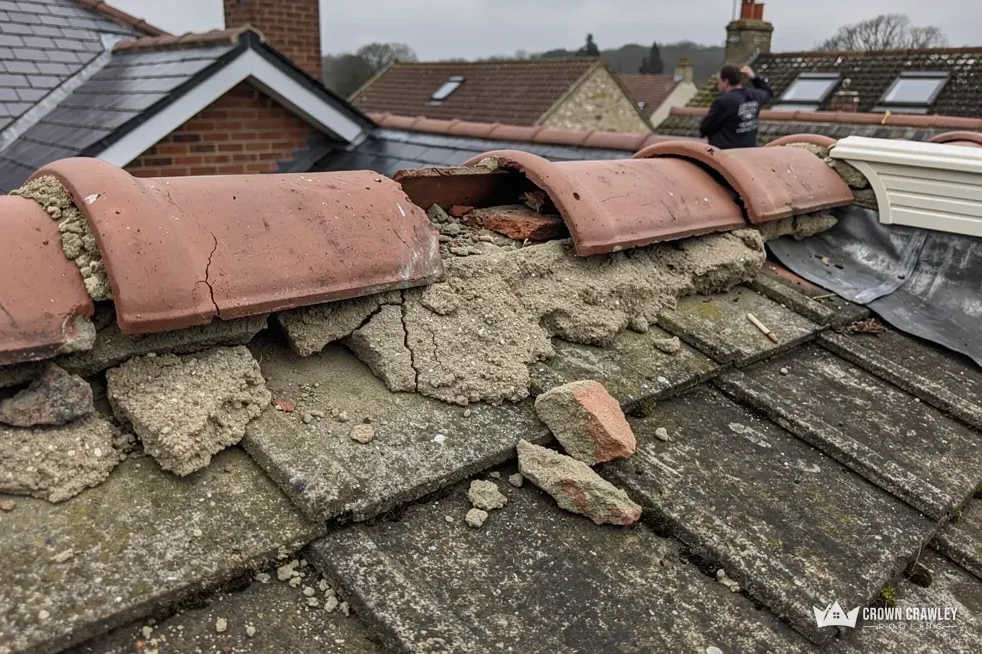
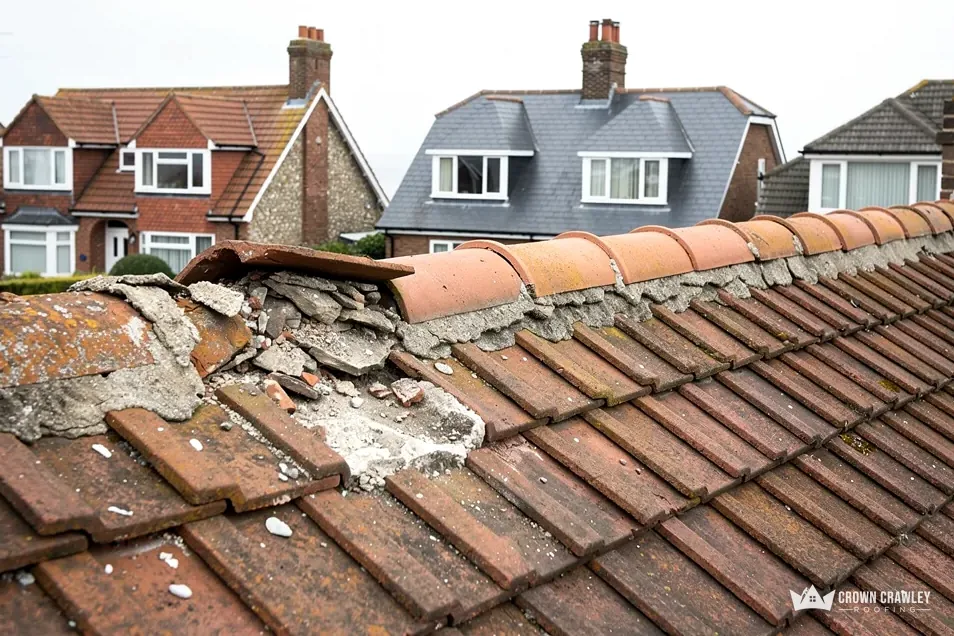
On a mortar ridge, a bed of mortar is laid along the crest, and each ridge tile is pressed into it. The mortar fills the gap between the tiles below and the cap above, and it is pointed along both edges. Over time the mortar can shrink, crack and wash out, and the tile it was holding then moves.
What is in a dry system?
A dry system uses a ridge batten or rail fixed along the roof, clip or bracket arms that hold the tiles, and a vented roll or strip that spans the gap beneath the cap. There is no wet trade. The tiles can be lifted and refixed without breaking anything, which makes later inspection simple. Our page on what a dry ridge system is goes through each part in order.
What does the standard expect?
Marley's post on mortar against dry fix, updated in February 2026, takes the 2014 revision of BS 5534 to mean that mortar strength cannot carry a ridge or hip tile alone, so bedded tiles and fittings should all have a mechanical fix as well. It names BS 8612 as the standard dry systems are tested to. A bedded ridge today is therefore expected to carry clips or screws as well as mortar. Marley adds that installing to BS 5534 is not required by law, which is why old-style work that ignores it still turns up.
The comparison at a glance
The table sets out the five points that come up first. It describes how each system tends to behave, and no figure in it is a promise for your roof. The costs are national ranges from one published guide, and only the written total you receive after a survey is a price for your house.
| Point | Dry ridge | Mortar ridge |
|---|---|---|
| Working life | Set by the maker's parts; the clips, rail and vented strip are the weak links | Set by the mortar joints, which crack and wash out first |
| Maintenance | Occasional look at clips and screws; tiles lift out for access | Re-pointing and rebedding when joints fail |
| Cost per metre | Checkatrade, June 2026: £50 to £70 per metre for dry ridge repair, £70 to £100 for dry hip | Varies with access and condition; the written quote fixes it |
| Look | Neat and even, with a vented strip tucked beneath the cap | Traditional, with a visible pointed line along each edge |
| Conservation limits | Needs checking against the council's rules for protected buildings | Often preferred for like-for-like repair on listed or traditional roofs |
Checkatrade says its repair figures are exclusive of VAT, so check whether any quote includes VAT. The next sections take each row in turn and say where the table needs a longer answer.
Two things the table cannot show are workmanship and the state of the roof underneath. A well-made mortar ridge on sound battens will outlast a careless dry ridge, and a dry system clipped onto rotten timber will not hold. The method matters, but who fits it and what it is fixed to matter just as much.
Life and maintenance in practice
Neither system has a fixed life, and anyone quoting you a number of years for a ridge is guessing unless it is a maker's written guarantee for a named product. What can be said is where each one tends to fail first.
Where does a mortar ridge fail?
The weak point is the mortar. Frost, rain and movement from the roof working in the wind cause hairline cracks, then loose pieces, then gaps where the tile can rock. The tile may stay on for a while after the mortar has gone, because gravity holds it, but a gust can take it. That is why a mortar ridge benefits from a look every so often from the ground with binoculars, and from a closer check after a storm.
Where does a dry ridge fail?
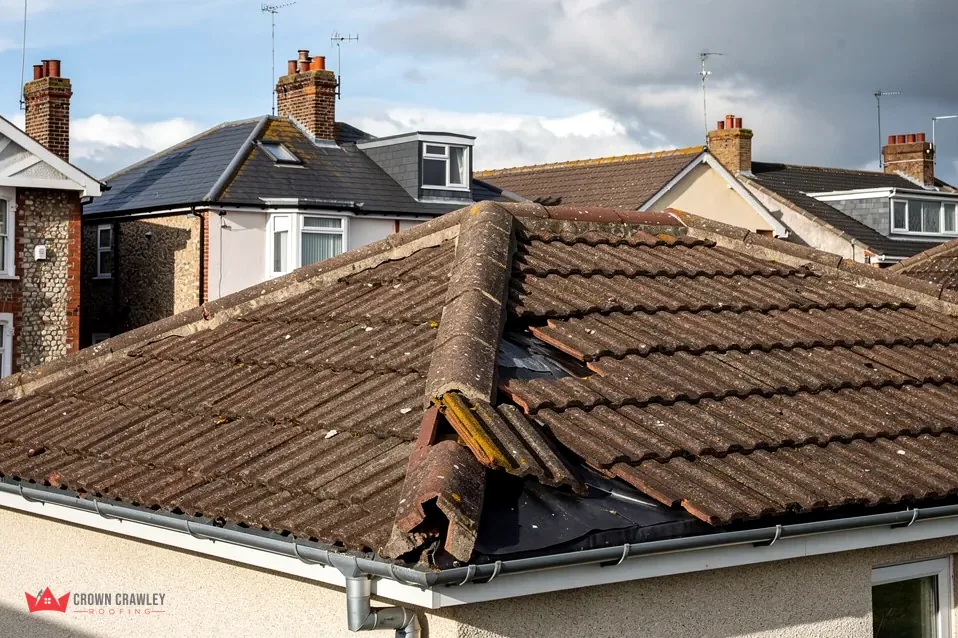
The weak points are the fixings and the vented strip. Clips can work loose, screws can corrode, and a poorly fitted rail can allow the tiles to rattle. A dry ridge is usually quick to inspect, since the tiles lift off and go back. Our page on dry ridge maintenance lists what to look for. If the ridge was fitted without a rail, or with fewer fixings than the maker's instructions call for, it can fail early, so ask which system and which fixings were used.
Neither type removes the need for an occasional check, ideally after the first big storm of each winter. The difference is that a failed dry ridge usually means a tile or a clip, while a failed mortar ridge often means pointing or rebedding along a longer run.
Cost per metre, and what drives it
Cost is where people expect a clear winner, and there is not one. Mortar looks cheaper because the materials are simple, but it often needs repeat visits. Dry systems cost more for the parts but go on quickly and rarely need a wet trade.
What does a national guide say?
Checkatrade's roof repair cost guide, with a table dated June 2026, gives dry ridge repair at £50 to £70 a metre and dry hip at £70 to £100 a metre. Those are national typical ranges and they exclude VAT. A mortar ridge is priced from the same list of things, and the total in your written quote sets the figure. What pushes the price either way is covered next.
What sets the price on your roof?
The length of the ridge, the number of hips, the height of the building and the type of access decide most of it. A short ridge on a low bungalow needs little access equipment, while a long one on a tall house means scaffold, and that gap alone can swing the total. The condition of the old ridge matters too: stripping off crumbling mortar and carting it away is part of the job. The covering underneath matters, because a ridge laid on weak battens may need those fixed first.
After the survey you receive one written total. Check that scaffolding and VAT are covered, and whether the tiles are being reused or replaced, since the answers change the figure more than the choice of method does.
Appearance and conservation limits
Looks are subjective, but a few facts help. A dry ridge sits on a rail with a vented strip beneath the cap, and the finished line is neat and even, which suits modern estates well. A mortar ridge shows a pointed line along each side, which some people find more traditional and some find untidy once it has aged.
Does a dry ridge look different?
On a modern concrete tile roof, the difference is small. On clay or slate it can stand out more, because a vented strip may be visible from a low angle, and some makers offer colour matched options. Ask to see the strip and the cap before work begins, so you know how it will look from your drive.
What are the limits on older or protected buildings?
If the house is in a conservation area, check with the council's planning team before changing the ridge method or the tile profile. A listed building needs listed building consent for changes that touch its character, so a swap from mortar to dry is a question for the council first. Swapping a mortar ridge for a dry one is a change to the fabric, so ask rather than assume. For Article 4 areas, the direction itself says what is covered, so the council is the right place to ask.
On a traditional roof, mortar-bedded work with added mechanical fixings can satisfy both the conservation officer and the standard, which is why it is not simply an inferior choice.
Which one should you choose?
For roofs built or recovered in recent decades, dry ridge is the sensible default. It matches what the standard now expects, it is quick to fit, and it is easy to inspect. For a traditional roof where the look matters, or a protected building, a bedded ridge with added fixings may be the better match.
When does dry ridge fit best?
It suits newer concrete and clay tile roofs, repairs where the mortar has failed across a long run, and any roof where you want a ridge that can be lifted and refixed. If your ridge tiles keep coming loose, our page on whether ridge tiles need mortar explains why the old method struggles on exposed slopes.
When might mortar still be right?
On a roof in a conservation area where the council wants like-for-like work, on a stretch of ridge only a few tiles long, or where the existing tiles are rare and a dry system's rail would not suit them. The trick is that the mortar must be backed by a mechanical fixing, because mortar alone is no longer enough. Ask the roofer to say which fixings are going in and how many per tile, so the answer is on paper before work starts.
Whichever you choose, and our dry ridge and dry verge page has the wider picture, ask for the tile profile, the fixing method and the list of parts in writing, and send photos of the ridge taken from a safe spot at ground level. We can then say which method suits your roof before the survey visit.
Part of our Dry Ridge & Dry Verge Systems in Crawley
Dry ridge against mortar questions
Is dry ridge allowed on any roof?
Dry ridge is allowed on most tiled roofs, but each system is made for particular tile profiles, so the parts must suit yours. On listed buildings and in conservation areas, ask the council's planning team before changing the method, because the original fixing may be part of the building's character.
Will a dry ridge stop ridge tiles blowing off?
It holds them with clips or screws instead of relying on mortar, which is what BS 5534 now expects. It does not make tiles immune to extreme gusts, and a poorly fitted rail can still fail. Correct fixings, a sound batten and a check after storms matter as much as the method.
Can you add dry ridge to a roof with a mortar ridge?
Yes, the old mortar and tiles come off, the rail and clips go on, and the tiles are refixed or replaced. The roofer checks the ridge batten and the top row of tiles first. Our page on adding dry ridge to a roof that already has tiles covers the sequence step by step.