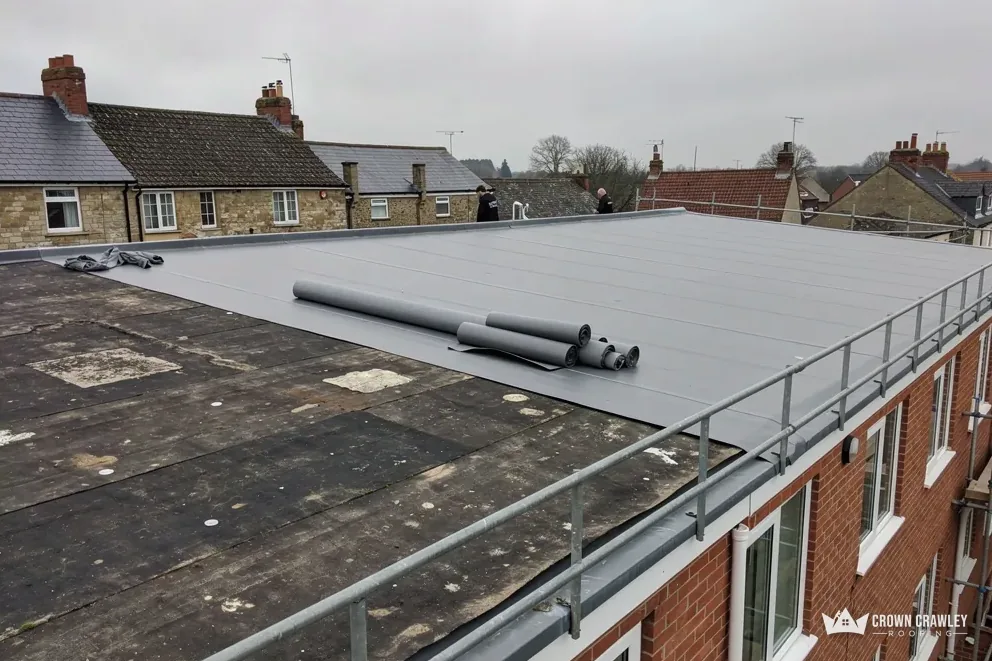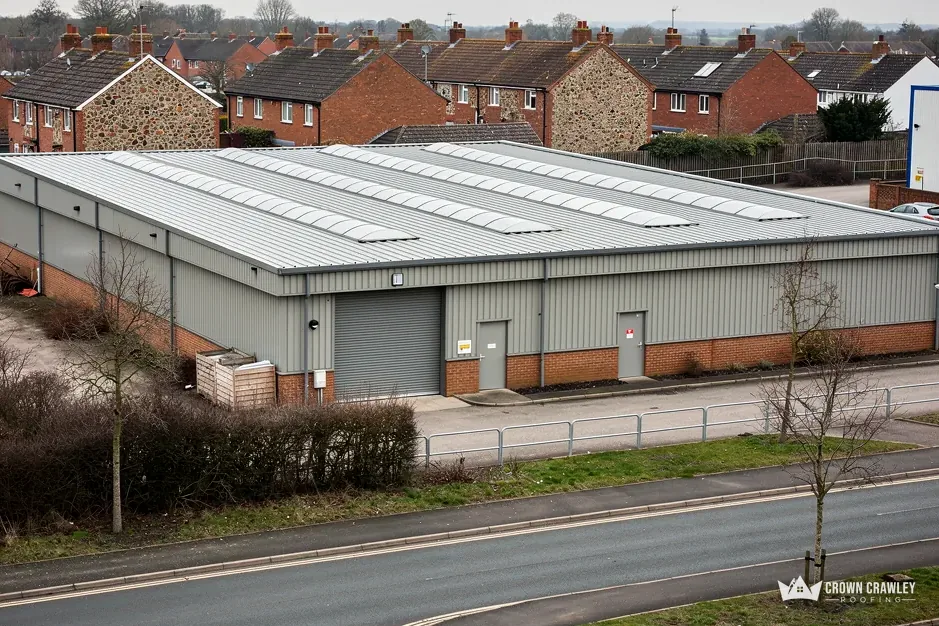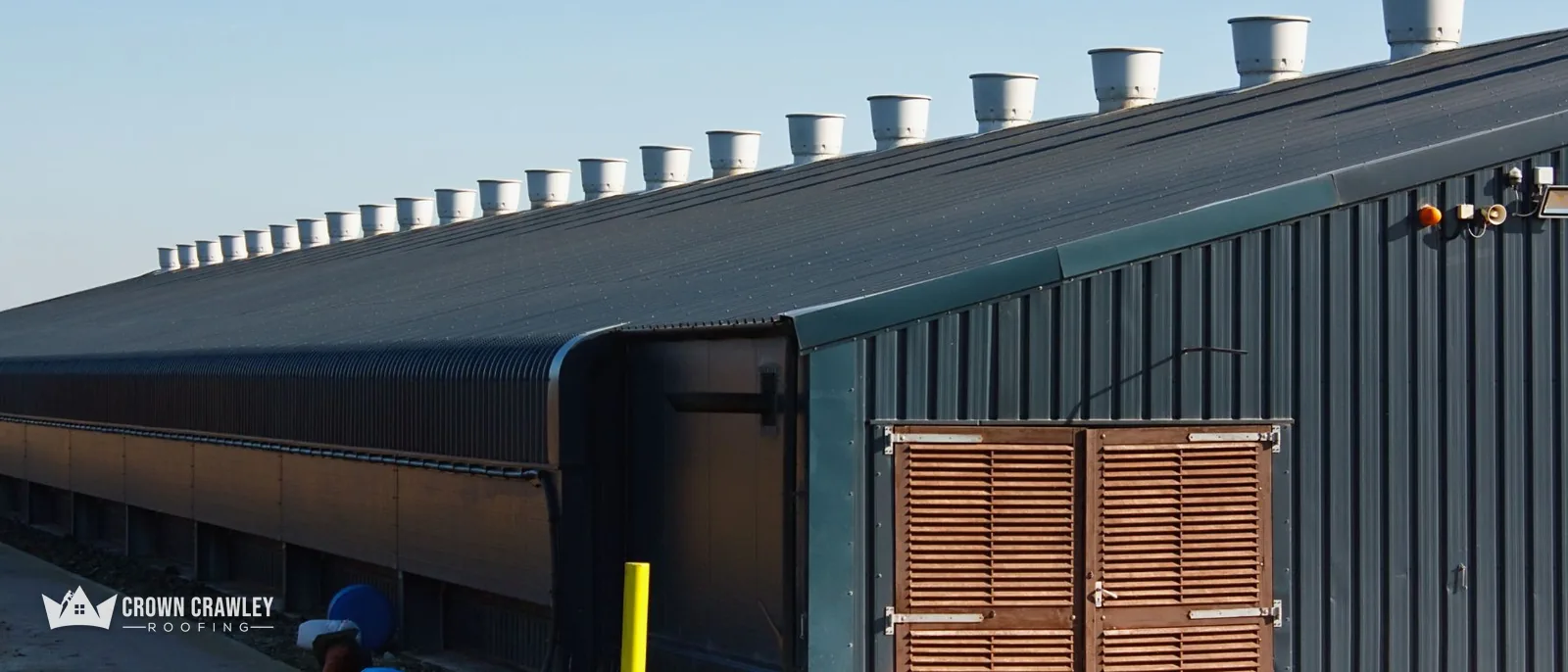
Hiring for a commercial roof is not the same as hiring for a house. The building is often occupied while the work goes on. Staff walk beneath it, lorries load beside it, and a tenant may hold a lease that says who pays for what. A badly run job costs you more than the roofing itself, because it stops stock moving, sets off alarms and lets rain into units that cannot afford to be wet.
So the useful question is not who quotes lowest but who has thought about your building before turning up. That shows in paperwork. A contractor who has run this kind of job before can hand you a method statement, a risk assessment, evidence of their insurance cover and references from work of a similar size without a week of chasing. One who cannot will usually send a price and a friendly phone call.
This post lists what to ask for, why each item matters and how to read what comes back. It applies to any firm you approach, ourselves included. None of it needs technical knowledge. It needs the habit of asking for things in writing and keeping the answers on file.
Start with what your building needs
Before you phone anyone, write down what the building actually is. A steel-framed warehouse with profiled metal sheets and rooflights has different risks from a shop with a flat roof over a stockroom, and both differ from a garage block with a row of single-ply roofs. Note the covering, the approximate area, how people reach the roof, whether anything on it is fragile, and who occupies the floor below.
Why does the brief matter before the quotes?
Because every contractor prices what they are told. If one firm is told the roof is a simple overlay and another is told nothing, their totals will not be comparable, and you will end up choosing between two different jobs. A short written brief sent to every firm keeps the field level, and it works for a unit, a shop or a garage block alike. See our commercial roofing page for the kinds of building we work on. Include any known leaks, previous repairs, and any restriction on noise, hot work or deliveries.
What should a first visit look like?
A sensible contractor wants to see the roof before naming a figure, and wants to see it from above as well as from the yard. They should ask about access, ask whether the building holds an asbestos register, and ask what the business needs to keep running. Our own commercial roof condition survey works the same way: look first, photograph what is there, and only then put a price in writing.
If a firm quotes over the phone for a roof they have not seen, treat the number as a guess. It may turn out to be a good guess, but you cannot hold anyone to it, and the gap tends to reappear later as an extra.
Method statements on an occupied site
Contractors often bundle two papers together under one label. The risk assessment lists what could go wrong on your particular roof and the steps taken to stop it. The method statement describes, in order, how the work will be carried out. Together they are the clearest evidence that a contractor has thought about the job rather than simply the price.
What should a good method statement cover?
Look for the way people will reach the roof and how they will be stopped from falling through it or off it. Look for how the work area will be separated from your staff and visitors, where materials will be stored, how waste leaves the site, and what happens to the building overnight if the roof is part stripped. If the work involves hot works, such as torch-on felt, the paperwork should say how fire risk will be managed and who watches the roof afterwards.
Who needs to see it?
Your site manager, your health and safety lead if you have one, and your landlord or managing agent where the lease requires it. Ask for the documents before the start date, not on the morning, so there is time to question them.
A method statement that could be pasted onto any roof in the country has not been written for yours. Look for your building's access points, your fragile areas and your trading hours.
Fragile surfaces deserve a direct question. According to the HSE, an asbestos cement roof should always be treated as fragile, and rooflights in older sheeted roofs can look solid and fail under a boot. Ask how the contractor will mark, cover or guard them, and read our guide to fragile roof safety for the questions behind that.
Insurance papers worth asking for
You are entitled to ask any contractor to show you their insurance, and a professional firm will expect it. Citizens Advice puts it simply for households: check you and your trader have insurance. For a business the stakes are higher, because a dropped sheet, a fire or a flood into your stock can run well beyond a homeowner's loss.
Which policies should you look for?
Three questions cover most of it. Is there public liability cover for damage or injury to third parties, and for what amount? Is there employers' liability if the contractor has staff on your roof? And is there cover for the work itself while it is in progress? Ask for the certificates and read the dates, the limit of cover and the name on the document. The name should match the firm quoting.
What does a typical figure look like?
Highway authorities give a useful benchmark. Surrey County Council wants a copy of public liability insurance for at least £10 million with a scaffold licence application, while Kent County Council sets its figure at £5 million. Those are requirements for scaffolding on the public highway, not for roofing as such, but they show the scale of cover that firms working at height are expected to hold.
Does the scaffold need a council licence?
Only where it stands over the public highway. Under section 169 of the Highways Act 1980, scaffolding that obstructs a road or pavement needs a licence from the highway authority before it goes up. A yard or car park you own needs no such licence. West Sussex County Council publishes a lead time of 10 working days from application, so put that wait into your programme on day one and ask the contractor to say who is applying.
References you can actually ring
A reference is only worth anything if you can check it. Citizens Advice cautions that a written reference may not be genuine, and advises asking for recent examples and contacting the customers yourself. That advice was written for households, and it applies even more strongly to a commercial tender, where a single reference can decide a five-figure order.
What should you ask a referee?
Keep it concrete. Was the roof a similar type and size? Did the job finish when promised, and if not, was the delay explained? Did the contractor leave the site as they found it? Were there leaks afterwards, and how were they handled? Was the final invoice the same as the quote? People answer specific questions honestly far more readily than general ones.
How recent is recent?
Ask for work from the last couple of seasons rather than a showpiece from long ago. Staff change, methods change and a firm's standards can drift. If the contractor is reluctant to name a client for confidentiality, ask whether they can arrange a call and a visit to see the finished roof.
Checking claims about who they are
If a firm claims membership of a trade body or scheme, check the name on that organisation's own website, where Citizens Advice notes the members are listed. Check the company name at Companies House so you know who you are contracting with. Be wary, as Citizens Advice also says, if a trader gives only a mobile number.
Finally, ask to see photographs of completed work on buildings like yours, with a note of the date. Pictures of a house tiling job say little about a warehouse re-sheet.
Reading a written price properly
Before deciding, Citizens Advice suggests collecting written quotes from at least 3 different traders. For commercial work that is a sensible minimum, provided the three are quoting the same thing. The lowest total on the table is only a bargain if it covers the same area, the same covering and the same access arrangements as the rest.
What should a quote tell you?
It should state the address, the area of roof covered, the covering and any insulation to be fitted, and what happens to the old material. It should say whether VAT is included, since the standard rate is 20 per cent and a figure that leaves it out reads very differently once it is added. It should say whether scaffolding or other access is included in the total. And it should state how long the work is expected to take and what could change that.
Once we have surveyed, our quote reaches you as one written total, with access, area and covering all sitting inside it. When you compare firms, compare totals against the same brief rather than hunting for small differences in how the paperwork is laid out.
When does a gap between quotes mean something?
A much lower figure often means a smaller scope: less preparation, thinner insulation, no allowance for the rooflights, or a plan to leave an old covering in place. A much higher one may include work the others missed. Phone each firm and ask them to explain the difference in plain words.
What about asbestos?
HSE guidance is blunt about older premises: where the building dates from before 2000, whether built or refurbished then, assume asbestos is present. A contractor should ask for your asbestos information before pricing, and our guide to overcladding an asbestos roof explains one common route.
Warranties, aftercare and who comes back
A good warranty on paper is only useful if the firm behind it is still there when you need it. Ask what the guarantee covers, how long it runs, whether it covers workmanship, materials or both, and what you must do to keep it valid. Some manufacturers' warranties depend on the membrane being installed by an approved applicator or inspected on a schedule, and that obligation passes to you.
What questions protect you after handover?
Ask who you phone if the roof leaks in the first winter, and whether you will get a named person. Ask whether the contractor will walk the roof with you at completion and hand over photographs of the finished work. Ask for as-built details of any rooflights, outlets and edge trims that were changed, because the next contractor will want them.
Should a guarantee decide the job?
It should be one factor among several. A warranty is not a lifespan, and no document makes a poor installation last. Weigh it alongside the method statement, the references and the quality of the survey you were given. A firm that photographs your roof, explains what it found and puts one total in writing is showing you how it will behave once the job is under way.
If you are ready to compare, send us the address, the roof type and a note of any known leaks, and we will book the survey and send back photographs of what we find.
Part of our Commercial Roofing in Crawley & Gatwick
Before you sign a commercial roofing contract
How many commercial roofers should I ask to quote?
Citizens Advice suggests at least 3 written quotes before deciding. For a commercial roof, send each firm the same brief so the totals cover the same area, covering, access and VAT position. Then ask each one to talk you through anything that makes their figure noticeably higher or lower than the others.
Do I need to see a contractor's insurance certificates?
Yes, ask for them and read the dates, limits and the name on the document. Look for public liability, employers' liability if staff will be on your roof, and cover for the works in progress. A firm used to commercial sites will send these promptly and without fuss.
Whose job is the highway scaffold licence?
The answer changes with the authority. Kent says the scaffolding firm should apply for the customer. Elsewhere in our area, put the question to the contractor in writing and ask how long approval takes. A scaffold confined to your own yard is a separate matter from one that blocks the footway.