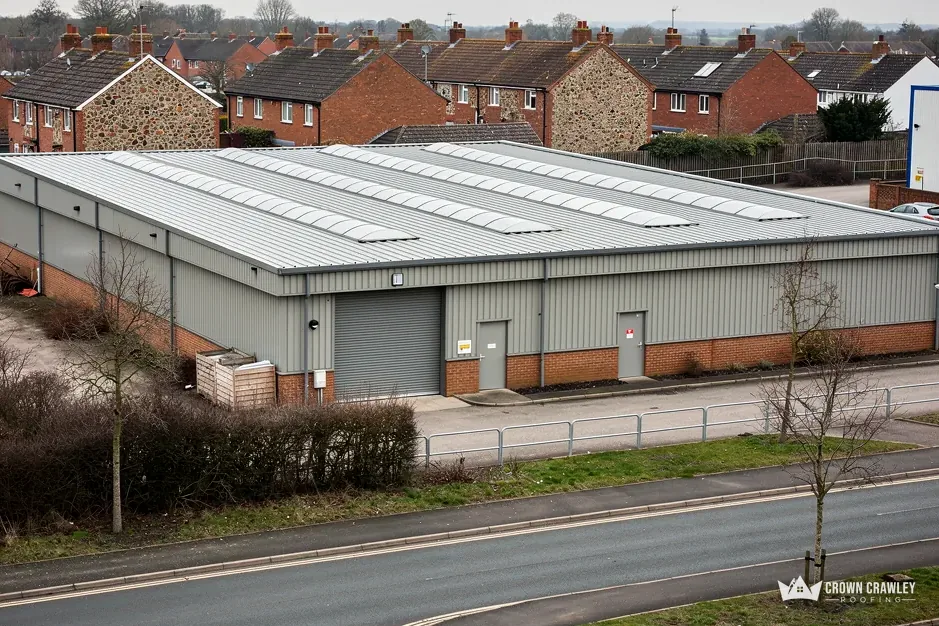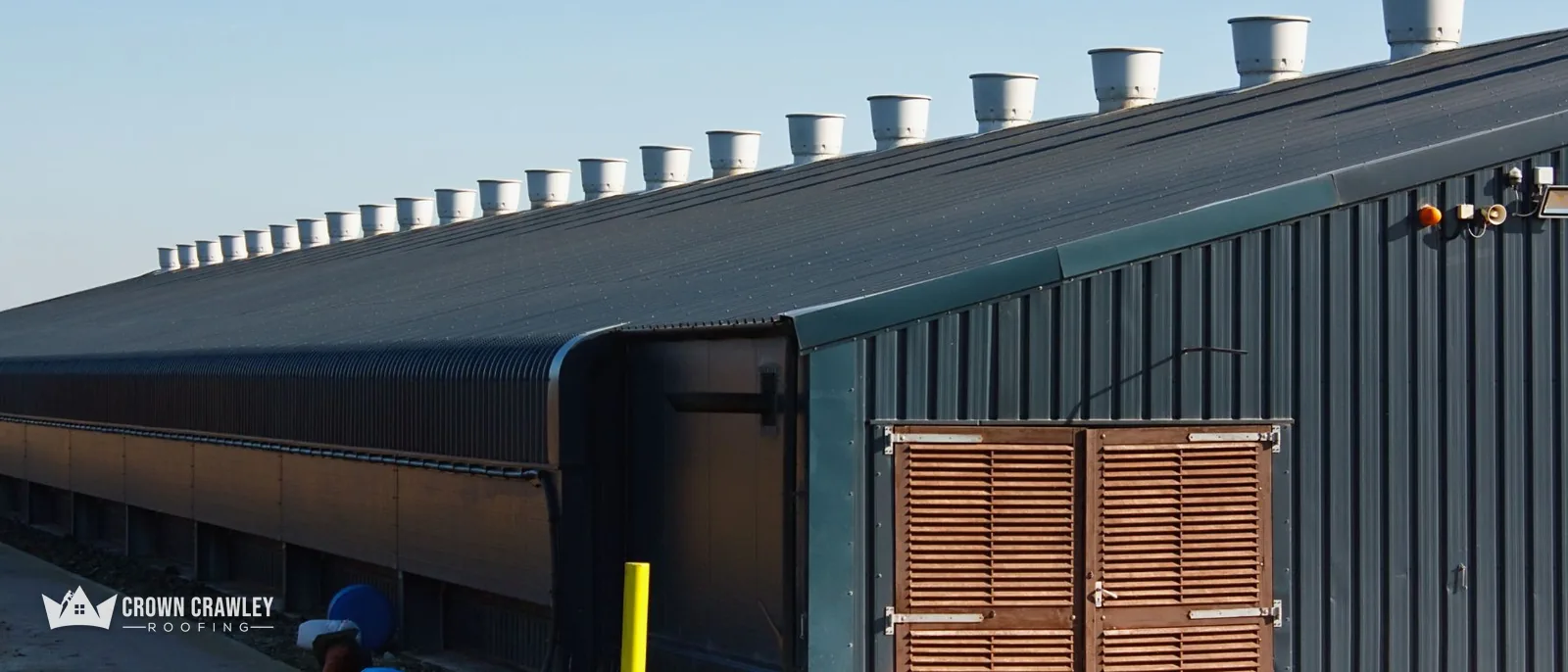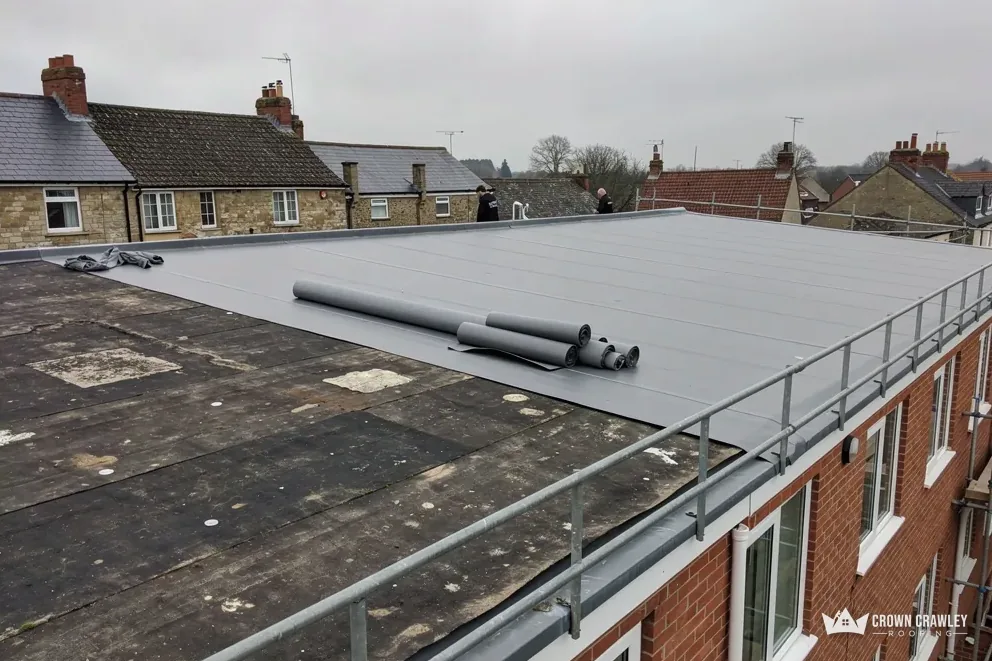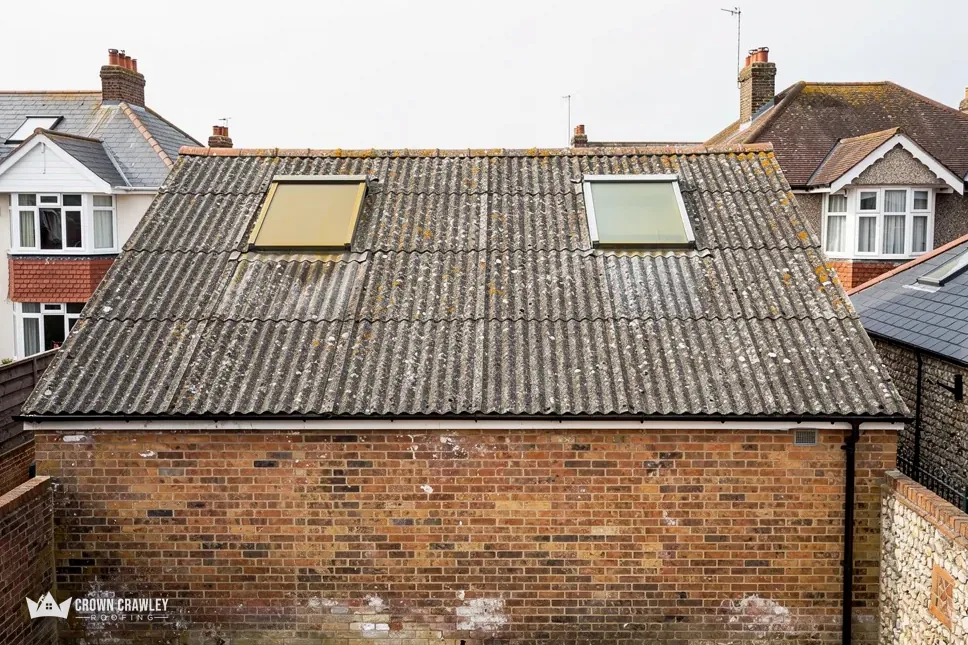
A fragile roof is one that cannot be relied on to carry the weight of a person. The surface might be asbestos cement, an old plastic rooflight, thin profiled sheeting or a lining weakened by corrosion. From above, many of these look no different from a safe roof, and some are painted or covered in moss and so are harder still to tell apart. That is what makes them dangerous: a step that looks ordinary ends in a fall through the roof.
Falls from roofs and through fragile materials have long been a serious source of injury in building work, and the people at risk include maintenance staff, window cleaners, aerial fitters and contractors, not only roofers. This guide describes how fragile roofs and rooflights are recognised, what planning and equipment should be in place before anyone goes up, and where responsibility lies. It is general guidance, and the Health and Safety Executive is the place to confirm current requirements for a specific job.
Which roofs and rooflights count as fragile
The safe starting point is to treat any roof as fragile until someone competent has shown otherwise. Age and visible damage are not what decide it, and appearance is a poor guide. Our commercial roofing work starts from that assumption, and a survey confirms which areas can take weight and which cannot.
Which materials give way?
HSE's asbestos publications call asbestos cement roofs fragile every time, and the same body says to presume asbestos in a building constructed or refurbished before 2000. Owners of older sheds and units should therefore ask what their roof sheets are before anyone climbs on them. Other materials that are commonly weak include single-skin profiled sheets, thin metal liners that sit beneath insulation, and wood-wool or similar boards that rot. A roof that was strong when it was new can lose its strength through corrosion, age or years of standing water.
Why are rooflights so risky?
Rooflights are the classic trap. Plastic panels weather in sunlight and become brittle, and a panel may look intact while being unable to take any weight. Some are painted over with the roof, covered in debris, or set flush into sheeting so that they blend in. A dome or glazed unit may have a safe-looking frame and a weak infill. Treat every rooflight as fragile, including those that appear to be fitted with a reinforcing mesh underneath, since the mesh may be missing, damaged or fixed only at the edges.
If a building has sheeted roofs, our guide to replacing metal roof sheets shows what condition problems to expect.
Before anyone goes up: the plan
The Work at Height Regulations 2005 put avoiding a fragile surface first, so the best measure is to keep off the roof. Where that cannot be done, a plan decides what is used, who goes up and what happens if something changes.
What should the plan say?
A sensible plan names the roof, identifies which areas and rooflights are fragile, describes how people will reach the roof and move across it, and sets out the equipment used to stop a fall or reduce its effect. It also says who is in charge, how the weather will be judged and what happens in an emergency. For notifiable or larger jobs, it forms part of the wider health and safety arrangements. Our guide to construction design and management rules for roof work explains how roof projects fit those arrangements.
Who needs to see it?
Everyone who works on or near the roof, including subcontractors for aerials, solar, ventilation and cleaning. Staff in the building should know when work above them is under way and which areas are closed. A plan sitting in a folder helps nobody, so brief people on site and walk them through the route before they start. Agree a stop signal too, so that anyone who sees a problem, whether a cracked panel, a rising wind or an unexpected visitor, can halt the job without having to argue the point first.
What do you ask a contractor?
Ask for a written method statement for your roof and a risk assessment, and ask who will supervise. When we survey, we set out how access will be arranged before a price is given, so the written total reflects the safety arrangements as well as the repair itself.
Safe access and the order of protection
Safety measures work best when chosen in a sensible order. The aim is to stop a fall happening first, and to limit the harm second.
What comes first?
Where possible, do the job from below or beside the roof: a mobile elevated platform, a tower or a cherry picker can bring a worker to the point of repair without stepping onto a fragile surface. Fixed platforms, guardrails and proper access ladders or stairs come next, and our guide to roof edge protection covers the barriers that guard the perimeter.
What if people must cross the roof?
Then protection has to go across the roof as well as round it, and it has to be in place before the first foot is set down, not added once someone is already on the surface. Crawling boards or staging that spread the load, covers over rooflights, and netting or similar systems beneath the sheets are all used, often together. None of these is a licence to walk anywhere; each has set limits and has to be fitted, checked and kept in place. Never rely on a harness alone if its anchorage point is itself on fragile material, and do not step on a board that is only resting on weak sheeting without it being bridged to a stable support.
Who should do the work?
Competent people trained for the equipment they are using. A rooflight swap, a cleaning visit or a cable fixing may seem a minor task, yet it can need the same level of precaution as a large re-roof. If the task is replacing the units themselves, our guide to industrial roof light replacement explains the work.
Marking, covering and keeping rooflights safe
Once a fragile area has been identified, the next job is to make sure the next person knows about it. Knowledge passes badly between visits, particularly when the roof is looked after by different contractors over the years.
How can fragile areas be flagged?
Signs at every access point, warning notices on roof hatches and marked routes across the roof all help. Rooflights can be fitted with permanent guards or protective grilles, which stop a person falling through even if the panel itself is weak. Barriers around skylights stop people stepping into them by accident. Painted markings fade, so check them as part of every inspection and renew them when they dim.
What about temporary covers?
Temporary covers over rooflights are sometimes used during works. They have to be strong enough, secured against wind and clearly marked, and they should be inspected daily. Remove them only when the work is done, and make sure they do not hide the unit so well that the next visitor forgets it exists.
Who tells visitors?
The building owner or manager should keep a simple roof file: a plan showing fragile areas, a note of the access method, previous incident details and the last inspection date. Give it to every contractor before they go up. Our page on how often a commercial roof should be inspected helps you build a routine around that file, and any visit is a chance to confirm that the signs and guards are still where they should be.
Who is responsible: owners, managers and contractors
Responsibility for roof safety does not rest on the roofer alone. Health and safety law places duties on those who control premises, those who commission work and those who carry it out, and the exact split depends on the arrangement. This section gives a plain picture, not legal advice, so confirm details with HSE or a qualified adviser.
What does the owner or manager do?
Control who gets onto the roof. That means locking or restricting hatches and ladders, keeping a record of who has been up, and telling every visitor what is fragile. It means choosing contractors with care and giving them the information you hold, such as the roof plan, previous repairs and any asbestos record. Suspected asbestos cement sheets in particular should be reported in advance, because they change both the method and the equipment.
What does the contractor do?
Assess the roof, plan the work, provide suitable equipment and make sure the people on site are competent. They should refuse to start if arrangements are inadequate, and they should stop if conditions change. Ask to see the arrangements in writing and check that what happens on the roof matches them.
What about tenants?
A tenant whose staff or suppliers need roof access, for example to service plant, has a share in the picture. The lease and the property manager decide who coordinates, so find out before the first visit. Our page on roof repairs while the business is open covers how to protect staff and customers during works.
Other hazards and what to do after a breakage
Fragile surfaces are not the only hazard on a commercial roof, and they often occur alongside others. A good survey records the lot.
Which other hazards turn up?
Open edges without a parapet, unguarded plant platforms, slippery moss, ice in cold weather, hot flues and exhausts, and electrical cabling all appear on commercial roofs. Lifting equipment can bring a further rule near Gatwick. The airport's crane page asks for a permit for a crane within 6km of the airport, with an exception for equipment below 10m or screened by taller trees or buildings. That page does not mention ordinary scaffolding, so it is a question for the crane operator, not the scaffolder.
What if a rooflight or sheet breaks?
Keep people away from the area below as well as the area above, because debris and fragments fall. Do not attempt a quick fix by walking out to the damage. Make the opening safe from a protected position, mark it and call a roofer. A leaking roof is made safe first, and a lasting repair is discussed once the area is protected and nobody is at risk from the opening.
What if asbestos is suspected?
Stop work, keep people away and arrange identification before anything is disturbed. HSE separates sound but weathered asbestos cement, which can be non-licensed work, from sheets that break up and create dust, which can make the work notifiable. Do not sweep, drill or snap fragments. To talk through an access problem, send a picture of the roof edge, the rooflights and the route to them, and the survey begins with those.
Part of our Commercial Roofing in Crawley & Gatwick
Fragile roof queries
Can I walk on a roof if I stay on the metal ribs?
No. Rib-walking gives a false sense of safety, because fixings may have corroded and the sheets can still buckle or tear. Whether a roof holds weight depends on its condition and structure, not only on where you step. Use proper access equipment, or arrange the work from a platform beside the roof.
Are rooflights with wire mesh safe to stand on?
Do not assume so. The mesh may be rusted, missing or fixed only at the edges, and it is easy to misjudge from above. Treat every rooflight as fragile, whatever it looks like, and use guards, covers or barriers so nobody needs to cross one to complete a task.
Who decides whether a roof is fragile?
A competent person with knowledge of roof construction should judge it, ideally after a survey that looks at the materials and fixings. Until that has happened, treat the whole roof as fragile. If you are unsure, ask the contractor to explain in writing how they assessed it and what protection they will use.