Roofers in West Hoathly

Roofs on a ridge village of sandstone, stone slabs and red tile.

West Hoathly stands on a High Weald ridge that reaches 600 ft, with a conservation area, a medieval church and a 15th-century timber-framed house. We survey each roof and share the photos before we price.

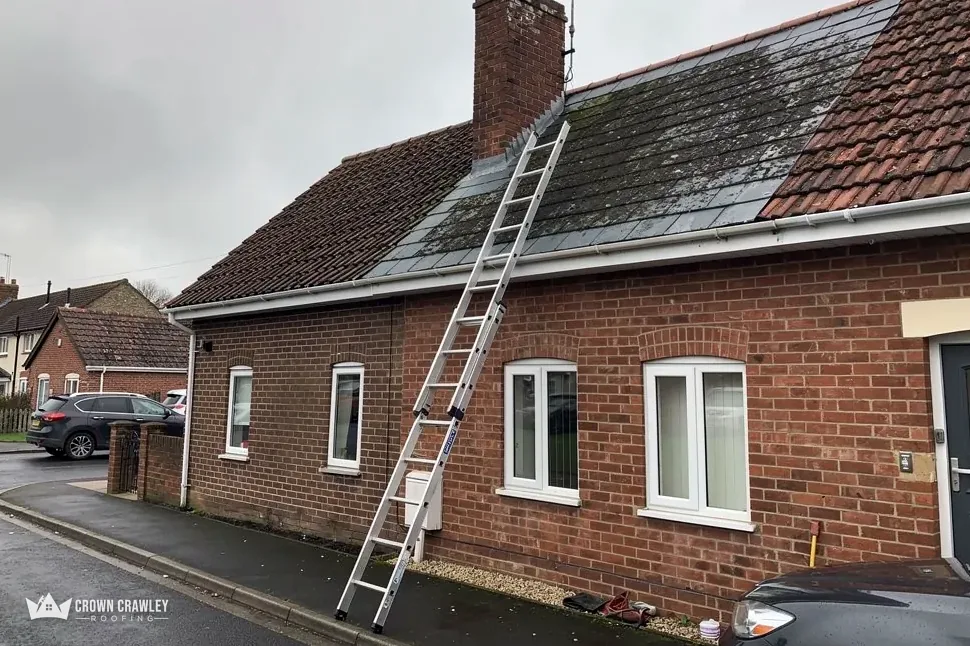
Brick bungalow with a ladder leaning against its tiled roof

West Hoathly houses from the ridge down

New slate-effect roof on a bungalow with white fascias and guttering

Horsham slabs beside red tiles

The Victoria County History found St Margaret's church roofed partly in Horsham slabs and partly in red tiles. Two coverings on one building mean two sets of fixings and two ways of failing, so we survey each slope on its own.

Stone slab and tile roof slopes

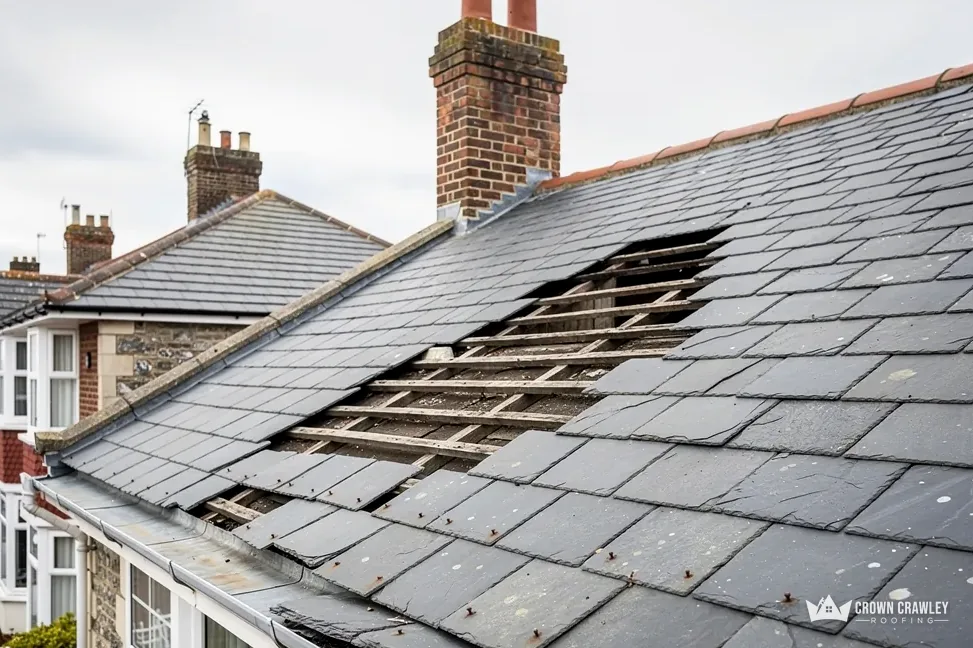
Slate roof stripped back to the battens on one slope

Horsham stone on older buildings

The council's 2009 appraisal says Horsham stone roofs some buildings put up before 1800. Slabs are laid differently from machine-made tiles, so we look at how each one is held before anything is lifted.

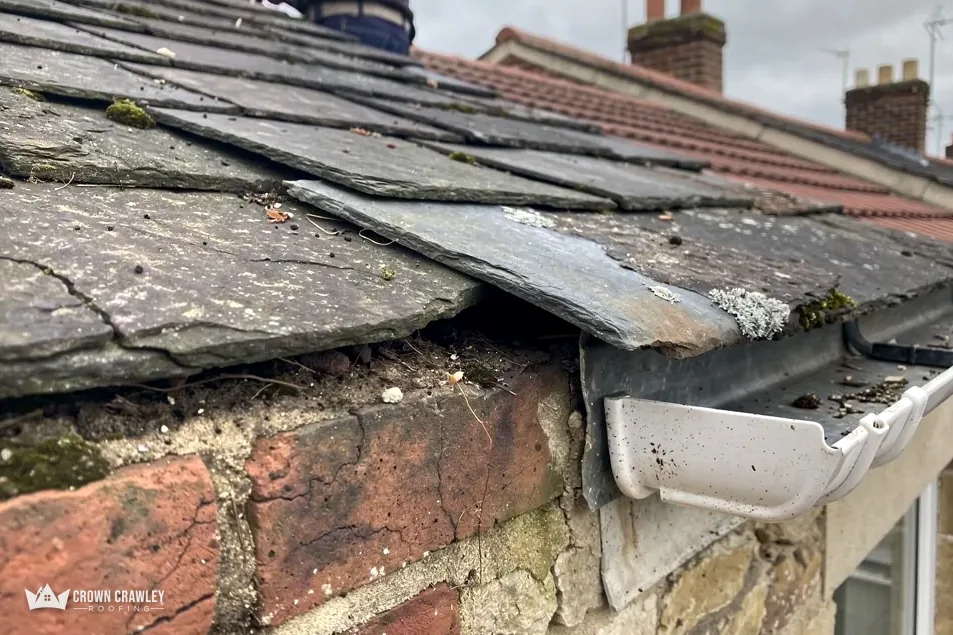
Old stone roof with moss and lichen

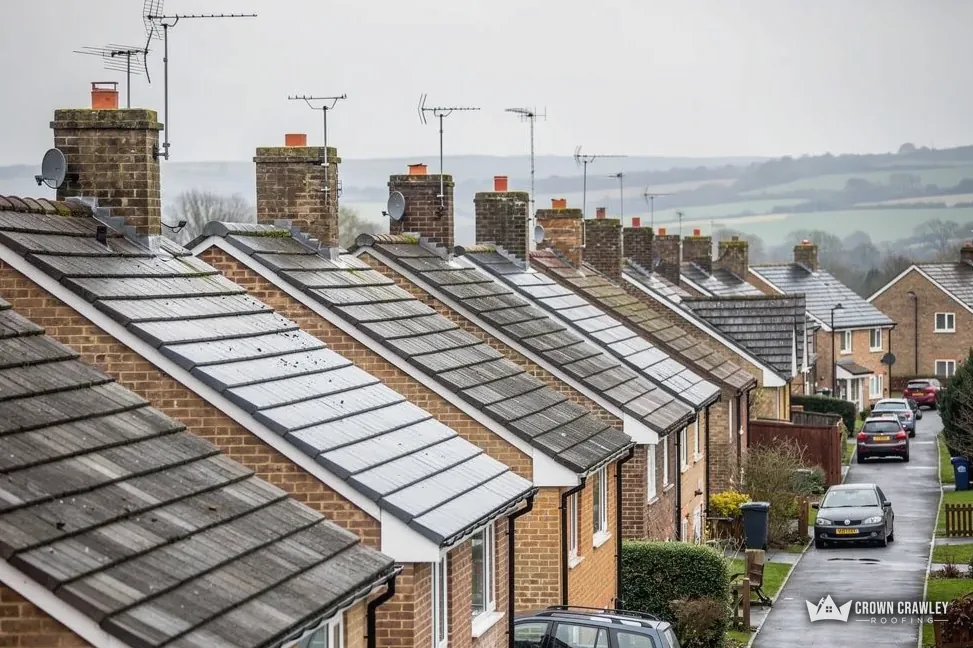
Terraced street with new grey tiled roofs

A timber-framed house under tile

The Priest House, listed Grade II*, is a 15th-century timber-framed house; the council's 2009 appraisal says its Horsham stone roof was added in the 16th century. On an old frame we check how the rafters sit before talking about new tiles.

Timber-framed gable under a tiled roof

West Hoathly, on a ridge at 600 ft

Map of West Hoathly and the neighbourhoods around it, with Crawley for reference.

The village stands in the centre of its parish on a high ridge, with the ground reaching 600 ft just to the north of it.

Distance
8.2 road miles from Crawley, to the east
Drive
About 18 minutes
Council
Mid Sussex District Council and West Sussex County Council
Planning authority
Mid Sussex District Council
Conservation area
West Hoathly Conservation Area (designated 1972)
Local stone
Philpots Quarry still produces very fine sandstones
Get a free quote

The West Hoathly job diary

Reading roofs on a High Weald ridge

Three short chapters on stone and tile coverings, what a conservation area changes for a repair, and the rules that start to apply once a job grows.

Stage 01 · Coverings

Horsham slabs, red tiles and sandstone

Records for the village point to Horsham slabs and red tiles, so we first find out which covering a West Hoathly roof actually has.

West Hoathly is a ridge village. The Victoria County History puts it in the centre of the parish on a high ridge, with the ground reaching 600 ft just to the north. A roof up there takes the weather from every direction, so the first thing we look at is whether the covering is holding at its edges: the eaves, the verge and the ridge.

What are West Hoathly roofs actually covered in?

It depends on the building. The Victoria County History describes the walls of St Margaret's church as local sandstone, with roofs covered partly in Horsham slabs and partly in red tiles, and dates the nave to about 1090. The council's 2009 conservation area appraisal adds that Horsham stone is used for roofing on some pre-1800 buildings, and that the sandstones and clays of the High Weald supplied the village with its building materials. That tells you about the church and some old buildings, not about the roof on your lane, so we never assume. We climb up, look, and photograph what is there.

A West Hoathly survey checklist

Covering
Stone, tile or a mix of both
Eaves and verge
Edges held firm in the wind
Ridge
Bedding sound, caps fixed
Flashings
Joints round stacks watertight
Loft
Timbers dry, underlay whole
Rear of a brick detached house with a tiled roof and garden

How do you survey a stone roof, or a mixed one?

Slabs and tiles fail in different ways. A tile slips, cracks across its nib or loses its fixing. A stone slab can crack, flake at the surface or drop when whatever holds it has given way. On a roof that has both, there is a line where the two meet, such as a valley or a change of slope, and rain on a West Hoathly ridge exploits exactly that seam. We check each one and record it with photographs from the ridge and the eaves, so every finding can be pointed to.

If an old stone roof needs more than a patch, we tell you plainly, including when the right person for part of the work is a stone specialist. For a tiled roof, our pitched roofing page explains how we deal with slipped tiles, soft battens and torn felt.

What happens in the loft and at the gutters?

The loft tells us what the slopes cannot. Daylight through a joint, a damp batten near the eaves, stained underlay and a wet patch below a valley all show where water is getting in. At the eaves we check that the gutters are level and clear, because water that cannot get away backs up under the lowest course. After that we write one total price, with the photographs set beside it.

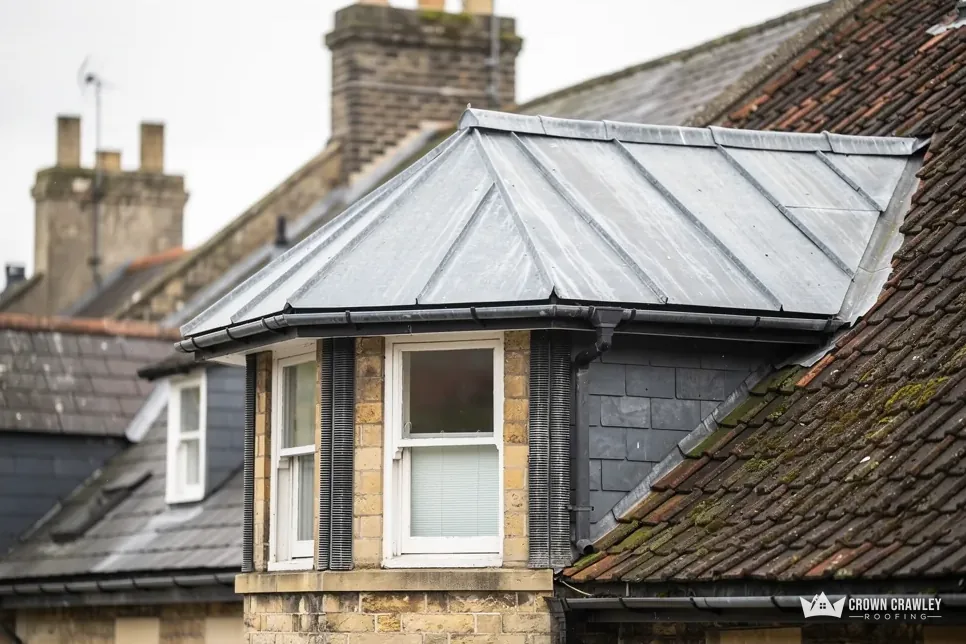
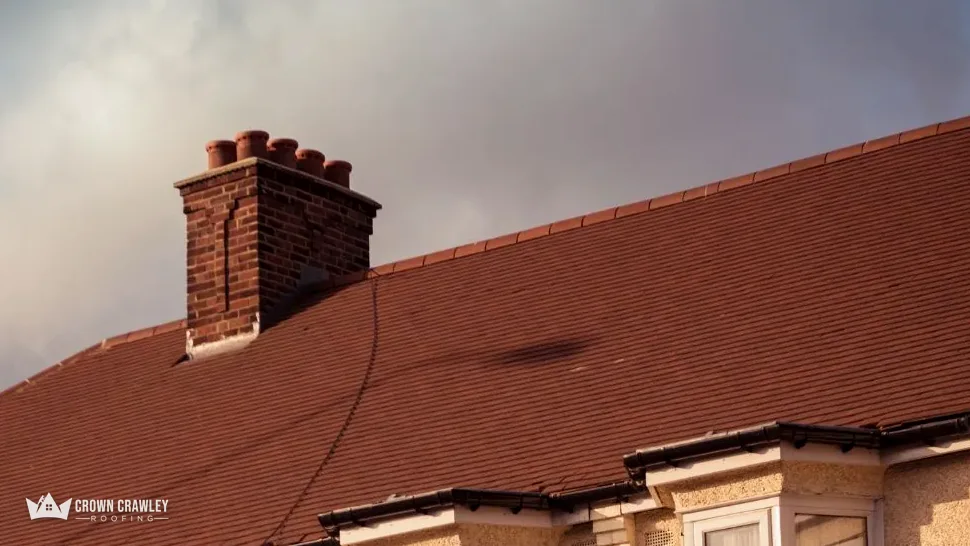
Lead-covered bay roof and chimney stack on a slate and tile roof

Stage 02 · Conservation area

A conservation area in the south

The southern part of West Hoathly became a conservation area in December 1972, which makes preservation the opening question on some roofs.

Mid Sussex District Council designated the southern part of West Hoathly as a conservation area in December 1972 and published an appraisal of it in 2009. Being inside the boundary never rules out mending a roof. It means Mid Sussex takes an interest in how the street looks, and it can raise questions when a job would change that look.

Does a conservation area change a roof repair?

Mending a roof with the identical covering, laid in the old manner, is the simple case. Slipped tiles go back, a cracked slab is swapped for a matching one, and the street looks as it did. The questions start if the material changes, if the pitch or the shape alters, or if you want an extra feature on a slope. Before any of those, put the plan to Mid Sussex District Council's planners for a view on your property. Our answer on re-roofing in a conservation area goes through the usual questions, and at the survey we photograph the covering you have now so a replacement can match it.

First look at a West Hoathly roof

Conservation area
District the council guards for its look
Listed consent
Needed before changing a listed house's character
Like for like
Matching material put back in place
Article 4 direction
Local withdrawal of certain householder rights

In a conservation area the safest repair is the one that puts back what was there.

What if the house is old or listed?

West Hoathly has plenty of old buildings. The Priest House dates from the 15th century and was presented to the Sussex Archaeological Trust in 1935, the church nave dates from about 1090, and the appraisal records St Margaret's as Grade I. Whether a particular house is listed is shown on the National Heritage List, and the council can confirm it. Listing brings its own approval for works that change a building's special character, separate from any planning question. Mention any listing in your first message, so the price allows for that conversation.

St Margaret's, an Anglican church in use, has its own consent route: roof repairs there go through the diocese's faculty system and not through the council, and the parish and its architect lead on it. If they want survey photographs or a plain description of the roof's condition, we can supply both.

Is an Article 4 direction in force on my road?

A direction can withdraw some permitted development rights across a defined area. Which roads a direction covers, if any, is for the council to confirm, and a short email with your address should get an answer before you commit to anything.

Stage 03 · Permissions

Rules for a bigger West Hoathly job

Mid Sussex District Council handles planning and building control here, and the county council grants highway licences for road scaffold.

Most West Hoathly repairs never meet a form. The rules begin to matter at three points: when the share of the roof being renewed gets large, when the new covering has a different weight, and when the poles cannot stand on your own ground.

How much of the roof can change before building control steps in?

The Planning Portal sets two tests. Normally nothing needs to be submitted while the work touches less than 25 per cent of the building envelope and less than 50 per cent of the roof, and both limits must hold at once. A swap to a covering that loads the rafters 15 per cent beyond the old one, or with a markedly different fire performance, needs approval as well, and the Planning Portal advises an engineer's or surveyor's check on the extra weight first. That matters on an old roof, where the timbers were sized for whatever sat there originally. Mid Sussex District Council has its own building control service, and for a large job we ring them before fixing dates, then write what they said into the price. If the whole roof is at the end of its life, our roof replacement page shows how a full job unfolds.

When a job outgrows a repair

Planning
Mid Sussex District Council
Building control
Mid Sussex, its own service
Road scaffold
West Sussex County Council licence
Notice
10 working days at least
Wildlife
Roosts and nests halt work
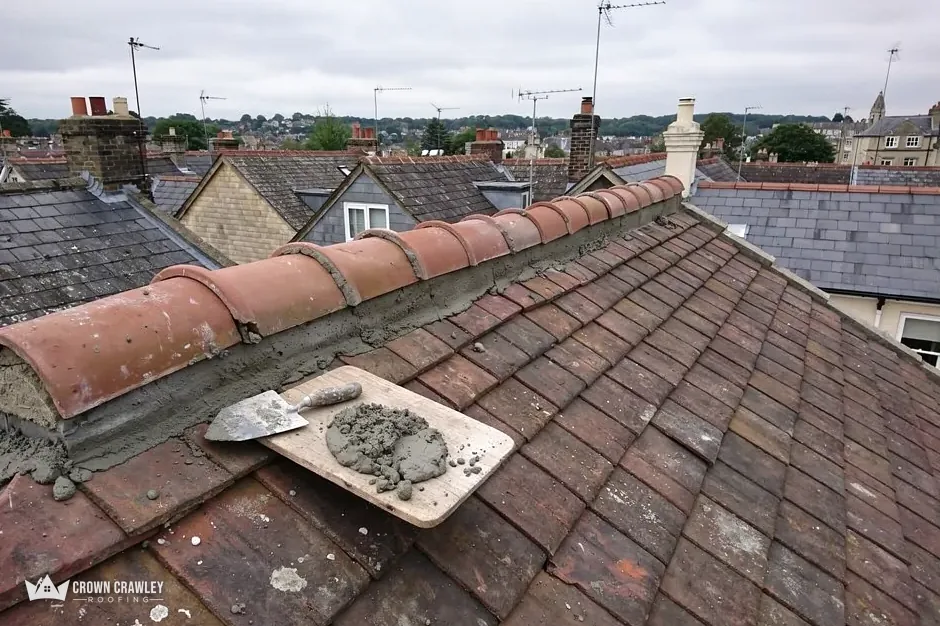
Ridge tile bedded in fresh mortar with a trowel resting on the roof

Where can the scaffold stand?

West Sussex County Council, as highway authority for West Hoathly, licenses scaffolding put up on a public highway, so the first question at the survey is whether your garden or drive can take the frame. The council needs the application at least 10 working days ahead of erection, and a month on the highway costs £266. Where the lane is unavoidable, we measure up and settle the paperwork with our scaffolder.

Could wildlife hold up a West Hoathly roof job?

Government guidance counts a roof job among the things that can affect a bat roost, and every species, with its breeding and resting places, is fully protected. Wild birds are covered separately by the Wildlife and Countryside Act, which bars anyone from intentionally taking, damaging or destroying a nest that is occupied or still under construction. Either one can alter a start date. If signs of a roost or a nest appear as we strip or lift, that patch of roof stays untouched and we call you first. We look for droppings, staining and nesting material during the survey.

Start with a picture of whichever part you worry about most: the slope, the ridge or the stack. Include your road and any listing; the survey does the rest.

West Hoathly roof questions, answered locally

Can a Horsham stone roof in West Hoathly be repaired rather than replaced?

Often a stone roof can be mended slab by slab, and the survey is how we find out. We check which slabs have cracked or dropped, how the rest are held, and whether the timbers below are sound. If the answer is a repair, you get it in writing with photographs. If a stone specialist should lead part of the work, we tell you.

Our West Hoathly cottage has a Horsham stone roof: can it go back in tile?

Ask Mid Sussex first. The conservation area covers the southern part of the village, and the 2009 appraisal notes Horsham stone on some pre-1800 buildings, so swapping stone for tile there is a change of appearance the planners will want to weigh. We photograph and record the stone at the survey so they can see what is there.

Where does scaffold go on a narrow village lane?

In your garden or on the drive where the poles will fit safely. If only the lane will do, West Sussex County Council requires a licence and at least 10 working days' notice, with £266 charged for a month. Access is judged at the survey, and the licence is sorted between our scaffolder and us.

Which photos help you price a West Hoathly roof?

One clear shot of the trouble spot from your garden or the lane, with your road and whether the house is listed. If you can, add a second picture of the chimney, since stacks are where we spend much of a first visit. If you can see the covering, say whether it looks like stone or tile. We book a survey from that and share our own photographs of your roof afterwards.

Your West Hoathly roof, in one written price

Email us the slope that troubles you and the road you live on, and a survey time is agreed.

01293 974253

10-year workmanship guarantee, in writing.

Call Get a free quote