Stage 01 · First look
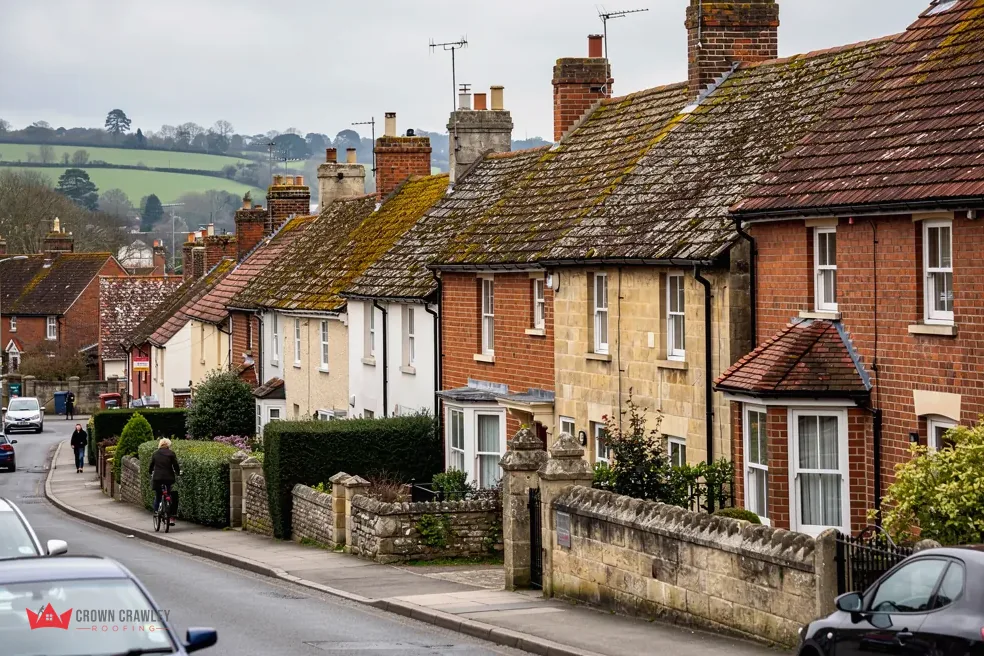
Sandstone, brick and tile in the High Weald
A Wadhurst survey starts by reading which materials meet on your roof: timber, weatherboard, sandstone, brick or tile.
Wadhurst belongs to the High Weald, whose guardians point to frames of timber, weatherboard cladding, and plenty of sandstone, brick and tile that follows the rock and clay beneath. A village built from that mix rarely holds two roofs made alike, so we never arrive assuming. We climb up, read the covering, see how each tile is held and write down what is there.
Which part of an old tiled roof gives up first?
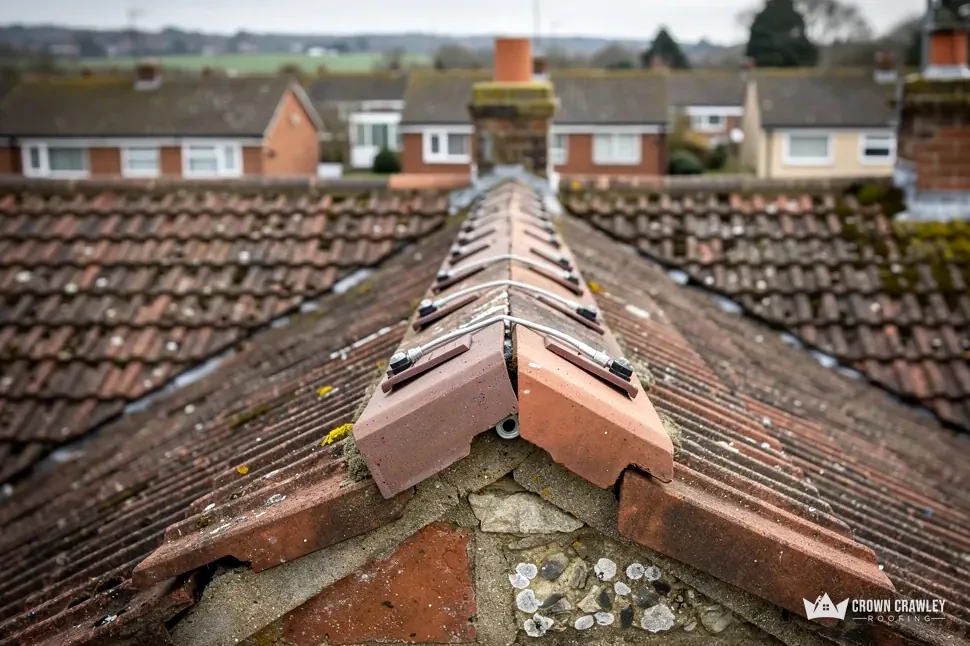
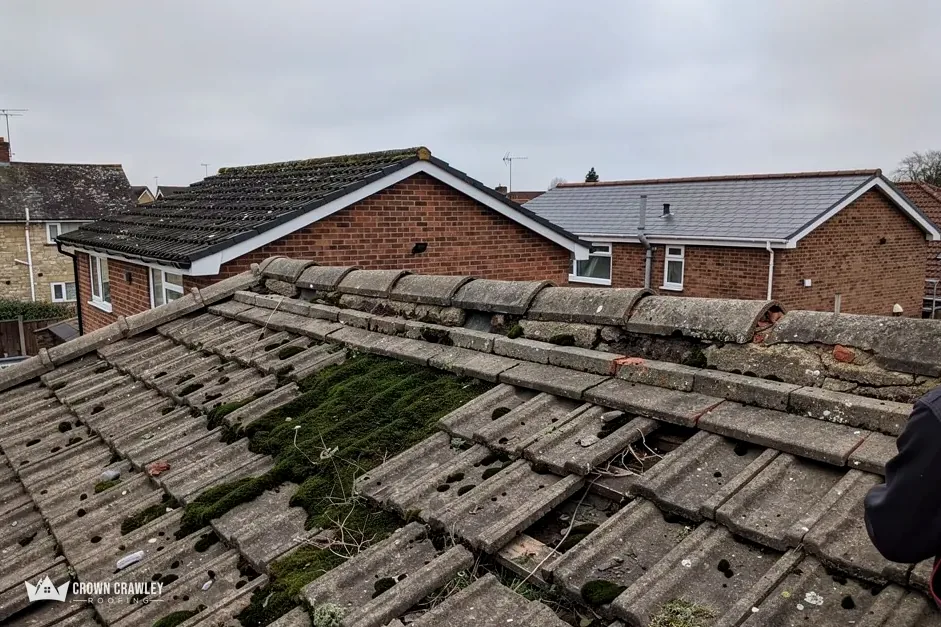
Rarely the tile itself. On an old roof, the first things to go are the nails, the pegs, the mortar under the ridge and the felt or underlay below the tiles. A tile held by a corroded nail slips long before its clay is spent. In the loft we use a torch and look for daylight at the tiles, damp on the underside of the battens, and rusty nail tips showing through. The Building Research Establishment's 60 year minimum for clay tile is a floor and not a forecast, and a conservation article advises against leaning on it for old peg tile. So a roof of any age is judged on its condition. A cluster of slipped tiles near a valley more often points to a blocked gutter or a rusted fixing than to a worn-out roof.