Roofers in Frant

High Weald village roofs, a conservation area and a Grade II church.

Frant belongs to the High Weald, and part of it is a mapped conservation area with a Grade II parish church at its heart. We read each roof, then price in writing.

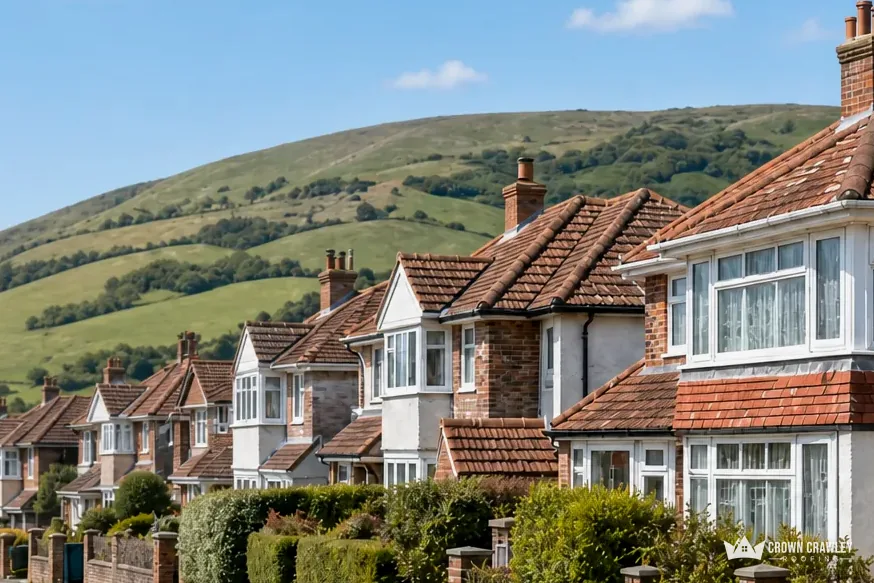
Row of suburban houses with tiled roofs below green downland

Frant's listings, conservation area and landscape

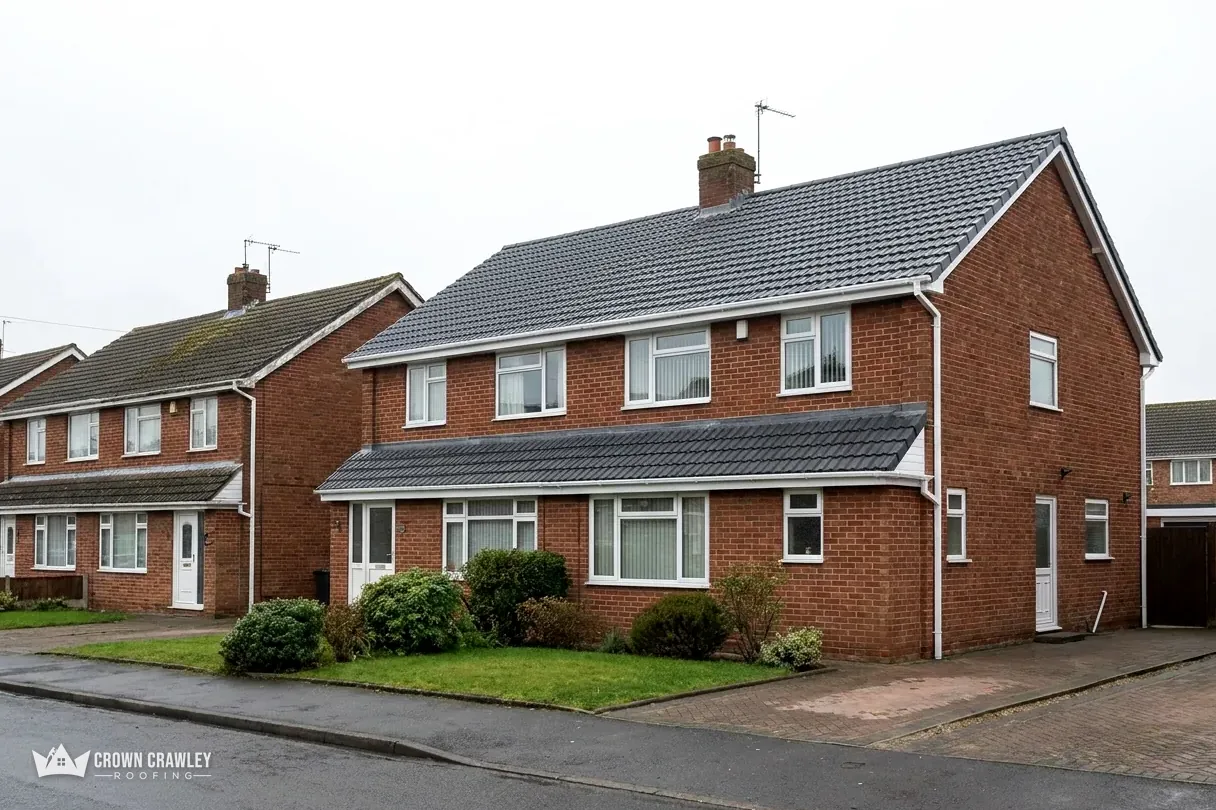
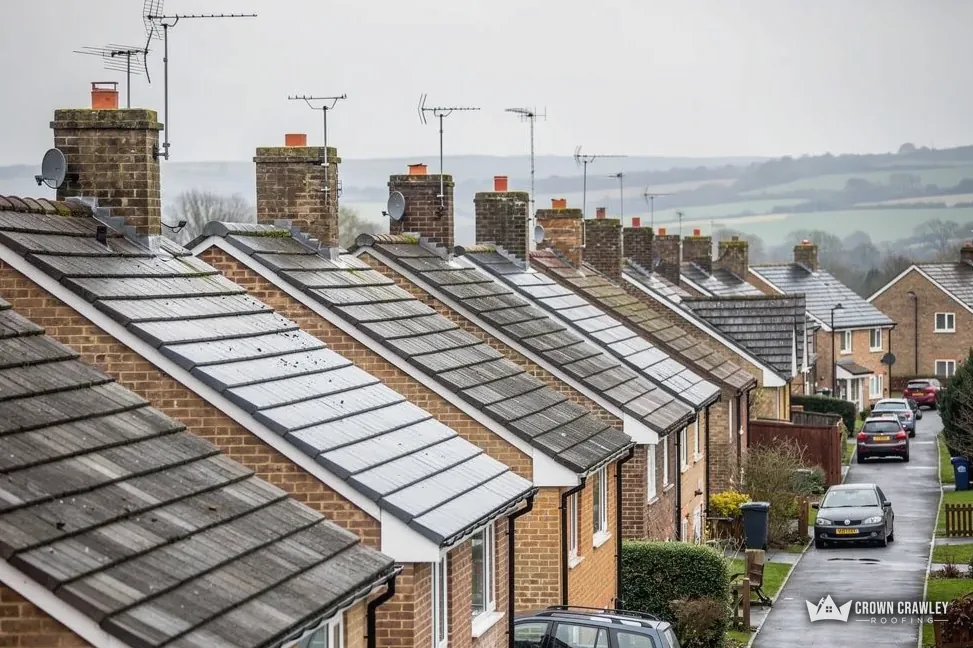
Detached red brick houses with grey tiled roofs on a quiet road

Frant Conservation Area

Part of Frant falls inside the Frant Conservation Area on the national planning map. Whether your house does depends on where the boundary runs, so we hold it against your address before pricing anything that alters the roof's appearance.

Tiled cottage roofs in a village

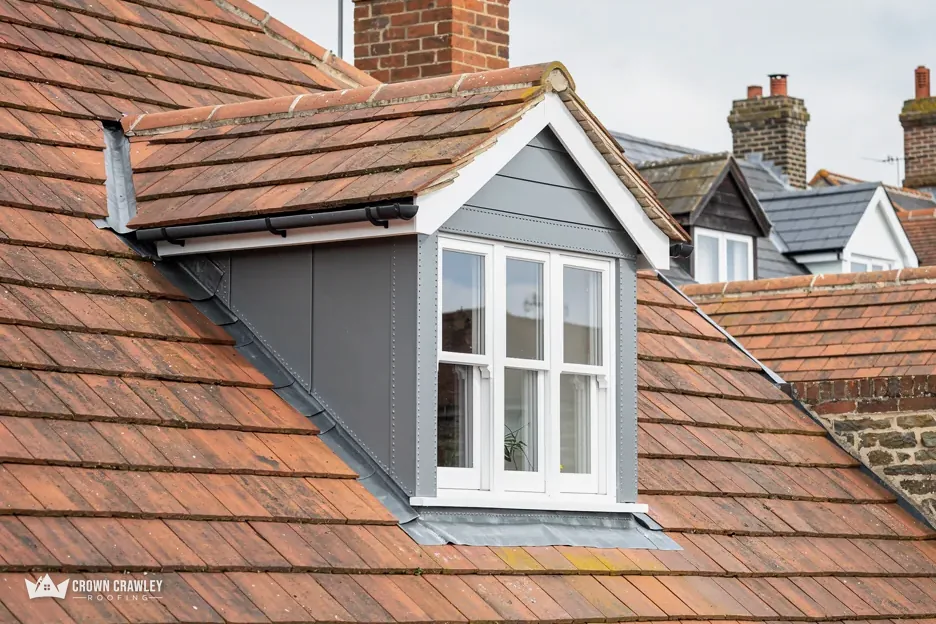
Lead-clad dormer window set into a red clay tiled roof

High Street Grade II entries

Three High Street entries carry Grade II status: numbers 5 and 7, 16 to 32, and 33, 35 and 37. A roof under any of them waits for the council's view, and so does our price.

Old brick and tile roofs

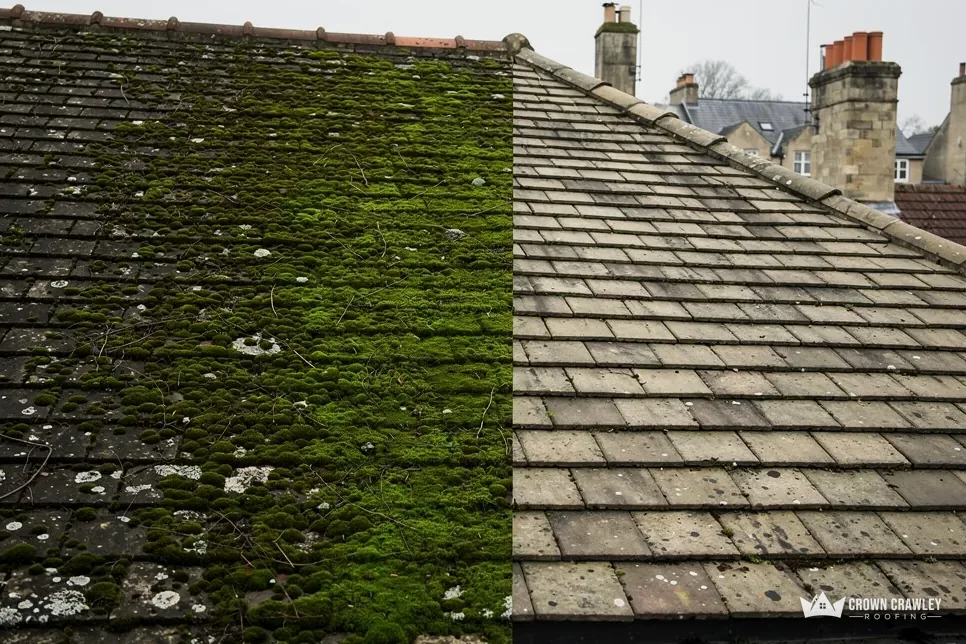
Roof slope half cleaned of moss, the left side still green

St Alban's church roof

St Alban's parish church is Grade II, and it is an Anglican church still used for services. Its roof is therefore dealt with by the church's own approval route, a faculty, rather than by the council.

Church roof with clay tiles

Frant and the Tunbridge Wells border

Map of Frant and the neighbourhoods around it, with Crawley for reference.

Frant is a High Weald village on the Sussex side of Tunbridge Wells, east of Crawley, with 702 people at the 2021 Census.

Distance
25.4 road miles from Crawley, to the east
Drive
About 49 minutes
Council
Wealden District Council and East Sussex County Council
Planning authority
Wealden District Council
Conservation area
Frant Conservation Area
Parish history
Part of Tunbridge Wells once lay in Frant parish
Building control
East Sussex Building Control Partnership
Get a free quote

Frant planning notes

Frant roofs under High Weald and conservation area rules

Three chapters: where the conservation area runs, what the High Street listings and the church require, and the Wealden steps before a larger job.

Stage 01 · Designations

Frant Conservation Area and the High Weald

Part of the village is in a conservation area and all of it sits in the High Weald, so a map check comes first.

Some villages let you start with the roof. Frant makes you start with a map. The planning dataset kept at planning.data.gov.uk shows a slice of the village inside the Frant Conservation Area, while every house here belongs to the High Weald, the landscape once known as an Area of Outstanding Natural Beauty. Wealden District Council decides planning questions here, so its officers are the people we ask.

Why does a conservation area change how we price a roof?

Councils draw these boundaries around streets whose look is worth keeping, and roofs are a big share of that look. Re-laying tiles to the same pattern and colour keeps faith with it. Swapping the covering, cutting a window into a front slope or rebuilding a chimney in a new style is where officers start asking questions. Planning law groups conservation areas with protected landscapes under the heading article 2(3) land, which is the reason we check with Wealden before a number goes on paper. Our post on planning permission for roof work gives the wider picture, so none of it is repeated here.

What the maps say about Frant

Conservation area
Part of Frant, per the dataset
Landscape
High Weald National Landscape
Planning
Wealden District Council
Listed
Grade II entries on the High Street
Church roofs
Faculty, not council consent
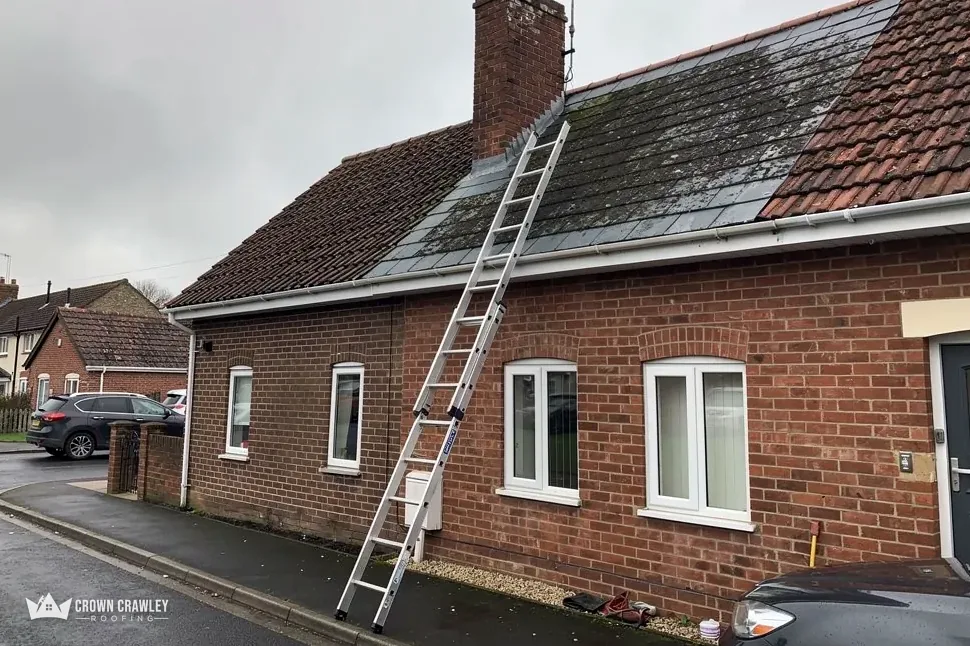
Brick bungalow with a ladder leaning against its tiled roof

What do the High Weald's own words tell us about its roofs?

The landscape body ties the area's buildings to the sandstone and clay beneath them, naming timber frames, weatherboard, brick and tile among its materials. Its account covers the whole High Weald rather than Frant street by street, so we never assume what covers your house. What it does show is that clay and stone have a long record in this part of the country, and a repair that honours the old material tends to look right for longer. Slate can run past 100 years when it is looked after, says the Confederation of Roofing Contractors. The Building Research Establishment puts a floor of 60 years under clay tile life, yet one conservation article calls that number a poor guide for old peg tiles. Treat all of these as ranges rather than promises. Once the survey shows what you have, our pitched roofing service takes over, repairing or relaying as the evidence suggests.

Moss, fallen leaves and a slipped tile near a valley can all look alike from the garden. A set of close photographs taken on the roof settles the argument, and you get to see them.

Terraced street with new grey tiled roofs

Stage 02 · Listed buildings

High Street listings and St Alban's church

Three High Street entries and the parish church are Grade II, and the church follows a different consent route from a house.

Historic England's register shows three Grade II entries on Frant High Street: numbers 16 to 32 (listed 31 December 1982), numbers 33, 35 and 37, and numbers 5 and 7. St Alban's parish church is Grade II too, listed on 26 November 1953.

What happens when a High Street house is listed?

Before anyone alters a listed building in a way that touches its special character, the council has to agree. What counts as touching it is the council's call, not ours. A single entry covers numbers 16 to 32 together, so if your house is among them, say so when you book the survey. The written price comes after the council's answer, which saves anyone paying for work that has to change. Lead goes wherever a roof meets masonry, and Royston's brochure lists code 5 (2.24 mm, red) for flashings and valley gutters. One cost guide reports lead flashing lasting over 80 years, so sound lead can often stay. Our lead work page covers repairs and renewals.

What does a listed-roof survey write down?

Everything the council might ask about. We note the tile type and size, how the nibs sit, the pitch, the ridge and hip detail, the verge and eaves finish, and the lead at chimneys, walls and valleys. From the loft we record the rafters, battens and any old timber that has been left in place. The photographs go to you and, with your permission, to the council alongside the proposal. Because the evidence is gathered before the quote, the quote is not rewritten halfway through.

Why is a church roof a separate case?

Anglican churches in use sit under the ecclesiastical exemption: their roofs are approved through the diocese by faculty, and the council's listed building process steps aside. The government's guidance adds a limit, because the exemption does not cancel planning permission for exterior changes to a listed place of worship. Should you sit on a parochial church council weighing up repairs, we survey and price on the same terms as a house: photos you can circulate, one written total, and a start date that waits for the faculty. Committees are often made up of volunteers who are not roofers. We explain each finding in everyday words and leave the photographs with you, so whoever signs off the budget can see what we saw.

Consent words in Frant

Grade II
Listed for special interest
Faculty
Anglican permission for church works
Listing entry
One record that may cover several numbers
Lead flashing
Metal sealing roof-to-wall joints

Stage 03 · Permissions

Wealden approvals and East Sussex scaffold licences

Wealden handles planning, a four-council partnership handles building control, and East Sussex Highways issues the licence when scaffold stands on the road.

Putting back what was already there seldom involves a form. Stripping a whole slope, changing the material or standing scaffold on the carriageway does. Three bodies are in play in Frant: Wealden District Council for planning, the East Sussex Building Control Partnership for building control, and East Sussex County Council, through East Sussex Highways, for scaffold licences.

Who checks a bigger Frant re-roof?

The East Sussex Building Control Partnership does the building control job for Eastbourne and Hastings Boroughs and for Rother and Wealden Districts, and its page sits on Wealden's own website. The Planning Portal gives the test for escaping an application: under 25 per cent of the building envelope touched and under 50 per cent of the roof. Weight is a separate trigger, since a new covering at least 15 per cent heavier than the old brings approval into play, and the Planning Portal suggests having a structural engineer or surveyor look first. On any larger job we raise the point with the partnership before we set a date. Our roof replacement page walks a complete new roof through its stages. Each body has its own timetable, and the quickest way to lose a week is to ask them in the wrong order, which is why Wealden hears from us before any scaffolder is booked.

Frant steps before a larger job

Planning
Wealden District Council
Building control
East Sussex Building Control Partnership
Scaffold licence
East Sussex Highways, if on the road
Extensions
Apply 5 working days before expiry
Nesting birds
Active nests stay undisturbed
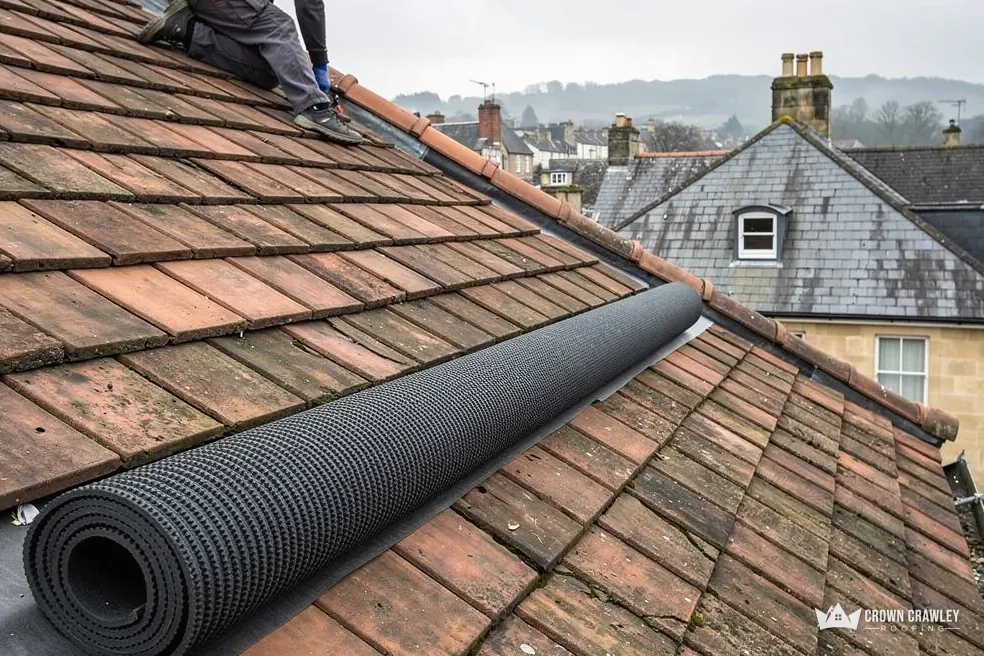
Roll of roofing membrane lying on a clay tiled roof

Who sorts the scaffold licence?

Scaffold that blocks a road or footway requires a highway licence under the Highways Act 1980, whereas a frame on your own ground does not. East Sussex Highways sets out the fee and the terms, but its page is silent on which party applies, so we ask who does, then handle the paperwork alongside the scaffolder. Its terms keep scaffolding off the highway while the annual bonfire celebrations run, and want any extension requested 5 working days before expiry, so our dates are set with both in view. A scaffold for a new roof runs to £700 to £1,300 in Checkatrade's October 2026 guide, which is why we say plainly whether it sits inside our total. Read every quote you collect for a line saying whether scaffolding and VAT are in.

What if birds are nesting in the eaves?

Under the Wildlife and Countryside Act, intentionally damaging a nest that birds are using or building is an offence, so an occupied nest under a tile or behind a soffit holds up that stretch of the job until the brood has flown. Photograph the slope, chimney or valley that bothers you, add your Frant postcode and send both over, and we will propose a survey slot.

Frant conservation area, listings and scaffold

Can I use new tiles on a house in the Frant Conservation Area?

Tiles that match the old ones in pattern and colour keep the roof recognisable from the street. A different covering is where questions begin. Wealden District Council's planning officers can answer for your address, and we hold the written price until you have heard from them, so the job we price is a job you can build.

Does the High Weald stop me altering the roof of my Frant house?

It does not forbid it. The designation marks the land as special, which narrows some planning freedoms, and Wealden District Council is the body to ask. For a repair that restores the existing roof, the survey and photographs usually show a simple route. If you want a change of look, tell us on the first call.

Is my Frant house one of the Grade II High Street entries?

Only the register can say. Numbers 5 and 7, 16 to 32, and 33, 35 and 37 are listed Grade II, so search Historic England's list by address or ask Wealden. If yours appears, the council needs to be asked before anything is priced or ordered. We photograph the roof, record each detail and pass the evidence on with your permission.

Who pays for scaffold on a Frant roof job?

The scaffold cost sits inside the one written total, and where the frame stands on a road or pavement, East Sussex Highways licenses it. Its page is silent on who must apply, so we ask and handle the paperwork alongside the scaffolder. A frame inside your own boundary needs no licence. Check that any other quote names VAT and scaffolding.

Arrange a Frant survey

Photograph the slope, chimney or valley that worries you, add your Frant postcode to the message, and we will suggest a survey slot.

01293 974253

10-year workmanship guarantee, in writing.

Call Get a free quote