Roofers in Tunbridge Wells

Roofs on the Wells' hills, from Mount Ephraim to Calverley Park.

Tunbridge Wells grew as a spa on the hills of the High Weald, with listed terraces and a Grade II* church. Each roof is surveyed separately, and the total is written down once.

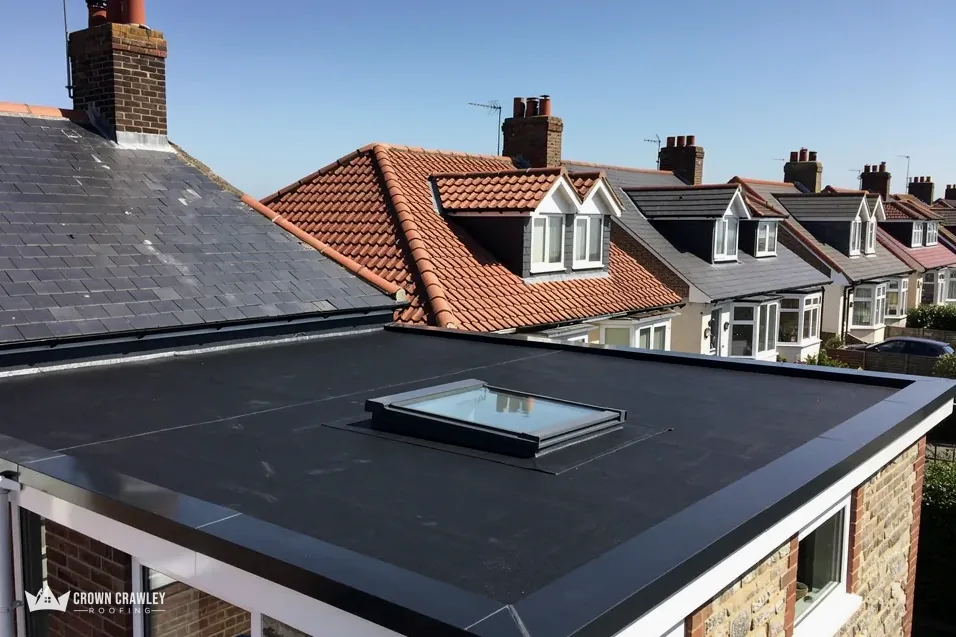
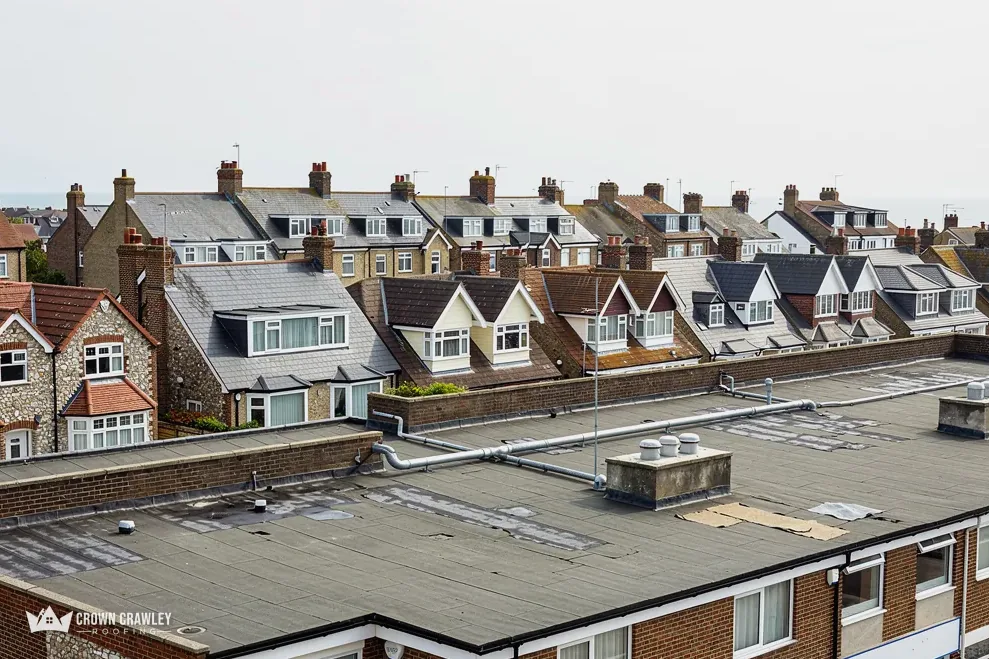
Flat roof in the foreground of a street of dormer-roofed houses

The roofs you see around Tunbridge Wells

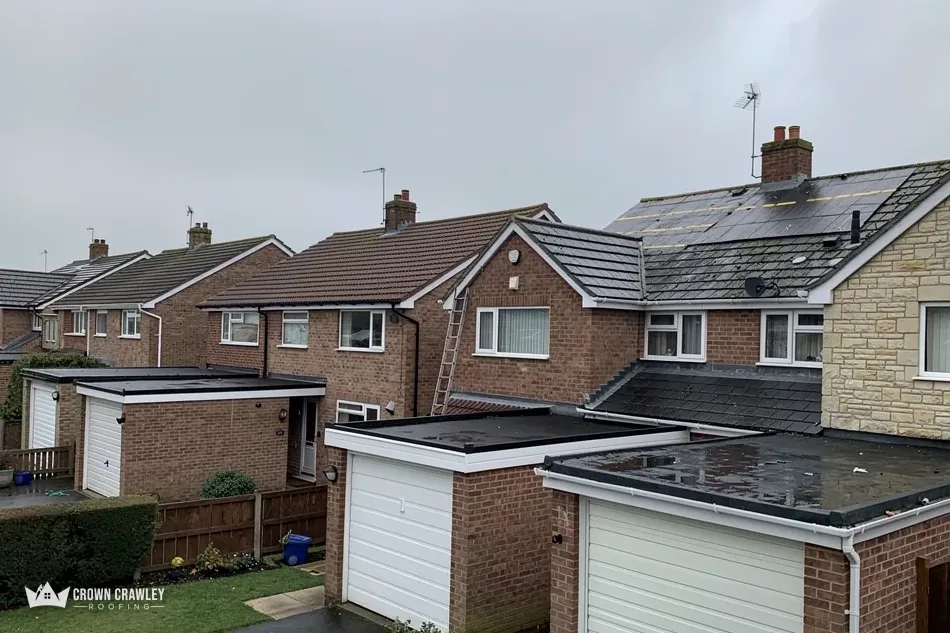
Flat-roofed garages at the back of semi-detached houses

Hillside streets of the old Wells

By 1797 the town was made up of Mount Ephraim, Mount Pleasant, Mount Sion and the Wells. Sloping ground changes how ladders, scaffold and deliveries reach a roof, so access is settled at the survey.

Houses stepping up a sloping street

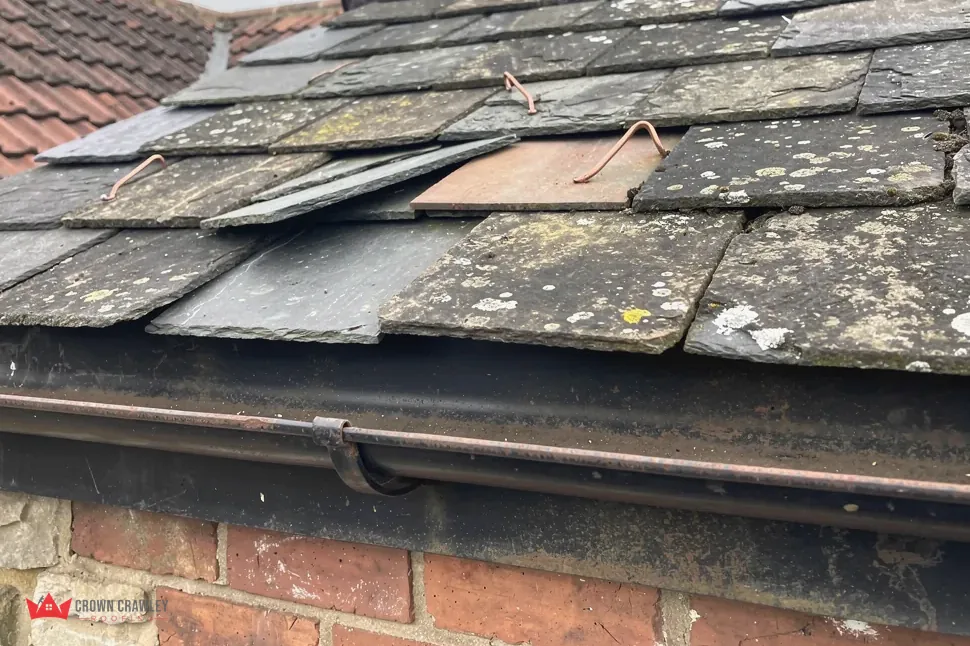
Old slates, damaged and slipped, above a cast-iron gutter

Calverley Park's listed houses

Number 1 and number 11 Calverley Park, and 1 to 17 Calverley Park Crescent, are each Grade II* listed. If yours is one of them, consent comes before pricing, and the written plan reflects that.

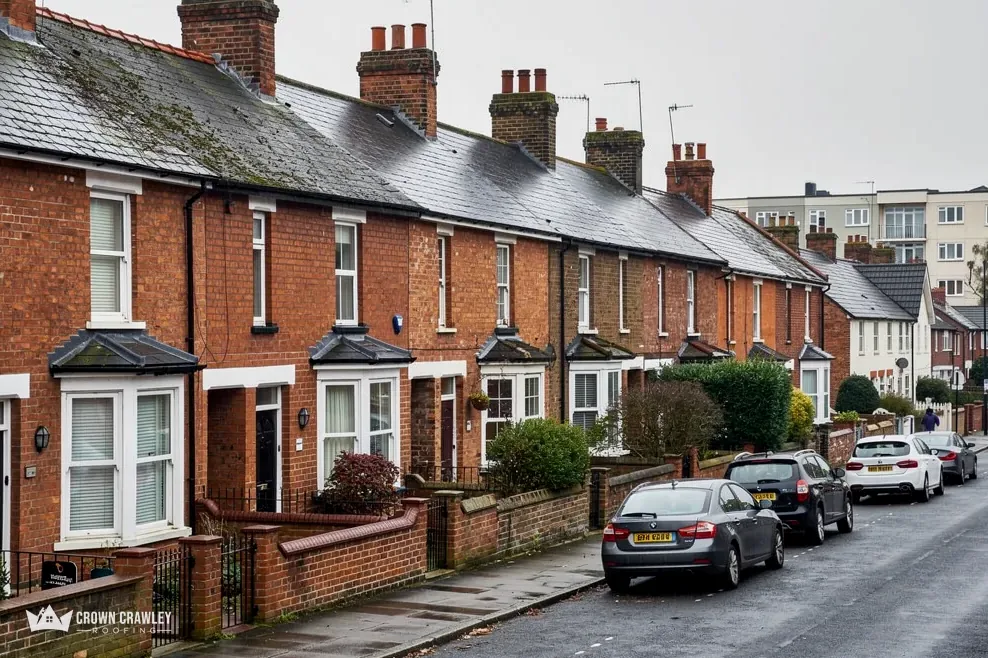
Period houses with slate roofs

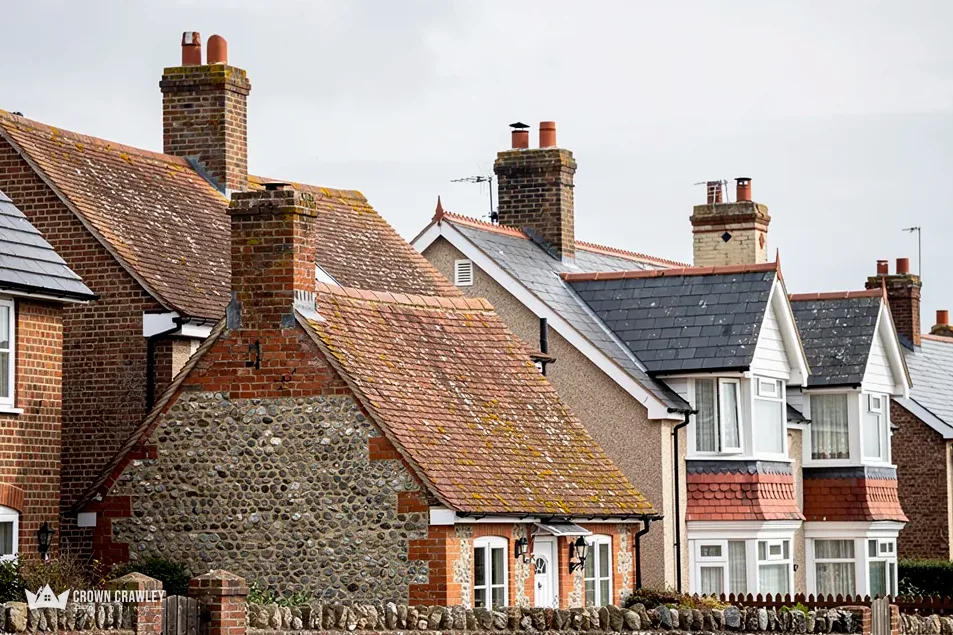
Flint and brick houses with clay tiled roofs and chimneys

St Barnabas and church roofs

The Parish Church of St Barnabas is Grade II* listed and in Church of England use, so its roof work follows the church's own approval route rather than listed building consent.

Old stone church with tiled roof

Tunbridge Wells, on the Kent and Sussex border

Map of Tunbridge Wells and the neighbourhoods around it, with Crawley for reference.

Tunbridge Wells is a spa town on the High Weald hills at the Kent and Sussex border, with 51,232 people in the 2021 built-up area.

Distance
23.3 road miles from Crawley, to the east
Drive
About 44 minutes
Council
Tunbridge Wells Borough Council and Kent County Council
Planning authority
Tunbridge Wells Borough Council
Old name
Fant-wells, then the Queen's Wells, before Tunbridge Wells
Get a free quote

Tunbridge Wells: survey to sign-off

Spa town, steep streets and Grade II* terraces: reading a Wells roof

Three short chapters on a town built across hills and parishes, the listed houses and church where consent leads, and what Kent expects when scaffold or a larger job is in the picture.

Stage 01 · Setting

Four hills, three parishes, one spa

In 1797 Tunbridge Wells lay across Speldhurst, Tonbridge and Frant, and its roofs sit on slopes that make access a real question.

Hasted's History of Kent, published in 1797, says Tunbridge Wells then lay partly in Speldhurst parish, partly in Tonbridge and partly in Frant, which is in Sussex, and was made up of Mount Ephraim, Mount Pleasant, Mount Sion and the Wells. It adds that because part of the springs lay in Sussex they were for a time called Fant-wells, that the doctor Lewis Rowzee named them the Queen's Wells, and that the name Tunbridge Wells soon won out. The town's trade then was chiefly wooden toys known as Tunbridge ware, which employed a great number of people. Today the town sits on the hills of the High Weald at the Kent and Sussex border, and the hills are the first thing a roofer plans around.

Hillside access at the survey

Ladder base
Level footing, or boards beneath
Scaffold
Drive, garden or footway
Deliveries
Where the lorry can stop
Waste route
Side passage, steps or chute
Gutters
Falls to the downpipes
Black flat roof with a rooflight on a house extension

How does a slope change a roof job?

Everything arrives from below, and nothing wants to stay put. A ladder needs a level base, which on a steep front garden may mean boards under the feet. Scaffold may have to be stepped to follow the ground. A delivery of tiles may have to stop further along the road than the front door, and waste has to come down by a chute or a hand-carried route that is safe on steps. None of this is mysterious, but it must be settled before the first tile comes off, so at the survey we walk the plot with you and agree where each thing goes. The route we choose goes into the plan you receive, along with the date the scaffolding arrives and the day it comes down, so a neighbour with a drive to clear is never surprised.

What gets inspected on a roof like that?

Rain runs downhill, and on a hillside street the gutters and downpipes on the downhill side get a close look. We check that each run falls to its outlet, that the joints are tight and that nothing is blocked, since an overflowing gutter sends water into the wall behind it. The High Weald landscape's own website says that sandstone, bricks and tiles are widely used across the area because of the underlying geology, so we expect to meet clay tile, brick and sandstone details on the same elevation and treat each on its merits. Our pitched roofing service handles the re-tiling and underlay work that comes after.

Victorian brick terrace with bay windows and parked cars

Stage 02 · Heritage

Calverley Park, St Barnabas and consent

Calverley Park holds several Grade II* houses and St Barnabas is Grade II* too, so consent often decides who does what, and when.

The official list of protected buildings records 1 Calverley Park, 11 Calverley Park and 1 to 17 Calverley Park Crescent, each at Grade II*, with the Parish Church of St Barnabas at the same grade. These buildings give the town its character. They also raise consent questions that an ordinary roof never meets, and a roofer who skips them can leave the owner facing enforcement action.

What if my Tunbridge Wells house is listed?

You cannot lawfully alter a listed building in ways that affect its special character without consent, and the roof carries a good share of that character. Putting back the same tile on the same pattern is generally a smaller matter than changing the covering, the chimney pots, the ridge or the lead, and Tunbridge Wells Borough Council's planning team settles which one you have for a given address. Before we touch anything we record the roof in pictures, covering the tile or slate type, the lead details and the state of the timber behind, so that everyone begins from the same point, and nothing that could need consent starts until you hold it. If the job involves lead, our answer on lead roof repairs on a listed building explains the usual points, and the lead work page covers the craft itself.

Consent terms explained

Faculty
Consent route for Anglican church works
Grade II*
Listed above the basic grade II
Listed building consent
Council consent for work touching listed character
Exempt denomination
Faith body with its own approvals

On a Calverley Park roof, the sequence matters more than the speed.

Why does a church follow another route?

St Barnabas is used as an Anglican place of worship, and Anglicans fall into the exempt group. A church in current use goes through its own denomination's approvals; an Anglican parish applies for a faculty, in place of listed building consent from the council. The exemption still leaves planning permission in play where outside changes call for it, and it covers only the listed worship buildings of the denominations named in the order. A trustee or churchwarden planning roof repairs should ask the diocese which route applies before accepting any figure, and we will price the work once that is clear.

Before altering the roof's appearance, ask Tunbridge Wells Borough Council whether your street lies inside a conservation area, since that narrows what can change without an application. For work that simply restores what is already there, the survey and the written price are normally all you need, and we keep the pictures on file for any later question.

Stage 03 · Permissions

Kent's rules for a Tunbridge Wells roof

The borough council deals with planning and runs its own building control section, while Kent County Council looks after the highway.

For most jobs the only paperwork is our own: the survey notes and your written price. A few jobs involve councils, and in Tunbridge Wells that means two of them. The borough council deals with planning and building control, and Kent County Council deals with roads.

Does stripping a slope bring in building control?

The Planning Portal's guidance on re-roofing says an application is not normally required where the work touches less than 25 per cent of the building envelope and under 50 per cent of the roof. Two things change that: a new covering at least 15 per cent heavier than the old, or one that would perform noticeably differently if fire reached the roof. Putting heavy natural stone where clay tile used to be would be a case to check first. Any such switch is flagged in the survey notes and reflected in your total, and a complete new roof is described on our roof replacement page. The borough council's own building control section confirms what applies to an address.

Before a bigger job here

Planning
Tunbridge Wells Borough Council
Building control
The borough council's own section
Scaffold licence
Kent County Council, firm applies
Weekly charge
£52 in 2026 to 2027
Church or listed
Consent route chosen first
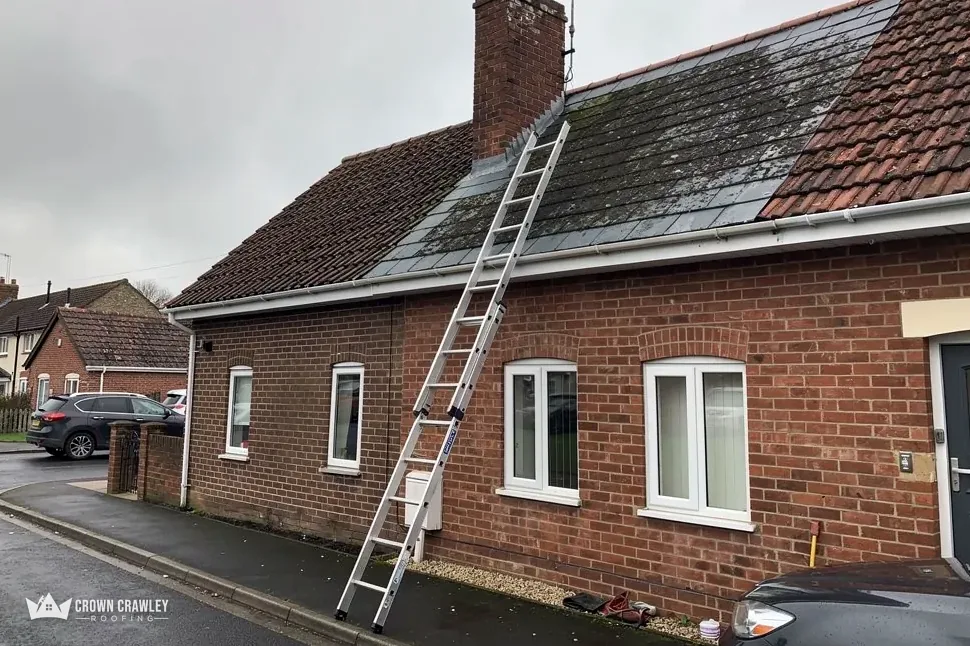
Brick bungalow with a ladder leaning against its tiled roof

How much notice does Kent want for a scaffold licence?

Kent asks for applications, renewals included, 5 working days before the intended licence start. It says licences are applied for by the company that owns and is responsible for the apparatus, so a homeowner who hires a scaffolding firm leaves the registration with that firm. For 2026 to 2027 its list gives £52 per week for scaffolding left on the highway for 7 calendar days, with a £78 site inspection if the county decides one is needed. Kent's licence concerns things placed on the public highway, and keeping poles off the pavement on a sloping street can be harder than it sounds, so we pace out the ground at the survey and describe the likely arrangement before any start date is fixed, including which side of the boundary the poles will stand and how pedestrians will get past.

A bat roost has legal protection, and a roof can hold one without anyone knowing. If we find droppings or a gap used for roosting, the work halts and we phone you to agree the next move. On the practical side, send your postcode and a snap of the slope or chimney bothering you, and say whether the street climbs or drops from your front door. When any quote arrives, ours or someone else's, look for whether VAT and scaffolding are covered. Mention any earlier repairs you know of, too, since they show us where to look first.

Tunbridge Wells roof queries

Does a hillside street change how my Tunbridge Wells roof is reached?

Often, yes. Ladders need a level base, scaffold may have to step with the ground and deliveries may have to stop down the road. We walk the plot at the survey, agree where scaffold, materials and waste will go and write the plan into your quote. Kent licenses scaffolding placed on the public highway, so whether the frame can stay off the pavement sometimes decides the route.

Do I need consent for roof work on a Calverley Park house?

If your house is among the Grade II* listings there, yes, for any work affecting its character. Tunbridge Wells Borough Council's planning team gives the answer for each address, and a straight like-for-like repair is a smaller question than a change of covering. Pictures of the roof are taken first, and nothing needing consent begins until you hold it.

Who approves roof repairs to a church like St Barnabas?

St Barnabas is Grade II* and in Church of England use, so repairs follow the church's faculty system instead of listed building consent from the council. Planning permission may still apply to changes outside. The diocese can tell you which route fits your job, and that is worth asking before you accept any quote, because the answer decides who must sign off before work starts.

How much warning does Kent need for scaffold outside a Tunbridge Wells home?

Kent County Council wants licence applications 5 working days before the start, and they come from the scaffolding company, not from you. For 2026 to 2027 its list shows £52 per week for 7 calendar days. We agree dates with the scaffolder, tell you in good time, and let neighbours know when the poles will arrive.

Book your Tunbridge Wells roof check

Tell us which slope, chimney or gutter is giving trouble, add your Tunbridge Wells postcode, and a survey visit follows.

01293 974253

10-year workmanship guarantee, in writing.

Call Get a free quote