Roofers in Southborough

Roofs on a Kent town that once lodged early spa visitors.

Southborough sits between Tonbridge and Tunbridge Wells, and some of its houses were built for people visiting the springs. We study the roof first, then quote one total.

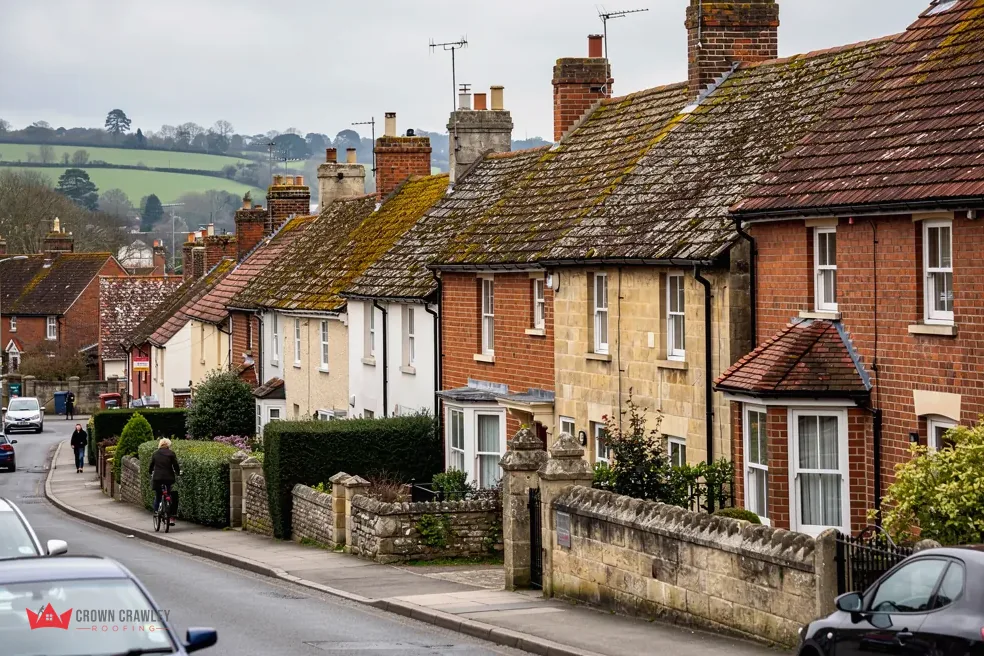
Village street of brick and render houses with old tiled roofs

Where Southborough's roofs come from

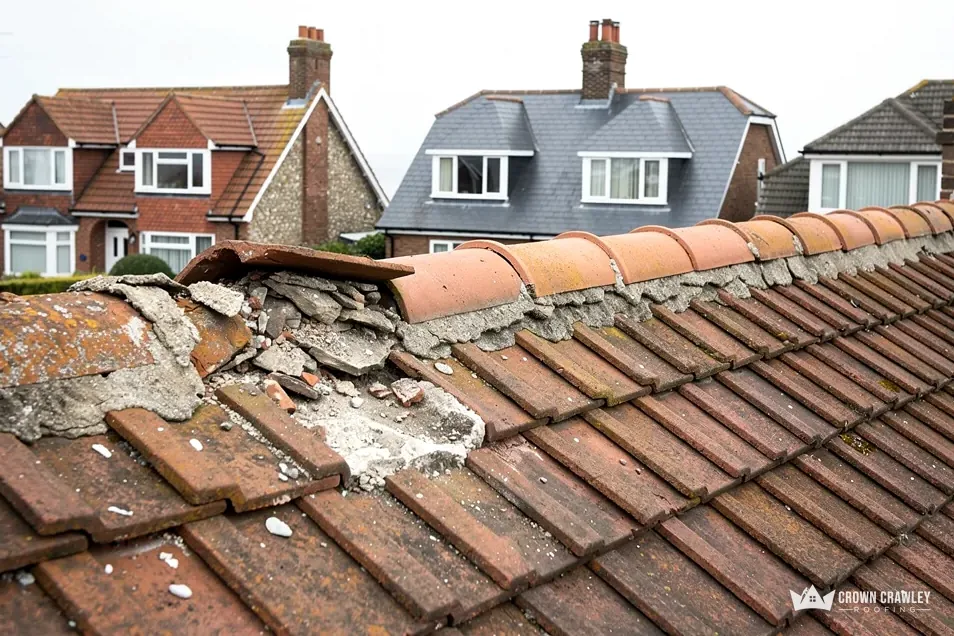
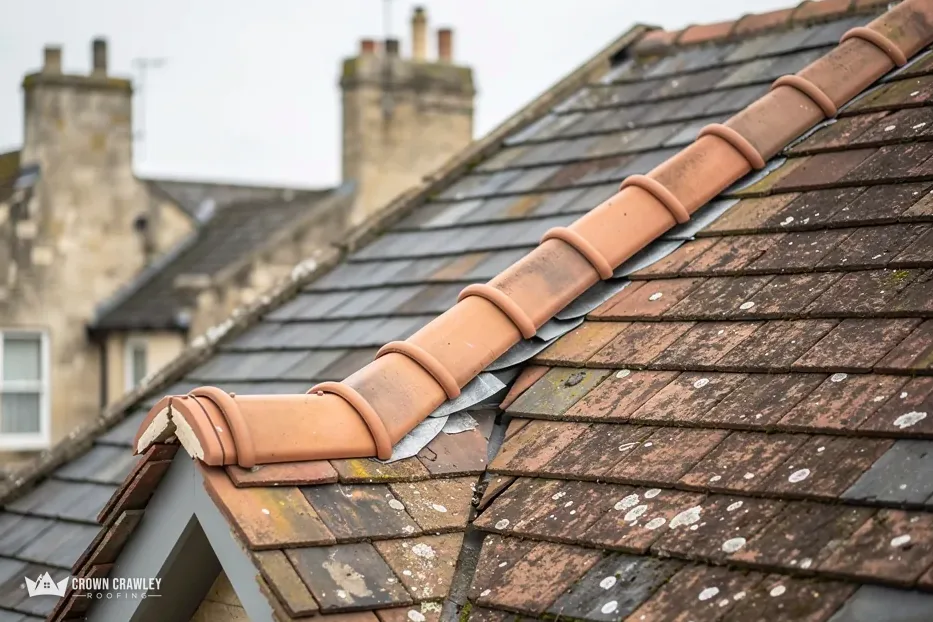
Broken mortar bedding along a clay ridge

Houses from the spa visitors' days

Southborough's early growth is tied to the Tunbridge Wells springs, as Hasted noted in 1797. We do not assume your house is that old, but we do read the loft for repairs made at different dates and mark them in the report.

Brick house with a tiled roof

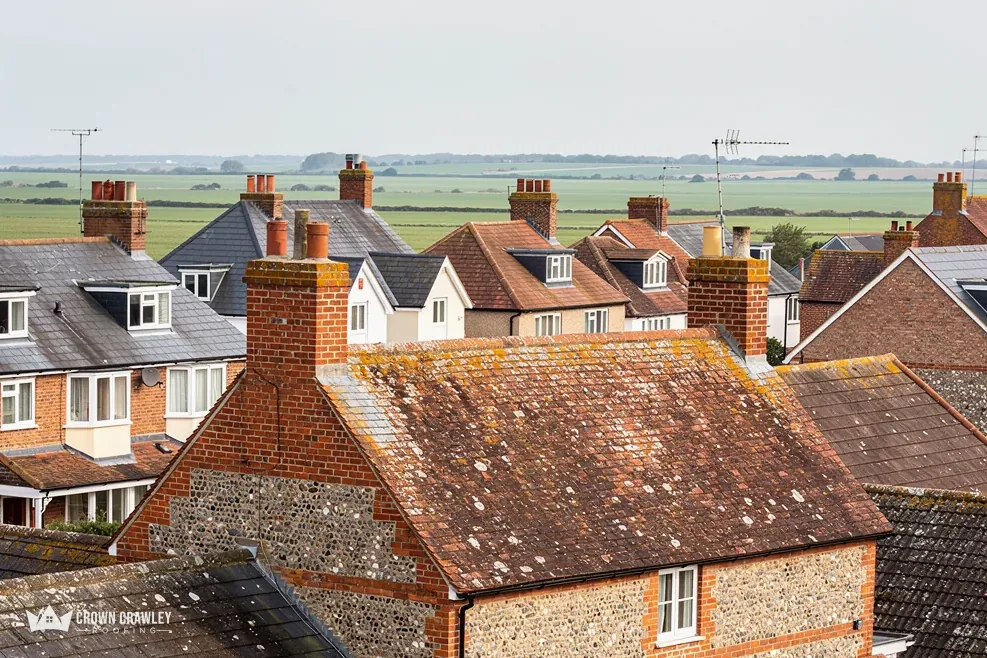
Flint-walled house with a mossy clay tiled roof overlooking fields

Listed houses on three roads

The National Heritage List has Grade II entries on Holden Road, London Road and Pennington Road. A roof at a listed address is discussed with the council before any estimate turns into a start date.

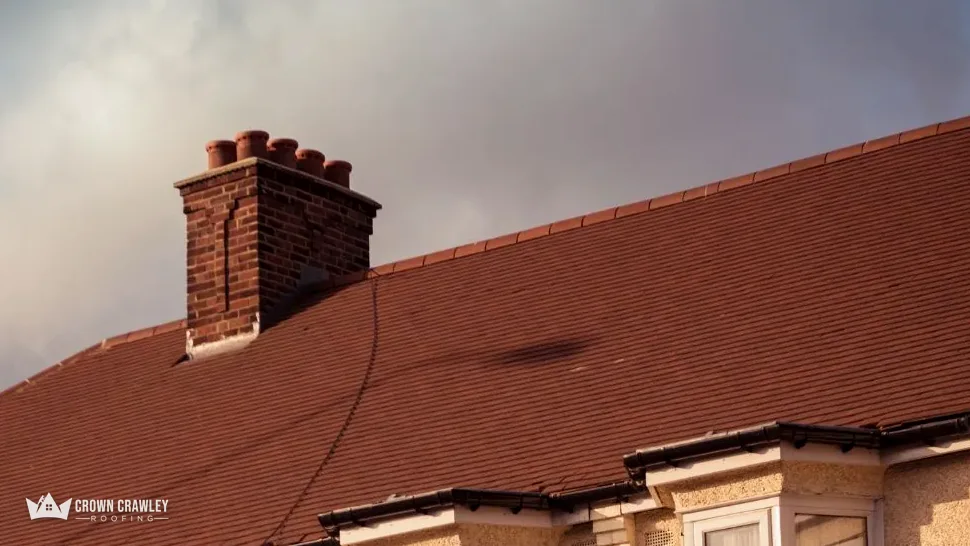
Clay tile roof on an older house

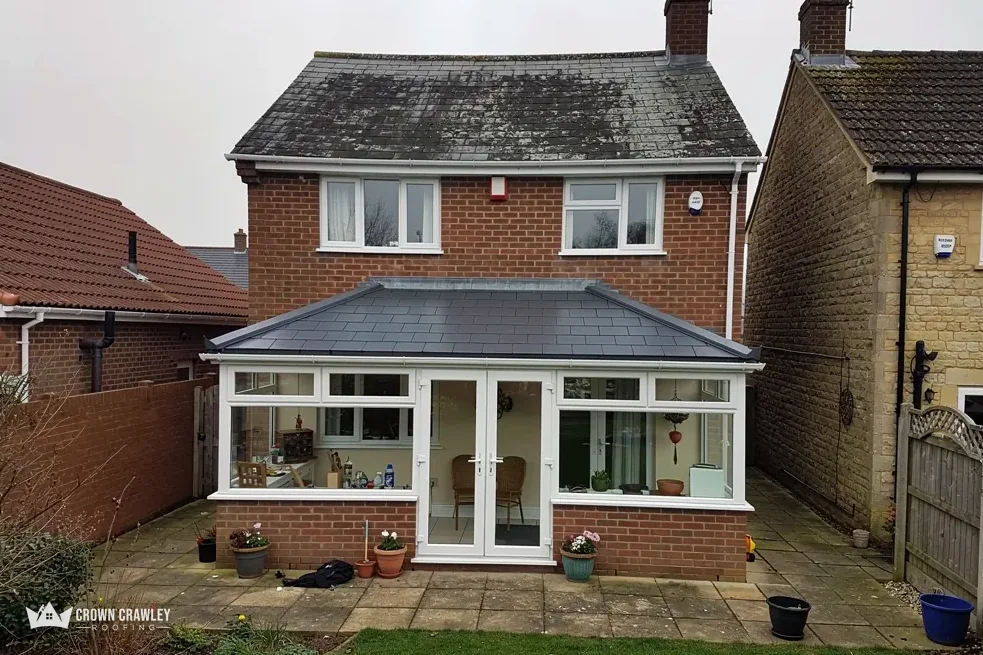
Rear of a brick house with a glazed extension and slate-effect roof

Southborough, the Common

Tunbridge Wells Borough Council has a conservation area called Southborough, the Common. The council's boundary plan settles whether your house is in it, and that decides how much a new roof look is questioned.

Terraced homes with tiled roofs

Southborough, between Tonbridge and Tunbridge Wells

Map of Southborough and the neighbourhoods around it, with Crawley for reference.

Southborough is a town on the road between Tonbridge and Tunbridge Wells, and for roof work it falls under Tunbridge Wells Borough Council.

Distance
24 road miles from Crawley, to the east
Drive
About 46 minutes
Council
Tunbridge Wells Borough Council and Kent County Council
Planning authority
Tunbridge Wells Borough Council
Population
9,631 (Census 2021, Southborough built-up area)
Building control
Tunbridge Wells Borough Council's own service
Get a free quote

Southborough on site

From spa-visitor houses to listed roofs, and what Kent asks of a job

Three short chapters on where Southborough's older houses came from, how listed roofs are handled, and the council and highway steps behind a bigger job.

Stage 01 · History

Houses for the Tunbridge Wells springs

Southborough housed some of the earliest visitors to the Tunbridge Wells springs, so a survey here starts by looking for repairs of many dates.

Southborough owes part of its early growth to the springs at Tunbridge Wells. Hasted, writing in 1797, noted that Tonbridge lay five miles from the water, which is why hamlets such as this one, and Rusthall, saw some of the earliest lodgings for visitors. The 2021 Census counted 9,631 people in the Southborough built-up area, so the town has grown a great deal since the spa years. Hasted also records the twist in the tale: once lodgings were built beside the Wells themselves, Southborough and Rusthall became ruinous and deserted by all but their own people. We treat that history as background only. On a given morning, what matters is the roof above you and what has been done to it, and a street name tells us very little about either.

In a Southborough loft

Rafters
Sound, with no soft or dark patches
Battens
Firm under each nail
Underlay
Present, whole and lapped
Past repairs
Noted, with the date if known
Air flow
Eaves vents open and clear
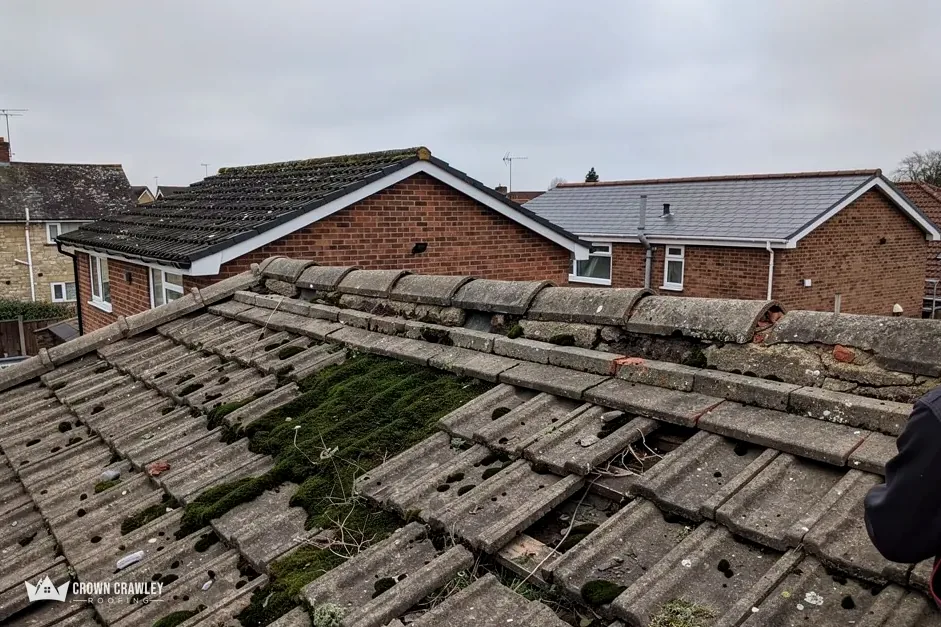
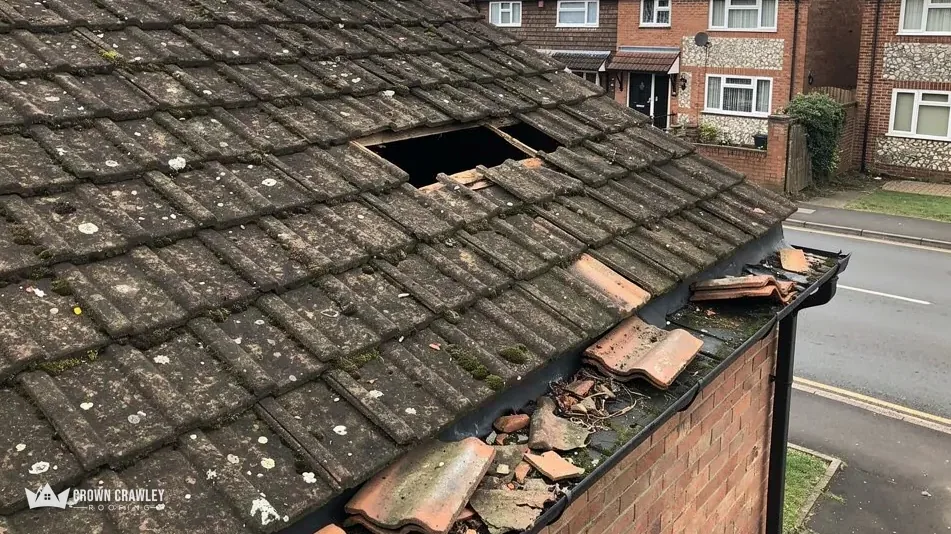
Aged concrete roof tiles with moss on the slope

How do you survey an older Southborough roof?

Outside, we trace each slope for slipped, cracked or chipped tiles, then the ridge, the hips and the joins at chimneys and walls, with a look at the fascia and gutter along the bottom edge. Then we climb into the loft. Roofs that have stood a long while have normally been mended more than once, and the loft records it: a new rafter sitting beside an old one, a patch of fresh batten, two kinds of underlay meeting halfway down a slope. We photograph what we find and mark where the older work stops, so you can see the repair history for yourself rather than take our word for it. If your house has a flat-roofed extension or a lean-to at the back, it gets the same treatment, because a later addition is often where the oldest roof meets the newest, and the join between them is where moisture likes to creep through.

What do those layers of repair tell us?

They tell us where water has been getting in. A string of old patches around one chimney points to its flashings, or to the flaunching, the sloped mortar cap that grips the pots, rather than to the tiles around it. Patches along the bottom of a slope tend to point at the gutter or the eaves. Reading the pattern stops us replacing sound tiles to cure a fault that lives in a metal strip or a mortar joint. Our pitched roofing page sets out the work on tiles, battens and underlay that follows, and the chimney repairs page deals with stacks, pots and flashings.

Keep reading

You do not need to learn every term in our report. We explain each one next to its photo, and where a smaller, cheaper fix will hold, we recommend it and write that into the price.

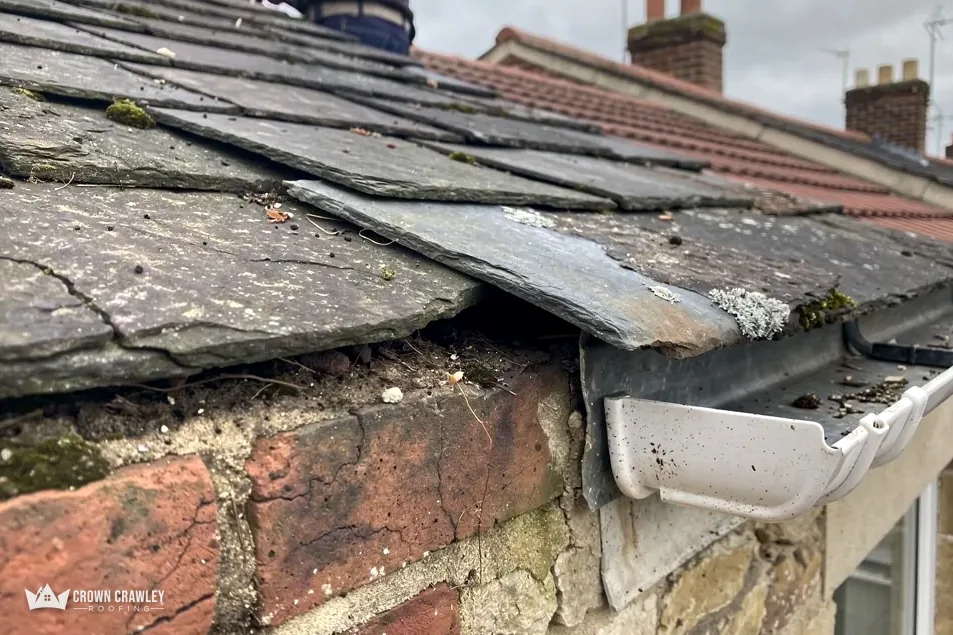
Terraced brick houses with flint detail along a wet street

Stage 02 · Heritage

Listed roofs on Holden Road and beyond

Southborough has listed houses and a listed church, and on any of their roofs the first question is whose approval comes first.

The National Heritage List records Grade II entries for 15 and 17 Holden Road, for 55 London Road and for 7 Pennington Road, and Christ Church holds a Grade II entry too. A listing covers the whole building, roof slopes and stacks included. If your house appears on the list, or you are unsure, check before you commission anything.

Who decides if a listed Southborough roof can be worked on?

Tunbridge Wells Borough Council's planning team. Anything that touches a listed building's special character calls for listed building consent, and the council decides where that line falls. A few replacement tiles of the same type may be a very different matter from a new covering, new battens or a change to a chimney. Our planning post covers how the rules fit together. Take our survey photos to the council when you ask, and we then write the agreed scope into the quote so that the paperwork and the price describe the same job.

Words from a roof report

Batten
Timber lath each tile hooks over
Underlay
Sheet laid beneath the tiles
Soaker
Small metal sheet at a roof junction
Faculty
Anglican route to approve church works

A listed address turns a roof quote into a conversation with the council.

How is a listed roof worked on once it is agreed?

Carefully, in small sections. Tiles that come off are stacked in the order they were lifted, checked one by one for cracks and worn edges, and refitted if sound. Replacements are matched against the originals for colour, size and profile in daylight, not from a catalogue picture. Lead around chimneys and valleys is judged on its thickness and its wear, and a patch of tired lead is often a smaller job than it looks. Soakers, the small metal sheets bent into a roof junction, are examined too, since old ones can be thin or split while the tiles above them look fine. A minimum life of 60 years is quoted for clay tiles, but hand-made ones from earlier centuries do not follow it, which is why we let condition outrank age. A sound tile from an earlier century can outlast a poor modern one, and a listed roof may hold both side by side.

What about the church?

Christ Church is still an active Anglican church. For a church used like this one, approval comes through the Church of England's faculty system rather than listed building consent. The parish arranges that, and it has nothing to do with a home roof.

Stage 03 · Permissions

Council and Kent steps for a larger job

Outside the Common's boundary, a matching repair on an unlisted house is simple; a larger job brings in the borough and Kent.

Southborough, the Common is a conservation area, so inside its boundary a new tile colour, rooflight or altered stack should go past Tunbridge Wells planners first. A house that is listed, or flats that share a roof, can raise questions of their own. The questions that remain are about size, weight and where the scaffold goes.

When does a Southborough re-roof reach building control?

Under the Planning Portal's test, a Southborough job touching less than 25 per cent of the building envelope and less than 50 per cent of the roof is, as a rule, outside the building control system. A new covering weighing 15 per cent or more beyond the existing, or whose fire performance differs, brings the job back in, and a surveyor or structural engineer can check the loading. The people to ask are Tunbridge Wells Borough Council's building control team, which runs its own service. If the survey suggests stripping a full slope, or moving to a heavier covering, we raise it with them before dates are agreed. Our roof replacement page shows how a complete new roof is staged.

Before a larger job starts

Planning
Tunbridge Wells Borough Council
Approval
The borough's own building control
Roadside scaffold
Kent County Council permit
Weekly charge
£52 for 2026 to 2027
Roosts
Bat finds halt the job
Clay ridge tiles along the hip of a weathered tiled roof

How does scaffold on a Southborough road get licensed?

Kent County Council is the highway authority, so a scaffold that occupies the road or pavement needs its licence. Kent County Council's licensing page expects the erecting firm, not the householder, to apply, at least 5 working days before the planned start. For 2026 to 2027 the weekly charge is £52, and an inspection, where one is judged necessary, is £78. Scaffolding that stays on the plot is outside the highway system altogether. When the access looks tight, we measure the side passage and the front garden at the survey, since a scaffold that has to squeeze past parked cars costs more planning than one with room.

The loft can also hold bats, and bats, with the places they breed and rest, have full legal protection. Signs of bats between the rafters stop our work there until advice is in. Gutters and fascias are checked on every survey, since water escaping from an eaves joint can soak the timber carrying the tiles, and it is easier to renew them while access is already in place. We also line up the survey, the council's reply and the licence application so that nothing waits on anything else. Give us the road, tell us about any listing or a site near the Common, and point out the slope or chimney that concerns you.

Southborough roof queries

How do you survey the roof of an older house in Southborough?

From outside we study the slopes, ridge, hips and chimney junctions, then we climb into the loft to read the rafters, battens and underlay. Older roofs usually show several generations of repair, so we photograph each one and mark where the old work ends. You get the pictures with a single total price in writing, and a plain account of what is needed.

Can I swap the tile colour on a house near Southborough Common?

Possibly not without asking. Tunbridge Wells Borough Council has a conservation area named Southborough, the Common, and a visible change inside it gets closer scrutiny; a listed house may need listed building consent as well. Before the roof's appearance changes in any way, put the question to Tunbridge Wells Borough Council's planning team and send us the reply, which we then build into the written scope.

Who deals with the scaffold licence for a roof in Southborough?

Under Kent County Council's rules the firm putting up the scaffolding makes the application, 5 working days before the planned start, so we agree the date with them early and keep you informed of it. Where the scaffold can stand entirely within your own boundary, the highway licence falls away, and the survey shows us whether that is possible.

My Southborough house is listed: who gives the go-ahead for roof repairs?

Tunbridge Wells Borough Council's planning team decides whether the repair affects the building's character and so needs listed building consent. A small like-for-like fix and a new covering can get different answers. Ask them first, and we will describe the work and materials exactly in writing so there is no doubt what you are asking about.

Show us the Southborough roof that worries you

Name your Southborough road, flag any listing, and say which slope or chimney is the worry. We will book the survey.

01293 974253

10-year workmanship guarantee, in writing.

Call Get a free quote