Gibraltar Tower, Heathfield Park
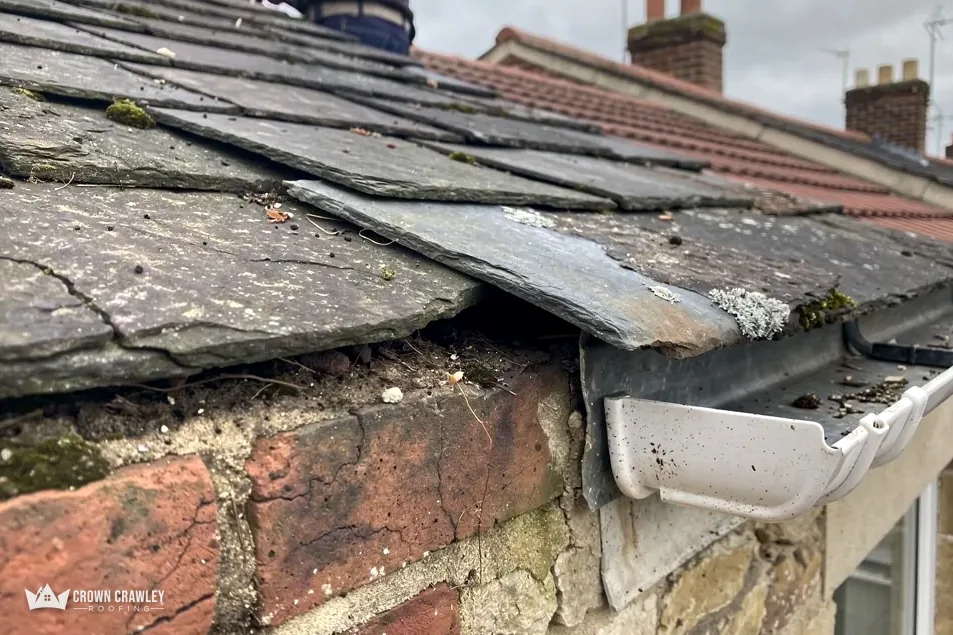
The Gibraltar Tower in Heathfield Park is listed Grade II*, first listed in 1966. A listed roof is repaired in matching material, with the plan put in writing before work begins.
Stone building with slate roof
Roofs across a Wealden town of 7,667 residents.
The 2021 Census counted 7,667 people in the Heathfield built-up area. Each roof here is read on its own terms, photographed, and then priced as one written total.
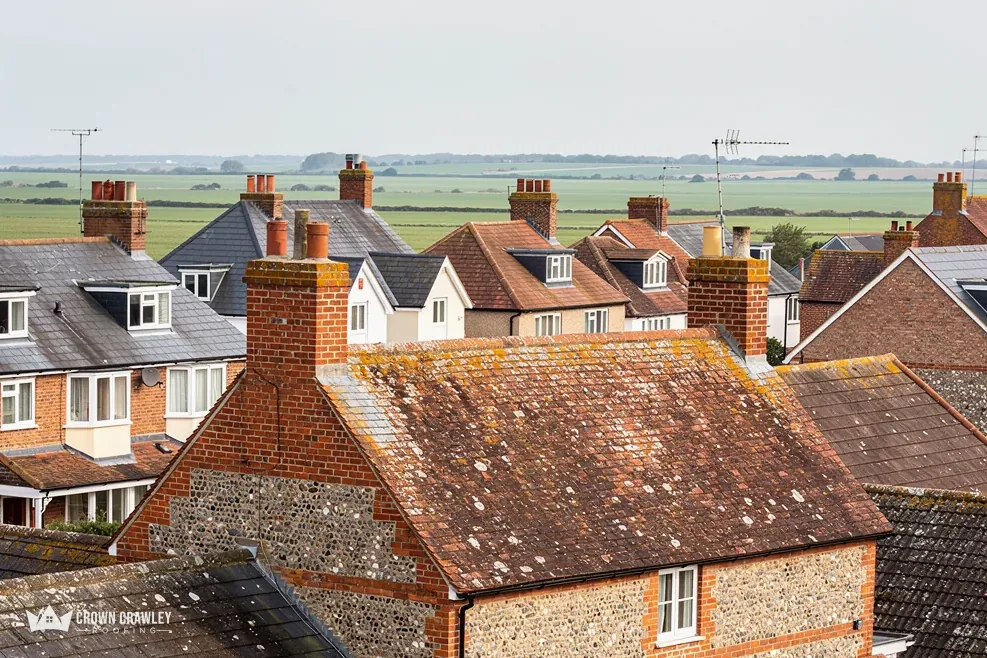
The Gibraltar Tower in Heathfield Park is listed Grade II*, first listed in 1966. A listed roof is repaired in matching material, with the plan put in writing before work begins.
Stone building with slate roof
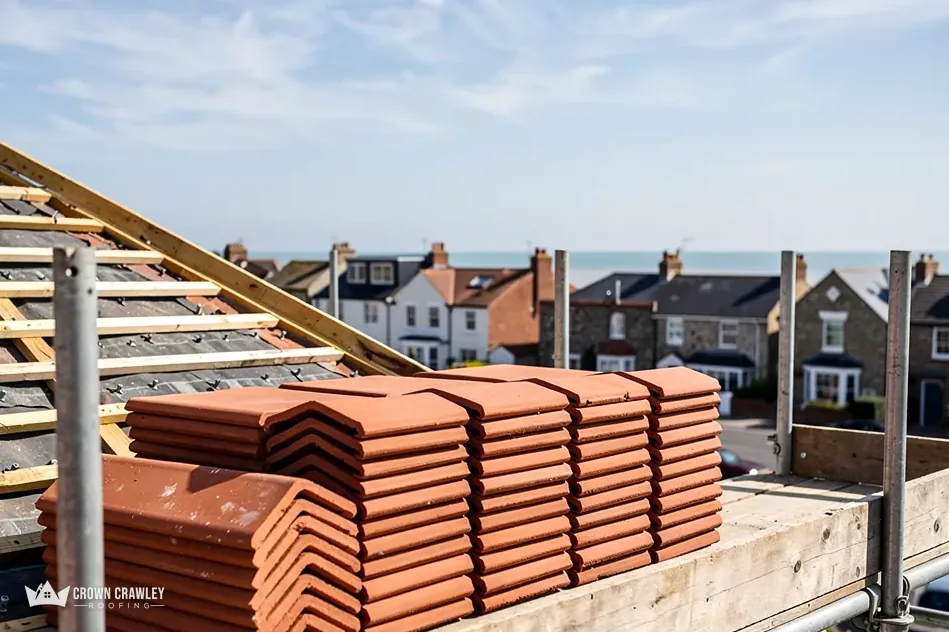
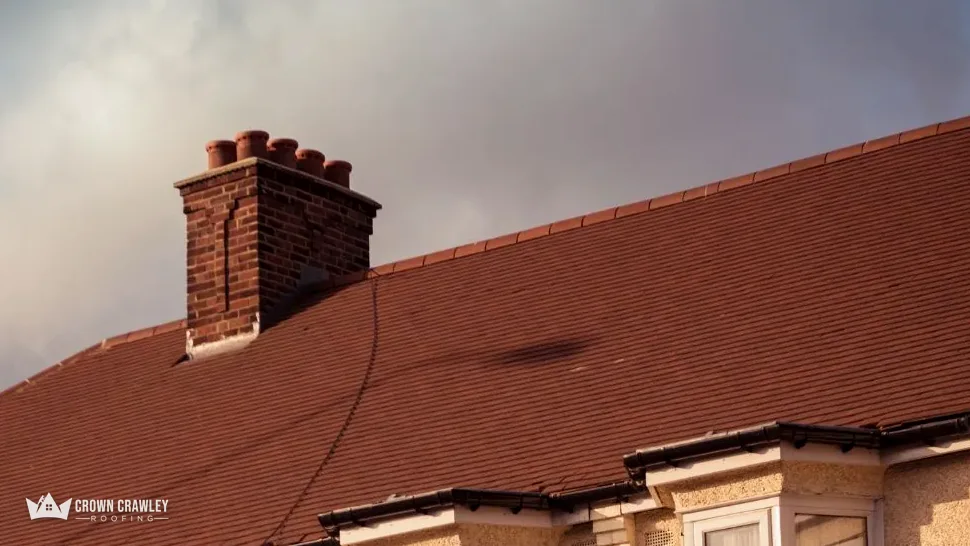
Both are Grade II listed. On a listed cottage the aim is matching tile, matching ridge pattern and a careful hand at the chimney, and any change of look goes to Wealden first.
Cottage roof with brick chimney
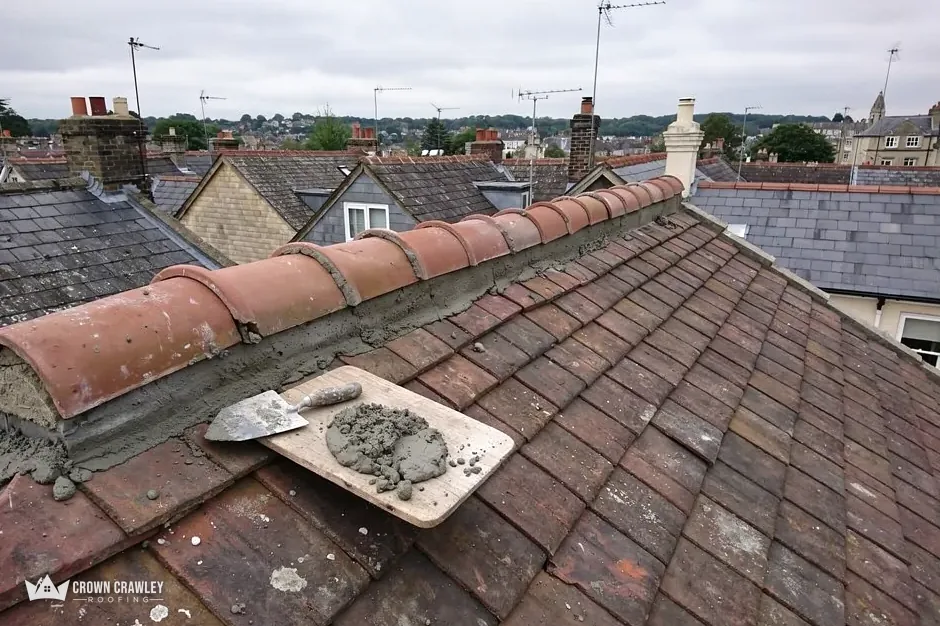
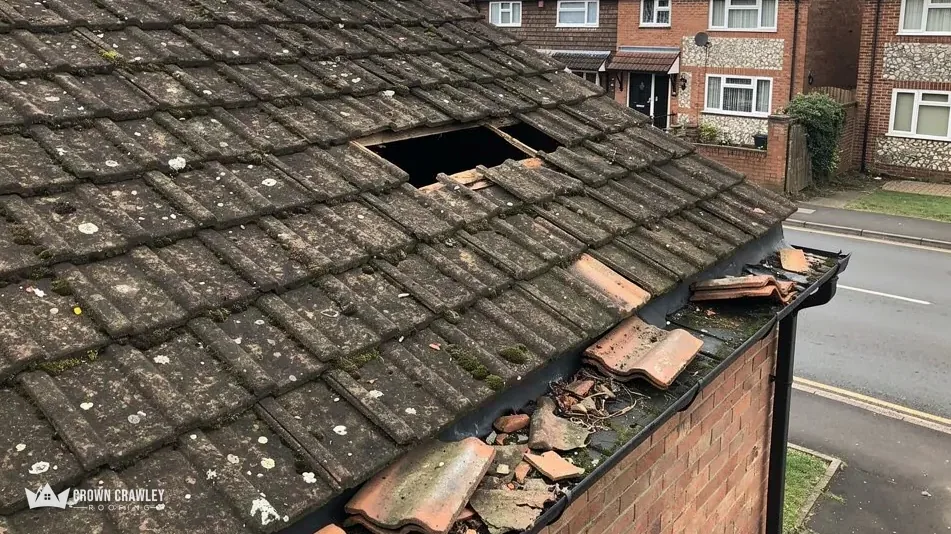
A repair that keeps the look is the simple case, and the district council can check your street against its conservation area boundaries. A different covering or a new opening is still worth a word with Wealden's planning team.
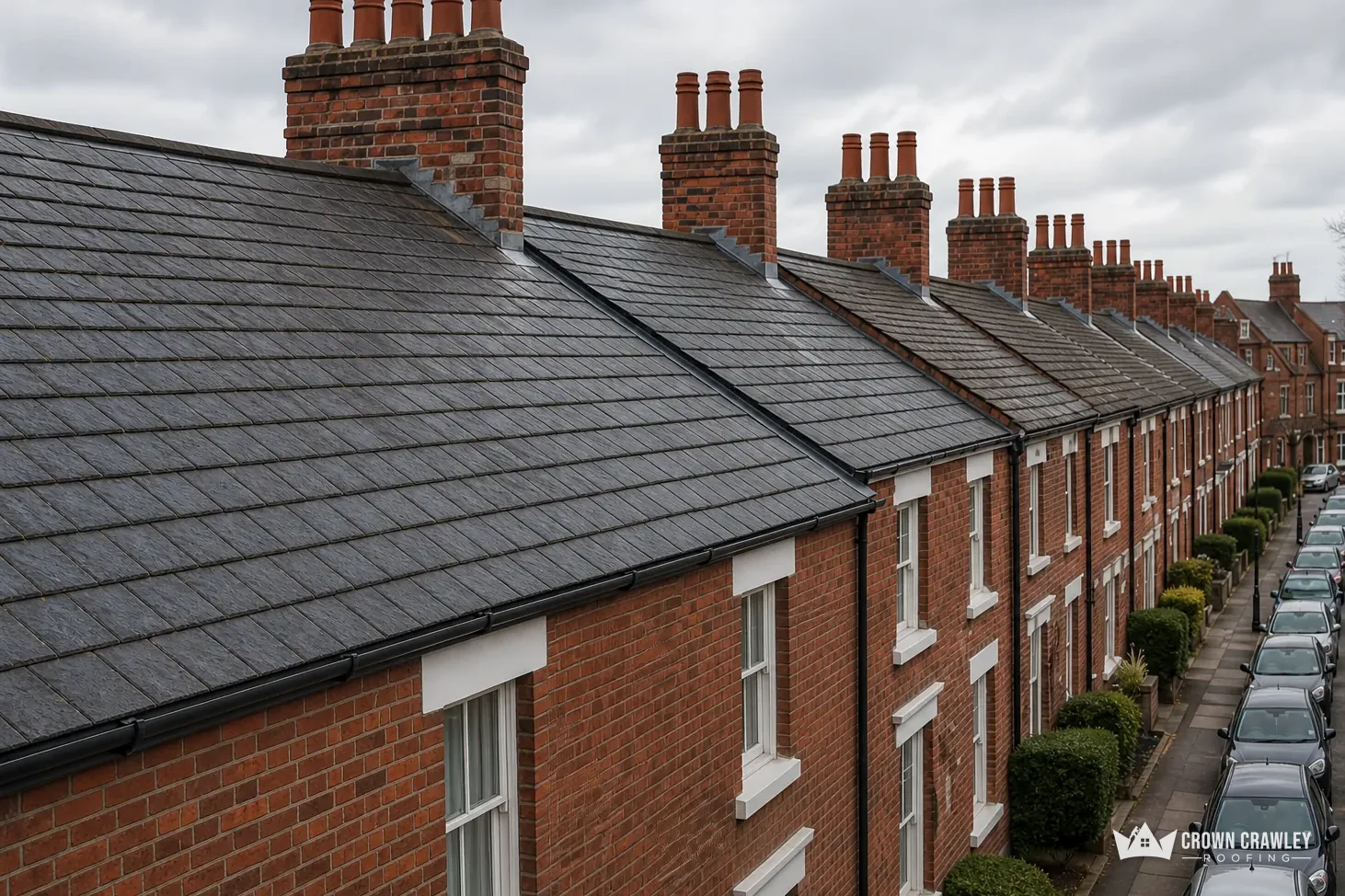
Tiled roofs along a street
Map of Heathfield and the neighbourhoods around it, with Crawley for reference.
Heathfield lies south-east of Crawley in East Sussex, where Wealden District Council handles planning and East Sussex County Council looks after the roads.
Heathfield survey diary
Three short chapters on reading an unfamiliar roof, the town's listed buildings and area checks, and the East Sussex scaffold and approval rules for bigger jobs.
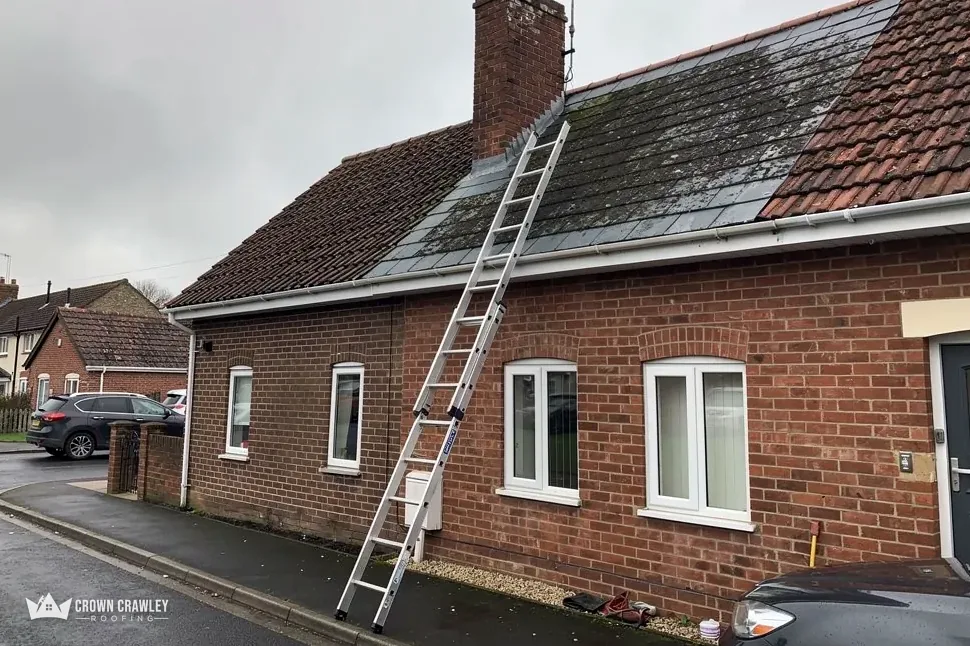
Stage 01 · First look
A town of 7,667 residents holds roofs of every kind, so each Heathfield survey begins by identifying the covering instead of assuming it.
Repairs, fixings and expected lifespan all depend on what the roof is covered with, so the first job at a Heathfield survey is naming the material. A tile that looks identical from the pavement can behave very differently under the hammer, and a patch made in the wrong material shows up within a season as a different colour and a different edge.
Look at the edges of the covering from the garden. Slate is thin, flat-faced and split along the edge. Clay and concrete tiles are thicker at the bottom of each piece, and plain tiles are small and flat, laid in overlapping rows, while interlocking tiles lock together side to side with a ridged profile. Your phone's zoom is enough for a first answer, and the survey confirms it. The answer matters because the lowest workable slope differs by product: Marley lists 35° for its plain concrete tile and 15° for the Mendip, while BS 5534 puts natural slate at a minimum of 20 degrees. A covering laid below its minimum pitch lets wind-driven rain in, whatever the tile is made of.
The loft tells the rest. From the hatch, with a torch, the underside of the covering shows the battens, the nail points, the underlay and any daylight. Damp patches on timber, rusty nail tips and a sagging underlay each point to a cause before a ladder is raised, and it is often cheaper to find a fault this way than by stripping tiles to look.
Coverings in plain words
Published lifespans are typical figures, never promises. Marley's figure for a concrete tile is around 60 years, with the note that it carries no guarantee. Clay is rated at a minimum of 60 years by the Building Research Establishment, though writing on old peg tile calls that figure an unreliable guide. Slate, according to the Confederation of Roofing Contractors, can last 100+ years if well maintained. Age is only part of the picture, since nails, battens and underlay give out on their own timetable, sometimes well before the covering does.
No. A roof near the end of a published range may still be sound, and a much younger one can fail early where nails have rusted or battens have rotted. The survey reads the evidence, and a repair is recommended whenever a repair will do the job. Slipped tiles, worn nibs and failed underlay are covered on our pitched roofing page, and the written price says which parts of the roof are staying.
Stage 02 · Permissions
Heathfield has listed buildings from a Grade II* tower to Grade II cottages, and Wealden decides which streets are conservation areas.
The Gibraltar Tower, in Heathfield Park, was first listed on 30 August 1966 at Grade II*, while Millview Vine Cottage and The Glade carry Grade II listings. Ask Wealden's planning officers about conservation area status for your Heathfield street. The listing is the other planning question to settle, house by house, and it is a question worth settling before a quote rather than after a start date.
Wealden District Council's planning team holds the answer for each address. Give them the house name as well as the postcode, since older properties can be recorded under a name instead of a number. If the house is on the list, tell the roofer before anything else, because the survey and the written quote then describe the work in finer detail, and that detail is what you pass to the council. Keep any old correspondence about the house too, such as a planning decision or a surveyor's report, since it often records what the roof was made of when it was last altered.
A listed roof gets its plan written down before the first tile is touched.
Before a listed roof job
Listed building consent is the gate for anything touching a listed building's character, and the roof is a big share of a cottage's. Repairs in the same material, the same pattern and the same fixing style are the safe route. A switch from plain clay tiles to something else is not, and a cottage roof with hand-made tiles may want its sound old tiles sorted and reused on the front slope. Our guide to re-roofing a listed building covers how that conversation with the council tends to run. Rebedded ridge tiles get mechanical fixings too: since the 2014 revision of BS 5534, mortar by itself has not been treated as a fixing, in Marley's reading, and a dry-fix system tested to BS 8612 is the alternative.
Then the road to a roof repair is plainer. Where no conservation area applies, a like-for-like re-roof raises no boundary question, though an unusual change such as a new dormer or a different material is still worth running past Wealden's planning team first. Chimneys on older Heathfield houses need their own look, because lead at the base and mortar on the top are where water gets in, and our chimney repairs page explains what is renewed and when.
Stage 03 · Sign-off
Building control here comes from a four-council partnership, and the highway licence for scaffold has its own fee and timetable.
Heathfield falls under Wealden District Council for planning, with East Sussex County Council as the highway authority. Building control comes from the East Sussex Building Control Partnership, which carries out building control for Wealden, Rother, Hastings and Eastbourne.
Planning Portal thresholds: 25 per cent of the building envelope, 50 per cent of the roof. A job that stays under both normally needs no application. Roof weight is a separate catch, since a new covering adding 15 per cent or more must be approved whatever its area. The survey is checked against both, and anything borderline is put to the partnership before dates are set. The full sequence for a new roof is on our roof replacement page.
East Sussex Highways issues the licence for scaffold standing on a pavement or road. Its published fee was £127 for 28 days, with a 2.77 per cent rise announced from 1 April 2026. Extensions must be applied for 5 working days before expiry, and a first application carries no published lead time, so who files it is settled with the scaffolder at the start. One calendar point: East Sussex Highways does not allow scaffold on a road or pavement during its annual bonfire celebrations, so those dates are planned around. A drive of your own is private ground, and no licence is involved.
Terms for a bigger job
On a re-roof the slopes are stripped in sections, so the house is never left open overnight. The scaffold is set up first, leaving a clear way through for deliveries, and rubbish goes into a skip or off site at the end of each working day. You are told each evening what the next day holds, including when the noisy work happens and when the street will be busiest. Neighbours get notice of the scaffold before it goes up. Photographs taken as the old covering comes off show what was underneath, and that is what the sign-off walk-round is based on.
Before the survey, pictures of ceiling stains and loft timber, the dates of earlier repairs, and a note of where a ladder or scaffold could stand all save a second visit, and they cost you nothing but a few minutes. If a council letter or a listing comes with the house, add that too, and the written price will be built around what the roof actually needs.
No, because listing applies building by building. Millview Vine Cottage and The Glade are on the list, but that does not stretch to their neighbours. Wealden's planning team can confirm your own address. If yours is listed, work touching its character needs consent first, and if it is not, work in matching tile and ridge brings no consent question.
East Sussex Highways published a fee of £127 for a 28-day licence, with a 2.77 per cent rise announced from 1 April 2026, so check the current figure. No first-application lead time is published. Before you compare two prices, ask each roofer whether the quote covers the scaffold and the licence, and who applies for it.
The East Sussex Building Control Partnership, which carries out the work for Wealden, Eastbourne, Hastings and Rother. Whether a given re-roof needs an application hinges on the area being renewed and the load of the new covering, so anything borderline is put to the partnership first, with a start date agreed once the answer is back.
Not necessarily. Marley's figure for concrete tiles is around 60 years, and the maker adds that this is no guarantee. Many roofs of that age need attention to the ridge, verge, nails or underlay long before the tiles themselves. A survey with pictures shows whether a repair will serve, or whether the battens and tiles are failing across a whole slope.
Send two pictures of the roof from the garden and one of the loft ceiling, plus your postcode, and the survey gets a date.
Message us on WhatsApp