A Grade II village church
Buxted's parish church, St Mary the Virgin, is Grade II listed and in Anglican use. Its roof follows the denomination's own consent route, a faculty, so nobody should promise a start date.
Parish church with a tiled roof
Listed rooftops and farmhouse tiles in a Wealden village.
Buxted has a Grade II church, listed farmhouses and a built-up area of 1,617 people. We check each roof on its own merits, share survey photos and price in one written total.
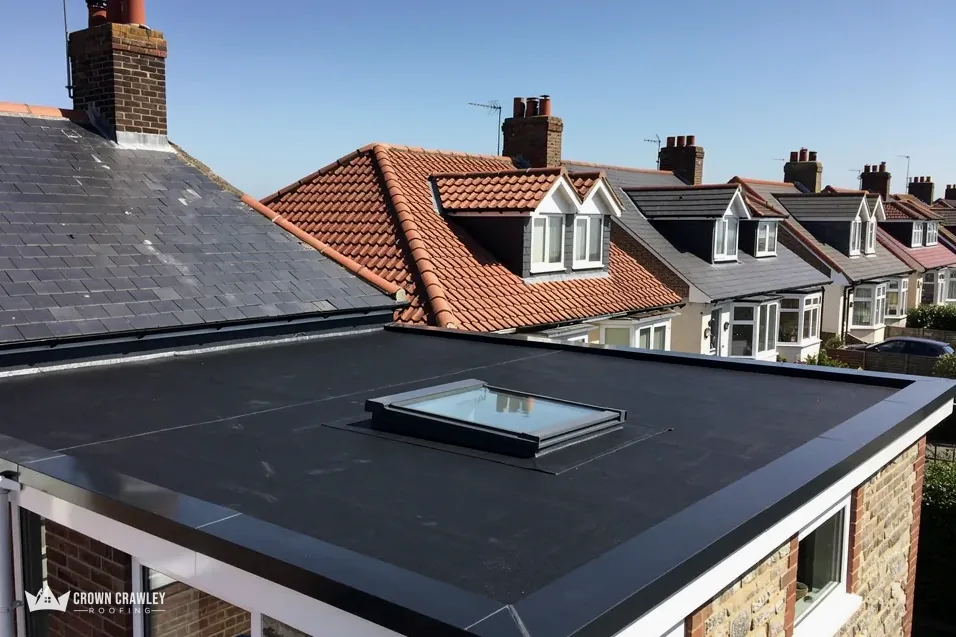
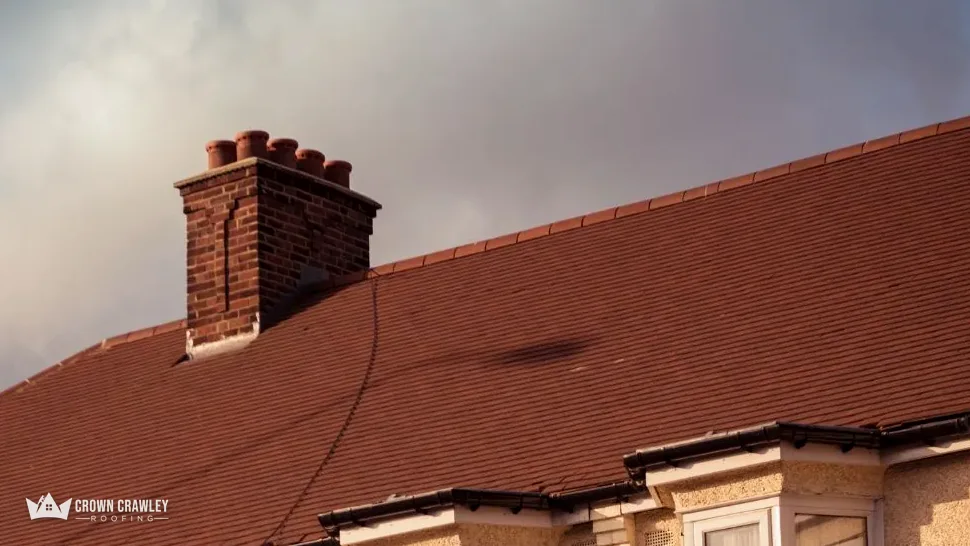
Buxted's parish church, St Mary the Virgin, is Grade II listed and in Anglican use. Its roof follows the denomination's own consent route, a faculty, so nobody should promise a start date.
Parish church with a tiled roof
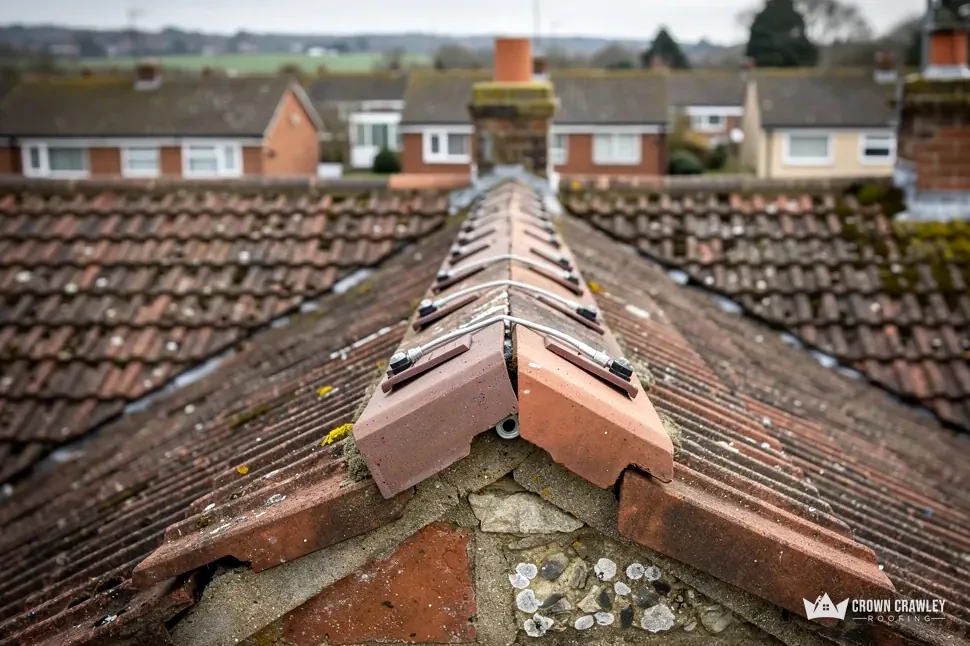
Britt's and Horseshoes Farmhouse are both Grade II listed. On a listed house, a change to the covering needs listed building consent, so we raise that with you before we put any price on it.
Older farmhouse with a clay tile roof
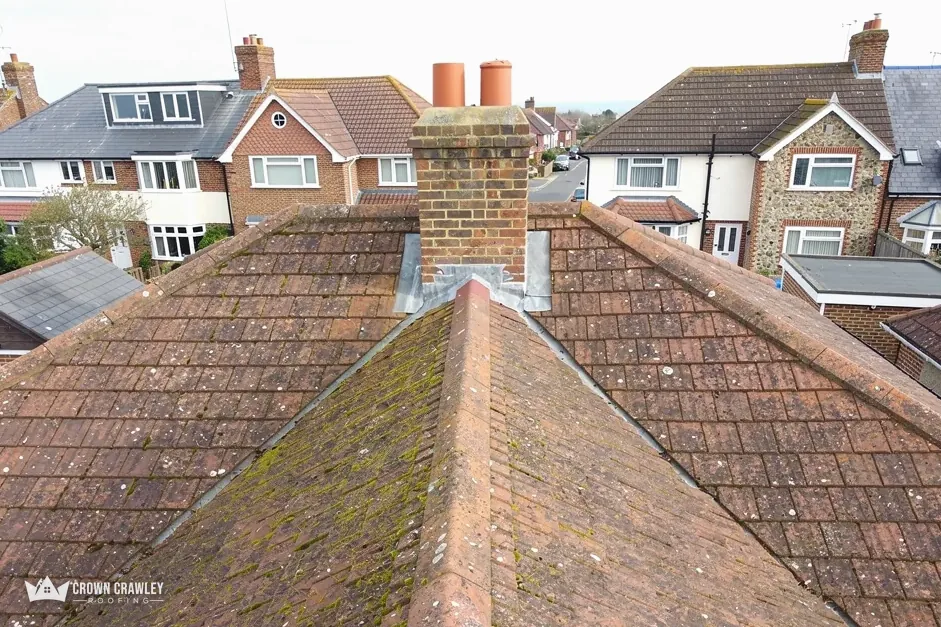
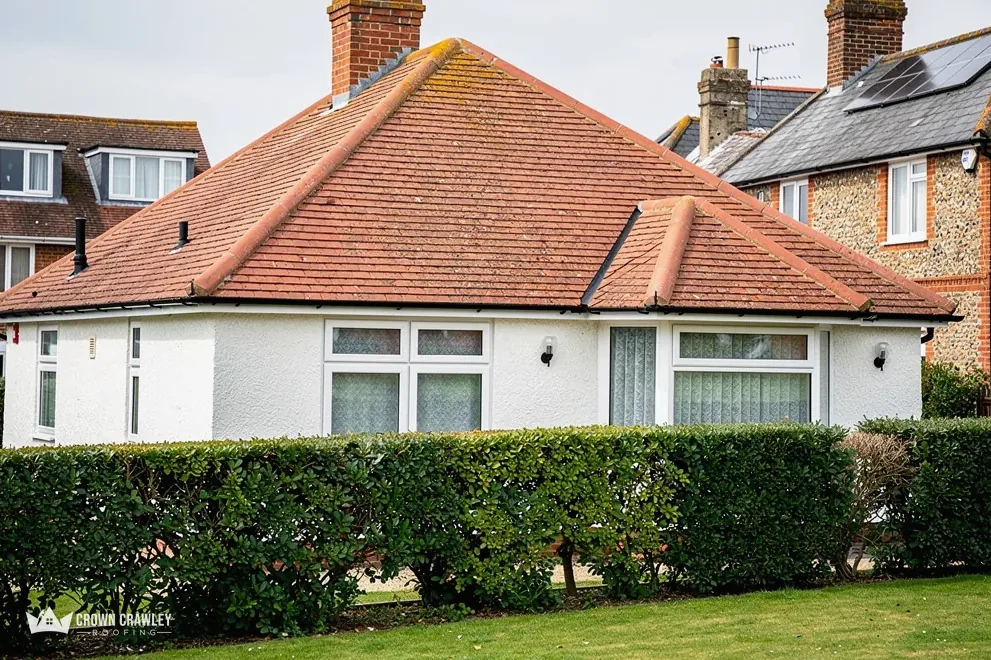
Wealden District Council will say if an unlisted home sits in a conservation area, which decides how many area rules apply. We still read each roof as it stands, from the tiles to the verge and the loft.
Pitched tile roof on a village house
Map of Buxted and the neighbourhoods around it, with Crawley for reference.
Buxted sits in Wealden District, outside the South Downs National Park, and planning there is dealt with by Wealden District Council.
The Buxted worksheet
Short chapters on listed roofs and the church, on ordinary homes and their ridges and verges, and on the rules that apply when a repair becomes a bigger project.
Stage 01 · Listing
Several of Buxted's best-recorded buildings are listed, and that changes who has to agree before a roof covering is altered.
Historic England's National Heritage List names three Buxted buildings that matter to anyone working on roofs here. The parish church, dedicated to St Mary the Virgin, has been Grade II since February 2011. Britt's has held the same grade since November 1953, and Horseshoes Farmhouse is Grade II as well. Each has a history that is not ours to guess at. What we can describe is how a listed roof is approached when the day comes to mend it.
Yes, though the route depends on what the repair actually does. Listed building law forbids works that alter a listed building's character as a place of special architectural or historic interest unless they are authorised. The council, not the roofer, judges which side of that test a given repair falls. Before we put a number on any job at a listed house, we ask you to contact Wealden District Council's planning team and describe the plan. A tidy account of the tiles, the nails and the battens, with our survey photos beside it, makes that conversation shorter. A request that names the slope, the tiles and the quantity is easier for a council to answer.
If your Buxted house is listed
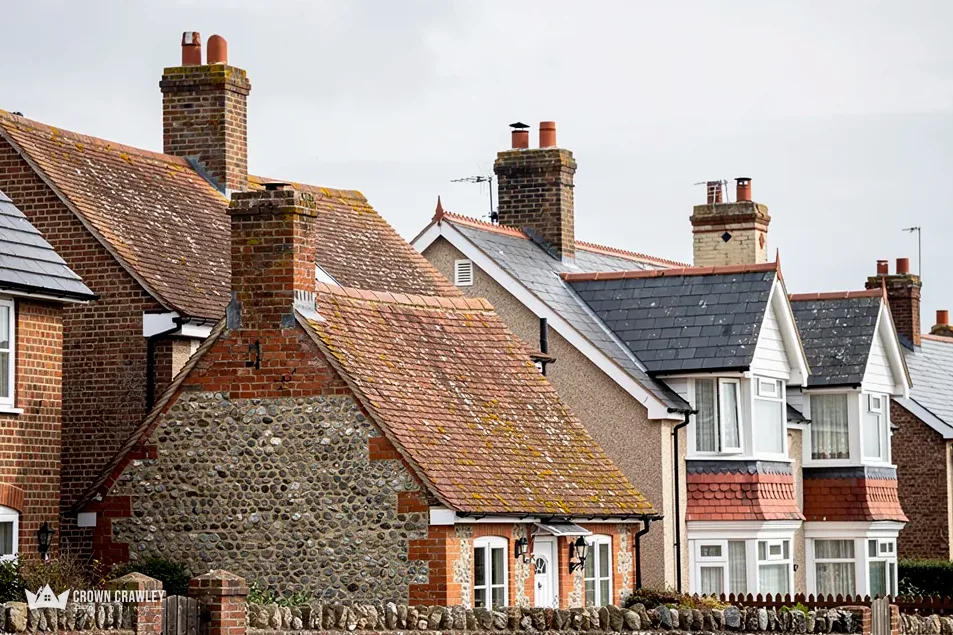
St Mary's is in use for Anglican worship, and the government's guidance on the ecclesiastical exemption says a church in that position is handled through its denomination's own system instead of listed building consent. For this church, that system is a faculty. A member of the parochial church council who wants a roof report can have us look from the ground and from any safe access inside, and receive notes written for the diocese to read. Planning permission may still be needed for exterior work on a listed place of worship.
Patience, mainly. On a period roof we repair before we replace, and where a tile must be swapped we match its size, camber and colour as closely as stock allows. Our pitched roofing page explains the work on tile, slate and the pieces round them. For a house on the list, the answer on re-roofing a listed building sets out what to settle first, and a firm written price follows the survey rather than leading it. If the covering has to change, you hear that from us at the survey, with the reason, and not halfway through the job.
Stage 02 · Condition
Away from the listed buildings, a Buxted roof usually comes down to how its crest, its gable edge and its loft have been looked after.
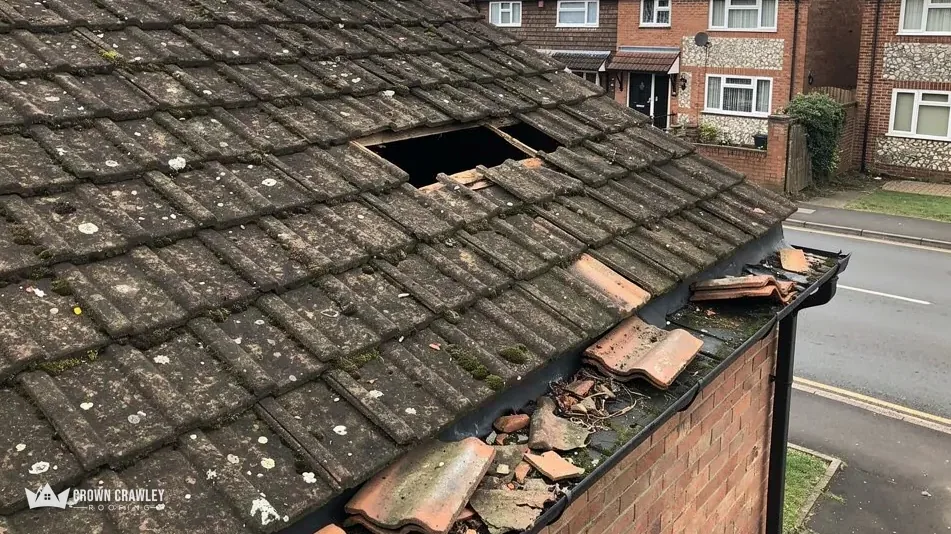
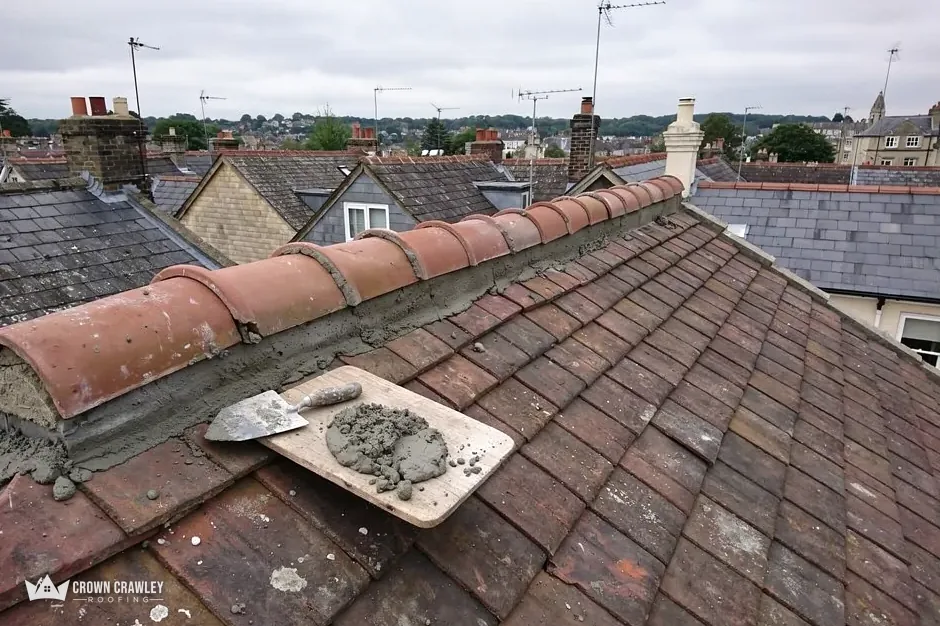
For conservation purposes, start by asking Wealden whether your Buxted street lies inside a conservation area. Outside one, an unlisted house can take a matching repair or a like-for-like re-roof free of area controls, so the job turns on condition. The edges of the roof are where we spend the longest, because that is where mortar tends to fail first. Slipped tiles beside the verge, a crack running along the ridge bed or a gap where the cap meets the gable all show up there, and so does daylight in the loft.
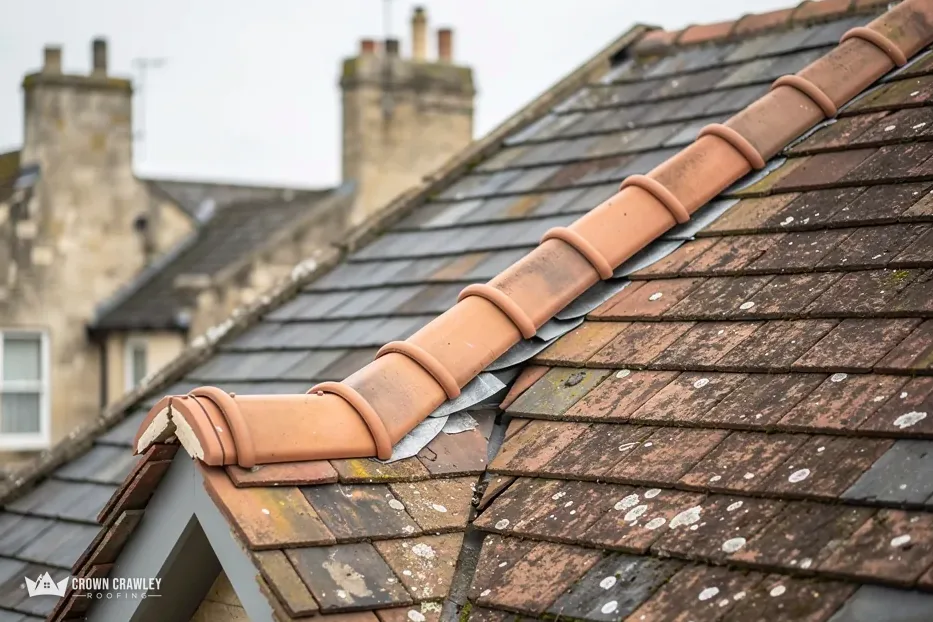
Mortar shrinks, freezes and loosens over the years while the wind works on the tiles above it. Marley, the tile maker, notes that the 2014 revision of BS 5534 made it plain that mortar by itself can no longer carry the job of fixing ridge or hip tiles and that every bedded fitting now needs a mechanical fixing too. On a rebed, we therefore add screws or clips. The ridge is the crest cap along the highest line of the roof, and a hip is the sloping join at the corner of a hipped roof.
Roof edges in plain words
A mortar edge is only as good as the fixings behind it.
The verge is the edge of the tiling where a gable end meets the sky. A dry verge replaces the mortar with caps that are clipped or screwed down and made to BS 8612. A Checkatrade cost guide, with its table dated September 2026, gives approximately £10 to £25 per linear metre as a typical UK range, materials and fitting included, and in the region of £875 for a semi. Our own quote is one total after the survey, and you can hold it against any national guide. Our dry ridge and dry verge page sets both systems side by side.
Less than people think. Marley puts concrete tile at around 60 years while adding that this is not a guarantee, and CORC's guide to roofing materials says natural slate can last 100 years or more when it is maintained. What really counts is how the nails are holding, how sound the underlay is (the waterproof sheet below the covering) and what the loft shows. If insulation has been pushed hard against the eaves, the gap that lets air in can be blocked, and damp then marks the timbers. So we run a torch along the eaves from inside the loft, then photograph anything that worries us for you to see.
Stage 03 · Permissions
A bigger Buxted job involves Wealden District Council, a shared building control partnership, and East Sussex as the highway authority.
Most small repairs need no form of any kind. That changes when a repair spreads across a whole slope, when one covering is swapped for another, or when the load on the rafters goes up. Three offices can be involved at Buxted, and it is much easier to know which of them you need before the work starts, because a gap between survey and start date is cheaper than a stop-work in the middle of a job. We tell you at survey stage which of these your roof is likely to meet.
Wealden's building control function is carried out by the East Sussex Building Control Partnership, which works on behalf of Eastbourne and Hastings boroughs and Rother and Wealden districts. For a larger re-roof, ask the partnership before a start date is fixed. The Planning Portal's test for skipping a building control application is two-part: less than 25 per cent of the building envelope and less than 50 per cent of the roof affected. Separately, it lists any new covering whose weight is 15 per cent or more above the old one. Our roof replacement page follows a whole job from first look to clear-up.
Who to ask on a bigger job
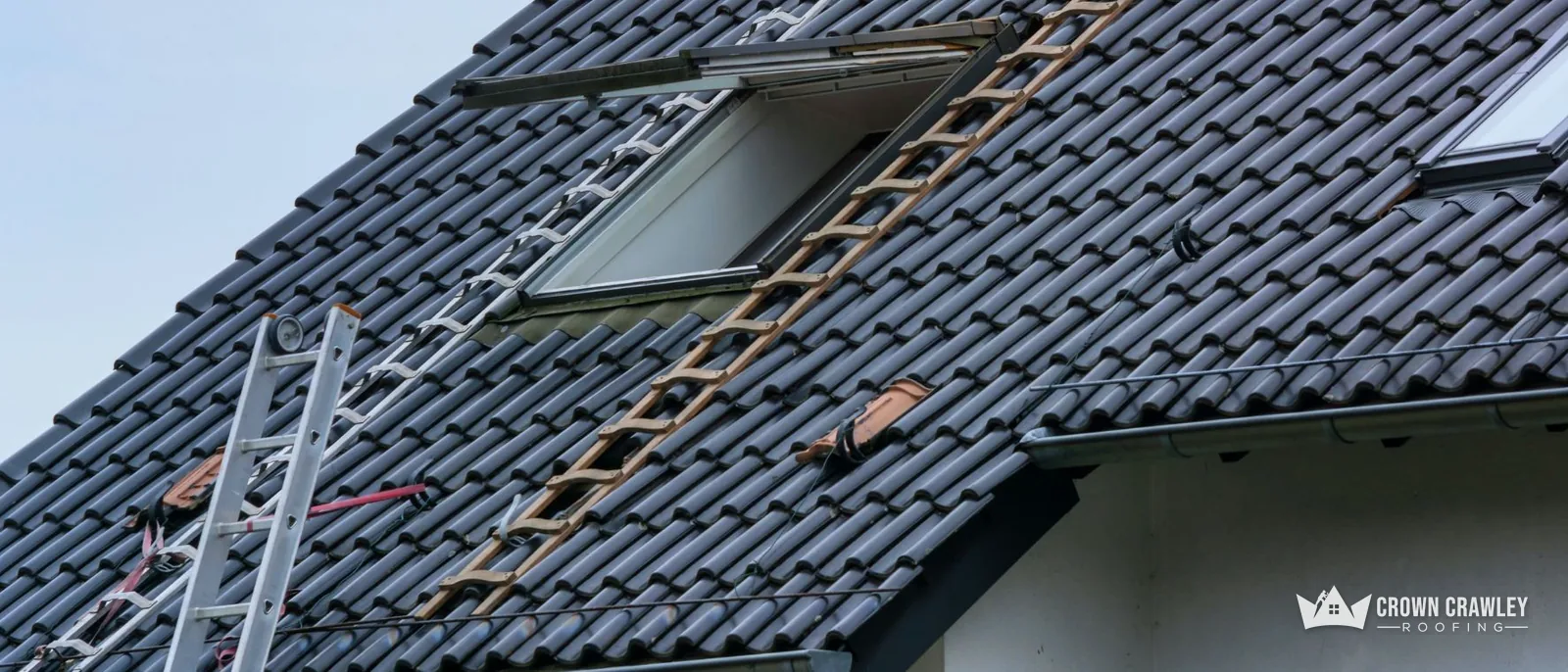
Whether the poles stand on the lane or on your own ground decides everything. On the public highway, a licence comes from East Sussex County Council, and the council handles applications through East Sussex Highways. Its published terms do not say who applies, so we put the question to the scaffolder and plan your start date around the answer. Poles that stay wholly on your private land involve no highway licence at all, though a narrow village road can still call for a parking suspension, and we check for that too.
A bat roost stays protected even when the bats are out, and the government's own list of activities that can affect bats includes repairing or replacing a roof. Farmhouses with open eaves, a gap beside a chimney or a void under the ridge are exactly the places we look at with care. Signs mean we stop and talk you through what happens next. To begin, send a picture from the garden or lane of the slope, verge or ridge that is bothering you, along with your postcode, and say if the house is listed.
Listed building consent covers works that alter a listed building's character, and Wealden District Council's planning team handles the application. A matching repair may be treated differently from a changed covering, which is why that question comes before the price. We then supply survey photos and a single written total once the consent route is clear to you.
Usually, and outside a conservation area a matching re-roof on an unlisted house raises no area controls, so confirm your street's status with the district council. A large re-roof can still need building control. Listing is a separate matter, so if yours is on the list, or you mean to alter how the roof looks, speak to Wealden's planning team before you book anyone, and tell us when you write.
The East Sussex Building Control Partnership works for Wealden, Rother, Eastbourne and Hastings. Ask it before a larger re-roof begins, particularly if the new tiles weigh more than the ones coming off. We record the current covering at the survey and put it in the written price, so the partnership has real details to work from.
Send your postcode, a picture taken from the garden or lane, and a line on what you have seen, such as a stain, a slipped tile or a sagging line. We survey, share our own photos of your roof and follow with one written total price. A listed house deserves a mention in your message.
Photograph the ridge or verge you doubt from the lane or garden, add your postcode and any listing, and we will set a survey date.
Message us on WhatsApp