Roofers in Hadlow Down

Farmhouse, church and inn roofs on a High Weald ridge.

Hadlow Down is a small East Sussex parish in the High Weald, with a listed farmhouse, church and inn. Each roof gets a survey of its own, and the price follows in writing.

Dormer windows on a weathered tiled roof facing open fields

Roof styles you will spot in Hadlow Down

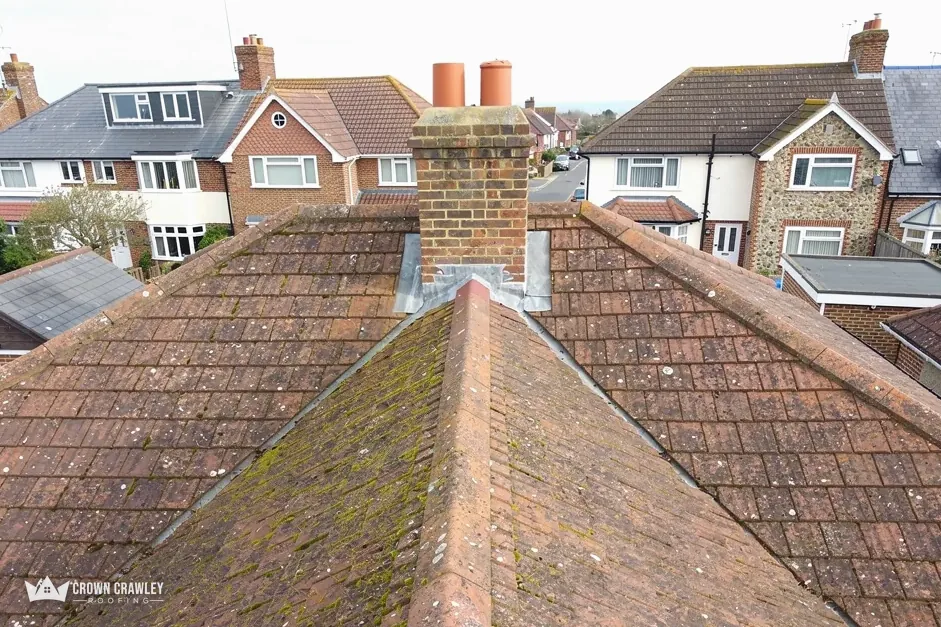
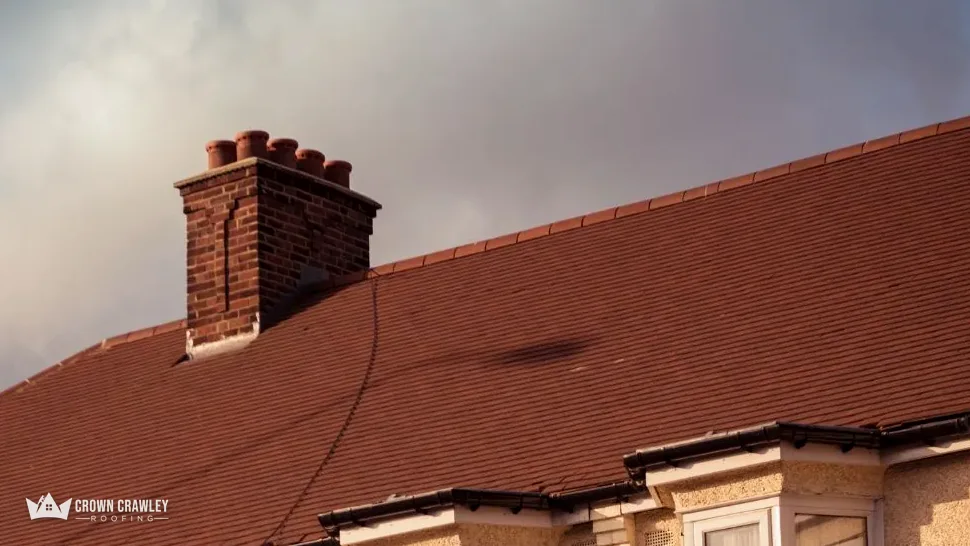
Hipped tiled roof with a chimney at the ridge

Lovetts Farmhouse and farm buildings

Lovetts Farmhouse is listed Grade II. A farmhouse roof can mean long runs of tile, several chimneys and old timbers, so we climb up, photograph the lot and ask the council about consent before pricing.

Tiled farmhouse roof with chimneys

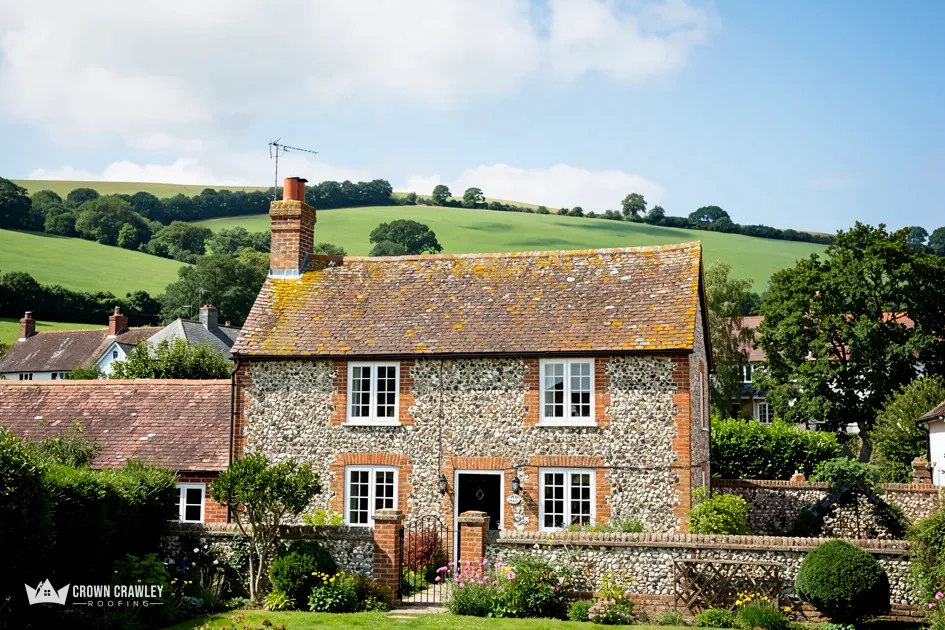
Flint cottage with a clay tiled roof set against green fields

St Mark's parish church

The Parish Church of St Mark is listed Grade II and open as an Anglican church, so repair approval, when its roof needs work, runs through the diocese rather than the district council.

Church roof with stone detail

New slate-effect roof on a bungalow with white fascias and guttering

The New Inn and village houses

The New Inn is listed Grade II, and the 2021 Census counted 800 people in the parish. Every house or inn gets a survey of its own roof, never a standard package.

Pitched tile roof on an inn

Hadlow Down, on the High Weald

Map of Hadlow Down and the neighbourhoods around it, with Crawley for reference.

Hadlow Down is an East Sussex village on the High Weald, and the drive from Crawley runs south-east across the Sussex Weald.

Distance
25.3 road miles from Crawley, to the south-east
Drive
About 43 minutes
Council
Wealden District Council and East Sussex County Council
Planning authority
Wealden District Council
Landscape
High Weald National Landscape
Population
800 (Census 2021, civil parish)
Get a free quote

Hadlow Down roof diary

From farmhouse chimney to church roof

Three chapters on the older buildings at the heart of Hadlow Down, the way a church roof gets approved, and what East Sussex asks for when a job needs scaffold.

Stage 01 · Farmhouses

Lovetts Farmhouse and old tiled roofs

A listed farmhouse roof has long slopes, several stacks and old timber, and the repair plan starts with the listing.

Lovetts Farmhouse's listing dates from 31 December 1982. Across the wider landscape, the High Weald's own description of its buildings speaks of timber-framed and weather-boarded houses, with sandstone, brick and clay tile in wide use, though only a survey shows what any one roof carries. One farmhouse of that kind may carry a main slope, a lean-to, a back kitchen roof and a couple of chimneys, each of a different age. Before we price any of it, we count the pieces and list them.

Does a listed farmhouse roof like Lovetts need consent for a repair?

Alteration that touches a listed building's character calls for listed building consent, and Wealden District Council, as the planning authority, decides what counts. A listing protects the farmhouse as a whole, so the chimneys and timber frame come under the same consent as the tiles. Replacing a handful of broken tiles in matching clay is the easiest case, though the council's opinion is the one that matters. A move from clay to concrete, rooflights where there were none, or a reshaped hip is another question altogether. Put the farmhouse name and your intended work in writing to the council before any date is fixed. We will gladly wait for the answer, and a written reply is worth keeping if you ever sell the house.

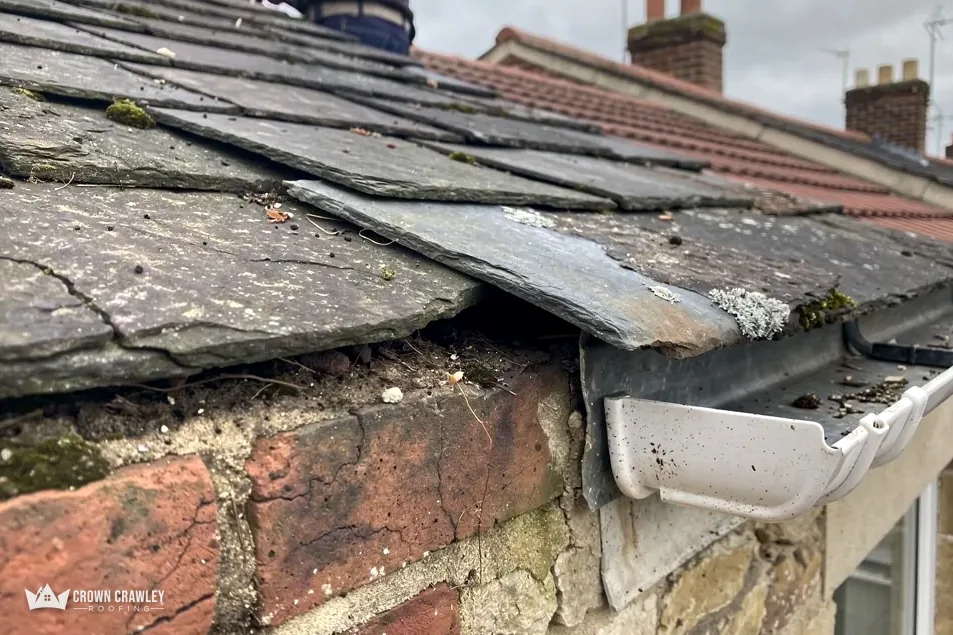
Surveying a farmhouse roof

Slopes
Tiles lifted, cracked or slipped
Stacks
Pointing, flaunching and flashing
Valleys
Clear of moss and leaf debris
Timbers
Rafter feet and battens dry
Listing
Consent route agreed first
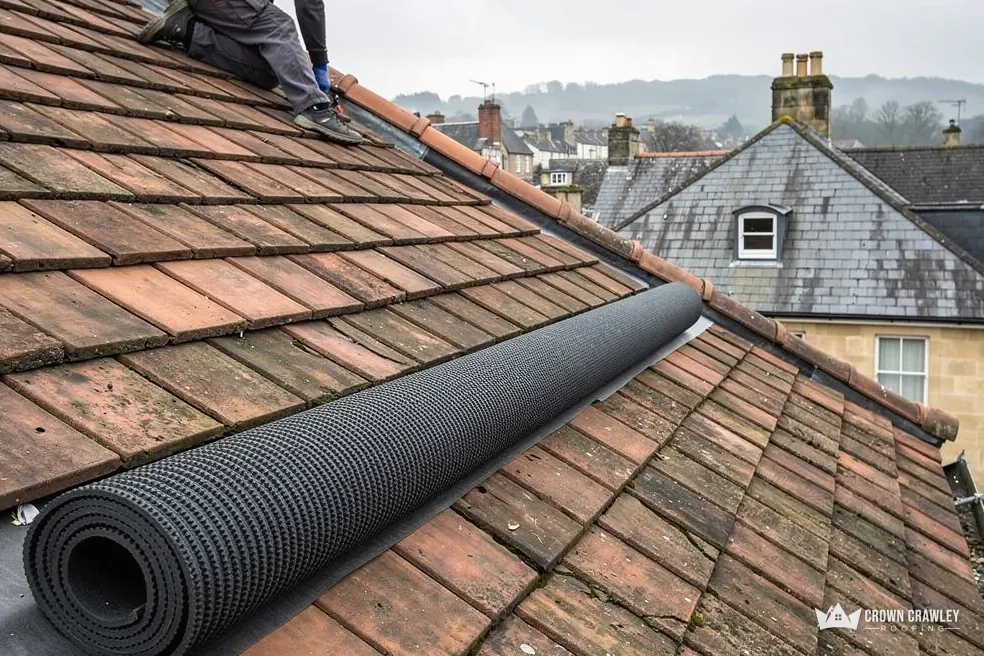
Roll of roofing membrane lying on a clay tiled roof

How do you survey a roof with several slopes and stacks?

We go slope by slope. On each we check for lifted and cracked tiles, for battens wherever they are visible, and for the underlay at the eaves. Then come the stacks: the brick joints, the flaunching, which is the mortar crown that holds the pots, and lead flashing at the joint with the wall. Valleys, the troughs where two slopes meet, gather leaves and moss, so we clear them and look underneath. Every finding comes back to you as a photograph, with one written total at the end. Pictures of the whole roof, not only the defect, go into the pack so you can see where each repair sits. Our pitched roofing page describes how we repair tiled roofs, and our chimney repairs page deals with stacks. If we find rot at a rafter foot or in the timber beam that carries it, called a wall plate, we show you the wood and agree the fix before anything is covered over. If your farmhouse has outbuildings with roofs of their own, tell us and we survey them in the same visit.

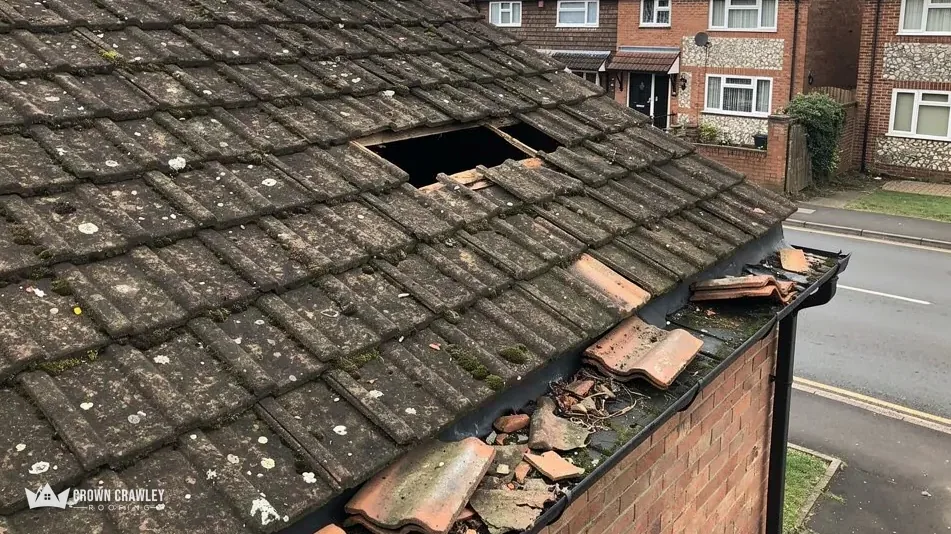
Storm-damaged tiled roof with the battens exposed and tiles on the ground

Stage 02 · Church roof

St Mark's church and the faculty route

St Mark's is listed Grade II and still a place of Anglican worship, so repair approval follows the denomination's own system.

The Parish Church of St Mark was listed Grade II in December 1982, and mapping data records it as an Anglican place of worship still in use. That matters because the law lets certain denominations run their own approvals for listed churches in use. The Church of England's route is the faculty, and for the building itself it takes the place of listed building consent. The route has edges: planning permission for outside changes is a separate matter, and scheduled monument consent is not covered at all.

Church roof vocabulary

Faculty
Church of England's own consent system
Exempt denomination
Handles its own listed approvals
Churchwarden
Parish officer who looks after the building
Coping
Stone cap along a wall top

Who do we deal with on a church roof?

We deal with the parochial church council and, through it, the diocese. The council writes the brief, the diocese grants the faculty, and we price what has been approved. A church roof can include lead valleys, gutters and parapets, so we inspect any lead as well as the tiles. Our lead work page shows how flashings, valleys and gutters are formed. Sheet lead comes graded by thickness in numbered codes, and Royston's brochure sets Code 3 for soakers only, Codes 4 to 6 for flashings and Code 4 upwards for valleys. We match the code already on the roof. Committees like specifics, so we supply the survey photographs, the list of defects and one written total, which members can read at their own pace without us in the room. Access is planned with the churchwarden, as a churchyard around the building limits where ladders and a skip can stand. Where a church roof drains into old cast-iron gutters, we check the joints and downpipes as well, because a choked outlet beneath a slope sends water sideways into the roof edge.

A church in use asks its diocese, not the district council, before its roof is touched.

What about the New Inn and the rest of Hadlow Down?

The New Inn is listed Grade II too, and its roof falls under the district council's system rather than the church's. An inn roof may have flues and vents through the covering, so we check each penetration. Houses in the parish without a listing follow the ordinary rules, and re-covering one in the same tile is the plain case, though Wealden can confirm whether a conservation area reaches your plot. For any listed building, a quiet word with Wealden District Council saves trouble later. The working order never changes: confirm who consents, survey, photograph, write one price, book the work. If rain is coming in meanwhile, we stop the leak before turning to approvals.

Stage 03 · Permissions

East Sussex scaffold and approvals

A Hadlow Down job answers to East Sussex Highways for scaffold on the road and to a shared partnership for building control.

Plenty of Hadlow Down jobs finish without a form: a few tiles, a rebedded ridge, a stack repointed. A new slope, a different covering or a scaffold standing in the lane brings a few steps first. A bigger job also gets a plain plan from us: which days the scaffold goes up, when the old covering comes off, and how the site is left tidy each evening.

How does scaffold on a Hadlow Down lane get licensed?

Under section 169 of the Highways Act 1980, scaffold that obstructs the public highway cannot go up without the highway authority's licence. For Hadlow Down that is East Sussex County Council, working through East Sussex Highways, whose fee list shows £127 for a 28 day licence along with a 2.77 per cent rise announced from 1 April 2026. It publishes no application lead time, so we ask early. To extend one, ask no later than five working days before it ends. The terms add a seasonal bar: the highway must be free of scaffold during the annual bonfire celebrations, so a job near those dates needs planning. We and the scaffolder decide at the outset who files the application. Nothing is licensed when the poles stand wholly on your own property. Whenever you compare quotes, ask each firm whether the price includes scaffold and VAT.

Approvals for a bigger Hadlow Down job

Planning
Wealden District Council
Building control
East Sussex Building Control Partnership
Road licence
East Sussex Highways
Licence fee
£127 for 28 days; 2.77% rise noted
Bonfire night
No scaffold on the highway then
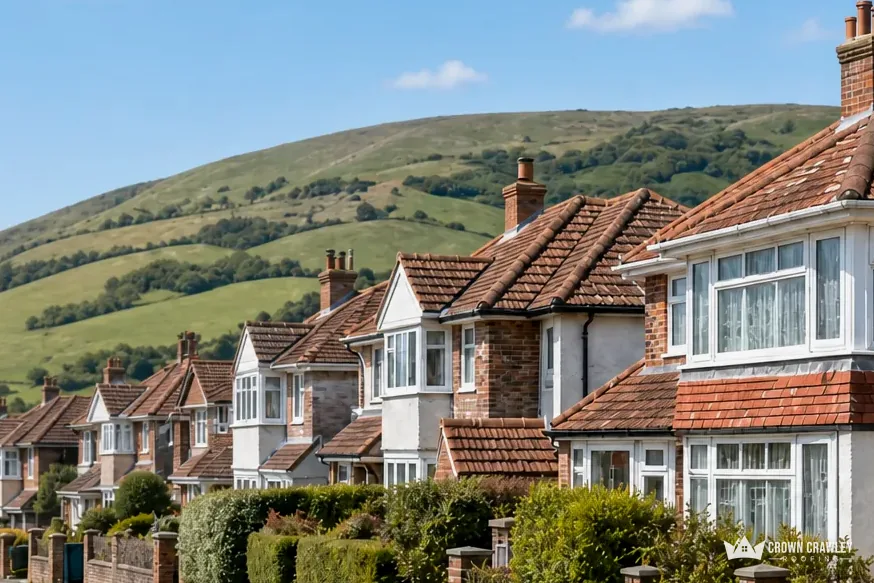
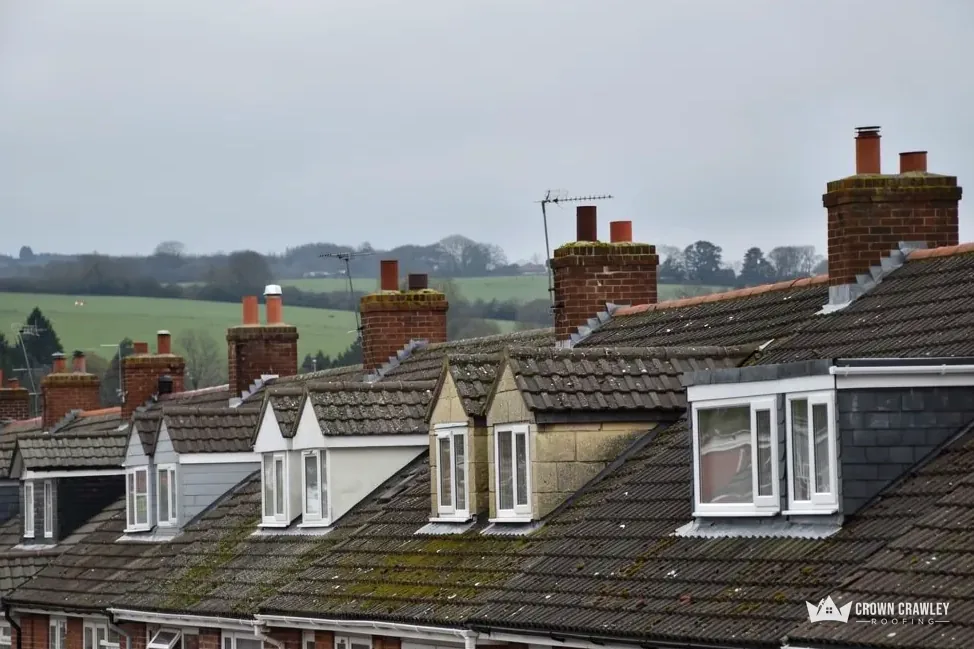
Row of suburban houses with tiled roofs below green downland

Which body handles building control for Hadlow Down?

Building control in Wealden is carried out by the East Sussex Building Control Partnership, working for four authorities: Eastbourne, Hastings, Rother and Wealden. Under the Planning Portal's guidance, approval is normally unnecessary below 25 per cent of the building envelope and below 50 per cent of the roof, while any covering 15 per cent heavier or more brings it in. We raise this at the survey whenever a bigger re-roof looks likely. If a job turns out to be only a repair, none of it applies and the quote simply says so. The High Weald setting adds caution to extras such as dormers, so raise those with Wealden before anything is drawn. Wildlife can turn up in older roofs, and our answer on bats and birds in the roof explains what happens then.

First step: snap whichever chimney, ridge or slope is troubling you, from your garden or from the roadside, then pass it on with your postcode and a line saying if the building is listed.

Hadlow Down roofs: farmhouse to church

Does a listing like Lovetts Farmhouse mean every Hadlow Down tile repair needs consent?

Work that affects a listed building's character needs listed building consent, and Wealden District Council decides whether a given repair does. Replacing a few tiles with matching ones is the simplest case, yet the council's view is the one that counts. Ask before work is planned, then we survey and write one price that follows the answer.

Who signs off repairs to the church roof at St Mark's?

St Mark's is in Church of England use, so the diocese's faculty process applies in place of listed building consent. The church's governing council and its diocese lead, and after our survey we price whatever scope is approved, with a photograph of each defect for the committee. Outside changes can still need planning permission, which is a separate question.

Are there dates when East Sussex keeps scaffold off a Hadlow Down lane?

The licence terms from East Sussex Highways keep scaffold off the highway during the bonfire celebrations, so a job planned for the road needs dates that avoid them. Scaffold standing on a private drive or garden is outside the highway licence. We check access at the survey and agree the licence side with the scaffolder.

Does a re-tile on an unlisted Hadlow Down house raise heritage rules?

Not usually, if the tile matches. Matching tile on an unlisted house is the simplest route, and Wealden District Council will say if your address lies in a conservation area. A listed house differs, since listing carries its own consent, and the High Weald setting calls for care with extras such as dormers. Wealden District Council can confirm for your address, and asking in writing gives you a record.

Send the Hadlow Down roof you want looked at

Pass us a picture of the trouble spot, your Hadlow Down postcode and a note on any listing, and a survey gets booked.

01293 974253

10-year workmanship guarantee, in writing.

Call Get a free quote