Villas from the early 1800s
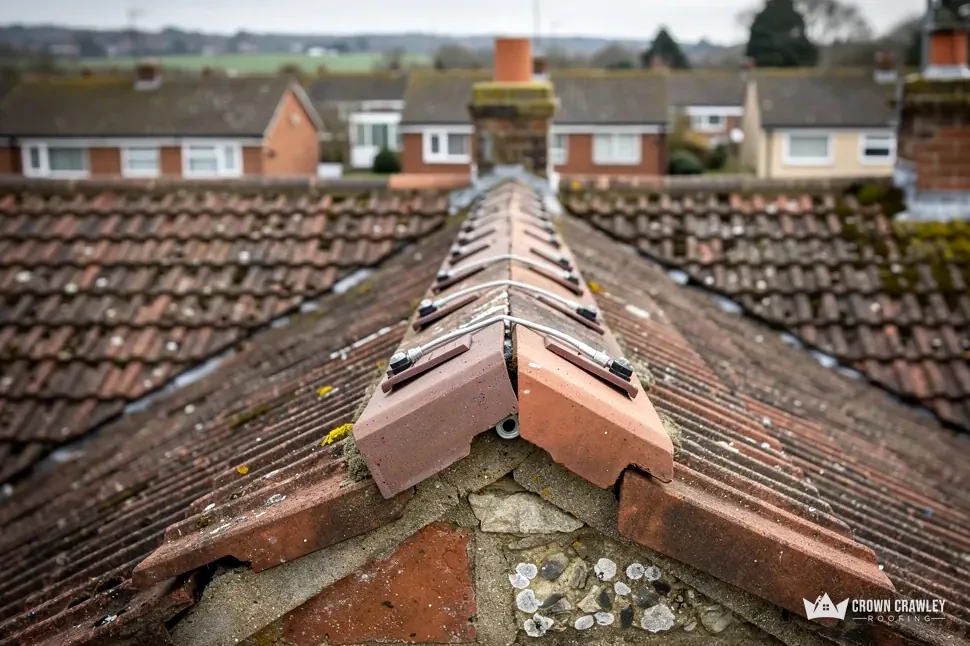
Southborough Lodge was built in 1808 and Surbiton Hill House in 1826. Roofs here can be older than the railway, so each one is judged separately, with old fixings and old tiles in mind.
Old tiled roof with chimney stacks
Roofs of a railway suburb that began building in the early 1800s.
Surbiton, on the hill south of Kingston, began building in the early 1800s and now has several conservation areas. Each roof gets read on its merits, then priced in writing.
Southborough Lodge was built in 1808 and Surbiton Hill House in 1826. Roofs here can be older than the railway, so each one is judged separately, with old fixings and old tiles in mind.
Old tiled roof with chimney stacks
The main line came through in 1836, the western side was developed first and the Berrylands hill section in 1851. Streets of different ages stand close together, so neighbouring roofs can differ.
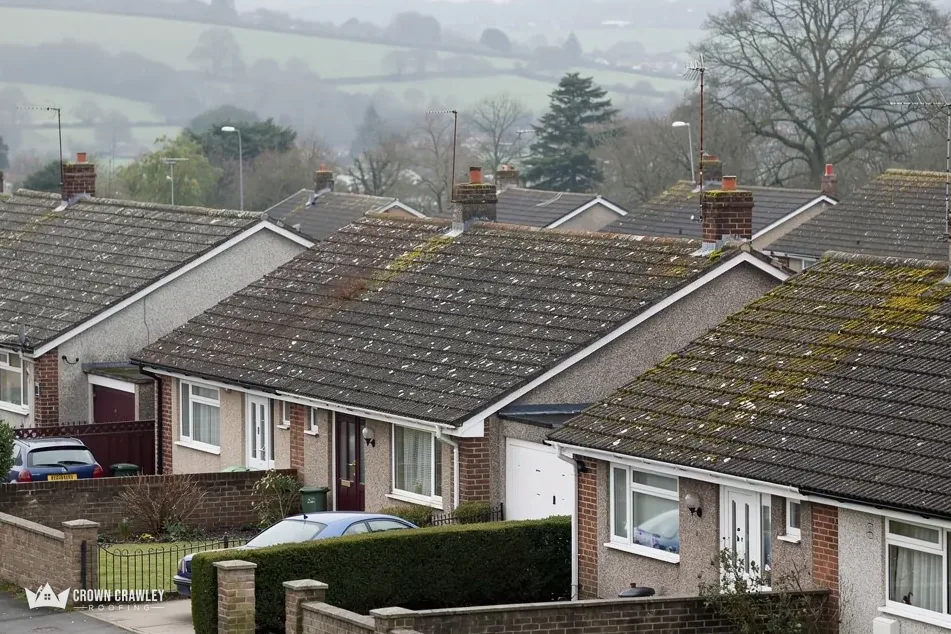
Terraced homes with pitched roofs

Parts of Surbiton fall within conservation areas such as Claremont Road, Oakhill, St Andrews Square and Surbiton Town Centre. Boundaries decide the planning route, so we check your exact address with the Royal Borough before we price anything visible.
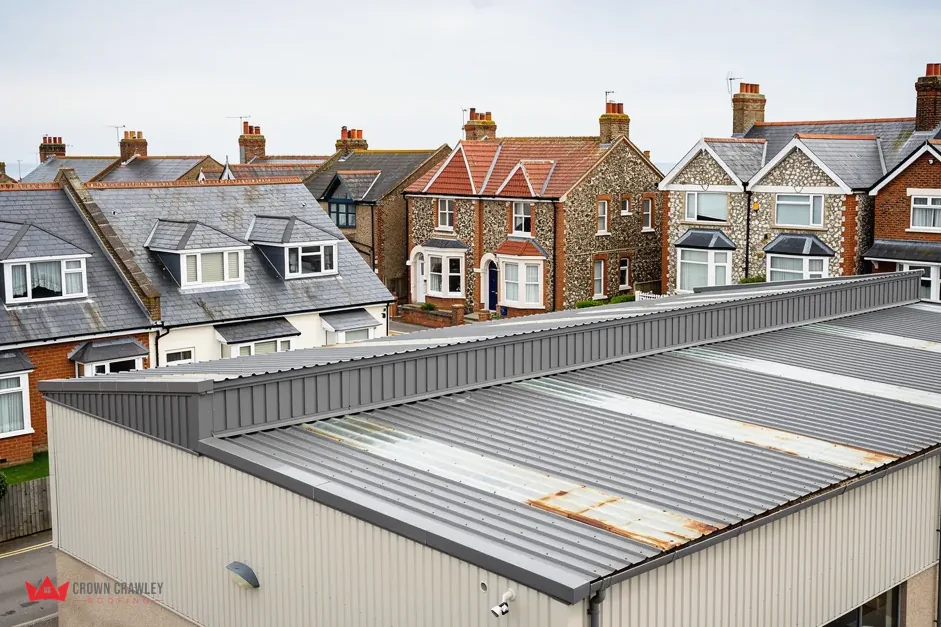
Tiled roofs on a residential street
Map of Surbiton and the neighbourhoods around it, with Crawley for reference.
Surbiton is a railway suburb on the hill south of Kingston upon Thames, beside the river, in outer south London.
Surbiton hill notes
Three chapters: how the suburb was built up, what its conservation areas and listings mean for a roof, and the Royal Borough steps before a larger job.
Stage 01 · Building history
Surbiton's building began early in the 19th century and ran on through the railway years, so roof ages sit side by side.
The Victoria County History tells the story in stages. Surbiton was a hamlet by 1179, but on eighteenth-century maps the only house in the area of modern Surbiton was Berrylands Farm. Building began early in the nineteenth century in the valley towards Kingston. Southborough Lodge went up in 1808 for Thomas Langley, designed by John Nash, and Surbiton Hill House followed in 1826, partly using material from the abandoned palace at Kew. The London and South Western main line reached the area in 1836; the western side was developed first and the Berrylands section on the eastern hill in 1851. The same account mentions brick-kilns on the clay of Surbiton Hill in 1838.
Reading an older Surbiton roof

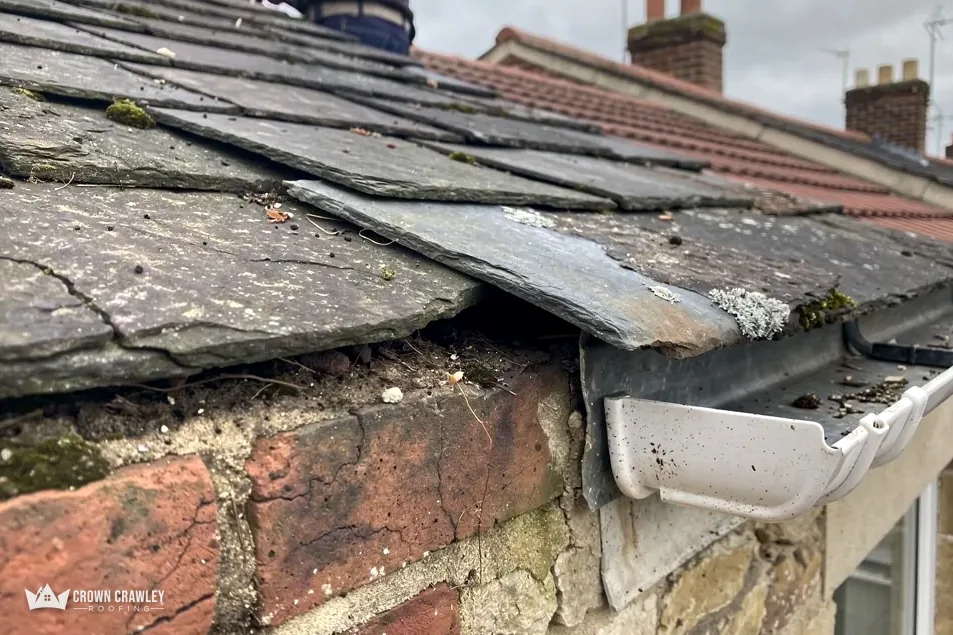
The span, not the specification. A house put up in the 1820s and one finished in the 1850s can stand a few streets apart, and each will have had a different run of repairs since. We therefore read the covering in front of us rather than the street name. The kilns on the hill are history, not evidence of what sits on any one house. BS 5534, the slating and tiling code, warns that it can be a poor fit for some older roofs built or mended with reclaimed or traditional stock. That caveat is reason enough to handle a Surbiton hill roof gently before anyone applies a modern method to it. Roofs of this age are often a patchwork of earlier fixes, which is why our survey records where each patch begins and ends. Our pitched roofing service starts from that record.
At every joint where a slope abuts brickwork, a chimney or a bay. A published costings guide says lead flashing can outlast 80 years, so a sound piece of old lead deserves to stay, and a failed piece deserves renewing in the right weight. Royston's brochure lists code 4 (1.80 mm, blue) for soakers, flashings and valleys, and code 5 (2.24 mm, red) for flashings, valleys and parapet gutters. A soaker, for the record, is the small sheet of lead that sits under the edge of each tile course against a wall. Our lead work page explains how we pick between the codes.
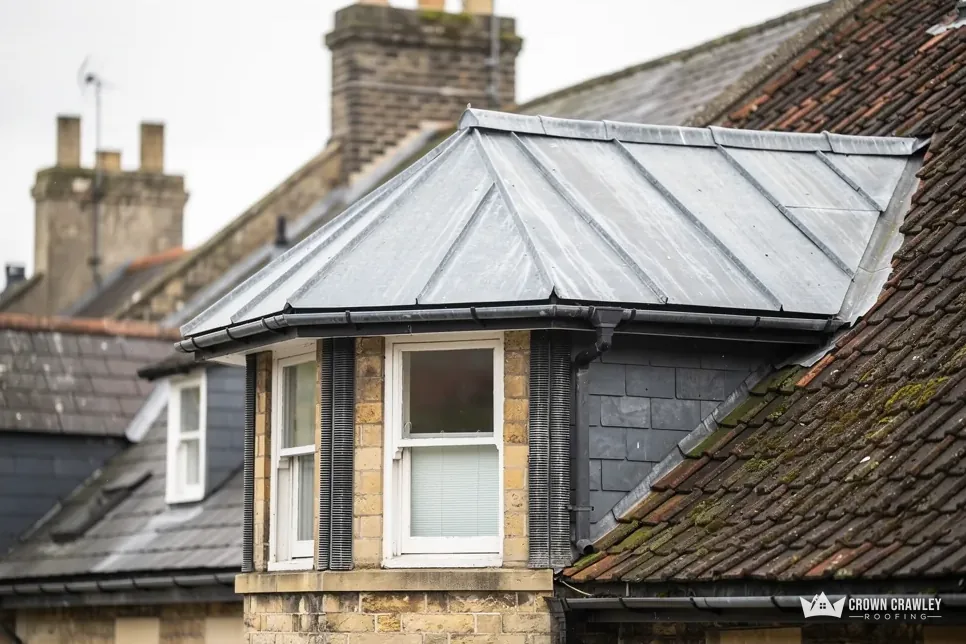
Bay windows and porches add short runs of roof with lead at every edge, and they often leak long before the main slopes do, so the survey includes them as a matter of course.
Stage 02 · Conservation areas
Several conservation areas cover parts of Surbiton, and Grade II entries on South Terrace, Victoria Road and Maple Road add a second layer of care.
The national conservation area dataset shows part of Surbiton in the Claremont Road conservation area, with Oakhill (A) and St Andrews Square close by, and further Kingston areas such as Surbiton Town Centre, Victoria Avenue and Surbiton Hill Park nearby. Which, if any, covers your street is a matter of the exact boundary, and the Royal Borough can confirm it from your address. Separately, the National Heritage List carries 1 South Terrace (first listed 22 March 1988), 12 Victoria Road and 124 and 126 Maple Road at Grade II.
The Borough maps these areas because of the character of their streets, and the front roof slope is part of that character. Mending with a tile of the same profile, size and tone keeps it intact. A change of covering material, or a new opening in the front slope, brings the planning team in. That is what stops a tile of the wrong colour standing out against its neighbours on a street the Borough has chosen to protect. We ask before pricing, so the number you receive is for work the Borough has already weighed up. Our answer on re-roofing in a conservation area sets out how that conversation usually goes.
Terms you will meet
In a conservation area, the boundary decides the route, so we read the map before the roof.
A listed roof is a stricter case. Works that would affect the character of the building need consent before they start, and the council decides what that means for each roof. If your house is on the register at South Terrace, Victoria Road or Maple Road, mention it on the first call. We photograph every slope, ridge and chimney junction, and the written price follows the Borough's answer rather than a guess. Search the register by address if you are unsure, because a listed neighbour does not make your house listed.
Close photographs of tile edges, ridge beds, lead and rafters let a planning officer judge a proposal without visiting, which tends to shorten the wait and keeps the price steady. A vague description invites a vague answer; a clear set of images invites a clear one. You receive the same set we send, so you can see exactly what the council is looking at, and ask us about anything that puzzles you before the proposal goes in. On a hill of mixed ages, that transparency also helps neighbours who share a ridge or a party wall line understand why a repair next door touches their roof.
Stage 03 · Permissions
Kingston's Royal Borough runs planning and its own building control, and a larger roof job also needs a scaffold plan.
Surbiton is governed by a borough of outer London, and the Greater London Authority sits a tier above it. For roof work, the practical contact is the Royal Borough, which handles planning and has its own building control service. When a job looks likely to need either, we raise it with the Borough early, and the written price reflects what comes back.
The Planning Portal gives two tests for a re-roof that does not need an application: less than 25 per cent of the building envelope affected, and less than 50 per cent of the roof. Strip most of a slope, or pick a covering at least 15 per cent heavier than the old, and the answer changes. Its advice is to ask an engineer or a surveyor about the structure before work is agreed. Taking the Borough's view early costs little and can save a great deal, because a heavier tile in place of the original changes weight and appearance together, and it is better raised at the survey than discovered at inspection. Our roof replacement page describes a full re-roof in stages.
Steps before a larger job
Poles or boards that stand on the carriageway or pavement obstruct the highway and require the highway authority's licence; a frame built wholly on your land stays outside that system. Fees and lead times differ between councils, so Kingston's current terms are checked when the job is booked. Which party submits the application is something we ask about, and once that is settled the paperwork runs in step with the scaffolder so the start date holds. Checkatrade's October 2026 guide prices the scaffold for a new roof at £700 to £1,300, so any quote that leaves out scaffolding or VAT should say so.
Roosts of protected bats and in-use bird nests are covered by law, so a find at survey stops that part of the job until you have the right advice. Your first step is a picture of the valley, junction or slope that is bothering you, with your Surbiton postcode attached, and a survey day will be offered in reply. If the roof is leaking now, say so in the message and we will treat that as the first thing to make safe.
Often, yes. The tiling code itself admits parts of it can be a poor fit for older roofs mended with salvaged or traditional stock, so each slope is judged as it is found. The survey records which tiles are sound and which have slipped, and the written price covers only what the evidence supports. Matching replacements are chosen after that.
Ask the Royal Borough before ordering one, because a new opening in a front slope is exactly what these areas watch. The national dataset places part of Surbiton in the Claremont Road area, with Oakhill, St Andrews Square, Surbiton Town Centre and other Kingston areas close by. Streets sit either side of those lines, so only the Royal Borough's planning team can say for your address. Raise any change to its appearance with the Borough first, and send us the reply so our price matches it.
If your house is listed and the work would affect its character, consent comes first. 12 Victoria Road and 124 and 126 Maple Road are on the register at Grade II. Search by address and ask the Royal Borough; we will then survey with photographs a planning officer can use, and price once the council has responded.
We ask the highway authority who applies, then arrange the licence with the scaffolder so the start date holds. Only a frame that blocks the road or footway calls for one; a frame wholly on your land needs none. When other quotes arrive, check whether scaffolding and VAT are included in each, since both change the total you would pay.
Photograph the valley, junction or slope that worries you, attach your Surbiton postcode, and a survey day will follow.
Message us on WhatsApp