Roofers in Claygate

Roofs in a village that grew up around its station.

Claygate became its own parish in 1841 and grew once the railway arrived in 1885. Every roof is examined as it stands, and a single written price follows.

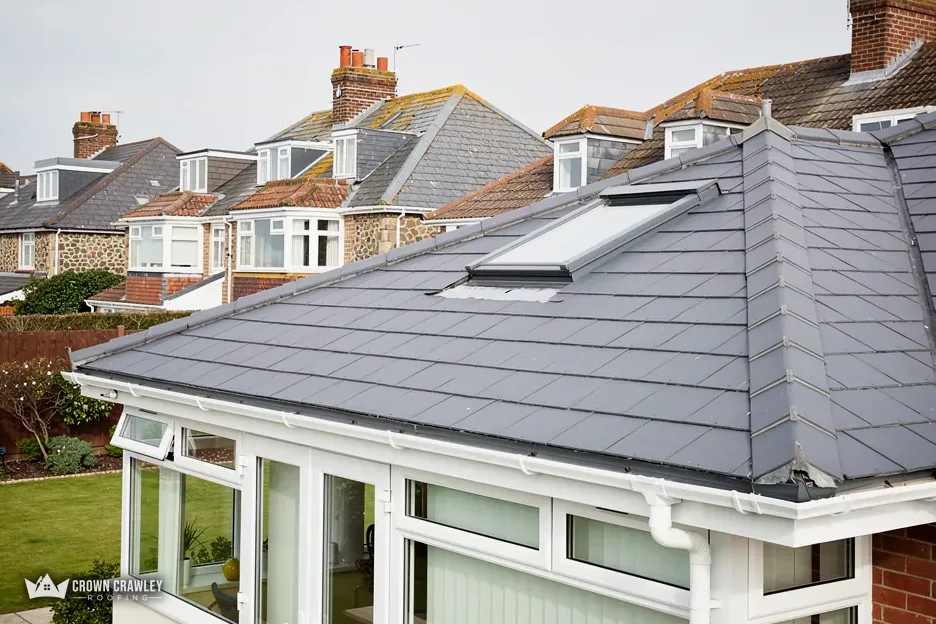
Slate-effect roof over a conservatory on a suburban house

What covers Claygate homes

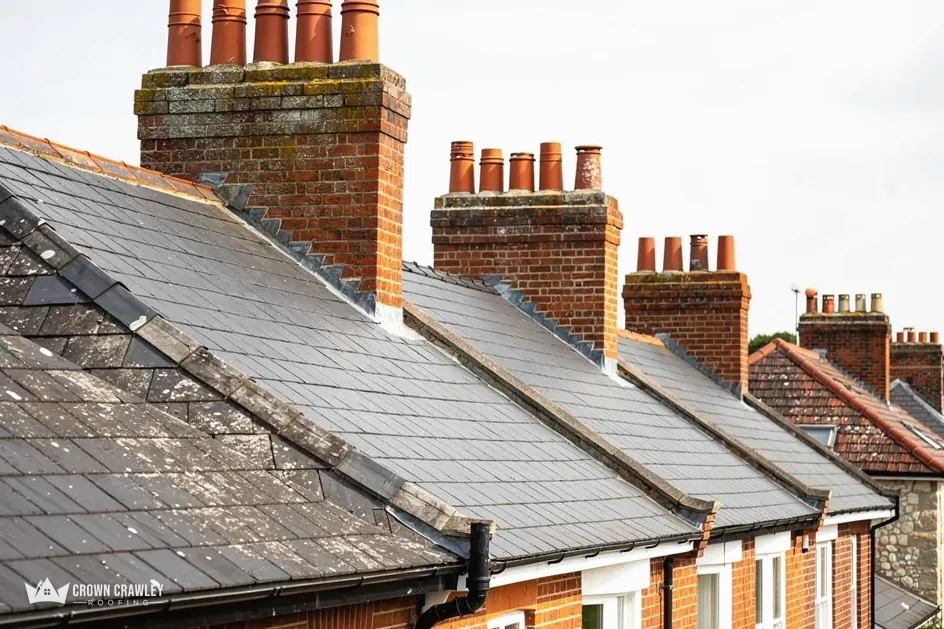
Row of terraced chimney stacks above slate roofs

Houses from the railway years

The station opened in 1885, and by 1911 the county history recorded that Claygate had grown very much since. Houses of different decades stand together, so we study each roof's own details.

Tiled houses on a suburban road

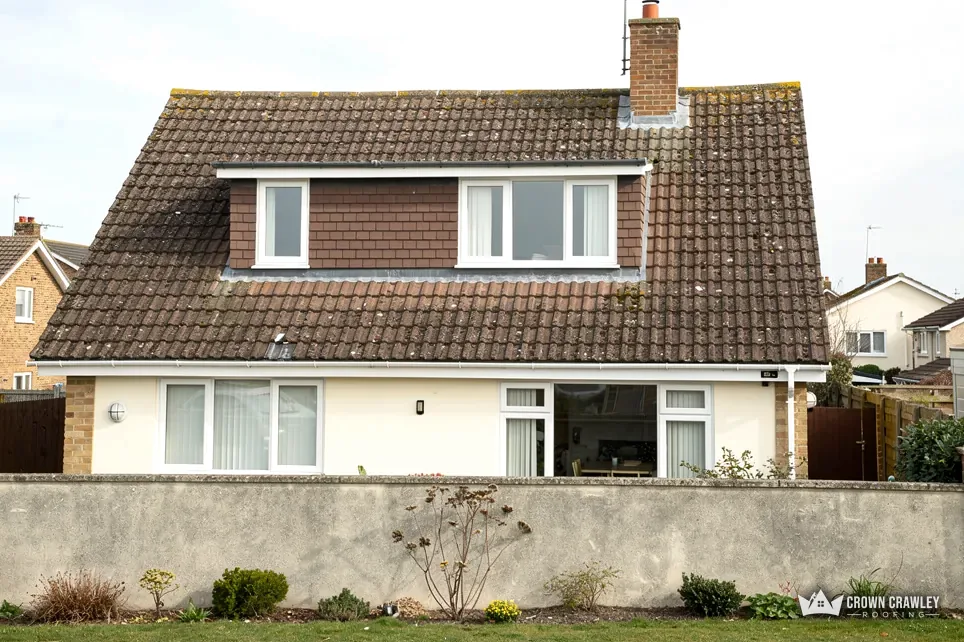
Dormer bungalow with a brown tiled roof and white rendered walls

Holy Trinity church

Holy Trinity carries a Grade II listing and is recorded as an Anglican place of worship in use, so the diocese's faculty system, rather than the council, decides on repairs to its roof.

Church roof with tiled slopes

Brick chimney with lead flashing on a clay tiled roof

Fee Farm House and the war memorial

Fee Farm House and Claygate War Memorial each hold a Grade II listing. Work near either calls for a conversation with Elmbridge Borough Council before a single scaffold pole goes up.

Old farmhouse tiled roof and stack

Claygate, south-east of Esher

Map of Claygate and the neighbourhoods around it, with Crawley for reference.

Claygate is a Surrey village south-east of Esher, in the old parish of Thames Ditton, on the railway to Guildford via Cobham.

Distance
28.8 road miles from Crawley, to the north
Drive
About 39 minutes
Council
Elmbridge Borough Council and Surrey County Council
Planning authority
Elmbridge Borough Council
Parish created
1841, out of Thames Ditton
Station opened
1885, on the Cobham to Guildford line
Population
7,263 (Census 2021, civil parish)
Get a free quote

Our Claygate roof diary

Reading roofs of different ages in Claygate

Three chapters on a village that grew after its station opened, the church and farmhouse that carry listings, and the Surrey rules for scaffold and approvals.

Stage 01 · Background

A village that grew after 1885

Claygate has been a parish since 1841, and its growth after the station opened means roofs here come from more than one building period.

Claygate was made an ecclesiastical parish out of Thames Ditton in 1841, and the station on the line through Cobham to Guildford opened in 1885. The Victoria County History noted in 1911 that the village had grown very much since the line opened. We take that as a clue, not a verdict: there is no single Claygate roof, and the sensible course is to study whichever one is in front of us. A house put up soon after the station may stand beside another built decades later, and either may have been extended since. The village is older than its railway, too: the manor of Claygate was given to the Abbot and convent of Westminster by Tosti, long before any of these houses.

Surveying a Claygate roof

Covering
Tile type, wear and past patching
Ridge and hips
Mortar sound or dry-fix tight
Extensions
Join between old and new roof
Underlay
Present, whole and lapped
Loft air
Eaves vents clear of insulation
Modern estate road with brick houses and grey roof tiles

What does a Claygate roof survey look for first?

The join between old and new. A house that has gained a rear extension or a loft room often has a valley or a flat section where two roofs meet, and that join is a likely place for water to find a way in. We examine the covering on each part, the ridge and hips, the lead where roof meets wall and the underlay beneath the eaves. You get the photographs to look over yourself. For tile faults and failed junctions, our pitched roofing page shows how we carry out the repair. Where an extension has a flat section, that gets its own check, because a flat roof and a pitched one fail in different ways.

Do roofs from several decades need different repairs?

They can. An older tile roof may lose pieces to frost or have nails that have rusted through, a newer one may rely on mortar alone at the ridge, and a patched roof can end up with three kinds of tile on one slope. Marley gives concrete tiles around 60 years and adds that this is no guarantee, while clay has a Building Research Establishment minimum of 60 years. Age alone does not condemn a roof. A written price follows the survey, so you can choose between a modest repair and a larger job with the evidence in your hands.

Keep reading

Why does the loft matter on an older Claygate roof?

Because damp from the house collects under a roof that cannot breathe. For an HR underlay, the non-breathable kind, BS 5250 as Marley quotes it wants a 25mm eaves gap on pitches of 15 degrees or less and 10mm on steeper ones. Insulation pushed hard into the eaves closes that gap, and dark patches on the battens are a common first sign.

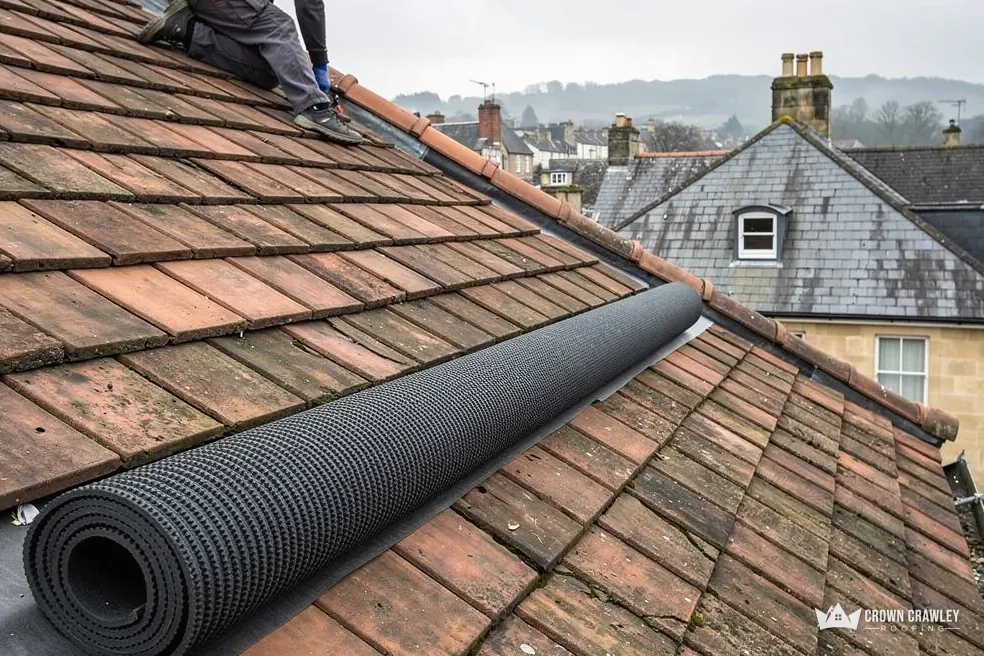
Roll of roofing membrane lying on a clay tiled roof

Stage 02 · Listings

Holy Trinity, Fee Farm House and the memorial

Claygate has listed buildings at three addresses, and a repair beside any of them starts with a question about consent.

Holy Trinity, the parish church, has carried a Grade II listing since April 1984. Fee Farm House and the Claygate War Memorial are listed at the same grade. The farmhouse and the church each follow their own route to approval. The first rule of a listed job is to find out who gives consent before anyone prices the work. Our survey photographs are dated and cover each slope, which is the kind of record a consent file likes to hold.

Who consents to repairs at Holy Trinity?

Holy Trinity is recorded as an Anglican place of worship in use. For such a church the Church of England's own system, the faculty, stands in place of listed building consent, and the parochial church council and the diocese take the lead. The arrangement stops short of planning permission for development that changes the outside of the building. We price the work the church has approved, with survey photographs and one written total that a committee can read in its own time. Church roofs often include gutters, valleys and flashings in lead, which we inspect alongside the tiles or slates. Access is arranged with the church's own officers, because the ground around a church can be a churchyard where equipment cannot simply be set down.

Terms for a listed Claygate job

Faculty
Church of England's own consent system
Listed building consent
Council approval for listed alterations
Exempt
Handled by the church, not the council
Flaunching
Mortar crown holding chimney pots
Whether the council or the diocese decides depends on who owns the building and how it is used.

What about Fee Farm House?

A listed house that is not a church needs listed building consent from Elmbridge Borough Council for work that affects its character. The council decides whether a particular repair counts, so ask before work is planned, quoting the address and what is wrong. An older farmhouse can have lead valleys, clay tiles and a brick stack that wants careful repointing, and the fix should use materials that match. Our chimney repairs page explains flaunching, repointing and flashing in turn. If a leak means water is coming in now, we make it safe first, then sort out consent for the permanent repair. We note what we find, keep any reusable bricks or tiles, and tell you what we recommend. Neighbouring houses without a listing follow ordinary rules unless they sit inside the Claygate Village or Claygate Foley Estate conservation areas. Even so, a good survey is the same on a listed and an unlisted house: slope by slope, junction by junction, with every defect recorded before a price is written.

Stage 03 · Permissions

Surrey scaffold licences and Elmbridge approvals

A Claygate job runs on Surrey County Council's scaffold licence and on building control from Elmbridge's shared service.

Most Claygate repairs need only a survey and a date. Anything bigger, such as a whole new slope or poles in the road, adds steps worth knowing before you choose a month.

How long ahead must a Claygate scaffold licence be requested?

Highways in Claygate answer to Surrey County Council, whose scaffolding page draws the line at the public road, pavement or highway: poles there need a licence. Applications should reach the council at least 10 working days ahead of the start date. The cost is £208 for each 28 days, renewals included, and Surrey adds that the fee for applying cannot be reclaimed. Its page names no applicant, so we settle with the scaffolder, before dates are fixed, who submits it. A drive long enough to hold the scaffold keeps it off the road and out of the licence altogether. Whenever you gather quotes, check whether each one includes scaffold and VAT.

Approvals on a larger Claygate job

Planning
Elmbridge Borough Council
Building control
Elmbridge Building Control Services
Road licence
Surrey County Council
Licence fee
£208 for each 28 day period
Notice
At least 10 working days
Victorian brick terrace with bay windows and parked cars

Which service handles building control in Claygate?

Elmbridge Building Control Services provides the service for Elmbridge Borough Council. For approval, the Planning Portal's yardstick is the share of the building touched: under 25 per cent of the building envelope and under 50 per cent of the roof usually needs no application. Extra weight alters that, and a covering 15 per cent heavier or more should be checked first by a structural engineer or surveyor. Flat roofs on extensions bring in Approved Document L: replacing a flat roof's waterproof membrane counts as renovation, and the 2021 edition sets a roof threshold of 0.35 W/(m2.K) and an improved value of 0.16 to aim for. We flag that when we visit. Our roof replacement page covers a complete strip and re-cover.

An extension with a flat or low-pitched roof gets a check of its own. We look at the falls, the edges, the upstand where the extension meets the main wall and the outlet, because water that cannot leave quickly finds the weakest joint. BS 6229:2025 keeps a minimum 1:80 finished fall for general roof areas, which is why we measure the fall instead of trusting the eye.

The easiest first step is a clear picture of the slope or extension join that has you worried, sent with your Claygate postcode and a note of when the roof was extended, if you know.

Claygate roof questions answered

Can a Claygate roof from the railway years still be repaired?

Often yes, because age alone does not decide it. Marley's figure for how long concrete tiles last is around 60 years, with the caveat that it is no guarantee, and clay has a minimum of 60 years from the Building Research Establishment. A survey shows whether the tiles, the ridge and the underlay can be repaired, and the written price then covers either route.

Who approves repairs to the roof of Holy Trinity church?

For a church in use, the Church of England has its own consent system, the faculty, and it stands in for listed building consent. The parochial church council and diocese lead on it. Changes to the outside may still need planning permission. Once the approved scope is clear, we price it, with a photograph of each defect alongside.

How much is a scaffold licence on a Claygate road?

Surrey County Council lists £208 for each 28 days of licence, renewals at the same rate, and wants the application in at least 10 working days before the start. Surrey will not hand back the application fee. Scaffold that stands on your own land needs no highway licence, which is one reason we look hard at access during the survey visit.

Do heritage rules touch an unlisted Claygate roof?

Elmbridge Borough Council has designated the Claygate Village and Claygate Foley Estate conservation areas, so ask whether your house sits in either; outside them, matching materials on an unlisted house raise no conservation question. Listed buildings such as Holy Trinity and Fee Farm House are different, because listing brings its own consent. If you are unsure about your own house, Elmbridge Borough Council's planning team can tell you.

Send the Claygate roof join that worries you

A picture of the join or slope that worries you, plus your Claygate postcode and any extension's age, books the survey.

01293 974253

10-year workmanship guarantee, in writing.

Call Get a free quote