Roofers in Petworth

Steep clay plain-tile roofs on a sandstone ridge, inside the South Downs.

Petworth's conservation area appraisal says steep clay plain-tile roofs predominate, varied by gables, hips and half-hips. We check hips, valleys and tiles, then price once in writing.

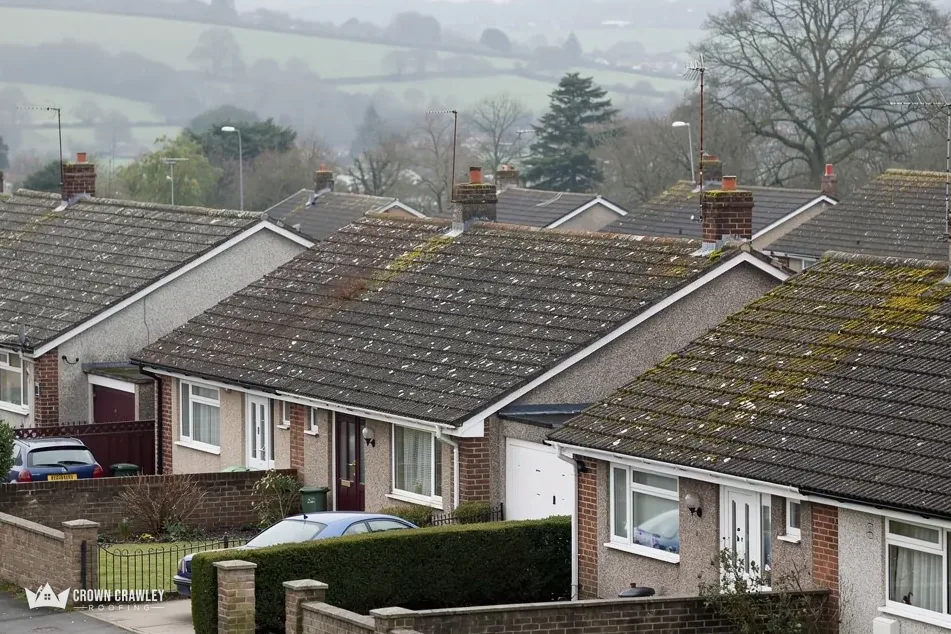
Terraced bungalows with grey tiled roofs along a cul-de-sac

Petworth roofs, from Angel Street to the ridge-top town

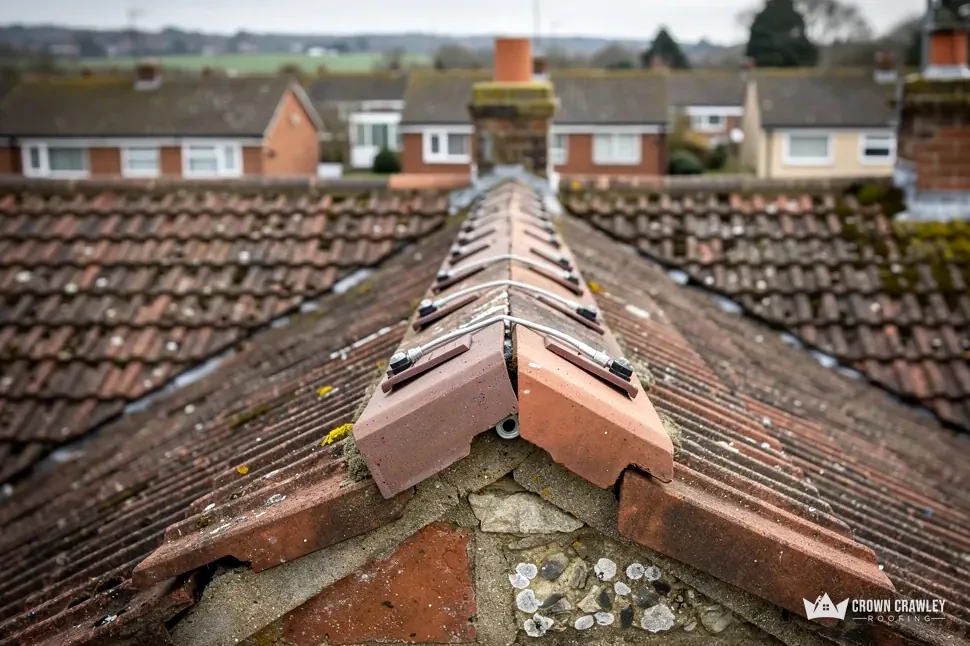
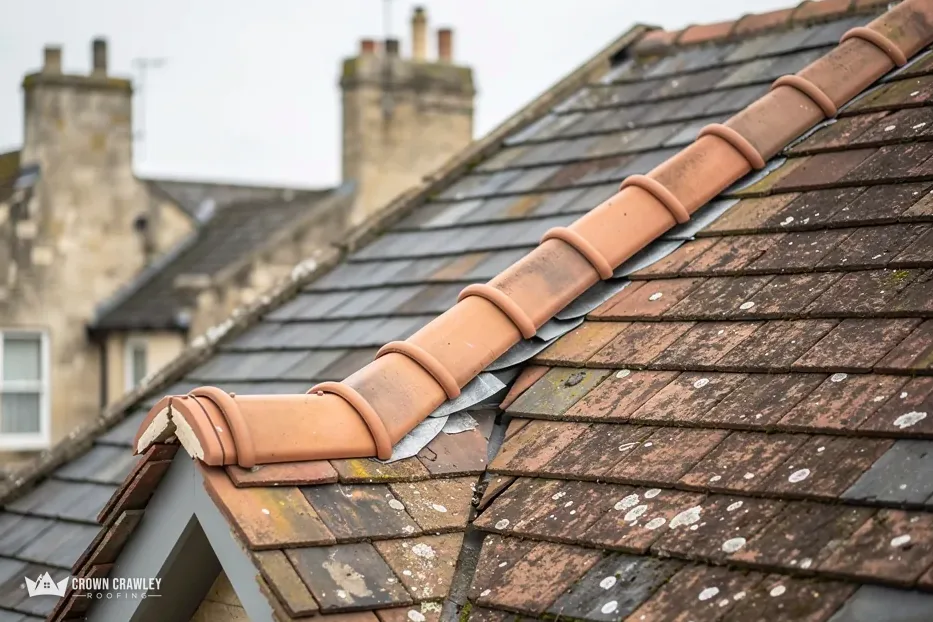
Clay ridge tiles along a hip on a pitched roof

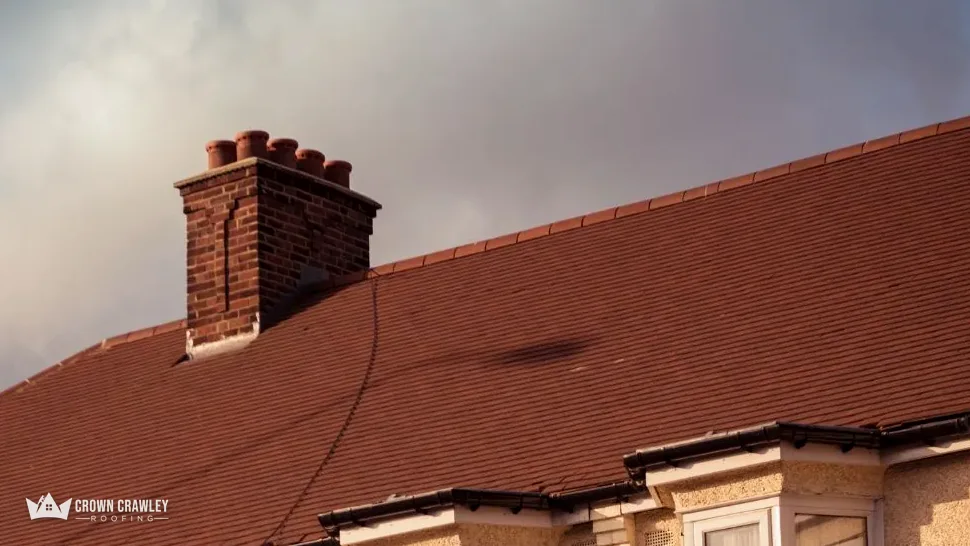
Steep clay plain tiles

The conservation area appraisal records that steep clay plain-tile roofs predominate in Petworth. Small flat clay tiles on a steep slope are slow to lay and gentle to repair, so we plan the access and the time carefully.

Steep clay plain tile roof

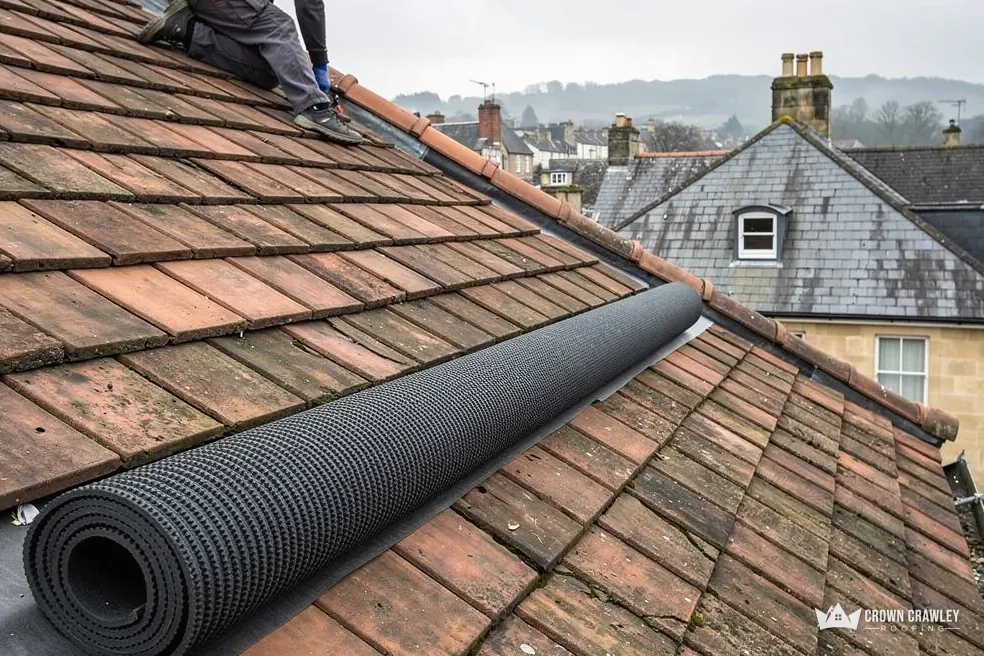
Roll of roofing membrane lying on a clay tiled roof

Gables, hips and half-hips

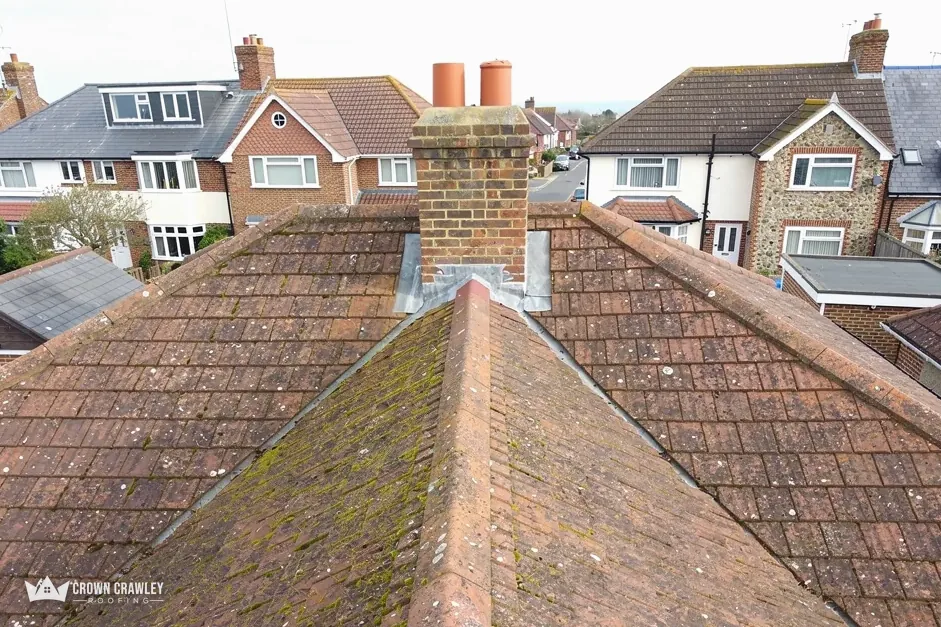
The same appraisal says the plain-tile roofs are varied by gables, hips and half-hips. Each hip and half-hip adds a ridge line to bed or fix, and a valley or flashing where slopes meet.

Hipped clay tile roof from above

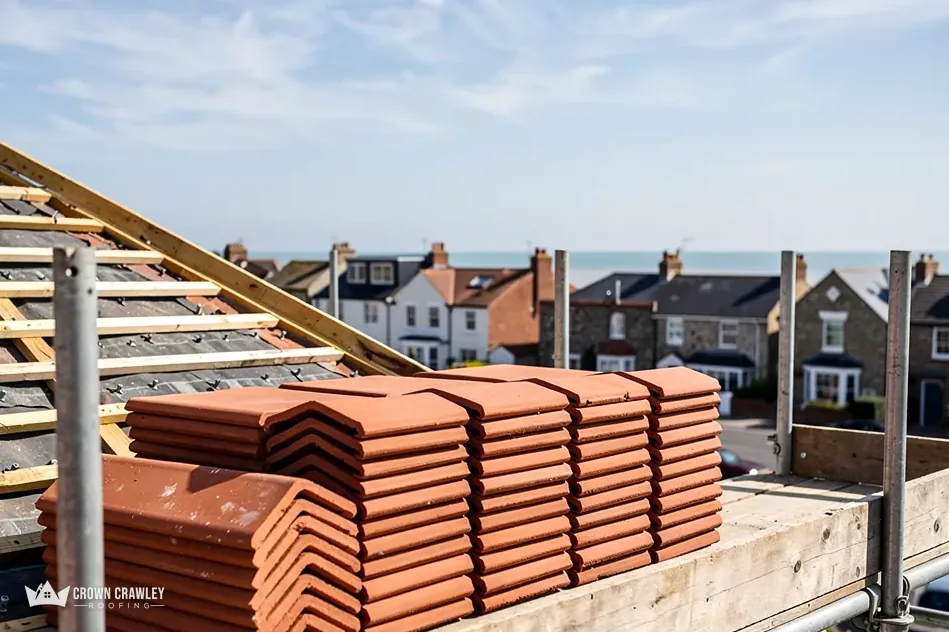
Stack of new clay tiles on scaffold beside roof timbers

Greensand and flint chequer churches

The Catholic church of the Sacred Heart on Angel Street, built in 1896, is of greensand with stone and flint chequer panels. The Parish Church of St Mary and Petworth House are both Grade I.

Stone church beside tiled roofs

Petworth, on a sandstone ridge

Map of Petworth and the neighbourhoods around it, with Crawley for reference.

Petworth is a hill town on a sandstone ridge at the southern edge of the Low Weald, about four miles north of the Downs.

Distance
23.8 road miles from Crawley, to the south-west
Drive
About 37 minutes
Council
Chichester District Council and West Sussex County Council
Planning authority
South Downs National Park Authority
Conservation area
Petworth (designated 1971)
National park
South Downs National Park
Planning in the Park
Chichester District Council handles applications on the Park Authority's behalf
Building control
Chichester District Council
Get a free quote

Petworth: our notes

Plain tiles, hips and a National Park behind every planning question

Three short chapters: how steep clay plain-tile roofs are read and repaired, what the National Park and conservation area change, and how access and approvals work on a hill town.

Stage 01 · First look

Reading a steep plain-tile roof

Petworth's appraisal singles out steep clay plain tiles with gables and hips, so a survey here turns on tile condition, hips and valleys.

The Petworth Conservation Area Character Appraisal and Management Plan, published by the South Downs National Park Authority, says steep clay plain-tile roofs predominate in the town, varied by gables, hips and half-hips. That describes the conservation area as a whole, not every house, so we never assume your roof matches it. It does tell us what to bring and what to look for. Plain tiles are small, flat and laid in many overlapping courses, each hung on a timber batten by two projecting nibs, and a steep slope makes every one of them more exposed to wind and rain. Between the tiles and the battens sits the underlay, a waterproof sheet that catches whatever blows past the tile, and we check its condition wherever we lift a few tiles to look.

On a clay plain-tile roof

Tiles
Cracked, laminated or slipped
Hips
Bedding sound or fixings holding
Valleys
Lead or tile lining watertight
Battens
Timber sound where nails hold
Gable ends
Verge edge tight and pointed
Hipped tiled roof with a chimney at the ridge

What goes wrong with clay plain tiles?

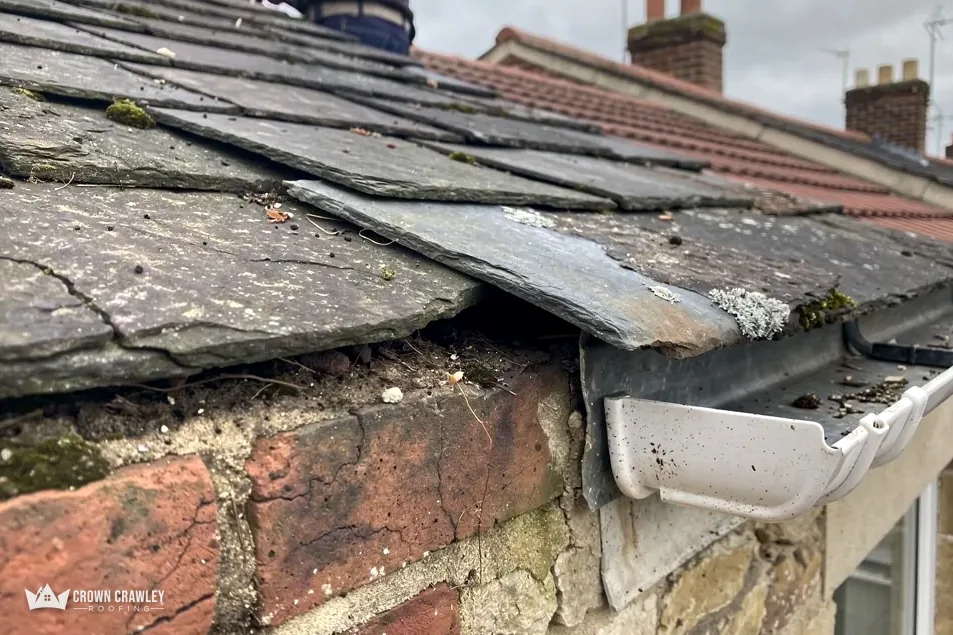
Tiles crack, flake in layers or slip once the nail holding them rusts through. On a steep slope a slipped tile can slide a long way from its home, so we look for the gap and also for where its neighbours have moved. A hip is the angled line where two slopes meet outwards, and a half-hip trims only the top of a gable end. Both carry special tiles, set either in mortar or on mechanical fixings, and the mortar version loosens with age. A valley is the dip where two slopes meet inwards. It collects the most water, and it relies on lead or a tile lining being whole. Lead for a pitched valley gutter is chosen by code, which is a weight and thickness grade: one manufacturer's brochure lists Codes 4 to 8 for that use. We tell you which code we propose and why.

Is a clay roof ever too old to repair?

Sixty years is the floor the Building Research Establishment sets for clay, though one building conservation writer calls that figure a poor yardstick for old peg tile. Condition matters more than a date. BS 5534 sets out how slating and tiling should be done, and the standard itself concedes that its recommendations might not be appropriate when certain older roofs are re-tiled, notably where reclaimed or traditional materials go back on. So we sort sound tiles from tired ones by hand and reuse what is good. Our pitched roofing page covers tile, batten and underlay work, and our lead work page explains valleys, soakers and flashings. Photographs of your own roof show you every point we raise.

Terraced brick houses with flint detail along a wet street

Stage 02 · Permissions

The Park, the conservation area and your roof

Petworth lies inside the South Downs National Park, so the body that decides a planning question is not the one many people expect.

West Sussex County Council first designated Petworth a conservation area on 6 September 1971. Chichester District Council reviewed it in 1999 and adopted an appraisal in November 2000, and the South Downs National Park Authority took over as planning authority in April 2011. Chichester stays in the picture because it processes applications for the Authority across this stretch of the Park. It also provides the building control service, which the Authority does not. A town with a weekly market first recorded in 1279 and a railway that arrived in 1859 has roofs of many ages, so the conservation area is only a starting point for what we expect to find.

Who should I ask about a roof change in Petworth?

Begin with the planning team at Chichester District Council. Ask whether your address sits in the conservation area or is listed, and what that means for the job you have in mind. The Petworth appraisal says the Park Authority will consider Article 4 directions, so ask whether any direction touches your street rather than assuming none does. Describe the planned change to the team in writing and file its answer alongside the survey photographs, so the paperwork is complete before the scaffold goes up.

Who is who in Petworth planning

Park Authority
Planning authority for the Park
Delegated area
Council handles cases for the Park
Conservation area
Designated here in 1971
Grade I
Highest national listing grade

Planning here belongs to the Park Authority, yet it is the district council that receives your application.

What do Grade I buildings and churches change?

Two names stand out on the national list, since the Parish Church of St Mary and Petworth House each hold Grade I status. Listed building consent applies to works that would affect a listed building's special character. A church still in use may follow its denomination's own approval route instead, as the Catholic church of the Sacred Heart would, so whoever looks after such a roof should ask that body first. A private house nearby is a different matter, and the council decides whether a like-for-like repair needs consent at all. Our post on planning permission for roof work sets out the national rules, which we do not repeat here. We can supply photographs and a clear written description of the existing tile, ridge and hip detail to go with your enquiry, which makes the council's job quicker and ours easier. If your roof carries a mix of old and newer repairs, the photographs also show where one stops and the next begins, so the planning team sees the roof as it really is and not as the street suggests it should be.

Stage 03 · On site

Access, licences and approvals on a hill town

A town on a ridge has steep streets and tight corners, which shape where scaffold goes and what a West Sussex licence asks for.

Petworth's old streets were never laid out for lorries, and a steep roof needs a stable base from the ground upwards. When we visit, we note the pavement, the kerb, the fall of the street and any overhead cables, and from that we decide where the scaffold, the tile pallets and the skip can stand. A hill town rewards that planning on day one.

Does scaffold in Petworth need a licence?

Anything left standing on a Petworth pavement or road must have permission from West Sussex County Council, whose page asks for a minimum of 10 working days from application to erection. A month costs £266. Who sends in the form is worth asking the scaffolder, and we stay in step with them on the licence so that your start date follows the council's notice. Your own garden or drive needs no licence. Steep clay roofs often need scaffold along more than one side, so we mark that on the plan before the written price is fixed, not after.

Petworth job checklist

Planning
Park Authority, handled by Chichester
Building control
Chichester District Council
Roadside scaffold
West Sussex County Council licence
Lead time
10 working days minimum
Bats and nests
Found on site, we stop and advise
Clay ridge tiles along the hip of a weathered tiled roof

Who checks a Petworth re-roof?

Chichester District Council provides building control even though the town is inside the Park. According to the Planning Portal, work that touches under 25 per cent of the building envelope and under 50 per cent of the roof can normally proceed without approval. Choose a covering 15 per cent heavier and that rule falls away, and the Planning Portal wants an engineer or surveyor consulted first. Clay plain tile is a small-format covering, so swapping it for something heavier is a decision for that kind of advice. Our roof replacement page describes how a full re-roof proceeds from first look to final check.

What about bats and nests?

Old tiled roofs with deep eaves are places bats may roost, and the roost is protected by law. So is a nest while a bird is using it. If we find either, we leave that section alone and talk through the choices with you before touching anything else, because the answer shapes the programme.

The rest of the site is run the way we run any other. Neighbours are told when scaffold arrives and leaves, the pavement stays passable, tile offcuts and old battens are cleared away daily, and the plan for each day is explained before it starts. Gutters and fascias at the eaves are looked at while access is up, which spares a second scaffold hire later.

Petworth roof Q&A

Can I re-roof my Petworth house in a different tile from the clay plain tiles around it?

Possibly, though check first. Petworth sits in the South Downs National Park and in a conservation area, and a change of covering alters the look of a street. Ask the planning team at Chichester District Council, which handles applications for the Park, before you decide. We then price either matching clay tile or your alternative, in writing.

Will a roof change in central Petworth need planning advice?

Petworth's conservation area was designated in 1971, yet a look from the street will not settle whether your house falls within it. Chichester District Council's planning team can answer from your address, and tell you if the house is also listed. Give us the reply before we visit, so the quote reflects what is likely to be accepted for your roof and no more.

How much notice does Petworth scaffold on the road need?

West Sussex County Council asks for at least 10 working days' notice before scaffolding goes onto a public highway, with £266 charged for one month. Nothing is needed for scaffold standing on private land, such as a drive or garden. We handle the licence in step with the scaffolders, and your first day on site follows the council's notice period.

Does Chichester or the Park Authority decide on my Petworth roof?

On planning, the Park Authority is the authority, with Chichester District Council handling the applications on its behalf in this area. On building control, Chichester District Council is the body. Which one you contact depends on the question, and the survey notes we give you say which of them applies to your particular job, so you are not sent back and forth.

A quote for your Petworth home

Photograph whichever hip, valley or patch of tiles is giving you doubts, and email it with your postcode ahead of the first visit.

01293 974253

10-year workmanship guarantee, in writing.

Call Get a free quote