Roofers in Fittleworth

Roofs in a Rother valley village inside the South Downs National Park.

Fittleworth sits on the River Rother among sandstone hills, inside the South Downs National Park. Cottages and newer estates both get a close survey and one written price.

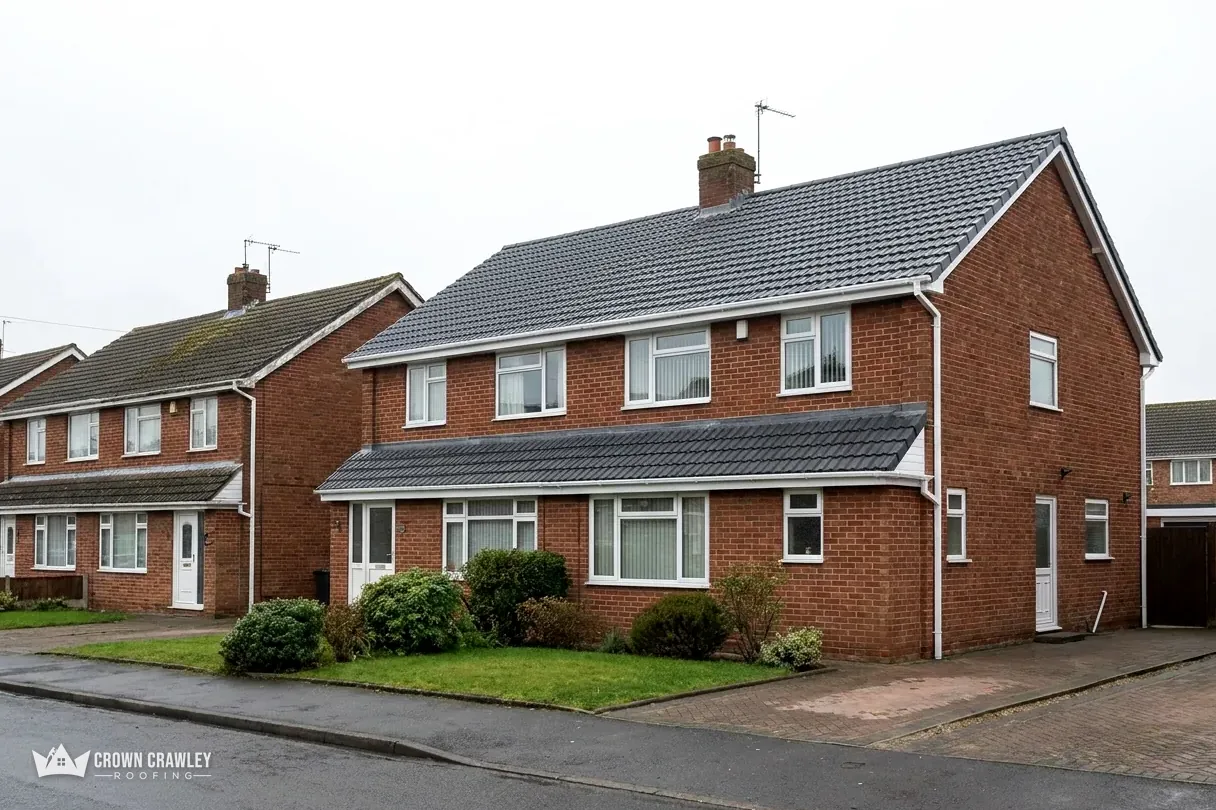
Detached red brick houses with grey tiled roofs on a quiet road

What sits above Fittleworth's sandstone and timber

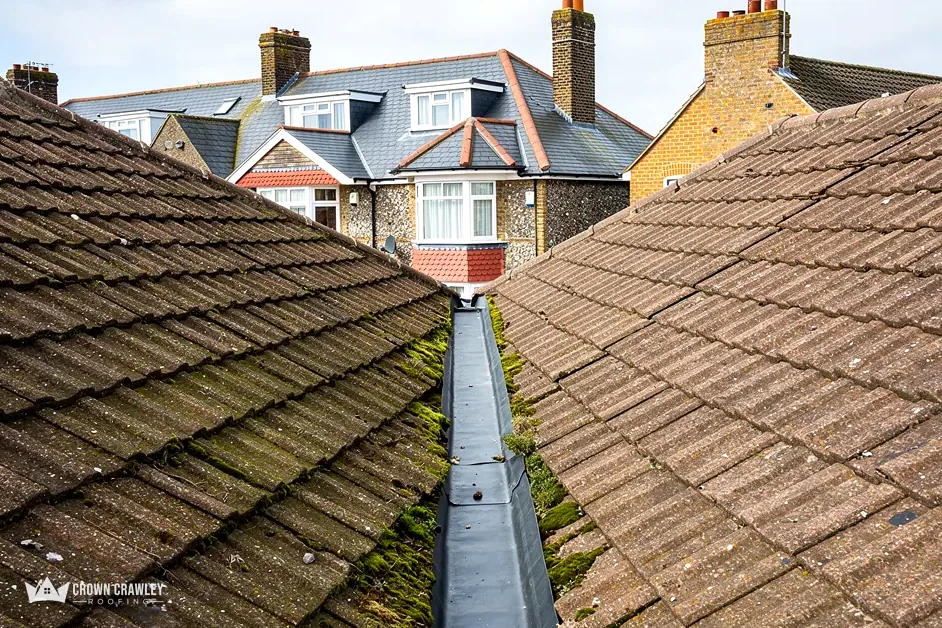
Lead-lined valley gutter between two tiled roof slopes

Sandstone and ironstone walls

Some Fittleworth homes are built from sandstone and ironstone quarried in the parish and nearby. We pay close attention to where lead meets stone, at chimneys, gable walls and other junctions.

Stone wall under a tiled roof

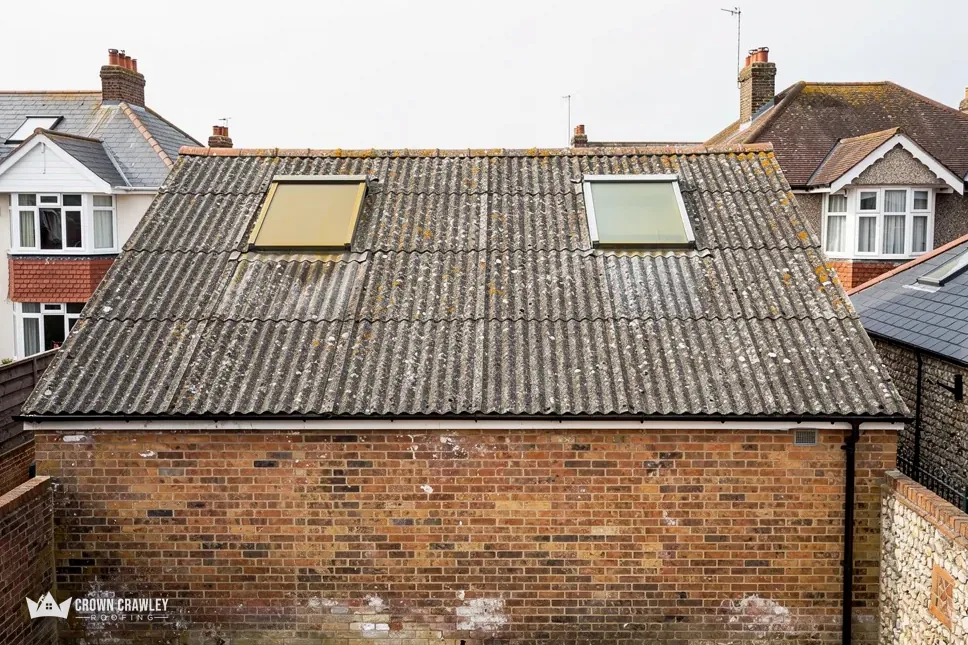
Corrugated cement garage roof with two rooflights above a brick wall

Timber-framed village buildings

Local wood supplied many timber-framed buildings in the village. On a frame that old, we check the timbers from the loft before any covering is touched, and report what the wood is doing.

Old timber rafters in a loft

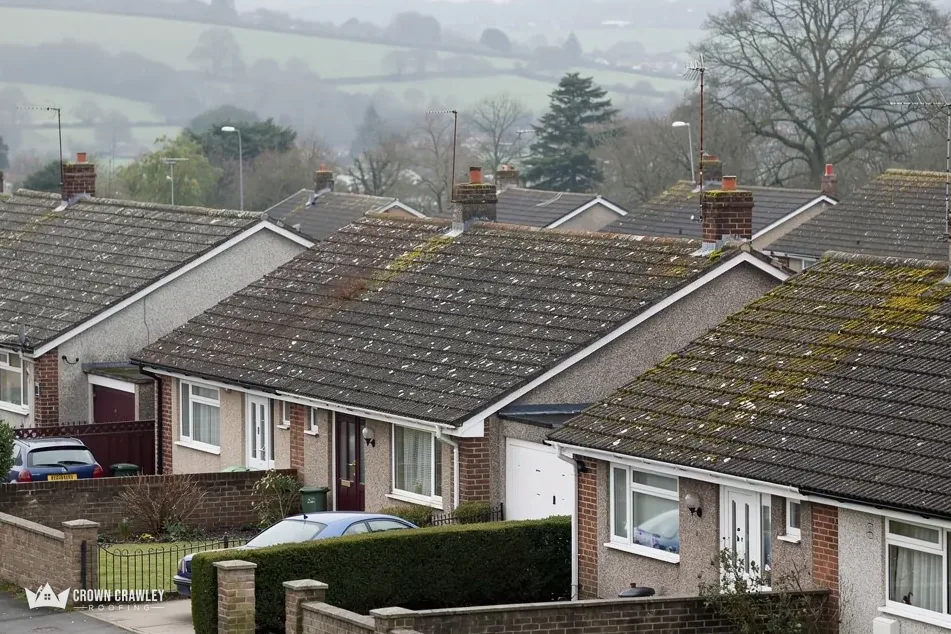
Terraced bungalows with grey tiled roofs along a cul-de-sac

Homes from the 1930s to the 2000s

Greatpin Croft went up between the 1930s and 1950s, and estates such as The Gardens and School Close followed from 1950 to the early 2000s. Each roof is read as found, not assumed.

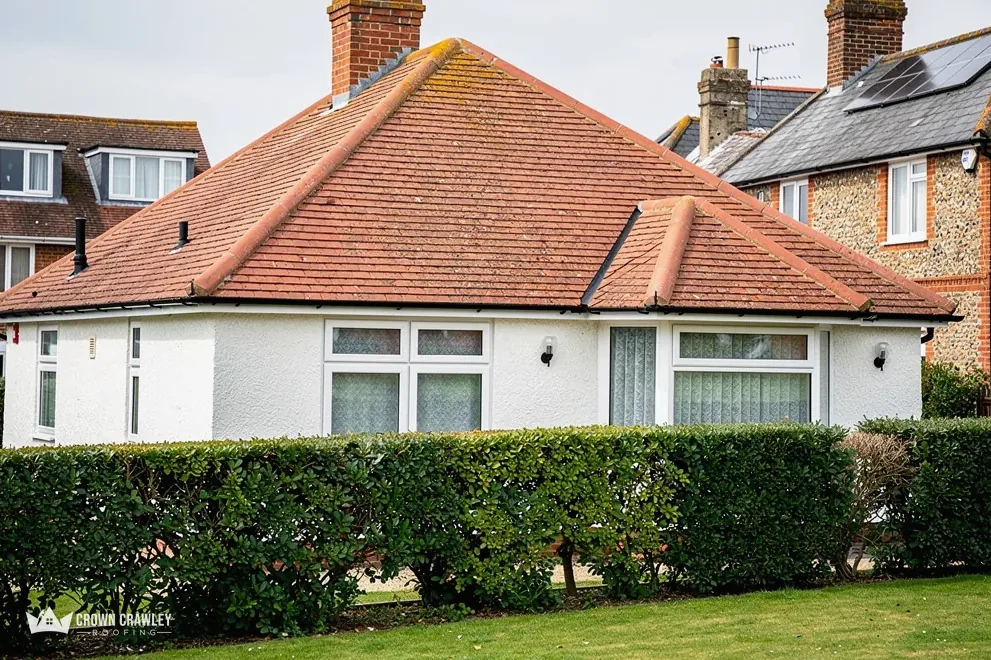
Estate homes with pitched roofs

Fittleworth, on the River Rother

Map of Fittleworth and the neighbourhoods around it, with Crawley for reference.

Fittleworth is a Rother valley village south-west of Crawley, with 738 residents at the 2021 census and two Grade I churches in the parish.

Distance
23 road miles from Crawley, to the south-west
Drive
About 36 minutes
Council
Chichester District Council and West Sussex County Council
Planning authority
South Downs National Park Authority
Conservation area
Fittleworth Village (plus Coates and Little Bognor) (designated 1984)
National park
South Downs National Park
Listed buildings
89 in the parish, two of them Grade I
Get a free quote

The Fittleworth worksheet

Roofs in a village inside a National Park

Three short chapters: how the village's buildings grew, which planning bodies and conservation areas apply, and what a West Sussex scaffold licence involves.

Stage 01 · Village stock

Four building eras in one small village

Fittleworth spans old stone and timber, a railway-era spread, social housing and later estates, so no two streets need the same roof advice.

The Fittleworth Neighbourhood Development Plan, hosted by the South Downs National Park Authority, sets out how the village grew. A railway station was open by 1889, closing to passengers in 1955, and it led to housing around Tripp Hill. Greatpin Croft, a large social-housing area, was built between the 1930s and 1950s, and estates such as The Gardens, School Close, Wyncombe Close and High Trees followed between 1950 and the early 2000s. Older buildings use sandstone and ironstone quarried locally, with timber frames from local wood. A village this size holds roofs from several generations, which is why every job begins with looking and not with assuming.

How do you survey a roof from a different era?

The loft comes first. On a cottage, rafters, wall plates and the underside of the covering show how the roof has behaved over time. On a house from the later estates, the underlay, batten nailing and ventilation along the eaves tell us more. Then we climb out to the slopes, the ridge, the verges and the chimney. Each answer shapes the price. Each finding gets a photograph, shown to you before we leave. For repairs to tiles, battens and underlay, our pitched roofing page explains the work.

Checking a Fittleworth roof

Stonework
Abutments and chimney joints sound
Timbers
Rafter feet and plates dry
Tiles
Whole, firm and well fixed
Ridge
Bedding intact or caps screwed
Gutters
Falls true, brackets holding
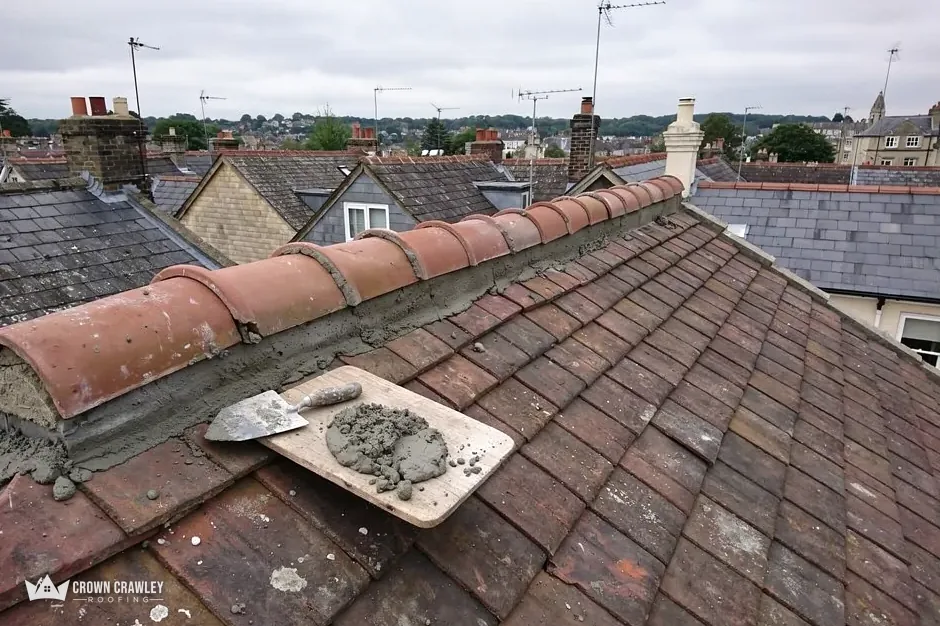
Ridge tile bedded in fresh mortar with a trowel resting on the roof

Are mortar-bedded ridges a problem on newer roofs?

They can be. BS 5534 as revised in 2014 stopped treating mortar as enough for ridge and hip tiles, Marley explains, and bedded tiles and fittings now need a mechanical fixing too. That does not make older mortar ridges wrong, since the standard is not law and some old roofs differ, but it does mean a rebed should add fixings. Where a stack rises through the roof, flashing and flaunching get checked too, and our chimney repairs page covers that work, from repointing to new lead.

Moisture matters at every age, on a stone cottage by Lower Street as much as a house on High Trees. Under BS 5250, Marley quotes eaves ventilation of 25mm for pitches of 15 degrees or less and 10mm above that, where non-breathable felt is used. Insulation stuffed into the eaves can choke the gap. The loft check is where we see it. Clearing a blocked gap costs little compared with the timber damage it prevents, and it is a better fix than a new roof that would suffer the same problem.

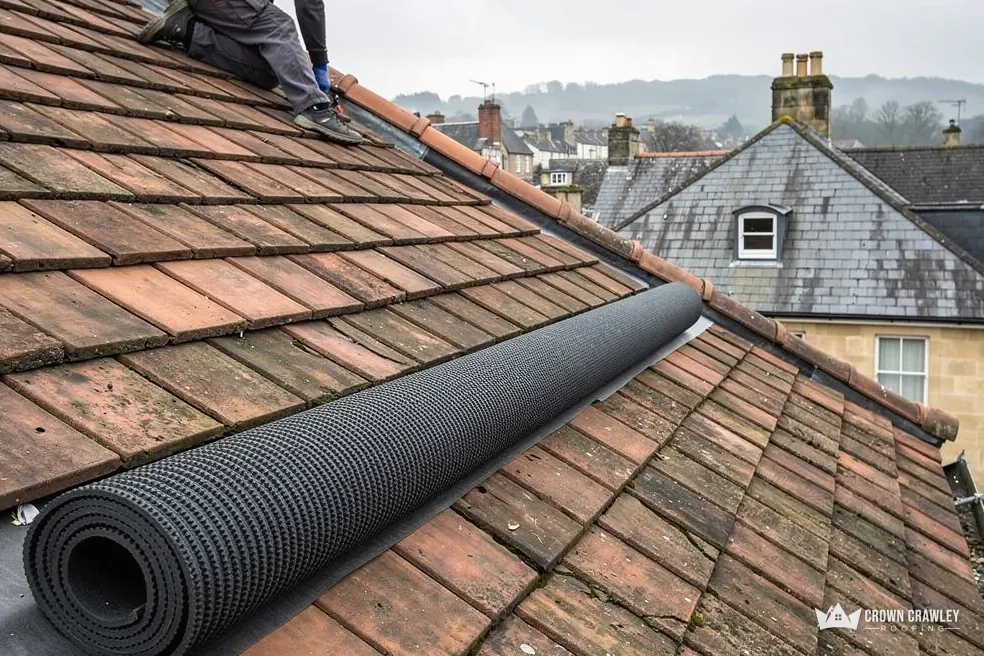
Roll of roofing membrane lying on a clay tiled roof

Stage 02 · Old buildings

National Park rules and three conservation areas

Fittleworth lies inside the South Downs National Park, with conservation areas at the village, Coates and Little Bognor, so planning questions come early.

The Neighbourhood Plan records the older parts of Fittleworth, part of Bedham Lane and most of Lower Street down to the river, within a conservation area, with two more in the parish at Coates and Little Bognor. The parish has 89 listed buildings, two of them Grade I: St Mary the Virgin in Fittleworth and St Agatha at Coates. Fittleworth Bridge is a Scheduled Ancient Monument, and Sir Edward Elgar rented Brinkwells, a cottage in Bedham Lane, in 1917, writing most of his Cello Concerto there.

Who decides planning for a Fittleworth roof?

The South Downs National Park Authority is the planning authority here. Fittleworth falls in one of the Park's delegated areas, so the applications themselves are dealt with by Chichester District Council acting for the Authority. Building control stays with Chichester District Council, as it does anywhere in the Park. So for planning, speak to the Authority or Chichester's planning team, and for Building Regulations, to Chichester's building control team. When a question comes up on a job, we tell you which of the two it belongs to.

Who decides, in plain words

Planning authority
Body deciding planning applications here
Delegated area
Where the district handles park planning
Article 4 direction
Order removing some permitted rights
Conservation area
Zone with extra planning care
Listed building
Building protected for special interest

Does a like-for-like repair need consent here?

The Authority's listed building page says like for like repairs done in situ, along with regular maintenance, need no listed building consent where they are minor. That is the starting point for a cottage with slipped tiles or a worn ridge, but wording matters, so the survey and the written price describe the repair precisely. Alterations to appearance, such as a new covering, roof windows or a different chimney, need a conversation with planning first. Fittleworth's parish church, St Mary the Virgin, holds a Grade I listing (entry 1238939 on the national list). Because it is Church of England and in use, work on it follows the church's own faculty process, which stands in for listed building consent. Outside changes to a listed church can still call for planning permission, so a churchwarden should ask the planning team first. Our planning permission for roof work post gives the starting points.

Inside a National Park, the planning question comes before the quote.

Is there an Article 4 direction in Fittleworth?

The Authority lists a direction for Land at Coates, Fittleworth, made on 24 November 1983 and confirmed on 2 December 1983. It applies to that site at Coates rather than the village, and if your house is near Coates, the Authority can tell you what it covers and whether it touches roof work before you commit. Elsewhere in the village, the conservation area boundaries matter more, and the Authority can confirm them for your address before a single tile moves.

Stage 03 · Permissions

A West Sussex scaffold licence and the price

West Sussex County Council licenses scaffold over a Fittleworth road, and its notice and charges are worth knowing before booking.

A scaffold standing on the public road needs a licence under the Highways Act 1980, issued by the highway authority. In Fittleworth that is West Sussex County Council, whose licensing page says a licence is required for scaffolding and tower scaffolding on a public highway. It wants a minimum of 10 working days to pass between application and erection, and charges £266 for one month of scaffolding, with an extension at £178. There is a fast-track route for an extra £52, though we plan jobs so nobody needs it.

Does the council say who applies for the licence?

The council's page does not say, so the scaffolders and Crown settle the licence between them and the date goes to you afterwards. The council also expects every scaffolding contractor to tell it as soon as scaffolding comes down. Scaffold put up wholly on your own land needs nothing from the council. Village lanes can make access harder, so the survey takes in where materials can be stored and how waste will leave.

West Sussex scaffold licence

Highway authority
West Sussex County Council
Notice
10 working days minimum
One month
£266 for scaffolding
Extension
£178 for scaffolding
Private land
No highway licence needed
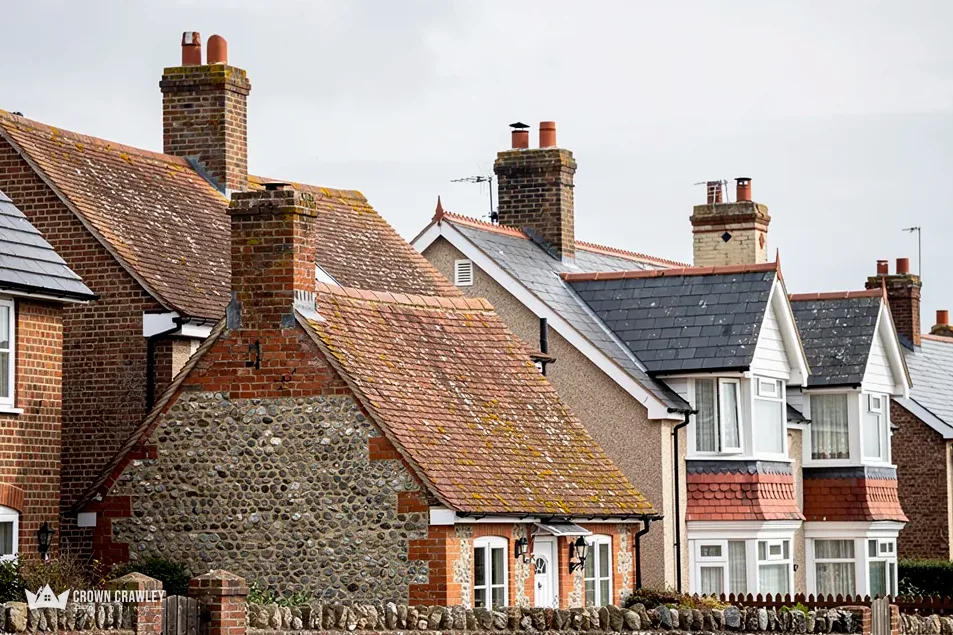
Flint and brick houses with clay tiled roofs and chimneys

What does the written price cover for a Fittleworth roof?

One total price in writing, set after the survey. What moves it is the size of the roof, the covering, access and what the loft and battens turn out to need. Whichever firm quotes, ask if scaffolding and VAT sit inside the total, because both change it. For a full renewal, our roof replacement page shows each step from survey to sign-off.

Wildlife law matters on a roof here. In a Rother valley loft, any bat roost is protected by law, and GOV.UK counts roof repairs among the works that touch it; the Wildlife and Countryside Act 1981 also bars anyone from intentionally harming a bird's nest while birds occupy or build it. If the survey turns up any sign, that part of the roof waits and you hear the choices from us first. Scaffolding put up on the highway without a licence draws a charge of £50 per day plus a retrospective licence at £425, which is why the licence is arranged before the poles go up, and why a tight deadline never justifies skipping it. To begin, send one photograph of the worrying ridge, tiles or stack, with your Fittleworth postcode; the conservation and Park position for your address is checked before we go further.

Fittleworth, the Park and your roof

Do Fittleworth's stone cottages need different roof repairs from the newer estates?

Often the repair is similar, but the checks differ. On stone cottages we look hard at where lead meets stonework and at the timbers in the loft. On estate homes from 1950 onwards we look at underlay, batten nailing and eaves ventilation. Either way, the survey photos show what was found, and the written price follows from them, so you can follow the reasoning.

Who do I ask about planning for a roof in Fittleworth?

Planning sits with the South Downs National Park Authority, though in this delegated part of the Park Chichester District Council processes the applications for it. Building control stays with Chichester District Council. Ask the Authority or Chichester's planning team about any alteration to the roof's appearance, and tell us the answer so the written price reflects it, with no surprises later.

Is my house in one of Fittleworth's three conservation areas?

The Neighbourhood Plan places the older village, part of Bedham Lane and most of Lower Street down to the river in a conservation area, with two more at Coates and Little Bognor. A street name cannot settle it for your house, so ask the planning team to confirm it for your address before you change a covering, a roof window or a chimney.

How long before a Fittleworth job can the scaffold go up?

If it stands on a road, West Sussex County Council requires 10 working days' notice from application and charges £266 for one month. The date is fixed around that wait once the scaffolders confirm the licence. If the scaffold can stay on your own ground, no licence is involved, and the survey looks at that.

Tell us about your Fittleworth roof

A single photograph of the ridge, tiles or stack you are unsure about, plus your Fittleworth postcode, is enough to arrange the survey.

01293 974253

10-year workmanship guarantee, in writing.

Call Get a free quote