Roofers in Plaistow

Steep clay-tiled roofs, tall chimney stacks and one stone slate house.

Plaistow lies in the Low Weald, with nearly 30 listed buildings in its conservation area and handmade plain clay tiles among its traditional materials. We survey, share photos, then quote in writing.

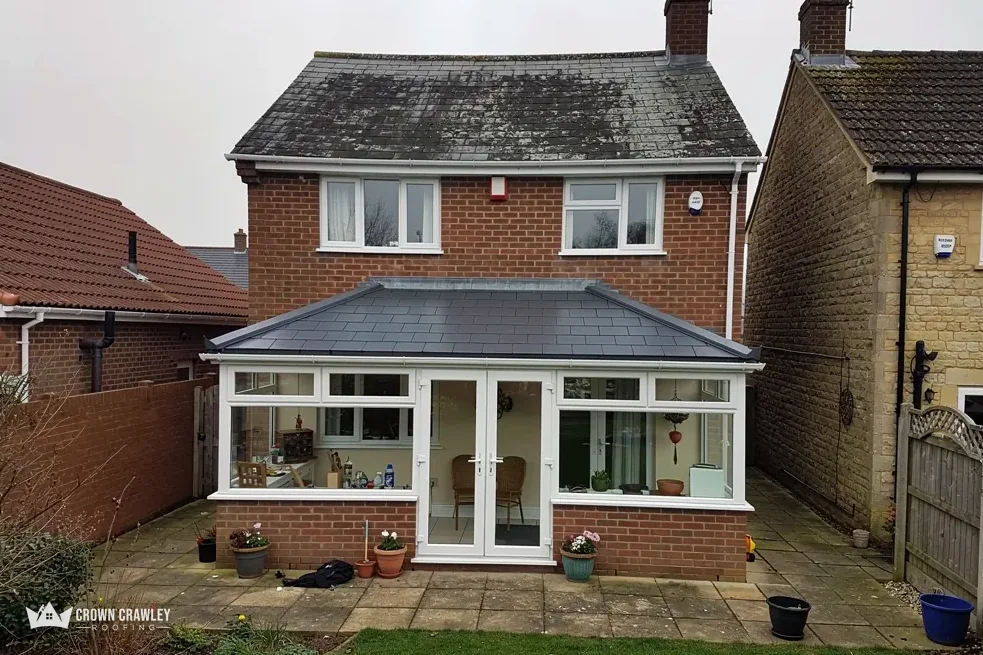
Rear of a brick detached house with a tiled roof and garden

Plaistow roofs, from The Street to Stone House

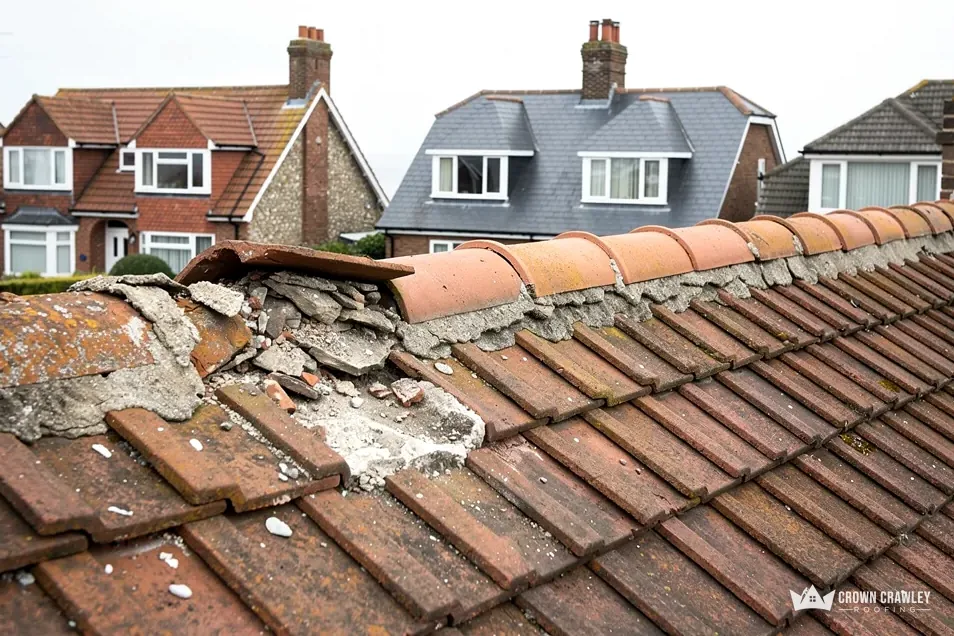
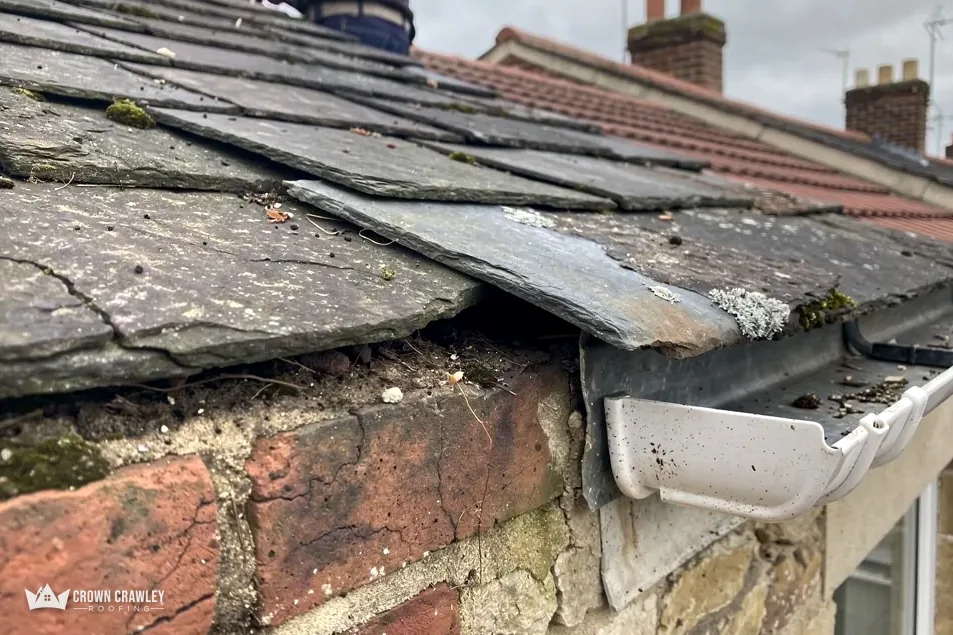
Broken mortar bedding along a clay ridge

Handmade plain clay tiles

Handmade plain clay tiles are among Plaistow's traditional materials, laid on steeply pitched roofs with substantial chimney stacks. Plain tiles overlap in small units, so a repair is made tile by tile and the steep slope sets how we reach it.

Plain clay tiles on a steep roof

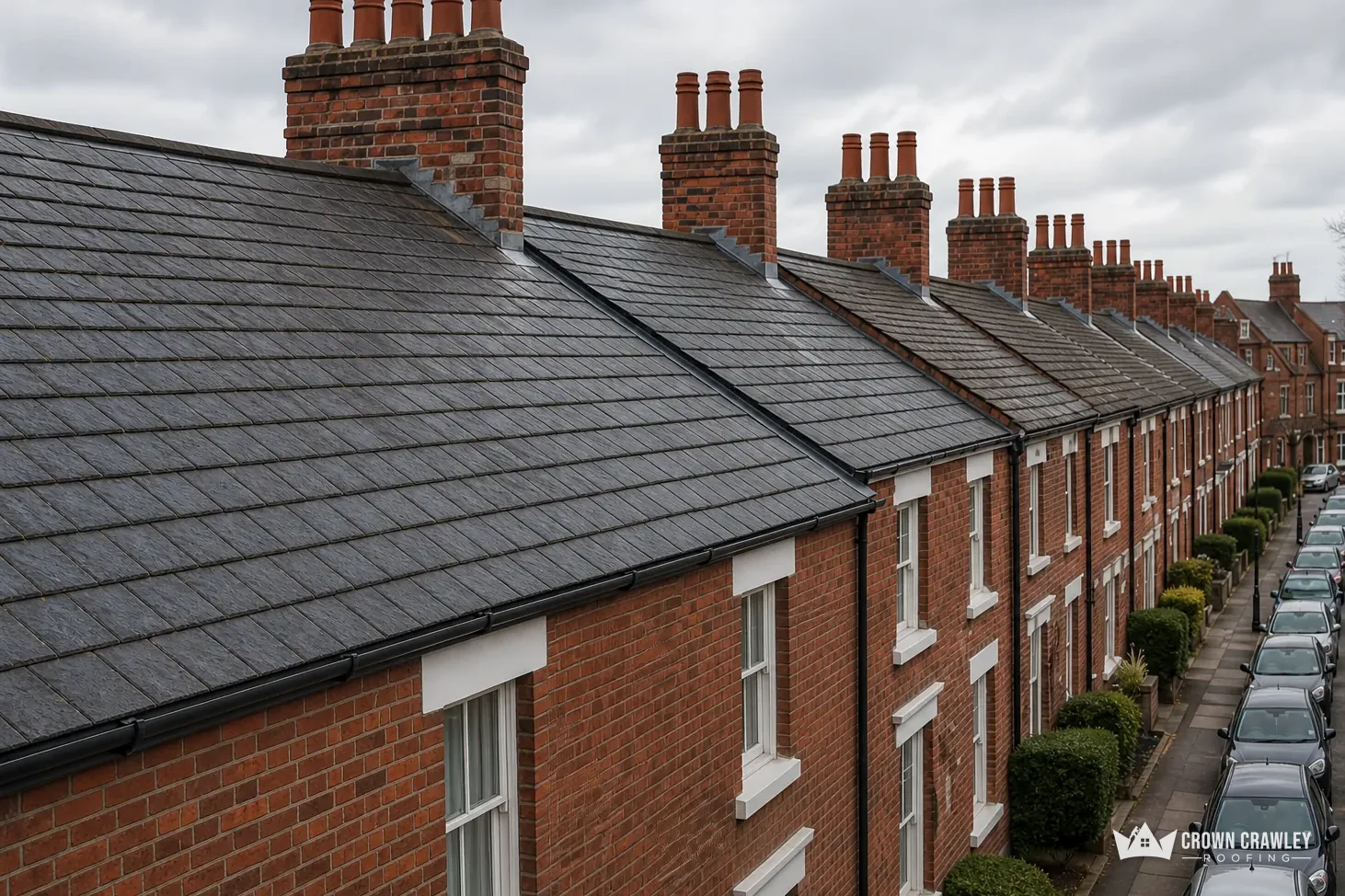
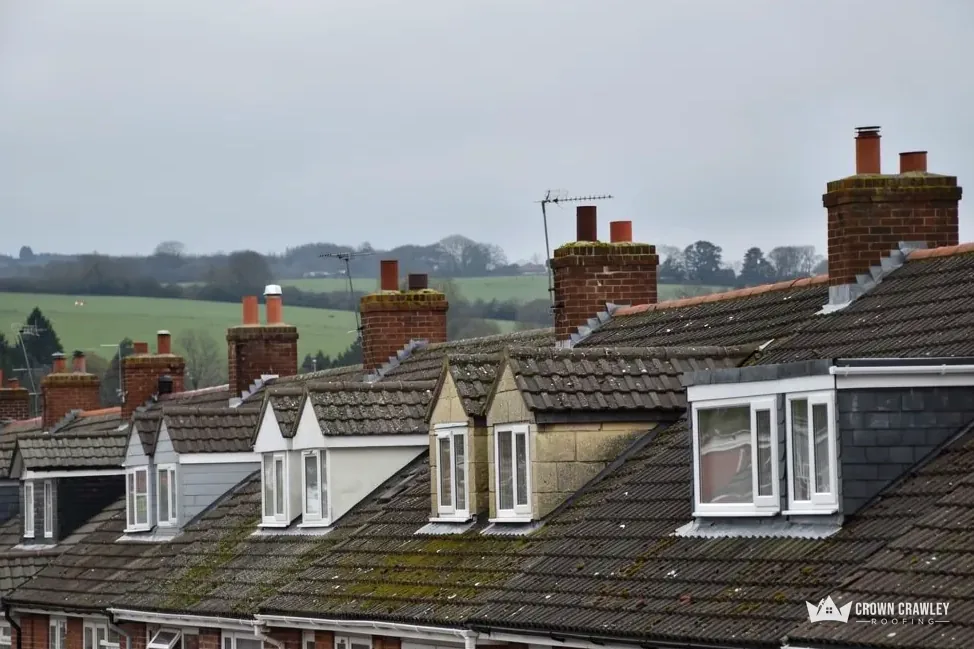
Long terrace of slate roofs with a line of brick chimneys

Stone House and its slate

Stone House is the only stone-faced building in the conservation area and the only one roofed in Horsham stone slates. Its neighbours carry other coverings, so we confirm what yours is before we advise.

Stone slate roof on an old house

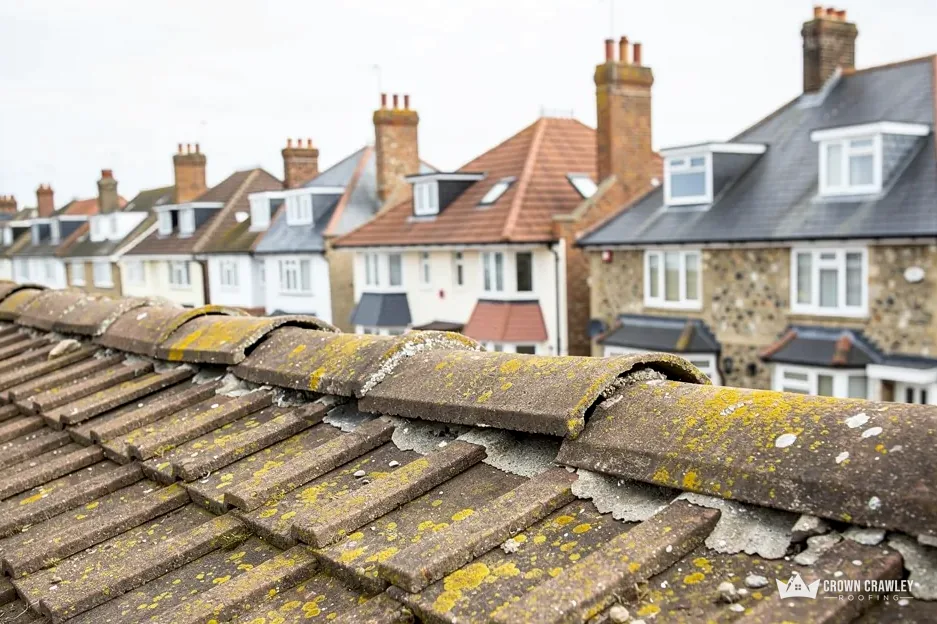
Mossy ridge tiles lifting along the ridge of a terraced roof

Todhurst and its hips

Todhurst on The Street is Grade II listed, dating to the 17th century or earlier, with a hipped tiled roof over red brick below and tile-hanging above. A hip is the outward-facing angle where two sloping roof planes join.

Hipped tiled roof on a village house

Plaistow, in the Low Weald

Map of Plaistow and the neighbourhoods around it, with Crawley for reference.

The village lies in the Low Weald landscape character area, in wooded, undulating country where glassmaking and iron making were once local industries.

Distance
21.4 road miles from Crawley, to the west
Drive
About 38 minutes
Council
Chichester District Council and West Sussex County Council
Planning authority
Chichester District Council
Conservation area
Plaistow Conservation Area
Population
2,031 (Census 2021, Plaistow parish)
Get a free quote

Plaistow roof log

Reading Plaistow roofs from brick front to chimney cap

Three chapters on brick fronts that hide older houses, the one stone slate roof in the conservation area, and the planning and access points that follow.

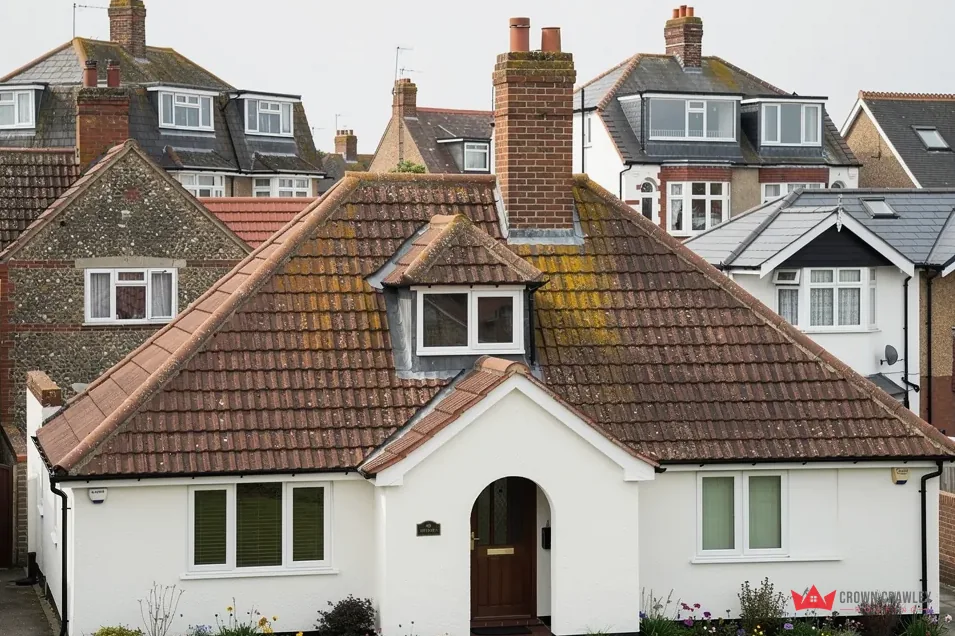
White rendered bungalow with a hipped tiled roof and dormer

Stage 01 · Origins

Brick fronts that hide older houses

Nearly 30 listed buildings stand in Plaistow's conservation area, and later brick frontages often conceal how old the house behind them really is.

Chichester District Council's 2013 character appraisal of Plaistow counts nearly 30 listed buildings in the conservation area, many of them from the 17th century or earlier, and adds that later brick frontages often hide their true origins. A tidy brick front can therefore sit on a much older frame, and the roof above may have been rebuilt, patched or re-covered more than once. The appraisal also lists the traditional materials: handmade plain clay tiles, timber framing with painted panels or stained weather-boarding, and local Wealden greensand stone.

Is the roof as old as the brick front?

Not necessarily, and the loft is where the answer lies. In the loft we read the rafters, the battens and the back of the tiles for signs of earlier work: different timber, old nail holes, a patch of newer felt. On an old house that history guides the repair, because an ancient rafter is treated differently from a batten fitted last decade, and the photos of those timbers go in the survey so the roof's story is on record before any price is given. Plaistow's older roofs are described as steeply pitched, which sheds rain quickly but means every inspection and repair is done at height with roof ladders and proper edge protection. Our pitched roofing page sets out the work.

What changes where tile-hanging meets the roof?

The wall tiles stop and the roof tiles begin, and the junction between them is a classic place for water to enter. Narrow lead soakers, which are small folded pieces slid under each course of tile, carry rain from wall onto roof, and they stiffen and crack in time. A repair there means lifting tiles on both faces to renew the metal, then fixing them back, so we price it as one job and mark it in the survey photos. On a wall of painted panels or stained weather-boarding the same check runs down to the board ends below the eaves, where water that gets past the gutter tends to settle.

Words for a Plaistow elevation

Tile-hanging
Clay tiles hung vertically on walls
Weather-boarding
Overlapping timber boards clad the wall
Chimney stack
Brickwork carrying the flue above the roof
Flaunching
Mortar collar that seats the pot

Does a tall stack mean a bigger repair?

Not by height alone. Substantial stacks are part of the local roof character, and what fails first is usually the pointing, the flaunching at the top or the flashing at the base. In Checkatrade's April 2026 chimney figures, typical UK prices run from £300 to £1,000 for repointing and £250 to £1,000 for flashing, with the written quote following our survey. Our chimney repairs page covers the repairs a stack can need.

Rear of a brick house with a glazed extension and slate-effect roof

Stage 02 · Stone slate

The one Horsham slate roof

Stone House is the only building in the conservation area roofed in Horsham stone slates, and any stone slate roof asks for a careful approach.

Stone House is a single entry in a long list of clay tile and timber, and the appraisal singles it out for exactly that reason. Horsham stone slate is a thick, natural stone cut into slabs that are laid in overlapping courses, and a roof of it looks and weathers like nothing else around. If you live on a street with one, or your own roof is stone slate, two things matter more than anywhere else: do not assume it can be swapped for something lighter, and do not let anyone strip it without a plan for the slabs.

What happens to the slabs when a stone slate roof is repaired?

Each slab is taken off by hand, checked and sorted. Sound ones are set aside for relaying, and cracked or flaking ones are replaced from reclaimed stock so the courses keep their character. A repair is therefore slower than on a tiled roof of the same size, and the written price reflects that after the survey shows how many slabs are in doubt. Reclaimed stone slate has to be found, and the supply sets the timetable more than any roofer can. Stone slate repairs usually sit in the pitched roofing family of work, with lead for the valleys, flashings and abutments.

A stone slate roof is repaired slab by slab, and the sound ones are worth more than new.

Checking a stone slate roof

Slabs
Cracked, flaking or slipped
Fixings
Pegs or nails still holding
Valleys
Lead lining sound
Stack joint
Flashing tight to the brick
Timbers
Laths and rafters free of rot
Can a stone slate roof be replaced with tiles?

It can be asked, but in a conservation area the council's planning team will want to see why, and a listed house needs listed building consent for a change that affects its character. Weight is part of it too. Under the Planning Portal's guidance, a covering 15 per cent or more heavier than the old one brings in building control approval, so a structural engineer or surveyor comes first. Our own view on any old roof is to repair first, because a repair that keeps the covering also keeps the look the council is protecting.

What about the church roof with its belfry?

Holy Trinity Church is unlisted and was rebuilt in the early 1850s in local sandstone, with a wooden belfry and spirelet, and its clock was added in 1887. A timber spirelet on a stone church shows how many materials meet on one roof: wood, lead and stone, each wanting its own detail. Tall features like that call for planned access, not a ladder, which is the same principle we apply to a house with a tall stack.

Stage 03 · Permissions

Plaistow's protected streets and the scaffold

Planning and building control both rest with Chichester District Council here, and the highway licence comes from West Sussex County Council.

Plaistow lies outside the South Downs National Park, so Chichester District Council is the one office for planning questions and building control alike. Ask the council for the conservation area boundary map before you plan more than a repair, and keep its reply with your house papers. A roof job here sorts into three kinds: a straight repair, a change of look, and a larger re-roof, each with its own paperwork.

When is a repair simply a repair?

Replacing a broken clay tile with a matching one, rebedding a ridge in the same way, or renewing a lead flashing leaves the house as it was seen before. Anything that would change the colour, the pitch of the covering or the roof windows is a different matter. Our post on planning permission for roof work covers the national rules, and Plaistow's conservation area means asking the council whether an Article 4 direction removes further rights from your street.

Dormer windows on a weathered tiled roof facing open fields

Does a Plaistow roof job need a highway licence?

Only scaffold standing on the public highway calls for a licence, and West Sussex County Council grants it: £266 covers a month, and applications go in at least 10 working days ahead. A drive or front garden deep enough for the poles keeps the scaffold off the road, and on private land no highway licence is involved. If the road is the sole choice, the licence application goes in with the scaffolder's help, and you know the date before the poles arrive.

Wildlife is part of the same survey. Old tile and timber roofs can hold bat roosts, and a roost has full legal cover whether or not anyone knew it was there. Any sign of a roost found during the job pauses the work until the right next step has been talked through with you.

Terms you may hear

Article 4 direction
Council order removing some permitted rights
Listed building consent
Needed before altering a listed home's character
Highway licence
County consent for poles on the public road
Like for like
New material matching the old exactly

What if the survey finds more than the tiles?

That is why the survey comes first. If the problem turns out to be rafters gone soft at the feet, a failing stack or a roof that needs stripping back to the battens, you see the photos and then receive a single written price. Where the work grows into a replacement, our roof replacement page shows how that runs, and building control from Chichester District Council is raised before the start date is fixed.

Plaistow clay, stone slate and brick fronts

Is a steep clay tile roof in Plaistow harder to repair than a shallow one?

It takes more planning. Steep roofs shed rain quickly, but every tile is reached with roof ladders and edge protection, and materials need a safe way up. A single slipped tile can be a short job; a ridge or hip on a steep slope takes longer. The survey tells us which, and the written price follows it.

Can the brick front of my Plaistow house tell me how old the roof is?

Not reliably. The council's appraisal notes that later brick frontages often conceal the true origins of older houses in the village. We judge a roof by the timbers, nails and battens in the loft, not by the wall below it, and the photos from your own survey let you see that evidence for yourself, with each repair tied to what the timbers show.

Are there extra rules for repairing Horsham stone slates in Plaistow?

Matching repair of a stone slate roof raises few planning questions, but a change of covering is different, and listing adds listed building consent to the list. Check with Chichester District Council's planning team first. Weight matters too, because a heavier covering can need building control approval, so get a structural engineer's or surveyor's view ahead of ordering anything.

What does a scaffold licence cost for a Plaistow roof, and who arranges it?

On the public highway, a licence from West Sussex County Council costs £266 for one month, with at least 10 working days between application and erection. Our part is to sort that out with the scaffolder. Scaffold standing on private land does not need a highway licence at all. Ask whether any quote you receive includes the scaffold, the licence and VAT.

Send us your Plaistow roof photos

Say whether the roof is clay tile, stone slate or tile-hanging, add a photo of the worrying stack or hip, and your postcode.

01293 974253

10-year workmanship guarantee, in writing.

Call Get a free quote