Stage 02 · Access
Reaching a roof down a bridleway
Roads inside the Ifold Estate are classed as footpaths or bridleways, so where the scaffold, skip and lorry go needs early thought.
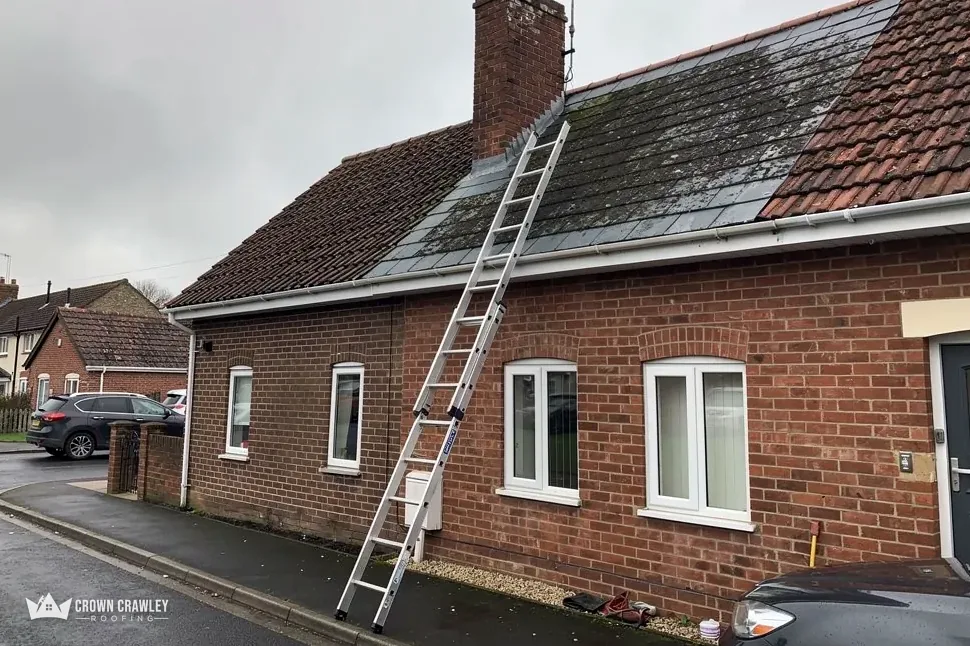
On many jobs, getting materials to the house takes as much effort as fitting them. The history page for Ifold says the roads within the estate are officially classified as footpaths or bridleways. For a roofer that raises ordinary practical questions. Can a flatbed with a pallet of tiles get down the lane? Where does the skip stand? Is there room for the scaffolder's lorry to unload, and can neighbours still get their cars in and out while it does? Those answers decide how many deliveries we plan and how big each one is.
Where does the scaffold go?
Wherever possible, scaffold stands on your own land, on a drive, a lawn or a hard-standing beside the house, and scaffolding on private ground needs no licence. If the only workable spot is on the road or path itself, permission has to be in place first, because section 169 of the Highways Act 1980 makes an obstructing scaffold on a highway lawful only under the highway authority's licence. West Sussex County Council asks for at least 10 working days' notice and charges £266 for one month. We settle with the scaffolder which of us files the application, and we build that wait into the start date so you are not told a day that the paperwork cannot meet.
Access words you may hear
- Scaffold licence
- Permission to put scaffold on a highway
- Highway authority
- The body that looks after the road
- Skip
- Container for stripped tiles and waste
- Hard-standing
- Firm ground where a lorry can stop