Roofers in Alfold

Roofs in a wooded Wealden village on the Surrey and Sussex border.

Alfold stands on Wealden clay by the Sussex border, with tile-hung cottages, timbered farmhouses and a conservation area. We look at the roof first, then give a single price in writing.

Dormer window with white cladding in a clay tiled roof

What older Alfold roofs ask of us

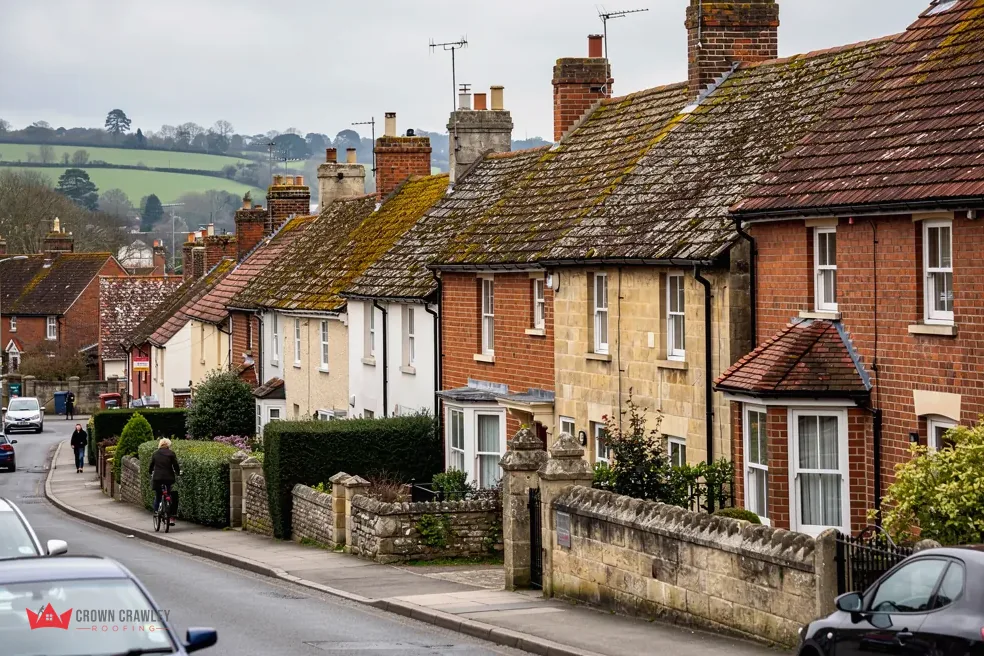
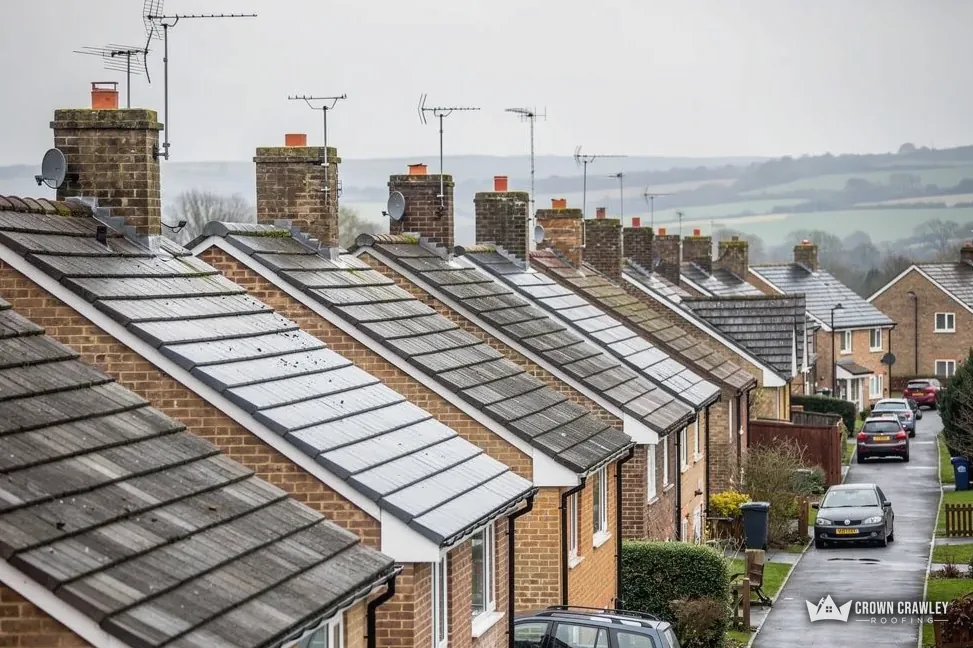
Village street of brick and render houses with old tiled roofs

Tile-hung cottages by the church lane

The Victoria County History found tile-hung cottages grouped around the church lane in 1911. Where hung tiles meet the roof, the junction needs sound flashing and a neat finish at the eaves, so we survey both wall and slope.

Tile hanging beneath a roof edge

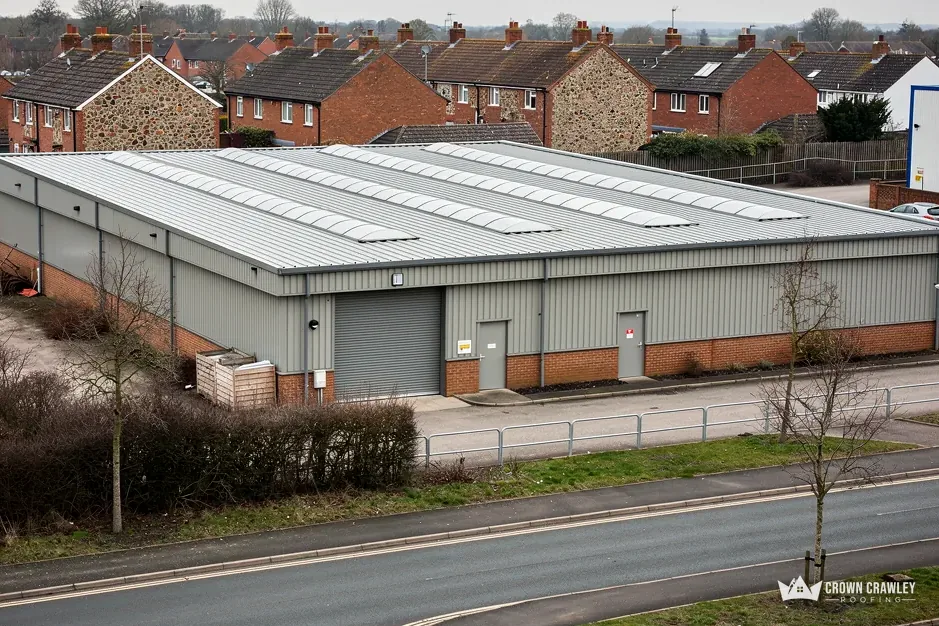
Large grey metal-clad industrial unit with long rooflights beside a road

Timbered farms and cottages

The same account called the parish rich in timbered farms and cottages, and Alfold House is a half-timbered house of the early 16th century. Old frames carry roofs that have moved, and we sight along the ridge before anything else.

Timber-framed house with tiled roof

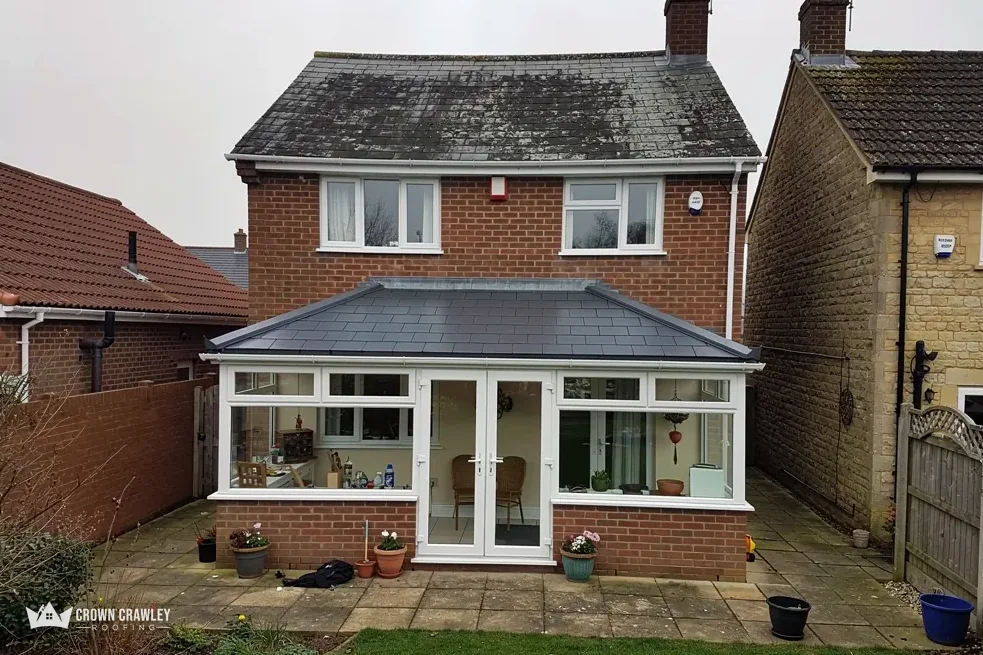
Rear of a brick house with a glazed extension and slate-effect roof

Stone slabs and oak tiles

St Nicholas's church roofs were covered with Horsham slabs, and its bell-turret and spire with oak tiles. Natural coverings like these call for a specialist hand, and we tell you straight when a job needs one.

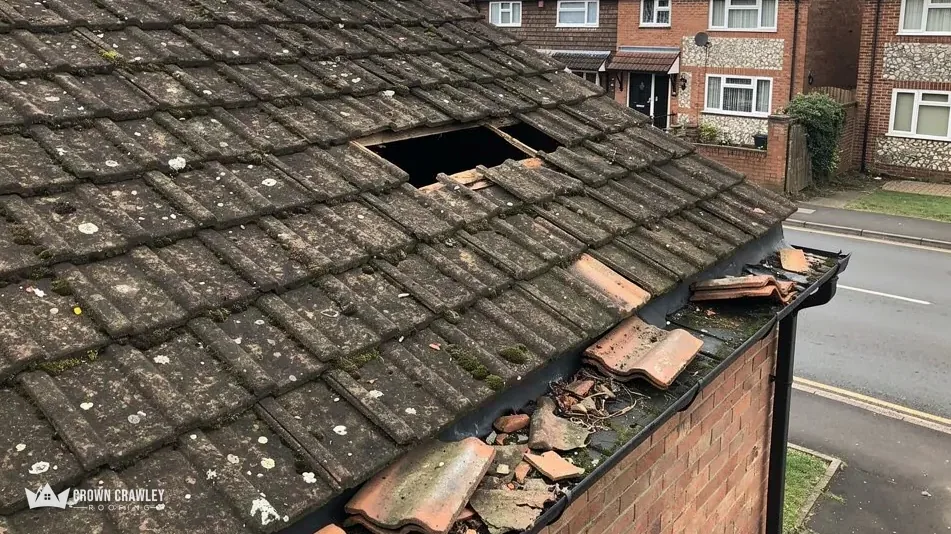
Old stone and clay roof covering

Alfold, on the Surrey and Sussex line

Map of Alfold and the neighbourhoods around it, with Crawley for reference.

Alfold is a village on the Surrey-Sussex border, on Wealden clay, and the Victoria County History described it in 1911 as largely wooded.

Distance
18.7 road miles from Crawley, to the west
Drive
About 29 minutes
Council
Waverley Borough Council and Surrey County Council
Planning authority
Waverley Borough Council
Conservation area
Alfold Conservation Area (designated 1970)
Conservation area appraisal
Adopted by Waverley, 16 February 2016
Get a free quote

Alfold roof notes

Clay, woodland and tile-hung walls

Three chapters on the village's tile-hung cottages, the stone and oak tiles on its church, and what Waverley's rules mean for a bigger job.

Stage 01 · Background

Tile-hung walls and woodland edges

Alfold is a rural parish on clay, ringed by trees, where walls as well as roofs are covered in clay tile.

The Victoria County History of 1911 describes Alfold as a rural parish on the Surrey and Sussex border, about 2,974 acres, lying on Wealden clay and largely wooded. It records glass-houses that once stood in Sydney Wood, and Aubrey's sight of French glass-makers' graves in the churchyard, long after the industry had died out. Today that history has left us a village of scattered farms, cottages and a church lane, and a good deal of tree cover around them. Both shape the way roofs age here, so we pay as much attention to the surroundings of a roof as to the tiles themselves, and we ask when the gutters were last cleared before we pick up a ladder.

What is tile hanging, and why does it matter to the roof?

Tile hanging means fixing small tiles to the face of a wall, hooked over battens, so that the wall sheds water like a roof. The same account says tile-hung cottages are grouped around the church lane. A roofer cares because the wall and the roof meet along a line that has to shed water in two directions at once. At that junction we check the flashing, the lowest course of hung tiles and the way the eaves tuck in. A small gap there can let water run behind the wall tiles and into the timber.

Where we look in Alfold

Wall junction
Hung tiles meeting roof edge
Gutters
Free of leaves and seed
Moss
Patches holding water on tiles
Frame
Ridge straight, rafters dry
Branches
Clear of tiles and fascia
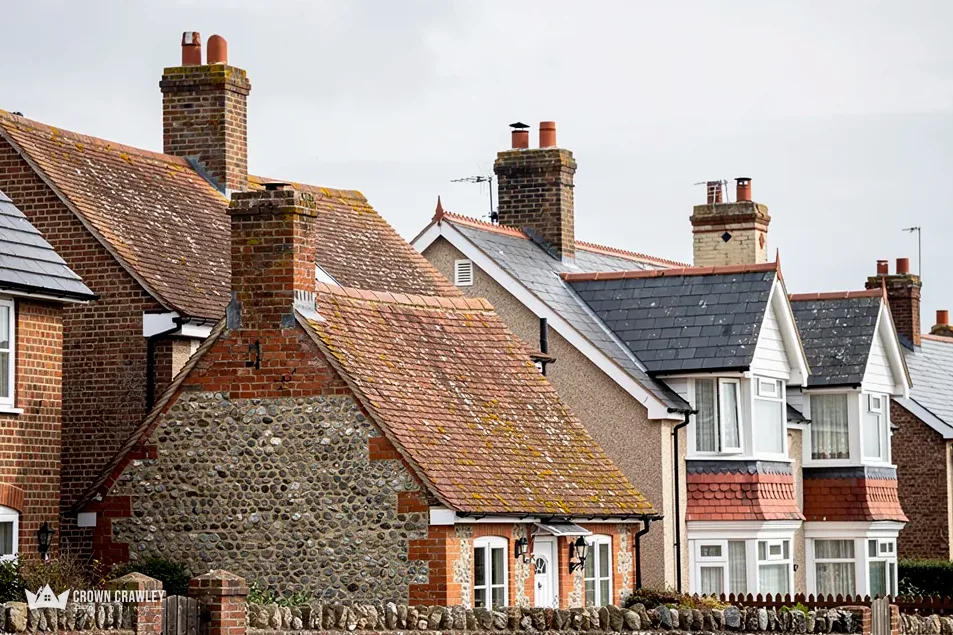
Flint and brick houses with clay tiled roofs and chimneys

Do trees around a roof make a difference?

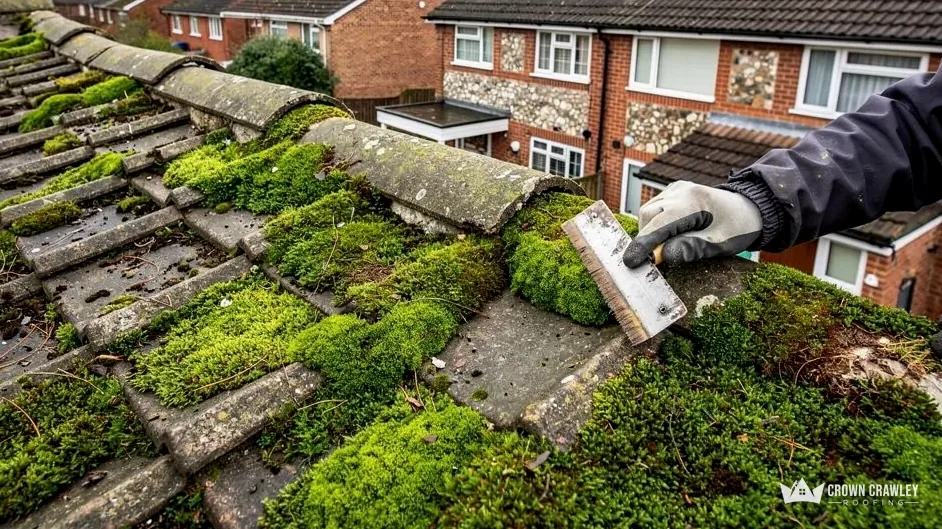
They make work for the gutters. Leaves and seed collect in the channel, block the outlet and send water over the edge and down the wall, which is hard on a tile-hung house. Shade also encourages moss, and a thick cushion on a tile holds moisture against it. Checkatrade's roof cleaning guide, with a table dated April 2026, puts typical UK cleaning at £8.50 to £14 per m². Marley advises against high-powered jet washes because they can damage tiles, so we clean by hand and by brush. Our roof cleaning and moss removal page explains what we do, and our gutters, soffits and fascias page deals with the channels.

On a roof near trees we also look for branches that rub against tiles or fascia, since movement in the wind can chip an edge and loosen a nail. A branch that overhangs is a job for a tree surgeon, but we can point to the exact limb in a photograph.

Terraced street with new grey tiled roofs

Stage 02 · Materials

Stone, oak tiles and older coverings

Alfold's church shows coverings that most roofers see rarely: stone slabs on its low roofs and oak tiles on the spire.

St Nicholas's church, according to the Victoria County History, has walls of Bargate stone rubble, a bell-turret and spire covered with oak tiles, and a timber bell-frame and spire framework dated to about 1500. The chancel, aisle and porch roofs were covered with Horsham slabs. These are not materials that appear on a modern estate, and they show how varied the village's roofs may be. The church is a parish matter. The same range of materials, though, can turn up on older buildings elsewhere, and it helps to know what we are looking at, which is why we name the covering on the survey notes before quoting for any repair.

Where an old cottage roof is hand-made clay, any published life figure is a rough guide at best. A roof can look rough and still be sound beneath, or look tidy over rotten battens, so the condition of each tile, the battens and the nails tells us more than a date, and the photographs show you the same evidence we see. That evidence is what the written price rests on, whichever covering is underneath.

Old roofing terms

Horsham slab
Stone slab laid as roofing
Oak tiles
Thin oak pieces laid like tiles
Bell-turret
Small tower that holds bells
Tile hanging
Tiles fixed upright on a wall

Can a general roofer work on stone slabs or oak tiles?

Sometimes, and sometimes not. Our work centres on tiles, slates, flat roofs, lead, gutters and the roofline. A stone-slab or oak-tile roof may be better served by a specialist, and when a survey shows that, we explain why plainly, rather than taking on a job that would not be done properly. What we can do is look at the roof, photograph the condition, make it weathertight where that is sensible and tell you what a specialist would need to see. Our pitched roofing page lists the coverings we work with.

What about timber coverings near trees?

Wood holds moisture, and a roof in shade dries slowly. Moss, damp leaves and a lack of air movement will shorten the life of any natural covering. The cure is regular clearing and gentle cleaning, not heavy washing. That is why we ask for a ground-level photograph, and the date of any earlier repair, before we climb up.

Some old coverings are best left to a specialist, and a straight answer saves your money.

If you own an older Alfold property and you are unsure what it is covered with, send us a clear photograph taken from the ground. Tile, slate, stone and oak tile look quite different up close, and we will tell you which of them we think it is and whether it falls within the work we carry out ourselves.

Stage 03 · Permissions

Alfold Conservation Area and Waverley's rules

Waverley Borough Council designated the Alfold Conservation Area in 1970 and extended it in 1989, so an older roof here may sit inside its boundary.

Waverley Borough Council gives the Alfold Conservation Area as designated in 1970 and extended in 1989, and its appraisal was adopted at Full Council on 16 February 2016. Whether your house stands inside the boundary is a question for the council's planning team, and it is worth asking before you choose a covering.

Does the conservation area change what I can do to the roof?

It changes how carefully you approach it. Mending a roof with the same tiles, ridge and verge details raises few questions. A new covering, a different ridge or a rooflight facing the lane is a matter to raise with Waverley first. The council's records do not name an Article 4 direction for Alfold, so ask the planning team what applies at your address. Our answer on re-roofing in a conservation area covers the usual points. A written specification from us, naming each tile and fitting, gives you something exact to show them.

Checks for an Alfold re-roof

Planning
Waverley Borough Council
Conservation area
Designated 1970, extended 1989
Building control
Waverley Building Control
Highway licence
Surrey County Council, £208
Booking
Request by 4pm for next day
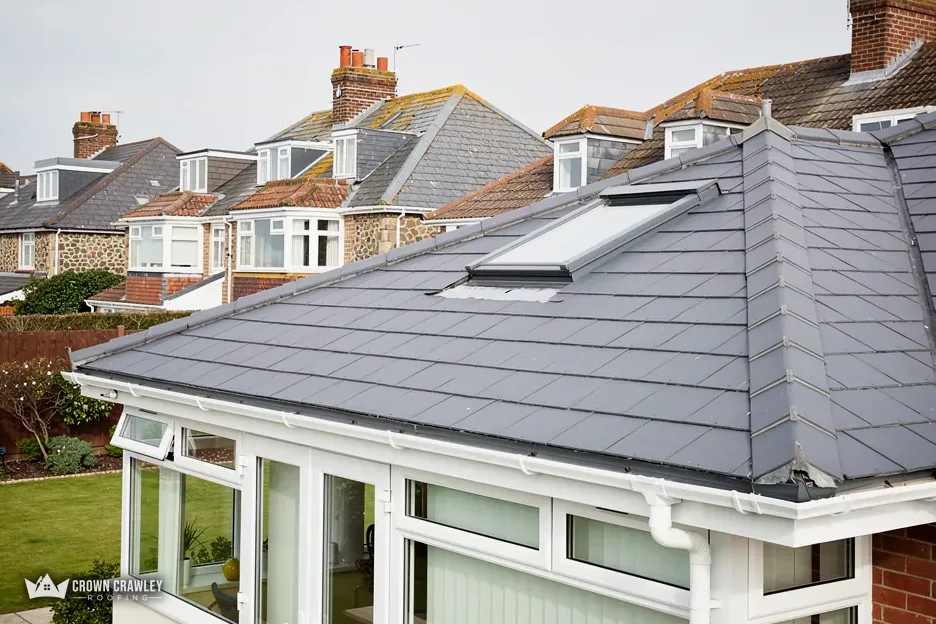
Slate-effect roof over a conservatory on a suburban house

Who handles building control here?

Waverley Borough Council runs its own building control, and its page says you can book next day inspections if you ask by 4pm the day before. The Planning Portal's thresholds for work that can go ahead without an application are under 25 per cent of the building envelope and under 50 per cent of the roof, plus a separate 15 per cent weight test for any new covering. If a survey shows a larger scheme, we ring Waverley's team before a start date is promised to you.

What does the scaffold need?

On the highway, Surrey County Council wants a licence application at least 10 working days ahead and charges £208 for each 28 days. Nothing is needed on your own land, so a drive or garden with room for the poles keeps the paperwork down. We check at the survey whether the poles can stand on your side of the boundary. Woodland nearby also makes roosting bats a real possibility, and the law protects their roosts even when the bats are away; any sign found during stripping stops work on that section until we have talked the options through with you. If a wide, heavy roof stripped of its slabs or tiles needs extra care, we plan that with the scaffolder at the same time. To start, send us your road, the house name and a photograph of the roof taken from the ground.

Alfold roof questions

Can you repair the roof where hung tiles meet it on an Alfold cottage?

Yes. That junction is where we start on a tile-hung house. We check the flashing, the lowest hung tiles and the eaves, photograph each, and repair what has failed in the same style. Water that gets behind wall tiles can reach the timber, so a small gap there is worth fixing early. The written price follows the survey.

Can I change the tiles on an Alfold roof near St Nicholas's church?

Matching tiles are the simple case. A new covering is different if the house lies within the Alfold Conservation Area, designated in 1970 and extended in 1989, and the boundary map is Waverley Borough Council's to confirm. Send your address to the planning team and keep the reply with your quote. We will wait for it before any covering is ordered for the job, and we will tell you if the answer changes what we plan to fit.

Do you work on Horsham slab or oak tile roofs?

We look at them and report on their condition with photographs, but stone slab and oak tile roofs often suit a specialist better than a general roofer. If the survey shows that, we explain why and what the specialist will need to see. For tiles, slates, flat roofs, lead and gutters we price the work ourselves.

Do trees near my Alfold roof cause damage?

They cause wear more than damage. Leaves block gutters, shade encourages moss and branches can chafe tiles or the fascia. Clearing channels, brushing off moss by hand and cutting back limbs through a tree surgeon all help. We photograph the problem spots during the survey so you can see exactly which limbs, gutters and tiles need attention, and in what order.

A survey for your Alfold roof

Tell us the road, the house name and whether the walls are tile-hung, then send a ground-level photograph of the roof for the survey.

01293 974253

10-year workmanship guarantee, in writing.

Call Get a free quote