Roofers in Cranleigh

Clay-country roofs, tile-hung houses and listed buildings around Cranleigh Common.

Cranleigh was spelt Cranley until the name changed to avoid postal and railway confusion with Crawley. It stands on Wealden clay once dug for brick and tile, and we survey before we price.

Dormer windows on a weathered tiled roof facing open fields

What Cranleigh homes are roofed with

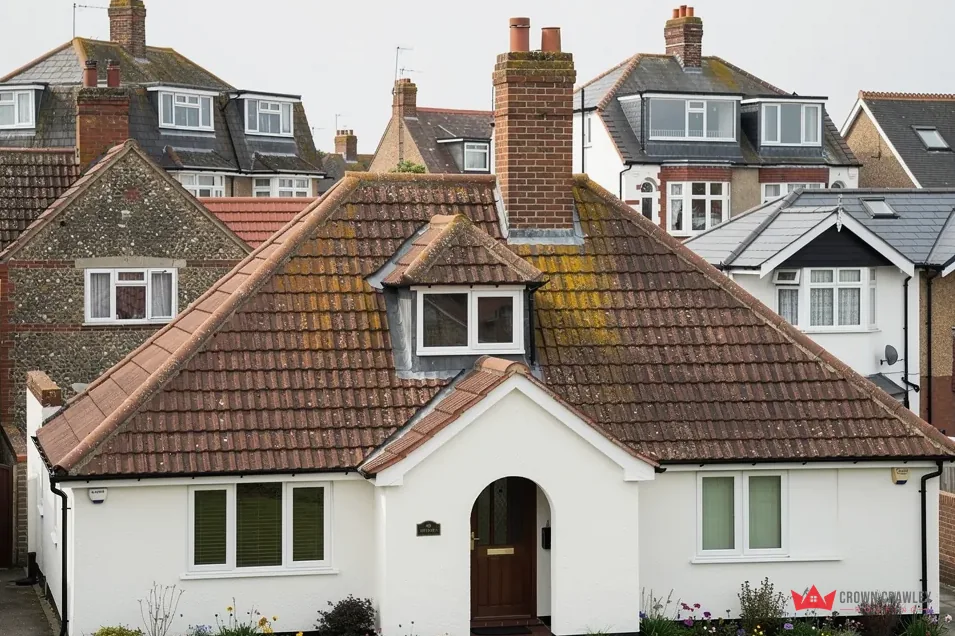
White rendered bungalow with a hipped tiled roof and dormer

Tile-hung gabled houses

In 1911 the Victoria County History recorded gabled and tile-hung houses near the church, including the post office. Where hung tiles meet a gable, the verge and the flashing both need checking together.

Tile-hung gable above a pitched roof

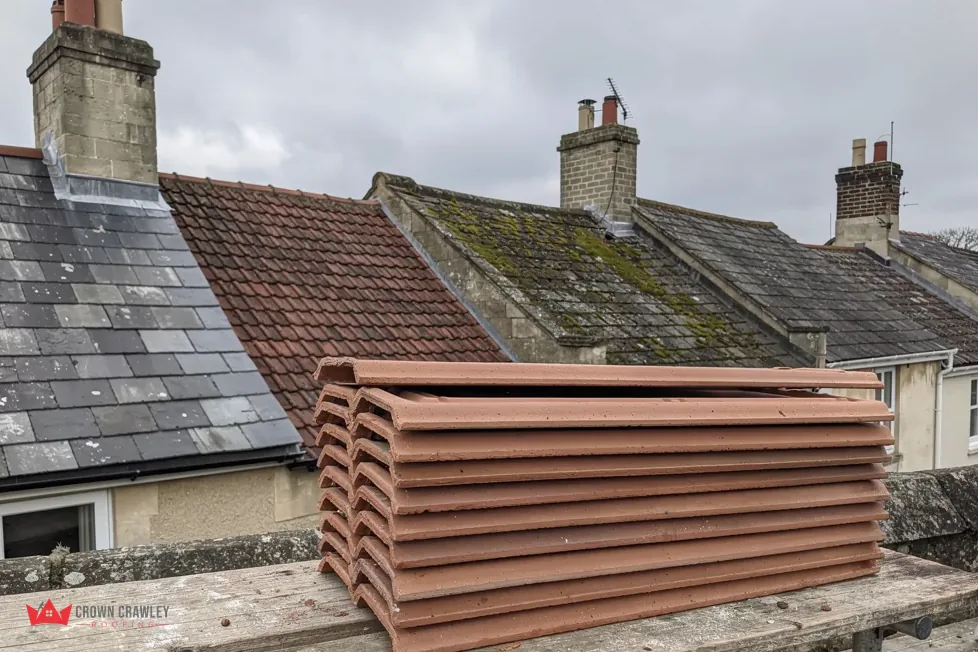
Stack of clay ridge and hip tiles on a flat roof

Clay, brick and tile

The same record notes extensive brick and tile works on the clay. No particular house can be assumed to have local clay tiles, but a clay covering is worth recognising at the survey, so any replacement tile matches.

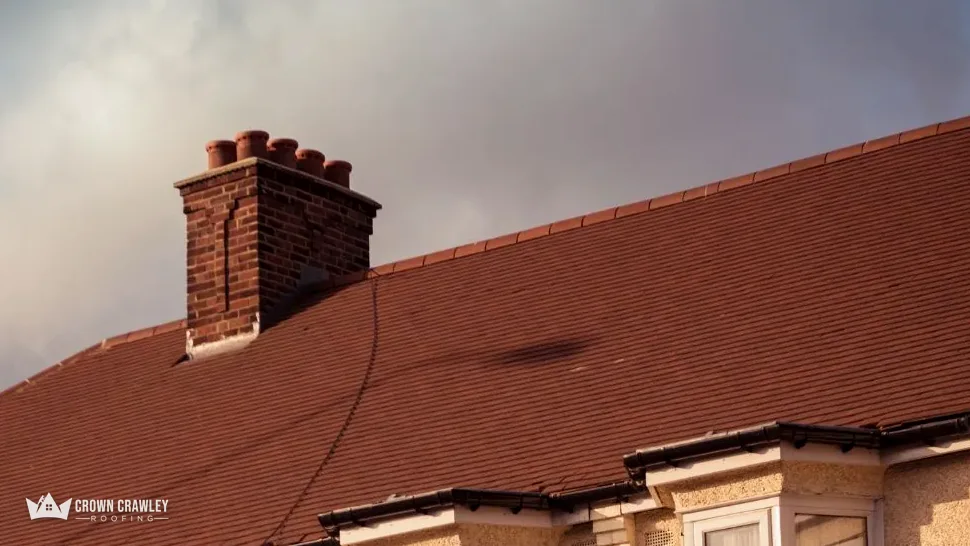
Clay tiled roof with brick chimney

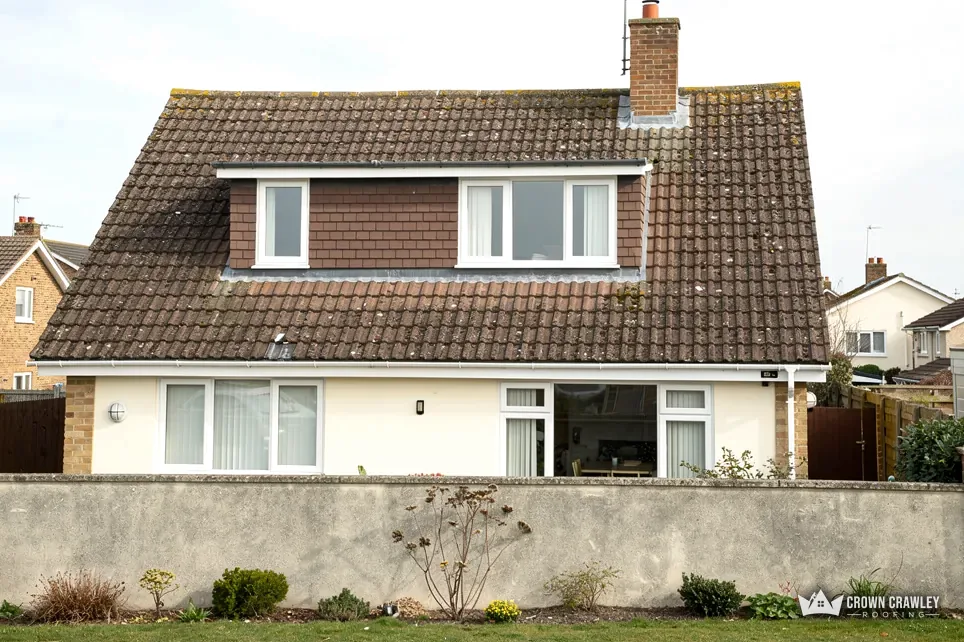
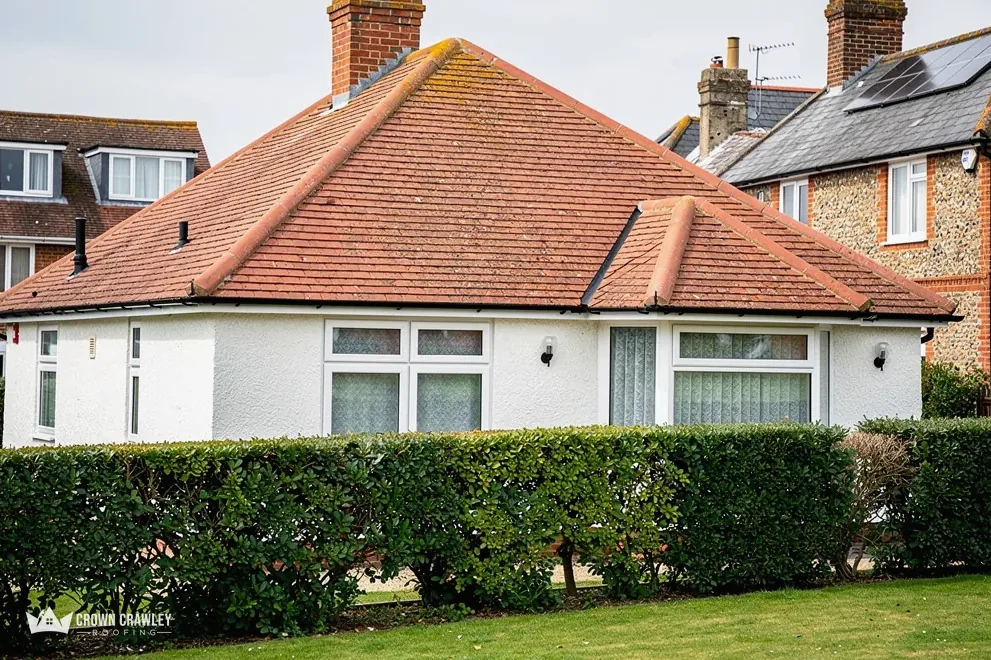
Dormer bungalow with a brown tiled roof and white rendered walls

Church and High Street listings

Cranleigh has listed buildings, among them the Grade II* church and Grade II houses along the High Street. Works that affect a listed building's character need listed building consent, so we ask before we plan.

Old tiled roof on a village street

Cranleigh, on the clay below Winterfold Hill

Map of Cranleigh and the neighbourhoods around it, with Crawley for reference.

Cranleigh is a large Surrey village on the Wealden clay below the greensand of Winterfold Hill, centred on Cranleigh Common.

Distance
20.3 road miles from Crawley, to the west
Drive
About 33 minutes
Council
Waverley Borough Council and Surrey County Council
Planning authority
Waverley Borough Council
Conservation area
CRANLEIGH
Population
10,421 (Census 2021, built-up area)
Building control
Waverley Building Control
Get a free quote

Cranleigh survey diary

Reading a roof in clay country

Three short chapters on the tile-hung and brick-and-tile houses of Cranleigh, the listed buildings in its centre, and the Waverley and Surrey rules behind a bigger job.

Stage 01 · First look

Brick, tile and tile-hung gables

Cranleigh sits on clay that once fed local brick and tile works, so clay coverings and tile-hung gables are worth looking for.

Cranleigh is a large village about 8 miles from Guildford, on the Wealden clay below the greensand of Winterfold Hill. The British History Online account of Surrey in 1911 recorded extensive brick and tile works on that clay, and a few old-fashioned gabled and tile-hung houses near the church. It does not say what any house on your road is covered with today, so we treat that history as a reason to look closely, not as an answer.

What should a Cranleigh tile-hung gable have on show?

A tile-hung gable has two weak points. One is the verge, the edge of the roof where it runs up the gable wall, which is either bedded in mortar or capped with a dry-fixed system. The other is the line where wall tiles meet roof tiles. Bedding cracks first, and hung tiles that have slipped let rain run down behind them. From the ground we can see slipped tiles and open joints, and on the survey we photograph both close up so you can see how far the problem goes.

On a Cranleigh tiled roof

Tiles
Whole, flat and not flaking
Gable
Hung tiles tight to the verge
Ridge
Bedding firm, fixings present
Flashing
Sealed at stack and wall
Gutter
Joints dry, no sagging
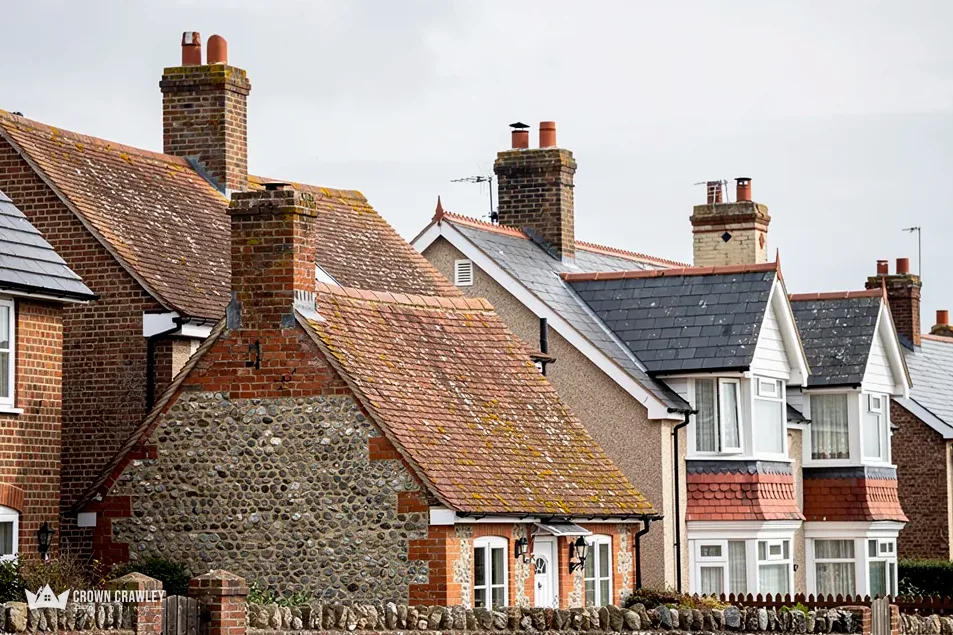
Flint and brick houses with clay tiled roofs and chimneys

How long should a Cranleigh clay roof last?

Not by age alone. For clay tile, the Building Research Establishment gives a minimum life of 60 years, which is a floor and not a promise about any one roof. Ridge mortar, nails and underlay usually tire before the clay does. Underlay is the sheet under the tiles, and a perished sheet shows up in the loft as daylight at the laps or damp timber, long before a tile fails from above. We look at it from inside the loft as well as from the ladder, because the two views rarely tell the same story.

What do slipped and broken tiles cost to put right?

Checkatrade's October 2026 guide puts the typical UK cost at £170 to £500 for up to five tiles, from a simple job to one needing scaffold. Our written price is one total, and it depends on access, the number of tiles and whether the bedding or battens are involved. Battens are the timber laths the tiles hang from, and we check a few wherever a tile has gone, because a soft batten holds a replacement tile badly.

If tiles are slipping across more than one slope, the pitched roofing page covers how we repair or renew a tiled roof. For the ridge, hips and verges together, see dry ridge and dry verge. Either way, you receive the photographs of your own gable and slopes with the price, and a plain note of anything that can wait for another season.

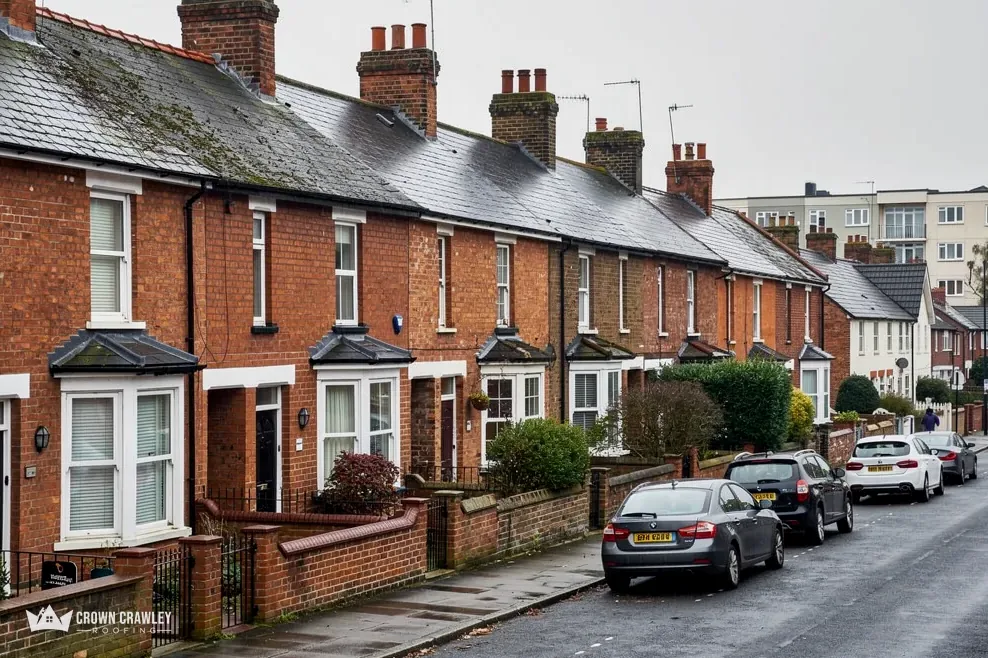
Victorian brick terrace with bay windows and parked cars

Stage 02 · Listed roofs

Listed buildings in the village centre

Cranleigh's church and several High Street houses are listed, and a listed roof is looked after differently from an ordinary one.

On the National Heritage List, Historic England records the Church of St Nicolas as Grade II*, first listed on 9 March 1960 under entry 1044371. It also lists 121 and 123 High Street and 35 High Street as Grade II. The 1911 account says the church roofs were then partly covered with Horsham slabs and that the conical tower roof was shingled. Those details show how varied a village roof can be, and how much depends on who built it and when.

When does a Grade II High Street house need consent for roof work?

Under the law on listed buildings, listed building consent is needed for alterations that would change what makes the building special. Where exactly the line falls on a given repair is for Waverley Borough Council's planning team, not for the roofer, and a clear written description helps them answer. Our re-roofing a listed building answer is our longer take on the question. If you are unsure which side of the line your repair falls on, ask before work is planned, and bring our survey photographs with you.

Cranleigh heritage terms

Grade II*
Particularly important listed building
Listed consent
Permission for works affecting character
Flaunching
Mortar cap holding a chimney pot
Valley
Inner angle where slopes drain

What does a survey of an old roof look like?

We go slowly. We photograph every slope, the ridge, the chimney and the valley, which is the inner angle where two slopes meet and drain. Old roofs are often a patchwork of repairs, with different tiles and mortars from different decades, and a photograph of each patch is more use to you than our opinion of it. We then say which parts we would repair, which we would leave alone, and what we cannot judge until a tile is lifted.

Chimneys on older houses earn the same attention. Flaunching, the mortar cap holding the pot, cracks in frost, and a cracked cap lets water straight down the flue. Checkatrade's October 2026 guide gives around £750 as an average for repointing a chimney, and rebuilding above the roofline runs from £1,000 to £3,500. The written price we send is for your stack only, after we have seen it.

The same approach applies to lead flashings in a listed building, where a repair may need to match what is already there. Our chimney repairs page shows how we deal with stacks, pots and flashings together, and the survey notes record the lead that is sound as well as the lead that is not.

Stage 03 · Permissions

Waverley, Surrey and the scaffold

Part of Cranleigh lies in a conservation area, and the planning, building control and highway questions each have a different Surrey authority.

Keeping the roof exactly as it looks now is the simple end of the scale. Bigger work brings in three different bodies, and it helps to know which is which before a start date is set.

How does the Cranleigh conservation area affect a re-roof?

The national dataset on planning.data.gov.uk records that part of Cranleigh lies in the conservation area, with boundaries supplied by the council, so the village is only partly covered. Waverley Borough Council's planning team can say whether your address is within it. If it is, put your question to them before changing a roof's covering or look. If a full renewal is on the cards, the answers from the council go into the written price, so nothing about permissions comes as a surprise later.

What does Waverley Building Control look at?

Waverley runs its own service and takes next-day inspection bookings made by 4pm the day before. The Planning Portal puts the line for a re-roof at 25 per cent of the building envelope and 50 per cent of the roof, and it asks for approval whenever a new covering adds 15 per cent or more to the weight carried by the roof. Anything close to those figures goes to building control before we set a date.

Before a bigger Cranleigh job

Planning
Waverley Borough Council
Building control
Waverley Building Control
Highway
Surrey County Council licence
Licence fee
£208 per 28 day period
Notice
At least 10 working days
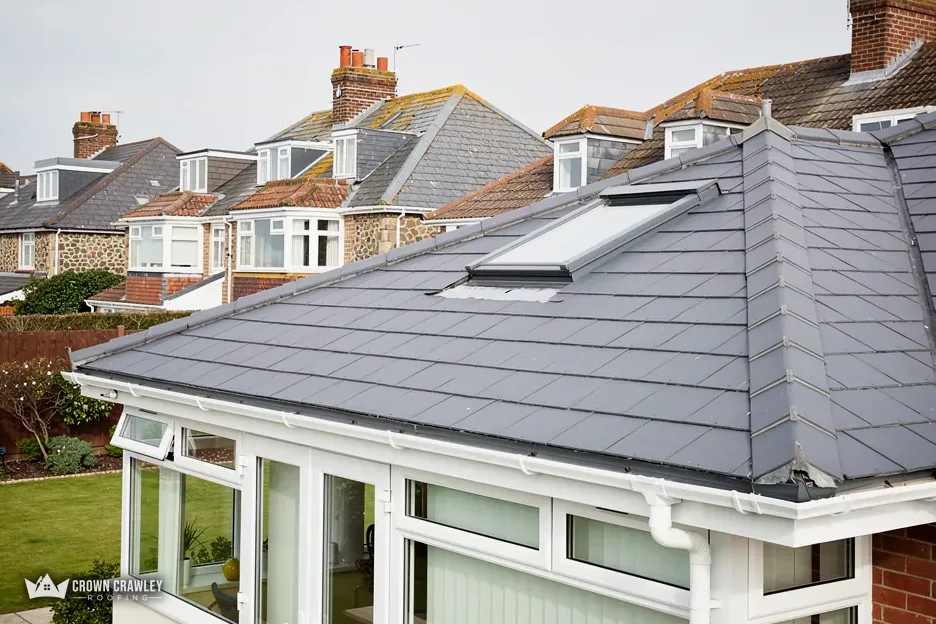
Slate-effect roof over a conservatory on a suburban house

What does a Surrey scaffold licence involve?

If the poles will stand in the road or on the footway, Surrey County Council has to grant a licence. The charge is £208 per 28 day period, and applications are asked for 10 working days ahead of the erection date. Scaffold on a private drive needs none. Surrey's page leaves open who applies, so we organise the licence together with the scaffolding contractor and let the notice period decide the first day. A short wait is normal, and it is better built into the plan than discovered halfway.

Every bat species in England has full legal protection, and roof repair is one of the activities government guidance flags as able to affect them. A tiled roof with open eaves or lifted hips is the kind of place signs can turn up, and if they do we stop that section and talk the options through with you. To start, take a photograph of the gable, tiled slope or stack that worries you and put your Cranleigh postcode in the form.

Cranleigh roof FAQs

How do you repair a tile-hung gable on a Cranleigh house?

We start at the verge and at the line where hung tiles meet the roof, because that is where water gets behind. Slipped tiles are refixed or replaced with a matching tile, the verge is rebedded with fixings or capped dry, and the flashing is checked. The survey photographs show each junction so you can see the problem.

My Cranleigh home is listed. Who do I ask before roof work?

Ask Waverley Borough Council's planning team, because they decide whether your repair affects the building's character and needs listed building consent. Describe the covering, the tiles and the mortar you want to use, and bring our survey photographs so the planner sees the roof as it is. A written description of the proposed repair, supplied by us on request, usually makes the answer quicker and avoids a second round of questions.

Does Surrey County Council charge for scaffolding outside a Cranleigh house?

Where scaffold occupies the footway or carriageway, a Surrey licence is needed at £208 per 28 day period, with 10 working days between application and start. Scaffold on your own drive or lawn escapes that. Surrey does not name the applicant, so ask us early and we will organise the licence together with the scaffolding contractor, then confirm the date.

Are Cranleigh's old brick and tile works a reason to expect clay tiles on my roof?

They are a reason to check, not to assume. The 1911 record mentions extensive brick and tile works on the clay, but it does not name the roofs of today's houses. We identify the covering at the survey, photograph it and, if tiles need replacing, match the profile and colour as closely as we can.

Ask for a Cranleigh quote

Photograph the gable, tiled slope or chimney you are unsure about, add your Cranleigh postcode to the enquiry form, and a survey visit follows.

01293 974253

10-year workmanship guarantee, in writing.

Call Get a free quote