Roofers in Peaslake

Roofs in a Surrey Hills valley, among listed houses and a church.

Peaslake is a hamlet in a valley between Holmbury and Ewhurst Hills, inside the Surrey Hills National Landscape. We check the approach, the roof and the rules, then write one price for the whole job.

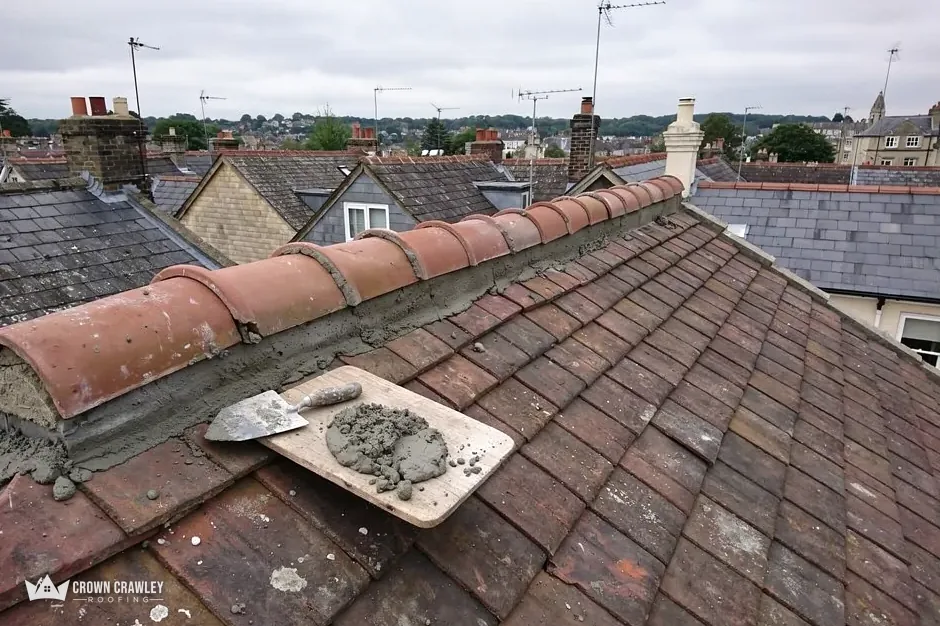
Ridge tile bedded in fresh mortar with a trowel resting on the roof

What sits over Peaslake's valley houses

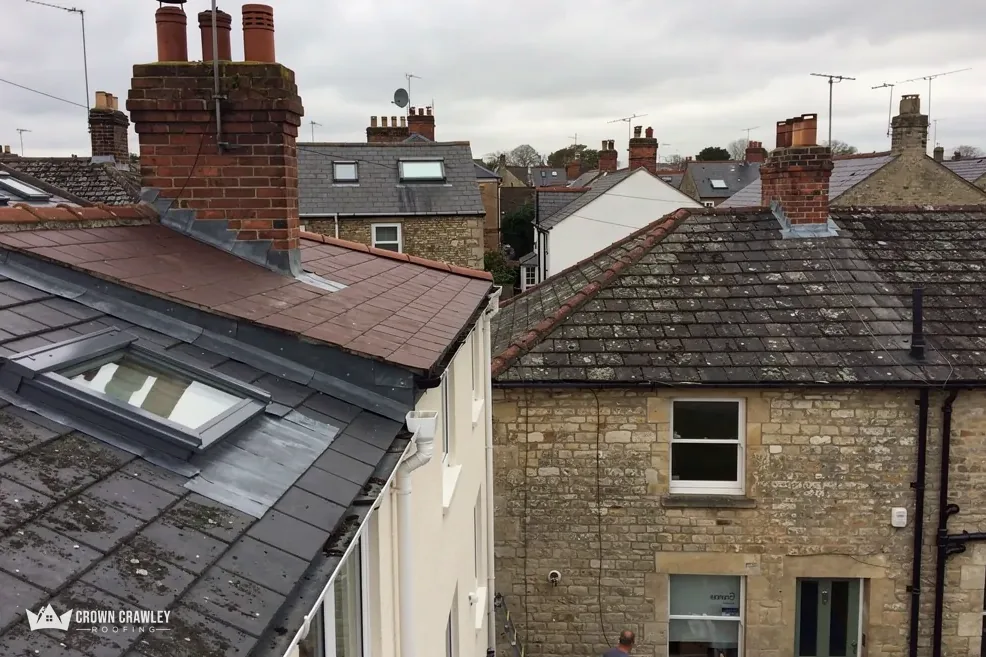
Slate and tiled roofs with a roof window beside a stone cottage

Homes in the Peaslake conservation area

Part of the hamlet lies in the Peaslake conservation area, so a re-roof that changes the look of a house raises planning questions. We confirm where your address sits first, and photograph the existing covering.

Tiled village roofs among trees

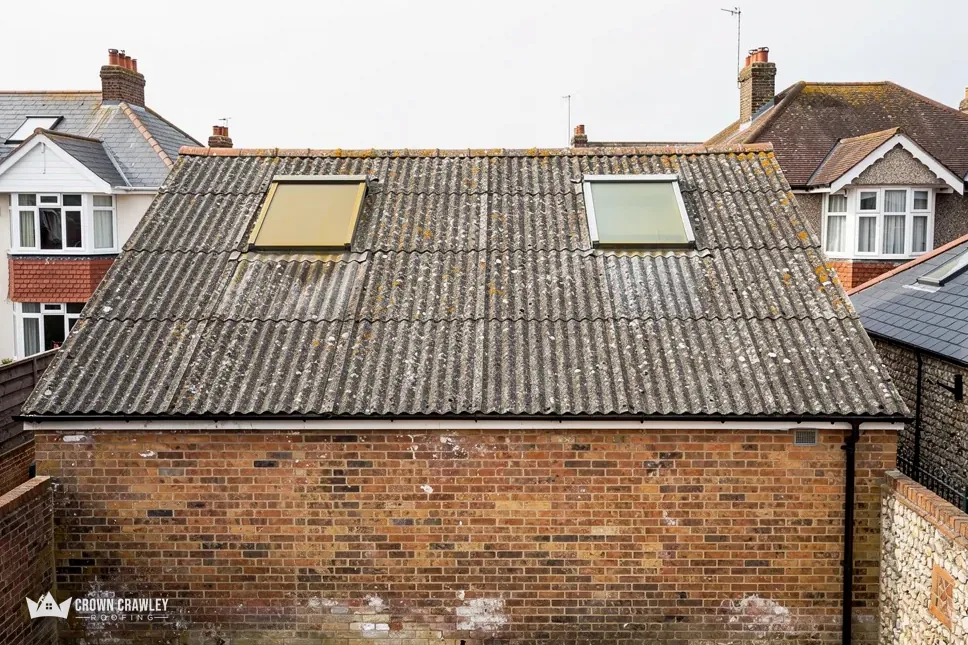
Corrugated cement garage roof with two rooflights above a brick wall

Listed houses: East View and Hazel Hill

East View and Hazel Hill, with its former stables to the rear, are both listed Grade II. A list entry can take in outbuildings, so we ask what applies to every roof on the plot.

Listed house roof with outbuilding

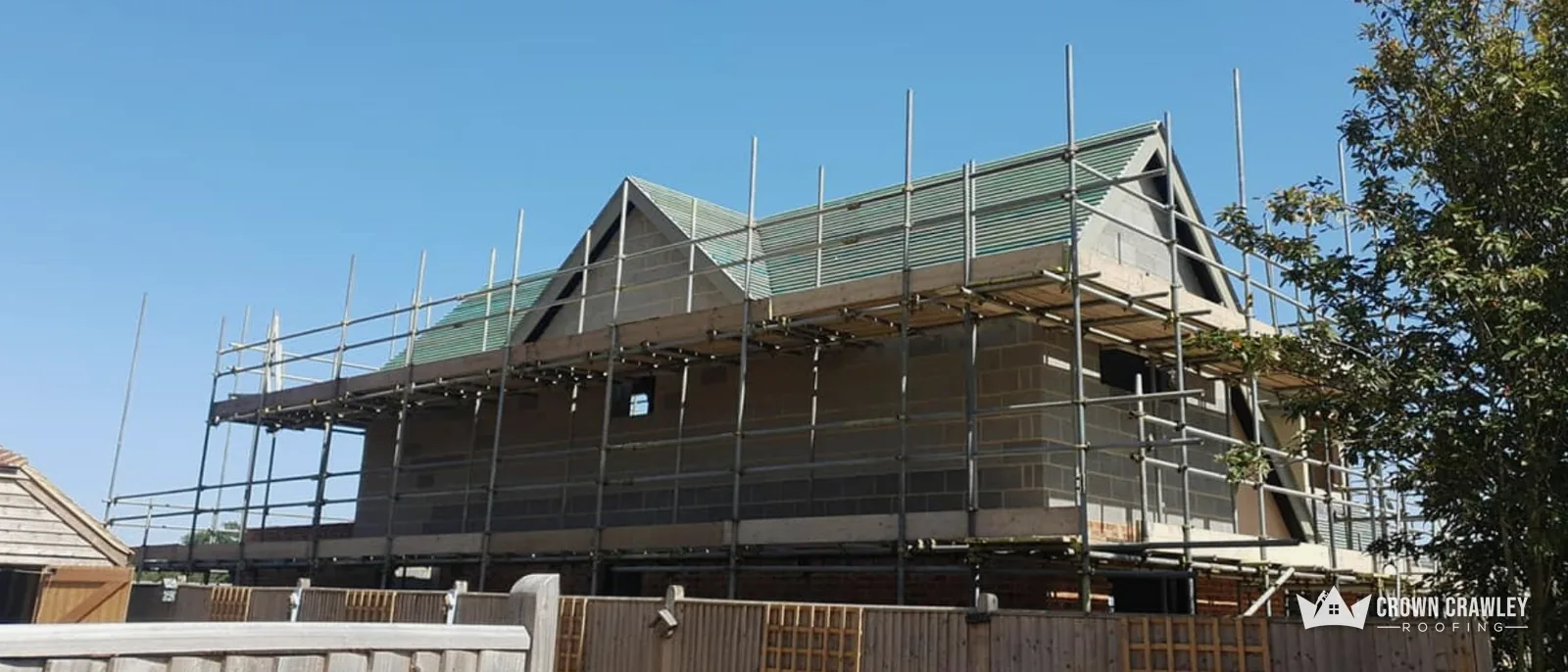
Scaffolded house with a new roof under construction

St Mark's and the chapel-of-ease story

St Mark's opened in 1889 as a chapel of ease to Shere and is now listed Grade II. Roofs near a church are worth a look for the same reason as any exposed edge: the wind reaches them first.

Church roof beside village houses

Peaslake, in the valley south of Shere

Map of Peaslake and the neighbourhoods around it, with Crawley for reference.

Peaslake is a hamlet of Shere, in a valley of the greensand hills between Holmbury and Ewhurst Hills, a little south of Shere itself.

Distance
19.4 road miles from Crawley, to the north-west
Drive
About 36 minutes
Council
Guildford Borough Council and Surrey County Council
Planning authority
Guildford Borough Council
Conservation area
Peaslake
Population
820 (Census 2021, Peaslake built-up area)
Landscape
Surrey Hills National Landscape
Get a free quote

Peaslake job notes

Roofs in the valley below two hills

Three short chapters on a hamlet reached by the valley, the listed houses and church within it, and the National Landscape and Guildford rules that follow from where it sits.

Stage 01 · Approach

A valley hamlet and its approach

The Victoria County History called the valley inaccessible and wild, and a roofer still starts by working out how materials get to the house.

The Victoria County History of 1911 describes Peaslake as a hamlet of Shere, set at the bend of the valley between Holmbury and Ewhurst Hills, and says that area formerly shared the inaccessibility and wild character of Felday. Modern roads have changed that, but the valley is still a place where a delivery lorry has to be planned for. St Mark's, the hamlet's church, opened as a chapel of ease to Shere in 1889.

Before work in Peaslake

Approach
Lane width and turning space
Drop zone
Where tiles and skip can stand
Ladder line
Firm, level ground at the wall
Neighbours
Shared drives and gates noted
Loft
Safe hatch and clear floor
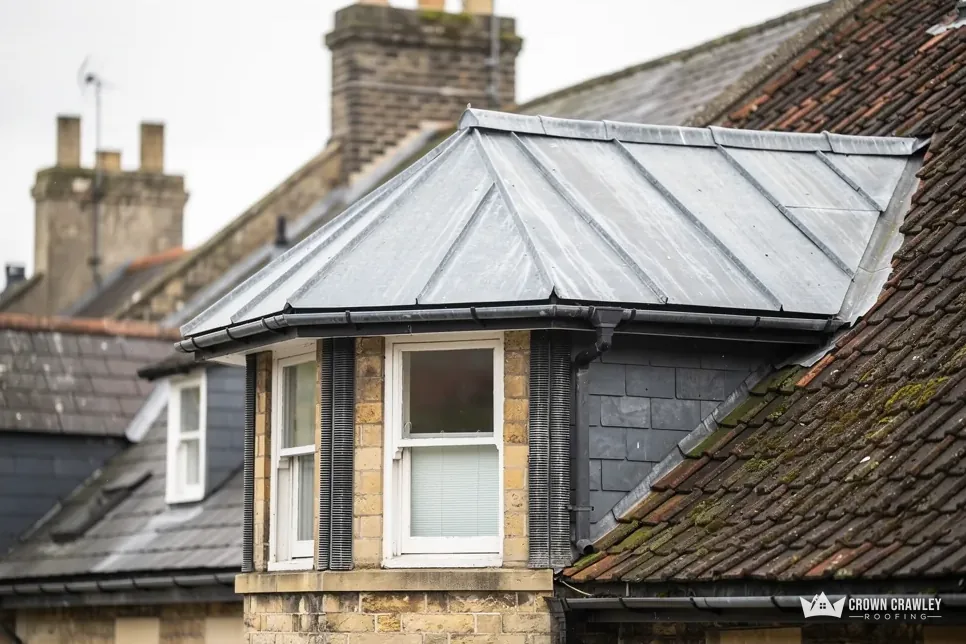
Lead-covered bay roof and chimney stack on a slate and tile roof

Why does the approach matter to a roof job?

Good tiling is no use if the materials cannot get to the house. Pallets of tiles, bundles of battens, rolls of lead and a skip for the old covering all need a place to stand. We cannot tell you what any particular lane is like, so the survey includes a look at the width of the way in, the space to turn and the ground where the pallets would sit. If a lorry cannot reach the plot, a smaller vehicle or hand-carrying is planned and the written price reflects it. We also ask about shared drives and gates, because neighbours who know a delivery is coming are far easier to work alongside. Once the job is booked, each morning we tell you what is planned that day and when the lane will be partly blocked, and when the day ends the roof is sheeted, the tools are cleared and the site is safe to walk past.

What does the roof itself tell us?

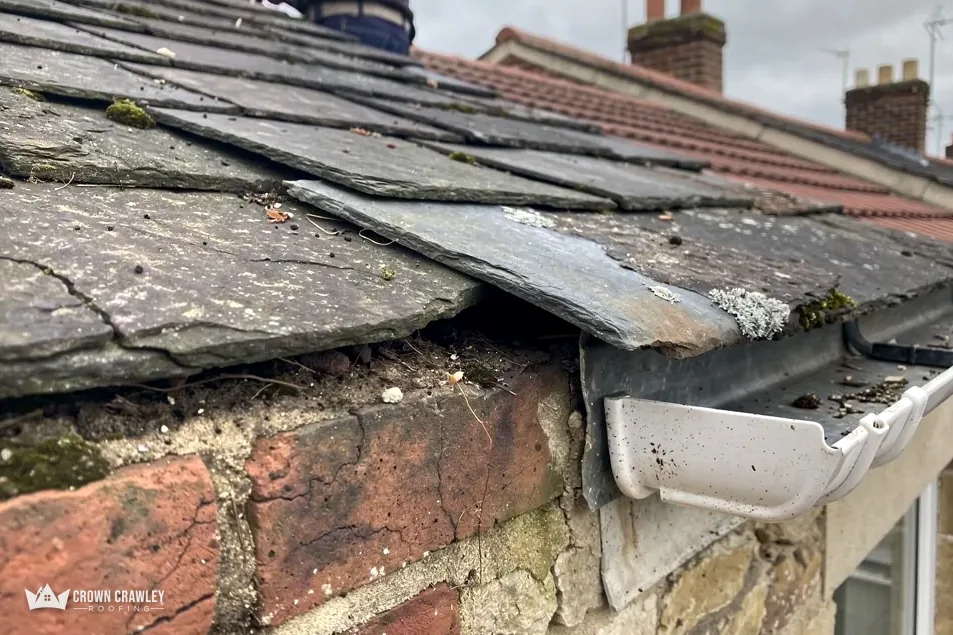
From the loft we look at the rafters, the angled timbers the battens are nailed to, at the underlay beneath the tiles and at any daylight at the eaves. Outside, we check the ridge at the very top and the hips, the sloping lines where two faces meet outward. We press on ridge caps, test the tiles near the verge, the tiled edge beside a gable, and look at the lead at chimney and wall junctions. Every fault is photographed for you, with a plain note saying whether mending or renewal is the honest answer.

Keep reading

The surveys are done the same way whatever the roof is made of, because the hamlet's history says nothing about what covers any house today. Our pitched roofing page sets out the re-fixing, re-battening and underlay jobs that a survey can lead to. If a repair is small, the written price will be small.

Row of suburban houses with tiled roofs below green downland

Stage 02 · Listed homes

St Mark's, East View and Hazel Hill

Peaslake's church and two of its houses are listed Grade II, and each listing raises its own question before anyone orders a tile.

The Church of St Mark has been listed Grade II since 4 March 1993. East View is Grade II, and so is Hazel Hill, whose entry includes its former stables to the rear. Together they cover a village church, a house and a house with outbuildings.

Does a listing cover the garage or stable block too?

It can. The Hazel Hill entry names its former stables, and that is a useful warning: a list entry can reach beyond the main house. If you own a listed house, ask the council whether the shed, the barn or the stable roof is part of the listing before you reroof it. We would rather ask Guildford Borough Council one more question than find out halfway through a job. Section 7 of the 1990 Act on listed buildings requires authorisation for works that affect a listed building's character. Our post on planning permission for roof work explains what to ask the council.

Listing terms in plain words

Grade II
Listed building of special interest
List entry
Official record describing the building
Faculty
Church of England consent for works
Outbuilding
Separate stable, store or garage

How does a listed roof repair differ from an ordinary one?

The repair itself is the same craft. A tile is a tile and a flashing is a flashing. The difference is in the preparation. We write down the tile type, size and colour, photograph the roof before we start, and describe the repair in words the council can follow. We avoid any change that adds weight or alters the line of the roof. Where the old look cannot be kept, the sensible step is to put our written description to Guildford's planning team before materials are chosen.

What about the church roof?

St Mark's is an Anglican church, and because the Church of England is exempt, its roof work goes through a faculty, not listed building consent. For a householder the point is simply that the parish handles its own church roof, and your own house follows the ordinary rules.

A list entry that names the stables is a hint to look at every roof on the plot.

Photographs matter more on a listed roof than on any other, because they show the council exactly what was there. We take wide shots of each slope and close ones of ridges, valleys, chimney flashings and any outbuilding roof. Being listed leaves a roof perfectly repairable. What it asks is that the repair protects what the entry describes. Our roof windows and skylights page covers what changes when an opening is added, a change any listed owner should put to the council first.

Stage 03 · Permissions

National Landscape, Guildford and Surrey rules

Peaslake lies within both the Surrey Hills National Landscape and a conservation area, so planning questions come up sooner than on a plain suburban street.

The Surrey Hills received its Area of Outstanding Natural Beauty designation in 1958, among the earliest in the country, and Peaslake lies inside it. National Landscape is the brand name now used for these areas. Add the conservation area, and the hamlet sits on land where planning rules for roofs are stricter than usual.

How does that land status touch a Peaslake roof?

Both a conservation area and a National Landscape count as article 2(3) land. A repair in matching tiles does not change the look of the house, and rarely troubles the council. A loft conversion with a dormer is a different matter, since dormers are treated more strictly on this land. Rather than repeat the rules here, we refer you to our article on planning permission for roof work, and to Guildford Borough Council's planning team, who decide.

Checking a Peaslake roof

Planning
Guildford Borough Council
Approvals
Guildford's own building control
Landscape
Surrey Hills National Landscape
Scaffold on road
Surrey County Council licence
Church work
Faculty, not council consent
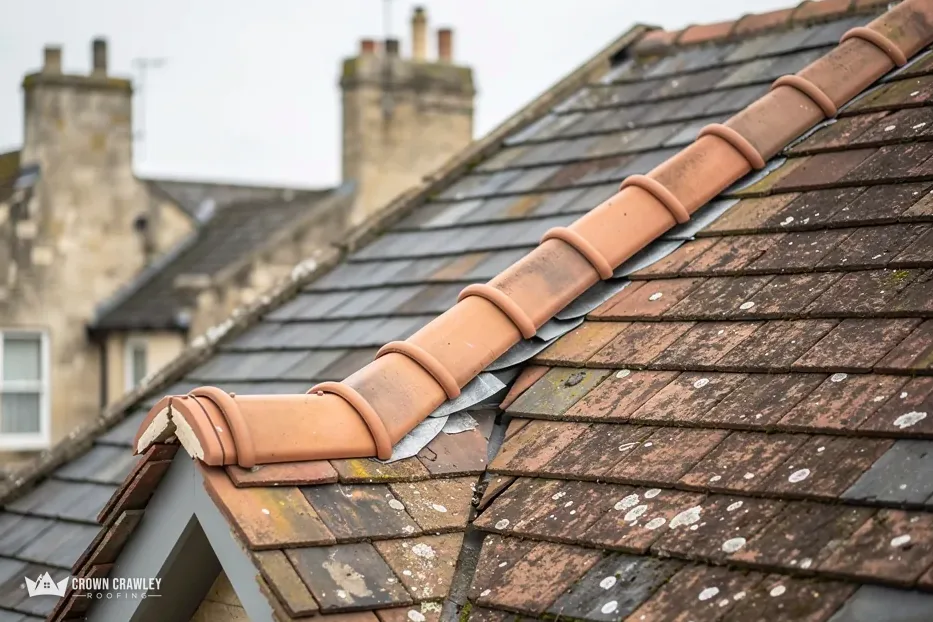
Clay ridge tiles along the hip of a weathered tiled roof

Does a Peaslake re-roof need building control?

Guildford Borough Council runs its own building control service. Re-roofing stays outside it while less than a quarter of the building envelope and under half of the roof are affected, which is how the Planning Portal frames its 25 per cent and 50 per cent limits. If the new covering would add 15 per cent or more to the weight, approval is needed whatever the area. Should the survey find that a full slope must be stripped, Guildford hears from us first. For the stages of a complete re-roof, see our roof replacement service.

Scaffold, wildlife and what to send

Surrey County Council's licence applies to scaffolding put up on the highway. The charge is £208 per 28 day period, and the county wants the application in at least ten working days before the start. The scaffolder and we decide who files it before any booking. Scaffold kept inside your plot needs no highway licence. Bats can roost in roofs, and the law protects bats and their resting places, so any sign of them in the loft stops the work until we have agreed what to do. Neighbours with a shared track may want a word from you before the scaffold goes up, and we will give you the dates to pass on. Send a photo of the roof or chimney you are worried about, together with your postcode, and say which lane you are on, so we know how the delivery will arrive.

Frequently asked in Peaslake

How do you get roofing materials to a house in the Peaslake valley?

We look at the way in at the survey: lane width, turning room and where pallets and a skip can stand. If a full-size lorry cannot reach the plot, we plan a smaller vehicle or hand-carrying and the single written price reflects it. We tell you the delivery day in advance and what we need clear.

Does the National Landscape restrict roof work in Peaslake?

Matching repairs are rarely affected, but changes such as a dormer face tighter rules in both the Surrey Hills National Landscape and a conservation area, so speak to Guildford's planners well before committing to one. Our planning post explains the questions to put to them, and we can describe a repair in words they will understand.

Which Peaslake roofs come under conservation area rules?

Those inside the Peaslake conservation area, which the national dataset shows covering part of the hamlet. Houses near the edge of the line are easy to misjudge, so check with Guildford's planning team using your address. If the work is a matching repair, file their answer alongside our photographs, in case the question comes up later.

Will scaffold on a Peaslake lane need a licence?

Only if poles and boards would occupy the carriageway or pavement itself. Surrey County Council charges £208 per 28 day period and asks for 10 working days' notice. The scaffolder and we agree beforehand who applies, then set the start around it. On your own drive or lawn there is no licence, and the survey shows which applies.

Start with a Peaslake survey

Send your Peaslake postcode with a photo of the roof, chimney or outbuilding that worries you, and we will arrange a survey.

01293 974253

10-year workmanship guarantee, in writing.

Call Get a free quote