Roofers in Holmbury St Mary

Listed cottages, a Grade I church and roofs below Holmbury Hill.

Holmbury St Mary is a small Surrey Hills village under Holmbury Hill, with a conservation area and several listed buildings. Our survey goes slope by slope before one written price is set.

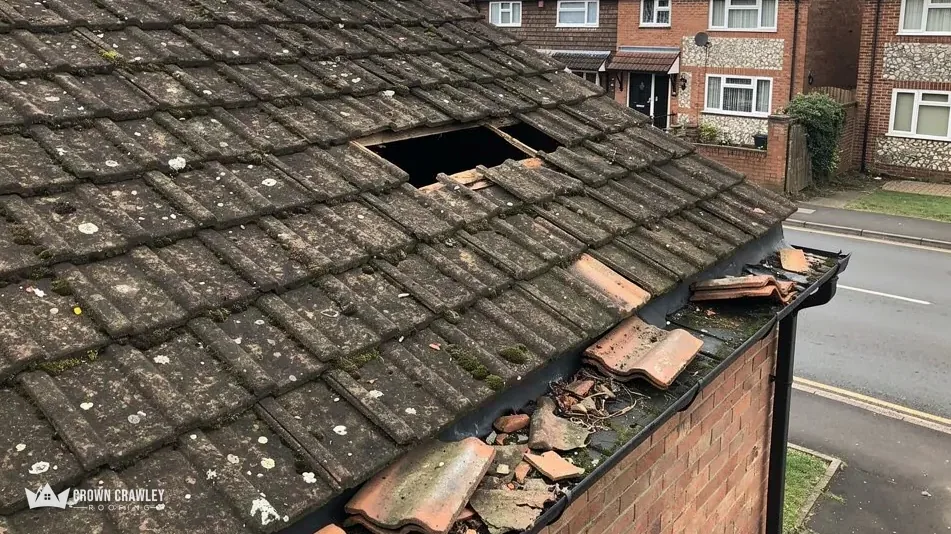
Storm-damaged tiled roof with the battens exposed and tiles on the ground

Holmbury St Mary roofs under the hill

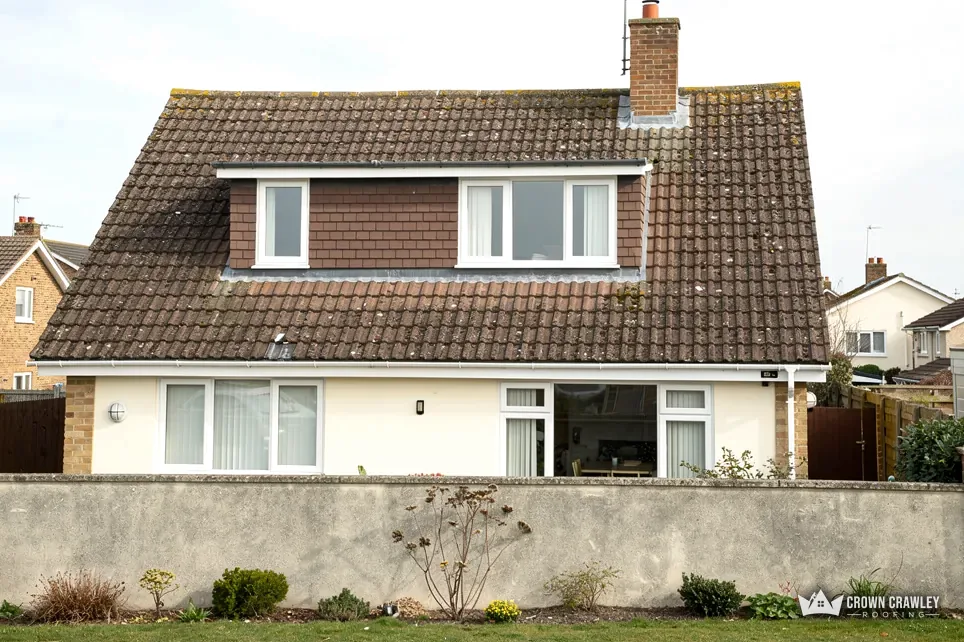
Dormer bungalow with a brown tiled roof and white rendered walls

Listed cottages

Chapel Cottage, the cottage adjoining it and Hilda Cottage are all listed at Grade II. For any listed house, we raise consent with Guildford Borough Council early, ahead of any quote that alters the roof's appearance.

Old cottage with tiled roof

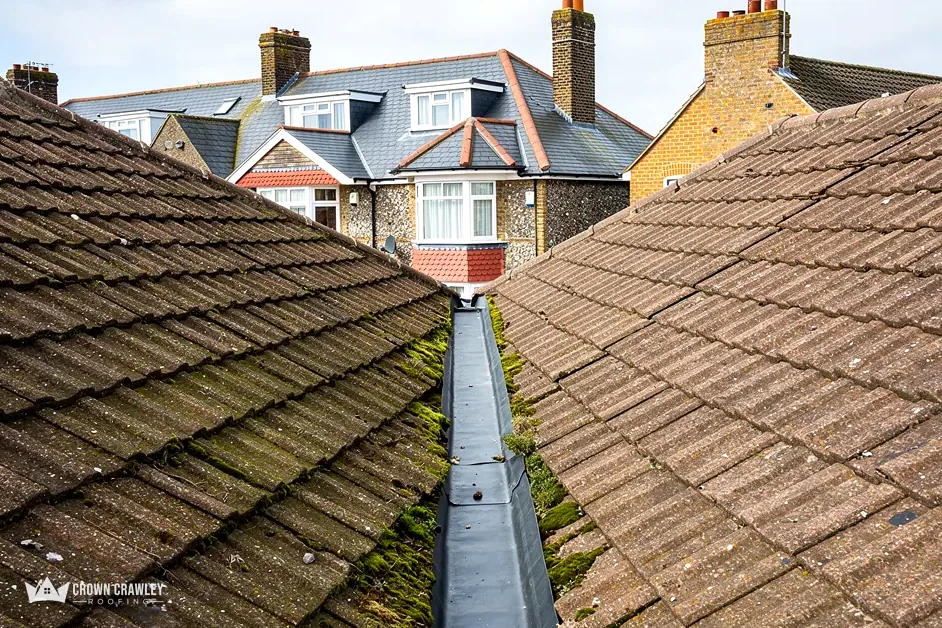
Lead-lined valley gutter between two tiled roof slopes

A Grade I church

The Church of St Mary is listed at Grade I. The consent route for a church depends on its denomination, which is a different process from the one a house follows, and the people who look after the building will know it.

Old stone church roof

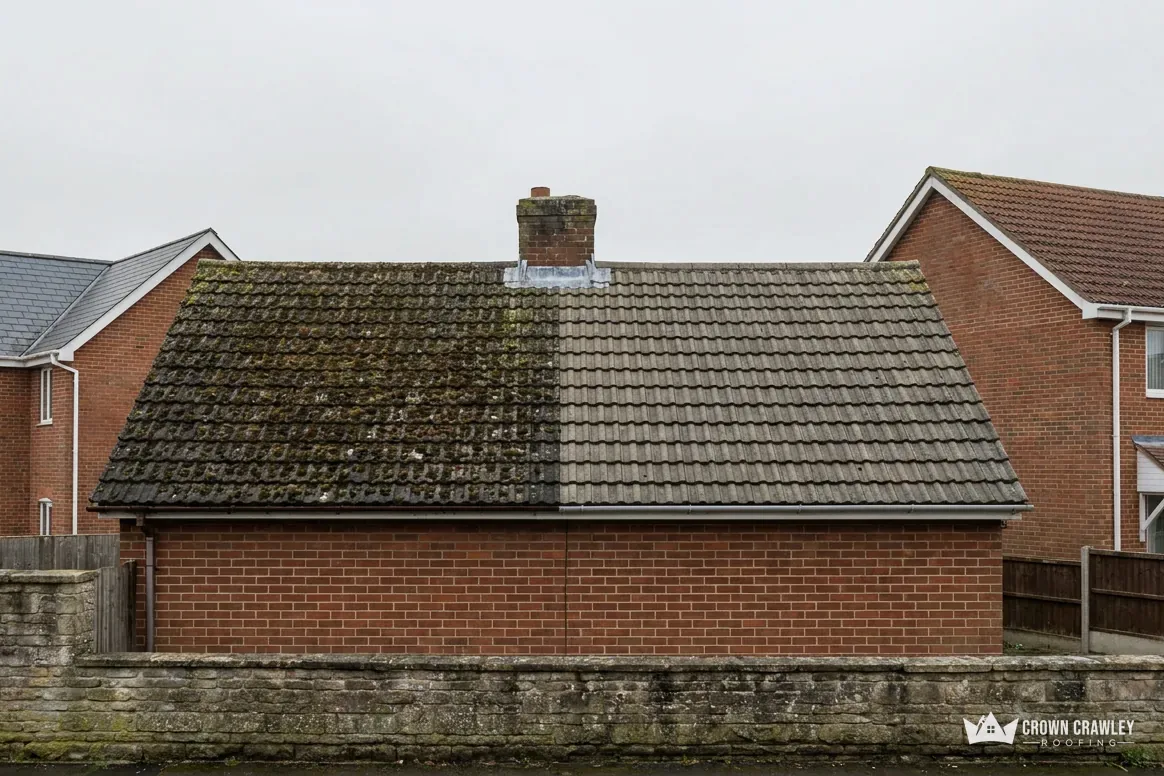
Garage roof partly cleaned of moss behind brick houses

A conservation area

Some Holmbury streets fall inside the Holmbury St Mary conservation area and some do not. We confirm with Guildford's planning team which side of the boundary you are on before suggesting a different covering.

Village houses with pitched roofs

Holmbury St Mary, beneath Holmbury Hill

Map of Holmbury St Mary and the neighbourhoods around it, with Crawley for reference.

A village on the greensand hills south-west of Dorking, below Holmbury Hill and within the old parish of Abinger.

Distance
17.5 road miles from Crawley, to the north-west
Drive
About 30 minutes
Council
Guildford Borough Council and Surrey County Council
Planning authority
Guildford Borough Council
Conservation area
Holmbury St Mary
Population
799 (Census 2021, built-up area)
Holmbury Hill
Earthwork of almost exactly 10 acres at 857 ft
Get a free quote

Holmbury St Mary field notes

Roofs on the slope below Holmbury Hill

Three short chapters on the hillside setting, the listed buildings in the village, and the permissions that come with a conservation area in the Surrey Hills.

Stage 01 · Setting

Beneath a hill with an old earthwork

Holmbury Hill carries an earthwork at 857 ft above sea level, and roofs below it stand on sloping ground, so access shapes each survey.

The Victoria County History notes that Holmbury Hill carries a considerable earthwork covering almost exactly 10 acres at 857 ft above sea level, with double banks and ditches on the north and west, and that Neolithic flints, including a fine axe-head, have been found around it. The village sits below that hill on the greensand, south-west of Dorking, and the 2021 Census counted 799 people in its built-up area. It lies within the old parish of Abinger, and the history of that parish says little about the village itself. For us the hill matters for a plainer reason: houses on a slope are reached by a slope, and the way up shapes the whole job, from the first ladder to the last load of waste.

On a hillside survey

Approach
Gradient, lane width, parking
Eaves
Fascia, soffit and gutter fixings
Slopes
Tiles seated, no daylight showing
Chimney
Stack, flashing and cap sound
Loft
Dry timber, clear air gaps
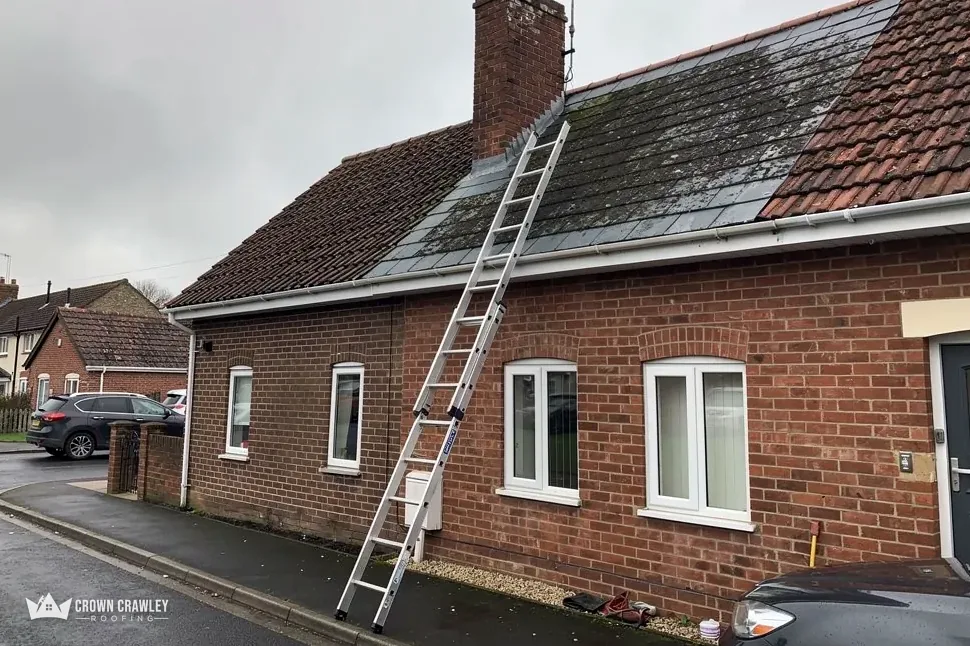
Brick bungalow with a ladder leaning against its tiled roof

How does a hillside change a roofing job?

It changes the getting there. A van that parks level outside a house on flat ground may have to park a long way down a lane here, and the tiles, battens and bags then travel on foot. Scaffold on a sloping plot needs its base levelled and packed with care. A garden that falls away behind the house can leave the back eaves much higher above ground than the front ones, so the access we plan for the front does not suit the rear. We walk the whole plot, note the gradient and decide where the poles, the boards and the skip will go before a figure is written down.

What do we find when we get up there?

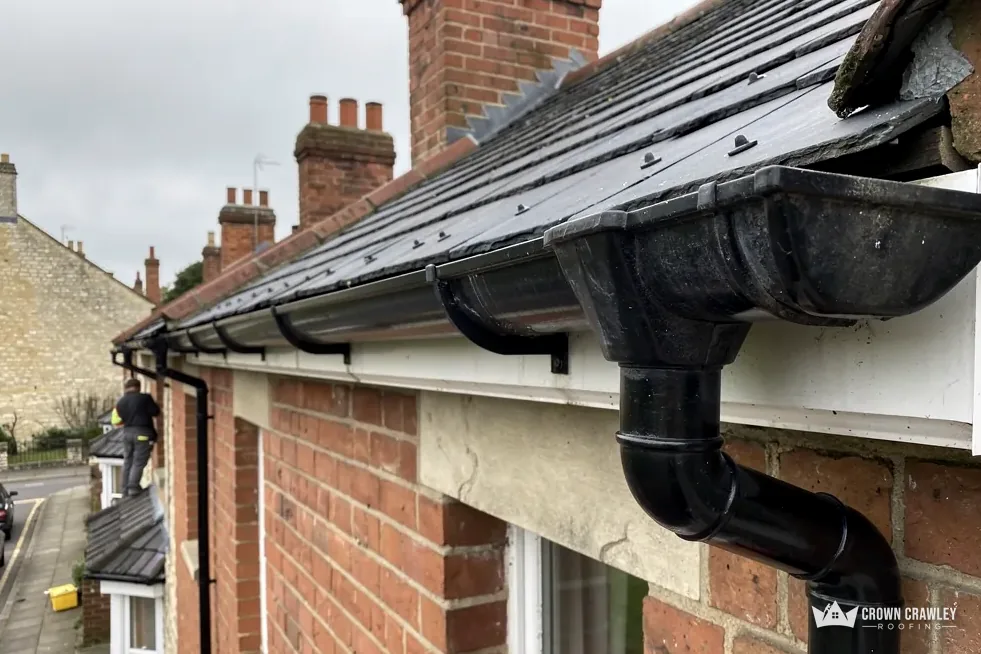
The covering comes first: tiles that have slipped or cracked, nibs (the small lugs that hold a tile on its batten) that have worn away, and daylight where a tile should sit hard against its neighbour. After that come the eaves, meaning the fascia board along the roof edge, the soffit boarding underneath it and the gutter on top. A gutter that has dropped at one end sends water down the wall, and the resulting damp is often blamed on the roof. Last, the chimney and the loft. Our gutters, soffits and fascias page shows how we deal with the edge of the roof.

Keep reading

The photos we take stay with you, each one captioned with the fault it shows. If a roof turns out to be sound, the report says that too, and you can put it in a drawer for your next sale or survey.

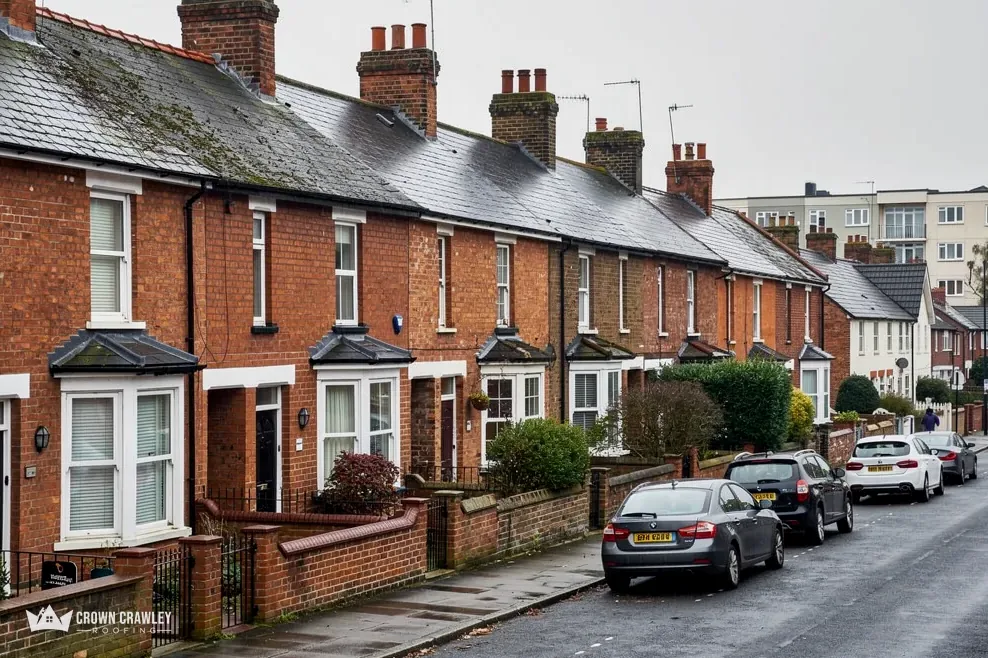
Victorian brick terrace with bay windows and parked cars

Stage 02 · Heritage

Listed cottages and a Grade I church

Chapel Cottage, Hilda Cottage and the Church of St Mary are all on the national list, and each has its own route to consent.

Three Holmbury St Mary buildings turn up on the national list: the Church of St Mary at Grade I, and Chapel Cottage with its adjoining cottage, and Hilda Cottage, both at Grade II. They are the buildings on the record, not a full count of the village's older houses, and some unlisted houses will be old too. What they show is the range: a church whose roof belongs to a congregation and a wider body, and cottages whose roofs belong to families who live under them and pay for every repair.

What do we do before touching a listed cottage roof?

We read it first. The survey notes the covering, the way it is laid, the ridge and any lead, and we photograph all of it from the ladder and from the garden. Then we ask Guildford Borough Council's planning team whether the repair we have in mind counts as like for like or whether it would affect the building's character. Listed building consent covers the second kind, and the council, not the roofer, decides which kind a job is. Our answer on re-roofing a listed building lays out the steps. Whatever the council writes back goes into your paperwork, and our quote is built on it.

Heritage words explained

Grade I
The highest listing grade
Grade II
A listing grade below Grade I
Listed building consent
Permission to alter a building's special character
Like for like
Matching material, method and look

On a listed cottage the council is asked before the price is fixed, not after.

It also pays to think about the long term. A listed cottage that is repaired in small, matching steps tends to cost less over time than one left until a whole slope must be renewed. We would rather show you the loose tiles in a photo now than a stain on the bedroom ceiling next winter.

Is the church a different case?

Yes. The consent route for a church depends on its denomination: the Church of England uses its own system, known as a faculty, certain certain other denominations use their own approval processes, and some closed churches go back to listed building consent. Which one applies to St Mary's is a question for the church's own contact and the council. We mention it because villagers sometimes assume a listed church and a listed cottage follow one rulebook, and they do not.

For a house owner the practical step is simple. If you think your home is listed, say so at the first call, and check your deeds or the council's map if you are unsure.

Stage 03 · Permissions

A conservation area in the Surrey Hills

Guildford Borough Council covers planning and building control, Surrey County Council sets terms for road scaffold, and part of the village has conservation area status.

Holmbury St Mary lies inside the Surrey Hills. The Surrey Hills organisation dates the Area of Outstanding Natural Beauty status to 1958, which put these hills among the earliest so designated in England. Part of the village is also a conservation area, and we ask the council to confirm the boundary for your address. Photos taken at the survey show the existing covering, ridge and verge, which is what a planning officer wants to see first. Neither stops a straight repair. Both make it worth asking before a job changes how the roof looks from the lane.

Which council checks a re-roof?

Guildford Borough Council runs building control itself rather than through a partnership. The Planning Portal's guidance says an application is not normally needed while work stays below 25 per cent of the building envelope and below 50 per cent of the roof, and we check with Guildford whenever a job might cross it. The same guidance picks out a covering that weighs at least 15 per cent more than the one it replaces, and a switch of material can do that without anyone noticing. Keep the council's reply with your house papers, because it may be wanted when you sell. Our roof replacement page walks through a whole new roof from first batten to last ridge tile.

Who to ask

Planning
Guildford Borough Council
Building control
Guildford's own service
Road scaffold
Surrey County Council licence
Landscape
Surrey Hills, designated 1958
Wildlife
Work pauses if found
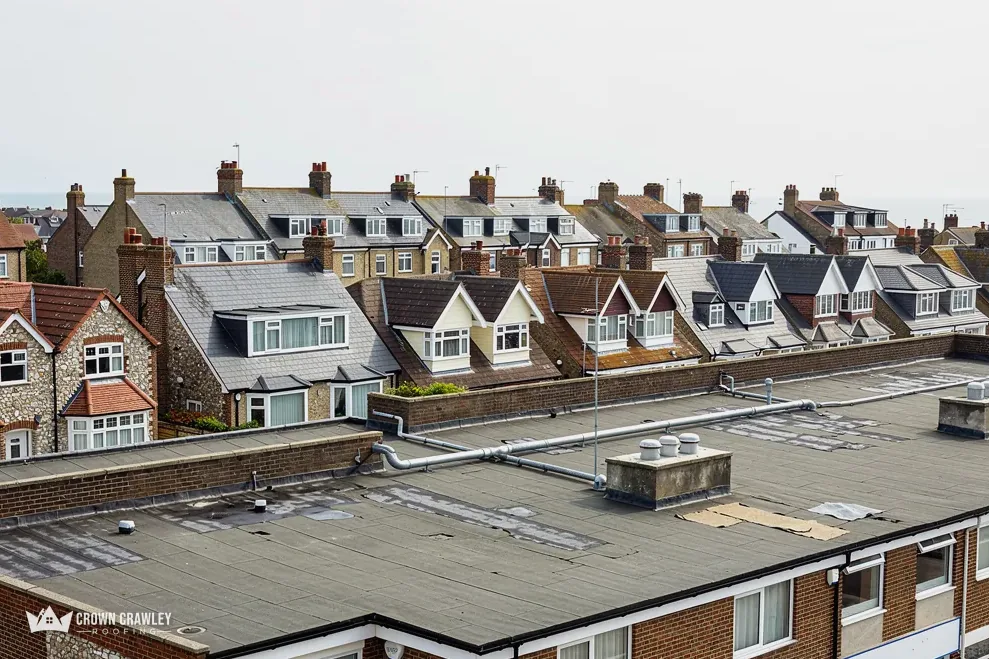
Flat roof in the foreground of a street of dormer-roofed houses

Where can the scaffold go?

On your own land it needs no licence. On a public road or pavement, Surrey County Council wants the application in 10 working days ahead and charges £208 for each 28 day period. Surrey leaves open who should apply, so that is agreed between our scaffolders and us, and the first day is chosen once the notice period has run. The application also needs a layout drawing, which is why access gets decided at the survey, not on the first morning.

What if the roof has bats or nests?

Government guidance lists roof repair as work with a possible effect on bats, and it is an offence to intentionally harm an active nest. The law attaches to the animal and its roost, not to the postcode. If droppings or a nest turn up, at the survey or once work has begun, we stop, check what the find means for the job and agree the next step with you.

The first move is yours: photograph the roof from the lane, mention any listing, and send both with your postcode.

Holmbury St Mary: listing, hillside and scaffold

Is a Grade II cottage roof in Holmbury St Mary ever repaired without consent?

It can be, when the repair matches the old covering exactly, because consent covers work that affects a building's character. The council decides where that line falls, so write to Guildford's planning team before work begins, keep what they send, and pass us a copy. Our survey photos give them something concrete to look at, and they show the condition before any work starts.

Does the Holmbury conservation area change what I can do to my roof?

Only if your house is inside it, and only part of Holmbury St Mary is covered, so a neighbour's answer may not be yours. The national planning data site records the boundary, and Guildford Borough Council can confirm your address. It matters most if you want a new covering or a different roof outline, though we still ask before quoting any change you can see.

Do roofers need a licence to put scaffold on a Holmbury lane?

A Surrey County Council licence applies where scaffold sits on a road or pavement, with 10 working days' notice and £208 per 28 day period. Private ground needs none. Where the lane is the only place the poles can go, we plan that at the survey and agree the booking with the scaffolders, so nobody on the lane is surprised.

Who inspects a re-roof in Holmbury St Mary?

Guildford Borough Council runs its own building control service. Whether approval is needed turns on what fraction of the roof is affected, and on the weight of any new covering. For a larger job we ask the council first, and the quote records the answer we were given. A photo of the roof plus your postcode is enough to start.

Your Holmbury St Mary roof, surveyed first

Photograph the roof from the lane, add any listing or conservation area note, and send both with your postcode.

01293 974253

10-year workmanship guarantee, in writing.

Call Get a free quote