Roofers in Abinger

Old listed roofs and Horsham slate on a long Surrey Hills parish.

Abinger runs from the chalk downs to the Wealden clay, with a Grade II* church and Horsham slate in its record. We read each roof as it stands, then price in writing.

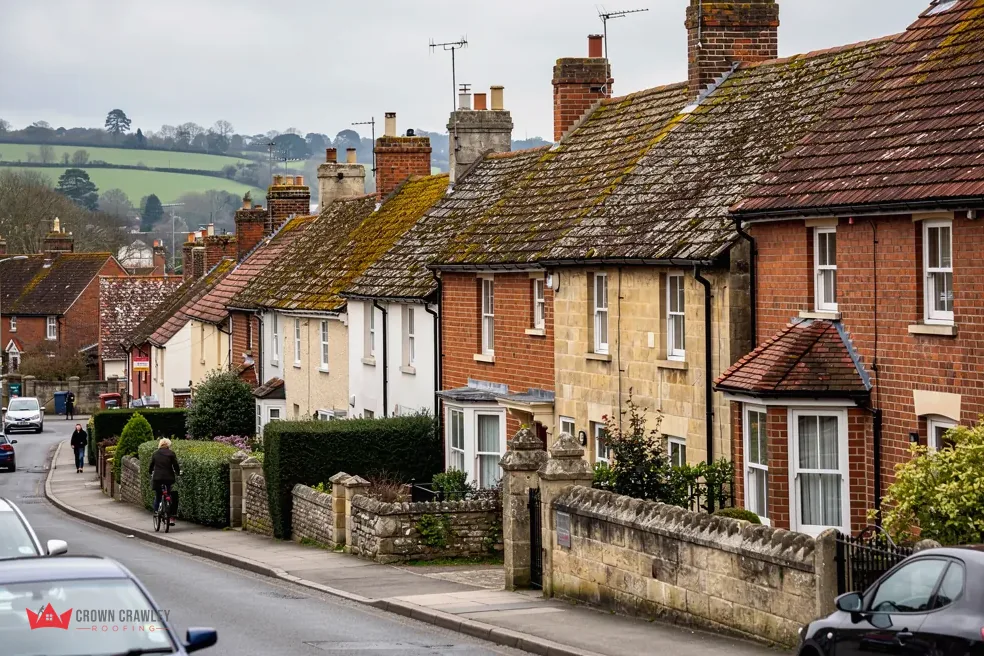
Village street of brick and render houses with old tiled roofs

Three things to know about Abinger roofs

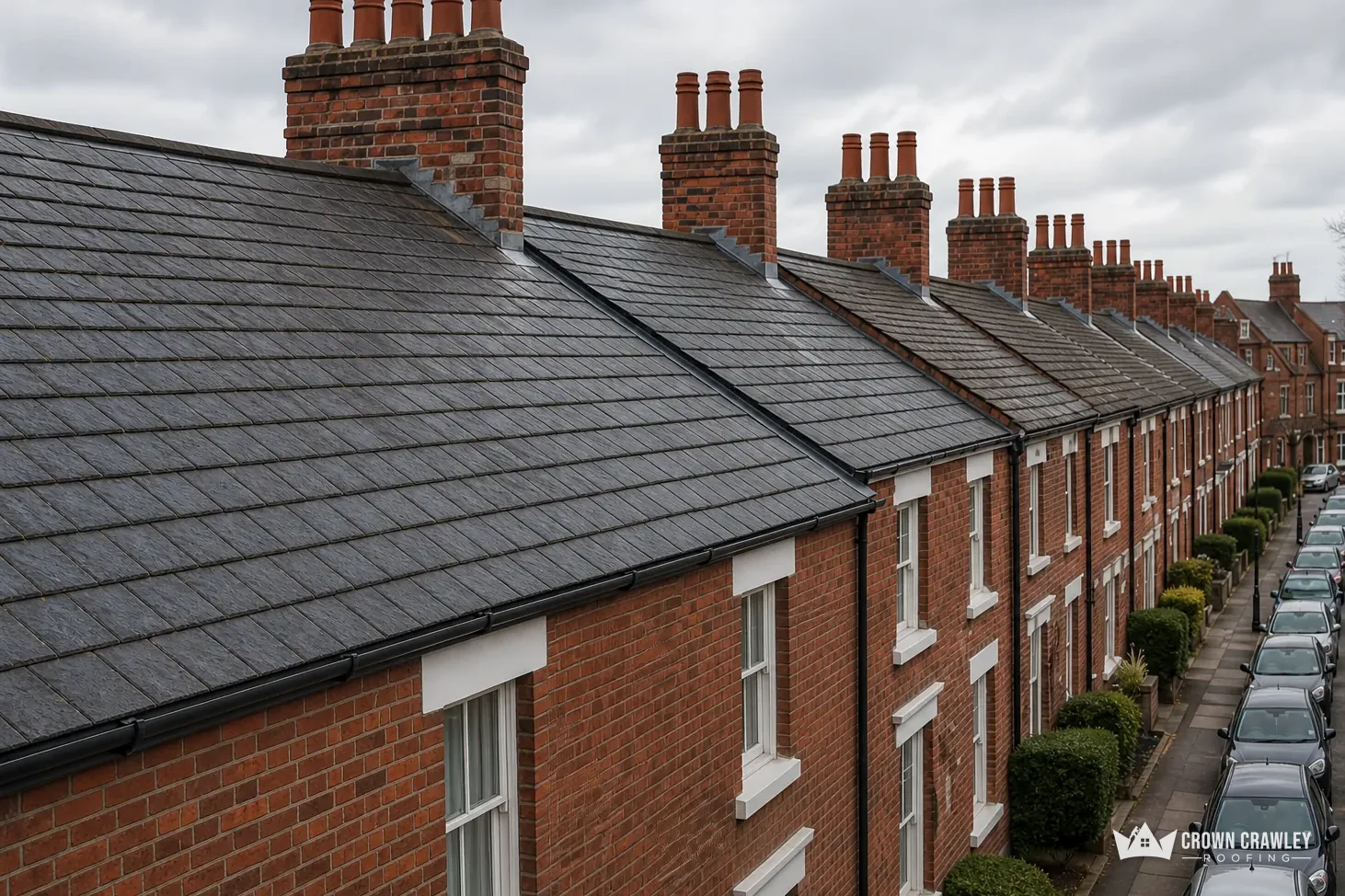
Long terrace of slate roofs with a line of brick chimneys

Horsham slate at St James's

The Victoria County History records the roofs of St James's church as covered with Horsham slates in 1911. If your own slate roof needs a different covering, the Planning Portal advises checking the extra weight with a structural engineer or surveyor first.

Natural slate roof, close view

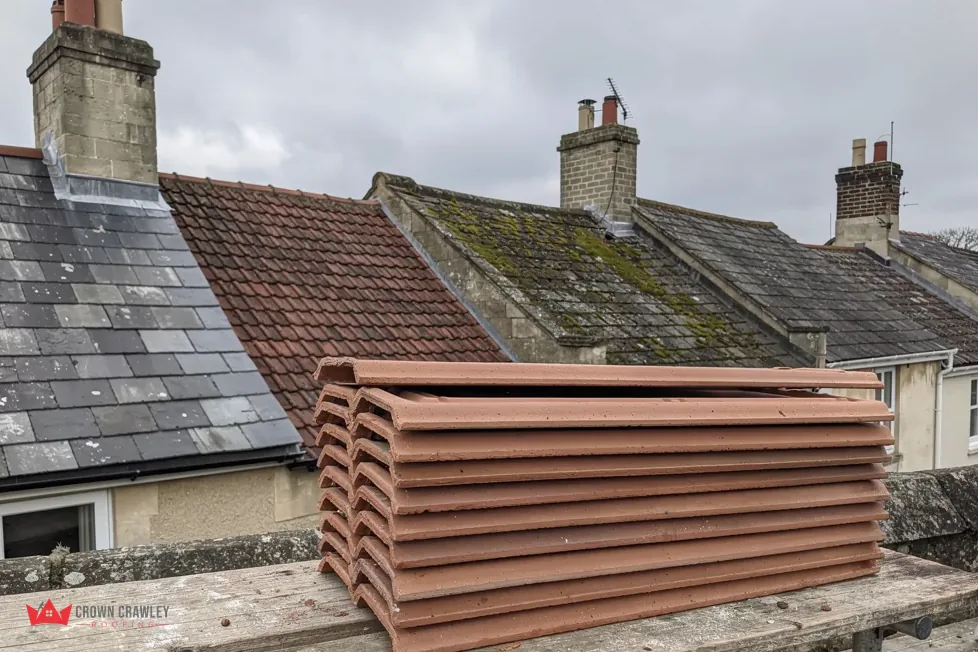
Stack of clay ridge and hip tiles on a flat roof

Listed houses and the manor

Abinger Manor is listed at Grade II, as is the war memorial on Abinger Common. Work that affects a listed building's character needs consent, so we ask Mole Valley District Council before we price anything beyond a straight repair.

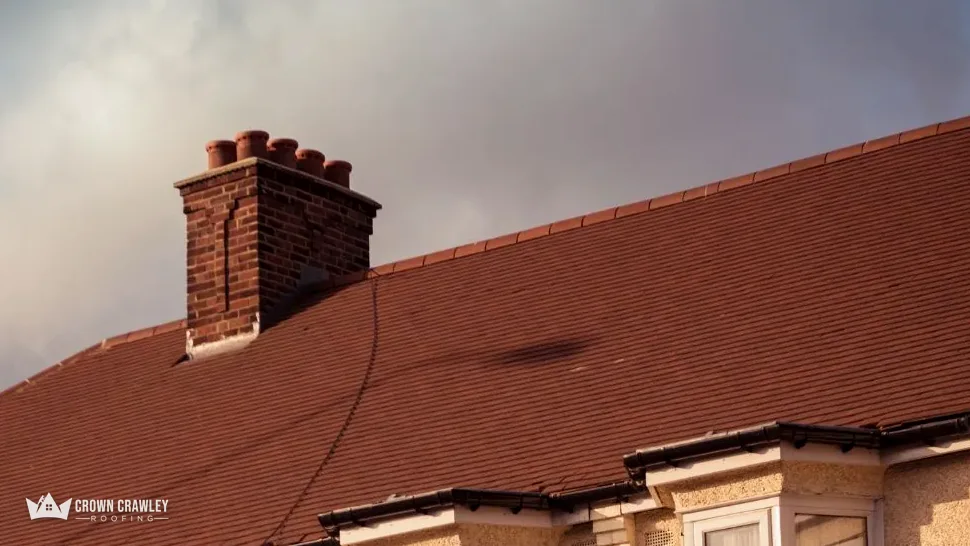
Old tiled roof with chimney

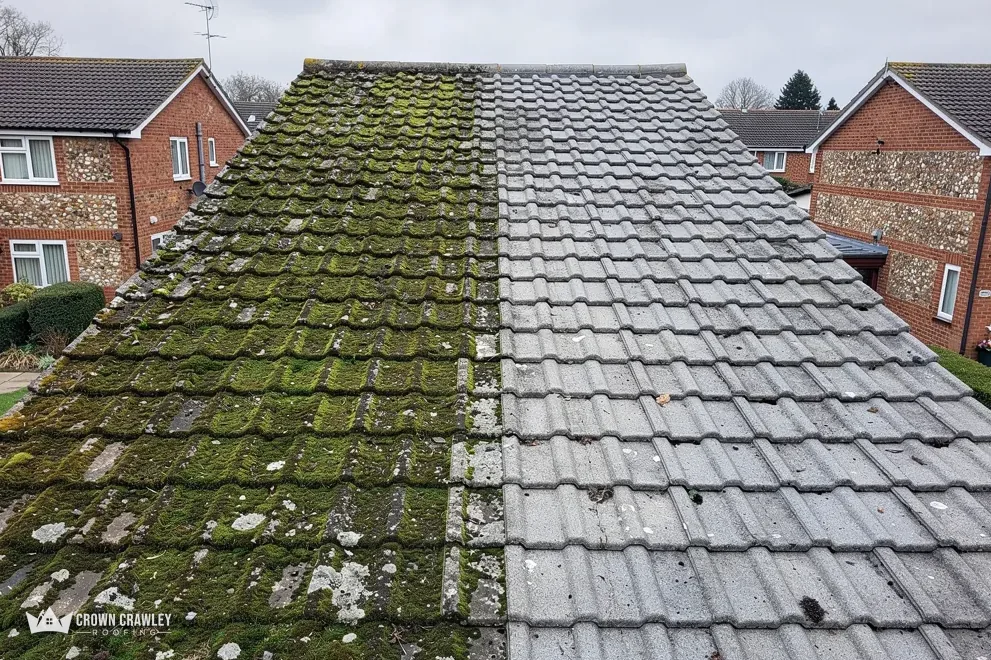
Tiled roof with one half cleaned and the other still covered in moss

Roofs on sloping ground

The parish runs south over the greensand of Leith Hill and down to the Wealden clay. Ground that changes this much changes the access too, so we plan ladders, scaffold and the skip at the survey.

Scaffold on a pitched roof

Abinger and Abinger Hammer

Map of Abinger and the neighbourhoods around it, with Crawley for reference.

Abinger lies inside the Surrey Hills National Landscape, in a parish that takes in Abinger Hammer, where an iron forge once stood on the Tillingbourne.

Distance
17.9 road miles from Crawley, to the north-west
Drive
About 32 minutes
Council
Mole Valley District Council and Surrey County Council
Planning authority
Mole Valley District Council
Population
1,911 (Census 2021, Abinger parish)
Church height
St James's stands about 550 ft above sea level
Get a free quote

Abinger roof notes

Reading a roof in a hill parish

Three short chapters on the ground Abinger stands on, the slate and listed buildings in its record, and the approvals that follow a bigger job.

Stage 01 · Setting

From chalk downs to Wealden clay

Abinger is a long parish with high and low ground, so the survey starts with where your roof sits and how we reach it.

The Victoria County History describes Abinger as a long parish. It runs from the chalk downs south over the greensand of Leith Hill and down to the Wealden clay, and Abinger Hammer on the Tillingbourne once had an iron forge. The church of St James stands about 550 ft above sea level, and in 1911 the same history called it the highest old parish church in Surrey after Tatsfield. For a roofer that matters in a plain way: a house high on the hill and a house by the stream do not share the same ground, the same lane or the same view of the sky. Every job starts with a survey, and the survey starts with where the roof sits.

On an Abinger survey

Covering
Slipped, cracked or rusted fixings
Ridge
Mortar sound, or caps fixed
Verge
Edge mortar whole, tiles held
Loft
Daylight, damp or stained rafters
Access
Where scaffold and skip can stand
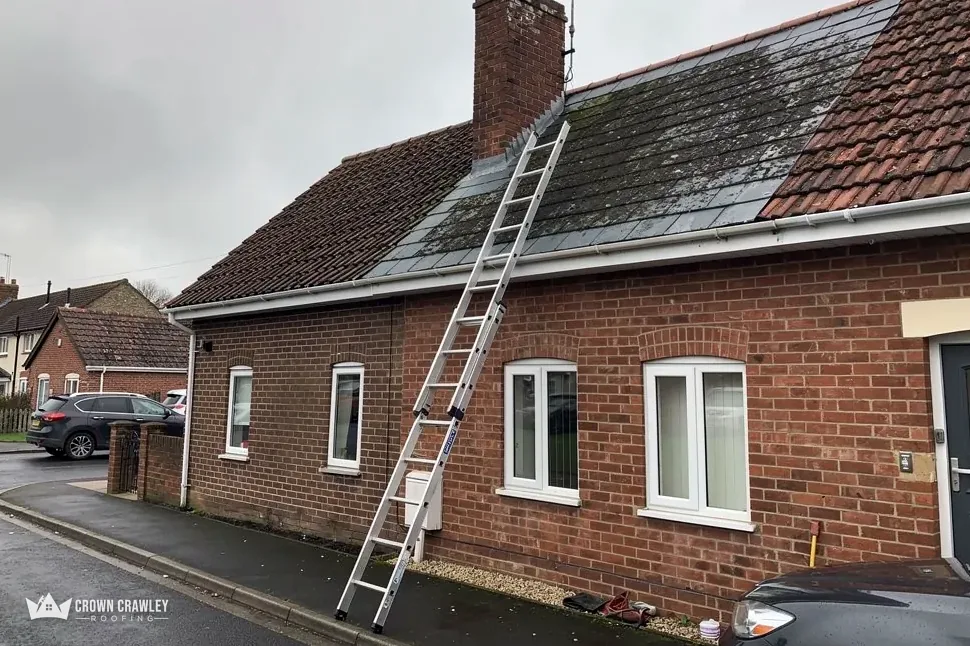
Brick bungalow with a ladder leaning against its tiled roof

What do you look at first on an Abinger roof?

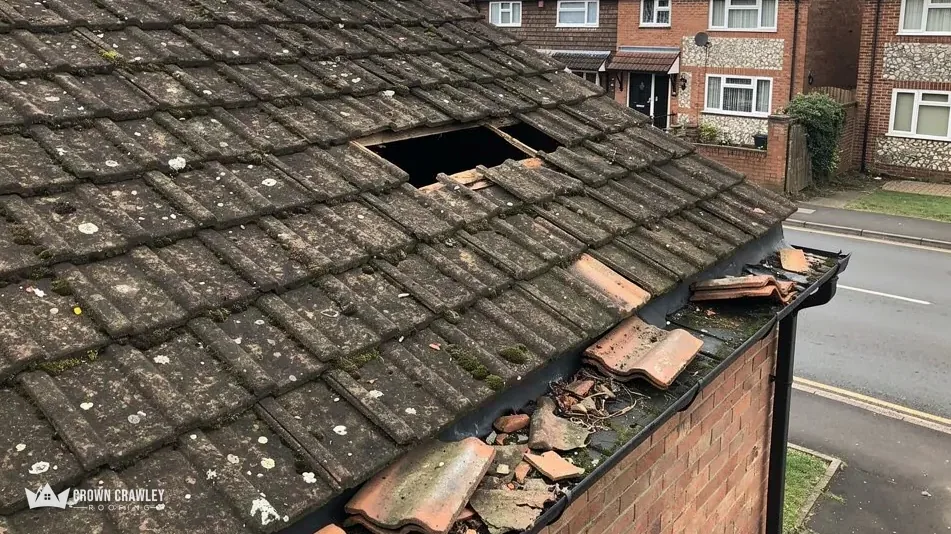
We look at the covering and what holds it on. On a tiled roof that means slipped or cracked tiles, worn nibs (the small lugs that hang a tile from its batten) and the nails behind them. On a slate roof we look for slipped slates and for nails that have rusted through. Then we look at the ridge, the top line of the roof where the slopes join, and the verge, the sloping edge at a gable end. On an older roof both are bedded in mortar, and mortar cracks and lets go as it weathers. The survey ends in the loft, where daylight through the covering, stained rafters or damp underlay tell us what the outside cannot. You receive photos of your own roof, so you can see exactly what we saw.

How do you reach a roof on a steep or narrow plot?

Plots in a parish like this vary a great deal. Some have a wide drive, some a narrow lane with a hedge on both sides, and some a garden that drops away from the house. At the survey we check where the scaffold can stand, how materials will get up to the roof and where the skip will go, so the written price still holds when the lorry arrives. If access is tight, you hear that from us before the price is written. Our pitched roofing page sets out how we repair tiles, slates, battens and underlay once we are up there.

Keep reading

A roof that has already been patched once often shows a mix of repairs: new tiles of a slightly different colour, a filled ridge, a strip of felt. None of that is a problem on its own. We note what is there, repair in matching materials where we can, and tell you plainly if the patching has reached the point where one larger repair would cost you less in the end.

New slate-effect roof on a bungalow with white fascias and guttering

Stage 02 · Heritage

Horsham slate and listed buildings

Abinger's record names Horsham slate on its church and lists a Grade II manor, so some roofs need a consent before any work starts.

In 1911 the Victoria County History described the roofs of St James's church as covered with Horsham slates, and the nave as that of an early 12th-century church. The church is listed at Grade II*. Abinger Manor and the war memorial on Abinger Common are listed at Grade II. Plenty of ordinary houses in the parish have no listing at all, but if yours is one of the listed ones, the rules change before the first slate comes off.

Words you may hear

Listed building consent
Permission for work affecting a listed building
Faculty
Church of England consent for church works
Grade II*
A listing grade above Grade II
Like for like
Same material, fitted the same way
Horsham slate
Local slate named in the 1911 record

Does a listed house need consent for a roof repair?

Listed building consent is needed for work that would affect the character of a listed building, and a roof is a large part of that character. A repair that puts back the same material in the same way is a different thing from a repair that changes the look, and the council decides which one you have. For Abinger that council is Mole Valley District Council. We ask its planning team before we quote anything beyond a straight repair, and the written price records what we assumed. If the council replies in writing, keep that reply and send us a copy, because we will quote against what it has said. Photos from the survey help here too, since a planning officer can see the covering, the ridge and the chimneys without a site visit. Our answer on re-roofing a listed building walks through the usual steps.

A church roof has its own consent route, so the first question is who owns the building.

Who agrees work on the church itself?

Churches follow a different route. A Church of England church in use goes through that church's own consent system, called a faculty, instead of listed building consent. St James's is a Church of England church, so works to it go that way. Other denominations, and churches that have closed, follow other routes again. A village roof is a shared concern, so it is worth knowing the answer: for a house it is the council, and for the church it is the parish and the Church of England's own process.

Slate deserves a word in its own right. One published roofing guide says natural slate, if well maintained, can last 100+ years. That is a typical figure, not a promise, but it is the reason we repair a sound slate roof before we suggest stripping it. We replace the nails and the slates that have failed, in matching slate, and we leave the rest to carry on.

Stage 03 · Permissions

Permissions for a bigger Abinger job

Mole Valley handles planning, a shared team handles building control, and Surrey County Council licenses scaffold on the public highway.

A like-for-like repair rarely needs any paperwork. A bigger job does, and in Abinger three bodies can be involved: Mole Valley District Council for planning, the Southern Building Control Partnership for building control, and Surrey County Council as the highway authority.

When does a re-roof need building control?

The Planning Portal says building control approval is not normally needed if less than 25 per cent of the building envelope is affected and less than 50 per cent of the roof is affected. Approval is also needed when a new covering adds 15 per cent or more to the roof's weight, or behaves differently in a fire, which is why a switch from slate to a heavier tile is never a casual decision. Mole Valley names the Southern Building Control Partnership as its building control team, a shared service that also covers Reigate and Banstead and Tandridge. On a large re-roof we confirm with them before we fix a start date. Our roof replacement page explains how that job runs from strip to sign-off.

Who decides what

Planning
Mole Valley District Council
Building control
Southern Building Control Partnership
Highway
Surrey County Council licence
Private land
No scaffold licence needed
Bats
We stop and talk to you
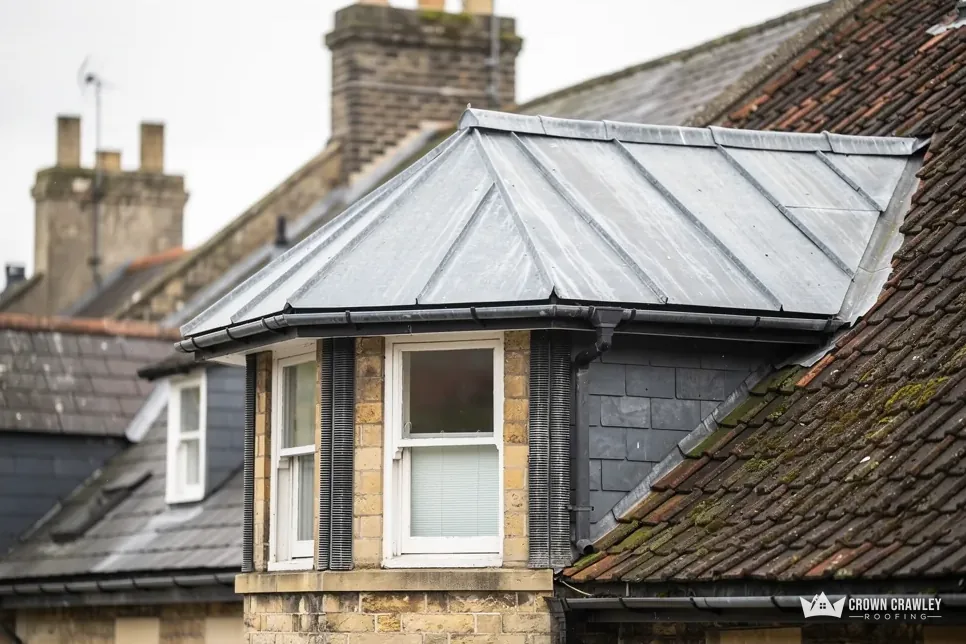
Lead-covered bay roof and chimney stack on a slate and tile roof

Will the scaffold need a licence?

Only when it stands on a public road, pavement or highway. Surrey County Council asks for an application at least 10 working days before the start date and charges £208 per 28 day period. A scaffold on private ground, such as a drive, needs no highway licence. The application asks for a layout drawing of the scaffold and a copy of the applicant's public liability insurance, and the council's page does not say who applies, so we work the licence out with the scaffolding firm and set the start date around the 10 working days. Whoever you hire, ask who is applying and who is paying.

What happens if there are bats in the roof?

Bats are protected wherever they roost, and the gov.uk bat guidance names roof repair and replacement among the jobs that can affect them. Nesting birds are covered too while a nest is in use or being built. If droppings, a roost or an active nest turn up during the survey or the strip, work pauses until we have agreed the next step with you.

The next step is simple. Photograph the slope you can see from the lane or garden, send it with your postcode, and add a line on whether the house is listed.

Abinger: slate, listing and scaffold

Do a few slipped slates mean an Abinger roof needs stripping?

No. Slipped slates and rusted nails are repairs, and one published roofing guide puts well-maintained natural slate at 100+ years. We check the nails and battens, replace only what has failed with matching slate, and show you photos of every fault we find. If the house is listed, ask Mole Valley's planning team first whether the repair needs consent.

Do the Surrey Hills rules change a roof repair in Abinger?

Abinger lies inside the Surrey Hills National Landscape, which was among the first designated, in 1958. A repair that keeps the same covering and the same look does not change the planning picture, but new windows or dormers can. Check with Mole Valley's planning team first. Mole Valley's planners can tell you if your lane is part of a conservation area, and that answer is worth having before anything changes on the outside.

Where does scaffold stand on a narrow Abinger lane?

On your own drive or garden if there is room, since private land needs no highway licence. If it must stand on the road or pavement, Surrey County Council wants 10 working days' notice and charges £208 per 28 day period. We plan the position at the survey and arrange the licence with the scaffolder.

Which building control team covers an Abinger re-roof?

Mole Valley uses the Southern Building Control Partnership, shared with Reigate and Banstead and Tandridge. The Planning Portal's national test is less than 25 per cent of the building envelope and less than 50 per cent of the roof. If your job might pass either figure, we check with the team before the start date.

Send us the Abinger roof that worries you

Tell us your postcode, whether the house is listed and which slope or chimney concerns you, with a picture from the lane. Your survey follows.

01293 974253

10-year workmanship guarantee, in writing.

Call Get a free quote