Roofers in Westcott

Roofs in a Surrey Hills village below the chalk downs.

Westcott lies west of Dorking below the chalk downs, within the Surrey Hills National Landscape, with a conservation area over part of the village. One survey, one written price.

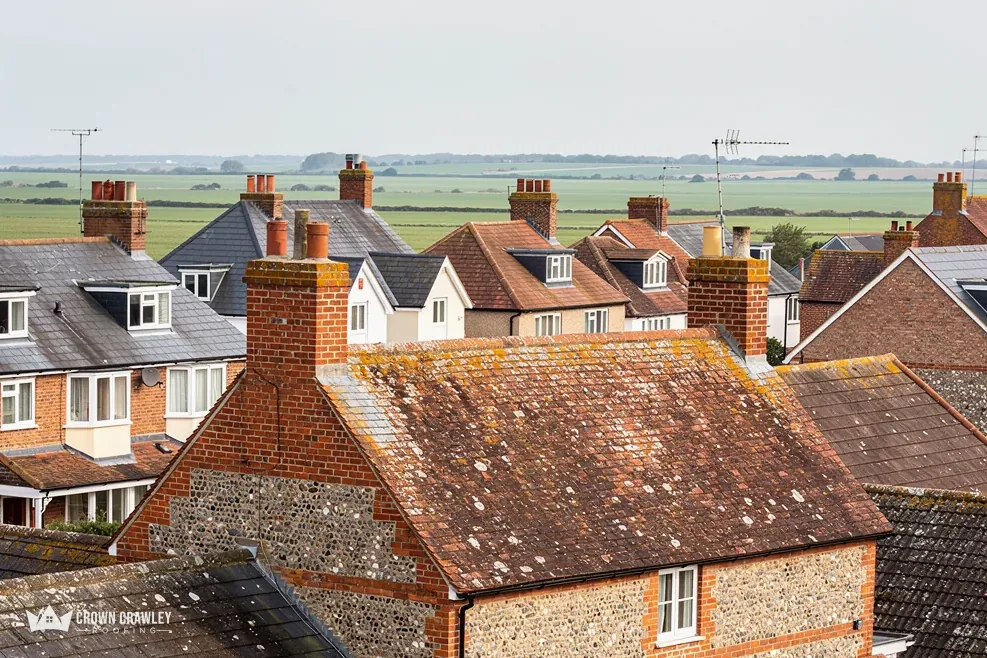
Flint-walled house with a mossy clay tiled roof overlooking fields

Westcott roofs, from a Grade II* church to village rows

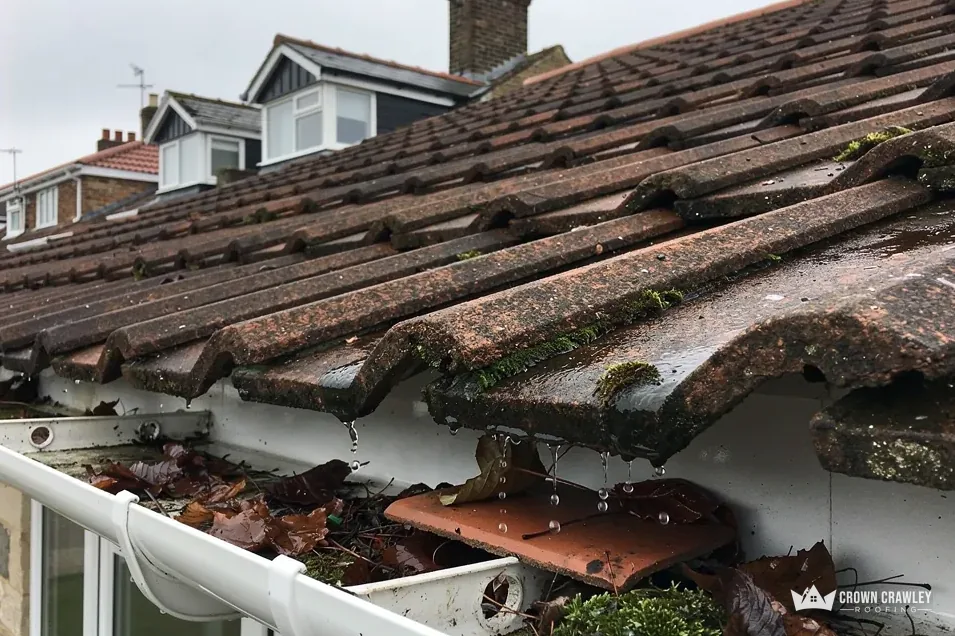
Slipped tiles lying in a blocked gutter

Holy Trinity, listed Grade II*

Holy Trinity, built by Sir Gilbert Scott and consecrated in 1852, holds a Grade II* listing and serves as a Church of England parish church. Roof work there follows the diocese's faculty system, which is a different route from the council's listed building consent.

Parish church with tiled roof

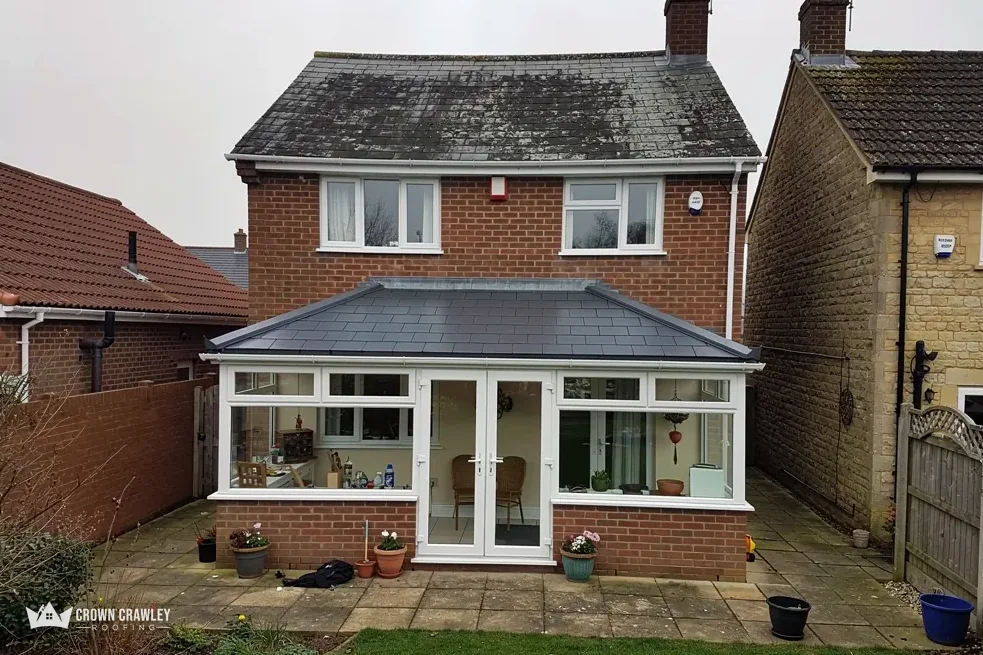
Rear of a brick house with a glazed extension and slate-effect roof

Guildford Road rows and cottages

2 to 7 Guildford Road and Bay Tree Cottage are each listed Grade II. A roof like that gets a matching repair, and an early word with the council before any change to its character.

Row of old cottages with tiled roofs

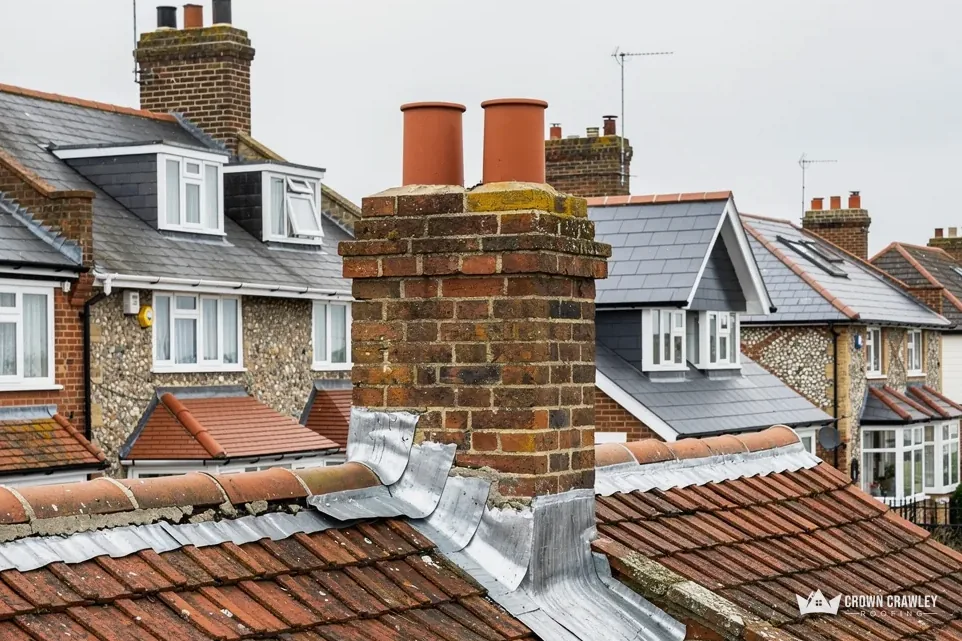
Chimney stack with orange pots and lead flashing among tiled roofs

Streets within the conservation area

Some Westcott streets fall inside the Westcott conservation area. Your address is checked against that boundary, with Mole Valley's planning team, before we suggest altering the look of any slope.

Village street with tiled roofs

Westcott, west of Dorking

Map of Westcott and the neighbourhoods around it, with Crawley for reference.

A village west of Dorking on the Guildford road, below the chalk downs and the wooded greensand hills.

Distance
15.9 road miles from Crawley, to the north-west
Drive
About 34 minutes
Council
Mole Valley District Council and Surrey County Council
Planning authority
Mole Valley District Council
Conservation area
Westcott; Conservation_Area.TAB
Population
2,271 (Census 2021, Westcott built-up area)
Protected landscape
Surrey Hills National Landscape
Listed church
Holy Trinity, Grade II*, list entry 1227892
Get a free quote

Westcott survey diary

An old Dorking tithing and the roofs it left behind

Three chapters: how a village older than its parish reads from the roof, which consent route a church or listed roof follows, and what Mole Valley and Surrey ask of a bigger job.

Stage 01 · First look

From Dorking tithing to parish

Westcott was a settlement long before it became a parish, so one street can hold roofs put up in very different centuries.

The Victoria County History of 1911 lists Westcott, spelt Westcote in places, among the boroughs or tithings of Dorking. In 1852 it was joined with Milton to form an ecclesiastical parish, and the history adds that a considerable village had stood there already. In the 14th and 15th centuries Milton and Westcote were separate manors. The same account notes old houses of the 16th, 17th and 18th centuries, some with gables of Bargate stone rubble and ornamental brick, and a farmhouse with fine brick chimneys of about 1670. For a roofer that means a village older than its parish, whose buildings were not all raised at once.

How do we date a Westcott roof?

Two neighbouring houses can carry coverings laid a century apart, so the street tells us little. On the survey we identify the tile or slate, count the repairs made over the years and note which have lasted. A cluster of newer tiles among older ones points to an old leak and tells us where to look underneath. The survey photos show the same details, so you can follow our reasoning.

On a Westcott first look

Age of roof
Judged from the covering itself
Past repairs
Patches from different decades
Abutments
Lead or mortar at each wall
Gutters
Falling to clear downpipes
Loft
Dry timbers, open eaves
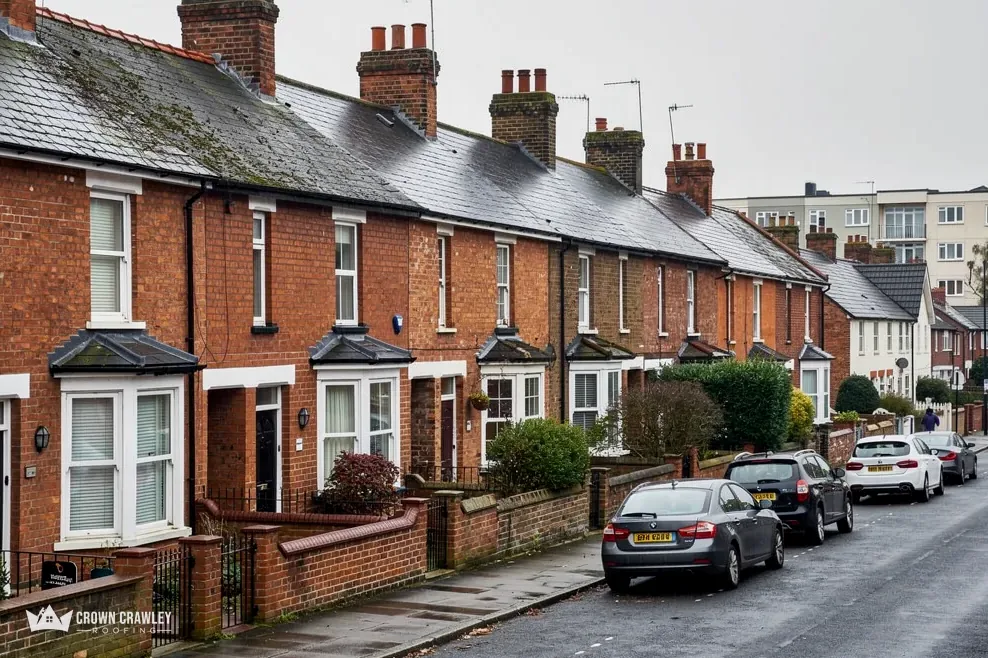
Victorian brick terrace with bay windows and parked cars

Where does the water go below the downs?

The history places Mag's Well, once reputed a medicinal spring, in Squire's Wood south of the village, as one of the sources of the Pip Brook, which runs through Dorking to the Mole. We say nothing about your garden's drainage, but the lesson for a roof is plain: water arriving off the slope has to leave cleanly. We check that gutters fall to their outlets, that downpipes discharge away from the walls and that nothing along the roof edge dams the flow.

The loft tells its own story, so we go inside as well. Daylight showing through the covering, damp or darkened timber and insulation squashed flat at the eaves all point to where a roof is failing. We photograph what we see from below, which lets us compare it with the outside view and tie each stain on a ceiling to a particular part of the slope.

Valleys and abutments come next. Moss and leaf litter gather in an inward corner, and at any point where roof and wall meet, the flashing must be sound and well pointed, with no gap for rain to track behind it. Our lead work page explains the lead codes and the way a flashing is dressed. Once the whole picture is clear, we say whether repair is the better buy; if the covering has run its course, our roof replacement page shows how a strip and relay is run, from stripping the old covering to bedding the final ridge.

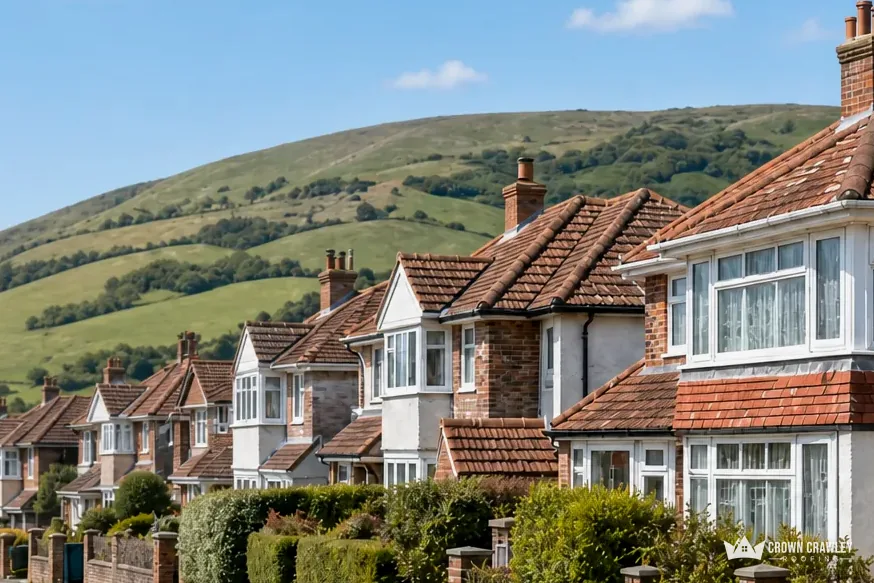
Row of suburban houses with tiled roofs below green downland

Stage 02 · Consent routes

Faculty, listed consent and the Surrey Hills

Holy Trinity and the houses at 2 to 7 Guildford Road are listed, and each follows its own consent route before a roof is touched.

On 11 June 1973 Historic England's list took in the Church of the Holy Trinity at Grade II*. Numbers 2 to 7 Guildford Road and Bay Tree Cottage are listed Grade II. Whether your own home is on the list is something to confirm for your address, with Mole Valley's planning team, before we price anything.

Which consent route fits a church roof?

Holy Trinity remains in Church of England use, so the ecclesiastical exemption applies and its roof work goes through the diocese's faculty rather than the council's listed building consent. That exemption has limits. Government guidance says it does not excuse a denomination from planning permission for development that reshapes what you can see of a listed church. Churches of other denominations have different arrangements again, so whoever manages the building should confirm the route before we plan anything.

Consent words in plain English

Faculty
Diocese approval for church works
Listed consent
Council approval for listed alterations
National Landscape
Protected landscape of national value
Conservation area
Area protected for local character
And a listed house on Guildford Road?

A listed house falls under the 1990 listed buildings Act, which controls changes that would alter its special interest, and the council decides what counts. The repair with the best chance is the one that matches: same tile, same laps, same details. We lift a sample, compare its size, colour and camber with what a supplier can offer, and photograph each stage so that the council's file is complete. On a listed roof the lead gets the same treatment as the tile: we record the code and the laps already there and renew like for like. Ridge and hip details deserve a conversation with the council too, because they are what the eye picks out from the road.

A church roof raises one more question, which is access. It sits a long way up, and whether the work needs a tower, a mobile platform or a full scaffold changes the job considerably. We talk that through with whoever manages the building and set it out in the one written price, so there are no surprises on the day.

Three different consent routes can meet on one village street.

The village also lies within the Surrey Hills National Landscape, whose own organisation dates its status to 1958, when it became one of the country's first Areas of Outstanding Natural Beauty. If you are thinking of a dormer or any change to the shape of the roof, raise it with Mole Valley before you commit. Our answer on re-roofing in a conservation area explains how a council reads a roof within its setting, and the survey photos can go straight into your application.

Stage 03 · Permissions

Permissions from Mole Valley and Surrey

Mole Valley District Council decides planning here, while a scaffold on the highway needs a licence from Surrey County Council.

Putting back what you already have leaves the village as it was, and nobody needs convincing. Trouble starts with a new tile or slate, an added roof window or a reshaped roof. Westcott's conservation area and the Surrey Hills designation both raise the stakes, so the sensible moment to ask Mole Valley is before an order is placed, not after.

Which Westcott roof jobs go to the partnership?

The Southern Building Control Partnership is the council's own building control team, as Mole Valley describes it. For the national test the Planning Portal draws its line at 25 per cent of the building envelope and 50 per cent of the roof, and it treats a heavier covering, 15 per cent or more, as a trigger for approval. When your survey suggests a strip beyond that, the partnership hears from us before dates are set and the written price carries their answer.

What to settle first

Planning
Mole Valley District Council
Building control
Southern Building Control Partnership
Landscape
Surrey Hills National Landscape
Conservation area
Part of the village
Scaffold
Surrey County Council licence
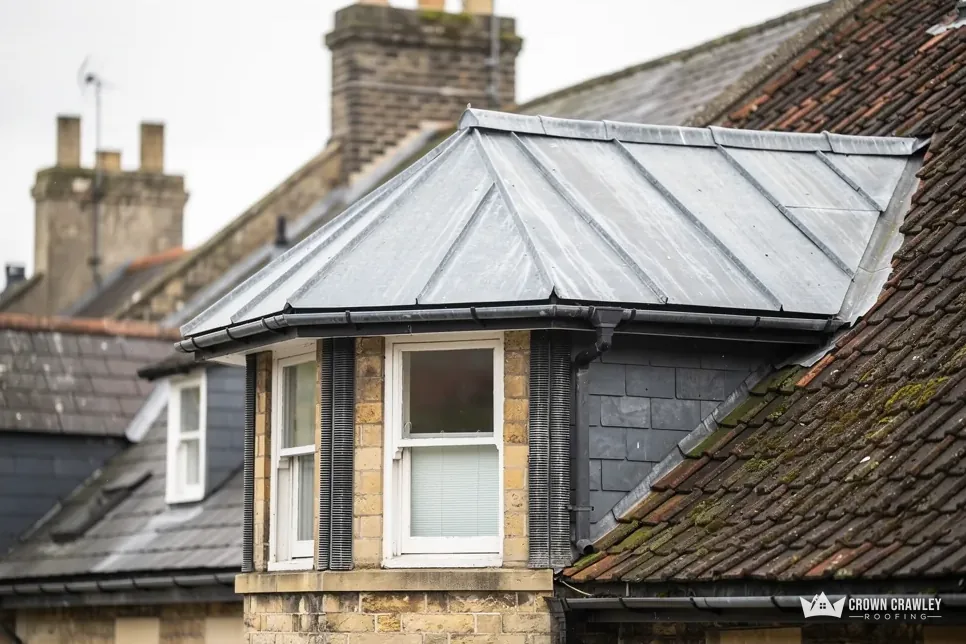
Lead-covered bay roof and chimney stack on a slate and tile roof

Scaffold: who applies, and where does it stand?

Anyone setting scaffolding or hoarding on a public road or pavement must hold a Surrey County Council licence. The council asks for the application 10 or more working days beforehand and charges £208 per 28-day period. A drive or garden of your own is outside that scheme. On quotes, it is worth asking which firm files the licence application and whether the price covers VAT and the scaffold. Access is one of the first things we look at on the survey, because a house set close to the road changes where the scaffold can stand and how deliveries reach it.

What does a Westcott site look like day to day?

Before work starts we agree where tiles and waste will be kept and which route materials take through the garden. Each day you hear how the work went and what tomorrow holds, the roof is covered overnight and the site is swept and left tidy. Finished work is photographed too, so you hold a record of the whole roof and not only the problem area.

Wildlife gets a look as well. Roosts of any bat species are protected, and a roof job is exactly the kind of work the government's bat guidance has in mind. Bat droppings, a roost or a nest being used, found at the survey, stop the job while we plan around it with you. A picture of the slope, joint or gutter run that worries you, sent with your Westcott postcode, is how the survey gets booked.

Westcott roofs: what to check first

Can a listed Westcott cottage keep its old tiles when the roof is repaired?

Where the tiles are sound, yes: they are lifted, sorted and relaid on renewed battens and underlay, topped up with matching tiles for the cracked or worn ones only. The survey photographs show which pile each tile falls into. Because the house is listed, the council should agree the approach before work begins, and a sample of the old tile helps that conversation.

Which landscape designation covers Westcott?

Planning data places the village inside the Surrey Hills National Landscape, the brand name for a designation the planning rules still record under its older title. Both that and the conservation area count as article 2(3) land, where some permitted development rights are narrower, so any change bigger than swapping like for like should go past Mole Valley first.

How is a repair to Holy Trinity's roof approved?

For an Anglican church in worship use, the faculty system applies rather than listed building consent, though planning permission can still apply where the work changes how the church looks from outside. Holy Trinity is listed Grade II*. Whoever manages the church should confirm the route first, and our photographs and written total can travel with the papers.

Will the scaffolder need a Surrey licence for my Westcott road?

Yes, whenever the scaffold reaches the carriageway or the pavement beside it. Surrey County Council needs the application no later than 10 working days ahead of the first day and charges £208 per 28-day period. Scaffold wholly on your own land sits outside the scheme. Ask who applies, and whether each quote includes VAT; the start date is set once the notice period is clear.

Booking a Westcott roof survey

Message a photo of the roof area that worries you and your Westcott postcode, and a word on whether the house is listed.

01293 974253

10-year workmanship guarantee, in writing.

Call Get a free quote