Roofers in Lower Beeding

Roofs where the High Weald meets the Low Weald.

Lower Beeding covers most of the old St Leonard's Forest, with sandstone cottages, tile-hung walls and a slated church. We go up, photograph your own slopes and give a single total price in writing.

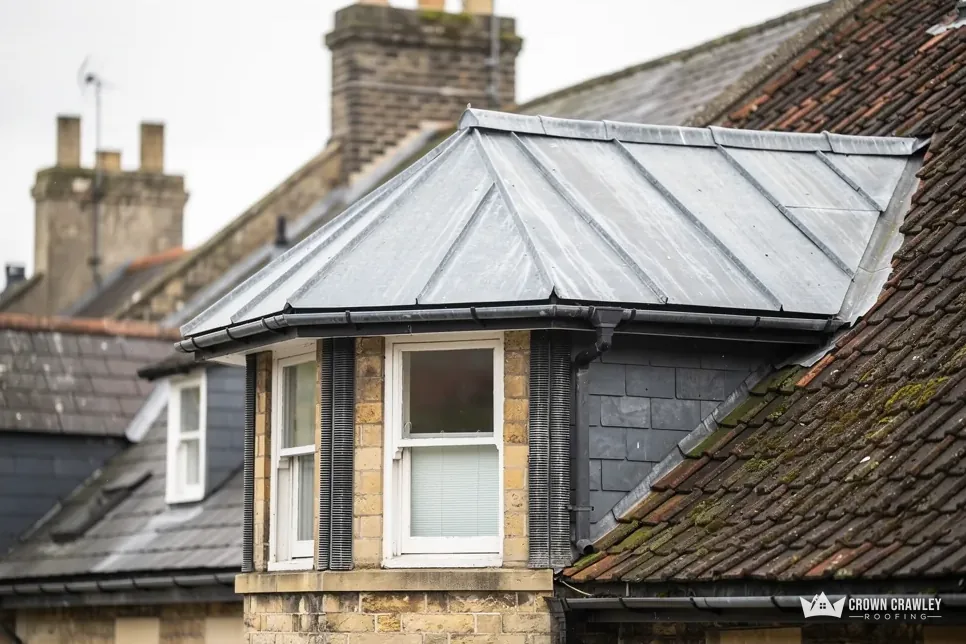
Lead-covered bay roof and chimney stack on a slate and tile roof

Lower Beeding: tile-hung cottages, council houses and purple slate

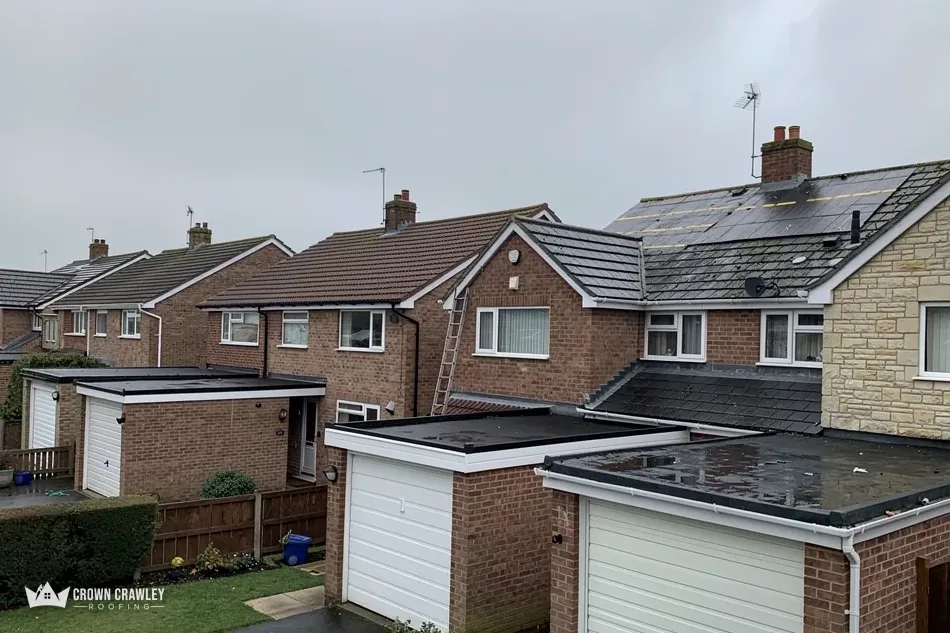
Flat-roofed garages at the back of semi-detached houses

Cottages of sandstone, brick and hung tile

The county history describes early 19th-century cottages here as two storeys, built of sandstone, of brick sometimes in rat-trap bond, or with hung tiles. Where a tile-hung wall meets a roof, the junction needs careful flashing.

Tile-hung wall meeting a tiled roof

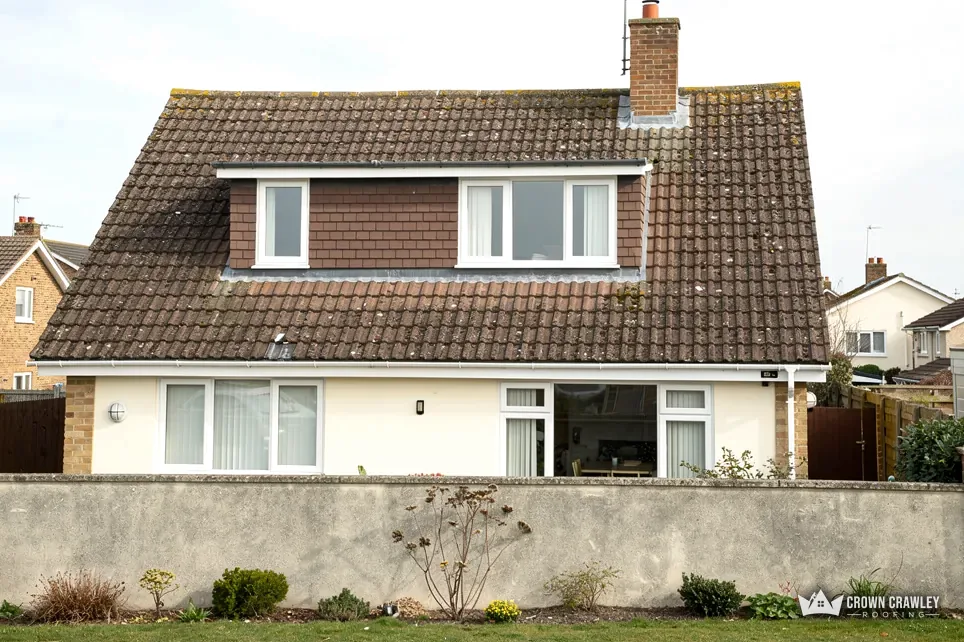
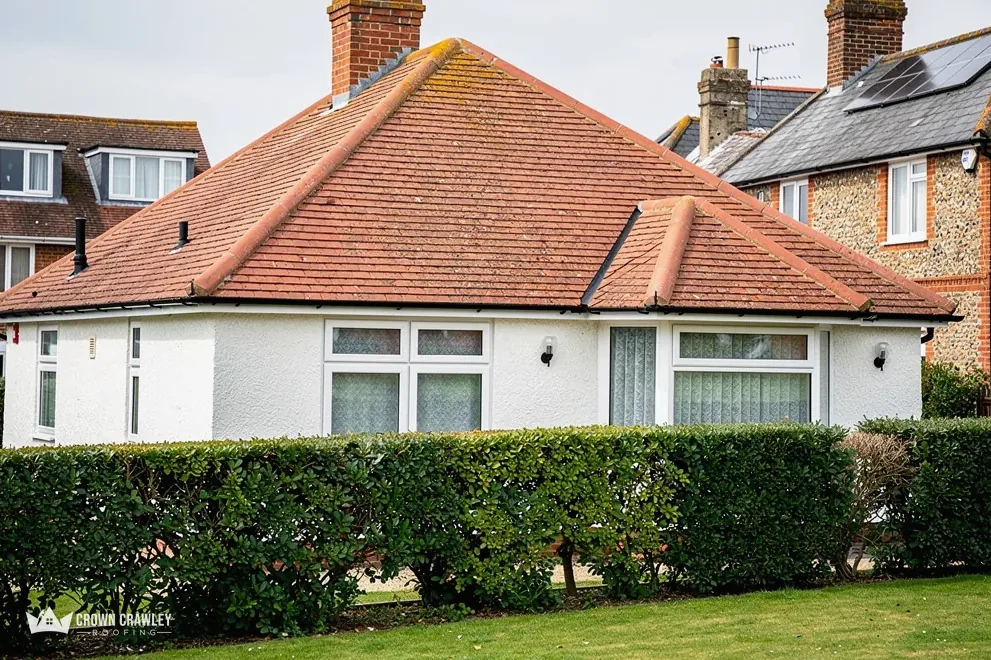
Dormer bungalow with a brown tiled roof and white rendered walls

Council houses from the 1930s

Lower Beeding village grew after its church was built in 1840, and council houses appeared from the 1930s. A roof that age may have been patched more than once, so we record what earlier repairs left behind.

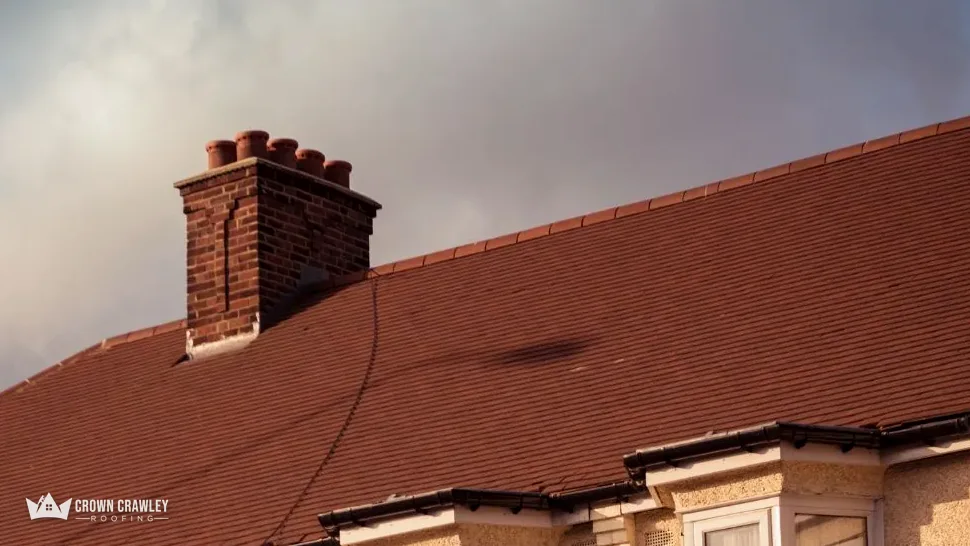
Pair of tiled village houses

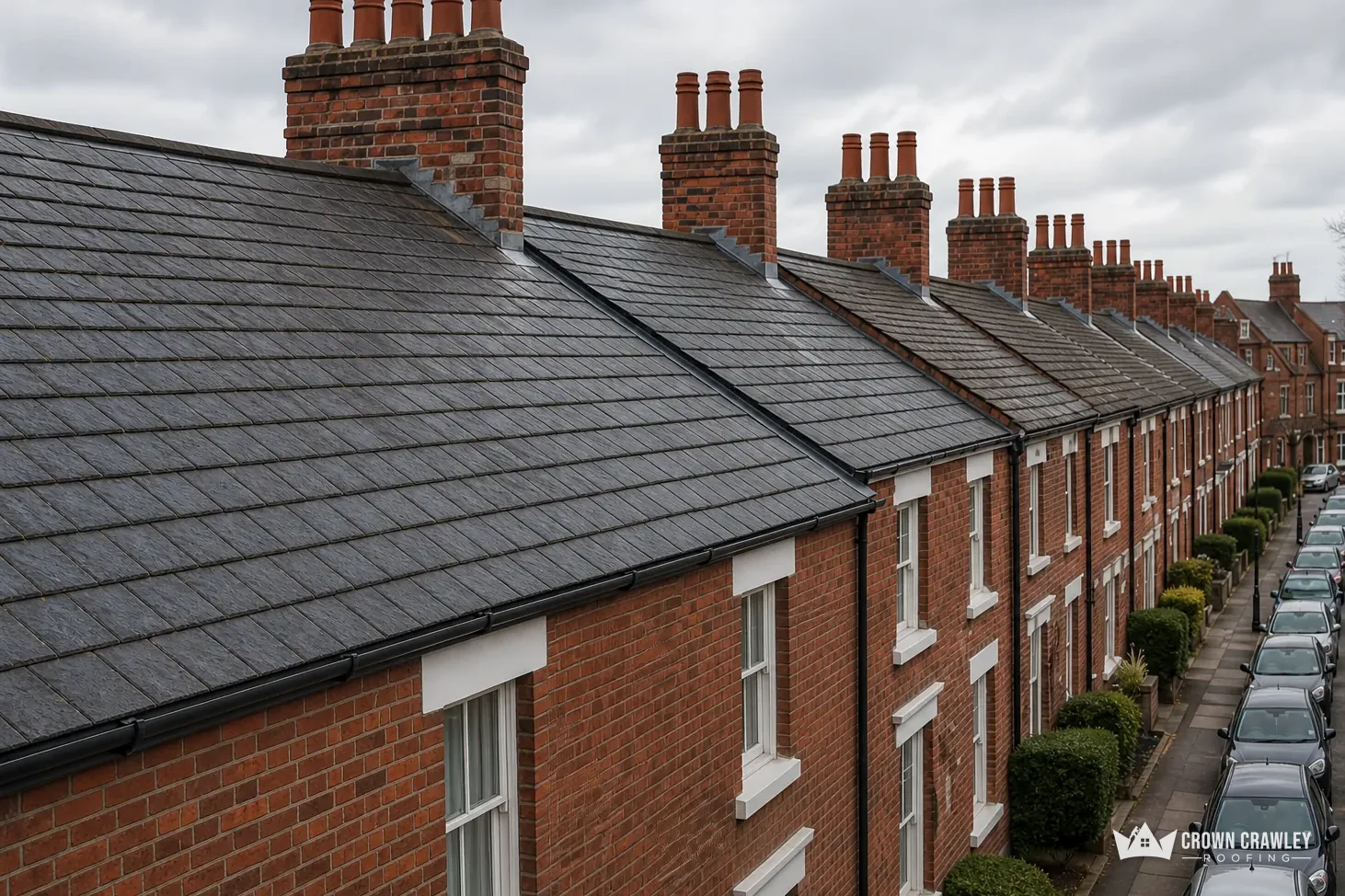
Long terrace of slate roofs with a line of brick chimneys

Purple slates at Colgate

St Saviour, Colgate, built in 1871, has a roof of purple slates. Slate lasts a long time when well kept, so on a slate roof we examine the fixings and any slipped slates before anything else.

Natural slate roof on a church

Lower Beeding, in St Leonard's Forest

Map of Lower Beeding and the neighbourhoods around it, with Crawley for reference.

Lower Beeding parish covers most of the former St Leonard's Forest, where the High Weald merges into the Low Weald.

Distance
7.4 road miles from Crawley, to the south-west
Drive
About 13 minutes
Council
Horsham District Council and West Sussex County Council
Planning authority
Horsham District Council
Population
1,163 (Census 2021, Lower Beeding civil parish)
Get a free quote

Roof work in Lower Beeding, staged

Forest, forge houses and the roofs that followed

Three short chapters on sandstone and hung-tile walls, the repair-or-replace choice on older council houses, and slate roofs under Horsham's rules.

Stage 01 · First look

Sandstone, brick and hung-tile cottages

A parish built from sandstone, brick and tile-hung walls has many places where wall meets roof, and water finds the weak ones.

The county history describes Lower Beeding as lying where the High Weald merges into the Low Weald, on Tunbridge Wells sandstone, across the former St Leonard's Forest. Ironworking after about 1550 brought more houses, forge houses among them by 1602, and the early 19th-century cottages that followed were two storeys of sandstone, of brick sometimes laid in rat-trap bond, or with hung tiles. Walls of such different materials sit under roofs of different periods, so a Lower Beeding survey starts with a question of identity before any question of price.

Where do hung tiles meet the roof?

Hung tiles are tiles fixed to a wall instead of a roof. Where a tile-hung wall meets a roof slope, the junction is sealed with flashing, the metal strip that keeps water out of a joint, and small pieces of lead called soakers tuck beneath the tiles along the edge. Water finds any gap there. Royston Lead's brochure recommends Code 3 sheet at 1.32 mm for soakers only, with Code 4 and Code 5 listed for flashings. We examine these joints from the roof, because from the lane they can look sound when they are not.

Where walls meet the roof

Hung tiles
Sealed with flashing and soakers
Stack
Flashing and flaunching intact
Verge
Mortar sound or caps held
Valleys
Lead or tiles free of cracks
Gutters
Fixed firmly, free of moss
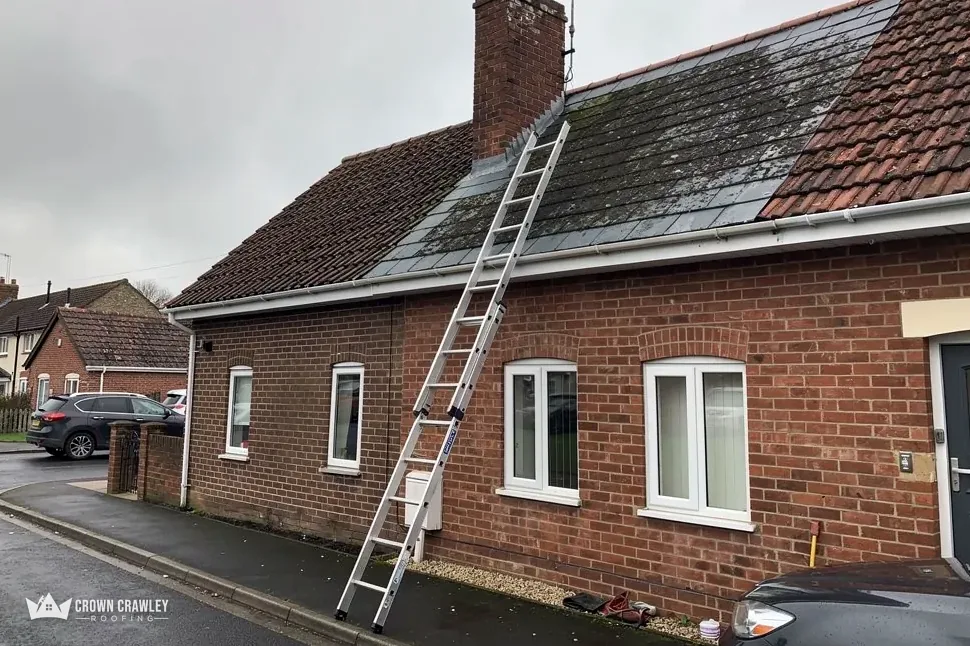
Brick bungalow with a ladder leaning against its tiled roof

What does a chimney on a stone cottage need?

If your cottage has a stack, the flashing at its foot and the flaunching round the pots are the first places we look. Flaunching is the sloped mortar cap that sheds water from the pots. Checkatrade's April 2026 guide gives typical UK figures of £250 to £1,000 for chimney flashing work, and your own written price comes as one total after the survey. Our chimney repairs page walks through a stack job from first look to finish.

Gable ends on older cottages deserve a look too. The edge of the roof, called the verge, is often finished with mortar that cracks and falls, and BS 5534 recommendations now expect mechanical fixing for bedded tiles. We tell you which you have, and whether clips would suit your roof better.

Because the cottages vary, no single estimate fits them all. Two cottages side by side can differ in covering, pitch, chimney and eaves detail, so each survey is written up separately: what covers the roof, what has failed, which parts are sound and what we would do first. The photos we take are yours to keep, and the written figure is based on what they show.

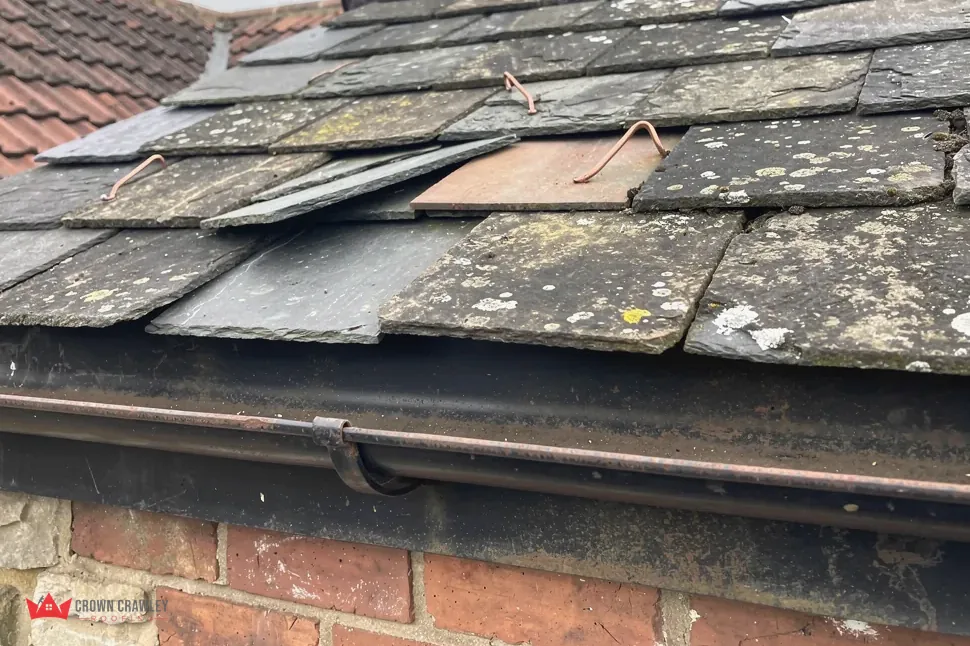
Old slates, damaged and slipped, above a cast-iron gutter

Stage 02 · The decision

Council houses and the repair or replace choice

For a house from the village's growth after 1840 and the 1930s, the real question is repair or replace, and condition answers it.

Lower Beeding village grew after its parish church was built in 1840, and council houses appeared there from the 1930s. For a homeowner with a house of that vintage the real question is seldom what the roof is and nearly always whether to repair or replace it. The answer comes from the condition of the roof, not its birthday.

When does a repair beat a new roof?

A repair wins when the damage is local: slipped or cracked tiles, a failed section of ridge, a worn valley or a split flashing, with sound battens and underlay around it. Replacement makes sense when the battens crumble, the underlay has perished across a whole slope, or the covering is failing in many places at once. A repair cannot rescue timber that has rotted through, and if the survey shows that, the photos make it plain to you. Equally, if one valley or one ridge is the only fault, you hear that plainly and the price covers that alone.

Words for the decision

Repair
Fixes a local fault only
Re-roof
Renews the whole covering
Strip and batten
Remove covering, fit new timber strips
Underlay
Waterproof sheet under the battens
Scaffold
Working platform round the house

What should a new roof cost, and what should a quote include?

Checkatrade's October 2026 guide puts a new roof for a three-bed semi at around £12,000, rising to approximately £17,000 for a four-bedroom detached, as typical UK figures and not Crown prices. The same guide gives £700 to £1,300 for scaffolding a new roof. Whoever quotes, check whether the figure includes VAT, which has a standard rate of 20%, and whether scaffolding is in it. From us you get a single written total once the survey is done. Our roof replacement page follows a full job from scaffold to sign-off.

Lifespan numbers help set expectations. Marley puts concrete tiles at around 60 years, and the Building Research Establishment gives clay a 60-year minimum, with neither figure a guarantee. A roof of that age is not doomed, and a younger roof can fail early if water got in at one weak detail. We weigh the pattern of damage and tell you what a repair buys, as an expectation and never as a promise.

Condition decides repair or replace, not the date on the deeds.

A re-roof can be done while you live in the house. Each morning we tell you which slopes are open and what has been sheeted over for the night, where the skip and the materials sit, and when the noise will be at its worst. Tidy access and a clear daily plan matter as much as the tiles.

Stage 03 · Permissions

Purple slates and Horsham's rules

A slated church at Colgate shows the material at its best, and Horsham District Council's rules decide when a slate repair needs paperwork.

St Saviour at Colgate, built in 1871, has a roof of purple slates, and Holy Trinity of 1840 is of local sandstone and listed Grade II. If your own roof is slate, a few facts help. CoRC's guide puts well-maintained slate at 100+ years. BS 5534 indicates a minimum pitch of 20 degrees for natural slate, and Cupa Pizarras' guidance warns against hook fixings on anything below 25 degrees. A slipped slate can mean a loose fixing, so we check the nails and hooks as well as the slate. Our guide to nail sickness in slate roofs explains the problem, and the pitched roofing hub covers the repair.

Which conservation areas does Horsham list near Lower Beeding?

Horsham's list has no entry for Lower Beeding itself, although the Crabtree area lies within the parish. Check your address with Horsham's planners before you alter the look of a roof. A listed building, such as the Grade II church, needs listed building consent where the work would alter its character, while Church of England churches still in use follow the faculty route instead.

Lower Beeding checks before a re-roof

Planning
Horsham District Council
Building control
Sussex Building Control
Scaffold
West Sussex highway licence
Notice
10 working days at least
Slate pitch
20 degrees minimum, BS 5534
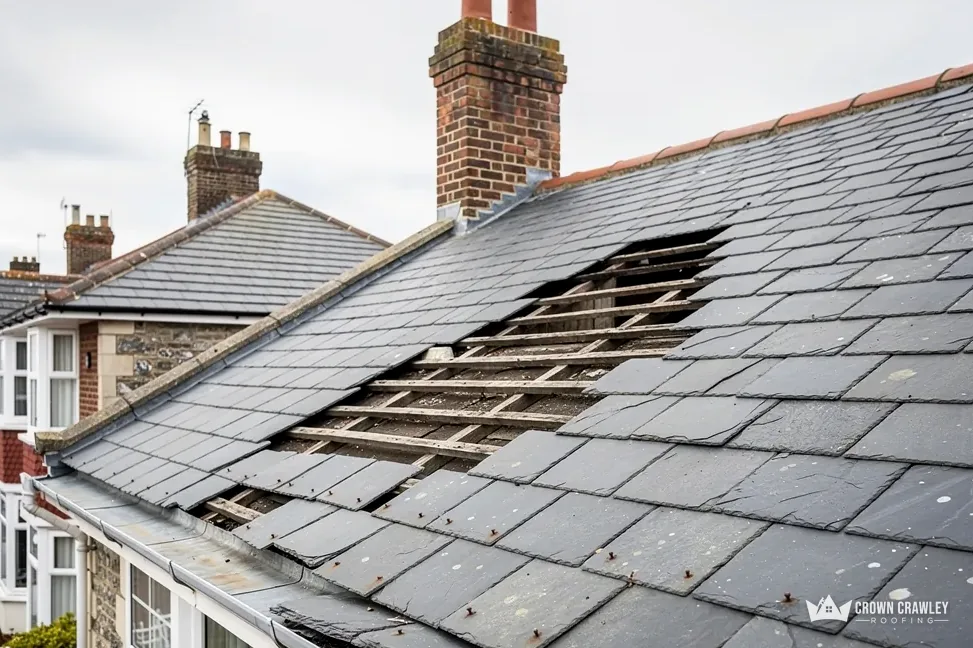
Slate roof stripped back to the battens on one slope

Which Lower Beeding re-roofs need building control?

The Planning Portal's guidance gives two limits: less than 25 per cent of the building envelope affected, and less than 50 per cent of the roof. Whatever the area, a covering at least 15 per cent heavier than the old one, or one with significantly different fire performance, does need approval. Horsham's service is branded Sussex Building Control. If a survey shows a full slope or more needs renewing, we ask them first and the quote carries the answer.

A scaffold standing on the highway needs West Sussex County Council's licence, with a minimum of 10 working days' notice and £266 for one month. Ask the scaffolder whether they or you submit it; we prepare our side early.

Storm damage is the other time rules matter. If wind lifts slates or tiles, tell your insurer first, have the roof made safe, and keep photos and receipts. IStructE advises that photographs are vital evidence for a claim, so we hand you the survey photos to pass on. A leaking roof gets made safe before anything else. Whether a claim pays out is a matter between you and your insurer, and the Financial Ombudsman Service exists for complaints about how one was handled. Tell us whether your roof is slate, tile or hung tile at the walls, add your postcode, and the first visit is planned around that.

Lower Beeding roofs: hung tiles, slates and licences

How is a tile-hung wall sealed where it meets a Lower Beeding roof?

With lead flashing, plus small lead soakers tucked under the tiles along the edge. Royston Lead's brochure lists Code 3 for soakers and Code 4 or 5 for flashings. We check these joints from the roof, repair or renew them as the survey shows, and photograph each one so you can see its condition for yourself. Soakers sit hidden under the tiles, so lifting a few is often the only way to judge them.

Is the roof of a 1930s council house in Lower Beeding worth repairing?

It is when the damage is local and the battens and underlay around it are sound. Marley puts concrete tiles at around 60 years, and calls that no guarantee, so condition counts for more than age. The survey photos show whether a repair will do, and the written price follows that finding. A younger roof with one failed detail can need more than an older roof that has simply been looked after.

Do Crabtree's conservation rules reach a roof in Lower Beeding village?

Horsham's published conservation areas include none for Lower Beeding village itself, but the Crabtree conservation area lies within the parish boundary. If your house is anywhere near Crabtree, confirm the address with Horsham District Council's planning team, particularly if you plan to change the covering, and ask whether an Article 4 direction touches it. A straight repair seldom triggers that question.

What is the lowest pitch for natural slate on a Lower Beeding roof?

BS 5534 indicates a minimum roof pitch of 20 degrees for natural slate, while hook fixings are ruled out on anything under 25 degrees. A flatter slope needs another covering or fixing method, so the pitch is measured with a gauge on site and the product data checked before we advise a repair or a re-slate. Where an old slate roof sits close to that limit, the fixings and headlap get a closer look too.

Your Lower Beeding roof, quoted as one total

Tell us if the roof is slate, tile or tile-hung at the walls, add your postcode, and the survey is planned to suit.

01293 974253

10-year workmanship guarantee, in writing.

Call Get a free quote