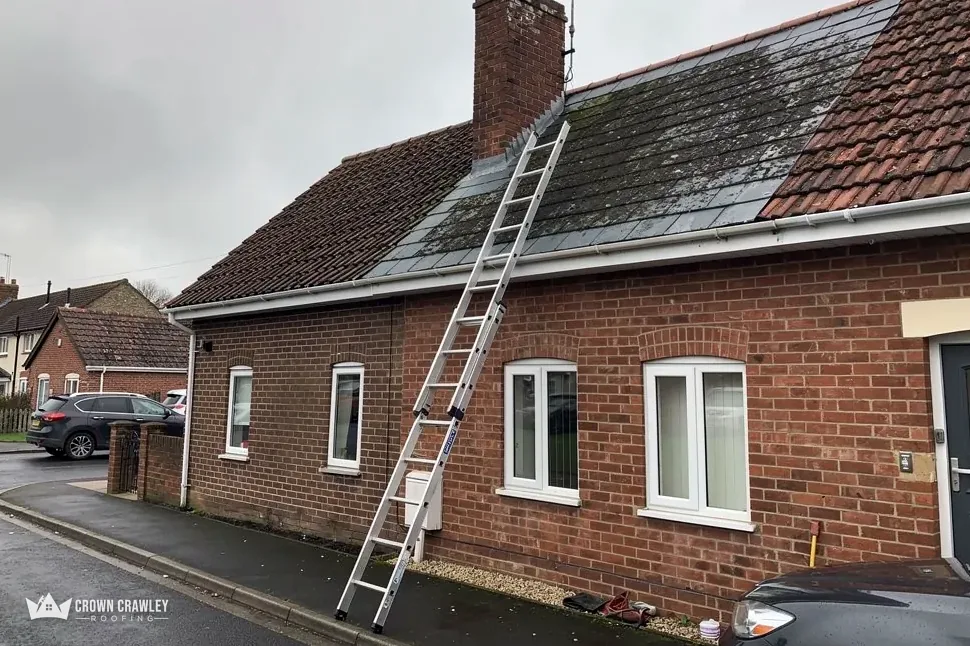
How do you match a hand-made clay plain tile?
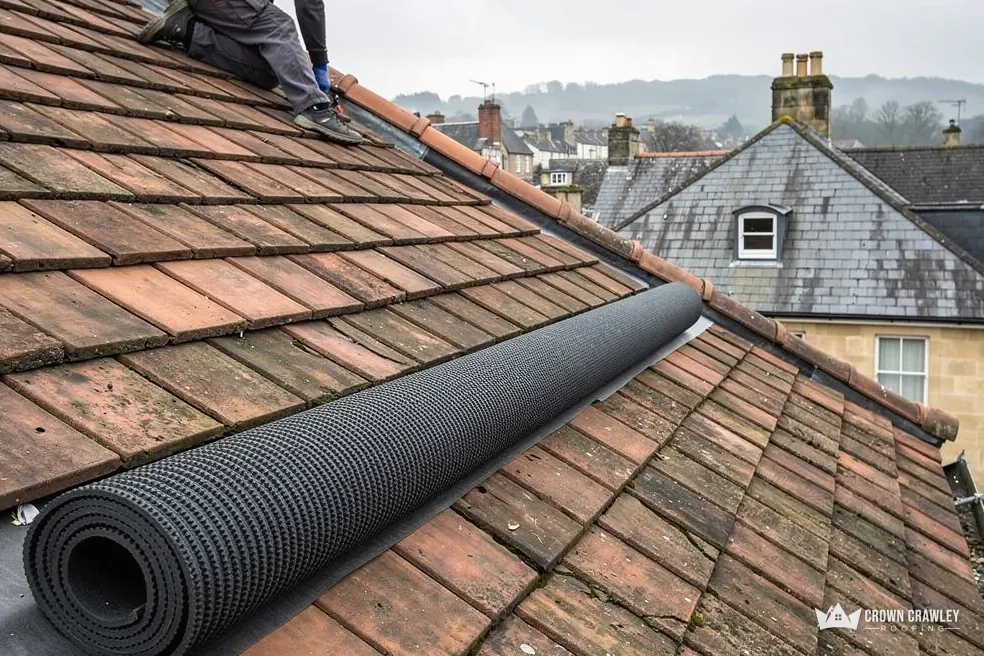
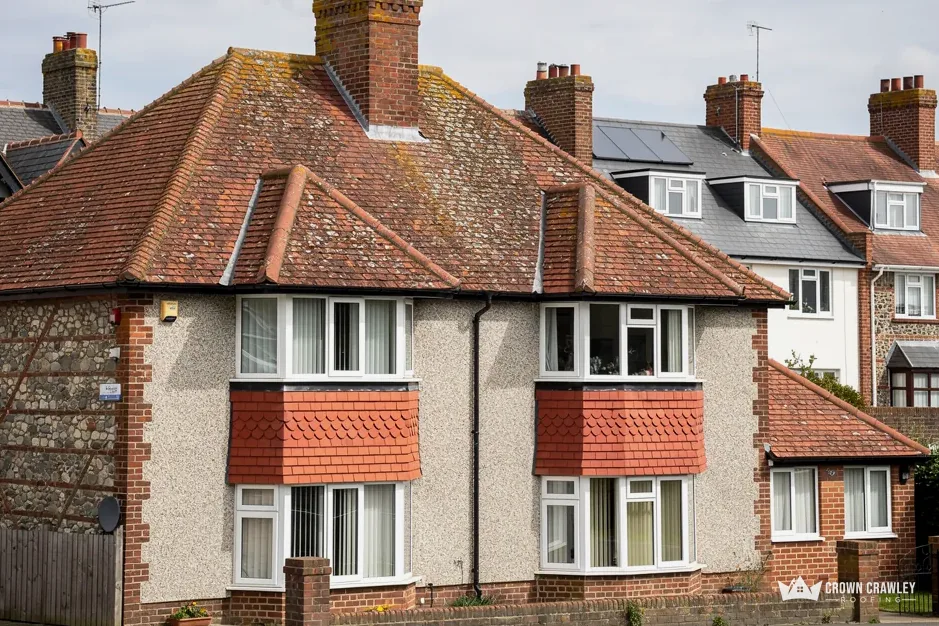
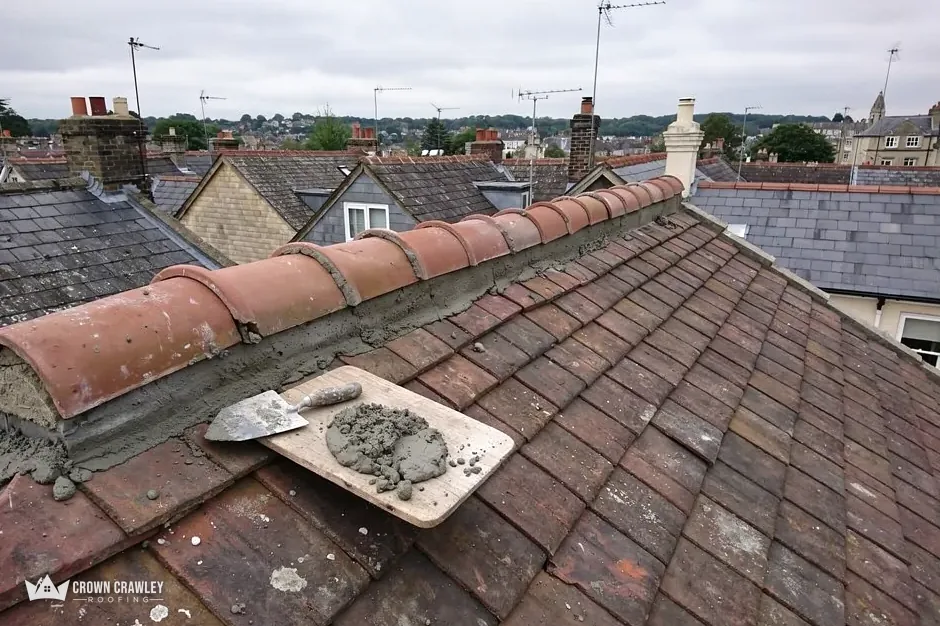
By eye, in daylight, with a spare tile in your hand. New factory tiles are often too even in colour and too flat in surface, and they stand out on a slope of hand-made ones. We look for salvaged tiles of the right size and tone, mix them across the slope so the repair does not read as a patch, and check the nibs, the nail holes and the overlap on the courses around it. Where a run of tiles has slipped, the cause is usually the nail or the batten, so we fix that too. Our pitched roofing page explains the rest of the work on tiled slopes.
What about the stone slates on Kingston Manor?
A Horsham stone slate roof is a different animal. The slabs are heavy, vary in thickness and are laid in courses that shrink towards the ridge, so the roof timbers carry a great deal of weight. Anyone who looks at one should photograph and number the courses before touching a stone, and agree the approach with the planning officers. That slows the start and protects something that is very hard to replace.
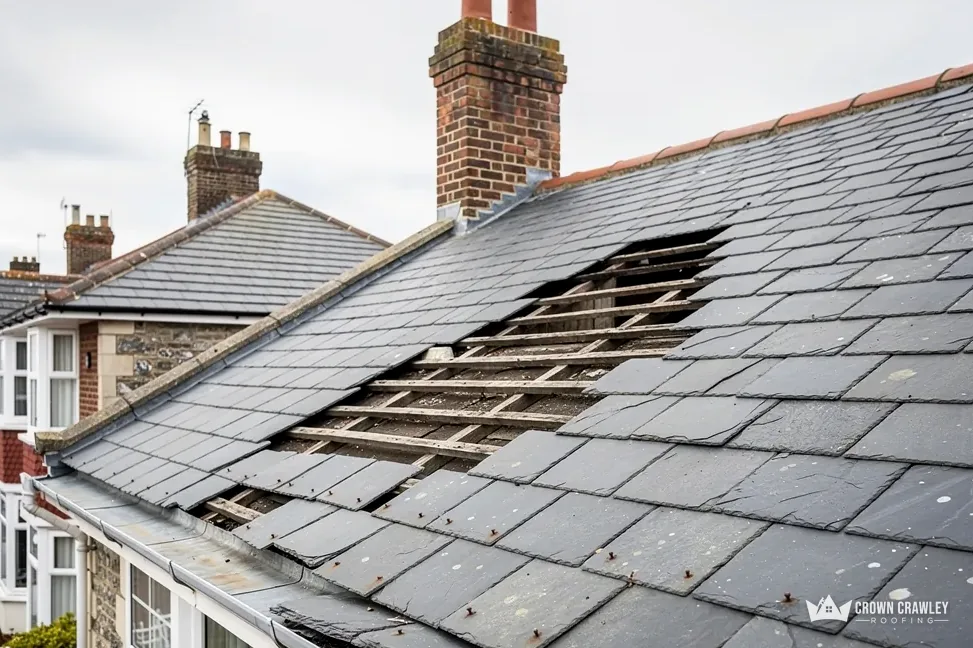
Between the stone and the tile, the lead work, gutters and chimneys also need a look. A cracked flashing can let water in beneath an otherwise sound slope, and the stain on the ceiling below can sit some way from the true source. We trace the path of the water before we propose a fix, and show you the photographs, including the underside of the covering from the loft wherever the space allows a look. That view often explains a stain better than the slope does.