Roofers in Kenley

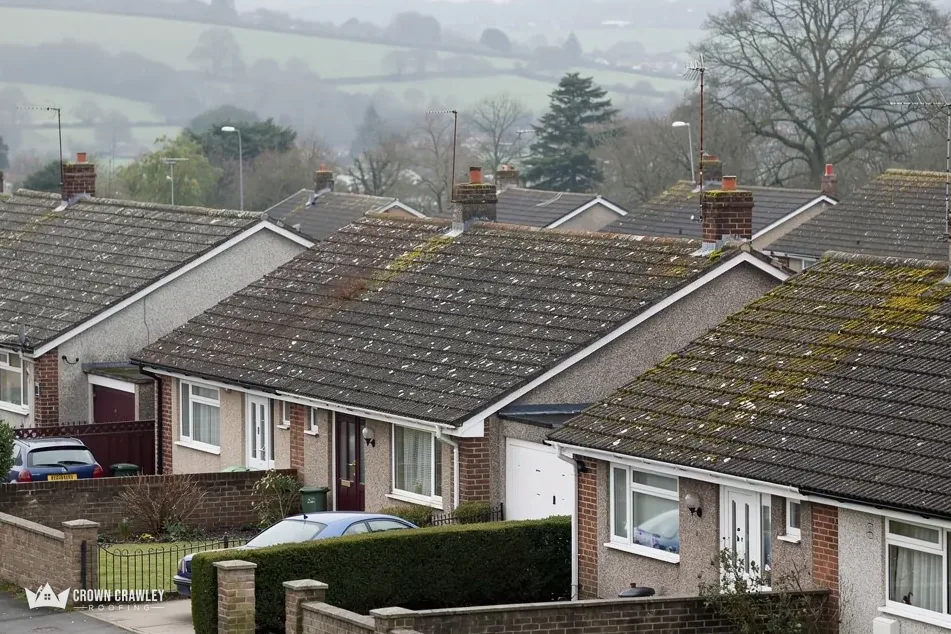
Roofs on the larger houses built up the Caterham Valley.

Kenley sits in the Caterham Valley south of Purley, where larger houses were going up by 1912. We climb up, photograph every junction and flashing, then give one written total.

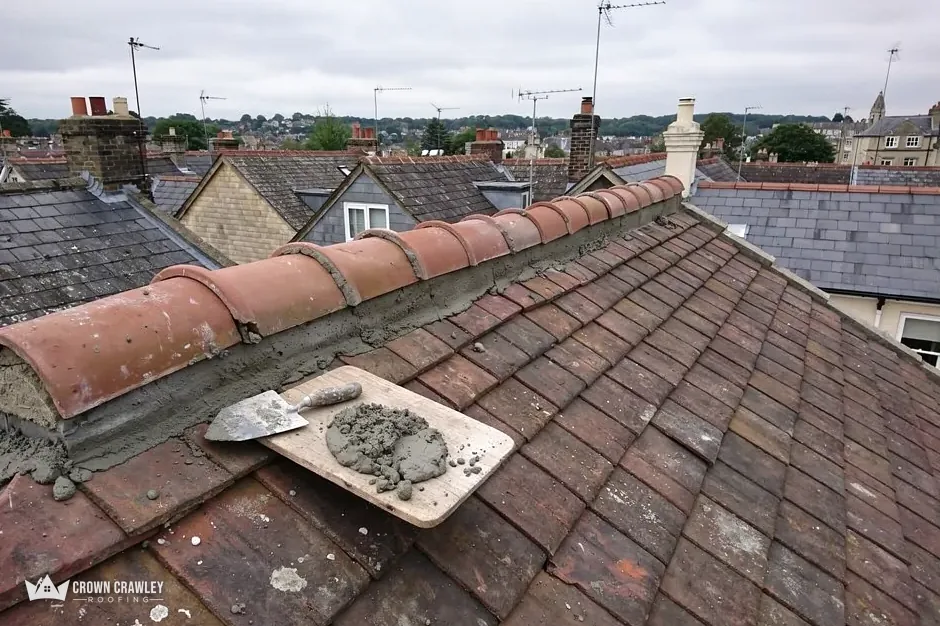
Ridge tile bedded in fresh mortar with a trowel resting on the roof

Kenley roofs, from valley houses to the station

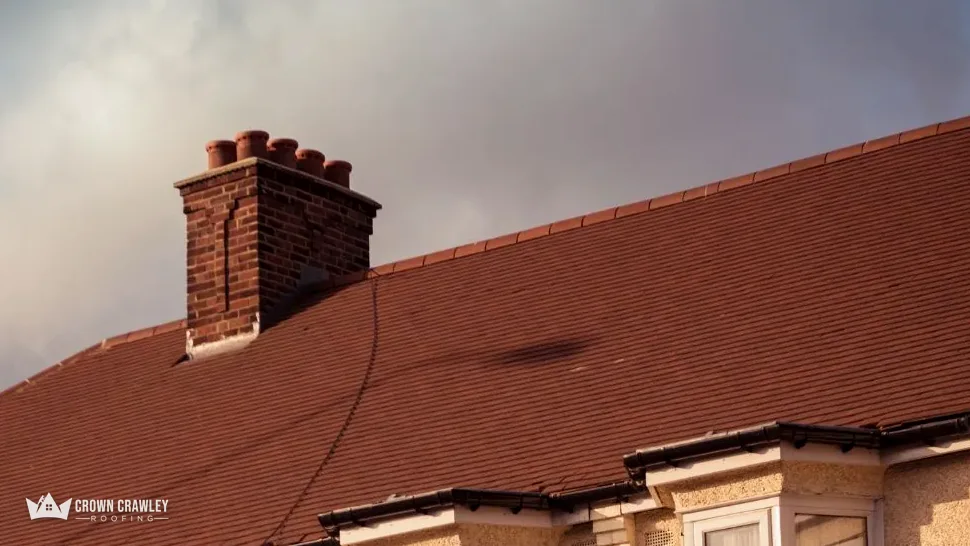
Brick chimney with lead flashing on a clay tiled roof

Larger houses of the Caterham Valley

By 1912 the Victoria County History recorded a great number of larger houses at Kenley, higher up the valley. A bigger house gives its roof more hips, valleys and flashings to keep watertight.

Large house with a hipped tiled roof

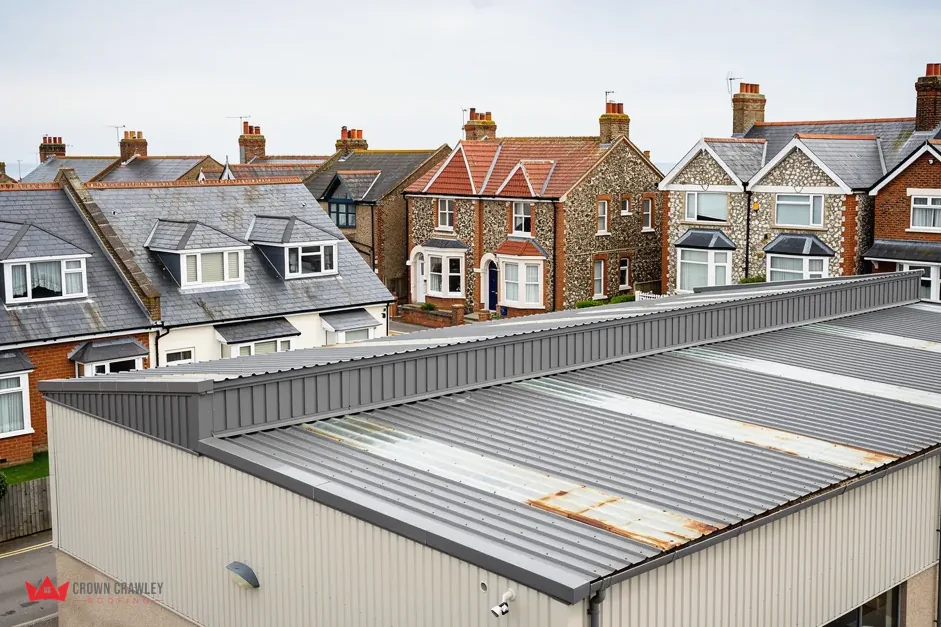
Metal-clad commercial roof with rooflights beside suburban houses

All Saints and the Commemoration Hall

All Saints church dates from 1870 and was enlarged in 1897 and 1902; the Commemoration Hall followed in 1897. Where a building grew in stages, old meets new along a roof join, and water tests that join first.

Church roof with a gable

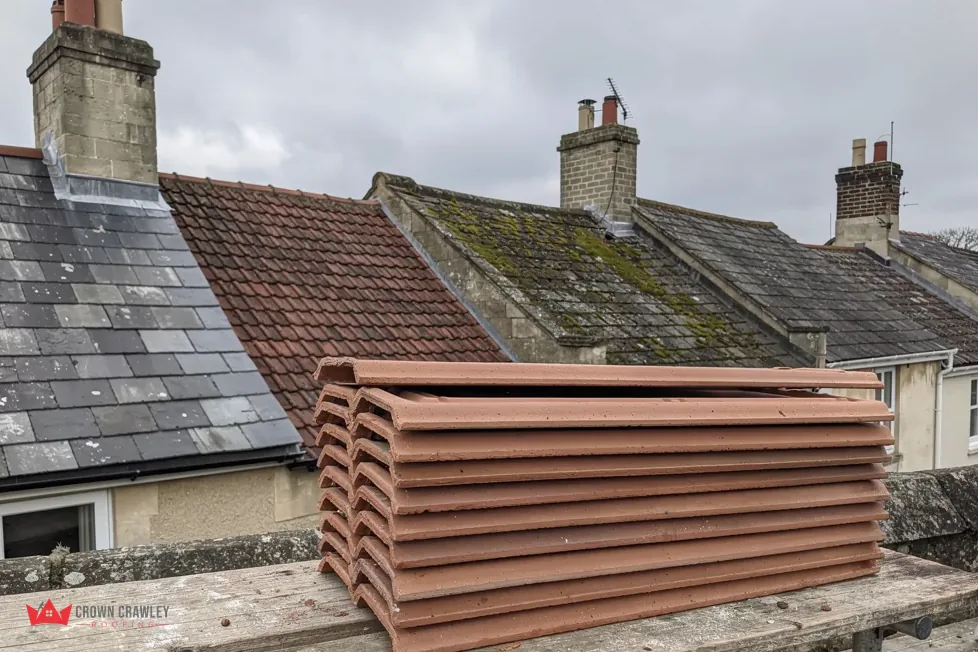
Stack of clay ridge and hip tiles on a flat roof

Kenley Station House

The original 1856 building of Kenley Station House is listed Grade II. A listing belongs to the building itself, so at the first visit we ask whether yours carries one.

Brick building with a pitched roof

Kenley, in the Caterham Valley

Map of Kenley and the neighbourhoods around it, with Crawley for reference.

A residential district south of Purley within the old parish of Coulsdon, with Kenley Common and Riddlesdown close by.

Distance
21 road miles from Crawley, to the north
Drive
About 30 minutes
Council
London Borough of Croydon (London borough; Greater London Authority above)
Planning authority
London Borough of Croydon
Railway
Kenley station, Caterham Valley line
Get a free quote

A job in Kenley

Big roofs, old listings and Croydon's rules

Three chapters on the bigger houses that climbed the valley, what a listing in the neighbourhood means for roof work, and the Croydon steps that apply to a larger job.

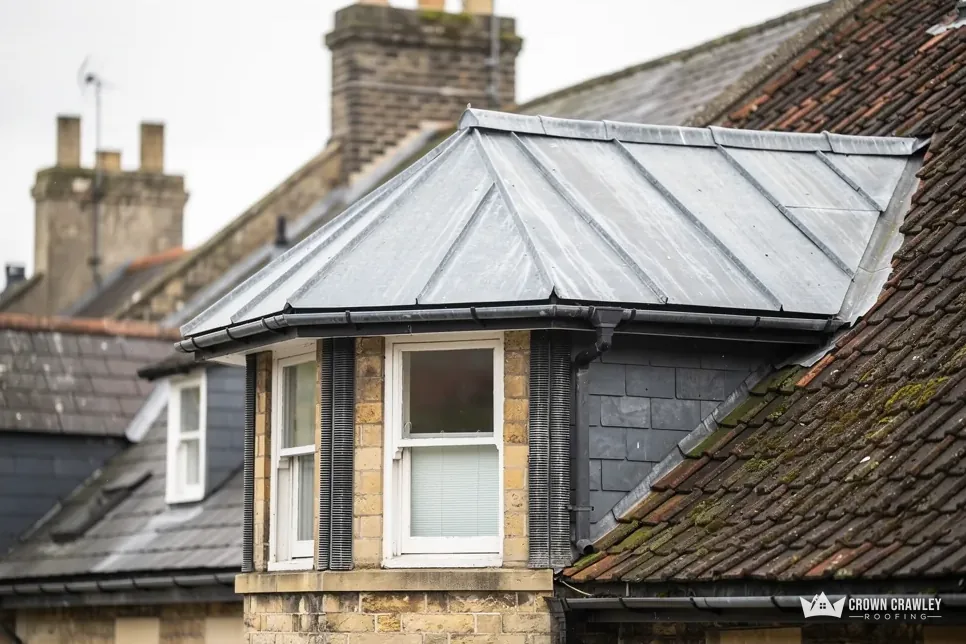
Lead-covered bay roof and chimney stack on a slate and tile roof

Stage 01 · Big roofs

Larger houses higher up the valley

The Victoria County History noted in 1912 that a great number of larger houses had gone up at Kenley, above the valley floor.

Kenley stands in the Caterham Valley south of Purley, in the old parish of Coulsdon, and Kenley station serves the Caterham Valley line. The Victoria County History of 1912 noted that a great number of larger houses had been built at Kenley, higher up the valley. A tenement called Kenley turns up as early as 1403, but the houses that history was describing are the ones that shape a roofer's week here: big, varied and full of roof detail.

Parts of a big roof

Hip
Sloping corner where slopes join
Valley
Gutter-like fold between two slopes
Flaunching
Mortar slope holding a chimney pot
Soaker
Lead piece slipped under the tiles

Why does a larger house mean more to check?

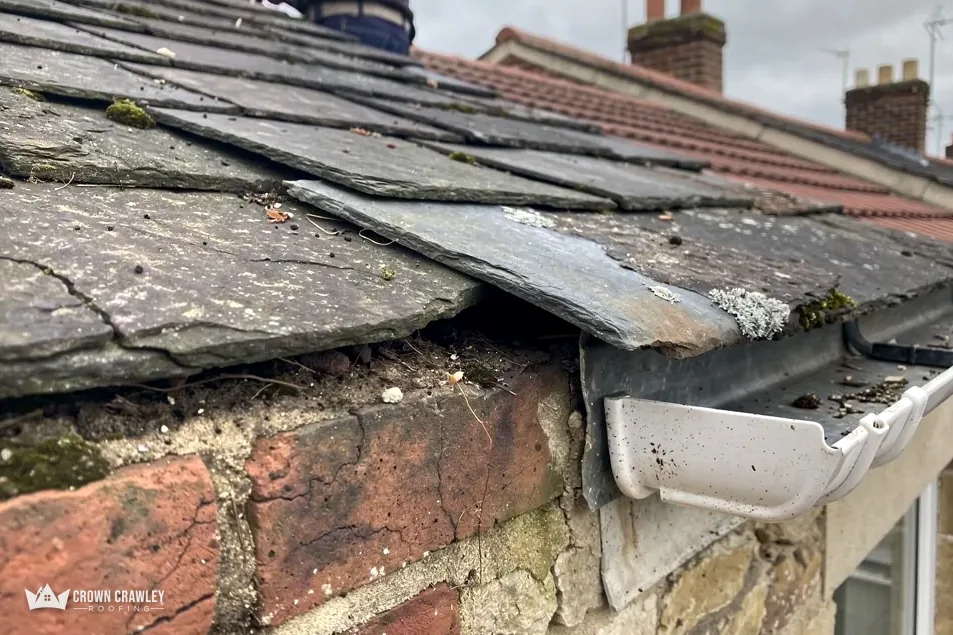
Size alone adds area, but the real difference is the number of joins. A house with several hips, a couple of valleys, a few chimney stacks and a bay or two has dozens of places where one roof surface meets another or a wall. Each of those has a bit of metal or mortar keeping it tight. We walk every one of them and photograph it, so you see the hip tile that has slipped, the valley that has silted up and the flaunching that has cracked, which is the mortar slope that holds a chimney pot.

What do we use for leadwork on these roofs?

Lead for the joins, and the right thickness for each. Royston's brochure shows Code 3 as suitable for soakers only, Code 4 for soakers, flashings and pitched valley gutters, and Code 5 for flashings, valleys and parapet or box gutters. MyJobQuote, in a guide last updated 22 September 2026, puts lead flashing at over 80 years, so replacing worn lead properly pays back. Its range for full chimney leadwork is £350 to £460 without scaffold and £700 to £920 with. On a house with several stacks, the survey ends with a single written total covering every one. See our lead work page for the detail.

A bigger house means more places where two surfaces meet and water looks for a way in.

When is a chimney the problem rather than the roof?

More often than people expect, a stain on an upstairs ceiling near a stack traces to the chimney, not the tiles. Cracked flaunching, a loose pot, failed pointing or a lifted flashing can each send water down the inside of the stack. We check the stack from the roof and from the loft, and where the fault is at the stack, the repair is usually local, which keeps the cost far below a re-roof. Our chimney repairs page explains the work, from repointing to a rebuild above the roofline.

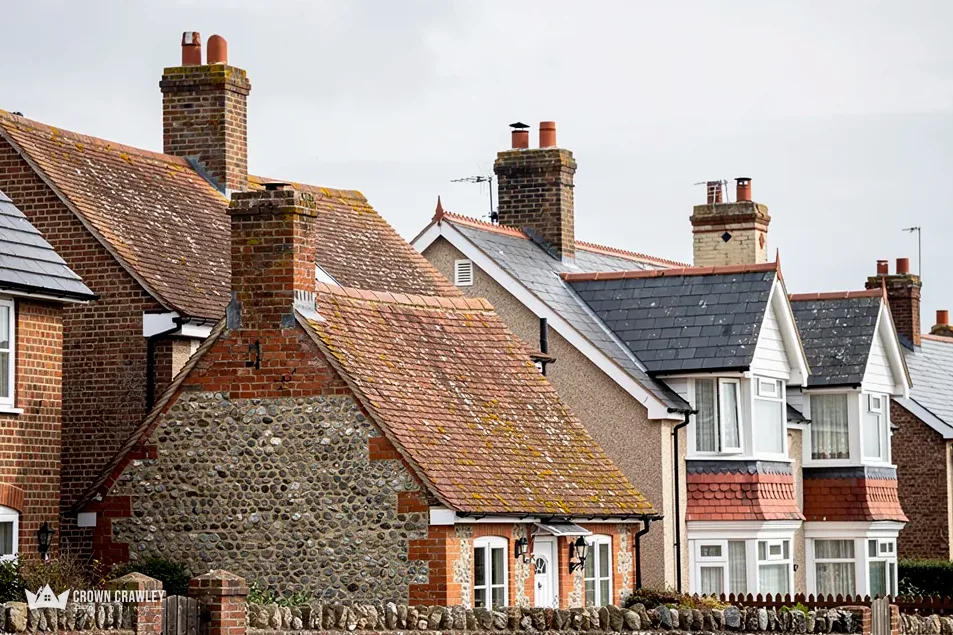
Flint and brick houses with clay tiled roofs and chimneys

Stage 02 · Listings

Listed buildings and a church nearby

Kenley has Grade II buildings, and the rules for a listed roof differ from those for an ordinary house.

The National Heritage List gives the Church of All Saints, Kenley, Grade II (list entry 1358795, first listed on 15 February 1983), and the original 1856 building of Kenley Station House is Grade II as well. Neither is a family home, but they show that buildings in this district can carry a listing, and a listing changes what has to happen before the scaffold goes up.

What does listing do to a Kenley roof repair?

Section 7 of the Planning (Listed Buildings and Conservation Areas) Act 1990 makes unauthorised alteration of a listed building's character an offence. A switch of tile, a new ridge pattern or fresh lead could each count. So the first step for a listed house is a conversation with Croydon's planning team, before a price is fixed rather than after it. A listed roof can still be repaired; the difference is that the work is agreed beforehand, and our roof replacement page covers how a job of that size is planned.

If your roof is listed

Listed house
Consent for works affecting character
Unlisted house
Croydon planning if the look changes
Church of England
Faculty, not listed building consent
Lead and tiles
Matched to what was there

Why does a church follow a different route?

All Saints is a Church of England church still in use for worship, which makes it an exempt building. For an exempt Church of England church, the route is a faculty, not listed building consent, though government guidance on the exemption notes that planning permission may still be required for work reaching the exterior of a church that is listed. We mention it because it catches people out: the same roof can be under one system on a Church of England site and another on a house next door.

How do we repair without changing the look?

By matching. We note the tile profile, colour and size, the ridge detail and the lead code on show, and we repair like for like. A match keeps the character of the roof and the survey photos record what was there before and after. For any Kenley house you suspect is listed, look it up on the national list online before booking. If it turns out to be on it, bring Croydon's planners in early, and give us the photographs they ask for.

An unlisted house gets exactly the same survey. With a listed one we allow for Croydon's reply before ordering anything, so the lead, the tiles and the timber arrive once the answer is in hand and nobody pays for stock that cannot be used.

Stage 03 · Permissions

Croydon's rules and a Kenley scaffold

Kenley sits in the London Borough of Croydon, which runs its own planning, building control and scaffold licences.

Croydon Council runs its own building control service. For a tile or two nobody needs to contact anyone. For a re-roof, a listed house or scaffold on the road, it helps to know the sequence before the quote is final.

What does Croydon building control look at on a re-roof?

The Planning Portal's test for skipping an application is under 25 per cent of the building envelope and under 50 per cent of the roof, while a covering that adds 15 per cent or more to the weight sends the job to building control. The energy side comes from Part L. In Approved Document L 2021, Table 4.3 gives 0.35 W/(m²·K) as the roof threshold and 0.16 as the improved value for retained elements, and renovating more than 50% of an element's surface area counts as triggering an upgrade. If the improved figure cannot sensibly be reached, or the cost would take more than 15 years to recover, paragraph 4.13 asks for the lowest U-value that can be reached and recovered within that period. The 2026 edition takes effect on 24 March 2027 and numbers that table 3.3. We run these figures against your roof at the survey.

Terraced bungalows with grey tiled roofs along a cul-de-sac

What does a Kenley scaffold cost in licence terms?

A scaffold that takes up pavement or road is licensed by the highway authority, and in Kenley that is Croydon. Its published fee is £488 per 4 weeks for each elevation, with £610 where an elevation runs past 10m, and the minimum period is one month. Croydon's guidance says the licence is issued to you only once its site visit has taken place, and that no licence or consent is needed to place scaffolding on private land. If the road is the only choice, the licence is handled between us and the scaffolder, with the site visit built into the start date.

Is there a conservation area to ask about?

Ask Croydon's planners if your Kenley road is inside one. If it is not, a like-for-like repair carries one question fewer, though a listed building still has its own. Our post on planning permission for roof work explains when permission becomes a question at all.

Words that come up

Part L
Building rules on saving heat and power
Elevation
One face of the building
Roof lining
Layer beneath the covering
Licence period
How long scaffold may stand on the road

The last check is wildlife. A roof is a common place for bats to shelter, and the law guards both the animals and the spots they use, so a re-roof can need a specialist's view first. Droppings in the loft, or an occupied nest under the eaves, mean we pause the job and agree with you what happens next. Photograph whatever is giving you doubts and send it with your postcode; the survey is booked from that.

Straight answers for Kenley homes

Which parts of a larger Kenley house roof need the most attention?

The joins. Valleys, hips, chimney flashings and the runs of gutter below them carry more work than the open slopes do. On the survey we photograph each of these in turn, show you what we found and say which are worth repairing now and which can wait, then write the whole job as one total.

Does a Grade II listing nearby change the rules for my house?

A listing belongs to a particular building, and the National Heritage List shows which ones. If yours is on it, consent is needed for works touching its character, so speak to Croydon's planning team before a price is fixed. A house that is not listed follows the ordinary rules, and we check which applies before the visit.

Will Croydon building control need to see a Kenley re-roof?

Possibly. That depends on the share of roof being renewed and the weight of whatever goes back on. Croydon runs its own building control service, so larger jobs go to it before a date is fixed. On the national yardstick, the Planning Portal does not normally expect an application below 25 per cent of the building envelope and below 50 per cent of the roof.

What should I send to start a Kenley roof quote?

Photograph the hip, valley, chimney or slope you are unsure about, then send it with your postcode and the room where any stain appears. A survey follows, and then comes a set of our own pictures and a single written total. If your house is listed, tell us when you get in touch, so we plan around it.

Book your Kenley roof check

Send us your postcode with a snap of the chimney, valley or lead you doubt, and a survey slot gets arranged.

01293 974253

10-year workmanship guarantee, in writing.

Call Get a free quote