Roofers in Purley

Roofs from the station town that grew up Smitham Bottom.

Purley was Caterham Junction before it was a town, and its villas climbed the downs by 1912. Each roof gets read for its age first, and the price follows in writing.

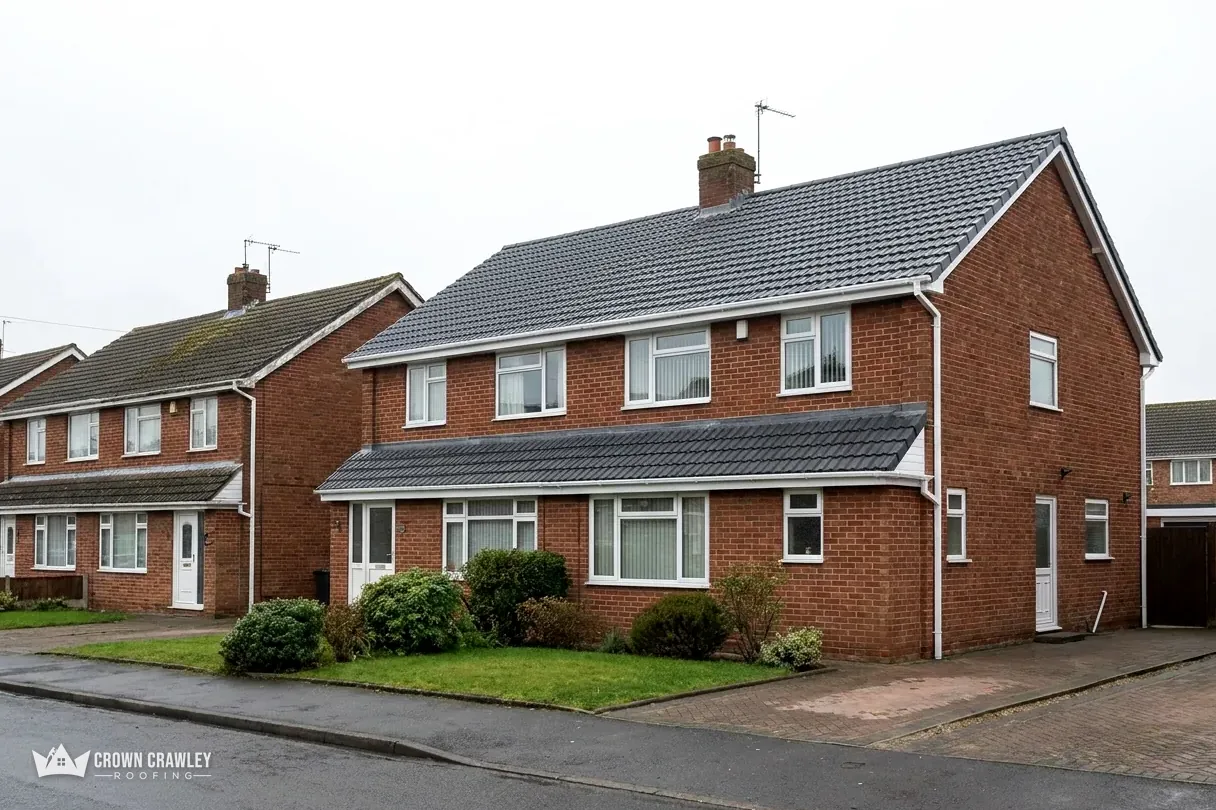
Detached red brick houses with grey tiled roofs on a quiet road

Purley roofs and where they come from

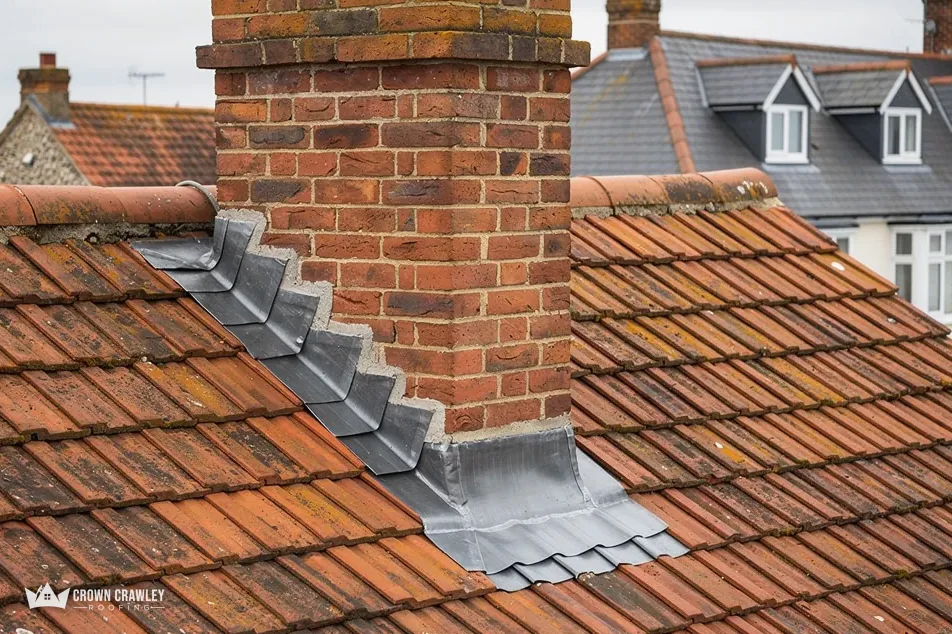
Stepped lead flashing around a brick chimney on a red tiled roof

Villas that climbed the downs

The Victoria County History said in 1912 that villas near the station had spread up Riddlesdown and along the Caterham Valley. A house from that era may carry a long history of repairs.

Older house with a pitched tile roof

Brick chimney with lead flashing on a clay tiled roof

Christ Church, begun in 1877

Christ Church was begun in 1877 and Purley became an ecclesiastical district in 1884. A house from that era may have valleys, flashings and chimney joints well past their first repairs.

Chimney and flashing on a tiled roof

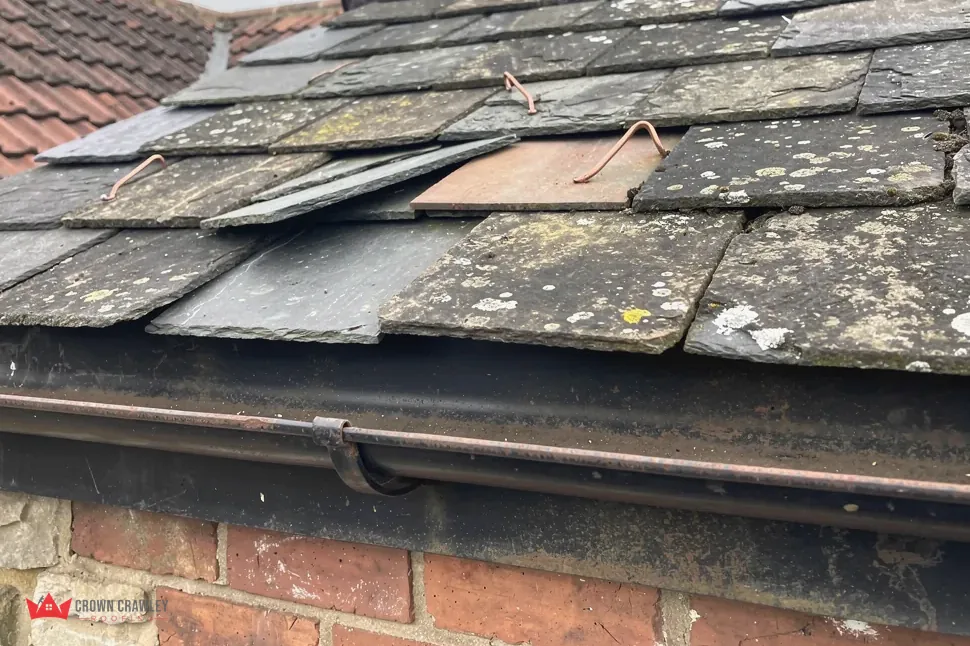
Old slates, damaged and slipped, above a cast-iron gutter

A listed church roof

Purley United Reformed Church, formerly the Congregational Church, is listed Grade II. Its denomination runs its own consent system, so we ask who must approve roof work before pricing it.

Church roof with a steep pitch

Purley, in Smitham Bottom

Map of Purley and the neighbourhoods around it, with Crawley for reference.

Purley is a town in the chalk valley of Smitham Bottom, south of Croydon, where the Brighton road meets the Caterham Valley.

Distance
19 road miles from Crawley, to the north
Drive
About 29 minutes
Council
London Borough of Croydon (London borough; Greater London Authority above)
Planning authority
London Borough of Croydon
Station's old name
Caterham Junction (Victoria County History, 1912)
Building control
London Borough of Croydon
Get a free quote

Purley roof ledger

From Caterham Junction to Croydon's rules

Three short chapters on how Purley grew around its station, what a Grade II church roof asks for, and the Croydon rules behind scaffold and larger jobs.

Stage 01 · Local story

From Caterham Junction to a town of villas

Purley's roofs have a railway-age story, and knowing it helps us guess where an older roof starts to fail.

Today's Purley station was once called Caterham Junction, and the Victoria County History of 1912 records very extensive lime works near the Coulsdon and Purley stations. Around that station a town gathered. By 1912 the villas had spread up the downs into Beddington parish, up Riddlesdown and along both sides of the Caterham Valley, and the same history says they now formed a town. For anyone looking at a roof, the useful lesson is that Purley did not appear all at once, so two neighbours can have roofs of quite different ages.

On an older roof survey

Ridge and hips
Bedding, caps and fixings
Valleys
Metal lining and tile edges
Flashings
Seals at walls and stacks
Soakers
Pieces beneath the tile edges
Flaunching
Mortar around the pot
Rear of a brick detached house with a tiled roof and garden

How do we read an older Purley roof?

From the top down and the edges in. We check the ridge and hips first. Valleys come next: the trough-like joint where two slopes meet, lined with lead or other metal, which carries the water to the gutter. After them, the flashings, which are strips of metal closing the gap at a wall or stack, and the soakers, the folded pieces tucked beneath the tile edges. Last, the flaunching, the mortar around the base of a chimney pot, which cracks in the weather and lets water run down the stack. Every one of those joints gets its own photo, labelled so you can find it on the roof plan. Along the eaves we study the gutters, fascia boards and soffits, because a sagging run or a rotten board lets water back in beside the lowest course of tiles. Those boards sit under the edge of the roof and are easy to miss from the pavement.

A roof near a Victorian station can be older than its last repair suggests.

Is an old roof past saving?

Not necessarily. A roof that has been repaired many times may still have sound tiles and timbers, with only the joints needing renewal. We show you the weak points in photos so you can compare a repair with a replacement on facts. Our lead work page covers renewing valleys and flashings, and our pitched roofing page covers the tiles and battens around them.

If a survey shows widespread decay in the timbers or covering, we say plainly what a strip and re-roof would involve and why. If it shows a few failed details, we price those alone and leave the sound parts untouched. The choice gets easier with the evidence in front of you, which is why a survey always ends with pictures of your own roof, and why a hand-written list of faults is never enough on its own. A repair priced from the pavement alone would be a guess, and a guess is a poor basis for a price.

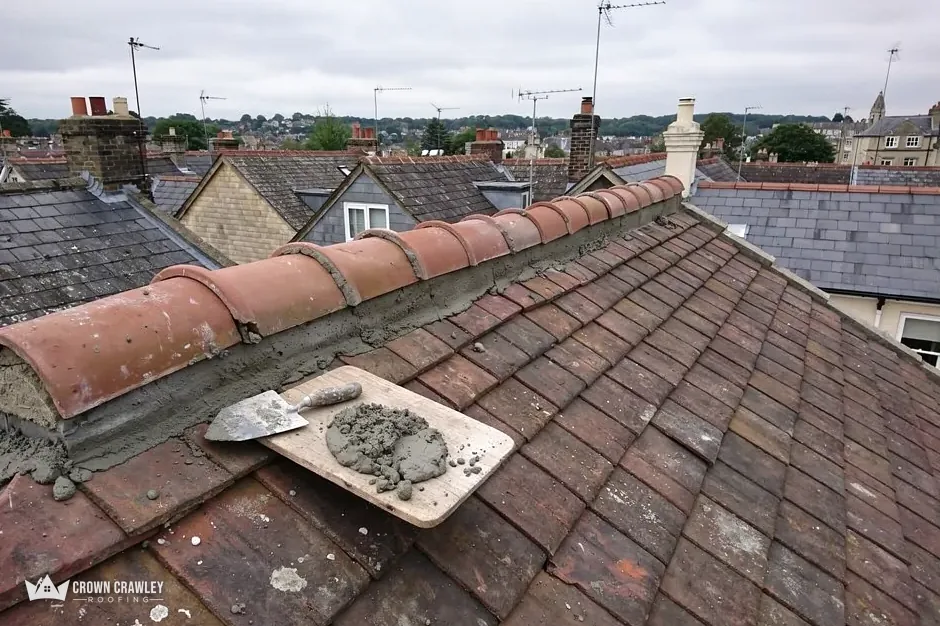
Ridge tile bedded in fresh mortar with a trowel resting on the roof

Stage 02 · Listed roofs

A Grade II church and its consent route

Purley United Reformed Church is listed Grade II, and while it is used for worship its consents run on a separate track from a house's.

The National Heritage List records Purley United Reformed Church, formerly Purley Congregational Church, as Grade II, first listed on 20 May 2010 (entry 1393812). It is in use as a United Reformed Church place of worship, and that fact decides who approves work to it.

Why is a church roof treated differently?

Listed building consent normally controls works that affect a listed building's character. The ecclesiastical exemption in section 60 of the same Act switches that control off for buildings in ecclesiastical use. Under the Ecclesiastical Exemption (Listed Buildings and Conservation Areas) Order 2010, a working Anglican parish church needs a faculty, while the Roman Catholic, Methodist, United Reformed and certain Baptist churches use their own denominational process. Unitarian, Quaker and other places of worship still need listed building consent. The same guidance notes that works altering the outside of a listed church or chapel still go through planning.

What if a church is no longer in use?

The exemption applies only while a building is used for worship. A closed Church of England church, or one vested in the Churches Conservation Trust, comes under ordinary listed building consent, and so does any place of worship outside the named denominations. If you are asking us to price a roof on a church or chapel in the Purley area, tell us how it is used now, and the quote will say which route we assume.

What does that mean for a roofer?

It means our first step on a church is a question, not a quote: who approves this roof work, and have they signed it off? Trustees and church officers know their denomination's process, and we follow the paperwork they give us. A written price for a church roof states what it assumes about consents and leaves the approvals with the people who hold them. Where lead, valleys or a parapet gutter are involved, we describe the proposed repair in terms a committee can follow.

Consent words, plainly

Faculty
Church of England consent for works
Exempt denomination
Church with its own consent system
Listing grade
Ranking on the national heritage list
Trustees
People who hold a church's property

For private homes the position is simpler. The Webb Estate is a Croydon conservation area within a kilometre of Purley's centre, and outside it a repair to an ordinary unlisted house raises few heritage questions. If your own house is listed, put the question to Croydon's planners before work begins. Our roof replacement page follows a full strip from the first scaffold pole to the final sweep, once any consents are settled.

Stage 03 · Permissions

Croydon's rules for scaffold and bigger jobs

Purley sits in a London borough, so Croydon handles planning, building control and the scaffold licence for a roadside frame.

Purley belongs to the London Borough of Croydon. The Greater London Authority is the regional tier over the borough, yet for a house roof the borough is the body to ask about planning and building control, and it is also the highway authority for the scaffold licence. That makes one set of council pages the place to look. Every figure below comes from those pages, so check them for updates before you set a budget.

What does a Croydon scaffold licence involve?

Croydon sets one month as the shortest scaffold licence, and it lists £488 per 4 weeks for each elevation of hoarding and scaffold, and £610 per 4 weeks where an elevation runs over 10 metres. Croydon also asks for a refundable bond, set at £50 for each square metre of highway enclosed. Nothing is issued until an officer has visited the site, and a renewal should be requested at least 7 days before the original expires. The council says no licence or consent is needed for scaffolding on private land.

Croydon scaffold facts

Planning
London Borough of Croydon
Building control
Croydon's own service
Minimum licence
One month
Fee
£488 per 4 weeks, per elevation
Renewal
At least 7 days before expiry
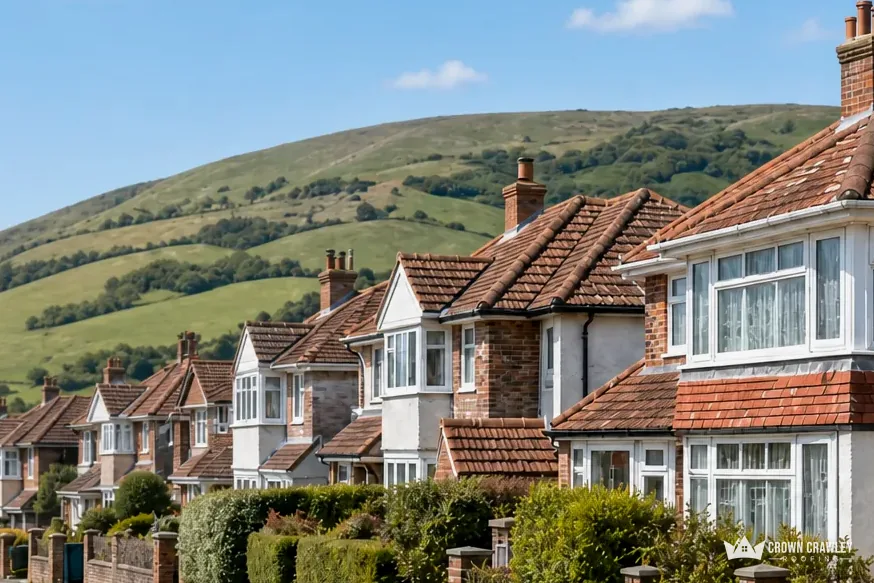
Row of suburban houses with tiled roofs below green downland

Those figures are why access gets a careful look on the survey visit, from the depth of the front garden to the width of the drive. If your drive has room for the frame, the licence question disappears. If the kerb side is the sole option, the paperwork is agreed with the scaffolder, and no start date is promised until the licence exists. Even where no licence is needed, Croydon notes that parking suspensions may still be wanted, so it is worth telling us early if cars are usually parked outside. Croydon's published figures belong to Croydon, so quote them back to anyone who offers you a different number.

Would a Purley re-roof need approval?

Two Planning Portal tests apply to a re-roof: the share of the building envelope affected, and the share of the roof. Under 25 per cent and under 50 per cent respectively, building control approval is normally unnecessary, but a new covering that raises the weight by 15 per cent or more does need it. The written price notes where a job nears those limits and whether we have checked with Croydon's building control team. Bat roosts are protected by law too, so a loft with droppings or staining holds the work while you and the surveyor choose a way forward.

Purley roof questions, one by one

Would repairing a roof on a Purley villa need a conservation area application?

Not usually. If the villa is on the Webb Estate, which Croydon has designated a conservation area, raise any change of look with the council first; a matching repair elsewhere brings no conservation question with it. A listed house would be different, and Croydon's planners can tell you about yours. Send us your road and a phone photo, and the survey will show what the repair involves. That record also helps if you later sell the house.

Who approves roof work on Purley United Reformed Church?

The United Reformed Church has its own approval process, because the ecclesiastical exemption covers denominations named in the 2010 Order. Planning rules still apply to changes that alter its exterior. We ask the trustees who signs off the roof work, and our written price states what it assumes about consents, so nobody discovers a missing approval after the scaffold is up.

What will Croydon charge for scaffold on the street in Purley?

Croydon lists £488 per 4 weeks per elevation, with a one-month minimum, and £610 where an elevation is over 10 metres long. A refundable bond of £50 for each square metre of highway enclosed is also required, and the licence follows a site visit. Scaffold on private land needs no licence, so we check your drive first.

Which office decides Purley roof questions, Croydon or the Greater London Authority?

For a house roof, it is Croydon. The borough is the planning authority, runs its own building control service and handles the scaffold licence. The Greater London Authority sits above the borough, but it is not where roof queries go. Ask Croydon's planning or building control team, then pass on their answer so the quote reflects it.

Show us the Purley roof that worries you

Send your road and a phone photo of the valley, chimney or slope in question, and we will book a survey.

01293 974253

10-year workmanship guarantee, in writing.

Call Get a free quote