Roofers in Danehill

Roofs on a High Weald ridge, from clay tile to Victorian slate.

Danehill stands on a ridge on the western edge of Ashdown Forest, with a conservation area and clay-tiled older homes. We survey each roof and share our photos before we price.

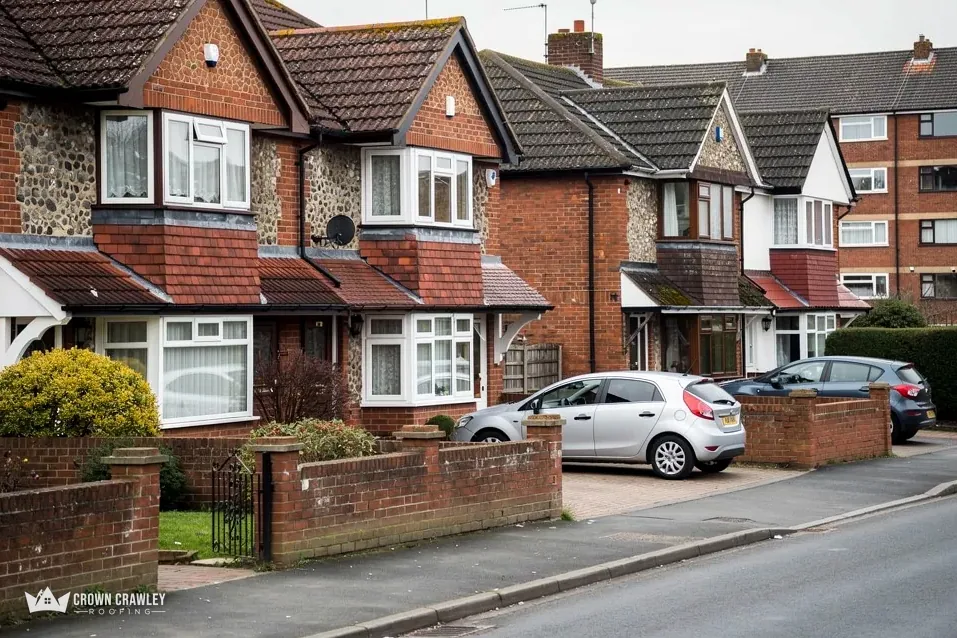
Brick semi-detached houses with tiled roofs and parked cars

Danehill roofs and how they age

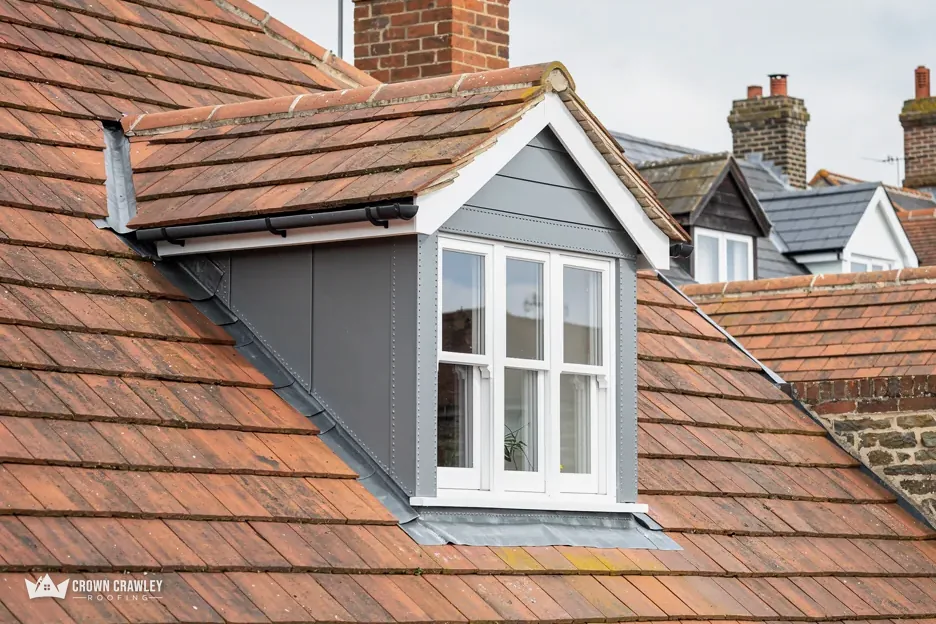
Lead-clad dormer window set into a red clay tiled roof

Clay tiles on older properties

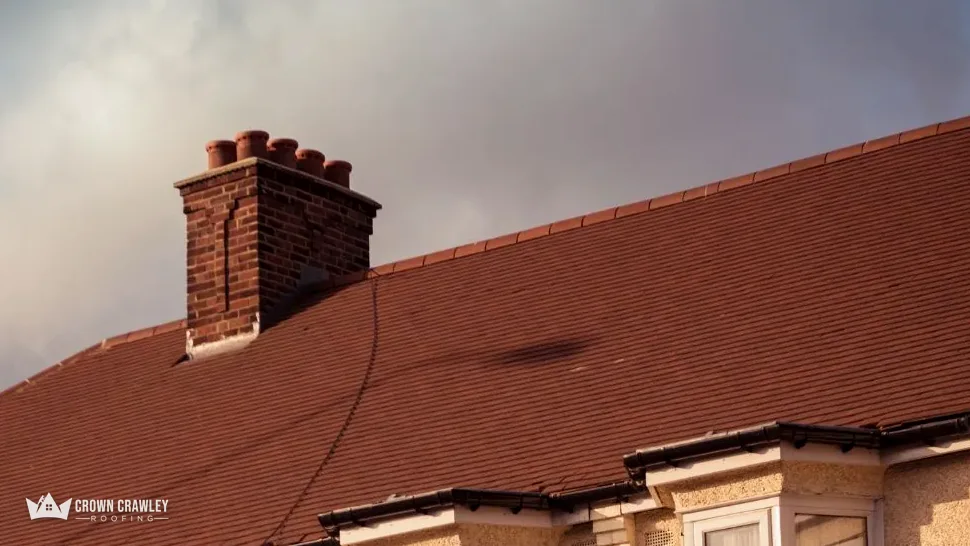
Wealden's conservation area appraisal calls clay tiles the main roofing material for older properties. We check every tile for cracks and worn nibs, and match colour and profile when we replace, so a repair does not stand out.

Old clay tiles on a pitched roof

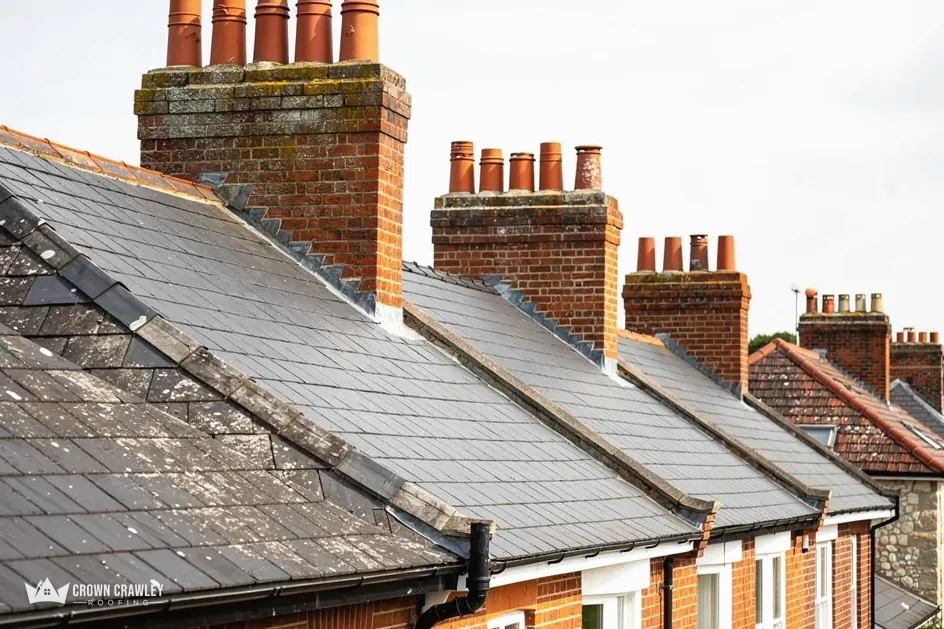
Row of terraced chimney stacks above slate roofs

Slate from the 19th century

The same appraisal says slate was also in use from the 19th century. A slate roof can slip where its nails have corroded, so we lift a few slates to look at the fixings and the battens beneath.

Slate roof with a tiled ridge

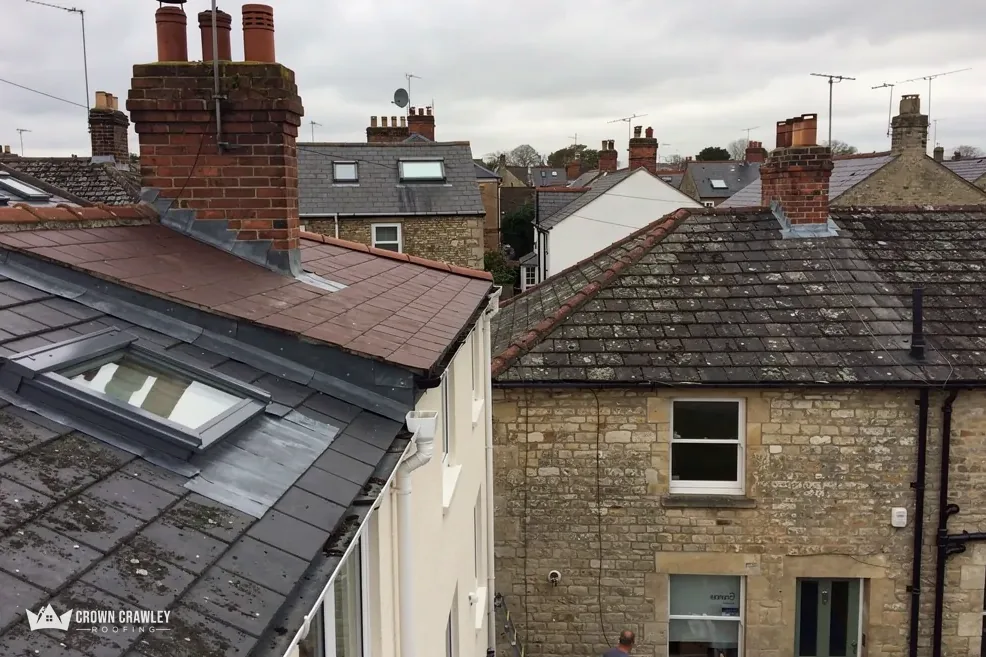
Slate and tiled roofs with a roof window beside a stone cottage

Brick, tile-hung and weatherboarded walls

The appraisal says timber-framed buildings have generally been refaced in brick, often tile-hung or weatherboarded at first floor. Where a roof meets that cladding, the flashing has to tuck in neatly behind it.

Tile-hung wall below a roof edge

Danehill, west of Ashdown Forest

Map of Danehill and the neighbourhoods around it, with Crawley for reference.

Danehill lies on the A275 on the western edge of Ashdown Forest, on the Greenwich Prime Meridian line, inside the High Weald National Landscape.

Distance
14.5 road miles from Crawley, to the south-east
Drive
About 28 minutes
Council
Wealden District Council and East Sussex County Council
Planning authority
Wealden District Council
Conservation area
Danehill Conservation Area (designated 1995)
Listed buildings
8 in the conservation area, all Grade II
Parish
Separate ecclesiastical parish since 1850
Get a free quote

Working in Danehill

Reading roofs in a High Weald conservation village

Three short chapters on the old clay tile around the village green, the church roofs of slate and Horsham stone, and the rules that apply in a conservation area and a National Landscape.

Stage 01 · First look

Clay tile around the village green

Danehill's older core grew around a green, and its older roofs are clay. We expect to find tile and check what is really there.

Danehill's older core grew between the early 16th and late 18th centuries around a village green, where minor roads met the historic London to Lewes route. Wealden District Council's draft conservation area appraisal says clay tiles are the main roofing material for older properties here, with slate in use from the 19th century. That gives us a sensible starting point at a survey: we expect clay, and we check what is actually up there before we say anything about price.

How long does a clay tile roof last?

The Building Research Establishment's figure for clay tile is a 60-year minimum. That is a general guide and no promise for any single roof, and for old peg tiles the same figure is described as clearly not a reliable guide. On a roof of great age, some tiles are still sound while their neighbours have cracked or lost their nibs, the projections that hook it over the batten. We inspect the slope tile by tile, then list what needs replacing and what can stay, so you are not paying to renew material that still works.

Surveying in Danehill

Tiles
Cracked, mossed or worn at the nibs
Battens
Sound timber under the covering
Ridge and hips
Bedding whole, fixings holding
Tile-hanging
Flashing tucked in behind cladding
Gutters
Joints tight, falls running clear
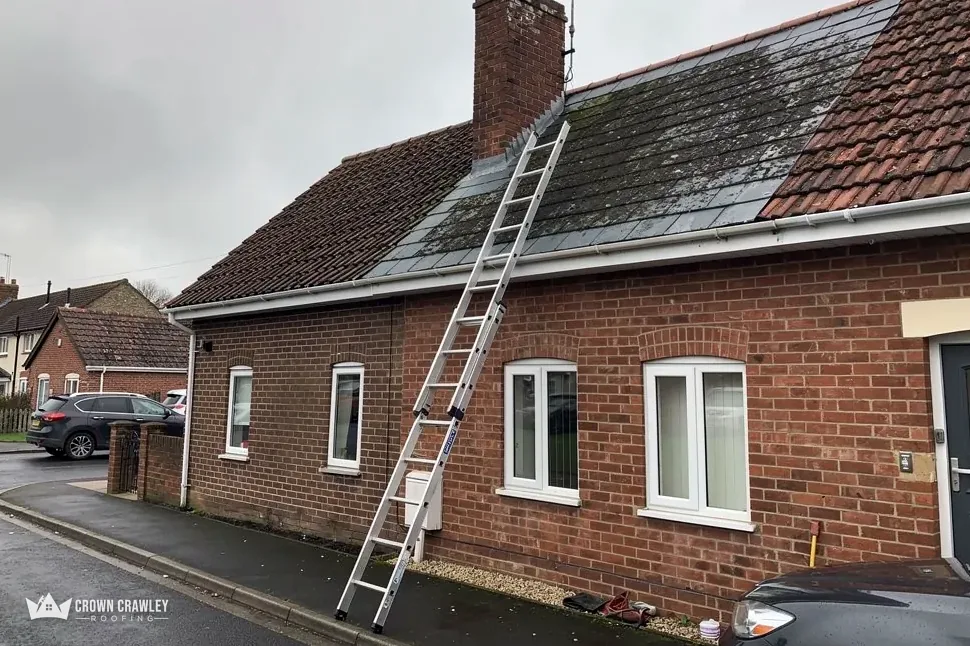
Brick bungalow with a ladder leaning against its tiled roof

Can a repair match the tiles already on the roof?

Often it can, and on a roof that people see from the green it matters. Tiles weather over the decades, and fresh ones can look bright beside them. At the survey we note the size, colour and profile, and where a less visible slope can spare some reclaimed tiles, we talk to you about using them on the face that shows. If none can be spared, we take a sample tile to the supplier to compare. Our pitched roofing page sets out the tile, batten and underlay repairs we carry out.

What sits around the tiles?

Battens carry the tiles, and underlay (the sheet beneath them, if the roof has one) catches what gets past. Along the top runs the ridge, and the hips are the sloping lines where two slopes meet; on an older roof both are usually bedded in mortar. Lead flashing seals the joint at a chimney or an abutting wall. On tile-hung walls the flashing has to tuck in behind the cladding, and a repair that ignores that junction invites a leak a few months later. Each part is photographed on your roof and explained before we write one total price.

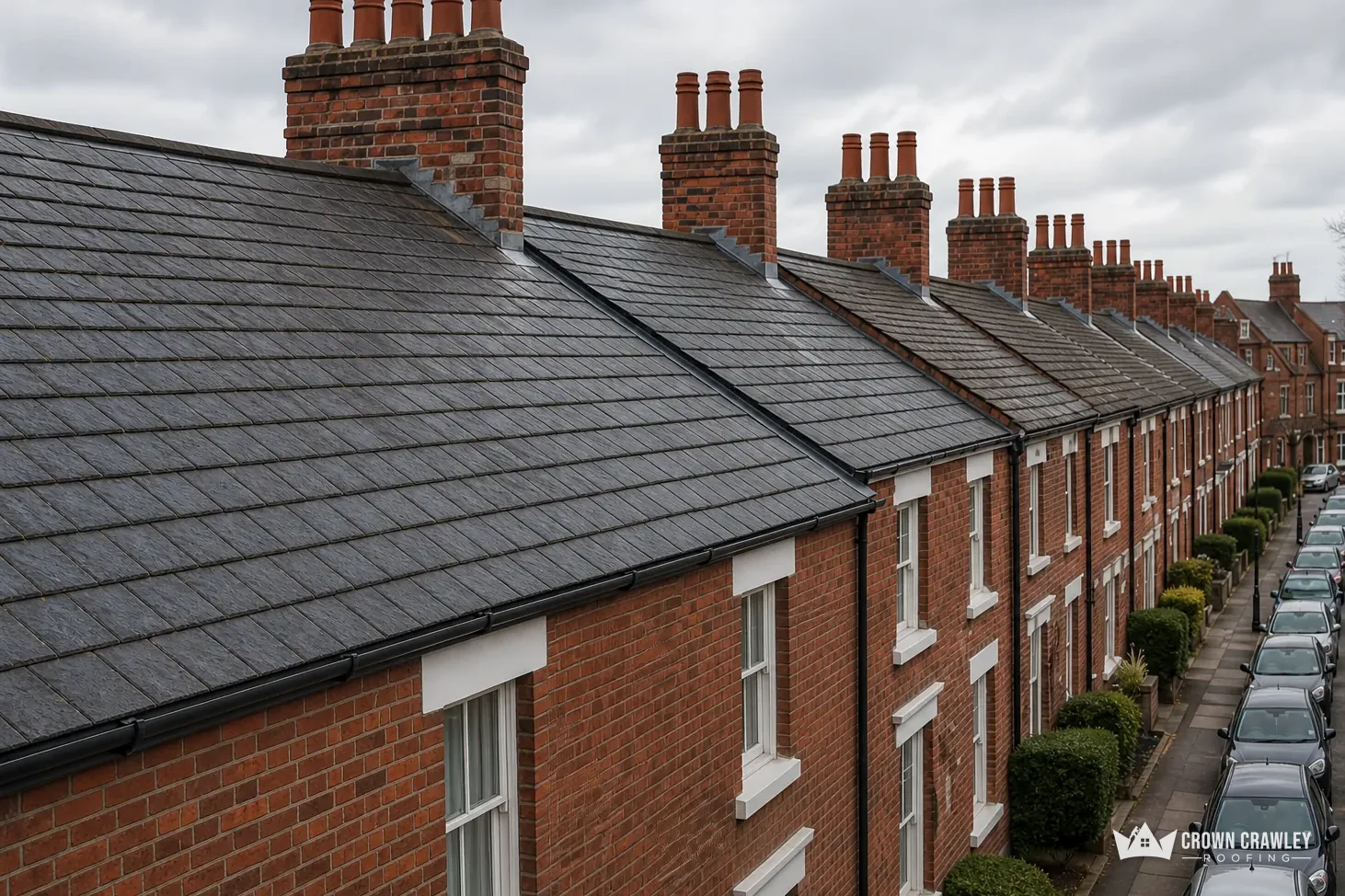
Long terrace of slate roofs with a line of brick chimneys

Stage 02 · Other coverings

Slate, Horsham stone and All Saints

The village church shows two stone roofs side by side, and the two are looked after in quite different ways.

Wealden's appraisal records that All Saints' church was designed by G.F. Bodley and G.F. Garner and built of sandstone from Scaynes Hill, with slate on the main roof and Horsham stone slabs on the porch roof. We are not describing a job on the church here. The pairing is a useful reminder that two stone coverings, a few metres apart, ask for very different care, and that the 19th-century slate in the village is a subject in its own right.

How does a slate roof fail?

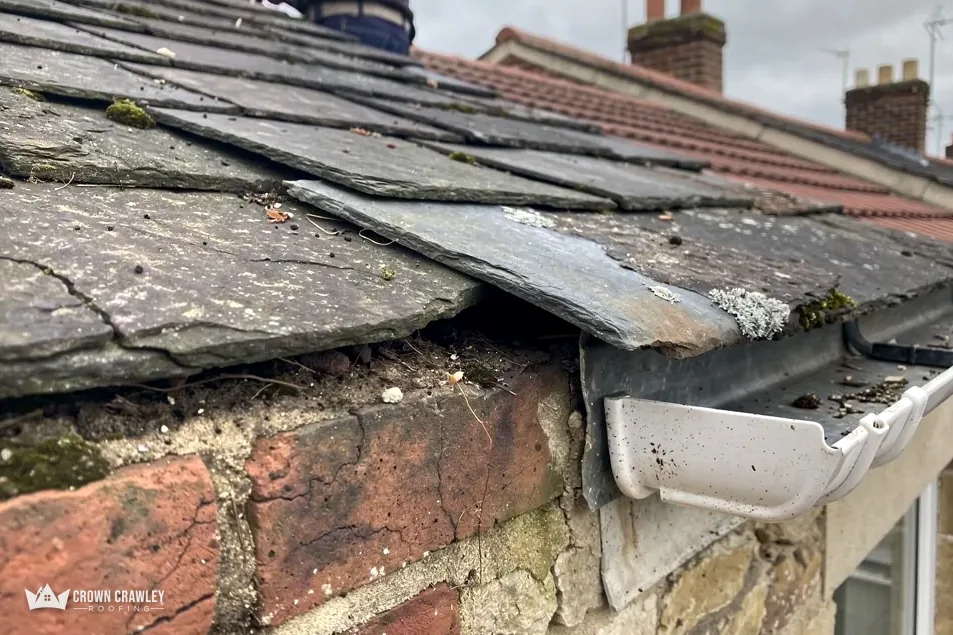
A specialist roofing guide puts well-kept natural slate at 100+ years, so age alone rarely condemns it. The usual trouble is at the fixings. When the nails corrode, slates slip, and a repair that only fills the visible gap leaves the same weak nails along the rest of the slope. A tingle holds one slipped slate in place and is a sound short-term fix for a handful of slips, but it does not cure failing nails everywhere. At the survey we lift a few slates to look at the nails and the battens, and the photographs show you what we found.

Stone roof terms

Slate
Thin split stone hung in courses
Horsham stone
Heavy sandstone slabs used as roof covering
Batten
Timber strip the covering hangs from
Tingle
Small metal strip holding a slipped slate

Slate and stone slabs fail in different ways, so each gets its own survey.

What changes if the slate pitch is low?

BS 5534 indicates a minimum pitch of 20 degrees for natural slate, and one slate supplier advises against hook fixings on any pitch below 25 degrees. A low slate roof, such as a small lean-to or a porch, needs more care with its laps and fixings than a steep main slope does. We measure the pitch on site and tell you which fixing suits it, since a hook that holds on a steep slope can let go on a shallow one. Shallow slopes also shed rain more slowly, so the laps and the underlay beneath them get a closer look than usual.

What about heavy stone slabs?

Stone slabs are heavy, so we look at the timbers that carry them as well as the slabs, and if a roof needs specialist stone work we tell you before we price rather than after. A porch or outbuilding in slab is usually a small area, but a covering like that deserves the same survey and photographs as a whole house. If you are unsure what sits over your front door, send us a photo from the ground and we will describe what we can see, then book a proper look from the roof, because a covering is easy to misjudge from the pavement.

Stage 03 · Permissions

Conservation area and National Landscape rules

A conservation area and the High Weald mean a like-for-like repair is simple, but a change of covering needs a question first.

Matching repairs seldom call for paperwork, but Danehill has layers of protection that are worth checking before a job grows. Wealden District Council is the planning authority. The village conservation area was first designated in October 1995 and re-designated with an enlarged boundary in March 2017, and the council's appraisal records eight listed buildings in it, all Grade II. The village is also inside the High Weald National Landscape.

Does a conservation area change a re-roof?

It can change what you are allowed to alter, which is why we ask before we price a change of covering. Putting back clay for clay keeps the look of the house, while switching to another material does not. The council's planning team can tell you how the rules apply to your address, and our post on re-roofing in a conservation area sets out what to ask them. Tell us when you first get in touch if your house is listed.

Before a bigger job

Planning
Wealden District Council
Approvals
East Sussex Building Control Partnership
Scaffold
Licence needed over the highway
Designations
Conservation area, High Weald
Listing
Ask first on a listed roof
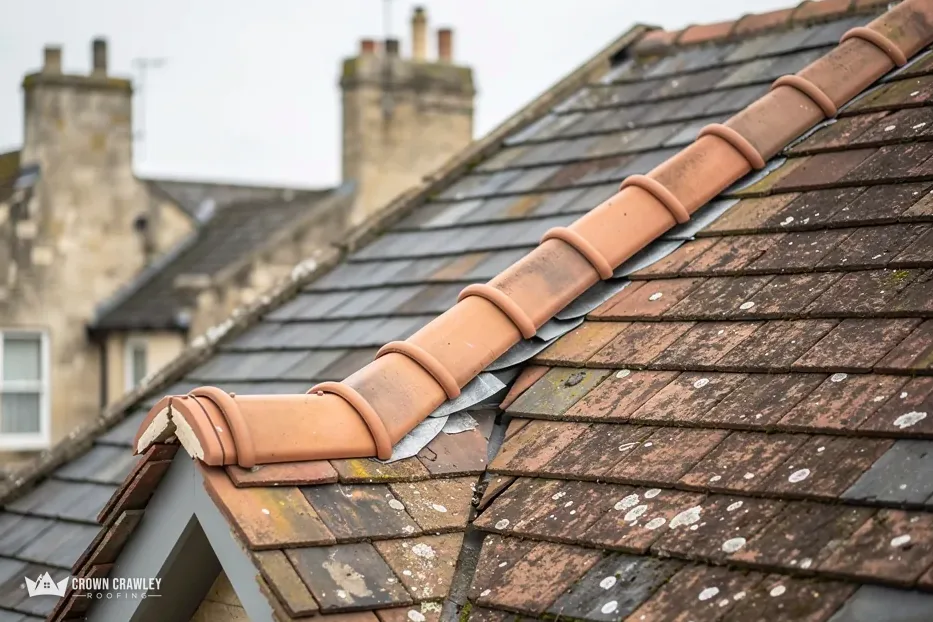
Clay ridge tiles along the hip of a weathered tiled roof

When does a Danehill roof job need building control?

The Planning Portal's test for re-roofing is that under 25 per cent of the building envelope and under 50 per cent of the roof is involved. Separately, a new covering adding 15 per cent or more in weight triggers approval. Danehill falls under the East Sussex Building Control Partnership, which Wealden leads alongside Eastbourne, Hastings and Rother. If the survey suggests most of the slopes must be stripped, we speak to your building control body before settling a start date. Our roof replacement page walks through a full re-roof from start to finish.

Does scaffold on the lane outside need a licence?

A scaffold on the public highway has to be licensed by the highway authority, but one on private land is not. In East Sussex those licences go through East Sussex Highways, which lists a 28-day scaffold licence at £127 and warns of a 2.77 per cent rise in licence fees from 1 April 2026. It publishes no lead time for a new application, so we raise the question early, deal with the licence through the scaffolder and fit the start date around it. Where a drive or garden has the space, the poles can stand on your own ground instead. Our lead work page covers the flashings we often renew once the scaffold is up.

Roof queries from Danehill

Are the old clay tiles on a Danehill house worth keeping?

Often, yes. Wealden's appraisal names clay tile as the main roofing material for older properties, while 60 years is the minimum life the Building Research Establishment gives clay, never a promise for one roof. A survey separates the sound tiles from the cracked ones, and replacing those singly keeps the colour and profile. The photographs show you exactly which is which.

What does the conservation area mean for a repair in Danehill?

Fixing a roof with the same covering, laid the same way, keeps the look of the house, so it is straightforward. Changing the material, the colour or the shape of the roof is different, and Wealden District Council's planning team is the right place to ask. If your home is one of the eight Grade II buildings in the area, say so in your first message.

My Danehill roof is slate. Can single slates be replaced?

Yes, a slipped or broken slate can be replaced singly or held with a metal tingle. Whether that is enough depends on the nails along the rest of the slope. If they have corroded, one repair will be followed by another slip nearby. We lift a few slates, show you the photographs and give one written price for what the roof really needs.

How long before scaffold can stand outside a Danehill house?

On your own drive or garden there is no highway licence, so it depends on the scaffolder's diary. Scaffold on the road needs the highway authority's licence, and East Sussex Highways publishes no lead time for a new application, so we ask for it as soon as you accept the price. We then give you a start date that works with the licence.

Danehill roof work, priced

Send us a photo of the tiles or slates that worry you, with your Danehill postcode, and a survey visit will be set up.

01293 974253

10-year workmanship guarantee, in writing.

Call Get a free quote