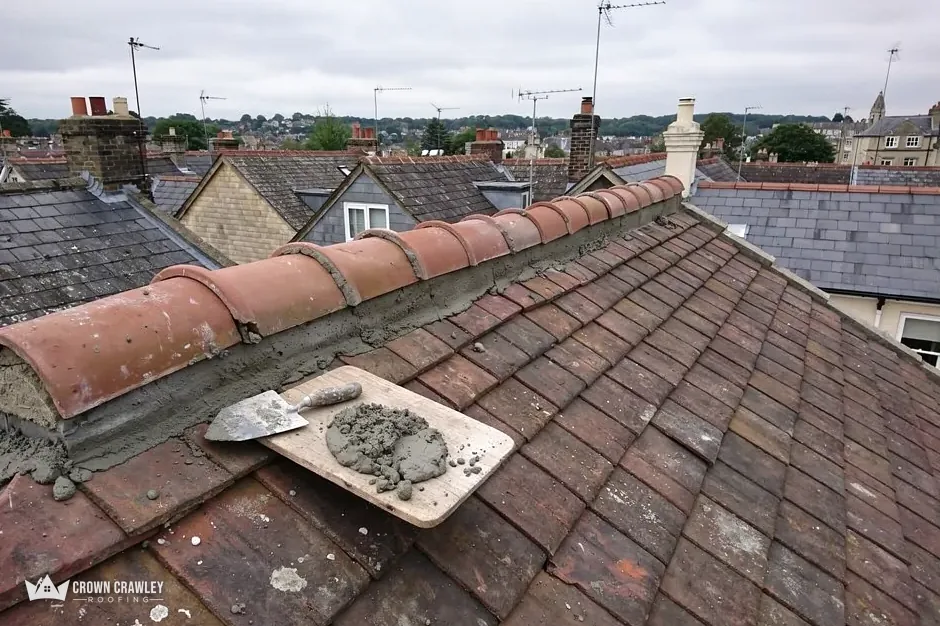
Tiles, whatever their age
The 2021 Census counted 21,990 people in the built-up area, which is too many streets to guess from a postcode. We read the tiles, ridge and verge of each roof as we find it.
Tiled roofs across a town
Roofs across a Wealden town with a Grade II farmhouse and church.
The 2021 Census counted 21,990 people in Crowborough. We take each roof as the survey finds it, covering by covering, and set out one total price in writing.
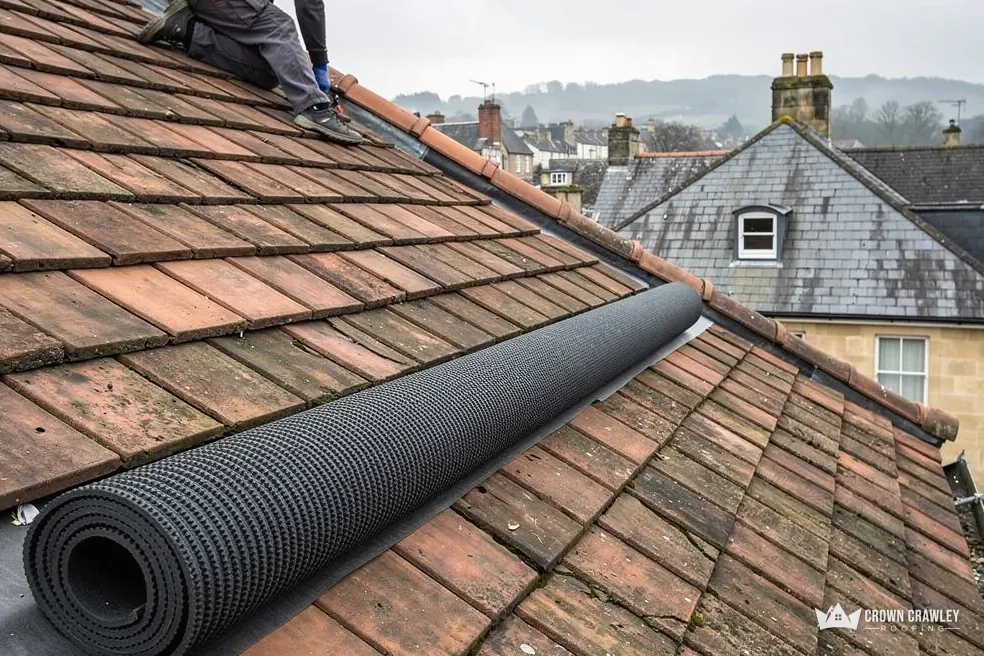
The 2021 Census counted 21,990 people in the built-up area, which is too many streets to guess from a postcode. We read the tiles, ridge and verge of each roof as we find it.
Tiled roofs across a town
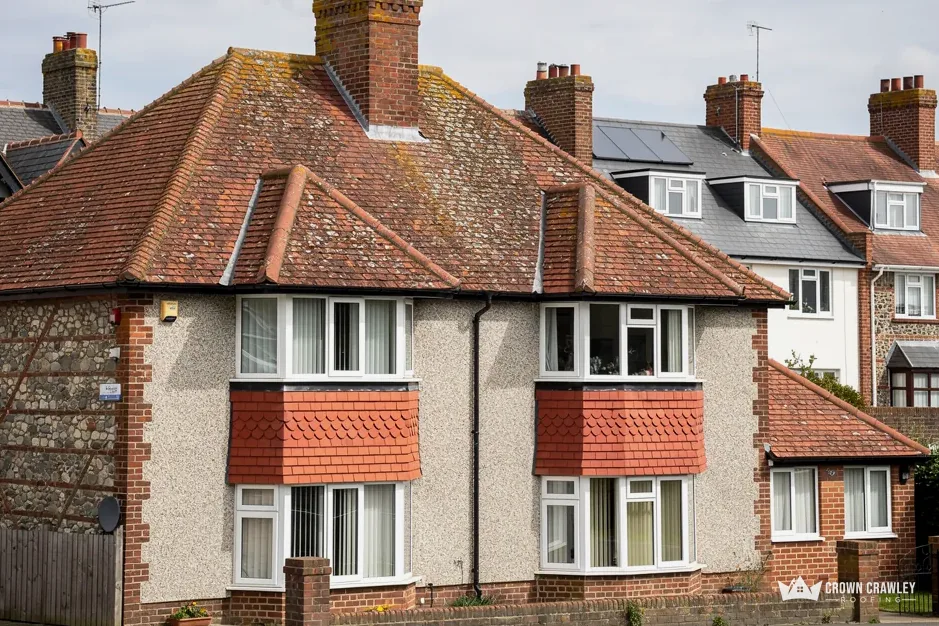
Luxford Farmhouse and the Parish Church of All Saints are both listed Grade II. A listed roof gets a matching repair or a conversation with the right body first, never a guess.
Farmhouse roof with tiled slopes

Wealden District Council has designated the Crowborough Conservation Area, so a house inside it needs more care over any change to its look. A listing raises its own question, which is why we ask about both at the survey.
Pitched roofs on town houses
Map of Crowborough and the neighbourhoods around it, with Crawley for reference.
Crowborough lies east of Crawley in the Wealden district of East Sussex, outside the South Downs National Park.
Crowborough field notes
Three short chapters on identifying a covering, keeping water moving off flat roofs and gutters, and the listings and licences that apply to bigger jobs.
Stage 01 · First look
With 21,990 residents and no single era to lean on, a Crowborough survey starts from the roof itself, tile by tile.
Some towns offer a tidy story about when their houses went up. A survey of a roof like this begins on the ground with binoculars, moves to the slope, and finishes in the loft, where daylight at the eaves, stained felt or damp timber tell their own story. Crowborough, with 21,990 people counted in its built-up area in 2021, is not one we can sum up from a map. Nothing on file tells us which coverings its streets carry, so we do not guess: the covering is identified on the roof, not assumed from the name of the street.
It changes what to expect. Marley puts concrete tile life at around 60 years and stresses it is no guarantee, while for clay the Building Research Establishment's minimum expectation is also 60 years; old peg tile does not follow that rule. A roofing trade body's guide says well-kept natural slate can last 100 years or more. None of these numbers tells you whether your own roof is sound. They tell you what the material can do when it has been looked after. So the first job is to name the covering, and the second is to find what is wearing out around it: nails, battens, underlay and ridge mortar. Our pitched roofing page explains how each repair is done.
Tile roof checks
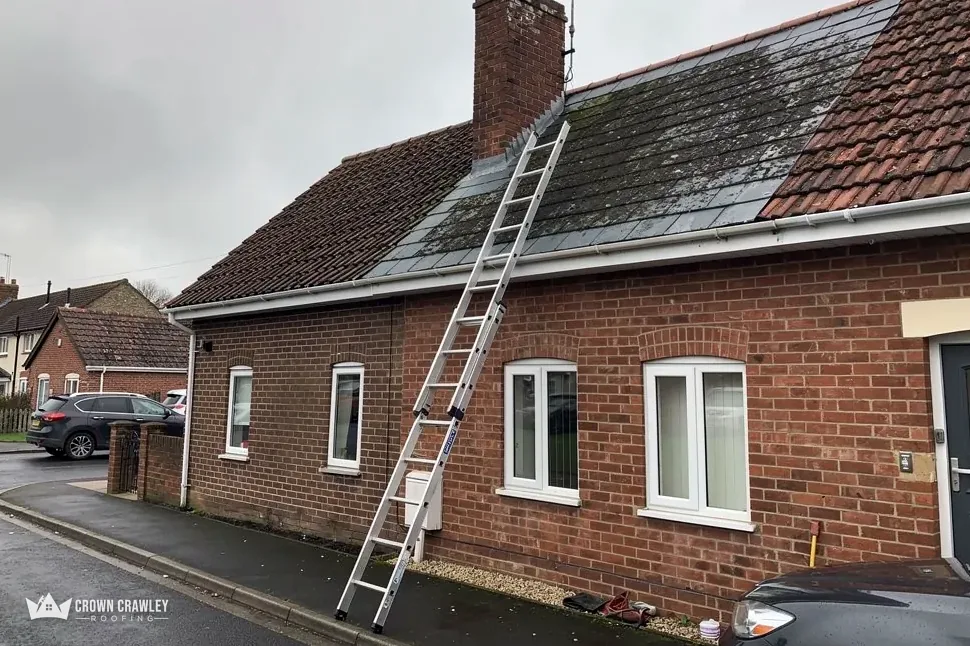
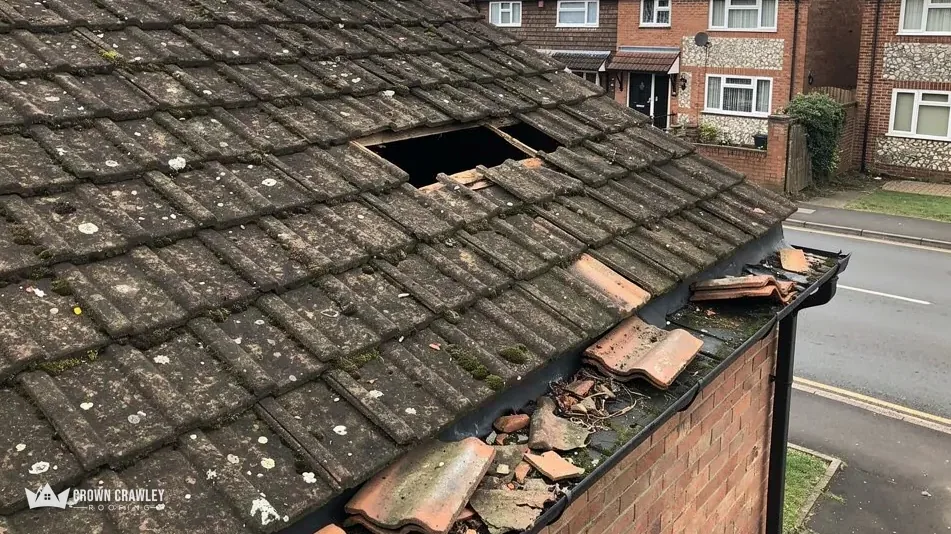
Checkatrade's October 2026 guide to replacing tiles gives £170 to £500 for up to five tiles, the lower figure for a simple job and the upper for one that needs scaffold. Its roof replacement guide, also October 2026, puts a new roof on a three-bed semi at about £12,000 and on a four-bed detached house nearer £17,000. These are typical UK figures, not a quote. In practice the tipping point is how far the failure has spread. A few slipped tiles on one slope are a repair. Nails that have rusted through across the whole roof, with battens that crumble when pressed, make a repair an expensive way of delaying a renewal. The survey photos show which of the two you are looking at, and the written price follows.
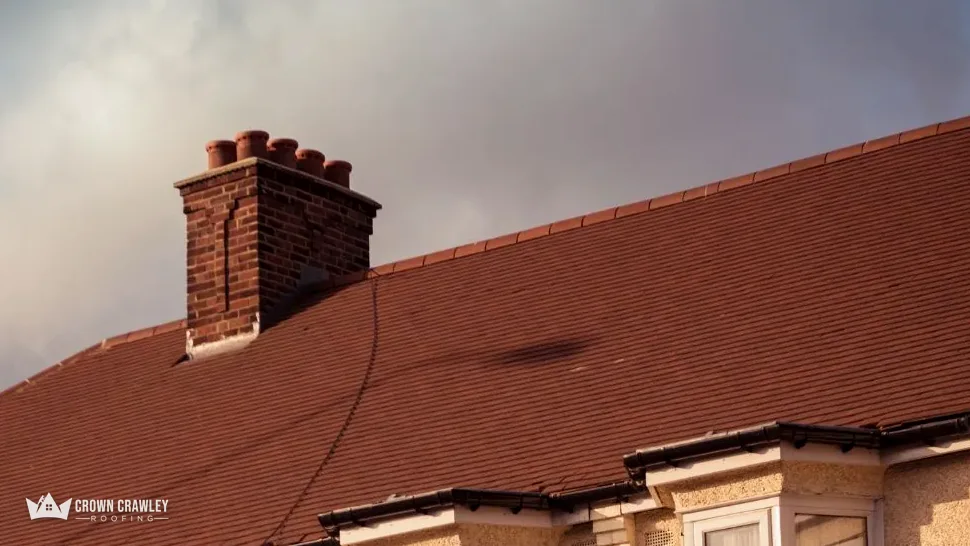
Ridges and verges get the same attention as tiles. A ridge bedded in mortar before the 2014 revision of BS 5534 may be relying on that mortar alone, and Marley points out that the standard is not law, so the choice between rebedding with fixings and fitting a dry system is yours to make. We explain the difference in the survey notes, with a photograph of the ridge line beside it.
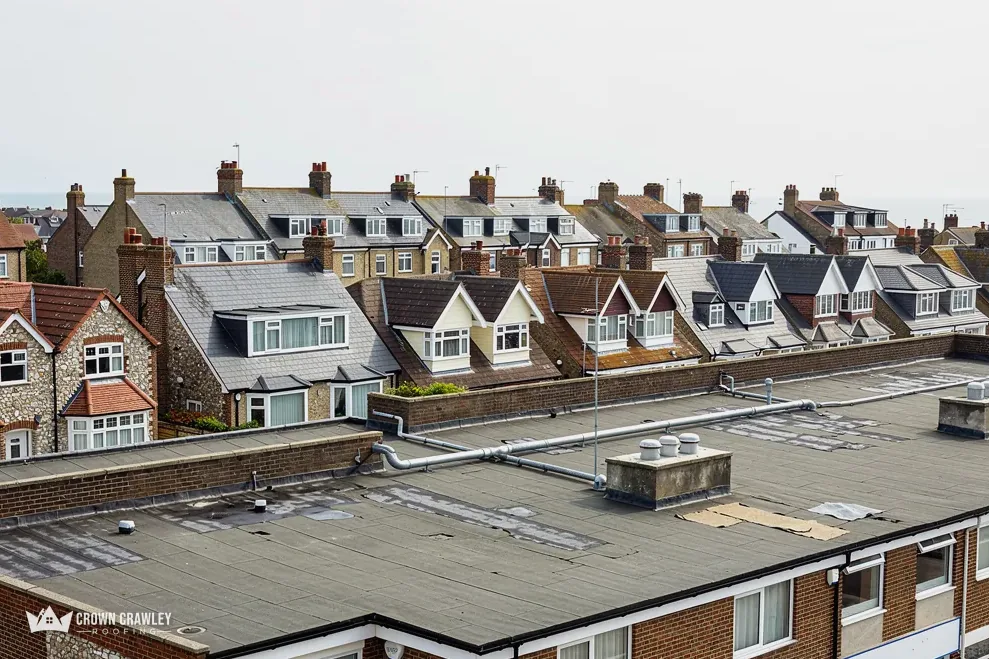
Stage 02 · Water
Water leaving a Crowborough roof has to reach the drain, and flat roofs and gutters are where it most easily stalls.
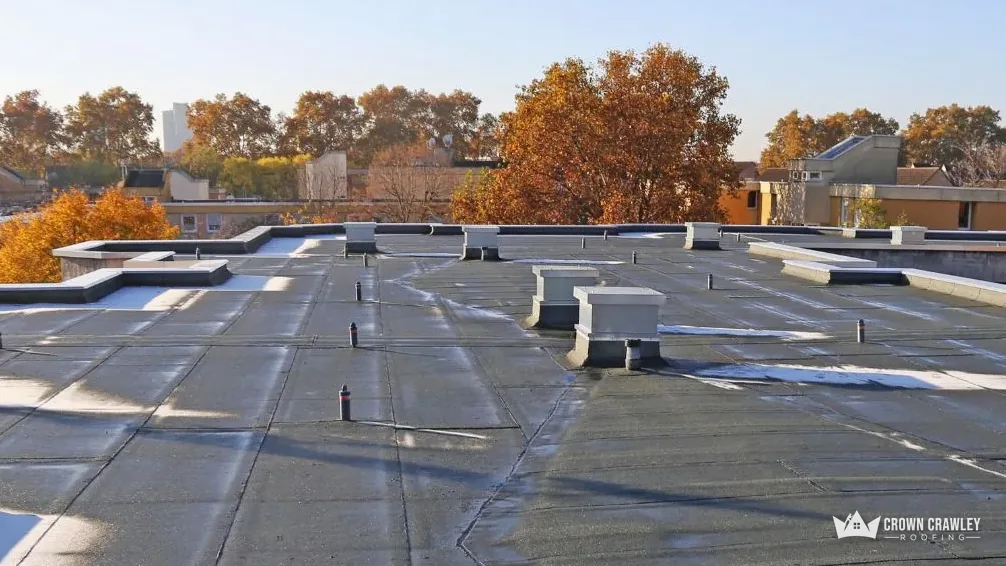
A flat roof asks different questions from a tiled slope. It has no tiles to slip and no ridge to crack. It has a single skin of membrane, a deck below it, and a slope so slight that a small error shows up as a puddle. Approved Document L, in its 2021 edition, lists renewing a flat roof's waterproof layer as renovation, so the roof's thermal performance joins the discussion whenever the covering is renewed.
GreenSpec lists EPDM at 20 to 30 years of expected service. A March 2026 guide from Less puts GRP at 25 to 40 years and felt at 10 to 20. Those are typical lives, not promises, and a warranty is a separate matter, so read both. Checkatrade's September 2026 figures run at £80 to £100 per m² for EPDM and £50 to £80 per m² for felt, which shows why the choice of covering matters as much as the age of the old one. Our flat roofing page explains the options.
Flat roof and gutter words
A flat roof that holds water is telling you its fall has gone.
Either the fall has gone or an outlet is blocked. BS 6229:2025 keeps a minimum finished fall of 1 in 80 for general areas and internal gutters, and IKO advises designing for 1 in 40 so that the finished roof still achieves at least 1 in 80. A roof that holds water after rain has probably lost some of that slope. We check the outlets first, then measure with a level.
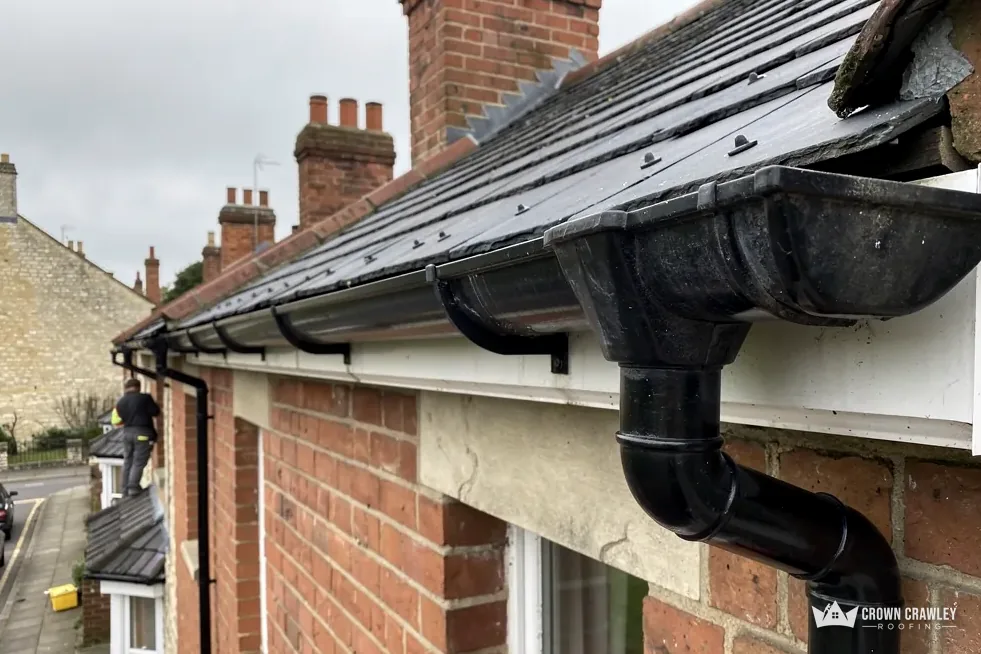
Brett Martin's guidance is a fall of 1mm for every 600mm of gutter, so a sagging run that holds water is worth fixing. Soffits need a different kind of care. For a building from before 2000, whether built or refurbished then, HSE says to assume the building contains asbestos, and its list of locations includes external soffits for insulating board. It is hard to tell insulating board from a non-asbestos equivalent by eye, so on an older house we have a board identified before it is disturbed. One retailer's guide gives uPVC fascia boards 20 to 40 years, a wide spread that is why we judge a board by pressing it, not by its age. Our gutters, soffits and fascias page covers what is replaced and how.
Stage 03 · Permissions
Wealden District Council decides planning, a shared partnership handles building control, and East Sussex Highways sets the scaffold licence fee.
Three Crowborough buildings are listed Grade II: Luxford Farmhouse, the Parish Church of All Saints and the town's war memorial, which was listed in 2017. A listing changes the order of events on a roof, and so do building control and a road licence. None of these touches a small repair.
All Saints was first listed on 26 November 1953 and is used for Church of England worship. A church in that position follows its own consent system, a faculty in the Church of England's case, not the council's listed building consent. Luxford Farmhouse is an ordinary listed house in this respect, so Wealden District Council's planners decide whether a repair counts as an alteration. In both cases we ask before we quote, and the survey photos go with the request. Either way, the answer comes before the price.
Checks before a bigger job
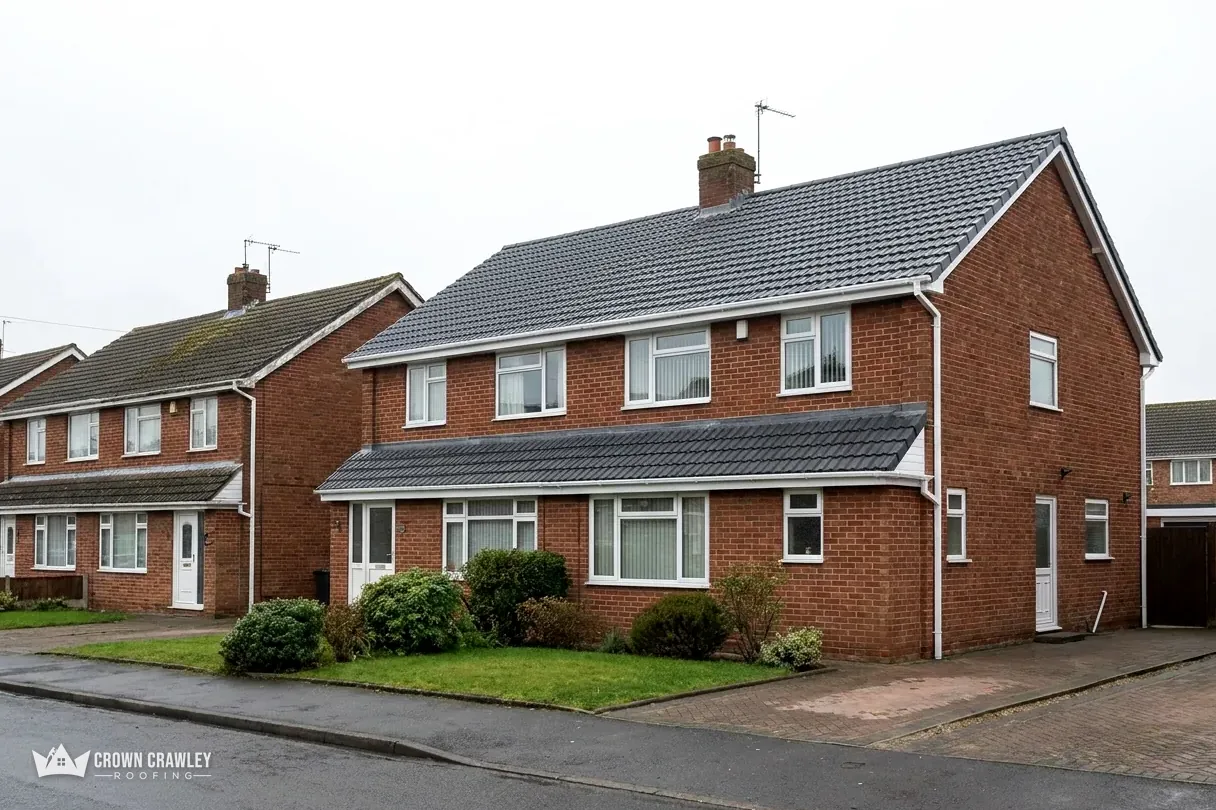
Wealden leads the East Sussex Building Control Partnership, which carries out the building control function for Eastbourne, Hastings, Rother and Wealden. The Planning Portal puts the threshold for roofs at under 25 per cent of the building envelope and under 50 per cent of the roof, and adds that a covering 15 per cent or more heavier needs approval. Where a whole roof needs renewing, the partnership gets a call from us before any dates are fixed. Our planning permission for roof work post says when planning comes into it.
East Sussex Highways, acting for the county council, prices a 28-day highway scaffold licence at £127.00, and says fees rose by 2.77 per cent from 1 April 2026, so ask for the current figure. It publishes no application lead time, and wants an extension requested five working days before the licence ends. The terms name the Licensee without saying whether that is you or the scaffolder, so the two of us settle it at the survey. A frame wholly on private ground sits outside the highway licence. Bats sometimes roost in a roof space, and the law protects both them and the roost, with roof repair named in government guidance as work that may affect them. If we see signs, that section waits while we talk to you. To begin, send a street-side picture of the roof and your postcode.
We do not assume. No record tells us how each house in town is roofed, so the covering is identified on the roof itself and named in the survey notes. Concrete, clay and slate age differently and fail at different points. You receive photographs of what we found, so you can see the reason for each repair we recommend.
Often it is, or an outlet is blocked. BS 6229:2025 keeps a minimum finished fall of 1 in 80 for general roof areas, and a roof that holds water after rain has probably lost some of it. We clear and check the outlets, then measure the slope with a level and photograph the result before suggesting a repair or a new covering.
East Sussex Highways lists £127.00 for a 28 day scaffold licence and notes a fee rise of 2.77 per cent from 1 April 2026, so confirm the current figure. It publishes no lead time for new applications. The scaffolder and we agree who applies, and the start date waits until the timing is clear. A frame on private ground needs none.
Wealden District Council's planners, because they decide whether a repair counts as an alteration needing listed building consent. For All Saints church the route is the Church of England's own faculty system instead. Send us whatever the council says in writing, and we will price against it as one total, with survey photos attached, so the listing is dealt with before any tile moves.
Share a clear picture of the troublesome slope, flat roof or gutter, give us your postcode, and tell us about any listing.
Message us on WhatsApp