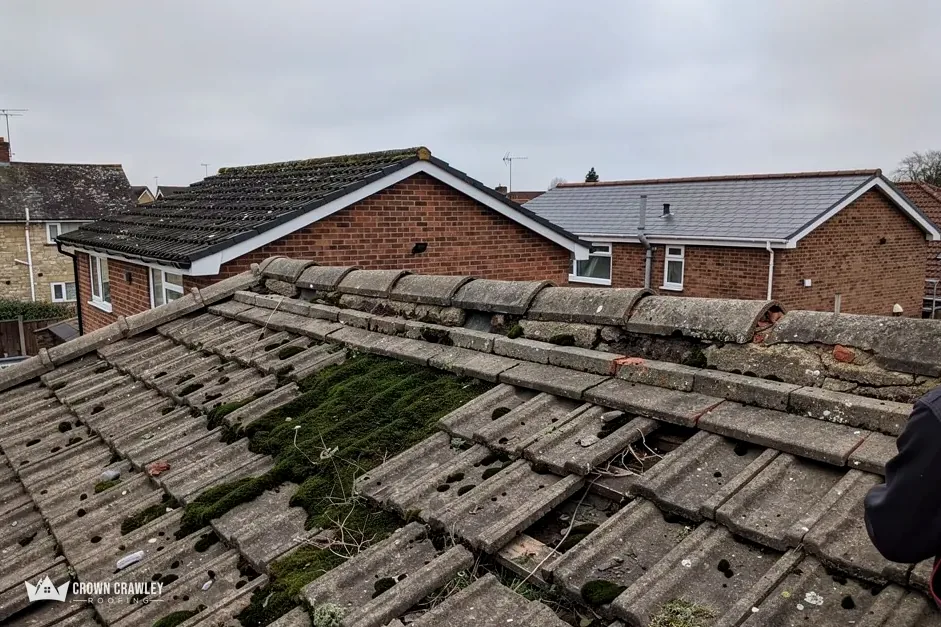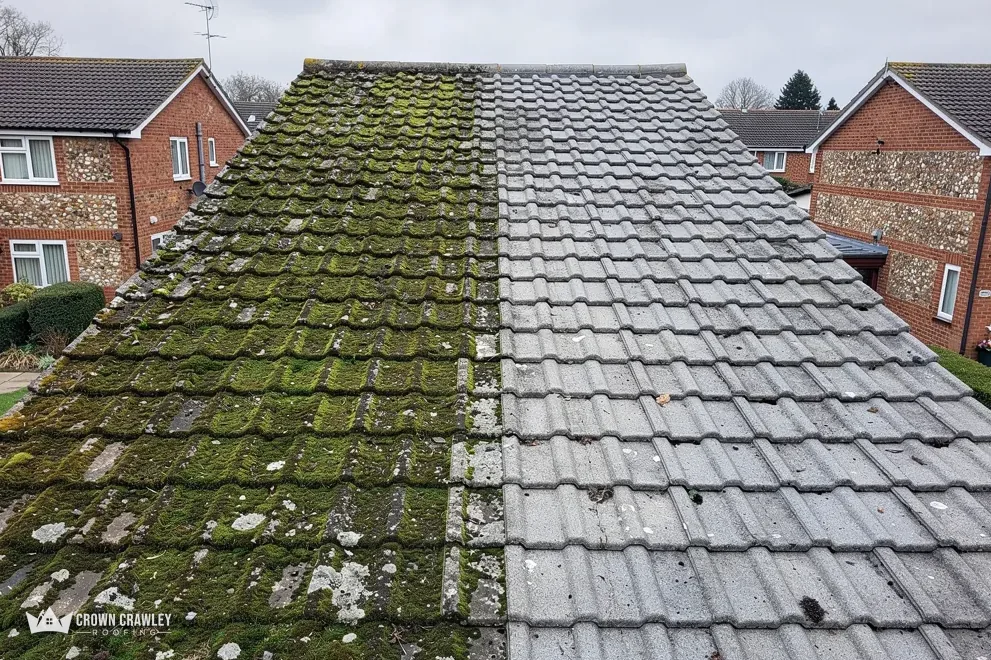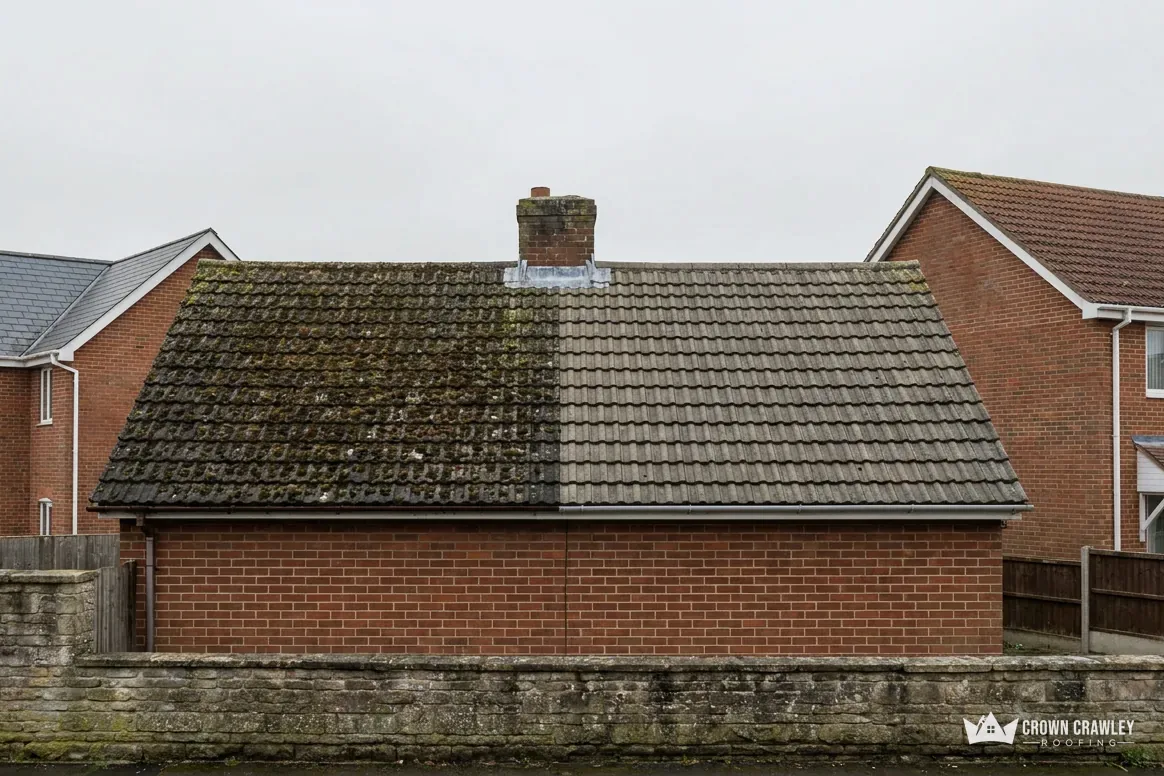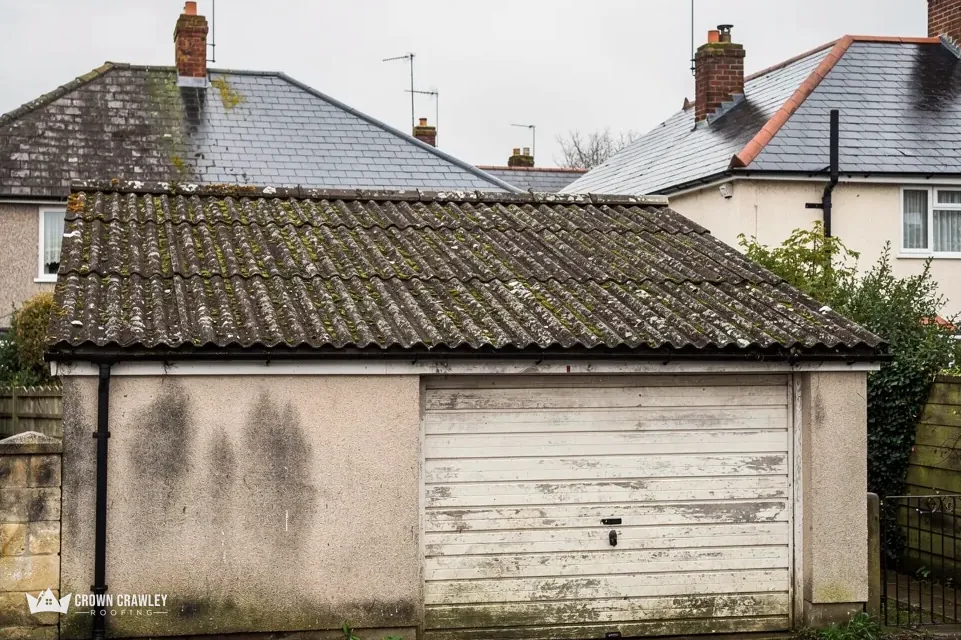
Buyers decide a lot before they reach the front door. They see the roof as they walk up, and a slope covered in green or black patches tells them the house has been neglected, whether or not that is true. A surveyor who looks up from the pavement will often write something down. That one line can turn into a question at negotiation, a request for a quote or a price reduction.
A clean before listing costs little next to the sale price and changes that first impression, but it is not always the right move. A clean can show up a cracked tile that was hiding under moss, and a rushed one can cause damage that looks worse in a survey than the moss did. This guide explains what moss does to the way a house looks and reads, how to treat the roof before a sale, what to repair first, how to time the work around photos and viewings, and what to keep on file for the buyer's solicitor.
Why the roof matters to buyers
On many houses the roof is the biggest surface facing the street, and it sits above eye line, so it shapes how the whole house reads. A clean, even roof reads as a house that is looked after. A roof with moss, lichen and dark streaks reads as a house where the owner stopped paying attention.
What does kerb appeal do for a sale?
We cannot put a pound figure on a clean roof, and nobody can for your street without seeing it. What is certain is that buyers judge on sight, and listing photographs are taken from the pavement, where the roof is in plain view. A tired roof in the lead picture can make the house look older than it is.
Does moss hide real problems?
It can. Heavy growth can cover slipped tiles, cracked edges and blocked gutters, and a buyer's surveyor knows it. That is why a clean on its own can backfire. If the roof is cleaned and the surveyor then sees open gaps, the story shifts from untidy to damaged. A look at the roof before any cleaning tells you whether the growth is cosmetic or hiding something. Our page on whether moss can cause a roof leak covers the link between the two.
If the house is already listed, a clean can still help, but booking it before the photographs are taken lets the pictures show the roof at its best.
Think about the angle too. Buyers drive up, stop and look at the front slope, and agents photograph that view first. The rear slope matters less for the first impression, but a surveyor will check both, so it pays to look at the back from an upstairs window before you decide how much needs doing.
What a surveyor says about moss
When a buyer has a survey done, the surveyor inspects the roof as far as they can reach and reports on its condition. What they see goes in the report, and moss is easy to see.
What do surveyors look for on a roof?
They look at the covering for slipped, cracked or missing tiles, at the ridge and verges, at flashings round chimneys and at gutters and downpipes. Moss and algae are noted as growth, often with a line about the possibility of trapped water. A surveyor may suggest the buyer gets a roofer's opinion, which can then become a negotiating point.
What can a seller do about it?
Every surveyor words things differently, and we cannot speak for any of them. What you can do is shrink the number of open questions before the survey happens. Deal with the roof's condition first, keep the paperwork, and have a roofer's written note to hand. A roof that is clean, repaired where needed and documented leaves much less to argue over at the negotiating stage.
Does a clean answer the comment?
It answers the cosmetic one. It does not answer a comment about the age of the covering, a sagging slope or a leak. Those need repair or replacement, and a clean can sometimes make them easier to see. If you want to know what a surveyor might say, ask a roofer to inspect the roof first, so you can decide what to fix.
If your buyer's survey has not happened yet, a short note from a roofer after an inspection, dated and with photos, can be handed over with the sale details. It shows the roof has been looked at by someone who works on roofs, and it answers the usual first question before it is asked.
Repairs to make before the clean
The best order is repair, then clean. Cleaning first spends money on a roof that may then need to be opened up, and it can hand a buyer a newly clean slope with a visible patch.
Which problems come first?
Start with anything that lets water in or may fail soon: slipped or cracked tiles, crumbling ridge or verge pointing, damaged flashing, and gutters that overflow. Dealing with those before the clean also means the cleaner is not working over weak spots.
Is it worth spending on a roof you are leaving?
A repair that stops a leak is almost always worth doing, because a buyer's survey will find the damp and your price will take the hit. A cosmetic clean is a smaller decision. If the roof is sound, a clean costs relatively little against the sale price. If the covering is already worn out, a clean pays for something the buyer may plan to strip off.
What about a full re-roof?
A new roof is rarely worth buying purely for a sale unless the existing one is failing. Some sellers prefer to price the house with a known roof job and let the buyer decide. Following a survey we send pictures of your own slopes with a single written price, so you have a figure to weigh against the asking price. Replacing a large part of the roof can also need building control approval, and Crawley Building Control lists replacing more than 25% of a roof's surface among such work.
Choosing a cleaning method that does no harm
A sale is the worst moment to damage a roof. The method needs to be safe for the covering and leave no trace that a surveyor would write up.
Which methods are gentle enough?
Hand removal with soft brushes and a low-pressure treatment are the usual choices. Tile maker Marley steers owners away from powerful jets, which it says can scar slate and tile faces and shorten their life. A damaged tile face is also the sort of thing a surveyor might note, which defeats the point of cleaning before a sale. Our page on roof soft washing describes the lower-pressure approach.
Are treatments safe?
Moss and algae treatments are regulated. The HSE keeps professional-only biocides away from the general public and bars adverts from calling a product HSE approved. A cleaner should name the product and follow its label. Pets, ponds and plants are worth mentioning before the work.
What should the result look like?
Most of the growth lifts off straight away. Treated algae and any lichen fade over the following weeks, so a roof can look better a month after the visit than the day after. If you are selling soon, that matters, and it is worth asking the cleaner how long the full effect takes. A coating over a sound roof is a separate decision, best made after the clean has settled.
Ask the cleaner to be straight about the limits. Some stains are in the surface of the tile and will only lighten, while others come off completely. Knowing which you have before the work starts avoids disappointment and lets you word the listing sensibly.
Timing the clean around your listing
Timing decides whether the clean helps or goes to waste. The roof should look its best on the days the house is photographed and viewed, and the work should be finished with time to spare.
How far ahead should you book?
Book before you list, ideally with several weeks in hand. If repairs are needed, they come first and take the longest to arrange. Treatment needs time to work, so a roof treated a month before photography will look better than one treated the day before. Weather matters too, because cold, damp months slow the way treated growth fades.
How long does the work take?
How long it takes depends on roof area and how thick the growth is. A small roof can be done in a day, while a large or heavily covered one can take longer. Our page on how long a roof clean takes gives the detail. Check the gutters and downpipes are cleared at the same visit, since moss falls into them.
What if you are already under offer?
If a survey has already flagged the roof, you can agree with the buyer to do the work or to adjust the price. A written report from a roofer with photos of the roof before and after gives a buyer something definite to read. It also helps if the sale involves a lender, because a surveyor on the lender's side may ask for evidence.
What to keep for the buyer
Paperwork turns a good roof into a roof the buyer can trust. A short file is enough, and it is quick to put together if you ask for it at the time.
What belongs in the file?
Keep the written quote and the final invoice, with the date and a description of the work. Keep before and after photos, and any report on the roof's condition. If repairs were done, keep notes of what was replaced and where. If a re-roof or other building work took place, ask the roofer about any building control paperwork, because the buyer's solicitor may ask for it. A clear record answers questions before they are asked.
What should you not claim?
Do not describe the roof as new, waterproof or guaranteed unless the paperwork shows it. A cleaner's guarantee, if there is one, covers the cleaning, not the life of the roof. Say what was done, on what date, and by whom, and let the buyer draw conclusions.
What does a clean cost nationally?
Checkatrade's roof cleaning guide, April 2026 table, shows £8.50 to £14 per m², £637.50 to £862.50 for a semi-detached house, and around £18 per m² for scaffold where it is needed. Use that as a rough national guide, and remember VAT at 20% may be extra. We price your own roof after a survey, in one written total. The roof cleaning and moss removal page lists the methods. Send photos of the front and rear slopes and your intended listing date, and we will tell you what to do first.
Part of our Roof Cleaning & Moss Removal in Crawley
Selling a house with a mossy roof
Will a surveyor mark down a house for moss on the roof?
A surveyor will usually note moss and any signs of trapped water, and the buyer may ask for a roofer's opinion. A clean roof with repairs done and photos on file leaves less to question. Moss alone is cosmetic, but it can hide damaged tiles.
Should I repair the roof before cleaning it to sell?
Yes. Repair slipped tiles, damaged ridge or flashing and overflowing gutters first, then clean. Cleaning over weak spots can finish off a tile or reveal a defect just before viewings. A survey shows what needs doing now and what can wait until after the sale.
How long before listing should the roof be cleaned?
Several weeks if you can. Treatment takes time to fade whatever growth is left, so a roof can look better a month after the visit than on the day. Allow time for any repairs first, and have all the work finished before the listing photographs are taken.