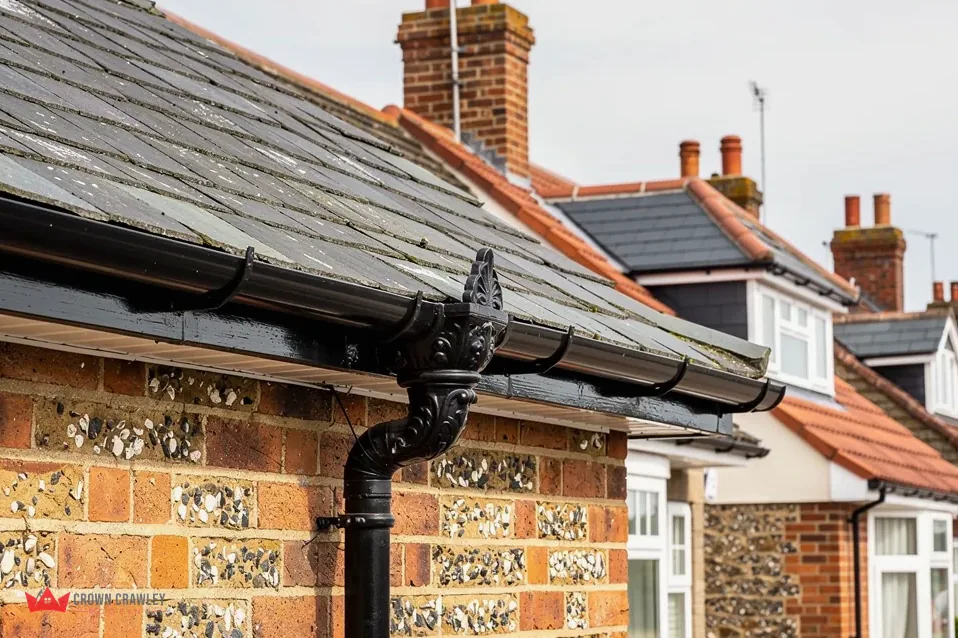
Look up at the underside of your eaves and you are looking at the soffit, the board that closes the gap between the top of the wall and the back of the fascia. On many houses it is plain and solid. On others it carries small round vents or a long slotted strip. Those holes are there on purpose, because the roof space behind needs a path for air to travel in.
That same gap is also an easy way into the building. Sparrows, starlings and other birds nest in it. Bats can use the eaves and the cavity behind the boards as a place to rest. Neither group has any idea that a roofer is booked for Tuesday. So a job that looks like a simple board swap can turn into a question about the law, and the answer may be to stop and wait.
Below we explain what soffit vents do, how much airflow a roof is meant to get, what to look for before any work, what the law says about nests and roosts, and how a sensible roofline job is planned around all of it.
What soffit vents actually do
A pitched roof with a cold loft needs moving air. Warm, damp air from kitchens, bathrooms and bedrooms drifts upwards. With no way out, the moisture settles as droplets on the chilly timber beneath the tiles. After a few winters that wets the rafters, stains the ceiling and feeds mould. Vents at the eaves let fresh air in, and the air then leaves through the ridge or high-level vents.
What do the different vents look like?
Three types are common. Disc vents are small round holes, usually pushed into a drilled soffit board. Strip vents are long slotted panels that run along the soffit. Over-fascia vents sit above the fascia board and let air in at the top of the wall instead. Whichever you have, the job is the same: keep a clear route from outside into the loft, above the insulation.
Why do vents get blocked?
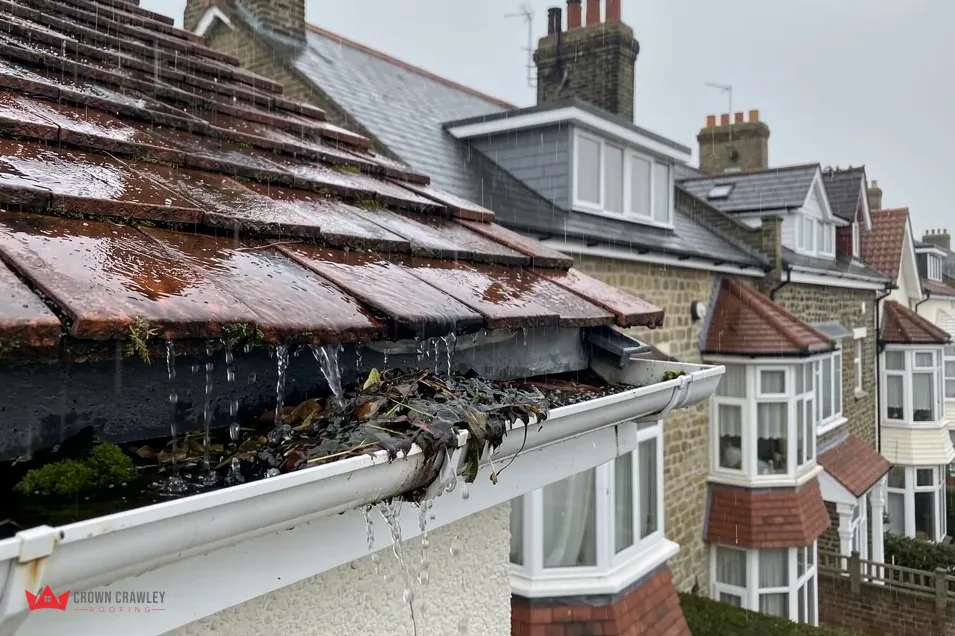
Insulation pushed into the eaves is the usual culprit, and so is paint over the slots, or a new soffit fitted with no vent at all. A blocked soffit does not announce itself. You find out later through damp patches, musty air or rusted nails, which we cover in our guide to loft condensation and roof ventilation. The soffit sits on the roofline alongside the gutters, so it belongs with the gutters, soffits and fascias work we carry out.
How much ventilation does the roof need?
The figure depends on the roof's build-up, so it cannot be guessed from the ground. Marley's guide to ventilating a cold roof, which follows BS 5250, gives a clear example. Its worked case is a cold loft under non-breathable underlay, where the eaves need one continuous opening: 25mm on pitches up to 15 degrees, and 10mm on steeper ones. Those figures are a continuous opening along the whole length, not one disc vent here and there.
Does breathable underlay change the answer?
It can. Marley says a breather membrane (the lower-resistance type) on a well-sealed ceiling, under a covering that lets air through, can rely on the small gaps in normal eaves construction, about 3mm, but only where third-party certification supports it. That is a technical call, and a roofer renewing underlay should say which sort is being laid and how air will move through the loft. Our page on breathable membrane against felt sets the two out.
What happens if I add vents to a plain soffit?
Cutting new vent holes is cheap work, but it opens the roofline at exactly the point birds and bats use. If the boards are old and you are not sure what is behind them, the check for wildlife comes first and the drill comes second. Loft insulation must also be kept back from the eaves so that the air can actually pass. Many lofts have it jammed hard into the corner, which defeats any vent on the outside. A plastic eaves tray or vent carrier fixed above the insulation holds the quilt away from the gap, and our page on eaves guard trays covers the related detail at the lowest course of tiles.
Birds that nest behind soffits and fascias
Gaps at the eaves suit small birds well, because they are dry, sheltered and out of reach of cats. The tell-tale signs are easy to spot once you know them: straw or moss poking out of a gap, droppings streaked down the wall or on the fascia, and a regular flurry of birds going in and out around the same spot. In spring the sound of chicks inside the boards is unmistakable, and a busy pair can come and go dozens of times in an hour. A nest that looks abandoned may simply be between visits, so watch for a good while before you decide it is empty.
Is a nest in the soffit protected?
The Wildlife and Countryside Act makes it an offence to deliberately wreck or harm a wild bird's nest while birds are still building it or living in it. The word intentionally matters: someone who has no idea a nest is there is in a different position from someone who has been told and carries on. For a roofer the working rule is plain: an active nest stays exactly where it is.
Is there a licence to remove an active nest for building work?
GOV.UK's guidance on wild birds says that no licence exists for development or construction purposes. A building job is therefore no ground for clearing an active nest. The sensible answer is to plan the roofline work for when the nest is empty. The test is whether the nest is in use on the day, rather than what the calendar says. Our page on bats and birds in the roof covers the wider picture, and our post on birds nesting in a chimney deals with the same problem higher up.
Bats in the eaves and what the law protects
Bats are harder to spot than birds. They are small, quiet and often use a roof only for part of the year, so a roof with no sign in January may still hold a roost in summer. Droppings that look like small dark grains, crumbling to a dusty powder when pressed, gather below a roost entrance or on window sills. You might also see staining on the wood around a gap, where animals have brushed in and out over time.
How strong is the protection?
Bats get full legal protection, and the spots where they raise young or rest are covered as well. The guidance lists both re-roofing and roof repair as work capable of harming them. The Habitats Regulations make deliberate disturbance of a protected species an offence. They also make it an offence to harm a roost, and that second offence is not limited to deliberate acts, so not knowing is a poor defence.
What should you do if you suspect bats?
Stop the work on that part of the roof and take advice before anyone lifts a board. Tell the scaffold crew too, because a tower pushed against the eaves can disturb a roost before a single board is touched. GOV.UK sets out the route through its bat protection guidance, and the licensing decision is not one a roofer or a homeowner should try to make alone. Do not block a gap, spray into it or close it up as a quick fix. If a roof has to be repaired and bats are present, the job is planned around the advice you receive. That can mean waiting, but it is a far better outcome than a prosecution.
Checking the soffit before any roofline job
Most roofline work does not meet a single bat. The checking step is still part of a careful job, because it is quick and it settles the question before scaffold goes up. Here is what we look at on a survey, and what you can do yourself from the ground.
What can you check from the garden?
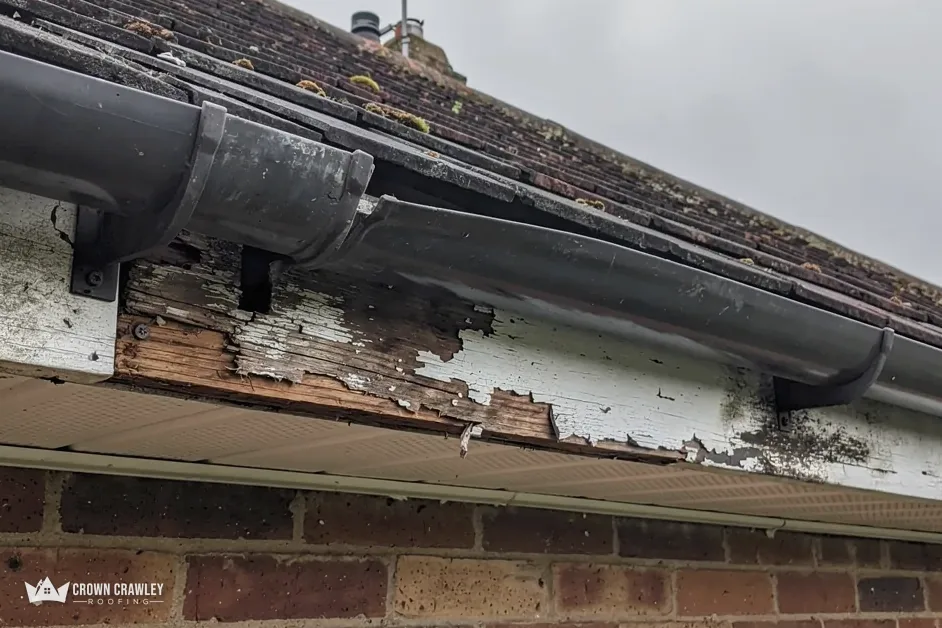
Walk the length of the eaves on a dry day and look at the gaps between fascia and wall, the vents, and any place where a board has dropped or rotted. Note stains, droppings, loose straw and any birds coming and going. Binoculars help, and so does a notebook with dates, because a pattern over a week tells you more than one glance. Take photos from the same spot each time, so we can compare. Do not climb a ladder to poke around.
What does the survey add?
On site we check boards at close range once access is in place, and we share photos of what we find. A rotten board that is hiding an active nest is a reason to pause that run, not push on. Our guide to rotten fascia board signs lists the decay clues to look for. Eaves can also hide a hazard of a different kind. HSE says to presume asbestos until proven otherwise in a property from before 2000, and it names external soffits as a spot where insulating board turns up. Read our page on asbestos soffit boards before anyone drills or breaks one.
When roofline work has to wait
Three situations call for a pause. The first is an active bird nest in the section being worked on. The second is evidence that bats use the eaves or the roof void. The third is suspect board material that has to be identified before it is touched. In each case the work waits for the right answer, and any sound roofer says so openly instead of quietly pressing ahead.
Can the rest of the job go ahead?
Often, yes, and that is the better way to run it. A roofline job runs in sections, and a section with a nest can be left until the birds have finished while the opposite elevation is done. A leaking gutter on a clear run can usually be fixed straight away. A rotten board that is letting water in can be made safe with a temporary cover that leaves the nest gap untouched. That is the sort of plan we agree with you at the survey, with the sequence written down.
What does a wait cost?
The honest answer is that it depends on how long the pause is and whether scaffold has to be kept up or taken down and put back. Checkatrade's fascia and soffit guide, in a table dated September 2026, gives around £150 per linear metre as a national figure. That is no price for your house, and a pause can add scaffold time. Ask any roofer how they would handle a wait before you agree a date.
Part of our Gutters, Soffits & Fascias in Crawley
Soffit and wildlife queries
Can I seal gaps in my soffit to keep birds out?
Only when no nest is active and no bats use the gap. Sealing a hole can damage an active nest behind it, which is an offence if done intentionally under the Wildlife and Countryside Act, and shutting off a bat entrance can break the same Act. Check first, ideally with photos, and fit proper bird-proof vents rather than stuffing the hole with filler.
Do all soffits need vents in them?
No. A warm roof, or a loft insulated and ventilated in another way, may not need them. Cold lofts usually do. The build-up decides, so ask your roofer to confirm what ventilation the roof relies on before a new soffit goes up, and keep the insulation clear of the eaves.
Who should I speak to if I think bats use my roof?
Start with GOV.UK's guidance on bats, which explains protection, surveys and licences, and take advice before work starts. Do not move, seal or spray anything in the gap. Tell your roofer straight away so the job can be paused for the affected section and planned around the advice.