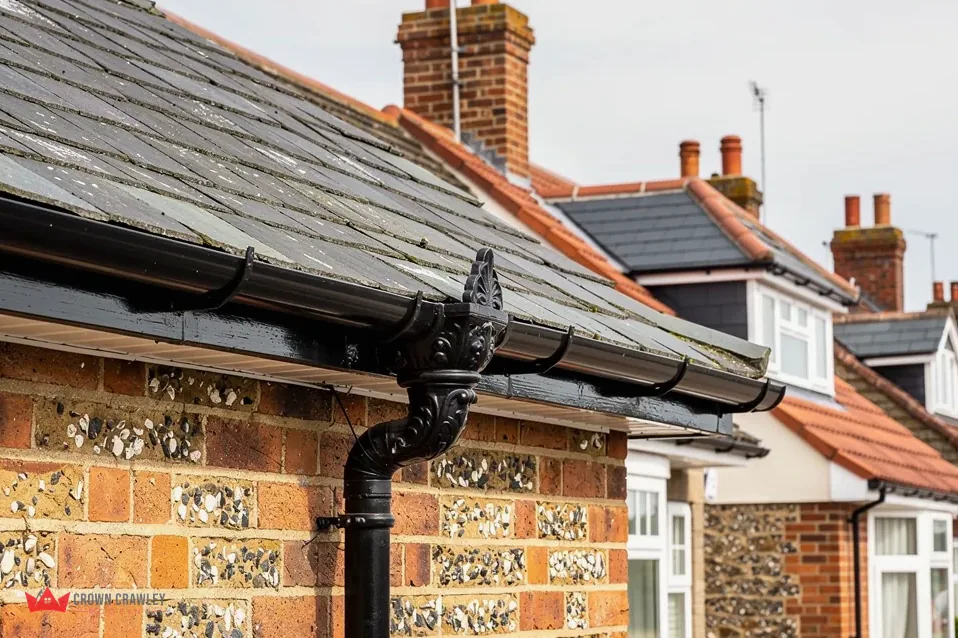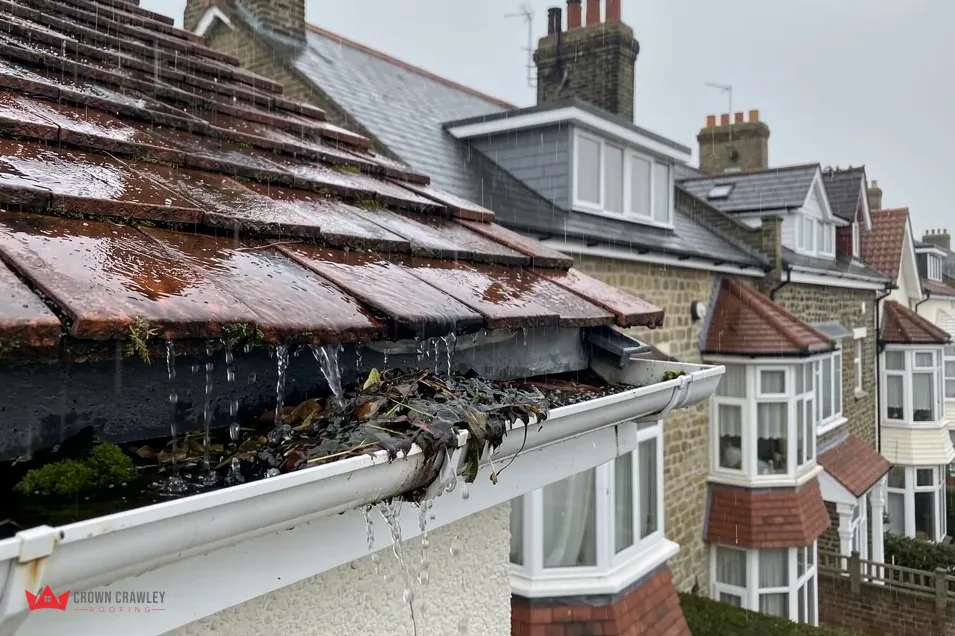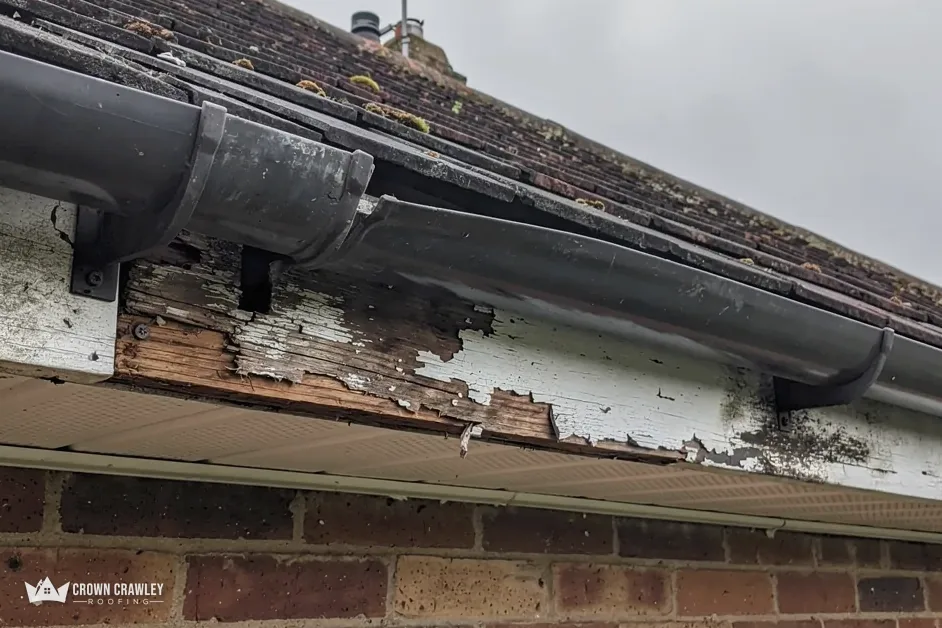
Fascias and soffits are a thin strip of the house, yet they draw the eye to the whole roof. The fascia is the long board across the rafter ends, and the gutter hangs from it. The soffit is the flat panel tucked beneath the eaves, filling the space between that board and the brickwork. Together they are the roofline, and when they are replaced you are handed a choice of colour that will be in view every time you come home.
White is the colour that comes to mind first, but black, anthracite grey, cream and woodgrain are all widely made. Each has strengths and quirks. White hides little and shows dirt. Dark colours look sharp and can show dust and water marks. Woodgrain looks warm and relies on a printed or laminated skin. This guide covers how finishes age, how heat affects dark boards, how to match windows and doors, and what limits apply in a conservation area or on a listed home. It uses sourced facts where they exist and plain advice where they do not, and it tells you what to ask a roofer before you commit to a shade.
The main finishes and what they are made of
Before choosing a colour, it helps to know what the board is made from, because the material decides how the colour is applied and how it ages.
What are the main materials?
Replacement fascias and soffits are commonly uPVC, a rigid plastic that does not need painting. Aluminium is also made, and so are composite boards, while painted timber remains the traditional choice on older houses. A uPVC board is either solid colour all the way through or carries a thin coloured skin over a white core. That difference matters when the board is cut, scratched or ages, because a skin can show a pale edge where it is damaged.
Which colours are common?
White and cream are the long-standing shades. Black and anthracite grey, a dark charcoal that suits modern windows, are now widely stocked. Woodgrain finishes imitate oak, rosewood or similar timber, usually as a laminated film on a uPVC base. Many makers add a few other shades, such as brown and grey. Ranges differ by supplier, so a particular colour may be available from one and not another.
How long do the boards last?
A retailer's guide on uPVC fascias says between 20 and 40 years, though that comes from a seller with an interest in the answer. Read that as a rough range and nothing firmer. Colour tends to wear before the board does, so the question is less whether the board lasts and more whether you will still like how it looks after the first decade. Our page on how long uPVC fascias last goes into this in more detail.
Do fascia colours fade or yellow?
Every outdoor surface weathers. Sun, rain, frost and traffic grime all act on a roofline board, and the colour you see on a showroom sample will not be the colour you see in ten years.
What happens to white?
White can turn a dull cream, especially on a south-facing elevation that gets strong sun, and dirt lodges in the surface at the lower edge where water runs. Cleaning with mild soapy water usually restores a good deal of brightness. Boards that have yellowed deeply are showing their age and are harder to bring back. It helps to ask a supplier how their white is made, since formulations differ.
What happens to dark and woodgrain finishes?
Dark finishes can lose depth over time, turning a little chalky or patchy, and scratches show clearly against the contrast. Woodgrain films can fade unevenly where the sun hits one side of the house harder than another, so a gable end may drift to a different tone from the rear. None of this is certain for a given product. Ask the maker or supplier for their written weathering guidance and for the length of any warranty on the colour, then keep that paperwork with your records.
If two boards from different batches meet at a joint, a slight difference in shade can show. Ask for the whole run to come from the same batch where you can.
Cleaning matters whichever colour you choose. A wash a couple of times a year stops grime from etching the surface, and a roofer or gutter cleaner can do it while checking the joints. A regular rinse is far cheaper than early replacement, and it keeps the roofline looking even.
Why heat matters for black and anthracite
Dark surfaces take in more of the sun's heat than pale ones. On a roofline that faces south or west, a black board can become much hotter to the touch than a white one on a summer afternoon. That has practical consequences, and a good installer plans for them.
How does heat affect the boards?
Plastic expands as it warms and contracts as it cools. A long dark board moves more through the day and the seasons than a pale one, so joints need expansion gaps and fixings need to allow movement. If a board is pinned too tightly, it can bow, buckle or open at the joints. The manufacturer's fixing guide sets the gap and the spacing, and your roofer should work to it. This is one of the quiet checks that separates a neat roofline from one that warps by the second summer.
Does a dark colour affect the roof space?
The soffit is part of the way a loft breathes, because vents in it let air in at the eaves. Dark soffits do not change the vent size, but heat soaking into a dark board can warm the air around the vent. The effect is small, and the larger concern is that the vents themselves stay open. If you have loft ventilation, ask that vented soffit panels or inline vents go back in the same places. Our guide to soffit vents, birds and bats explains why that matters.
None of this rules out dark colours. It means choosing a reputable range, following the fixing guide and accepting that an anthracite fascia will show dust and water marks sooner than a mid-tone.
Matching windows, doors and gutters
The best-looking rooflines are planned together with the windows, doors and gutters, so that the colours support each other and nothing looks like an afterthought.
Should the fascia match the windows?
It does not have to, but the colours should agree. White windows suit white or cream fascias. Anthracite or black frames look at home with matching dark boards and gutters. A woodgrain door can be picked up by a woodgrain fascia, though a full run of woodgrain across a large house can feel heavy. A contrast, such as black gutters on a white roofline, is a deliberate look and is worth seeing on a sample against your brick or render before you decide.
Why is an exact match so hard?
The same colour name from two manufacturers is rarely identical. One maker's anthracite is slightly bluer or warmer than another's, and a window made years ago will have aged. The sensible move is to hold a physical sample against the frame outdoors, in daylight, and to look at it in the morning and the evening. Photos on a screen are a poor guide.
What about gutters and downpipes?
Gutters fix to the fascia, and the colour of the guttering is usually chosen at the same time. If you are changing the fascias but keeping old gutters, decide whether the old ones will clash, because a mismatch shows more once the new boards are up. Whether the gutters are aluminium or uPVC is a separate choice, best made at the same visit, and the gutters, soffits and fascias hub shows the other roofline jobs.
Conservation areas, listed buildings and other limits
Most houses can choose any colour they like. A few cannot, and it is better to find out before the boards are ordered than after they are fixed.
What changes in a conservation area?
Conservation areas are one type of land the law treats with extra care. They sit among the places that planning law calls article 2(3) land, which also includes national parks and areas of outstanding natural beauty. Where a council has made an Article 4 direction, some rights owners normally have are taken away for a set area, and what any one direction covers differs from place to place, so the safe step is to ask the council's planning team before you change a roofline colour or material. For Crawley homes that means Crawley Borough Council; for other places, your own local planning authority.
What about listed buildings?
A listed house needs listed building consent before any work that changes its character. The South Downs National Park Authority puts regular upkeep, and minor in-situ repairs that copy what was there, outside that consent. A change of colour or a switch from timber to plastic is not like for like, so ask before ordering. Timber with a painted finish in a traditional colour is often the safest route on an older house.
Other limits are private ones. Some leases, freeholders, management companies and estate covenants set the colours of rooflines on a street or development. Check your deeds or lease, and ask neighbours who live in the same terrace or semi-detached pair whether a colour has already been agreed. A mismatch on a shared building can cause friction that no board can solve.
Soffits, asbestos checks, cost and access
Colour is the pleasant part of the decision. Cost, safety and access need equally careful attention.
Could an old soffit contain asbestos?
It is worth asking if the house is older. HSE's rule of thumb is to treat any building built or refurbished before 2000 as containing asbestos. Soffits on the outside of a house are among the places it names for asbestos insulating board, and that board can look just like safe alternatives. Do not drill, sand or break old boards yourself. Our page on asbestos soffit boards explains what to do next.
What does a new roofline cost?
In Checkatrade's replacement cost guide (September 2026 table), fascias and soffits come to around £150 for each linear metre, and a small semi averages £2,750. The colour you choose is rarely the main cost driver. Access, length, the number of corners and what turns up once the old boards are lifted are. Scaffold may be needed on a two-storey house, and the same Checkatrade table gives £300 to £600 a week for each elevation as a national figure. VAT at 20% may need adding, so check whether it is included in the quote you receive.
Your quote is a single written total. Ask which colour, which range and which fixings are named in it, so the boards that arrive match what you chose from the sample.
Part of our Gutters, Soffits & Fascias in Crawley
Colour and finish questions
Can I paint uPVC fascias a different colour later?
Some specialist paints are made for plastic, but the result depends on cleaning, preparation and the product used, and a poor job can peel. Painting may also affect any colour warranty from the manufacturer, so read its terms first. If you want a different shade, ask the supplier whether a coated range or a replacement board is the better route.
Do soffit and fascia colours have to match?
No. Many homes have white soffits with black or woodgrain fascias, or the other way round. The fascia is the board people notice, since it carries the gutter, while the soffit sits in shade under the eaves. Choose them as a pair that suits the walls, then check any ventilation requirements for the soffit panels.
Is woodgrain fascia suitable for a conservation area?
It depends on the council and on whether a local direction applies. Councils can take a view on the materials used on a building in a conservation area, and a printed finish may be judged differently from timber. Ask the council's planning team before you buy. For a listed home, a change of material or colour needs checking against listed building consent.