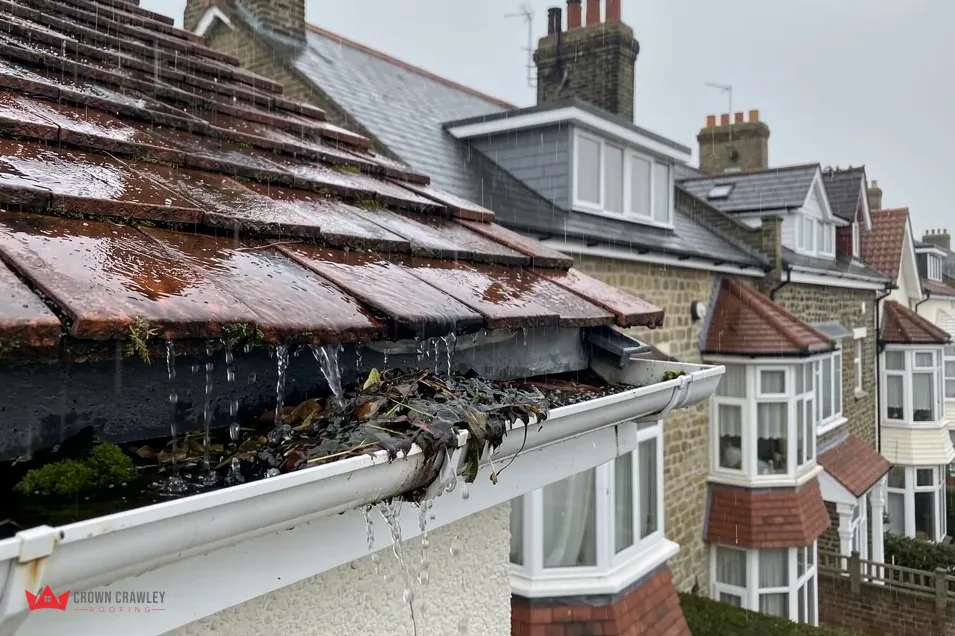
Gutters rarely get attention until a wet week shows you what they cannot cope with. Water pours over the front, streaks the wall, splashes the doorstep and pools at the foot of the house. The first instinct is to clean them out, and often that is exactly the fix. But if a clean-out only buys you a month before the same corner spills again, the system may simply be too small, too tired or badly set for the roof it serves.
An upgrade is a chance to fix that properly. The profile, the size of the channel, how many downpipes there are, where they sit and the way it is fixed all decide how much water it carries and where it goes. The profile also decides how the roofline looks. This post compares the common choices, which are half-round, square, deep flow and ogee, and explains how to match one to a roof that sheds a lot of rain. We use British terms throughout, so downpipes rather than downspouts.
When an upgrade makes more sense than a repair
Repairs suit local faults: one leaking joint, one loose bracket, one blocked outlet. An upgrade suits a system that is failing as a whole, or one that was never right for the roof.
What are the signs that the whole system is struggling?
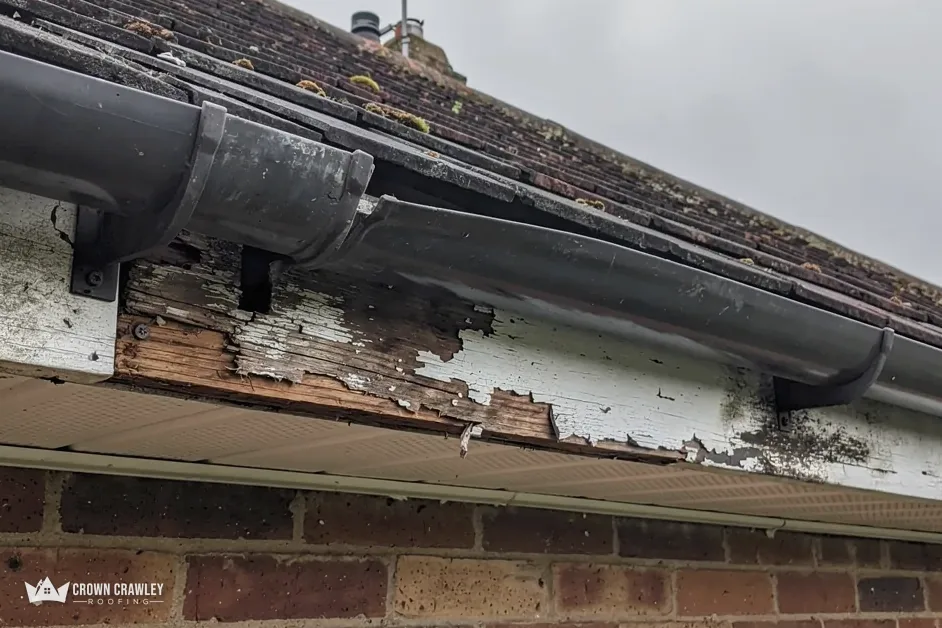
Look for gutters that overflow in the same places during hard rain even when they are clean, joints that weep along most of the run, long stretches that sag or hold standing water, brackets that have pulled out of soft fascia boards, and cracked or brittle sections. Green or black staining down the wall below the gutter shows water has been spilling for a long time. Several of these together mean you are patching something that is past saving.
Why might a gutter overflow even when it is clean?
Because the roof sheds more water than the gutter was built to take. That can happen after a loft conversion or extension adds roof area that drains to an old gutter, or where one downpipe serves a very long run. Our answer on why gutters overflow goes through the usual causes.
It also pays to look at the boards the gutter hangs on. If the fascia is rotten, a new gutter on it will not last, and the upgrade should include the boards. A survey of the roof edge will show which parts are worth keeping and which are not. Some customers find their downpipes and brackets are in decent shape while the channel itself has failed, and in that case only part of the system needs to go. Photos of each section make that easy to see.
The four main profiles, in plain terms
Profile means the shape of the channel when you look at the end of it. Four shapes cover most houses.
What is half-round guttering?
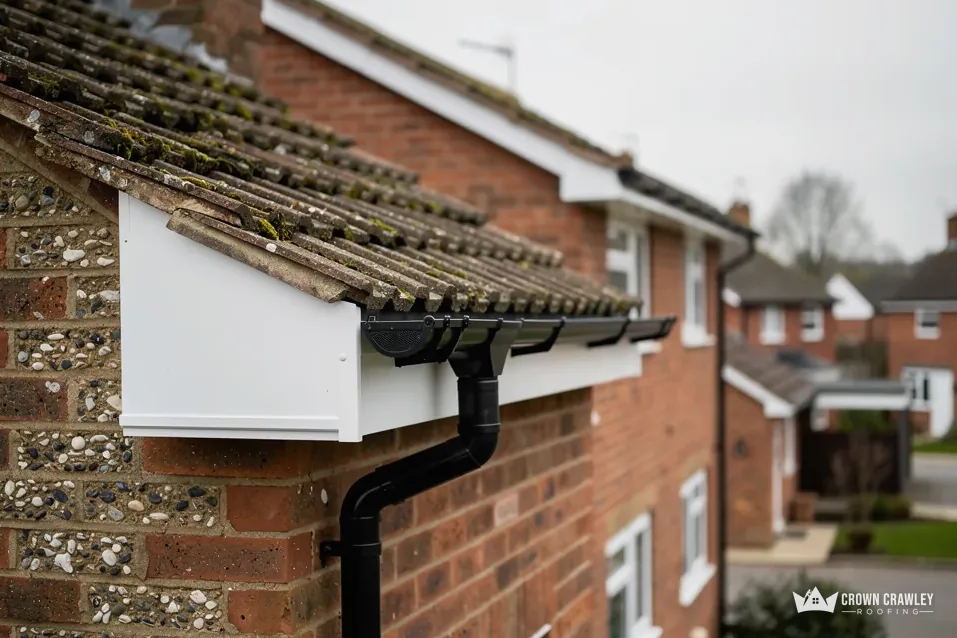
A simple semicircular channel. It is the classic British shape, it drains cleanly because there are no corners for debris to settle in, and it suits older and period houses. It is a standard size on most domestic roofs.
What is square guttering?
A channel with straight sides and a flat bottom. It sits neatly against a flat fascia, looks crisp on modern homes and holds more than a half-round gutter of the same width, because the corners add room.
What is deep flow guttering?
A deeper, rounder channel, usually with a taller back, designed to carry a lot more water before it spills. It is the usual answer for large roofs, long runs, steep slopes that shed water fast, and any house where the standard size keeps overflowing.
What is ogee guttering?
A channel whose face follows an S-shaped curve, like a decorative moulding. It is a style choice, popular on Victorian-style and traditional homes, and it brings a more ornate look to the roofline. It copes with water well enough for a typical roof, though if capacity is the real issue the size still matters more than the shape.
The names can vary between makers, so ask a supplier to show the end profile and the stated capacity rather than relying on a name alone.
Deep flow versus standard: which carries more
There are two halves to this: how much water your roof sends down, and how much the gutter and its outlets can carry away.
What decides how much water a gutter must handle?
The area of the roof that drains into it, how steep that roof is and how hard it rains. A big pitched roof draining to one side sends far more water to its gutter than a small porch. Think of the worst ten minutes of a thunderstorm rather than an average wet day, because that is when a marginal system gives up and a good one earns its keep. Long runs matter too: water at the far end of a gutter has a long way to travel, which is why a downpipe at each end, or one in the middle, often fixes a run that overflows at one point. A steeper slope delivers it faster. Rain in this country is changeable, and sudden heavy bursts are what overwhelm an undersized system, not steady drizzle.
Is deep flow always the better buy?
No. A deep channel with one small downpipe is held back by that downpipe. The outlet, the number of downpipes and the distance water must travel to reach one are as important as the channel itself. A standard gutter with downpipes in the right places can outperform a deep flow gutter with too few. Conversely, a big roof on an ordinary half-round system, with a downpipe at only one end of a long run, is a common cause of spilling.
How do you pick the right size?
BS EN 12056-3 sets out how roof drainage is laid out and calculated, but you do not need to work through it yourself. A roofer who has surveyed the roof can tell you whether your slope and your run lengths call for a deep flow profile or an extra downpipe. The survey tells you plainly, with photos, because the cheaper choice is sometimes the right one.
Materials: plastic, aluminium and cast iron
Profile and material are separate choices, and most profiles come in more than one.
What are uPVC gutters like?
Light, easy to cut and join, and the usual choice for homes. They need no painting, and they do not rust. Standard colours include black, white, brown and grey. Cheaper plastic can fade or turn brittle in strong sun, and joints rely on seals, so check how they are made. A rigid, thicker product holds its shape better between brackets.
What about aluminium?
Aluminium is stiffer and can be finished in a wide range of colours, and it can be made in long lengths with fewer joints, which means fewer places to leak. It usually costs more than plastic. Our answer on aluminium versus uPVC guttering goes through the trade-offs. Continuous runs, which are formed to length on site, mean fewer joints to seal, and a factory-applied colour finish saves repainting, though how well it lasts depends on the maker.
When does cast iron make sense?
On period houses where the original profile is part of the building. Cast iron is heavy, needs sound brackets and wants painting, but old sections can often be repaired rather than renewed.
What if your gutters are concrete?
Concrete, Finlock-type gutters were used on some 1950s houses. RICS's defects record says leaking joints are the known problem, and that nobody should assume these gutters have to come out. Lining or repair can be an option. A survey of the joints shows which case you have.
Fall, brackets and downpipes: how it all gets fixed
Even the best profile fails if it is hung badly. This is where many upgrades go wrong.
What slope does the run need?
A slight slope towards the downpipe. Brett Martin's installation guidance gives 1mm of fall for every 600mm of gutter. That is barely visible from the ground, but it is what keeps water moving. Too little and water stands. Too much and it looks wrong, and the front edge can end up lower than the back.
Where should the brackets go?
At regular spacings set by the maker, firmly into solid timber, with extra at joints and corners. Brackets screwed into soft or rotten boards pull out under the weight of a full gutter, which is why the fascia matters. Where the fascia is unsound, new boards should go on before the gutter.
Where does the water go at the bottom?
Into a drain, a soakaway or a water butt, not onto the foot of the wall. If two homes share a run, agree who pays before any work starts, because the shared part cannot be changed on one side alone.
Each downpipe also needs an outlet that is big enough. A large gutter feeding a narrow outlet simply backs up, and that is a design fault rather than a maintenance one. These are the details a good survey checks before it quotes a price.
Guards, looks and what it costs
Once the main choices are made, the extras and the budget decide the rest.
Are gutter guards worth adding?
They cut the amount of leaf litter that reaches the channel, which helps under trees. They still leave you with checks to make, and fine debris can collect regardless. Whether they suit your house turns on what grows nearby, and a surveyor can judge that on site.
Does the style change how the house looks?
A great deal. Gutters are one of the longest straight lines on a house, so black half-round gutters suit a brick and tile cottage, while slim square white ones suit a modern box. Match the colour to the fascias and the downpipes so they read as one set. That is kerb appeal gained for the price of the material you were buying anyway.
What does an upgrade cost?
In Checkatrade's October 2026 guide, 15 to 20 metres of gutter with three downpipes runs from £650 to £1,700, averaging £1,000. That is a national figure, not our price. The cost on your house turns on profile, material, height, and whether scaffold or new boards come into it. What we give you is one total in writing, worked out once we have surveyed. Whichever firm you use, check that VAT and scaffolding are counted. Our answer on gutter replacement cost explains what moves the figure, and our gutters, soffits and fascias page lists the related work.
Part of our Gutters, Soffits & Fascias in Crawley
Choosing a gutter upgrade: further questions
Can I mix deep flow gutters with existing downpipes?
Often you can, if the outlet fits and the downpipe is big enough for the extra flow. A bigger channel feeding a small pipe only moves the blockage. A roofer should check each outlet and the drain at the bottom. Sometimes one extra downpipe on a long run does more than a bigger gutter.
Will new gutters change the look of an older house?
They can, in a good way, if the profile is right. Half-round or ogee in black suits many traditional fronts, and square suits a modern one. On a listed building, or in a conservation area, speak to the council's planners before swapping the material or the shape of the gutters.
Is it worth doing the gutters and fascias in the same visit?
Usually, yes. Brackets must come off for the boards behind them to be renewed, and a new gutter fixed to old boards will not hold. Combining the jobs means one scaffold, one visit and one fall set correctly. Ask any firm whether its price covers both.