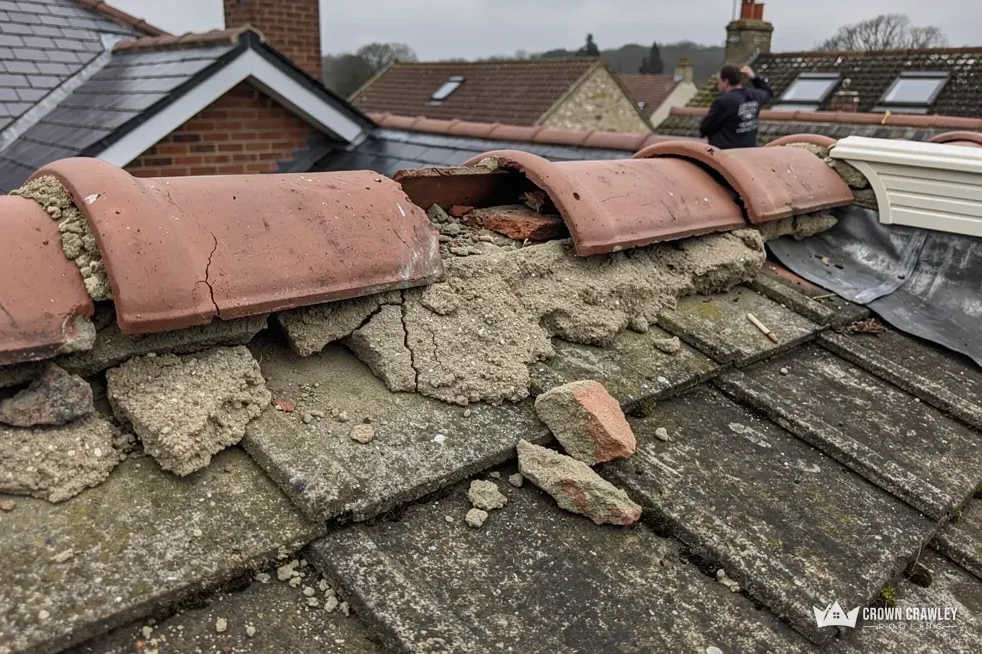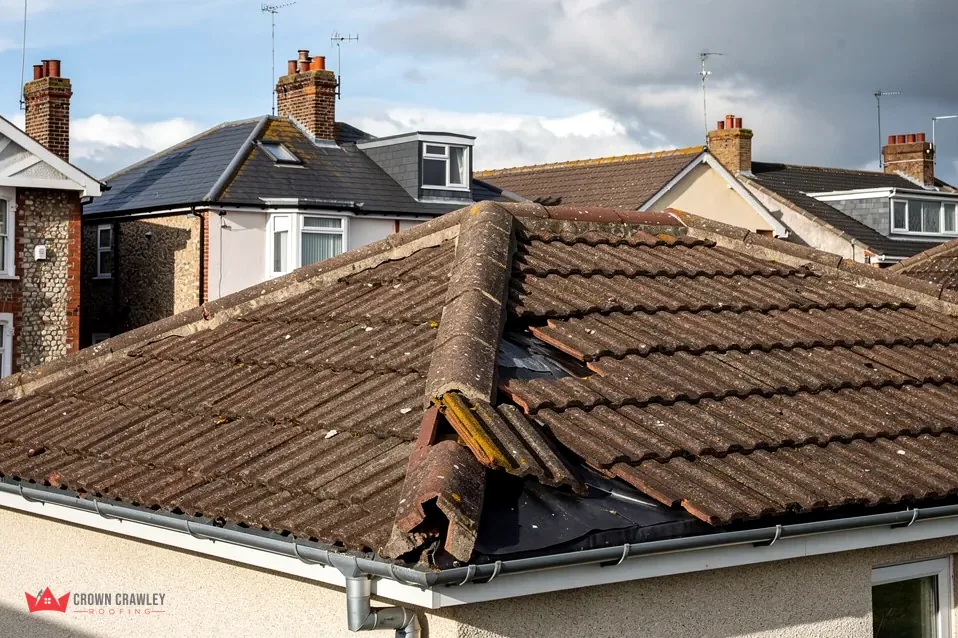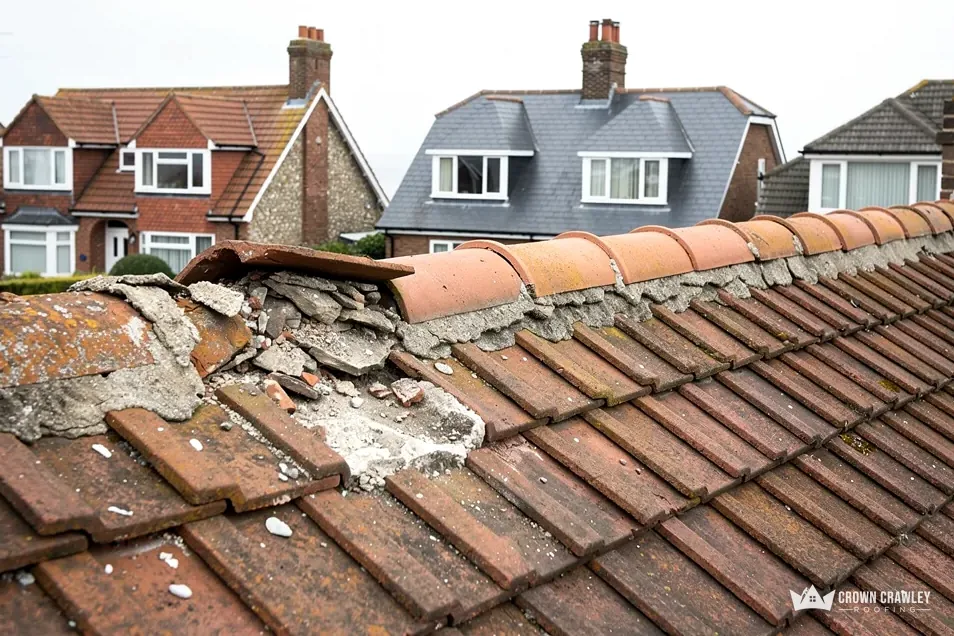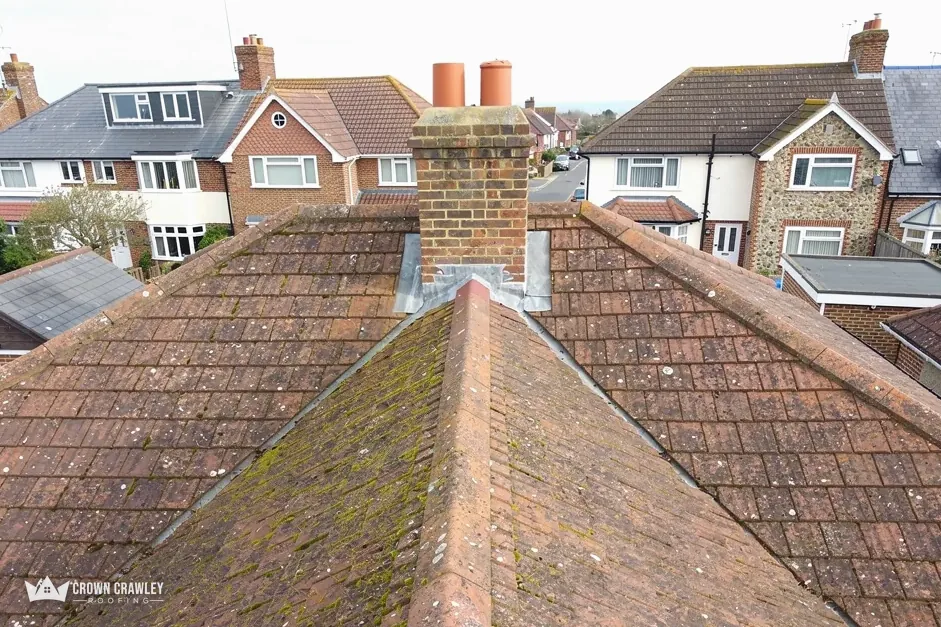
Walk down most streets and look at the gable ends. Where the tiling ends at the side wall, a line of tiles overhangs the brickwork and is bedded in mortar along its edge. That edge is the verge. It faces the wind, gets soaked from above and below, and carries a thin strip of mortar that has to hold the end tiles down against a gale. It is one of the first places a roof starts to show age.
Cracked, crumbling or missing verge mortar is common, and it often prompts a call to a roofer. The usual repair is repointing, which means raking out the bad mortar and filling the joint again. Sometimes the fault runs deeper, in the board or tile beneath the end tiles, called the undercloak, or in the way the verge was fixed. This guide explains what a verge is made of, how it fails, what a repointing job involves, what it can and cannot fix, and when changing to a dry verge system makes more sense. It also gives a national cost guide so a quote makes sense when it arrives.
What a mortar verge is made of
A verge has more layers than it seems from the ground. Starting from the top, there are the end tiles of each course, which overhang the gable wall by a small amount so rain drips clear of the brickwork. Under the overhang sits the undercloak, a strip of material that supports the tiles and closes the gap between them and the wall. Beneath that, the top course of brick or the wall plate carries the load.
What is undercloak?
Undercloak is a strip laid along the gable edge to support the overhanging tiles. It may be a row of plain tiles, a strip of slate, a fibre cement board or a plastic or timber board, depending on the age of the roof. The mortar is then bedded on top of it, and the tiles sit on the mortar. If the undercloak slips, rots or cracks, the mortar loses its base, and no amount of repointing will hold. Each layer depends on the one below, so a repair that skips a layer rarely lasts.
Where does the mortar sit?
The mortar fills the space between the last tile and the wall, and it is struck off to a clean line at the edge. It is both the weatherproofing and, on older work, the main fixing for the end tiles. Because BS 5534 now expects mechanical fixings on bedded tiles, many verge repairs today include clips or nails as well as mortar. Our guide to what a dry verge system is shows what replaces the mortar bed entirely.
How a mortar verge fails
Mortar is hard but not flexible. A verge is exposed to rain from one side, sun on the other, frost in winter and constant vibration from wind, so it moves a little with every change in temperature. Over time the joint between mortar and tile opens, and rain gets in.
What are the signs from the ground?
Look at the verge from the pavement or garden. Cracks and dark gaps along the pointing, pieces of mortar lying on the ground or on a path below, tiles at the edge that sit at an angle, and a line of green growth along the gable all point to a verge in poor shape. Moss and lichen along the edge hold moisture against the mortar and speed things along. A tile that rocks when the wind blows, or that has already slipped, says the mortar has lost its grip.
What is going on underneath?
Water that gets behind the mortar can reach the undercloak, the timber behind it or the top of the wall. Timber may rot, bricks may stain, and in a frost the water can freeze and push the pointing off in lumps. A failed verge can also let wind lift the end tiles, since the mortar bed was the only thing holding them. Our page on whether a dry verge is a legal requirement answers a common worry here.
Not every crack means failure. Fine hairline cracks in an otherwise firm joint can be watched. Loose, hollow-sounding or missing mortar, or any tile that moves when pressed, needs attention soon.
What a repointing job involves
Repointing a verge sounds simple, and in the right conditions it is. The work is done from scaffold or a safe platform, not from a ladder leaning against the tiles, because the edge of a roof is not a place to work from below.
How is the old mortar removed?
The roofer rakes out the loose and crumbling mortar to a sound depth with a hand tool, taking care not to crack the tiles. Dust and debris are brushed out. Where the tiles themselves are loose, they are lifted, the bed is cleaned and they are rebedded. Any broken tiles at the edge are replaced, ideally with ones that match the roof.
How is the new mortar laid?
A fresh mortar mix is packed into the gap and struck off to match the line of the existing verge. The mix, its colour and its strength matter: a mortar that is too hard can crack the older, softer tiles or bricks next to it, and one that is too weak will wash out. Clips or nails are added where the standard calls for them, so the tiles are held by something other than the mortar alone.
Repointing is a good repair when the undercloak is sound, the tiles are in good condition and the mortar is the only problem. It cannot fix rot behind the mortar, a sagging undercloak or tiles that have moved because the roof structure has shifted. A roofer should look behind the mortar before quoting, and tell you what they find.
Undercloak problems, and when to repair them
Undercloak is easy to forget because it hides. Yet it carries the end tiles and sets the line of the verge, so when it goes wrong, the repair cannot stop at the surface.
What goes wrong with undercloak?
Timber boards can rot after years of damp. Fibre cement or plain tile strips can crack or slip. Plastic types can warp in sun. In each case, the mortar loses its support, the joint opens and the end tiles begin to move. You may see a bow or dip along the verge, or a gap between the underside of the tile and the wall.
How is undercloak replaced?
The end tiles are lifted along the affected length, the old undercloak is taken out and the top of the wall is checked and cleaned. New undercloak goes in, with a slight fall towards the roof so water runs back onto the slope and not into the wall. The tiles are then rebedded with fresh mortar or fixed with clips. If a stretch of the wall plate or the barge board beneath has rotted, that needs timber repair first.
Does it matter which type?
Yes. Using a board that suits the tile, and that will not rot or warp, saves a repeat job. If the roof is a candidate for dry verge, the undercloak is often replaced with the system's own parts. Ask your roofer what material is going in and why, and whether clearing away the old mortar is part of the price, since it is heavy and messy to leave behind.
Photos of the gable edge from the ground, and a note of any cracks you can see inside the loft near the wall, help a surveyor plan the repair in advance.
When to switch to a dry verge
A dry verge replaces the mortar bed with mechanical parts. Special verge trims or end tiles are fixed to the gable edge with clips or screws, with a sealed cap or cloak that covers the gap. No mortar is needed, so there is nothing to crack. BS 8612 is the standard these kits are tested against, and BSI lists it as current.
When does switching make sense?
Consider it when repointing has failed more than once, when the verge is long and exposed, when the end tiles keep slipping, or when you are already paying for scaffold. Replacing the verge with a dry system at the same visit saves a second scaffold hire. It also suits a roof that was built with a mortar verge without clips, since the new system adds fixings the old one lacked. Our guide to the best dry verge system compares what is on offer.
When is repointing the better choice?
On a short run, on a roof where the look of a traditional verge matters, or on a protected building. Where the house stands in a conservation area, ask the council's planning team before changing the verge. A listed building brings listed building consent into play for changes that touch its character. A roofer should be happy to explain why one choice suits your gable end better than the other.
What it costs and how to read the quote
Verge work is priced by the metre, but access often outweighs the materials, so two houses with the same length of verge can have very different totals.
What does a national guide say?
Checkatrade's dry verge cost guide, September 2026, quotes approximately £10 to £25 for each linear metre of dry verge, materials and fitting included, and puts a semi-detached house in the region of £875. Those are national typical ranges and no guide to your own roof; VAT may need adding. For mortar repointing, the total in a written quote is the figure to trust, because the amount of undercloak and tile work behind the mortar cannot be seen from the ground.
What drives the price?
The length of the verge, the height of the gable, the condition of the undercloak and tiles, and whether scaffold is needed. Checkatrade's fascia and soffit table puts scaffold at £300 to £600 per elevation per week, again as a national guide. A low gable on a bungalow needs far less access equipment than the end wall of a three-storey house. If both gable ends need work, doing them in one visit shares the access cost.
Ask for a single written total, confirm whether scaffolding and VAT are in it, and ask what is being used for the undercloak and whether clips are fitted. Our dry ridge and dry verge page lists the other options, and a photo of each gable end sent to us before the survey lets us plan the first look at the verge.
Part of our Dry Ridge & Dry Verge Systems in Crawley
Verge repair questions
Can I repoint a verge myself from a ladder?
It is not a safe job from a ladder. The verge sits at the roof edge, the tiles are fragile and the mortar needs both hands. A tower or scaffold gives a stable platform. If you spot loose mortar, photograph it from the ground and keep people and pets clear of the ground below until it is fixed.
How do I know if the undercloak has failed?
Signs include a bowed or dipping verge line, a gap between the tile and the wall, damp staining on the gable brickwork and mortar that keeps falling out after repointing. A roofer can only confirm it by lifting the end tiles, so ask for the undercloak to be checked at the survey.
Is a dry verge more expensive than repointing?
Checkatrade's September 2026 guide gives £10 to £25 per linear metre for dry verge, including materials and fitting. A repointing price depends on what lies behind the mortar. Compare the written totals, check what each includes, and weigh how long the repair is likely to last.