Roofers in Riverhead

Roofs in an old Kent hamlet beside the river Darent.

Riverhead began as a hamlet where two main roads met, and part of it is now a conservation area. We inspect the roof, then write down one total for the job.

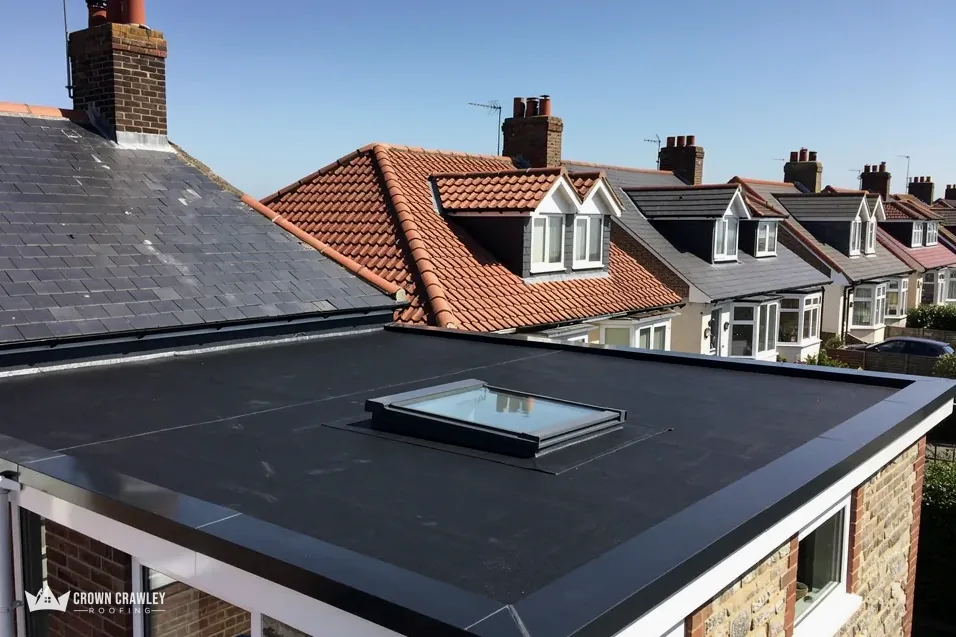
Black flat roof with a rooflight on a house extension

What tops the houses of Riverhead

Rear of a brick detached house with a tiled roof and garden

Houses inside the conservation area

Part of Riverhead lies in the Riverhead conservation area. Before a roof there changes appearance, we check the address with Sevenoaks District Council's planning team and limit the repair to what the survey shows.

Tiled roofs on a village street

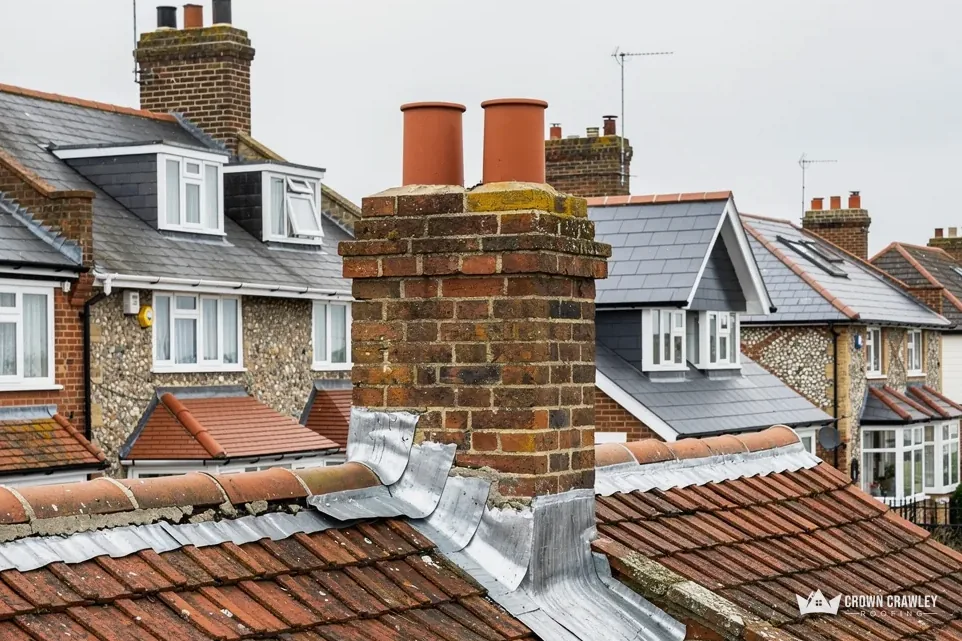
Chimney stack with orange pots and lead flashing among tiled roofs

Listed homes around Linden Square

Linden Square, Maidstone Road and Chipstead Lane each carry Grade II entries in the National Heritage List. On a listed roof the covering, the fixings and the consent route are settled before a single tile is lifted.

Old clay tiles on a pitched roof

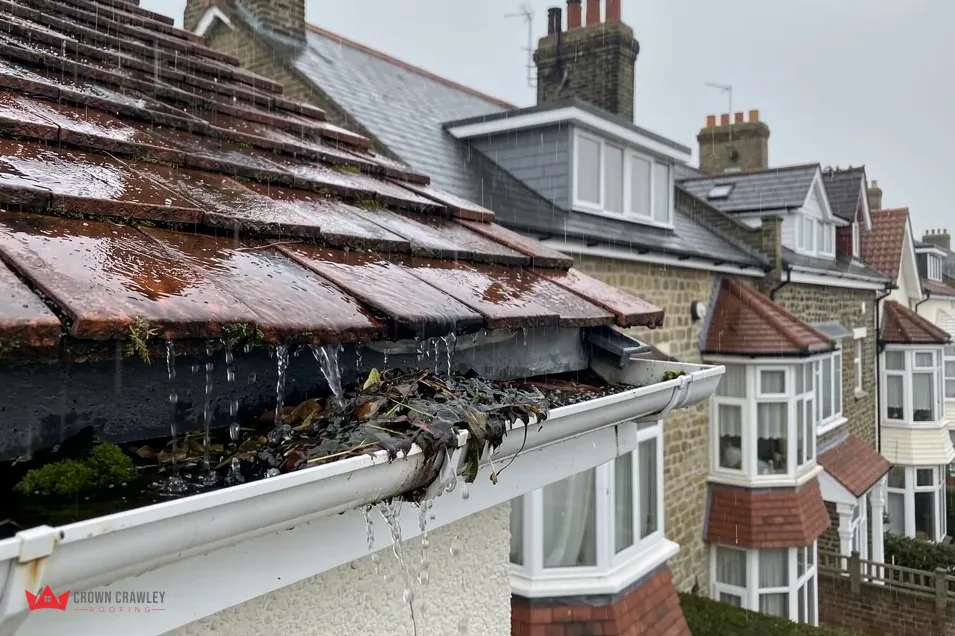
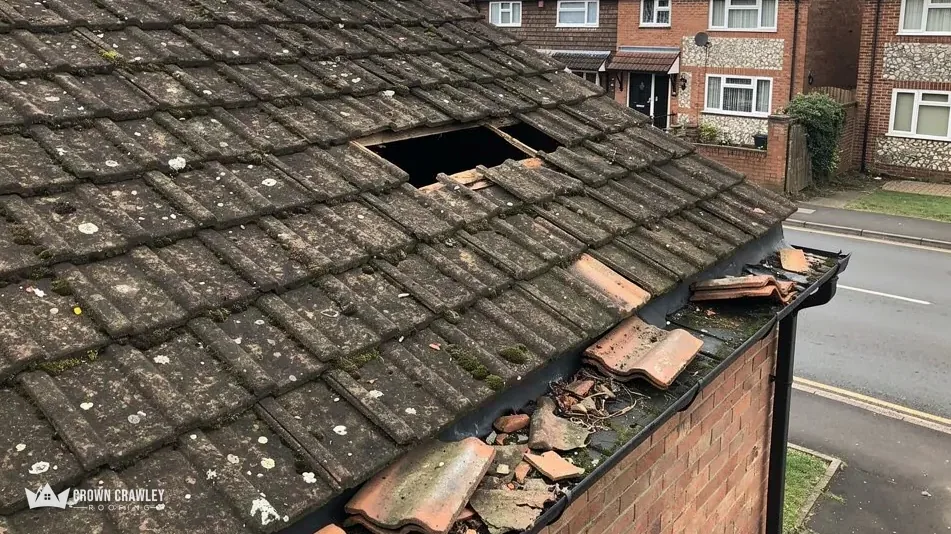
Blocked guttering full of debris below a wet tiled roof

Eaves close to the Darent

The village sits on low ground by the river. Moss, leaf fall and a slow gutter do their worst at the eaves rather than the ridge, so we clear and test the gutters every time we are up there.

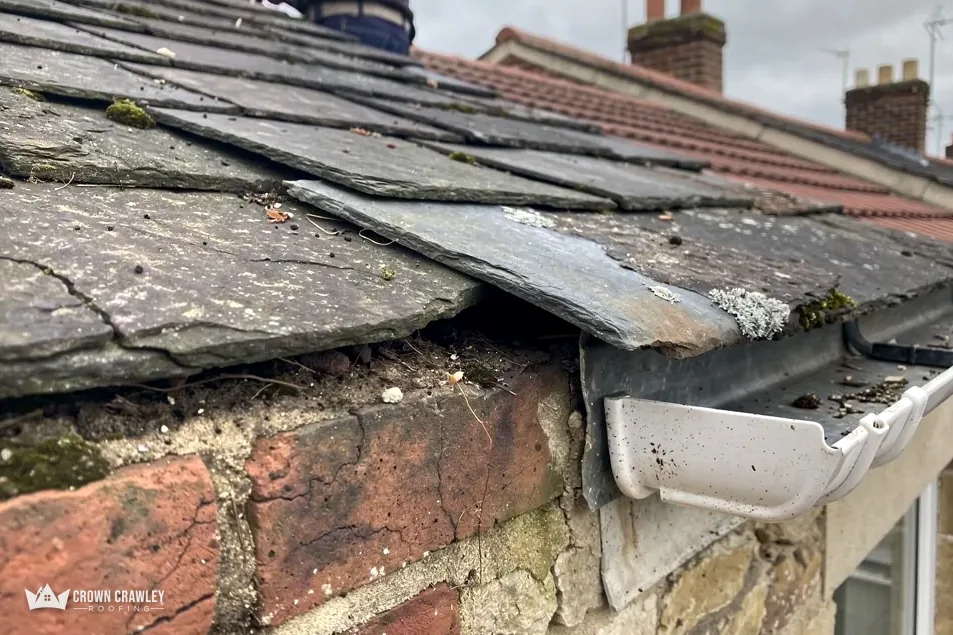
Gutter and fascia at the eaves

Riverhead, north-west of Sevenoaks

Map of Riverhead and the neighbourhoods around it, with Crawley for reference.

Riverhead is a village on low ground north-west of Sevenoaks, beside the river Darent, at the point where the London and Westerham roads come together.

Distance
27.6 road miles from Crawley, to the north-east
Drive
About 33 minutes
Council
Sevenoaks District Council and Kent County Council
Planning authority
Sevenoaks District Council
Conservation area
Riverhead
Population
2,633 (Census 2021, Riverhead civil parish)
Listed streets
Linden Square, Maidstone Road and Chipstead Lane (Grade II)
Get a free quote

The Riverhead roof story

An old hamlet, its listed houses and its permissions

Three short chapters on how Riverhead grew, what listed buildings ask of a roofer, and the permissions that matter once a modest repair begins to grow.

Stage 01 · Background

A hamlet where two roads met

Riverhead was a large hamlet long before it was a suburb of anywhere, and its roofs belong to a place that grew house by house.

Edward Hasted, in his 1797 history of Kent, called Riverhead a large hamlet about a mile north-west of Sevenoaks. He placed it where the London road and the Westerham road meet, with the river Darent forming its boundary. The 2021 Census counted 2,633 people in the civil parish, so it remains a village of modest size, and one that has been lived in for a very long time. That history shapes how we come to a Riverhead call.

What does an old hamlet mean for its roofs?

It means we leave the guesswork at the gate. Places that grew in stages collect roofs put on by different people in different decades, and the house across the lane tells us very little about yours. The survey does the work. We study the covering from a ladder or a scaffold, then climb into the loft and follow the rafters, battens and underlay from underneath, because a leak leaves its trail up there long before a stain reaches the ceiling. Every finding is photographed on your own roof, and you receive the pictures alongside the written price. Where someone has repaired the roof before, we note it in the report and show you where old work and new work meet.

Survey findings in Riverhead

Tiles
Slipped, split or flaking at the edges
Ridge
Bedding firm, or caps fixed down
Valleys
Free of moss and fallen leaves
Flashings
Tight against wall and chimney
Gutters
Level, jointed and draining
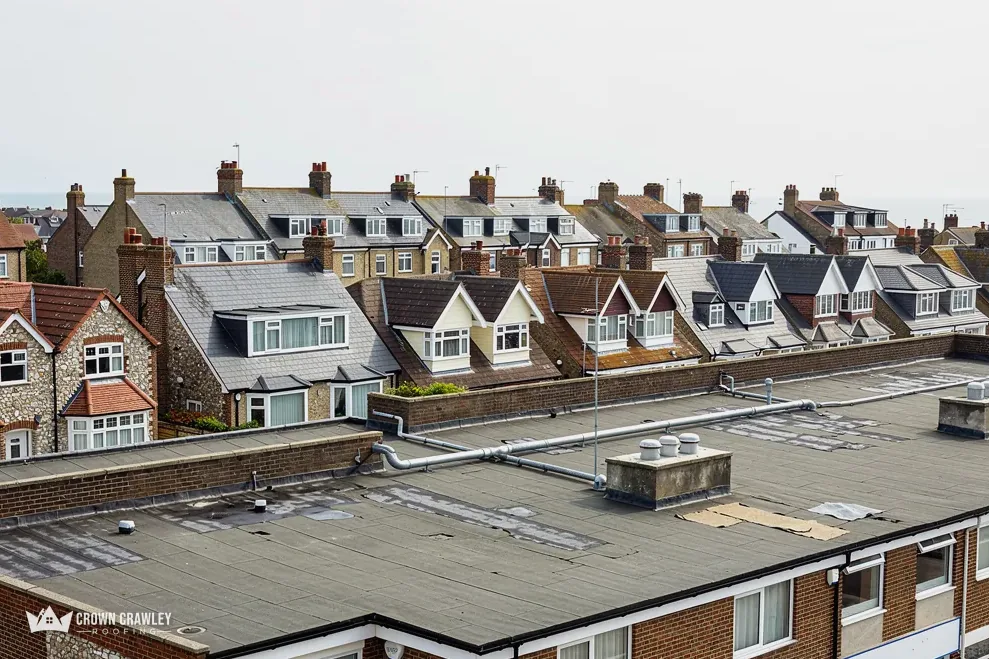
Flat roof in the foreground of a street of dormer-roofed houses

Where does a tiled slope usually give up first?

The tiles themselves are the obvious place, with slips, splits and chipped edges. Next is the ridge, the capped spine along the top of the roof, and the verge, the sloped rim at each gable end. Either may sit in a mortar bed, and a bed like that cracks as the house settles and the weather gets into the joints. After that come the valleys, the troughs where two slopes funnel rain towards the gutter, and the flashings, thin metal sheets dressed over the joint between roof and wall or chimney stack.

We finish at the eaves, the lower edge of every slope. Beside a river, damp air and leaf fall build up there, and a gutter that holds water can send water up under the bottom row of tiles. Fixing that is normally a small job, and it protects the timber behind. If the weather allows we also run water down the pipes, since a blocked outlet shows itself quickly that way. If the survey finds tile or batten trouble further up, our pitched roofing page describes how we go about it.

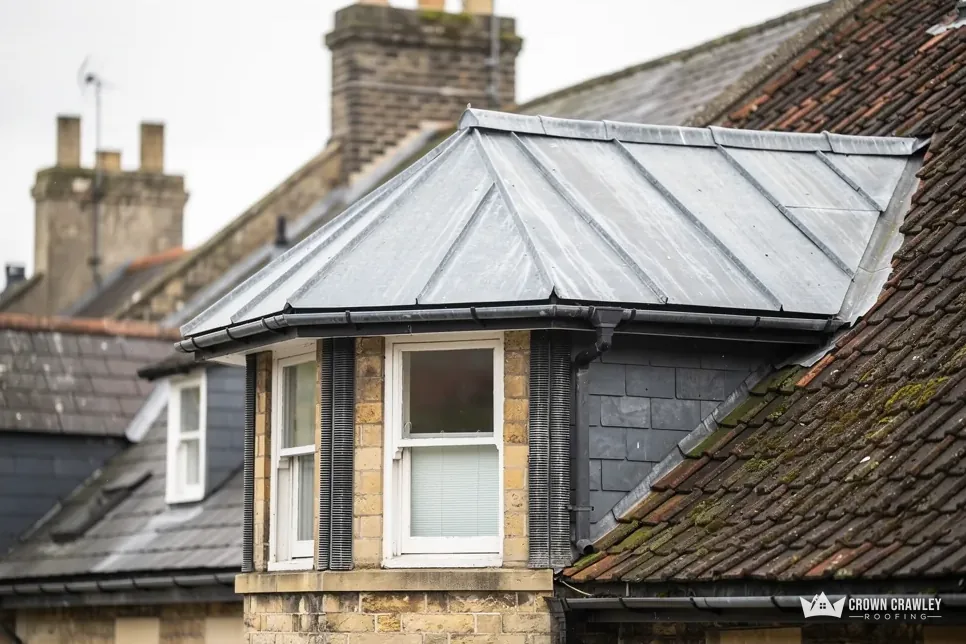
Lead-covered bay roof and chimney stack on a slate and tile roof

Stage 02 · Heritage

Listed homes and St Mary's church

Riverhead has Grade II listed houses and a Grade II listed church, and each has its own route for agreeing roof work.

The National Heritage List shows Grade II entries at 1 to 4 Linden Square, 3 and 5 Maidstone Road and 40 to 46 Chipstead Lane, while St Mary's church carries a Grade II listing too. If your home sits under one of those addresses, or under a listing we have not mentioned, the roof counts as part of what makes the building worth protecting. Nobody should start stripping it before the right permission is agreed.

Will a listed Riverhead house need consent for roof repairs?

Listed building consent is the council's permission for work that affects a listed building's special character. That judgement belongs to the planners at Sevenoaks District Council, and the answer can change between swapping a few tiles and laying a new covering. We would rather you asked them first than learn afterwards. Once you have their reply, we describe the exact work in the written price so that everyone is looking at the same thing. Our planning post explains how the wider planning picture fits together.

Heritage terms you may meet

Grade II
Special-interest status for a building
Listed building consent
Council's yes to altering a listed house
Faculty
How a parish church seeks approval
Relay
Lift, sort and refit existing tiles
How is an old roof handled differently?

Slowly. Hand-made clay tiles vary in size and wear, so we take them off in small sections, stack them in order and relay every sound one, buying new only for those that have failed. The battens and underlay are checked as each section opens, and lead gets its own inspection, because old flashings can wear thin while the tiles above stay fine. A new tile is matched against the old ones in daylight for colour and profile. The Building Research Establishment puts the minimum life of clay tile at 60 years, but an article at buildingconservation.com warns that the figure is no dependable guide for old peg tiles, so we weigh up each roof by how it has actually aged. If a batten has rotted we show you the timber and replace it along with the tiles it carried.

On a listed roof the paperwork goes up the ladder before you do.

Who approves work on the church?

St Mary's is an Anglican church in active use as a place of worship. For a church like that, the denomination runs its own consent system, which for the Church of England is called a faculty, and listed building consent does not apply. The parish and the diocese deal with it, so a homeowner has nothing to apply for, though a neighbour's scaffold or noise may still be worth a word.

Stage 03 · Permissions

When a Riverhead repair outgrows itself

A small repair needs no forms. Once the job grows, the conservation area and Kent's highway rules start to count.

Putting matching tiles back where a few have slipped seldom raises a single question. Questions begin once the patch grows to an entire slope, once a different covering is proposed, or once poles must go on the public road. Because part of Riverhead sits inside a conservation area, we check your address against the council's records at the very beginning.

How do I find the Riverhead boundary for my house?

The national planning dataset shows Riverhead's conservation area covering part of the village, and Sevenoaks District Council publishes a page for it. The boundary cuts through the village instead of wrapping all of it, so a neighbour may be in a different position from you. Ask the council's planning team about your own address before you agree to any change in the colour, material or shape of the roof. Our roof replacement page shows how a full new roof runs once those answers are in.

Ahead of a Riverhead re-roof

Planning
Sevenoaks District Council
Approval
Sevenoaks building control
Roadside scaffold
Kent County Council licence
Licence lead
5 working days at Kent
Loft visitors
Bats stop the job until advice
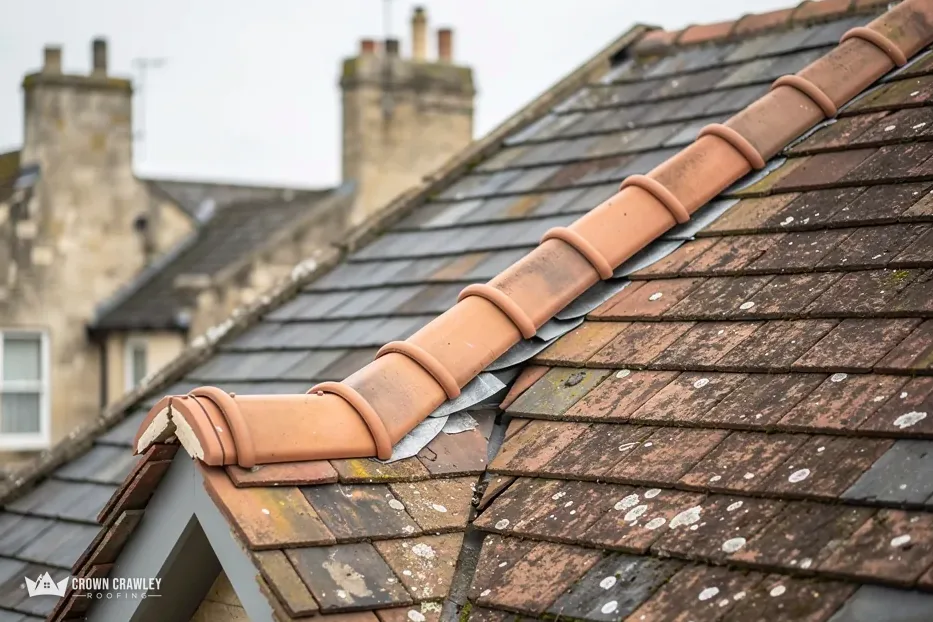
Clay ridge tiles along the hip of a weathered tiled roof

Does a bigger job need Building Regulations approval?

The Planning Portal puts the line at 25 per cent of the building envelope and 50 per cent of the roof: keep under both and building control approval is not normally needed. Any new covering that is 15 per cent or more heavier, or that behaves differently in a fire, takes a job over that line. In Riverhead, building control is Sevenoaks District Council's own service, so they are the people we would ring on a larger job, and we would say so in the written price.

Who arranges the scaffold licence?

A scaffold that occupies the carriageway or footway needs a highway-authority licence, and for Riverhead that body is Kent County Council. Kent's page puts the application in the scaffolding company's hands, made for you as the end customer, and wants it 5 working days before the licence begins. A permit covering 7 days costs £52 in 2026 to 2027. Poles that stay entirely on your own land fall outside Kent's licensing.

One more thing can turn up in the loft. Under GOV.UK guidance every bat species is fully protected, roosts included, and repairing or replacing a roof appears on its list of affected work. Droppings or a roost in the timbers mean work pauses while we talk through your options. To begin, write with your postcode and a few words on the slope you are worried about.

Before you book a Riverhead roofer

Does the Riverhead conservation area change how a roof gets repaired?

Not for a modest repair in matching materials, but it matters once the roof would look different. Part of the village is inside the conservation area, so we place your address on the map first and suggest you ask the Sevenoaks District Council planners before the covering, colour or profile is altered. The written price then states the work.

Who applies for a scaffold licence on a Riverhead road?

Under Kent's rules the scaffold firm makes the application on your behalf, with at least 5 working days to spare before the licence starts. A 7-day permit costs £52 in 2026 to 2027, and we time the start around it. If the scaffolding fits on private ground, no highway licence is needed at all, which is why we pace out the front of the house during the visit.

My Riverhead house is Grade II listed. Who signs off a roof repair?

Listed building consent covers work that affects a listed building's character, and Sevenoaks District Council's planning team judges whether your repair does. Ask them before a start date is booked. Send us pictures of the roof and the slope involved, and we will write up the work precisely so the council can see what is proposed.

What gets checked on a Riverhead roof before a price is given?

The covering from outside, then the timbers and underlay from the loft. We look along the ridge, verges, valleys, flashings and gutters and photograph each finding on your roof. A single written total follows the survey, with the photos attached, so the figure can be checked against what we found up there. If something needs a closer look, we tell you what and why.

Tell us which Riverhead roof is worrying you

Name the slope or gutter bothering you, add a postcode, and note whether a listing may apply. We will book the survey.

01293 974253

10-year workmanship guarantee, in writing.

Call Get a free quote