Roofers in Sevenoaks

Roofs on the sand-hill ridge, from Knole's park to the High Street.

Sevenoaks stands on a ridge above the Kentish Weald, beside Knole park, with listed buildings along the High Street. Each roof gets its own survey and a single written price.

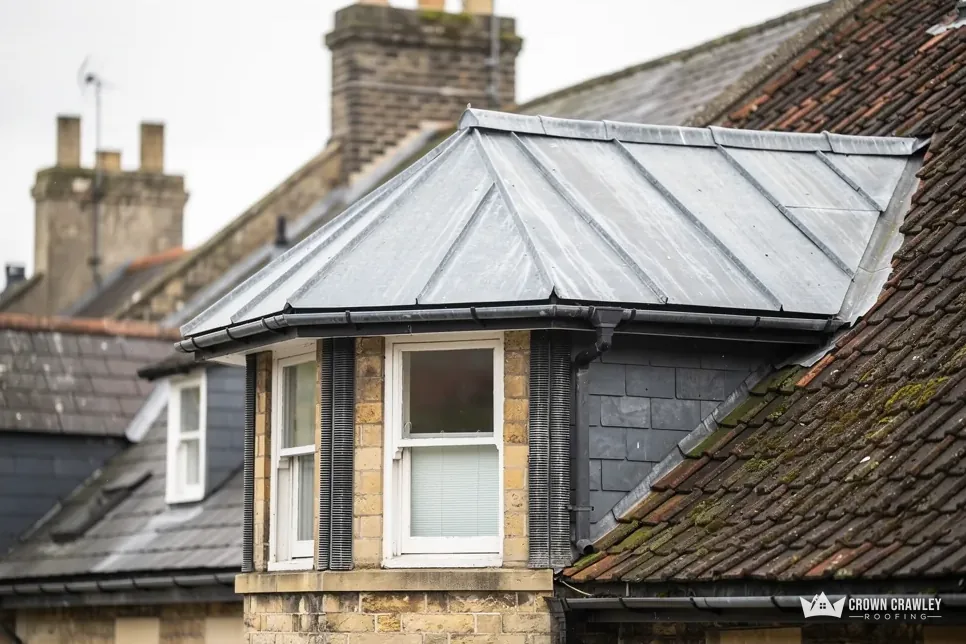
Lead-covered bay roof and chimney stack on a slate and tile roof

Roofing materials around Sevenoaks

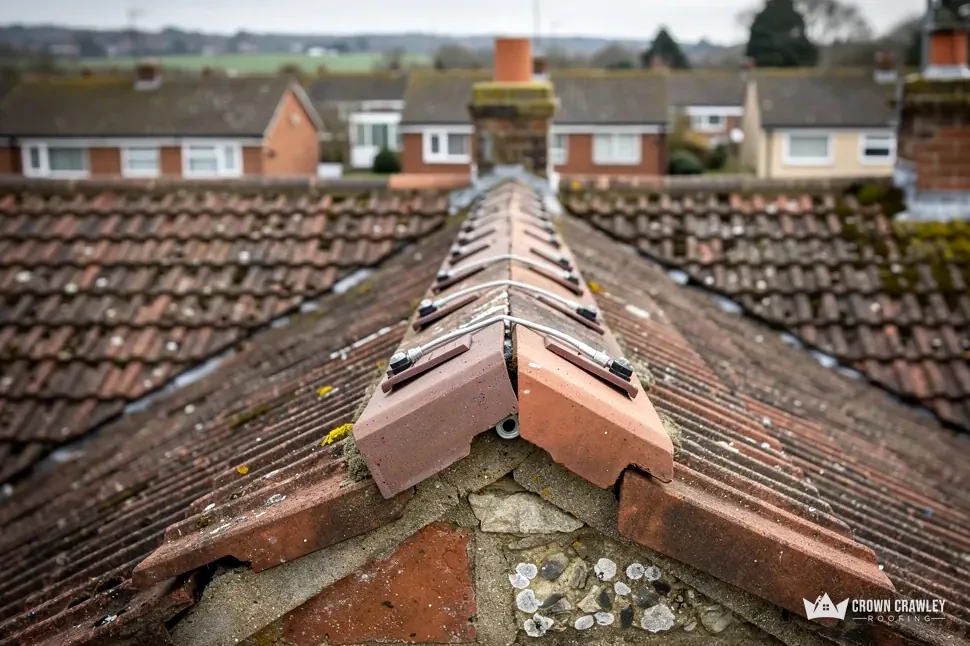
Clay ridge tiles along a hip on a pitched roof

High ground on the greensand ridge

Hasted described the town in 1797 as standing on high ground on the sand-hill ridge. A roof in an open position meets wind from several sides, so ridge, hip and gable-edge fixings get extra attention.

Tiled ridge against open sky

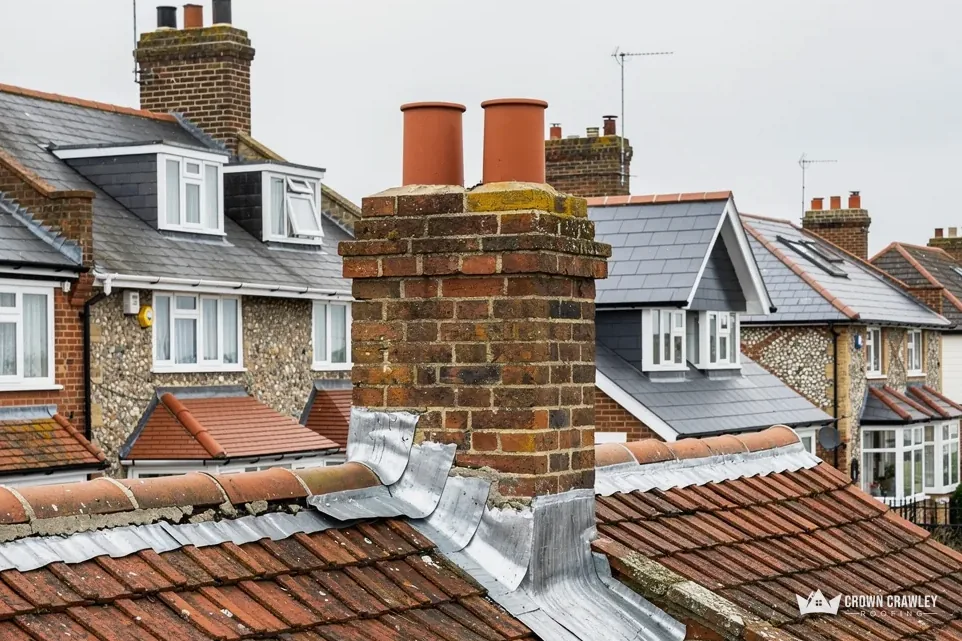
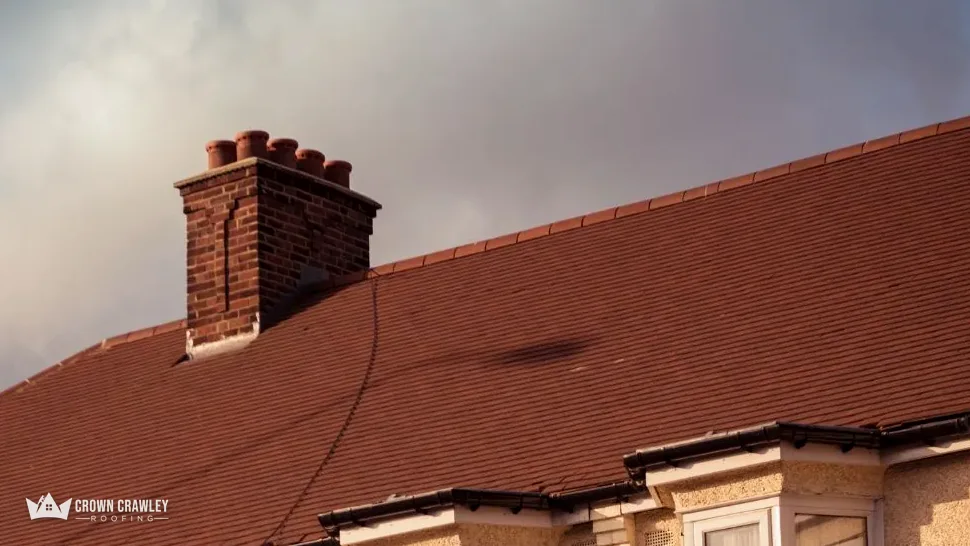
Chimney stack with orange pots and lead flashing among tiled roofs

Listed buildings on the High Street

Numbers 13, 15 and 17 High Street carry Grade II* listings. Where an address is on the national list, we speak to the council about consent before pricing anything that could alter the roof's character.

Old brick terrace with tiled roof

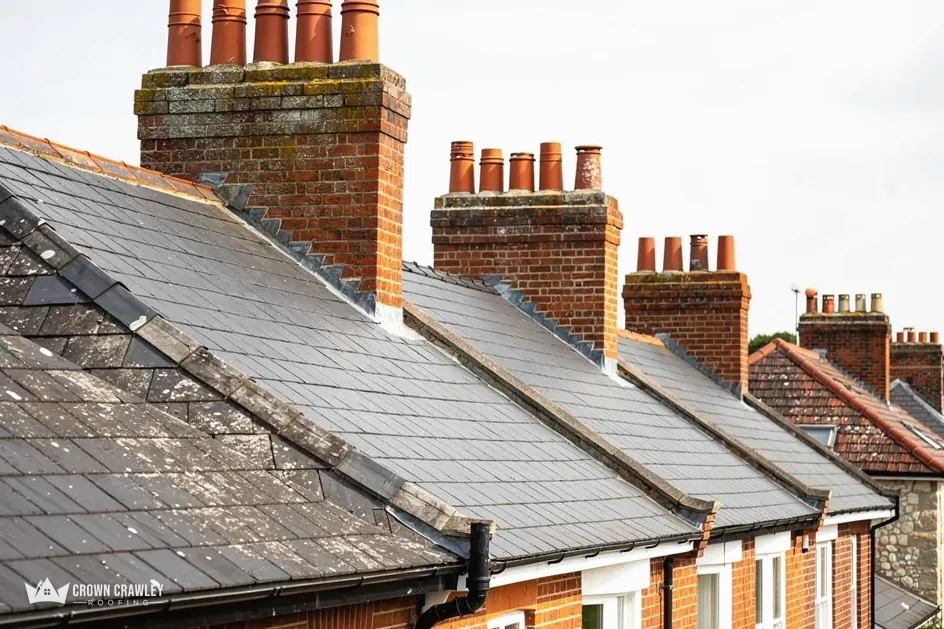
Row of terraced chimney stacks above slate roofs

Streets inside a conservation area

Part of the town falls within the Granville Road and Eardley Road conservation area, and the place also touches The Vine. For those streets we raise the roof's appearance first and the repair method second.

Pitched roofs along a quiet road

Sevenoaks, between the ridge and the Weald

Map of Sevenoaks and the neighbourhoods around it, with Crawley for reference.

Sevenoaks is a market town on the greensand ridge above the Kentish Weald, beside Knole park, with 26,479 people in the 2021 built-up area.

Distance
28.7 road miles from Crawley, to the north-east
Drive
About 37 minutes
Council
Sevenoaks District Council and Kent County Council
Planning authority
Sevenoaks District Council
Conservation area
Sevenoaks - Granville Road And Eardley Road; Sevenoaks - The Vine
Knole
Rebuilt by Archbishop Bourchier, left to his successors in 1486
Get a free quote

Sevenoaks: what happens when

Seven oaks, one ridge and a great many roofs

Three short chapters on a hilltop market town, the listed and conservation-area streets where consent comes first, and the Kent arrangements for scaffold and larger jobs.

Stage 01 · Setting

A ridge-top town and its weather

Sevenoaks took its name from seven large oaks on the hill where it began, and its roofs still meet the weather from a height.

Hasted's History of Kent, published in 1797, says the town took its name from seven large oaks standing on the hill where it was first built, and that people then commonly called it Sennock. The same account places the town on high ground on the sand-hill ridge, with sandy soil around it and stiff clay below the hill in the Weald, and a weekly Saturday market in the old market place. Height is the first thing a roofer notices. A house on a ridge has fewer windbreaks than one in a valley, so there is more for a gale to work on.

What we check on an exposed roof

Ridge caps
Bedded and fixed, none rocking
Gable edge
Clipped or mortared, not crumbling
Hips
Caps level with no gaps
Corner tiles
Rows at the exposed end
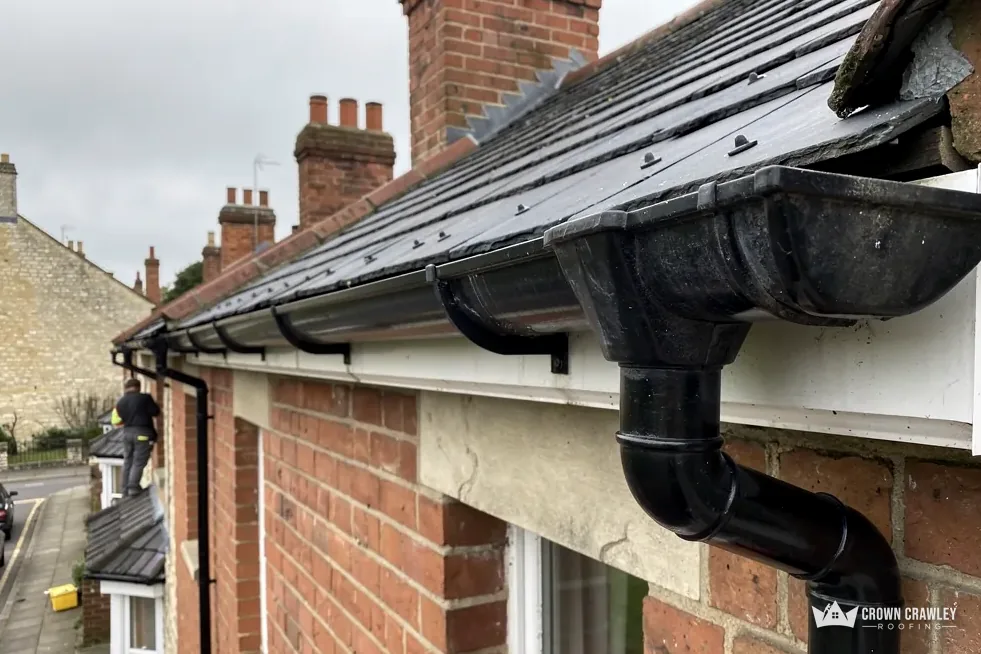
Gutters
Clear, level and bracketed
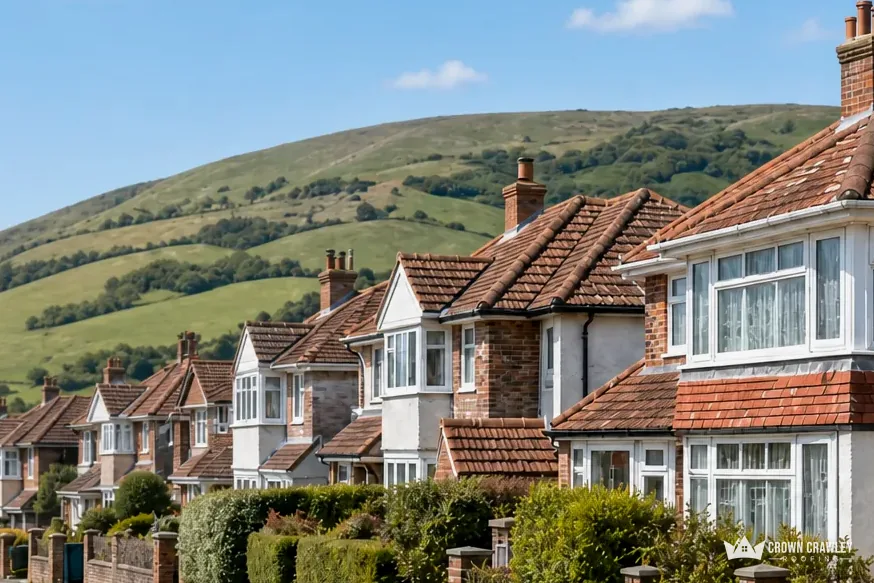
Row of suburban houses with tiled roofs below green downland

Why do ridge fixings count for more on high ground?

Think of the ridge as the spine of the roof, capped with curved or angled tiles where the slopes meet. A hip is the same idea at an outside corner, where two planes of tiling join at a slant. Both used to be bedded in mortar and left to it. The 2014 revision of BS 5534 changed the thinking, and Marley notes, in a page updated in February 2026, that a mortar bed alone has stopped being enough to hold such tiles, and that bedded work now wants mechanical fixings too. If your ridge was last rebuilt before then, we look at how it is held and tell you what a refix would involve. Clipped dry-fix is one answer, described on our dry ridge and dry verge page, and a mortar bed with proper fixings is another.

What else does a gale find first?

The corner of a slope, where the first courses at the gable edge take the strongest pull. A tile that has lifted there often leaves a strip of underlay showing. Chimneys get their own close look. Flashing is lead dressed into the joint between roof and stack or wall, and a gap in it lets in whatever rain the wind pushes against the brick. Our lead work service covers renewing it. Each of these findings arrives with a picture, so you can judge how far the trouble goes before we write a figure, and set it beside what is visible from your own front path. Put the pictures next to the survey notes and ask about anything that looks odd. If a slope is not visible from the ground at all, the pictures are the only way you will see it, which is why we take them across every slope and not only the one that leaks.

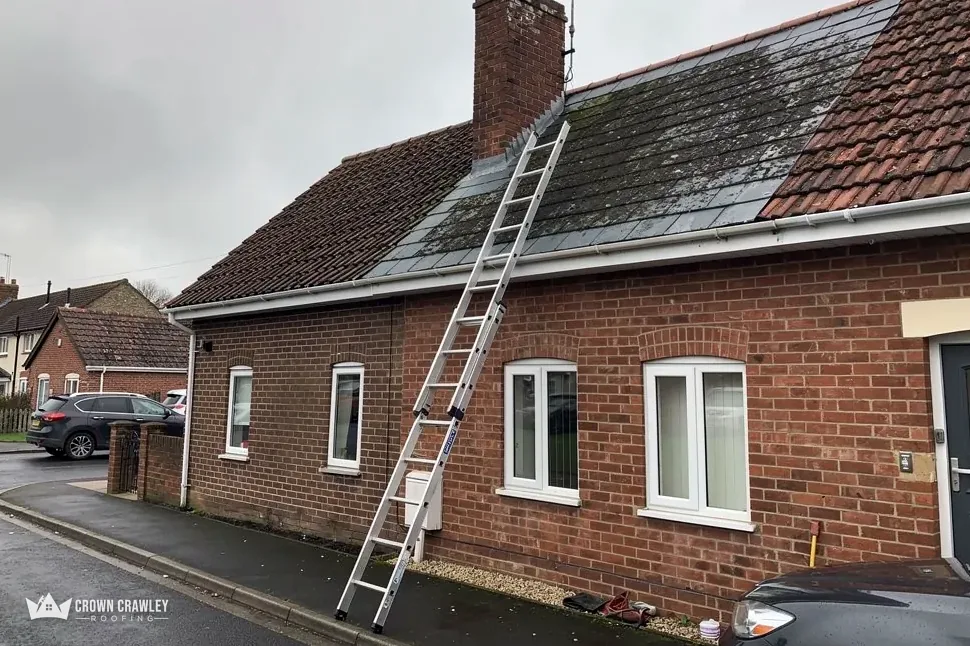
Brick bungalow with a ladder leaning against its tiled roof

Stage 02 · Heritage

Knole, the High Street and the conservation areas

Some Sevenoaks addresses are listed and part of the town sits in a conservation area, so the first call can be to the council.

Hasted records that Archbishop Bourchier rebuilt the manor house of Knole, enclosed a park around it, and at his death in 1486 left it to his successors as archbishops of Canterbury. The High Street today holds several listed buildings, with numbers 13, 15 and 17 all at Grade II*, and a church of St Mary elsewhere in the town holds a Grade II entry. Those frontages set the bar for how any roof repair beside them gets judged, so we treat the street with care.

Which Sevenoaks streets ask more of a roof change?

The national dataset maps part of the town inside the Granville Road and Eardley Road conservation area and shows the separate Vine conservation area alongside. Boundaries decide which streets are covered, and the council's planning team can place your house on the map. Within a conservation area the thing to watch is rarely a straight repair. A different tile, a new rooflight or a taller chimney would be the changes to raise. Our answer on re-roofing in a conservation area sets out what to ask.

Terms you may meet

Grade II*
A higher listing grade than II
Conservation area
Area the council has designated
Listed building consent
Council permission for character-changing work

A High Street roof can be mended quickly, but only after the right person has agreed.

What if the house itself is on the list?

Then listed building consent enters the picture. Sevenoaks District Council is the one to ask and the one to apply to, and works that would affect a listed building's character need that consent unless they are otherwise authorised. We take pictures of the whole roof before anyone touches it, so the council and you work from one starting record, and we start nothing that might need consent until it is in your hand. A chimney stack on an old High Street building is a clear case for this, as the stack, its flashings and the roof around it may all be of different ages and in different condition. Keeping the old covering and patching only what has failed is often the route that keeps both the building and the bill intact, and we say in the survey notes which parts of your roof are worth keeping. Where a stack needs rebuilding, the new work follows the old outline so the roofline keeps its character.

For an unlisted house outside the conservation areas, none of this applies, and the survey simply tells you what the roof needs. Either way the price you receive is one figure for the job as surveyed, with nothing tacked on once the scaffold is up.

Stage 03 · Permissions

Kent's rules, from scaffold to building control

Sevenoaks District Council deals with planning and has its own building control team, while Kent County Council looks after scaffold on its roads.

Most repairs involve no application at all. Swap a few tiles and the job is finished. Rules appear if the work balloons into stripping whole slopes, if a different covering is proposed, or if scaffolding must sit on the public highway. Because Sevenoaks is in Kent, two councils matter: the district council for planning and building control, and the county council for roads.

What makes a Sevenoaks re-roof a building control matter?

Sevenoaks District Council operates its own building control service. The Planning Portal sets the bar for when building control is not normally needed: less than 25 per cent of the building envelope and less than 50 per cent of the roof touched. A patch repair sits well under that. A heavier new covering is different. If the new covering would be at least 15 per cent heavier, approval is needed, and owners are advised to take advice on the structure first. Approval is likewise needed where the fire performance of the new covering would differ significantly from the old. We bring this up at the survey and reflect the outcome in the written price. A whole new roof is walked through on our roof replacement page.

Before a Sevenoaks re-roof

Planning
Sevenoaks District Council
Building control
The district council's own team
Scaffold licence
Kent County Council, firm applies
Notice
5 working days before the start
Roost found
Work stops and we ring you
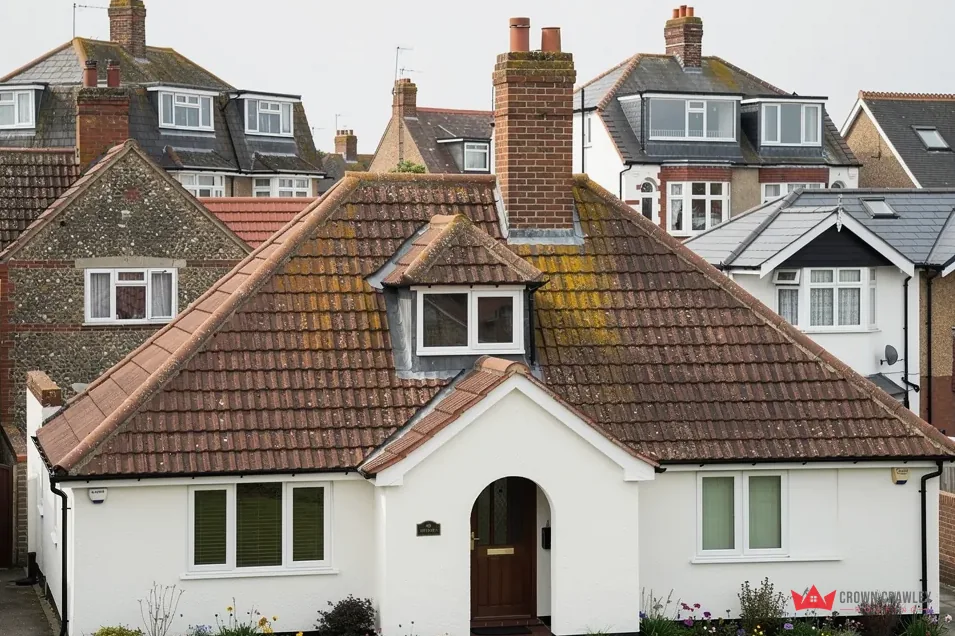
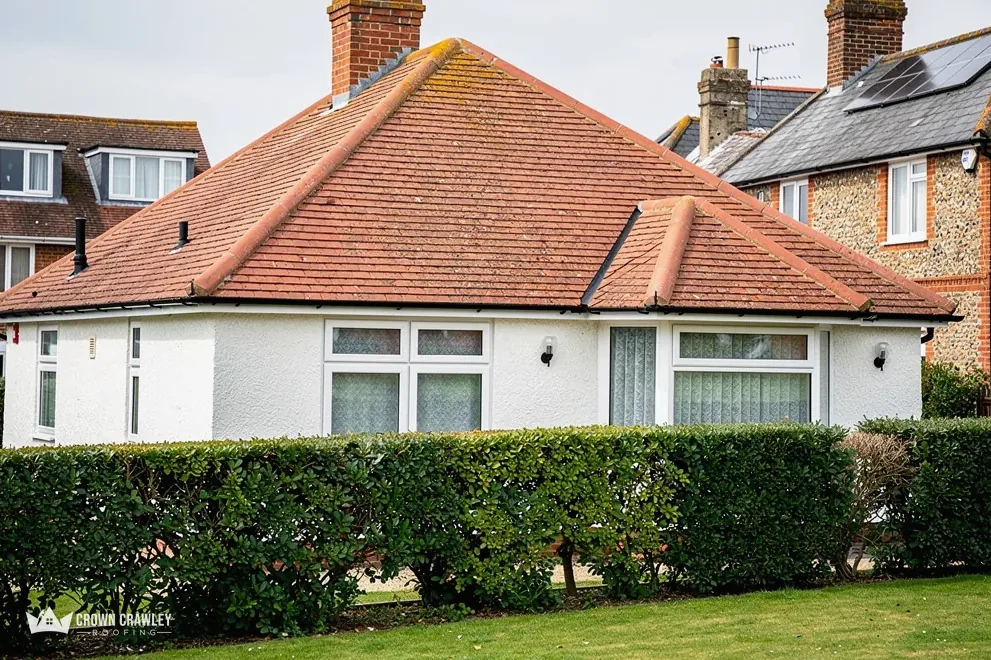
White rendered bungalow with a hipped tiled roof and dormer

Who files the scaffold licence in Sevenoaks?

Kent's highways licence page puts the application with the scaffolding firm, not with the homeowner who hired it. The county asks for the paperwork 5 working days before the intended start date. Its 2026 to 2027 list shows a permit for scaffolding on the highway for seven calendar days at £52 per week, plus a site inspection, if deemed necessary, at £78. None of this arises when the scaffold fits on your forecourt, which is why the frontage gets measured at the survey. When a licence is needed, the start date is set to fit the notice period, so neighbours hear before the poles arrive.

The last item is wildlife. Bat roosts carry legal protection, and a roof job is one of the activities that may interfere with them. Should we find signs in the loft or under the eaves, work halts, we phone you and agree the next step. As a first step, text a snap of whichever slope is giving trouble, add your postcode and mention whether it faces the road or the garden. If you know of any earlier repairs, mention those as well, since they tell us where to look first.

Sevenoaks roof queries

Does a ridge-top position change how a Sevenoaks roof is repaired?

It changes what gets looked at first. An open hilltop gives wind more to push on, so we check how the ridge, hips and gable edge are fixed, and whether any were bedded in mortar alone before the 2014 revision of BS 5534. You see the fixings in pictures, and what you receive afterwards is a single total for the work we saw.

Will you work on a roof that belongs to a listed High Street building?

Yes, as soon as consent is settled. Numbers 13, 15 and 17 High Street are Grade II*, and works affecting a listed building's character need listed building consent. Sevenoaks District Council's planning team answers for a given address, and we photograph the whole roof beforehand so the council and you begin from the same record.

Could a new tile colour on a Sevenoaks house need the council's view?

The national dataset shows part of the town in the Granville Road and Eardley Road conservation area, with The Vine conservation area alongside. Boundaries decide which streets count, so put your postcode to the council's planning team ahead of any change in the roof's look. Mending the roof in its present tiles seldom raises any question at all.

Do I or the scaffolders ask Kent for the Sevenoaks licence?

The scaffolding firm does, according to Kent's own page, and the county wants the application 5 working days ahead of the start. Dates are settled between us and the scaffolder, and you are told as they firm up. Poles on your own forecourt need no licence at all, which is another detail we check when measuring your frontage.

Quote for a Sevenoaks roof

Tell us which slope, ridge or chimney worries you, give your Sevenoaks postcode, and a survey goes into the diary.

01293 974253

10-year workmanship guarantee, in writing.

Call Get a free quote